Archive for the ‘Break IC’ Category
 Texas Instrument DSP Microcontroller TMS320F28075 Flash Content Duplicating
 August 19th, 2020 |
  Author:
 Texas Instrument DSP Microcontroller TMS320F28075 Flash Content Duplicating starts from unlock mcu tms320f28075 protective system and then extract embedded binary from IC;
Below Table describes the signals. With the exception of the JTAG pins, the GPIO function is the default at reset, unless otherwise mentioned. The peripheral signals that are listed under them are alternate functions. Some peripheral functions may not be available in all devices.
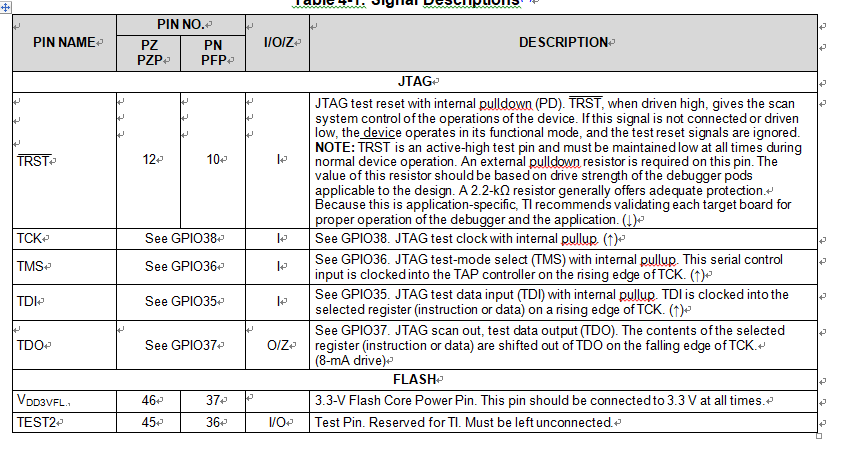
See Table 3-1 for details. Inputs are not 5-V tolerant. All GPIO pins are I/O/Z and have an internal pullup (PU), which can be selectively enabled or disabled on a per-pin basis. This feature only applies to the GPIO pins. The pullups on the PWM pins are not enabled at reset. The pullups on other GPIO pins are enabled upon reset. The AIO pins do not have an internal pullup.
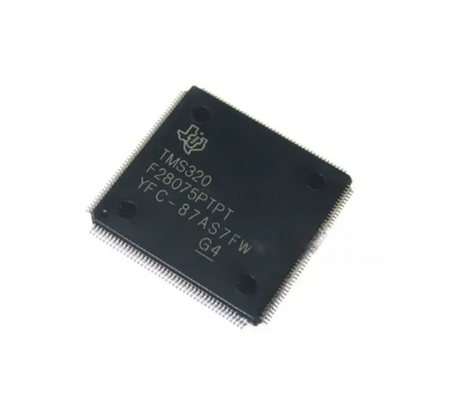
Zabezpieczony mikrokontroler TEXAS INSTRUMENT DSP TMS320F28075 duplikacja zawartości oprogramowania układowego z wbudowaną pamięcią flash rozpoczyna się od odblokowania ochronnego MCU TMS320F28075 systemu ochronnego, a następnie wyodrębnienia z niego zaszyfrowanego kodu źródłowego mikroprocesora danych binarnych i pliku szesnastkowego;
When the on-chip voltage regulator (VREG) is used, the GPIO19, GPIO26–27, and GPIO34–38 pins could glitch during power up. This potential glitch will finish before the boot mode pins are read and will not affect boot behavior If the microcontroller tms320f28015 dsp mcu content being recovering. If glitching is unacceptable in an application, 1.8 V could be supplied externally.
Alternatively, adding a current-limiting resistor (for example, 470 Ω) in series with these pins and any external driver could be considered to limit the potential for degradation to the pin and/or external circuitry. There is no power- sequencing requirement when using an external 1.8-V supply.
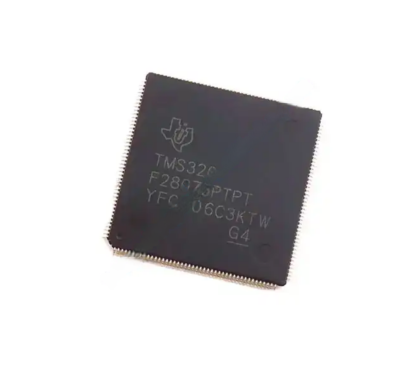
TEXAS INSTRUMENT DSP захищений мікроконтролер TMS320F28075 вбудованим флеш-прошивкою дублювання вмісту починається з розблокування захисної TMS320F28075 захисної системи MCU з подальшим вилученням з неї зашифрованого мікропроцесорного вихідного коду двійкових даних і шістнадцяткового файлу;
However, if the 3.3-V transistors in the level-shifting output buffers of the I/O pins are powered before the 1.8-V transistors, it is possible for the output buffers to turn on, causing a glitch to occur on the pin during power up. To avoid this behavior, power the VDD pins before or simultaneously with the VDDIO pins, ensuring that the VDD pins have reached 0.7 V before the VDDIO pins reach 0.7V.
 Posted in
Break DSP TMS320F28063 Microcontroller Flash Memory
The TMS320F28063PZ is a digital signal controller from Texas Instruments’ C2000 family, designed for embedded control systems that require real-time processing, accurate timing, and efficient handling of control algorithms. It combines a high-performance control-oriented CPU with integrated memory and a range of peripherals intended for demanding electronic applications.

The device is particularly relevant to motor-control systems, industrial automation, digital power supplies, photovoltaic and renewable-energy equipment, inverters, power converters, energy-management systems, and other industrial control platforms. In these environments, the controller’s internal program can coordinate feedback signals, switching operations, communications, protection functions, and other critical tasks, making the Flash memory inside the processor an important repository of the equipment’s embedded operating logic. For many long-running industrial products, the original firmware development environment may disappear long before the equipment itself reaches the end of its service life. Engineers may no longer have the original source code, project files, software backups, or engineering archive, while a programmed TMS320F28063PZ remains installed on an operational or partially damaged control board. If the device is protective, secured, encrypted, or locked, conventional programming equipment may not provide access to the stored Flash contents.

Authorized firmware recovery can therefore become an important part of controller repair, discontinued-product maintenance, replacement-board development, reverse engineering, and product preservation. Recovering available binary information from the existing processor can give engineers a valuable reference for restoring an established design without having to reconstruct every control function solely from hardware behavior.
For a TMS32F28063PZ Flash recovery project, engineers can begin by examining the target board, confirming the processor, identifying available programming or debugging interfaces, and assessing the memory organization and protection configuration. Depending on the condition of the device and the authorized recovery objective, appropriate technical methods can be evaluated to determine whether firmware, source code, data, software, memory, archive, flash, or eeprom information can be retrieved, decoded, duplicated, or cloned. When a protective, secured, encrypted, or locked configuration restricts normal access, specialists may investigate appropriate methods to break or attack the applicable access restriction.

If conventional interface-based analysis is insufficient, advanced semiconductor investigation may include controlled decapsulation of the microcontroller, microprocessor, MCU, chip, or IC. The practical recovery possibilities for each TMS32F28063PZ depend on its actual protection status, physical condition, memory contents, interface accessibility, and recovery requirements, so the feasibility of obtaining usable information from another TMS32F28063PZ must be evaluated individually rather than assumed in advance.
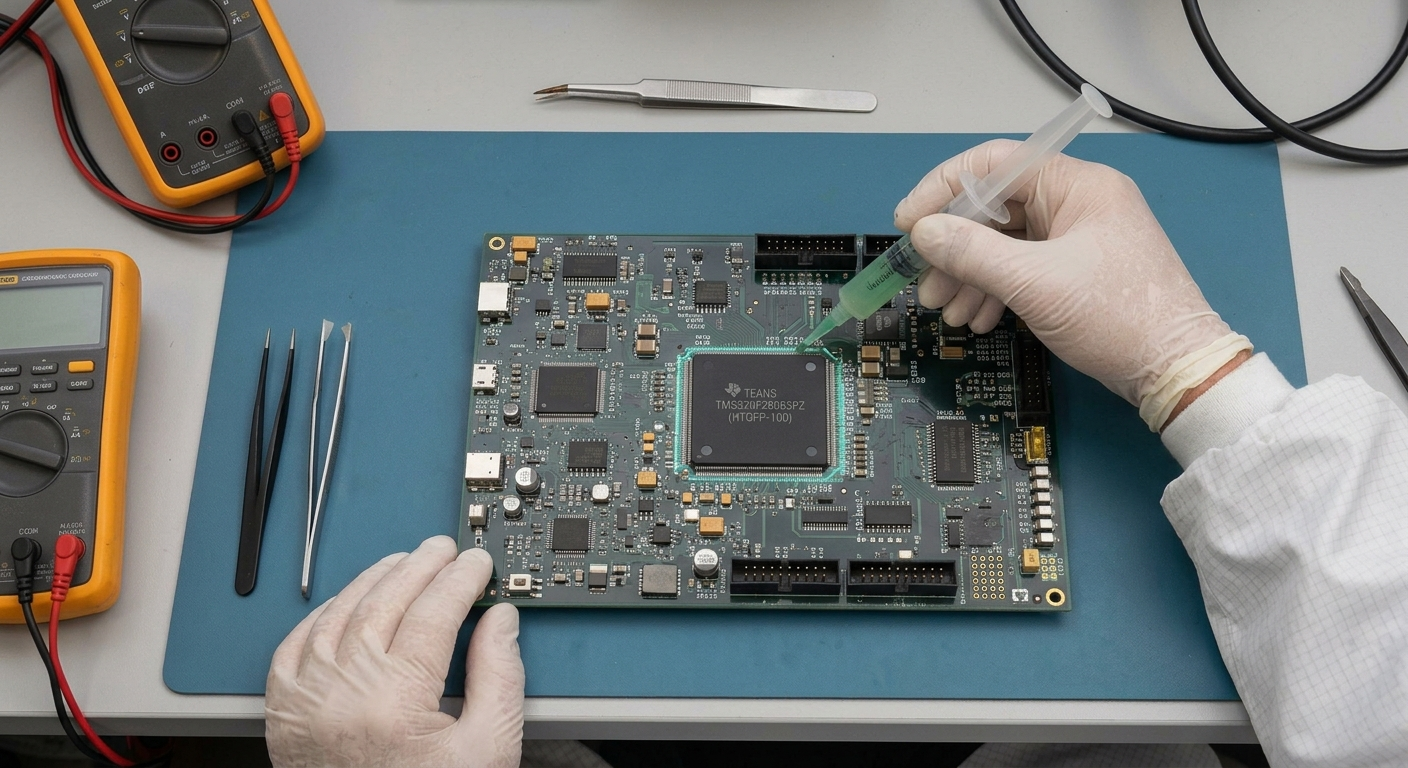
Our TMS320F28063PZ Flash memory and firmware recovery service is intended to support authorized equipment owners, manufacturers, repair organizations, and engineering teams that need to preserve or recover embedded software from existing control hardware. We can examine the target board, identify the processor and relevant interfaces, assess the memory and protection condition, and determine a suitable technical recovery approach.
Where technically feasible, our service can assist with obtaining recoverable firmware images, Flash contents, configuration information, or other embedded data for authorized repair, restoration, redesign, replacement-controller development, and engineering analysis. This can be especially valuable when an industrial controller has been discontinued and its original development archive is no longer available, but the programmed DSP still contains the software required for operation. Through hardware examination, memory investigation, firmware analysis, and specialized recovery techniques, we help end users preserve important embedded code and extend the useful life of established electronic equipment.
Attack DSP Controller TMS320F28053 Flash Memory
Attack DSP Controller TMS320F28053 Flash Memory can help to read embedded jed file from CPLD chip and copy jed file to new CPLD chip for cloning;

Below Figure shows how the various interrupt sources are multiplexed within the 280x devices.
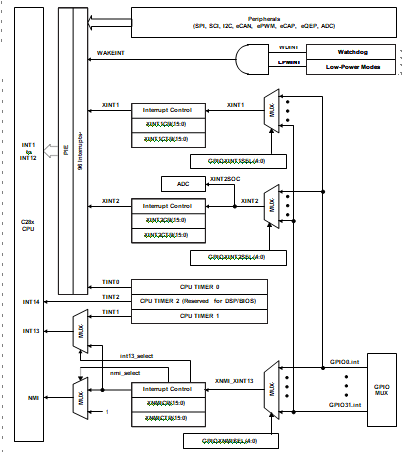
Eight PIE block interrupts are grouped into one CPU interrupt. In total, 12 CPU interrupt groups, with 8 interrupts per group equals 96 possible interrupts.
On the 280x, 43 of these are used by peripherals as shown in Table 3-12. The TRAP #VectorNumber instruction transfers program control to the interrupt service routine corresponding to the vector specified.
útok TEXAS INSTRUMENT DSP zabezpečený mikrokontrolér TMS320F28053 odolnost proti neoprávněné manipulaci a deaktivaci ochranného zámku flash paměti může pomoci načíst vestavěný firmware z mikroprocesoru DSP a zkopírovat jed soubor binárních nebo heximálních dat do nového DSP MCU TMS320F28053 pro klonování;
TRAP #0 attempts to transfer program control to the address pointed to by the reset vector. The PIE vector table does not, however, include a reset vector. Therefore, TRAP #0 should not be used when the PIE is enabled. Doing so will result in undefined behavior.
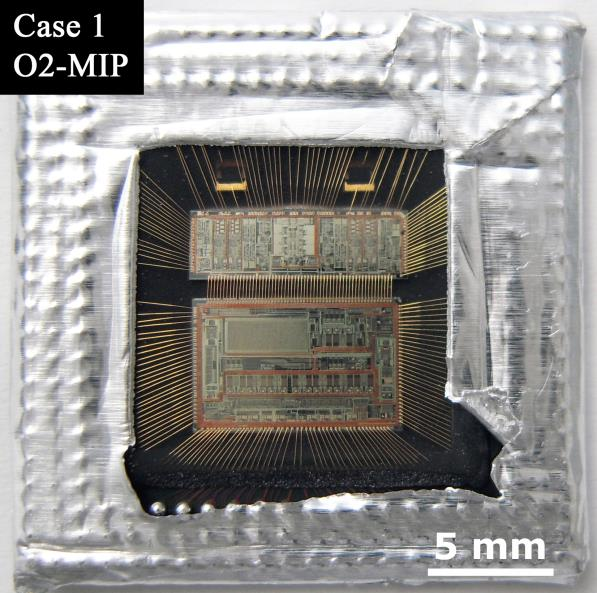
attaccare il microcontroller protetto TEXAS INSTRUMENT DSP La resistenza alla manomissione TMS320F28053 e disabilitare il bit di blocco protettivo della memoria flash può aiutare a leggere il firmware incorporato dal microprocessore DSP e copiare il file jed di dati binari o esimali sul nuovo MCU DSP TMS320F28053 per la clonazione;
When the PIE is enabled, TRAP #1 through TRAP #12 will transfer program control to the interrupt service routine corresponding to the first vector within the PIE group which will help to easy the attacking process of tms320f28031 microprocessor security system. For example: TRAP #1 fetches the vector from INT1.1, TRAP #2 fetches the vector from INT2.1 and so forth.
Reverse Engineer DSP Microcontroller TMS320F28052 Flash Memory Code
Reverse Engineer DSP Microcontroller TMS320F28052 Flash Memory Code needs to crack cpld chip protective system and extract CPLD code from its memory;
The 280x devices support the following serial communication peripherals:
eCAN: This is the enhanced version of the CAN peripheral. It supports 32 mailboxes, time stamping of messages, and is CAN 2.0B-compliant.
SPI: The SPI is a high-speed, synchronous serial I/O port that allows a serial bit stream of programmed length (one to sixteen bits) to be shifted into and out of the device at a programmable bit-transfer rate.
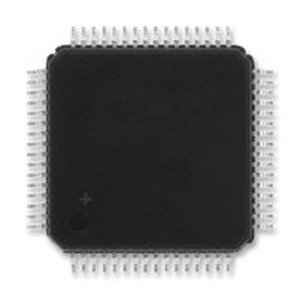
обратно инженерство заключен DSP микроконтролер TMS320F28052 флаш памет и копиране на вградения фърмуер изходния код на криптиран микропроцесор TMS320F28052 трябва да се справи защитена микрочип защитна система и извличане TMS320F28052 заключени MCU двоични данни или хексимал програма от паметта си;
Normally, the SPI is used for communications between the DSP controller and external peripherals or another processor which can also be used for reverse dsp cpld ic chip program. Typical applications include external I/O or peripheral expansion through devices such as shift registers, display drivers, and ADCs.
Multi-device communications are supported by the master/slave operation of the SPI. On the 280x, the SPI contains a 16-level receive and transmit FIFO for reducing interrupt servicing overhead.
SCI: The serial communications interface is a two-wire asynchronous serial port, commonly known as UART. On the 280x, the SCI contains a 16-level receive and transmit FIFO for reducing interrupt servicing overhead.
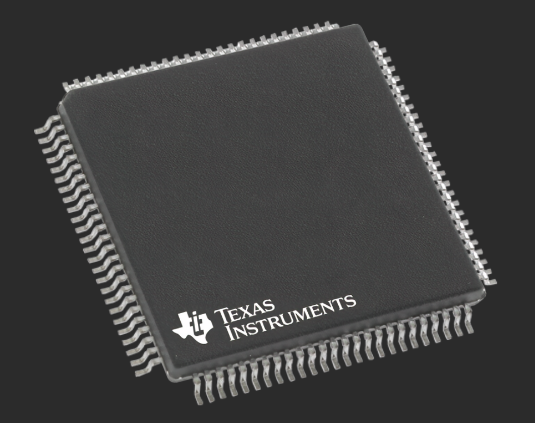
obrnuti inženjering zaključan DSP mikrokontroler TMS320F28052 flash memoriju i kopirati ugrađeni izvorni kod firmvera šifriranog mikroprocesora TMS320F28052 treba razbiti osigurani zaštitni sustav mikročipova i izvući TMS320F28052 zaključane MCU binarne podatke ili heksimalni program iz svoje memorije;
I2C: The inter-integrated circuit (I2C) module provides an interface between a DSP and other devices compliant with Philips Semiconductors Inter-IC bus (I2C-bus) specification version 2.1 and connected by way of an I2C-bus.
External components attached to this 2-wire serial bus can transmit/receive up to 8-bit data to/from the DSP through the I2C module. On the 280x, the I2C contains a 16-level receive and transmit FIFO for reducing interrupt servicing overhead.
Decrypt Secured DSP TMS320F28051 CPU Memory Data
Decrypt Secured DSP TMS320F28051 CPU Memory Data from embedded flash memory, crack mcu security fuse bit and read the firmware out from microcontroller;
Reverse DSP TMS320F28050 Micro CPU Flash Binary
Reverse DSP TMS320F28050 Micro CPU Flash Binary is a process to unlock dsp microprocessor tms320f28050 flash memory and then read the embedded firmware out from MCU.

The 280x devices support the following peripherals which are used for embedded control and communication:
ePWM:
The enhanced PWM peripheral supports independent/complementary PWM generation, adjustable dead-band generation for leading/trailing edges, latched/cycle-by-cycle trip mechanism. Some of the PWM pins support HRPWM features.
eCAP:
обратен инженеринг обезпечен DSP микрокомпютър TMS320F28050 флаш памет и четене вградени двоични данни или хексимал файл от заключен микроконтролер TMS320F28050 трябва да декапсулира криптирана микропроцесорна система за устойчивост на подправяне и да изхвърли TMS320F28050 защитен изходен код на фърмуера на MCU от своята флаш и eeprom памет;
The enhanced capture peripheral uses a 32-bit time base and registers up to four programmable events in continuous/one-shot capture modes. This peripheral can also be configured to generate an auxiliary PWM signal which can be used to attack dsp tms320f28031 microprocessor security system.
eQEP:
The enhanced QEP peripheral uses a 32-bit position counter, supports low-speed measurement using capture unit and high-speed measurement using a 32-bit unit timer.
This peripheral has a watchdog timer to detect motor stall and input error detection logic to identify simultaneous edge transition in QEP signals.
obrnuti inženjering osigurao je DSP mikroračunalo TMS320F28050 flash memoriju i očitavanje ugrađenih binarnih podataka ili heksimalne datoteke iz zaključanog mikrokontrolera TMS320F28050 treba dekapsulirati šifrirani sustav otpora mikroprocesora i izbaciti TMS320F28050 zaštitni izvorni kod MCU firmvera iz svoje flash i eeprom memorije;
ADC:
The ADC block is a 12-bit converter, single-ended, 16-channels. It contains two sample-and-hold units for simultaneous sampling.
Recover Secured DSP TMS320F28035 Microcontroller Flash Content
Recover Secured DSP TMS320F28035 Microcontroller Flash Content needs to crack dsp mcu tms320f28035 tamper resistance system and copy binary firmware to new MCU;
Most of the peripheral signals are multiplexed with general-purpose input/output (GPIO) signals. This enables the user to use a pin as GPIO if the peripheral signal or function is not used. On reset, GPIO pins are configured as inputs.
The user can individually program each pin for GPIO mode or peripheral signal mode. For specific inputs, the user can also select the number of input qualification cycles. This is to filter unwanted noise glitches. The GPIO signals can also be used to bring the device out of specific low-power modes.
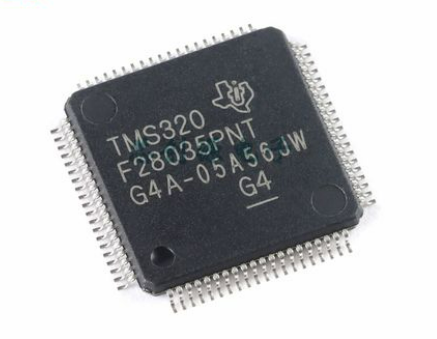
oporaviti DSP TMS320F28035 zaključani sadržaj flash memorije mikrokontrolera treba napasti DSP zaštitni MCU TMS320F28035 sustav otpora neovlaštenog mijenjanja i kopirati binarni kod ili heksimalne podatke ugrađenog firmvera iz izvornog osiguranog mikroprocesora u novi MCU TMS320F28035 klon;
CPU-Timers 0, 1, and 2 are identical 32-bit timers with presettable periods and with 16-bit clock prescaling. The timers have a 32-bit count-down register, which generates an interrupt when the counter reaches zero. The counter is decremented at the CPU clock speed divided by the prescale value setting in order to recover tms320f28032 microcontroller flash memory content.
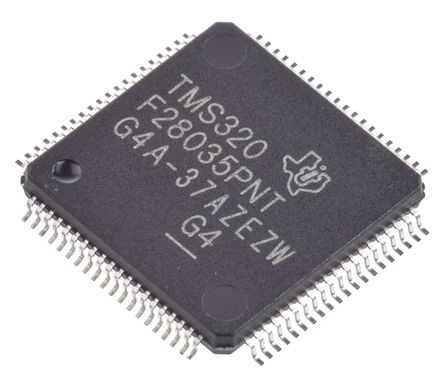
възстановяване на DSP TMS320F28035 заключен микроконтролер флаш памет съдържание трябва да атакува DSP защитен MCU TMS320F28035 система за устойчивост на подправяне и копиране на двоичен код или хексимални данни на вграден фърмуер от оригиналния защитен микропроцесор към нов MCU TMS320F28035 клонинг;
When the counter reaches zero, it is automatically reloaded with a 32-bit period value. CPU-Timer 2 is reserved for the DSP/BIOS Real-Time OS, and is connected to INT14 of the CPU. If DSP/BIOS is not being used, CPU-Timer 2 is available for general use. CPU-Timer 1 is for general use and can be connected to INT13 of the CPU. CPU-Timer 0 is also for general use and is connected to the PIE block.
Recovering DSP Texas Instrument MCU TMS320F28033 Flash Data
Recovering DSP Texas Instrument MCU TMS320F28033 Flash Data is a process to attack dsp microcontroller protective system and then transfer binary to new MCU for TMS320F28033 cloning;
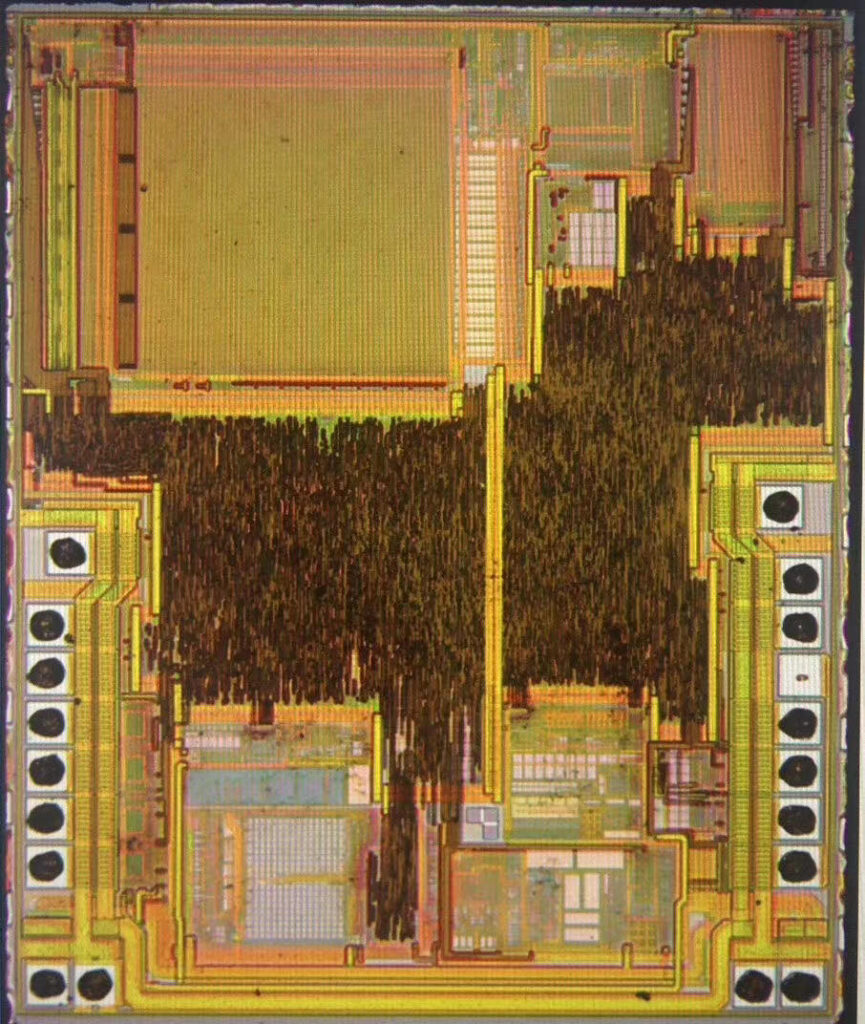
The 280x supports three masked external interrupts (XINT1, XINT2, XNMI). XNMI can be connected to the INT13 or NMI interrupt of the CPU. Each of the interrupts can be selected for negative, positive, or both negative and positive edge triggering and can also be enabled/disabled (including the XNMI).
The masked interrupts also contain a 16-bit free running up counter, which is reset to zero when a valid interrupt edge is detected. This counter can be used to accurately time stamp the interrupt which can be used for tms320f28026 microcontroller rom memory attacking.
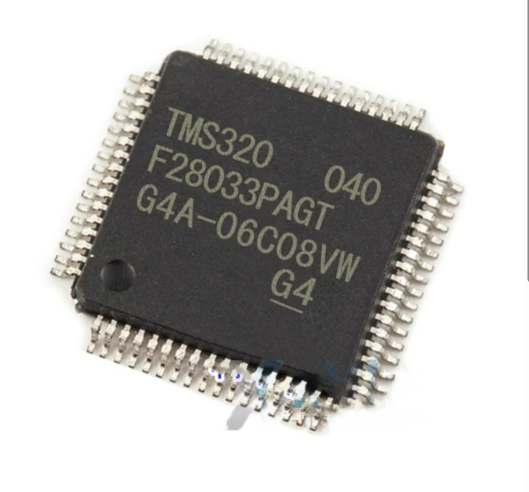
obnova DSP TEXAS INSTRUMENT zabezpečená MCU TMS320F28033 vestavěná data flash paměti je proces prolomení šifrovaného ochranného systému DSP mikrokontroléru TMS320F28033 a následného přenosu binárního souboru nebo zkopírování heximálního zdrojového kódu do nového mikroprocesoru pro klonování TMS320F28033;
Unlike the 281x devices, there are no dedicated pins for the external interrupts. Rather, any Port A GPIO pin can be configured to trigger any external interrupt.
The 280x can be clocked by an external oscillator or by a crystal attached to the on-chip oscillator circuit. A PLL is provided supporting up to 10 input-clock-scaling ratios.
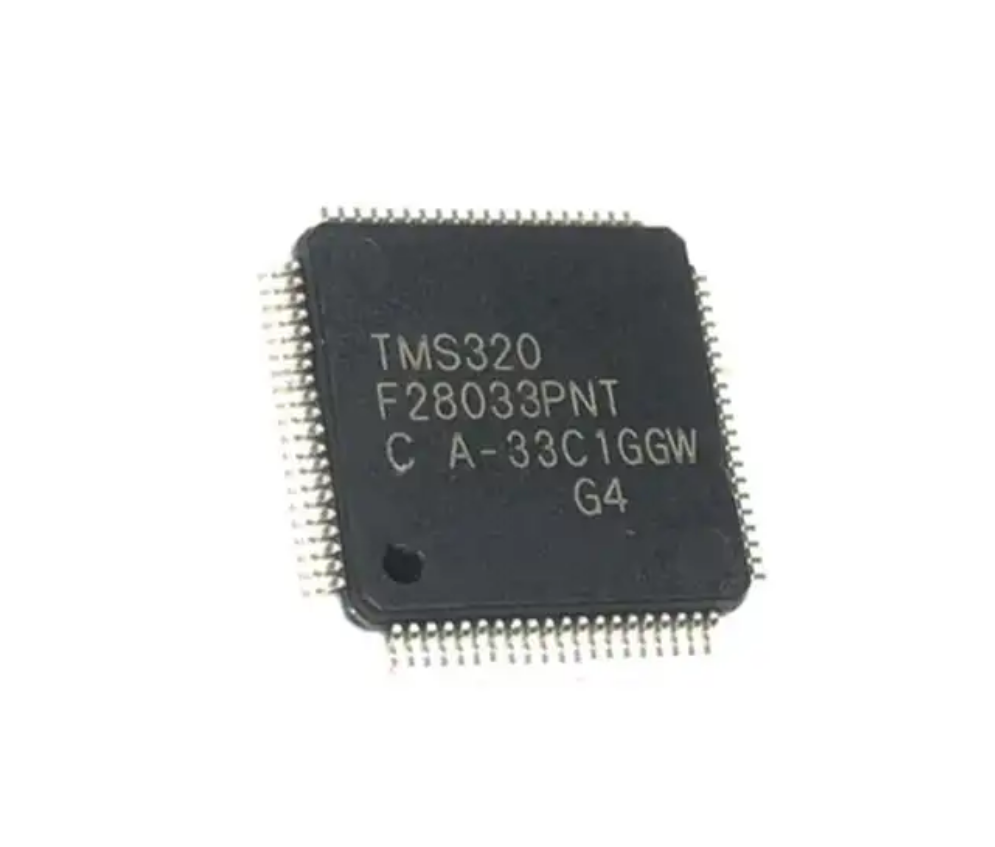
recuperarea datelor încorporate în memoria flash DSP TEXAS INSTRUMENT securizată MCU TMS320F28033 este un proces de spargere a sistemului de protecție criptat al microcontrolerului DSP TMS320F28033 și apoi transferați fișierul binar sau copiați codul sursă heximal pe noul microprocesor pentru clonarea TMS320F28033;
The PLL ratios can be changed on-the-fly in software, enabling the user to scale back on operating frequency if lower power operation is desired. Refer to the Electrical Specification section for timing details. The PLL block can be set in bypass mode.
Recover DSP TMS320F28032 Microcontroller Flash Memory Firmware
Recover DSP TMS320F28032 Microcontroller Flash Memory Firmware needs to firstly crack dsp tms320f28032 mcu security system by locating the security code;
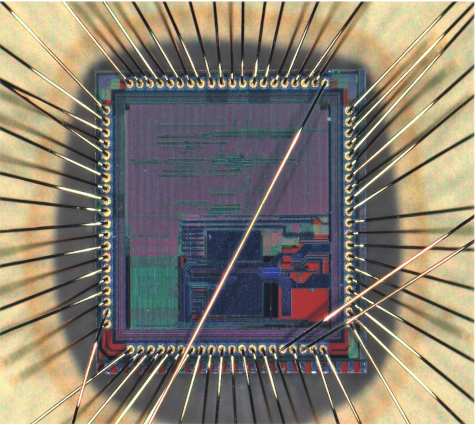
The PIE block serves to multiplex numerous interrupt sources into a smaller set of interrupt inputs. The PIE block can support up to 96 peripheral interrupts. On the 280x, 43 of the possible 96 interrupts are used by peripherals.
The 96 interrupts are grouped into blocks of 8 and each group is fed into 1 of 12 CPU interrupt lines (INT1 to INT12). Each of the 96 interrupts is supported by its own vector stored in a dedicated RAM block that can be overwritten by the user.
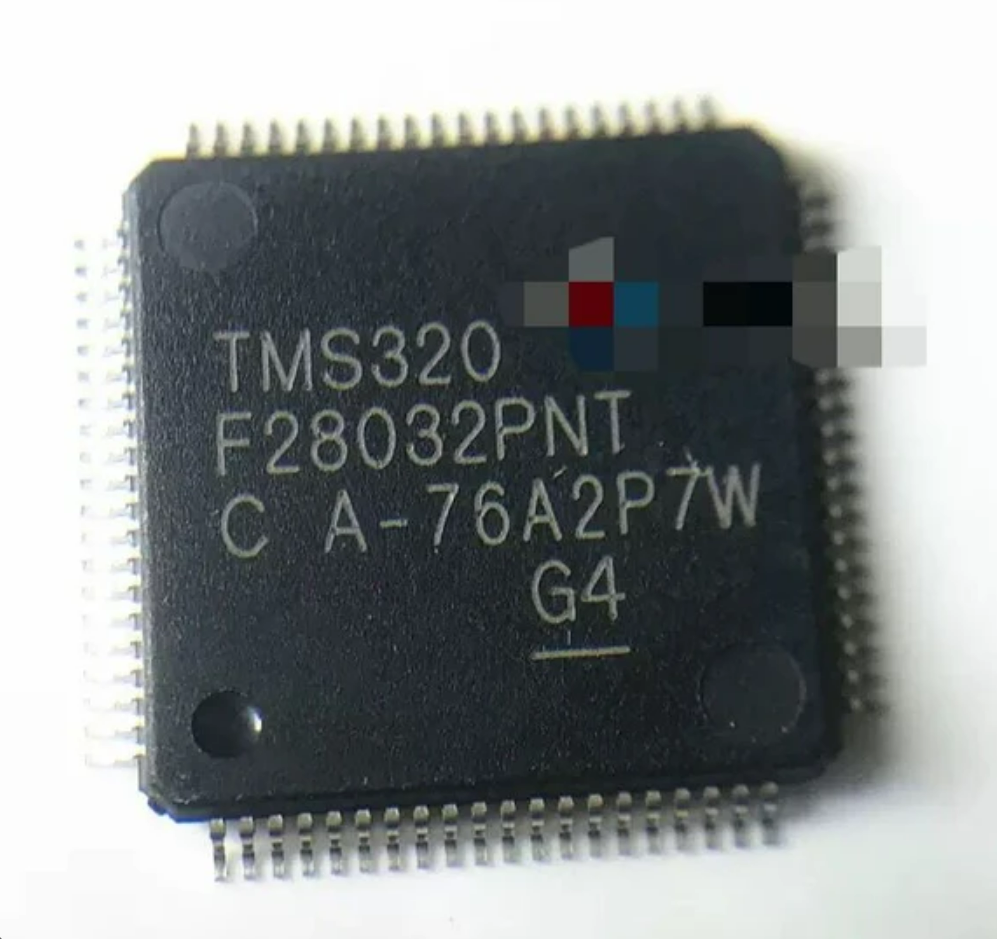
ochrana před čtením DSP TMS320F28032 mikrokontrolér vestavěný firmware flash paměti musí nejprve prolomit zamčený bezpečnostní systém čipu DSP TMS320F28032 MCU umístěním bezpečnostního bitu, poté extrahovat binární soubor nebo heximální data z mikroprocesoru TMS320F28032 a zkopírovat zdrojový kód na nový čip;
The vector is automatically fetched by the CPU on servicing the interrupt. It takes 8 CPU clock cycles to fetch the vector and save critical CPU registers which can be used for restoring tms320f28027 flash binary. Hence the CPU can quickly respond to interrupt events. Prioritization of interrupts is controlled in hardware and software. Each individual interrupt can be enabled/disabled within the PIE block.
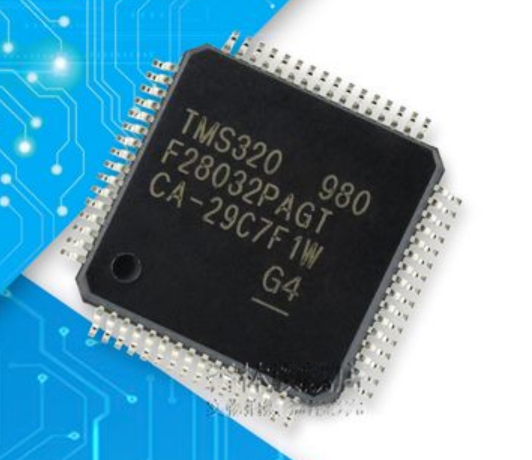
citirea de protecție a microcontrolerului DSP TMS320F28032, memoria flash încorporată, firmware-ul încorporat trebuie să spargă mai întâi sistemul de securitate blocat al cipului DSP TMS320F28032 MCU prin localizarea bitului de securitate, apoi să extragă fișiere binare sau date heximale din microprocesorul TMS320F28032 și să copieze codul sursă pe noul cip;
Attack DSP TMS320F28031 Microprocessor Security System
Attack DSP TMS320F28031 Microprocessor Security System is a process to crack mcu tms320f28031 tamper resistance and extract MCU code from flash and rom memory;

The 280x devices support high levels of security to protect the user firmware from being reverse engineered. The security features a 128-bit password (hardcoded for 16 wait-states), which the user programs into the flash.
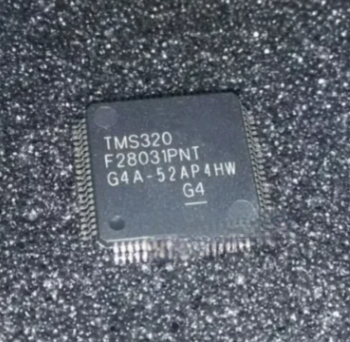
recuperați sistemul de securitate cu microprocesor criptat DSP TMS320F28031 este un proces de decapsulare a pachetului de siliciu al microcontrolerului blocat TMS320F28031 și extragerea firmware-ului încorporat al programului binar sau al software-ului heximal din codul sursă securizat al MCU TMS320F28031 din memoria flash și rom;
One code security module (CSM) is used to protect the flash/OTP and the L0/L1 SARAM blocks. The security feature prevents unauthorized users from examining the memory contents via the JTAG port, executing code from external memory or trying to boot-load some undesirable software that would export the secure memory contents.
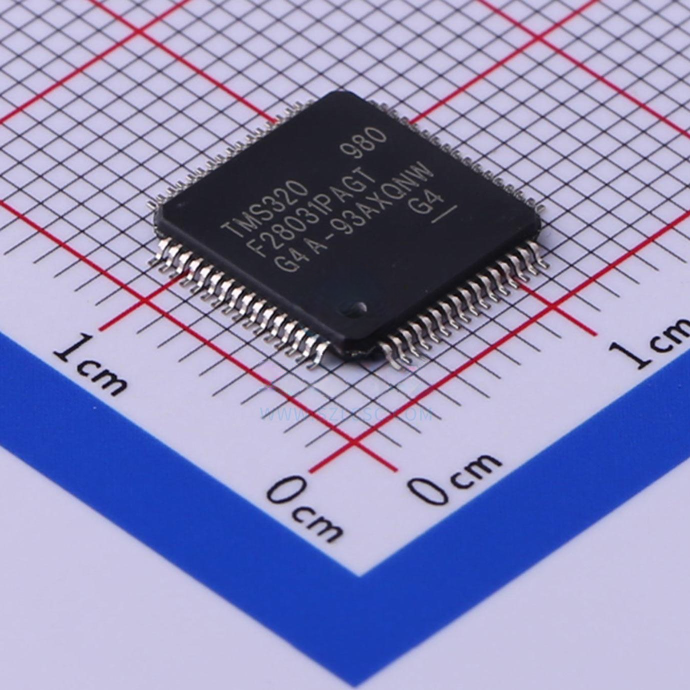
obnovit DSP šifrovaný mikroprocesorový bezpečnostní systém TMS320F28031 je proces pro dekapsulaci zamčeného křemíkového balíčku mikrokontroléru TMS320F28031 a extrahování vestavěného firmwaru binárního programu nebo heximálního softwaru ze zabezpečeného zdrojového kódu MCU TMS320F28031 z paměti flash a ROM;
To enable access to the secure blocks, the user must write the correct 128-bit KEY value, which matches the value stored in the password locations within the Flash to recover dsp tms320f28020 embedded firmware program.