 Recover MCU PIC16F716 Eeprom
 January 14th, 2015 |
  Author:
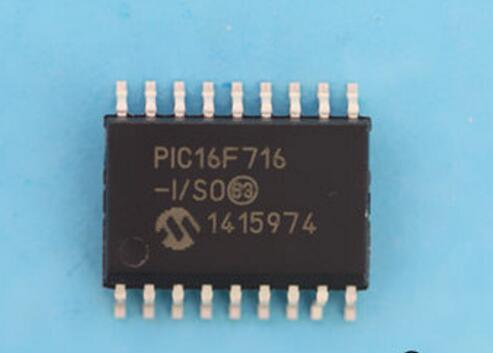
 The PIC16F716 microcontroller remains an indispensable asset across numerous commercial sectors, widely utilized in advanced power conversion systems, motor speed regulators, battery management modules, and small-scale consumer appliances. Renowned for its dedicated Enhanced Capture/Compare/PWM (ECCP) peripheral and high-speed analog-to-digital converter, this efficient embedded system manages complex real-time control loops with minimal external components. The operating logic governing these tasks is housed within a specialized internal flash partition, while vital runtime configurations, sensor calibration data, and unique machine identities are preserved inside the non-volatile eeprom memory layers. Because this underlying programming represents a significant intellectual and financial investment for the original manufacturers, the microcontrollers are almost universally deployed with their protective security fuses fully engaged. This creates a highly restricted, locked environment that renders the internal data completely unreadable via standard diagnostic interfaces.
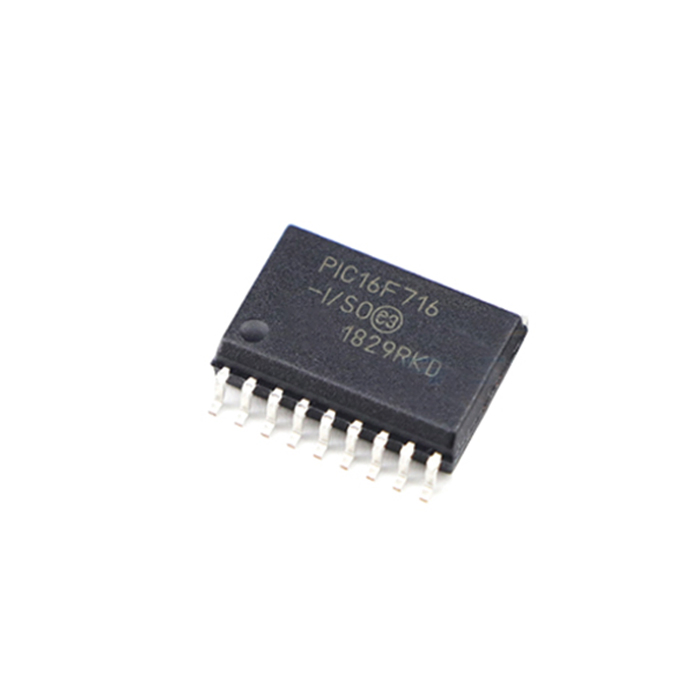
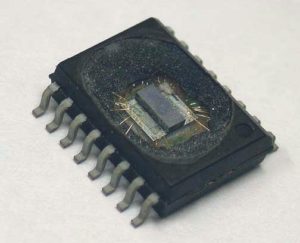
When an essential piece of industrial equipment fails and the original design archive, source code, or compiled firmware is entirely unavailable, standard software troubleshooting cannot bypass these deep hardware restrictions. Our specialized engineering laboratory offers a reliable, non-destructive path to navigate these barriers and successfully recover MCU PIC16F716 eeprom files. Overcoming these hardware-level security measures demands an intricate, physical approach. To access the internal structure safely, technicians carefully decapsulate the outer plastic or ceramic molding using specialized laboratory equipment, bringing the microscopic silicon die into view. Once exposed, precision micro-probing instruments or controlled electrical stimulus are deployed to decode the physical states of the memory arrays. Engineers carefully attack the embedded configuration bits that dictate read restrictions, allowing us to safely break through the chip’s internal defense gates. This controlled process makes it possible to hack past the restriction logic, retrieve the raw binary architecture, and extract the complete heximal asset seamlessly.
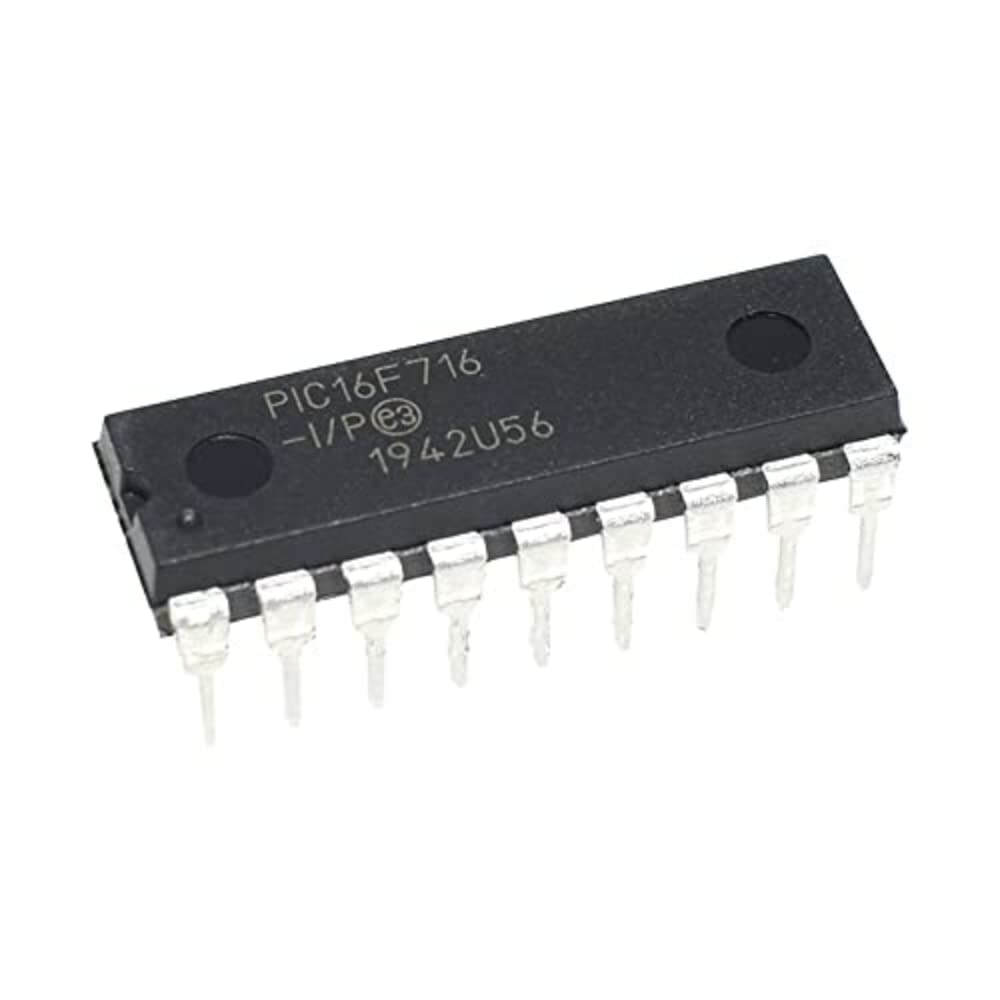
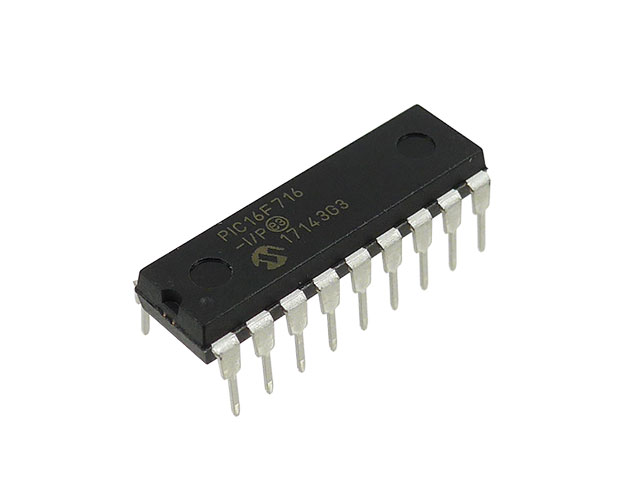
Microcontroller Core Features:
· High-performance RISC CPU
· Only 35 single-word instructions to learn
– All single-cycle instructions except for program branches which are two-cycle
· Operating speed: DC – 20 MHz clock input DC – 200 ns instruction cycle
· Interrupt capability (up to 7 internal/external interrupt sources)
· 8-level deep hardware stack
· Direct, Indirect and Relative Addressing modes
Special Microcontroller Features
· Power-on Reset (POR)
· Power-up Timer (PWRT) and Oscillator Start-up Timer (OST)
· Watchdog Timer (WDT) with its own on-chip RC oscillator for reliable operation
· Dual level Brown-out Reset circuitry
– 2.5 VBOR (Typical)
– 4.0 VBOR (Typical)
· Programmable code protection
· Power saving Sleep mode
· Selectable oscillator options
· Fully static design
· In-Circuit Serial Programming (ICSP™)
CMOS Technology
· Wide operating voltage range:
– Industrial: 2.0V to 5.5V
– Extended: 3.0V to 5.5V
· High Sink/Source Current 25/25 mA
· Wide temperature range
– Industrial: -40°C to 85°C
– Extended: -40°C to 125°C
Low-Power Features:
· Standby Current:
– 100 nA @ 2.0V, typical
· Operating Current:
– 14 µA @ 32 kHz, 2.0V, typical
– 120 µA @ 1 MHz, 2.0V, typical
· Watchdog Timer Circuit:
– 1 µA @ 2.0V, typical
· Timer1 Oscillator Current:
– 3.0 µA @ 32 kHz, 2.0V
Peripheral Features:
· Timer0: 8-bit timer/counter with 8-bit prescaler
· Timer1: 16-bit timer/counter with prescaler can be incremented during Sleep via external crystal/clock
· Timer2: 8-bit timer/counter with 8-bit period register, prescaler and postscaler
· Enhanced Capture, Compare, PWM module:
– Capture is 16-bit, max. resolution is 12.5 ns
– Compare is 16-bit, max. resolution is 200 ns
– PWM maximum resolution is 10-bit
– Enhanced PWM:
– Single, Half-Bridge and Full-Bridge modes
– Digitally programmable dead-band delay
– Auto-shutdown/restart
· 8-bit multi-channel Analog-to-Digital converter
· 13 I/O pins with individual direction control
· Programmable weak pull-ups on PORTB
The fundamental purpose of performing this meticulous micro-engineering analysis is to insulate enterprises from the catastrophic downtime and massive financial overhead caused by obsolete hardware. When a critical control board in an assembly line or a medical power supply becomes unresponsive, trying to reverse-engineer and rewrite the entire firmware system from scratch can trigger months of speculative development and testing. By utilizing our specialized hardware extraction workflows, engineering teams can cleanly duplicate the exact, bit-perfect configuration of a failing component. This operational payload can then be deployed to clone the asset onto fully functional, modern replacement silicon. The final delivered program file ensures that the replacement microcontroller behaves exactly like the original, maintaining full system timing, peripheral behaviors, and critical operating thresholds without variance.
Maximum Value for End-User Operations
The ultimate benefit for the end user is a predictable, highly efficient recovery pipeline that transforms an unreadable, secured piece of legacy silicon back into an accessible and maintainable corporate asset. Rather than writing off an entire multi-million dollar machinery setup due to a single protected or encrypted integrated circuit, our clients gain total transparency and control over their underlying firmware infrastructure. Our service bridges the gap between old-world engineering dependability and modern system maintenance requirements, ensuring your day-to-day industrial operations remain fully functional, optimized, and entirely insulated from the risks of unexpected chip-level obsolescence.
 Posted in Recover Chip