 Attacking ATmega328P Lock-Bit Protection: How the Fuse and Lock Bytes Work
 October 22nd, 2026 |
  Author:
 The ATmega328P is the chip most people have programmed without ever thinking about its protection — it sits at the heart of countless Arduino-class boards. But the moment a product ships, that same chip’s lock bits become the thing standing between an engineer and the firmware they wrote. This article explains precisely how ATmega328P protection is implemented, and what “attacking” it actually means at the technical level.
The part in context
The ATmega328P is an 8-bit AVR microcontroller with 32 KB of flash, 2 KB of SRAM, and 1 KB of EEPROM. It is programmed in-system over the ISP (In-System Programming) interface — the same SPI-based interface used to flash it in the first place. Protection on this part is not a single switch but a combination of fuse bytes and lock bits, and understanding the difference is the whole game.
The mechanism is consistent across the AVR family, so the same reasoning carries over to the ATmega32A and the ATmega324A.
Fuses vs lock bits
These two are often conflated, but they do different jobs:
- Fuses configure the device: clock source and prescaler, brown-out detection level, bootloader behaviour, EEPROM preservation on chip erase. They are configuration, not security.
- Lock bits are the security mechanism. They control whether the flash and EEPROM can be read back, and whether further programming is allowed.
The ATmega328P has two lock bits, LB1 and LB2, plus a set of boot lock bits (BLB0/BLB1) that protect the bootloader section specifically. Their states combine into three protection modes:
| LB2 | LB1 | Protection mode | Effect |
| 1 | 1 | No protection | Flash and EEPROM fully readable and writable |
| 1 | 0 | Further programming disabled | Read allowed, but no further writes |
| 0 | 0 | Further programming and verification disabled | Read-back blocked entirely |
That last row is the “locked” state everyone cares about: the ISP interface will no longer return flash contents, and only a full chip erase can return the part to a usable state — which destroys the program.
How the lock is enforced
The lock bits live in a dedicated lock-byte location in the flash, and the AVR core and the programming interface both consult them. When verification is disabled, the ISP interface simply refuses read commands. Crucially, this is enforced by the chip’s own logic, not by the programmer — no ISP programmer, however capable, can talk the chip into returning locked flash.
The interaction with chip erase is the detail that matters: a full erase clears the lock bits back to unprotected. That is by design — it lets a locked part be reused — but it means the original program is gone the moment you take that route.
What “attacking” means technically
Because the lock is enforced in silicon, the approaches fall into recognisable technical categories rather than “tricks”.
- Interface-level study. At the “further programming disabled, read allowed” state, the flash is still readable — the protection is only against modification. Recognising which lock state a device is in is the first step, and it is read directly from the lock bits.
- Fault-injection study. The lock check is a logic decision inside the chip. Introducing precisely timed disturbances — voltage dips on VCC, or clock glitches during the verification sequence — can cause the check to be evaluated incorrectly for a single cycle. These techniques are non-invasive, but they depend on silicon revision and are not universally reliable.
- Invasive analysis. When the protection cannot be bypassed electrically, the package can be decapsulated and the flash array read directly with a microprobe. This is the most expensive approach and destroys the part. The same decapsulation workflow is described in PIC16F877A die exposure.
Each of these is the subject of legitimate security research and failure analysis, and each is bounded by the same practical constraint: the goal is recovery of a customer’s own intellectual property, undertaken with documented authorisation.
Why engineers encounter locked ATmega328P devices
The scenarios are mundane rather than exotic: a contract manufacturer held the only compiled image, an engineering laptop died with the project archive on it, or a product line outlived the company that designed it. In all of these the device in hand is the last surviving copy of the program, and the lock bits stand between the engineer and recovery.
FAQ
Can the lock bits be cleared without erasing the flash? No. On the ATmega328P, clearing the lock bits to an unprotected state requires a chip erase, which also clears the flash. Any approach that preserves the program has to bypass the check rather than disable it.
Do fuses protect the firmware? No. Fuses configure the device; they are not a security boundary. The lock bits are.
Does the bootloader change the picture? It adds a second protected region. The boot lock bits protect the bootloader section independently of the main lock bits, so a device may be readable in the main array but not in the boot section, or vice versa.
Conclusion
Protection on the ATmega328P is a small, precise mechanism — two lock bits and a set of boot lock bits, enforced by the chip itself, with a chip erase as the only sanctioned reset. Understanding that structure is what makes the difference between guessing at a locked device and reasoning about it: knowing which state it is in, what that state actually blocks, and which technical avenues remain.
 Posted in
Decoding PIC18F4550 Firmware: From Hex File to Readable Assembly
A .hex file is not a program in any human sense — it is an address-to-bytes map. Decoding a PIC18F4550 firmware means turning that map back into something an engineer can reason about: instructions, routines, data structures, and eventually recognisable behaviour. This article explains what that process actually involves on the PIC18 architecture and where its limits lie.
The part in context
The PIC18F4550 is an 8-bit microcontroller with 32 KB of flash, 2048 bytes of RAM, 256 bytes of EEPROM, and a USB 2.0 full-speed interface. It is a popular choice for USB-connected industrial and consumer devices, which is one reason its firmware so often outlives the team that wrote it.
Other members of the same family follow closely related protection and extraction patterns, so the workflow described here transfers almost unchanged — see PIC18F4515 firmware extraction and PIC18F45K22 code protection for those comparisons.
What “decoding” really means
Decoding is a chain of translations, and each link loses something:
| Stage | Input | Output | What is lost |
| Disassembly | Raw bytes | Assembly mnemonics | Variable names, comments, structure |
| Control-flow recovery | Assembly | Functions, branches, loops | Original intent |
| Decompilation | Control flow | C-like pseudocode | Exact types, macros, optimisation artefacts |
The point to internalise: decoding does not recover the original source. It reconstructs an equivalent description. Anyone promising “we give you the original C” is describing decompilation, which produces readable but not identical code.
The PIC18 instruction set
The PIC18 core uses a 16-bit instruction word, with most instructions occupying a single word and a few (such as MOVFF, GOTO, CALL) taking two words. Instructions operate on a register file organised into banks, accessed through the BSR register and the access bit. This banked addressing is the single biggest source of confusion when reading PIC18 disassembly: the same instruction means different things depending on which bank is currently selected.
Understanding the bank state is therefore part of decoding, not an afterthought — a disassembler that ignores banking produces plausible-looking but wrong output.
The toolchain
Decoding is normally done with a disassembler that understands the PIC18 encoding, optionally followed by a decompiler:
- Disassemblers map opcodes to mnemonics and resolve addresses. Microchip’s own toolchain understands the family natively; general-purpose tools such as Ghidra can be taught the PIC18 encoding.
- Decompilers attempt to lift the assembly into C-like code. Results vary widely in readability and should be treated as a starting point, not a deliverable.
The practical workflow
A competent decode follows a sequence rather than a single pass.
- Identify the vector table. The reset vector and interrupt vectors tell you where execution begins and how the device responds to events. On the PIC18F4550, high- and low-priority interrupt vectors are separate, so both must be examined.
- Map the peripherals. Firmware is mostly about configuring and servicing peripherals. Matching register addresses in the disassembly to the datasheet’s SFR map quickly turns anonymous memory writes into “sets up Timer1” or “configures USB”.
- Recover control flow. Follow calls and branches to reconstruct functions. USB firmware in particular has a recognisable structure around endpoint handling and the standard request handlers.
- Annotate. Naming functions and constants as their purpose becomes clear is what turns a wall of assembly into something maintainable.
Why engineers decode PIC18F4550 firmware
The reasons are practical. A device in the field fails and the source is unavailable; a legacy product must be maintained but the original contractor is gone; a firmware audit is required to confirm what a device actually does; or a migration to a newer part needs the existing behaviour understood first. In each case, decoding is the step that makes the firmware legible again.
Because decoding is interpretive work rather than a fixed procedure, the quality of the result depends heavily on what the engineer already knows about the part. Reading a decode of a related device first is often the fastest way to learn the idioms: PIC18F45K80 flash recovery covers the same core with a different protection scheme.
Limits worth stating upfront
- Optimisation obscures structure. Heavily optimised code inlines functions and reuses registers, producing decompiled output that is correct but hard to read.
- No symbols means no names. Without a map file, every variable is an address and every function is a number until a human assigns meaning.
- Data is not code. Tables, strings, and lookup arrays sit in the same address space; mistaking one for instructions produces nonsense that looks like bugs.
FAQ
Does decoding recover the original source code? No. It produces an equivalent assembly listing and, with decompilation, C-like pseudocode. The original source — with its names, comments, and structure — is not stored on the device.
Can a PIC18F4550 be decoded if it is code-protected? Only after the protected image has been recovered. Decoding operates on the binary; getting the binary out of a protected part is a separate problem, and it is the harder of the two.
Why does the disassembly look wrong in places? Most often because of bank switching. PIC18 instructions are bank-relative, so a disassembler must track the BSR state to interpret them correctly.
Conclusion
Decoding PIC18F4550 firmware is a structured reconstruction, not a magic recovery of source. It depends on understanding the 16-bit instruction word, the banked register file, and the peripheral map, and it succeeds when the engineer treats the output as evidence to be interpreted rather than a document to be trusted.
Cloning an MSP430F149 Program: When and Why Engineers Do It
“Cloning” carries a bad reputation, largely because it is often described without context. In embedded engineering, cloning an MSP430F149 program is usually a maintenance activity: reproducing a program the requester already owns onto new silicon because the original is unavailable in some other form. This article explains the legitimate scenarios, the protection mechanism involved, and what a technically sound clone requires.
The part in context
The MSP430F149 is a 16-bit RISC microcontroller from Texas Instruments with 60 KB of flash and 2 KB of RAM. It has been in service for decades across industrial instrumentation, metering, and medical equipment, which is precisely why so many of them are still running in the field long after their design teams have dispersed. It is programmed and debugged over JTAG, and its protection mechanism is the JTAG fuse.
The same mechanism recurs across the family, so the practical work is nearly identical from one part number to the next — MSP430F4361 flash recovery walks through a sibling device with the same fuse-based lock.
Why cloning comes up at all
The reasons are consistently practical rather than adversarial:
- Legacy production continuity. A board is still manufactured or repaired, but the original programming file is lost. The programmed chip is the only remaining copy.
- Second sourcing. A customer needs the same behaviour on replacement hardware after the original part becomes unavailable or a supplier changes.
- Volume reproduction. A small batch of spares is needed for equipment that will otherwise be scrapped.
- Verification. A manufacturer wants to confirm that a batch of devices carries the correct, authorised program.
In every case the object is the requester’s own design, and legitimate work is gated on ownership or written authorisation.
How the MSP430F149 protects itself
The MSP430F149 uses a JTAG fuse rather than a flash-based lock-byte scheme. When the fuse is intact, JTAG gives full access: memory can be read, written, and stepped through. When the fuse is blown, the JTAG interface no longer provides access to the memory — the device is effectively closed to the debugger.
Two properties matter:
- Blowing the fuse is irreversible on the device. There is no documented way to restore JTAG access once the fuse is blown.
- The fuse is a separate physical mechanism from the flash array. The program is intact; it is the access path that has been severed. This is why invasive techniques target the fuse or the debug logic rather than the memory cells.
The consequence is that a clone project sometimes begins with a recovery project. If the fuse is blown and the program does not exist elsewhere, the first task is getting the image back at all — breaking MSP430F4361 protection covers what that involves on a device with the same fuse arrangement.
What a technically sound clone requires
A clone that actually works on real hardware involves more than copying the flash contents.
| Step | What it involves | Why it matters |
| Recover the image | Reading the 60 KB flash, if the fuse allows, or recovering it by other means | The program itself |
| Capture device configuration | Clock (DCO) calibration, interrupt vectors, any info-memory values | The MSP430’s behaviour depends on calibrated clock settings |
| Program new devices | Write flash and info memory to blank parts | Reproduce the image |
| Functional verification | Run on a real board, check timing and peripherals | A byte match is not proof of behaviour |
The DCO calibration point deserves emphasis: the MSP430F149 stores factory calibration values for its digitally controlled oscillator in the information memory. Those values are part-specific. A clone that copies the main flash but ignores calibration can boot at the wrong frequency — subtle, hard to diagnose, and easy to miss if verification is only a checksum.
Smaller members of the family expose the same issue in a starker form: on a part with very little flash, the calibration constants sit next to the program and are easy to overwrite during a careless write. MSP430G2452 embedded memory recovery is a good example of how tightly program and configuration are packed together on these devices.
The honest caveats
- Cloning is not the same as reverse engineering. A clone reproduces behaviour; it does not explain the design. If the goal is to understand or modify the program, decoding is required.
- A blown JTAG fuse is a real barrier. Unlike some lock-bit schemes, there is no documented erase-and-reuse path that preserves the program after the fuse is blown.
- Value depends on the target. Cloning makes sense when the goal is to keep a known-good product running; it is the wrong tool when the goal is to evolve the design.
FAQ
Can a blown MSP430F149 JTAG fuse be restored? Not by any documented method. Once blown, the device’s JTAG access is permanently closed. Recovery of the program then depends on other techniques.
Is cloning legal? Cloning your own design, or one you have written authorisation for, is a legitimate maintenance activity. The determining factor is ownership of the intellectual property, not the technique.
Why does a cloned device sometimes run at the wrong speed? Almost always because the DCO calibration values in information memory were not reproduced. The clock configuration is part of the program’s behaviour.
Conclusion
Cloning an MSP430F149 program is, in practice, a continuity activity — keeping equipment alive when the original artifacts are gone. Doing it well means treating the flash image, the device configuration, and the clock calibration as one package, and verifying behaviour rather than trusting a checksum.
Nordic NRF52833 MCU Source Code Duplication
Nordic NRF52833 MCU Source Code Duplication: Technical Analysis and Firmware Preservation
Nordic NRF52833 MCU Source Code Duplication is a specialized embedded-system engineering topic involving the analysis, preservation, and authorized reproduction of software information associated with the Nordic Semiconductor nRF52833. The nRF52833 is a multiprotocol 2.4 GHz wireless system-on-chip based on a 64 MHz Arm Cortex-M4 processor with floating-point support. It provides 512 KB Flash and 128 KB RAM, together with Bluetooth Low Energy, Bluetooth Mesh, Thread, Zigbee, 802.15.4, ANT, NFC-A, USB, ADC, PWM, timers, SPI, I2C, UART, and other integrated peripherals. Its combination of processing performance, wireless connectivity, memory capacity, and low-power operation makes it suitable for IoT equipment, industrial sensors, smart-home products, wearable devices, asset tracking systems, building automation, remote controls, and connected measurement equipment. For products already deployed in the field, understanding how the MCU firmware interacts with these integrated resources can be an important part of long-term product maintenance and engineering preservation.
Why Source-Code and Firmware Duplication Can Become Necessary
Embedded products frequently remain in service much longer than their original development environment. During this period, the original source code, software project, firmware backup, engineering archive, or programming documentation may become unavailable. A programmed MCU can consequently become one of the few remaining references to the software behavior of an established product. From an engineering perspective, Nordic NRF52833 MCU Source Code Duplication should not be regarded simply as copying a file. It involves determining what information remains available, understanding the relationship between firmware and hardware, and establishing whether an equivalent software image can be preserved for an authorized replacement or maintenance project.
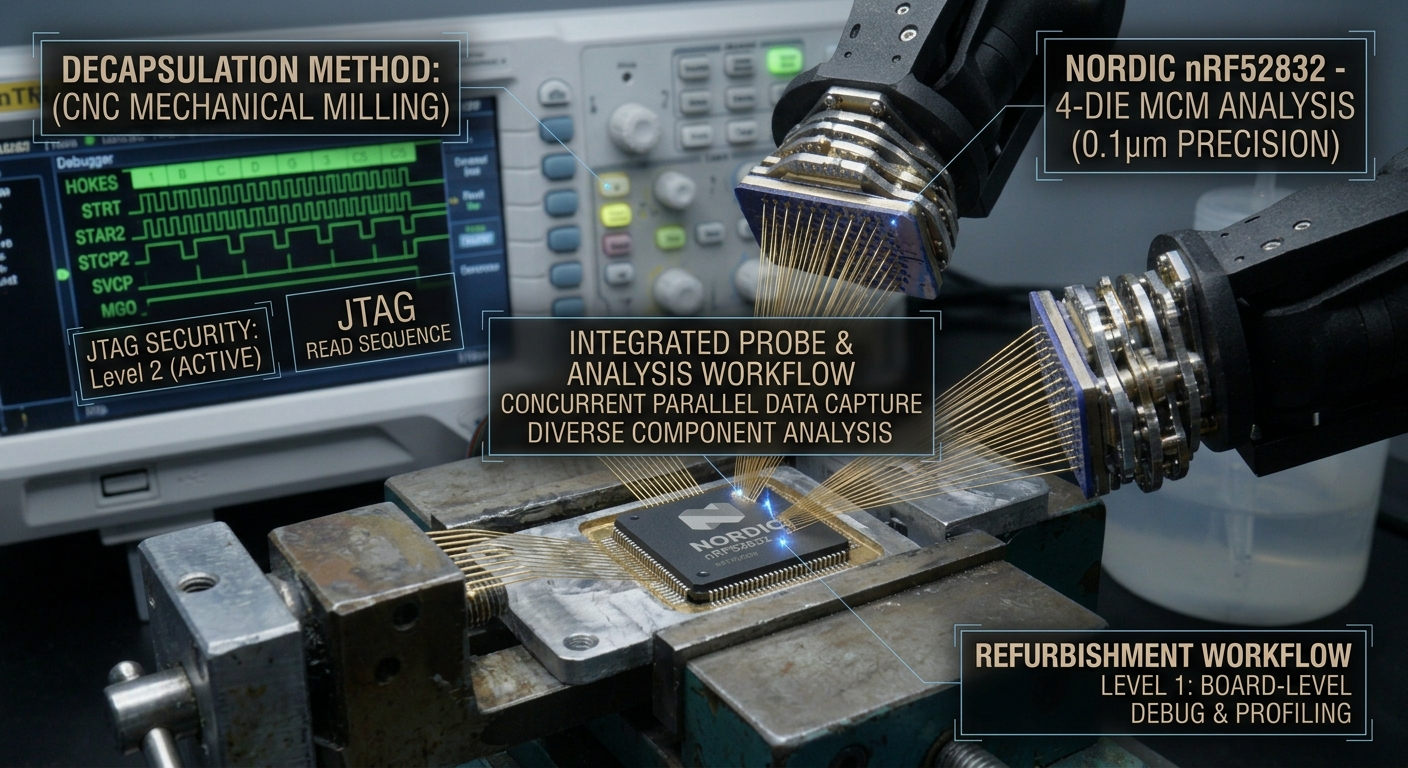
A particular challenge occurs when an nRF52833 has been configured with protective, secured, or locked access settings. Standard debugging or programming access may then be restricted, preventing straightforward inspection of internal memory. Engineers therefore need to establish the protection state before deciding on an appropriate technical route. Depending on the project, the objective may be to preserve a readable firmware image, compare different firmware versions, recover accessible data, or reproduce an existing software configuration on compatible hardware. This approach can reduce unnecessary redevelopment work when the original development resources are no longer available.
Technical Approach to NRF52833 Firmware Analysis
A Nordic NRF52833 MCU Source Code Duplication project generally begins with identification of the exact microcontroller and inspection of the complete electronic assembly. Engineers can examine the PCB layout, power architecture, SWD connections, external components, boot configuration, communication interfaces, and any external flash or eeprom devices. The internal memory arrangement of the nRF52833 is then considered together with the software architecture running on the device.
The next stage is to evaluate whether the available firmware, source code, software, memory, data, or archive information can be accessed and preserved. Where a legitimate firmware image is available, binary analysis can help identify application regions, configuration structures, communication routines, peripheral initialization, and relationships between the software and the physical chip. This information can be useful when developing a compatible replacement or verifying that a duplicated firmware image behaves consistently with the original design.
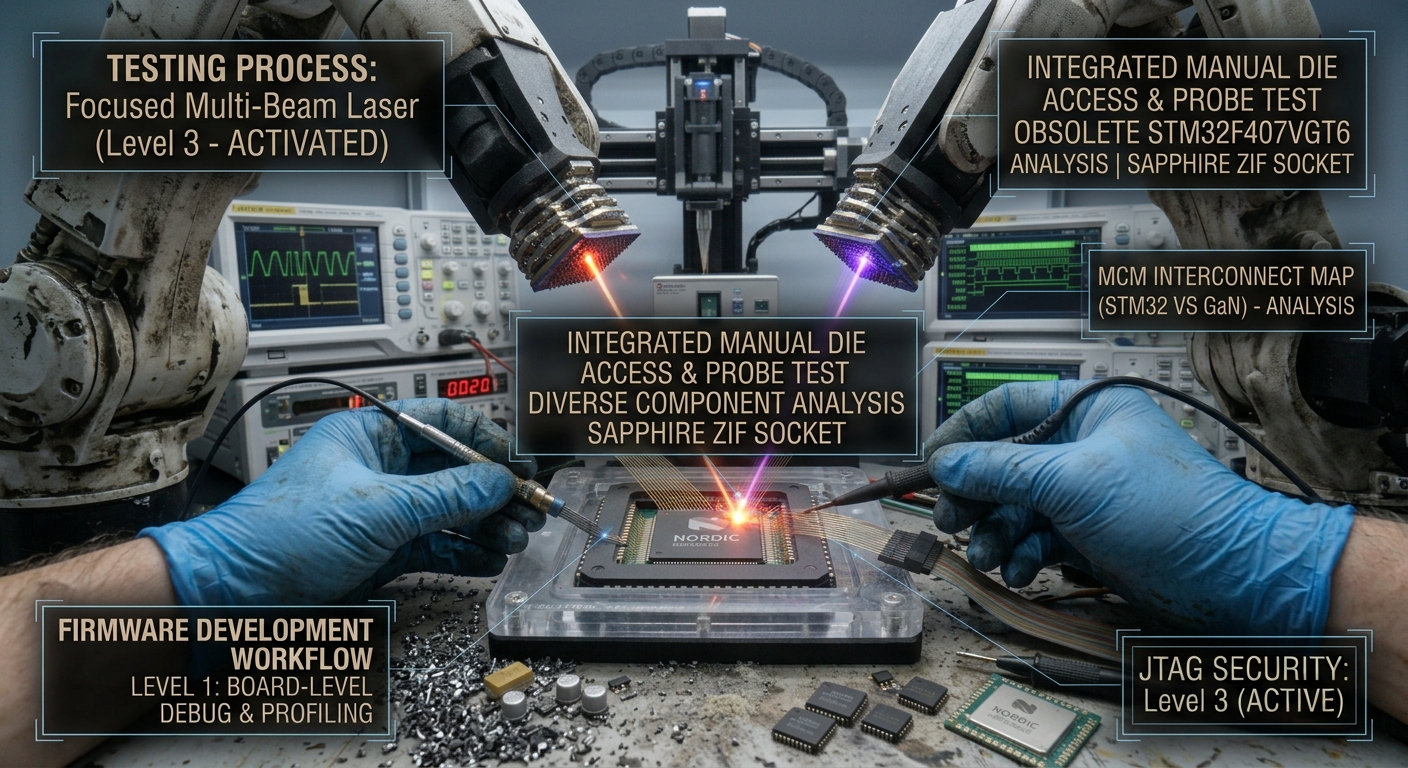
For protective, secured, encrypted, or locked devices, the investigation needs to distinguish between access protection and actual encryption. Technical terminology such as clone, attack, or decapsulate may arise in advanced semiconductor research, but these approaches should not be assumed to provide a universal solution. Any invasive semiconductor analysis should be considered only when technically justified and within the applicable authorization and legal framework. The practical result depends on the exact security configuration, device condition, available interfaces, and information retained inside the MCU.
Firmware Duplication for Embedded Product Continuity
The technical purpose of Nordic NRF52833 MCU Source Code Duplication is ultimately to preserve embedded functionality and support continuity of an electronic product. When an original firmware image can be legitimately obtained, duplication may allow engineers to maintain replacement controllers, compare production revisions, reproduce known software configurations, or investigate differences between functioning and defective boards. Firmware analysis can also help establish how wireless functions, sensors, user interfaces, communication peripherals, and other hardware resources are coordinated by the original software.
Professional MCU analysis can therefore combine hardware inspection, memory evaluation, firmware examination, binary comparison, and engineering documentation. The resulting information may support legacy product maintenance, replacement-board development, troubleshooting, and controlled reproduction of established electronic designs. It is important to recognize that source code and compiled firmware are not interchangeable: a recovered binary normally represents compiled program information rather than the original human-readable development project. Nevertheless, an accessible firmware image can provide valuable technical evidence about the original system.
A structured approach to Nordic NRF52833 MCU Source Code Duplication allows engineers to determine what information is realistically recoverable and how that information can contribute to an authorized engineering project. Rather than assuming that every protected MCU, microprocessor, chip, or IC can be duplicated, the analysis should begin with the actual device architecture and protection configuration. This provides a more reliable foundation for firmware preservation, product restoration, hardware replacement, and long-term support of Nordic-based embedded systems.
Retrieve MCU NRF52832 Source Code
Retrieve MCU NRF52832 Source Code: Technical Analysis and Firmware Preservation
The Retrieve MCU NRF52832 Source code process involves analyzing an embedded wireless system to determine what software and memory information can be preserved from a programmed nRF52832 device. The nRF52832 is a multiprotocol system-on-chip from Nordic Semiconductor, built around a 64 MHz Arm Cortex-M4 processor with floating-point support. Depending on the device variant, it provides either 512 KB Flash with 64 KB RAM or 256 KB Flash with 32 KB RAM. The SoC integrates a 2.4 GHz radio, Bluetooth Low Energy, Bluetooth Mesh, NFC-A, ANT, multiple serial interfaces, PWM, ADC, PDM, I2S, timers, and hardware AES capabilities. These features make the nRF52832 suitable for IoT products, industrial sensor networks, smart-home equipment, building automation, wearable devices, remote controls, computer peripherals, beacons, and other connected electronic products.
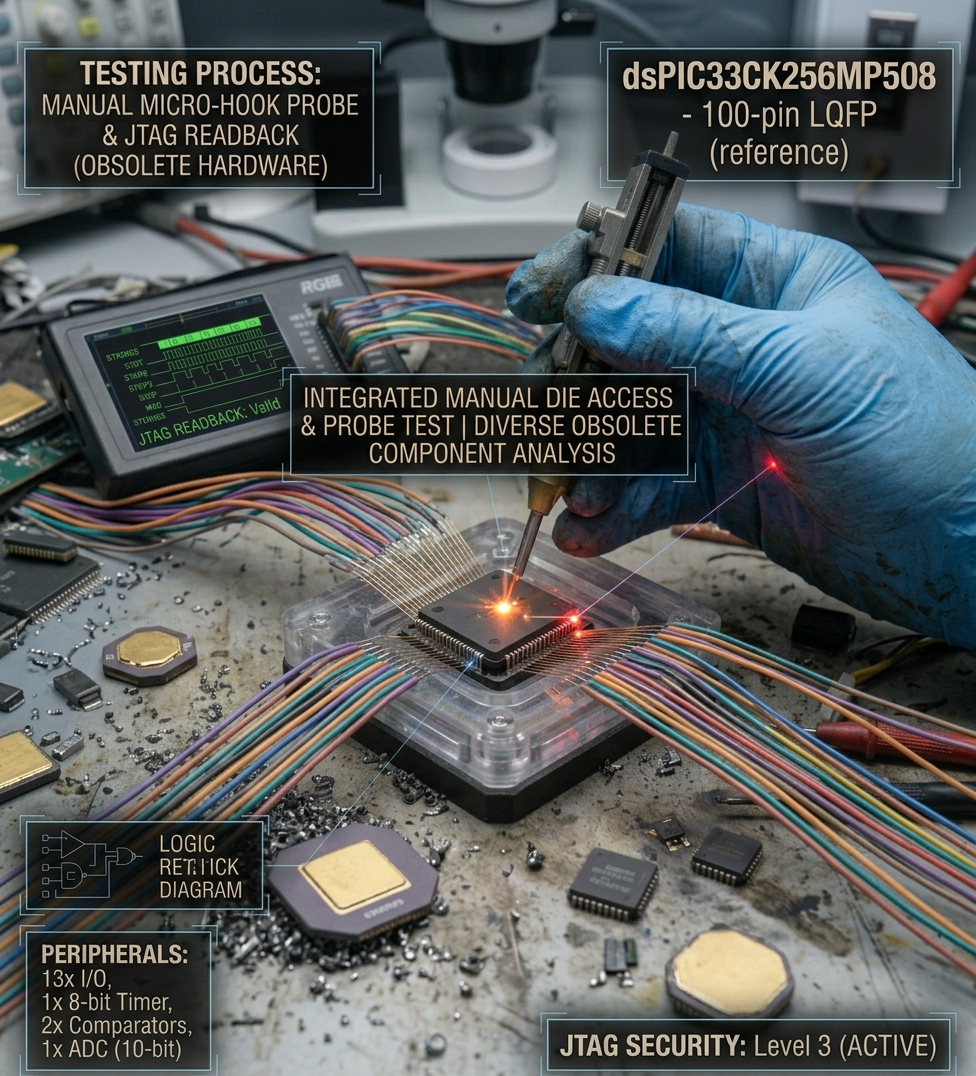
In a mature embedded product, firmware can represent much more than a simple executable program. It may contain application logic, wireless communication behavior, device configuration, calibration information, protocol implementation, and other data required for the system to operate correctly. Over the lifetime of a product, the original source code, development project, software package, engineering archive, or firmware backup may become unavailable. Consequently, investigating whether it is possible to retrieve MCU NRF52832 source code or preserve accessible program information can be valuable for legacy-system analysis, hardware replacement, firmware comparison, product maintenance, and technical restoration. The challenge becomes greater when the device has been configured with protective, secured, or locked access controls. Nordic’s documentation notes that access-port protection can block debugger read and write access to CPU registers and memory-mapped addresses, meaning that ordinary debugging access should not automatically be assumed to provide the original firmware.
Understanding the NRF52832 Memory and Protection Architecture
A technical Retrieve MCU NRF52832 Source code investigation normally starts with identification of the exact nRF52832 variant and examination of the surrounding hardware. Engineers can review the PCB, power arrangement, debug connections, boot configuration, external memories, and communication interfaces before assessing the internal memory architecture. The nRF52832 contains non-volatile flash for code and data storage and RAM for runtime operation; Nordic specifies different Flash/RAM combinations according to the device variant.
The next stage is to understand how the available debug and access mechanisms interact with the security configuration. A locked, secured, or otherwise protective device may behave differently from an unrestricted development device. Consequently, technical analysis should first determine whether accessible firmware, source code, software, memory, data, or other information can be preserved without unnecessarily altering the original hardware. The term readout should therefore be treated as an engineering objective rather than an assumption that all internal contents are accessible.
Technical Methods for Firmware and Source-Code Investigation
For Retrieve MCU NRF52832 Source code, engineers can evaluate available SWD access, device identification information, memory mapping, protection status, and the relationship between application firmware and Nordic software components. The nRF52832 supports SWD and includes a dedicated access-port architecture; Nordic documents that access-port protection can prevent debugger access to CPU registers and memory, while the behavior of protection mechanisms depends on the device build and configuration.
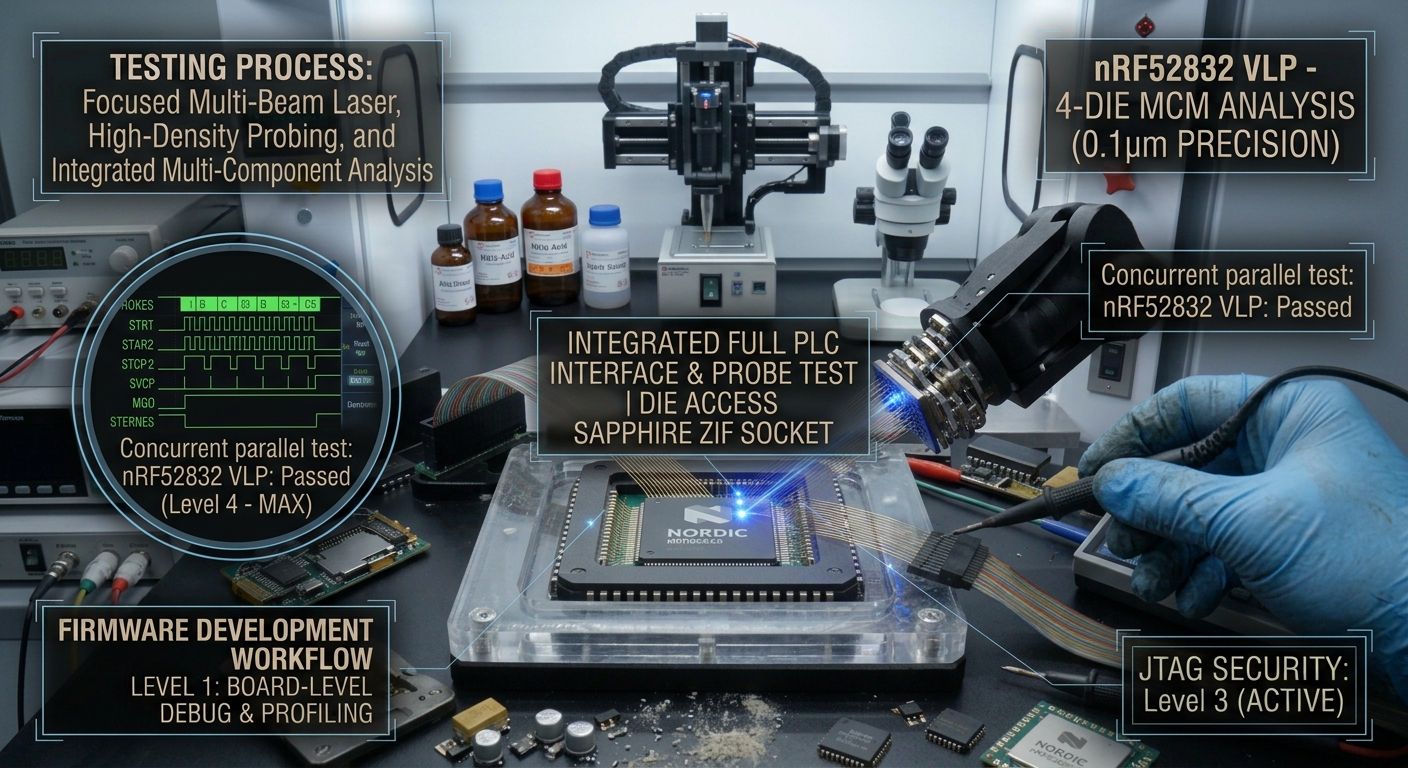
Depending on the authorized technical objective, the investigation may focus on recover, restore, and preserve accessible firmware or flash information. Where the original binary can legitimately be obtained, it can be analyzed as a reference for firmware structure, version comparison, hardware compatibility, or replacement-device development. If protection prevents conventional access, engineers need to distinguish between an access restriction and actual encrypted content. Terms such as decrypt, attack, or clone may appear in technical discussions of protected MCU analysis, but they should not be interpreted as evidence that a particular nRF52832 can always be bypassed or reproduced. More invasive semiconductor techniques such as decapsulate may be considered only in specialized circumstances after conventional engineering evaluation has been exhausted.
Supporting NRF52832 Firmware Preservation
The technical value of Retrieve MCU NRF52832 Source code extends beyond obtaining a single binary file. A recovered or otherwise accessible firmware image can provide engineers with information about wireless behavior, peripheral configuration, memory usage, communication protocols, and interaction between the software and the original PCB. This can be particularly useful when the original development archive has disappeared but an existing product remains available for examination.
A professional MCU analysis process can include hardware inspection, device identification, memory assessment, firmware examination, and documentation of accessible information. Such work can support authorized product maintenance, legacy-device restoration, replacement-board engineering, and preservation of embedded technology. The ultimate result depends on the nRF52832 variant, physical condition, protection configuration, available interfaces, and the information that remains accessible. Therefore, Retrieve MCU NRF52832 Source code should be approached as a structured technical investigation, with realistic expectations about what can and cannot be recovered from a protected device.
Renesas Microcontroller R7FA2L1A92DFL Binary Extraction
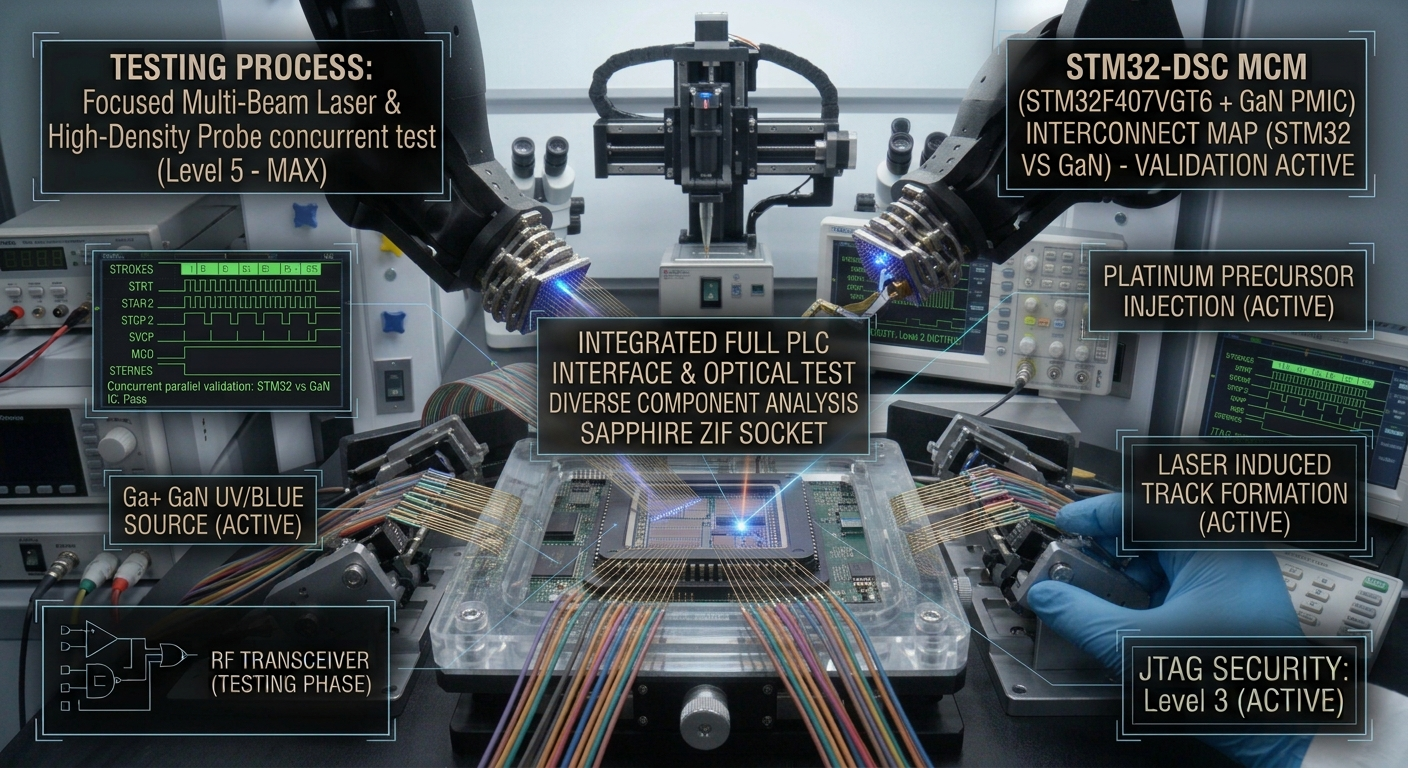
The R7FA2L1A92DFL is a 32-bit Arm Cortex-M23 microcontroller belonging to Renesas Electronics’ RA2L1 family. Operating at up to 48 MHz, this low-power MCU integrates 128 KB of code Flash, 8 KB of data Flash, and 32 KB of SRAM, together with a range of peripheral interfaces and analog functions. Its capabilities include capacitive touch sensing, serial communications, timers, a 12-bit ADC, a DAC, and CAN connectivity, making it suitable for industrial control boards, smart appliances, instrumentation, human-machine interfaces, building automation, sensor systems, and energy-conscious embedded products.
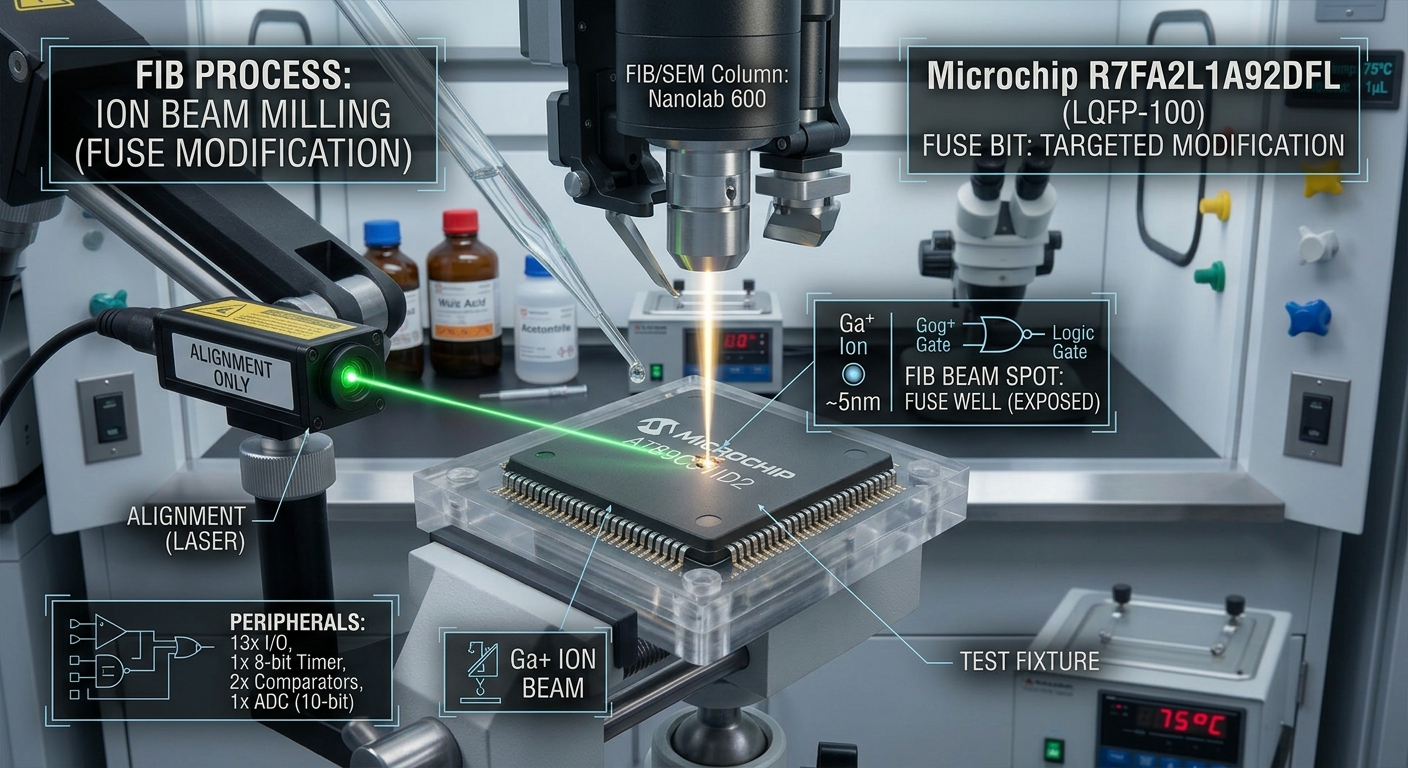
With its combination of processing performance, integrated peripherals, and low-power operation, the R7FA2L1A92DFL provides a practical foundation for compact electronic systems that depend on reliable embedded software.
When an electronic product requires repair, redesign, or continued production but its original development files are missing, the firmware stored inside the microcontroller may become an important source of engineering information. Lost source code, software projects, programming archives, and documentation can make it difficult to reproduce the original functionality or diagnose problems in an existing controller.
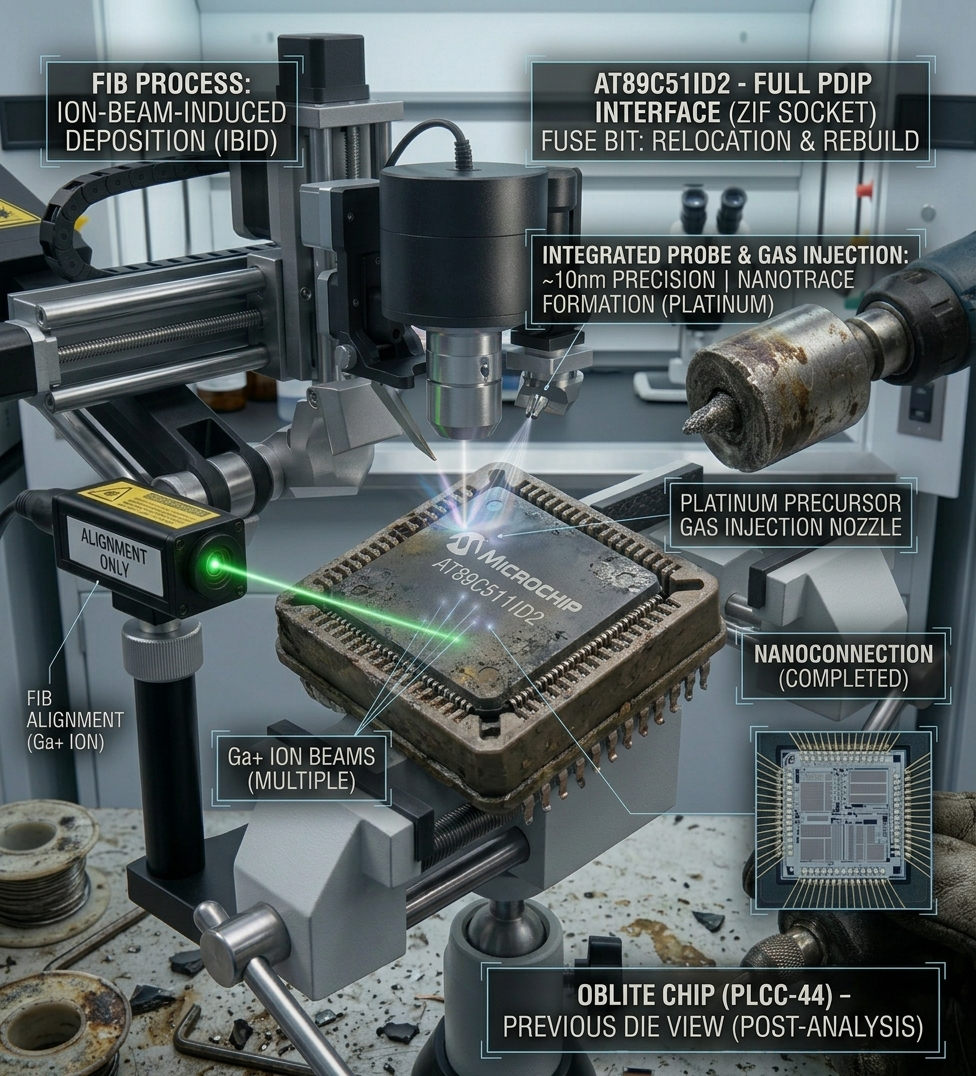
If the MCU is protective, secured, or locked against unauthorized memory access, standard programming interfaces may not permit a complete firmware readout. For authorized product owners and engineering teams, assessing the feasibility of binary extraction can help determine whether recoverable program information is available for maintenance, replacement-board development, product restoration, or compatibility analysis. Understanding the device’s security configuration before beginning recovery work is essential because memory protection may limit access to the original code.
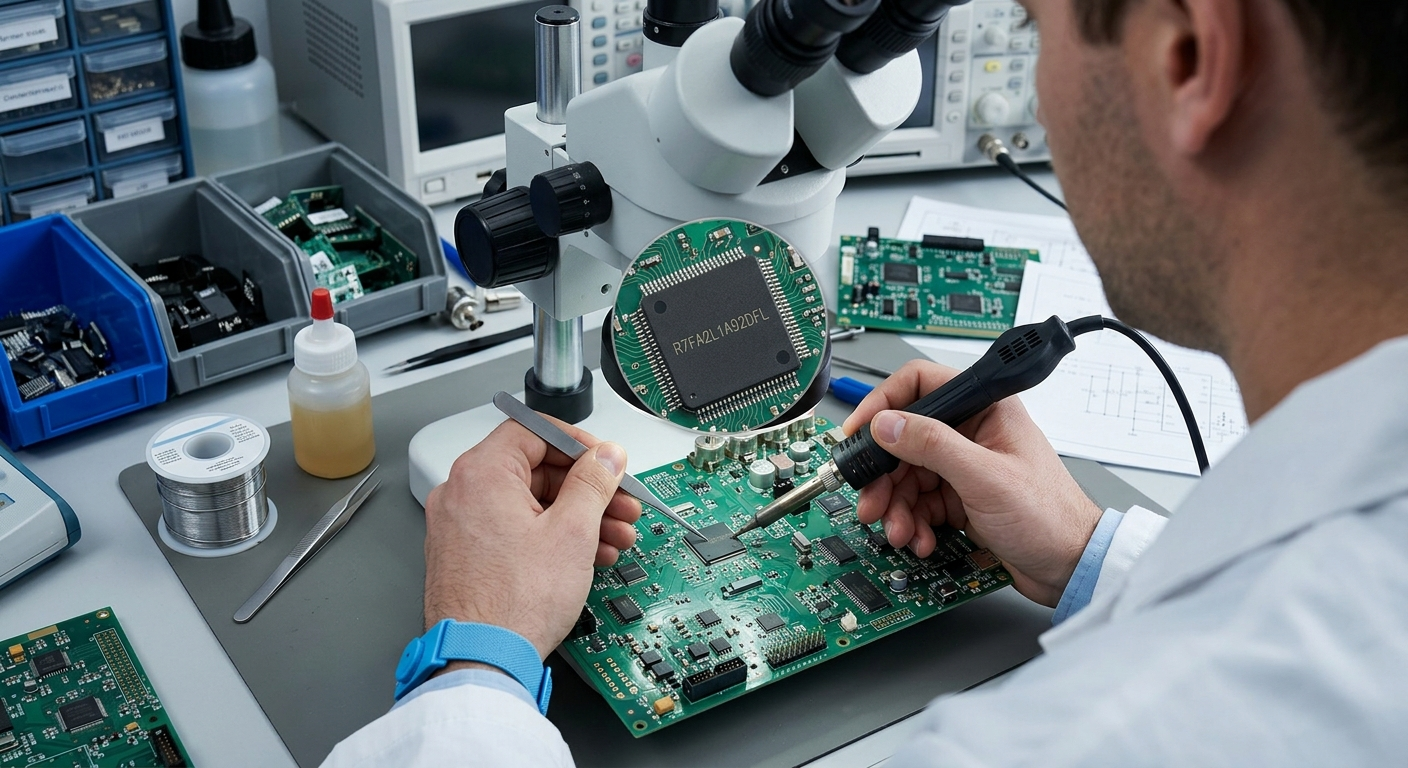
For an R7FA2L1A92DFL binary extraction project, specialists can begin by identifying the exact device variant, examining the circuit board, reviewing available programming and debugging interfaces, and assessing the memory and security configuration. Depending on the target condition, the investigation may determine whether firmware, source code, data, software, memory, archive, flash, or eeprom information can be retrieved, decoded, duplicated, or cloned for authorized engineering purposes. If a protective, secured, encrypted, or locked configuration restricts access, the recovery assessment can investigate supported access procedures and determine whether the relevant protection barrier can be addressed without compromising the original device.
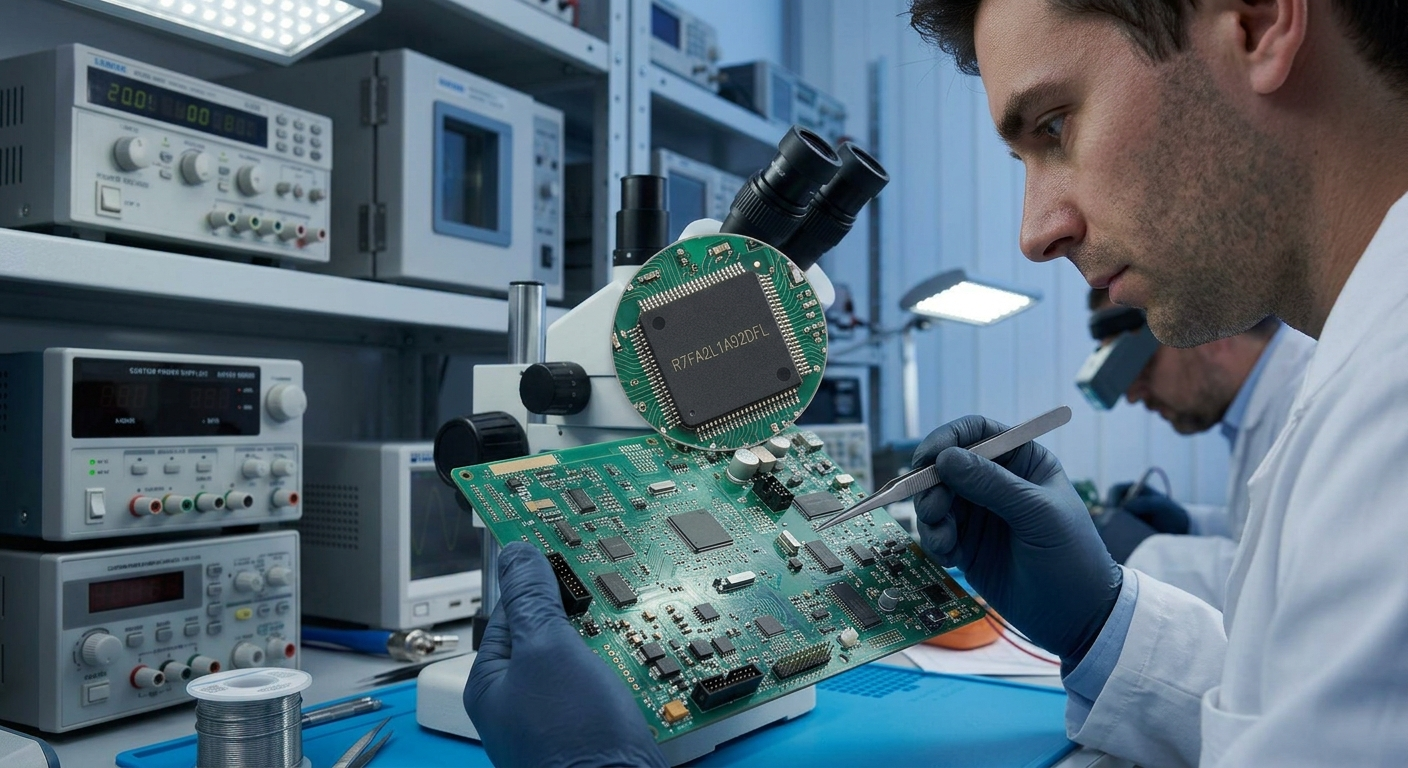
Advanced semiconductor analysis, including controlled decapsulation, may be considered only where technically justified. These methods apply to the relevant microcontroller, microprocessor, MCU, chip, or IC, including devices manufactured by STMicroelectronics and other semiconductor suppliers, but the actual approach must match the specific device architecture. The feasibility of extracting usable data from each R7FA2L1A92DFL depends on its protection settings, physical condition, and accessible interfaces; complete binary recovery cannot be guaranteed.
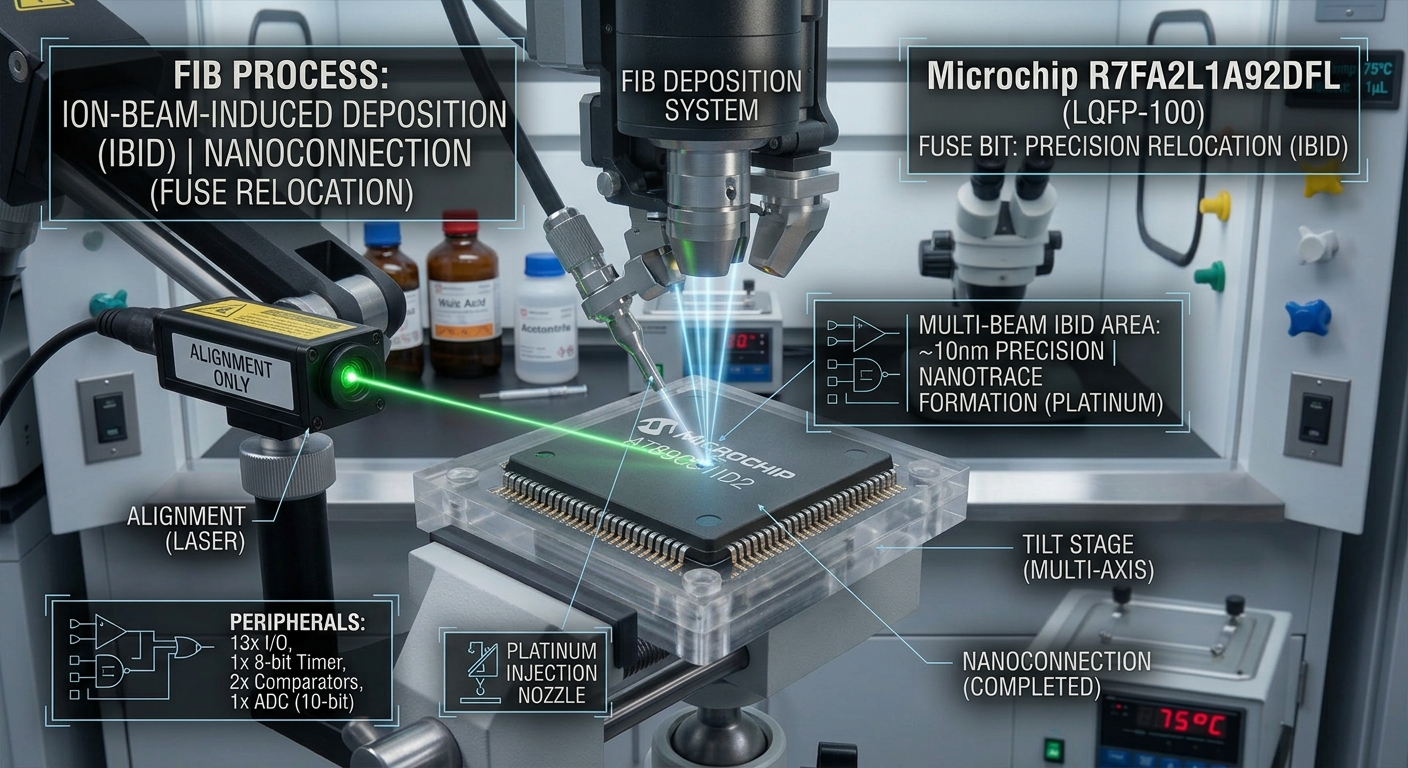
Our Renesas R7FA2L1A92DFL firmware and binary extraction service supports authorized equipment owners, manufacturers, repair providers, and embedded engineering teams seeking to preserve important program information from existing hardware. We can assess the target board, identify the MCU and available interfaces, review its protection configuration, and recommend a technically appropriate recovery strategy.
Where feasible, recovered binary images or accessible memory data can support controller replacement, legacy-product maintenance, hardware redesign, and further engineering analysis. If the original development archive has been lost, our assessment can help establish whether the installed microcontroller offers a practical route to recovering useful program information. Our goal is to help customers preserve valuable embedded software, evaluate realistic recovery options, and extend the service life of established electronic products through a careful, device-specific engineering process.

Break MCU PIC10F200 Program
We can Break MCU PIC10F200 Program, below its the MCU PIC10F200 features for your reference:
Low-Power Features/CMOS Technology:
· Operating Current:
– < 175 ìA @ 2V, 4 MHz, typical
· Standby Current:
High-Performance RISC CPU:
· Only 33 single-word instructions to learn when Break MCU
· All single-cycle instructions except for program
branches, which are two-cycle
· 12-bit wide instructions
· 2-level deep hardware stack
· Direct, Indirect and Relative Addressing modes
for data and instructions
· 8-bit wide data path
· 8 Special Function Hardware registers
· Operating speed:
– 4 MHz internal clock
– 1 ìs instruction cycle if Break MCU
Special Microcontroller Features:
· 4 MHz precision internal oscillator:
– Factory calibrated to ±1%
· In-Circuit Serial Programming™ (ICSP™)
· In-Circuit Debugging (ICD) support
· Power-on Reset (POR)
· Device Reset Timer (DRT)
· Watchdog Timer (WDT) with dedicated on-chip after Break MCU
RC oscillator for reliable operation
· Programmable code protection
· Multiplexed MCLR input pin
· Internal weak pull-ups on I/O pins
· Power-Saving Sleep mode
· Wake-up from Sleep on pin change
– 100 nA @ 2V, typical
· Low-power, high-speed Flash technology:
– 100,000 Flash endurance
– > 40 year retention
· Fully static design
· Wide operating voltage range: 2.0V to 5.5V before Break MCU
· Wide temperature range:
– Industrial: -40°C to +85°C
– Extended: -40°C to +125°C
Peripheral Features (PIC10F200/202):
· 4 I/O pins:
– 3 I/O pins with individual direction control
– 1 input-only pin
– High current sink/source for direct LED drive before Break MCU
– Wake-on-change
– Weak pull-ups
· 8-bit real-time clock/counter (TMR0) with 8-bit programmable prescaler
Peripheral Features (PIC10F204/206):
· 4 I/O pins:
– 3 I/O pins with individual direction control
– 1 input-only pin
– High current sink/source for direct LED drive
– Wake-on-change
– Weak pull-ups
· 8-bit real-time clock/counter (TMR0) with 8-bit programmable prescaler when Break MCU
· 1 Comparator:
– Internal absolute voltage reference
– Both comparator inputs visible externally
– Comparator output visible externally
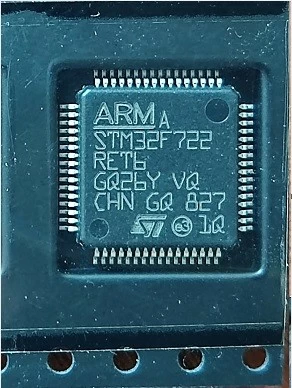
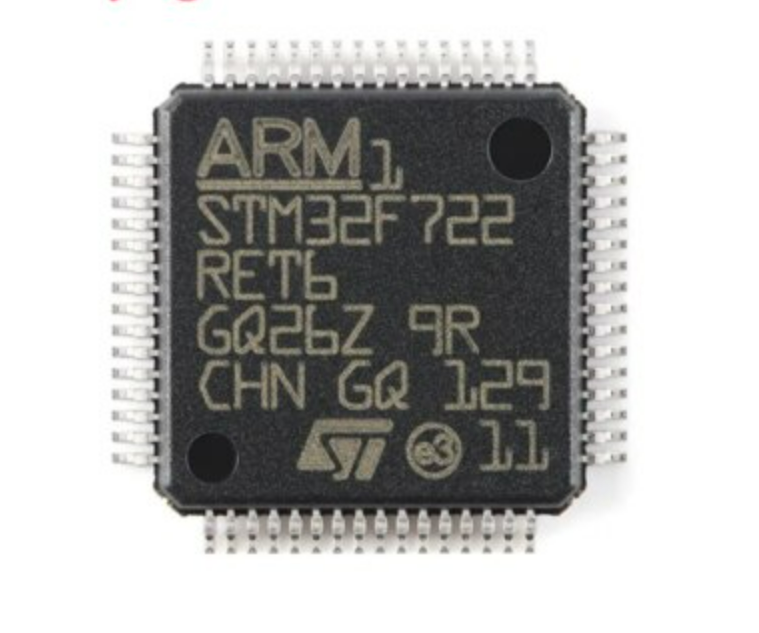
Encrypted Microcontroller STM32F722RET6 Embedded Firmware Restoration: Unlocking Secured MCU Data
In the world of embedded systems, the STM32F722RET6 microcontroller is widely recognized for its powerful performance, rich peripheral set, and advanced protection features. Designed by STMicroelectronics, this chip is frequently used in aerospace, robotics, medical devices, and industrial control systems. Its embedded firmware is often encrypted, protected, and locked by developers to safeguard intellectual property and prevent tampering.
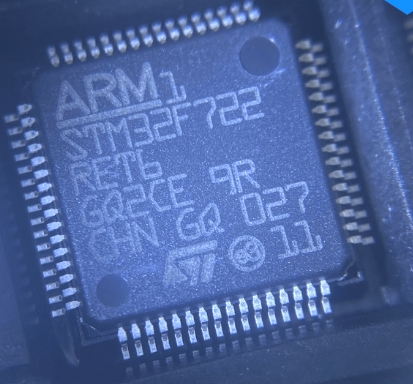
However, legitimate scenarios arise where an end user or integrator may need to restore, clone, or copy the original firmware — for example, in legacy system maintenance, security audits, or lost-source-code recovery. At CIRCUIT ENGINEERING CO., LTD, we specialize in encrypted microcontroller STM32F722RET6 embedded firmware restoration, offering professional services to crack, decrypt, and decode protected binaries from these high-security devices.
Why STM32F722RET6?
The STM32F722RET6 is a 32-bit ARM Cortex-M7 microcontroller with up to 512KB of Flash memory and 256KB of SRAM. It supports high-speed interfaces, DSP instructions, and real-time processing, making it ideal for advanced applications such as:
UAV flight controllers
Audio processing devices
Industrial automation
Motor control and power systems
Secure communication units
Its hardware-level protection features include read-out protection (RDP), write protection, and secure boot, making firmware extraction highly challenging without the right expertise.
Our Services: Unlocking and Restoring Protected Firmware
We offer a comprehensive service to unlock, open, and restore the embedded firmware, data, and memory contents from locked STM32F722RET6 chips. Whether the original source code, binary, or heximal file is lost or needs to be duplicated across units, our team provides a secure and reliable path to access and replicate the original system logic.
Our Process Includes:
Initial Analysis
We begin by analyzing the MCU’s protection level (RDP Level 1 or Level 2) and determining the feasibility of the restoration process. This includes assessing access via SWD or JTAG.Firmware Extraction
Using advanced hardware and software techniques, we attempt to bypass or crack protection mechanisms, allowing us to read the locked Flash, EEPROM, or memory regions.Decryption and Decoding
If the firmware is encrypted, we deploy custom decryption algorithms or exploit known vulnerabilities to decode the actual data structures and logic.Reconstruction and Decompilation
After obtaining the raw binary or hex archive, we reconstruct the data and optionally decompile it into a higher-level C/C++ source code, providing a human-readable format suitable for analysis or reuse.Verification and Cloning
We verify the integrity of the restored firmware and, if needed, help clone or duplicate the program onto other STM32F722RET6 chips or compatible systems.
Why Choose Us?
Specialized Experience in STM32 security architecture and firmware restoration
Custom Tools developed for secure memory access and analysis
Confidentiality Guaranteed – Your data and projects remain strictly protected
Broad Compatibility with both STM32F7 series and other ARM-based MCUs
Legal and Ethical Use
Our services are offered strictly for legitimate purposes such as device repair, authorized duplication, academic research, or system recovery. We do not support illegal or unauthorized duplication of proprietary software.
Conclusion
With the complexity and security of modern embedded systems increasing, accessing lost or locked firmware can be a critical challenge. At CIRCUIT ENGINEERING CO.,LTD, our encrypted microcontroller STM32F722RET6 embedded firmware restoration service empowers clients to unlock, restore, and clone protected MCU programs with precision and discretion. If you’re facing challenges with a secured STM32F7 device, contact us today for a professional consultation.
Decompiled firmware binary of secured system to C/C++ soure code
In today’s fast-paced tech world, many organizations face the challenge of working with firmware that has been intentionally obfuscated or secured to prevent reverse engineering. Whether for security audits, vulnerability assessments, or system optimization, understanding and modifying such firmware is a critical step in gaining full control of embedded systems. At Circuit Engineering CO.,LTD, we specialize in helping clients disassemble and reverse-engineer these complex, secured firmware binaries to provide clear, usable C/C++ source code.
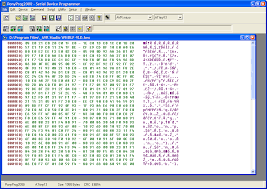
At Circuit Engineering CO.,LTD, we specialize in helping clients disassemble and reverse-engineer these complex, secured firmware binaries to provide clear, usable C/C++ source code.
The Challenge of Obfuscated Firmware
Obfuscated firmware is designed to hide its underlying logic and make reverse engineering difficult. Many manufacturers intentionally encrypt, compress, or scramble the binary/heximal firmware to prevent competitors or malicious actors from accessing proprietary code or identifying vulnerabilities. The result is a binary that is hard to read, understand, or modify.
However, despite these challenges, disassembling obfuscated firmware is crucial for various applications, including bug fixing, custom modifications, security patching, and gaining deeper insight into the system’s functioning. This is where we come in.
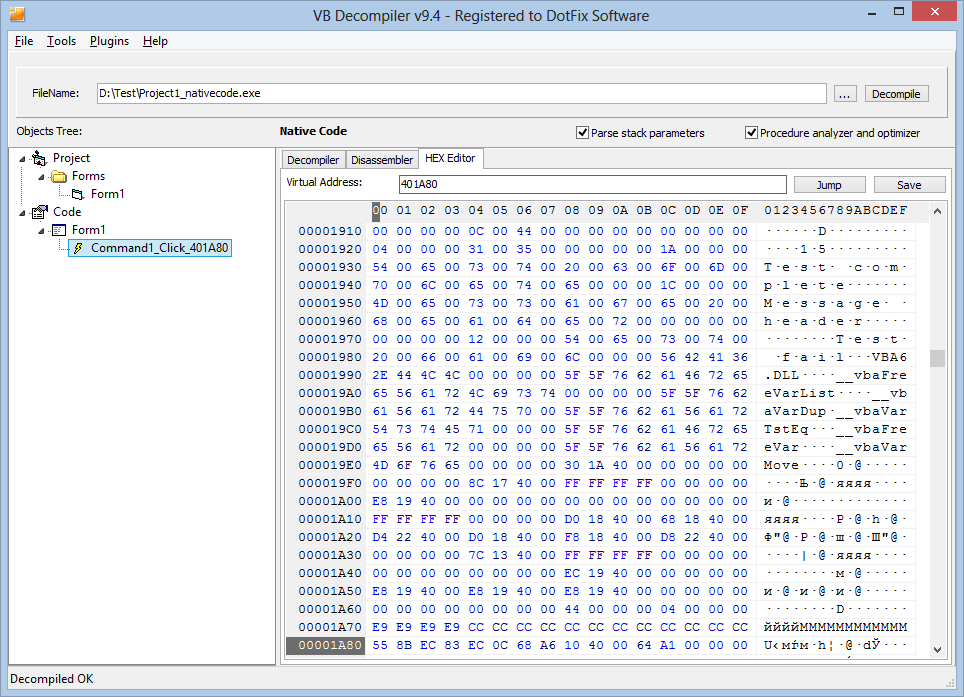
firmware-ul obscurcat este conceput pentru a-și ascunde logica de bază și pentru a face dificilă ingineria inversă. Mulți producători criptează, comprimă sau amestecă în mod intenționat firmware-ul binar/heximal pentru a împiedica concurenții sau actorii rău intenționați să acceseze codul proprietar sau să identifice vulnerabilități. Rezultatul este un binar greu de citit, înțeles sau modificat.
Cu toate acestea, în ciuda acestor provocări, dezasamblarea firmware-ului obscurcat este crucială pentru diverse aplicații, inclusiv remedierea erorilor, modificările personalizate, corecțiile de securitate și obținerea unei cunoștințe mai profunde asupra funcționării sistemului. Aici intrăm noi.
Our Approach: Disassembling to Assembly Language and Decompiling to C/C++ Code
Our team of experts uses advanced techniques to disassemble the binary/heximal firmware into assembly language, the low-level programming code that the hardware executes directly. This is the foundational step in understanding how the firmware interacts with the hardware.
Once the firmware is in assembly language, we leverage powerful decompilation tools and custom scripts to reverse-engineer the assembly code into higher-level C/C++ source code. This source code is far more human-readable and modifiable, providing our clients with the ability to make necessary changes, improvements, or security patches.
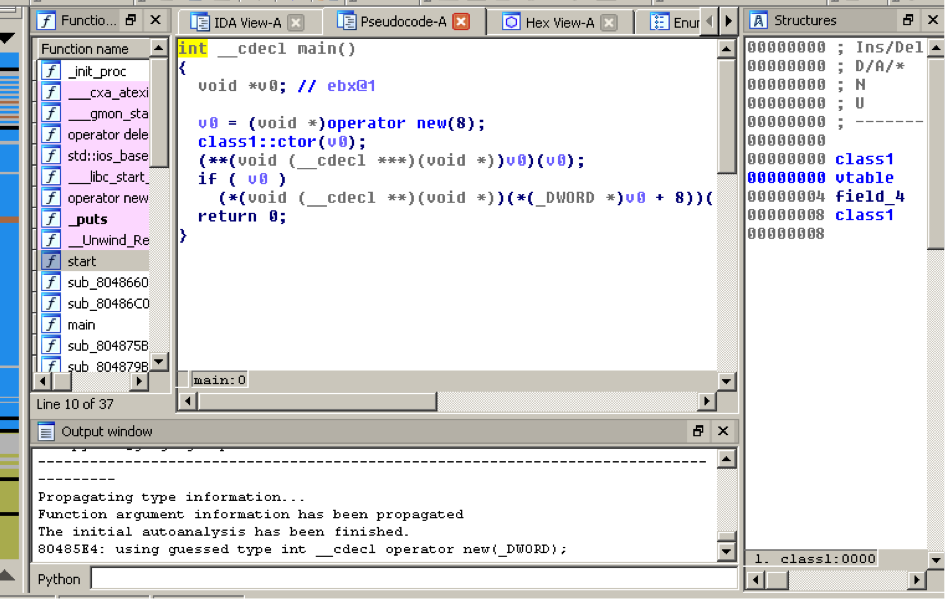
Unser Expertenteam verwendet fortschrittliche Techniken, um die binäre/hexadezimale Firmware in Assemblersprache zu zerlegen, den Low-Level-Programmiercode, den die Hardware direkt ausführt. Dies ist der grundlegende Schritt zum Verständnis der Interaktion zwischen Firmware und Hardware.
Sobald die Firmware in Assemblersprache vorliegt, nutzen wir leistungsstarke Dekompilierungstools und benutzerdefinierte Skripte, um den Assemblercode in höherstufigen C/C++-Quellcode zurückzuentwickeln. Dieser Quellcode ist für Menschen weitaus besser lesbar und veränderbar und bietet unseren Kunden die Möglichkeit, notwendige Änderungen, Verbesserungen oder Sicherheitspatches vorzunehmen.
Why Choose Us?
-
Expertise in Reverse Engineering: Our team has years of experience in firmware disassembly and reverse engineering, particularly for secured and obfuscated firmware binaries.
-
Tailored Solutions: We understand that every client’s needs are different. Whether you need to extract specific data, debug software, or perform a detailed audit, we provide customized solutions.
-
Security and Confidentiality: We prioritize security and confidentiality in all our reverse engineering projects, ensuring that your intellectual property remains protected at all times.
-
Cutting-Edge Tools: We utilize the latest software tools and techniques to decompile and disassemble firmware efficiently and accurately.
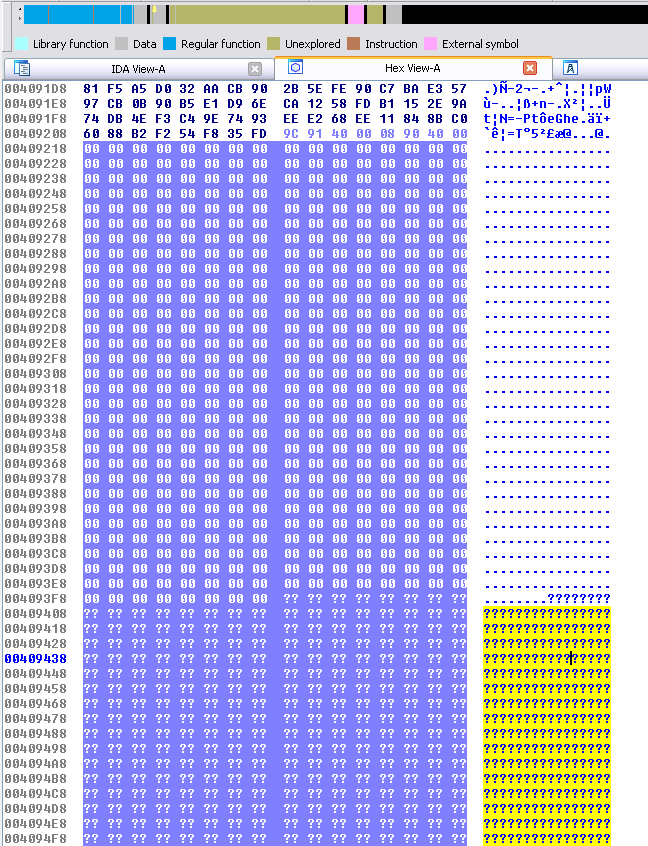
facem posibilă deblocarea întregului potențial al firmware-ului securizat, ofuscat, dându-vă puterea de a îmbunătăți, audita sau modifica cu precizie sistemele dvs. încorporate. Prin conversia fișierelor binare complexe de firmware în cod sursă C/C++, vă oferim informațiile de care aveți nevoie pentru a prelua controlul asupra dispozitivelor dvs. încorporate.
Conclusion
At CECL, we make it possible to unlock the full potential of secured, obfuscated firmware, empowering you to enhance, audit, or modify your embedded systems with precision. By converting complex firmware binaries into C/C++ source code, we give you the insights you need to take control of your embedded devices.
If you’re facing the challenge of dealing with obfuscated firmware, reach out to us today, and let our experts help you navigate the complexities of reverse engineering.
Restoring Original Logic from Obfuscated Firmware: A Service You Can Rely On
In today’s fast-paced technological landscape, embedded systems and firmware are at the core of countless devices and machinery. However, when it comes to understanding and modifying firmware, the challenge often lies in the obfuscation techniques used to protect intellectual property or prevent unauthorized access. At Circuit Engineering CO.,LTD, we specialize in providing a robust service for compiled hexadecimal of embedded firmware to original logic restoration, enabling clients to reverse-engineer, analyze, and optimize embedded firmware.
However, when it comes to understanding and modifying firmware, the challenge often lies in the obfuscation techniques used to protect intellectual property or prevent unauthorized access. At Circuit Engineering CO.,LTD, we specialize in providing a robust service for compiled hexadecimal of embedded firmware to original logic restoration, enabling clients to reverse-engineer, analyze, and optimize embedded firmware
Understanding the Challenge
Obfuscation of binary or hexadecimal firmware is a common practice to protect proprietary code and prevent tampering or unauthorized modifications. This results in a compiled firmware that is hard to understand, with valuable logic often buried in complex, encrypted, or fragmented code. When clients encounter these challenges, they face difficulty in conducting vital tasks such as debugging, security assessments, or simply understanding the inner workings of a device.
Obfuzarea firmware-ului binar sau hexazecimal este o practică comună pentru a proteja codul proprietar și pentru a preveni manipularea sau modificările neautorizate. Acest lucru are ca rezultat un firmware compilat greu de înțeles, cu o logică valoroasă adesea îngropată în cod complex, criptat sau fragmentat. Când clienții se confruntă cu aceste provocări, se confruntă cu dificultăți în a efectua sarcini vitale, cum ar fi depanarea, evaluările de securitate sau pur și simplu înțelegerea funcționării interioare a unui dispozitiv.
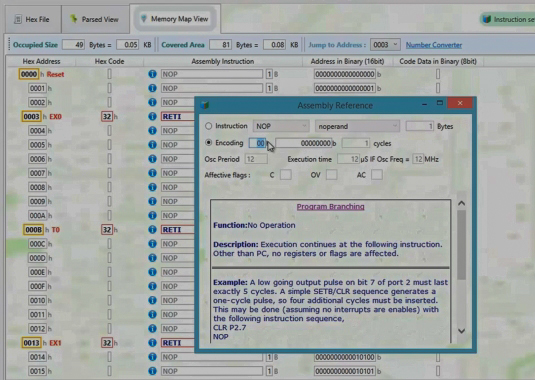
Our service focuses on the process of disassembling obfuscated binary/hexadecimal firmware into assembly language, providing a deeper understanding of the firmware’s structure, logic, and functionality. By doing so, we restore the original logic of the embedded system, making it accessible and understandable for further analysis and improvement.
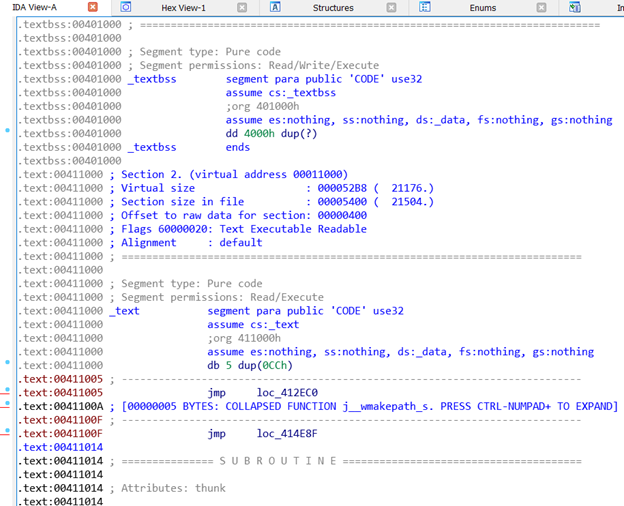
Unser Service konzentriert sich auf den Prozess der Zerlegung verschleierter binärer/hexadezimaler Firmware in Assemblersprache und ermöglicht so ein tieferes Verständnis der Struktur, Logik und Funktionalität der Firmware. Auf diese Weise stellen wir die ursprüngliche Logik des eingebetteten Systems wieder her und machen es für weitere Analysen und Verbesserungen zugänglich und verständlich.
How We Help
Our team of experienced engineers employs cutting-edge reverse engineering techniques to meticulously disassemble the compiled firmware. The process involves several key steps:
Firmware Analysis: We begin by analyzing the compiled hexadecimal or binary file to identify the obfuscation techniques applied, including encryption, packing, and fragmentation.
Deobfuscation and Decompression: Using specialized tools and proprietary methods, we deobfuscate and decompress the firmware to reveal its underlying structure.
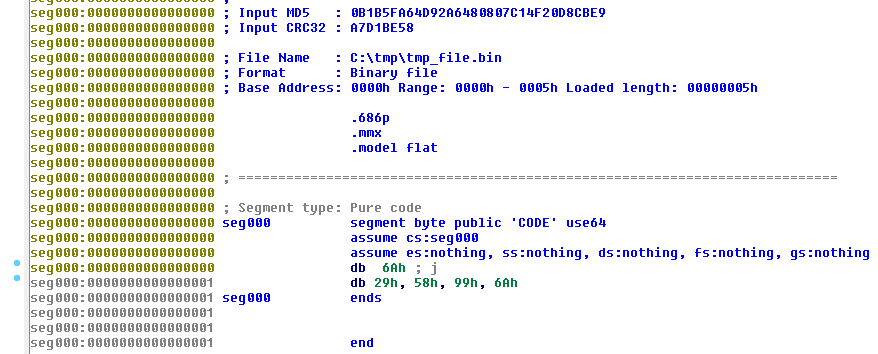
Disassembly to Assembly: After successfully deobfuscating the binary, we disassemble it into assembly language, which is easier to interpret and modify.
Logic Restoration: Finally, we restore the original logic, functions, and routines, allowing you to understand the exact behavior of the embedded system.
Analiza firmware: Începem prin a analiza fișierul hexazecimal sau binar compilat pentru a identifica tehnicile de ofuscare aplicate, inclusiv criptarea, împachetarea și fragmentarea.
Deofuscare și decompresie: Folosind instrumente specializate și metode proprietare, deobfucăm și decomprimăm firmware-ul pentru a dezvălui structura de bază.
Dezasamblare la asamblare: după dezfundarea cu succes a binarului, îl dezasamblam în limbaj de asamblare, care este mai ușor de interpretat și modificat.
Restaurare logică: În cele din urmă, restaurăm logica, funcțiile și rutinele originale, permițându-vă să înțelegeți comportamentul exact al sistemului încorporat.
Why Choose Us?
We are committed to delivering high-quality, efficient, and precise firmware restoration services. Our expertise ensures that no matter how obfuscated or encrypted the firmware is, we can help restore it to its original logic, enabling better analysis, optimization, and security. Whether you are a hardware manufacturer, a security researcher, or an enterprise needing to update or modify embedded firmware, we provide reliable solutions tailored to your specific needs.
Let us assist you in turning complex, obfuscated firmware into valuable, understandable assembly code for your next project.