 Reverse Engineering Microcontroller PIC16C620 Code
 February 23rd, 2015 |
  Author:
 The Microchip PIC16C620 occupies a distinctive position in the pantheon of embedded computing history as one of the most widely deployed 8-bit microcontrollers across industrial automation, automotive electronics, telecommunications infrastructure, and medical device manufacturing. This protected CMOS flash-based MCU introduced developers to a robust Harvard architecture featuring 512 words of program memory, 80 bytes of data RAM, and integrated EEPROM storage for parameter retention—capabilities that made it the backbone of countless control systems during the late 1990s and early 2000s.
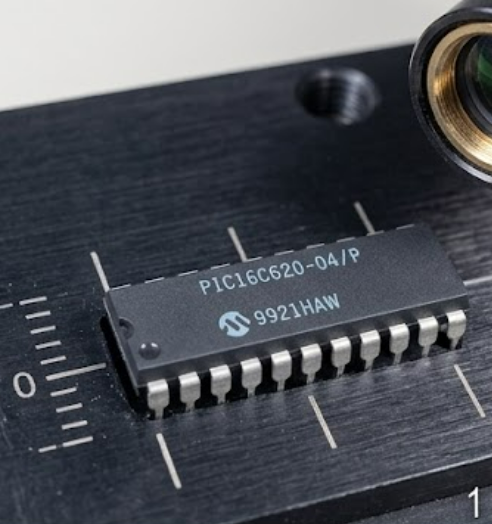
Its embedded peripheral suite including comparators, timers, and synchronous serial ports enabled engineers to construct sophisticated sensing and actuation platforms without external component proliferation. From precision fluid dispensers in pharmaceutical production lines to anti-lock braking modules in vehicles, the PIC16C620’s reliability cemented its presence in equipment designed for decades of continuous operation. Even today, locked instances of this secured chip continue governing critical processes in power generation stations, railway signaling networks, and legacy telecommunications switching equipment where replacement would trigger catastrophic certification cascades.
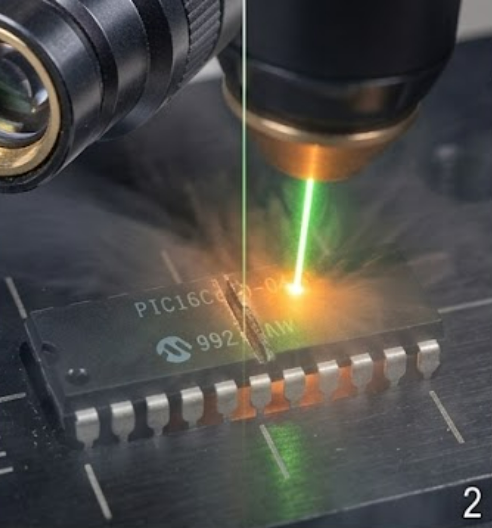
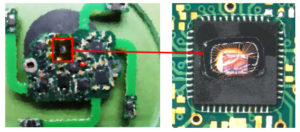
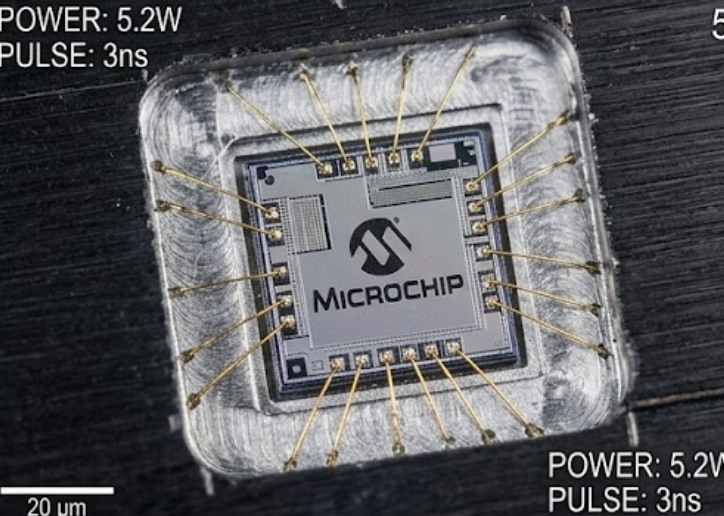
When manufacturers encounter a protected PIC16C620 whose original source code has vanished through corporate restructuring, supplier bankruptcy, or decades of institutional knowledge erosion, the challenge transcends simple component replacement. The firmware residing within this encrypted device represents irreplaceable operational intelligence—calibration curves, safety interlocks, proprietary communication handshakes, and regulatory compliance logic that cannot be replicated through guesswork. Professional reverse engineering of this microcontroller demands a systematic technical approach: specialists first decapsulate the IC package to expose the silicon die, then employ focused ion beam workstations or laser voltage probing to attack the memory array without triggering protective self-destruction mechanisms. Through precise electrical manipulation, engineers can break the secured readout barriers and retrieve the raw binary or heximal file from flash and EEPROM regions. Subsequent analysis decodes the instruction sequences, reconstructs functional blocks, and generates comprehensive documentation that transforms opaque machine code into comprehensible engineering archives. This process requires not merely equipment investment but deep architectural fluency with PLD-adjacent timing behaviors and embedded system design paradigms.

High Performance RISC CPU:
· Only 35 instructions to learn
· All single-cycle instructions (200 ns), except for program branches which are two-cycle
· Operating speed:
– DC – 20 MHz clock input
– DC – 200 ns instruction cycle
Interrupt capability can decide if the difficulty
16 special function hardware registers
8-level deep hardware stack
Direct, Indirect and Relative addressing modes
Peripheral Features:
· 13 I/O pins with individual direction control
· High current sink/source for direct LED drive
· Analog comparator module with:
– Two analog comparators
– Programmable on-chip voltage reference (VREF) module
– Programmable input multiplexing from device inputs and internal voltage reference after Reverse engineering Microcontroller PIC16C620 Code
– Comparator outputs can be output signals
· Timer0: 8-bit timer/counter with 8-bit programmable prescaler
Special Microcontroller Features:
· Power-on Reset (POR)
· Power-up Timer (PWRT) and Oscillator Start-up Timer (OST)
· Brown-out Reset
· Watchdog Timer (WDT) with its own on-chip RC oscillator for reliable operation.
The commercial imperative driving such hack-resistant microcontroller analysis stems from the brutal economics of industrial infrastructure maintenance. Organizations cannot afford to duplicate millions of dollars in certification testing, production line revalidation, or safety authority reapproval when a single locked control module fails. Our clone and duplicate services enable manufacturers to produce exact functional replacements of protected PIC16C620 devices, ensuring that program behavior remains bit-for-bit identical to original specifications. By retrieving the complete firmware image—including both flashprogram space and EEPROMdata parameters—we empower clients to fabricate drop-in replacement ICs or migrate functionality to modern microcontrollers while preserving every nuance of legacy operation. This capability proves especially vital for encrypted medical devices where FDA validation ties directly to specific software execution paths, or for telecommunications PLD-integrated systems where protocol timing tolerances measure in microseconds.

Our technical team delivers comprehensive PIC16C620 reverse engineering solutions that transform secured silicon into actionable engineering assets. We decapsulateprotected devices in controlled cleanroom environments, breaklocked readout defenses through advanced fault injection techniques, and decodeencrypted instruction streams into fully documented source code equivalents. Whether your objective is to clone existing firmware for immediate production continuity, duplicate legacy control behaviors for next-generation hardware migration, or retrieve critical calibration data from EEPROM regions, we provide complete binary and heximalfile extraction with full technical documentation. Our archive generation process ensures that embedded intelligence never again faces extinction from locked silicon obsolescence, converting vulnerable single points of failure into robust, reproducible engineering foundations for decades of continued operation.
 Posted in Recover Chip