 Recover Chip PIC16C621 Program
 February 24th, 2015 |
 Author:
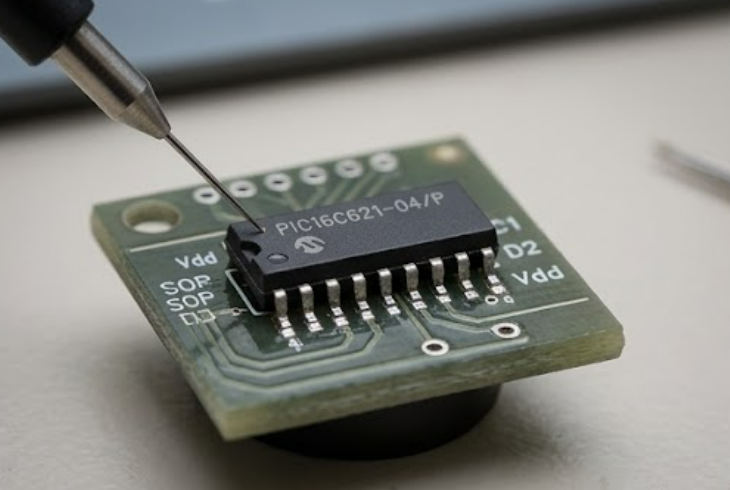
The Microchip PIC16C621 stands as a pivotal evolution in embedded 8-bit architecture, bridging the gap between early microcontroller simplicity and modern industrial demands through its enhanced peripheral integration and robust memory subsystems. This secured device delivers 1K words of program FLASH, 128 bytes of data RAM, and dedicated EEPROM for non-volatile parameter storage—specifications that positioned it as the control brain across diverse sectors including automotive climate systems, industrial weighing scales, smart metering infrastructure, and security access panels. Its embedded analog comparator modules and precision timer arrays enabled designers to construct closed-loop control systems without external PLD supplementation, reducing bill-of-materials complexity while improving electromagnetic reliability. The PIC16C621’s protective code configuration bits allowed manufacturers to safeguard proprietary algorithms, yet this same locked security architecture now threatens operational continuity as original development teams disperse and documentation archives deteriorate. From conveyor belt controllers in food processing plants to infusion pump regulators in hospital wards, this microcontroller continues executing mission-critical logic that organizations cannot afford to lose.
Special Microcontroller Features (cont’d)
Programmable code protection
Power saving SLEEP mode
Selectable oscillator options
Serial in-circuit programming (via two pins)
Four user programmable ID locations
CMOS Technology:
· Low-power, high-speed CMOS EPROM technology
· Fully static design
· Wide operating voltage range
– PIC16C62X – 2.5V to 6.0V
– PIC16C62XA – 2.5V to 5.5V
– PIC16CR620A – 2.0V to 5.5V
· Commercial, industrial and extended temperature range
· Low power consumption
– < 2.0 mA @ 5.0V, 4.0 MHz
– 15 µA typical @ 3.0V, 32 kHz
– < 1.0 µA typical standby current @ 3.0V
GENERAL DESCRIPTION
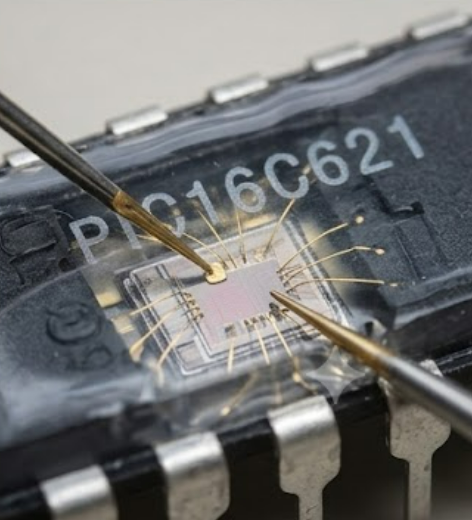
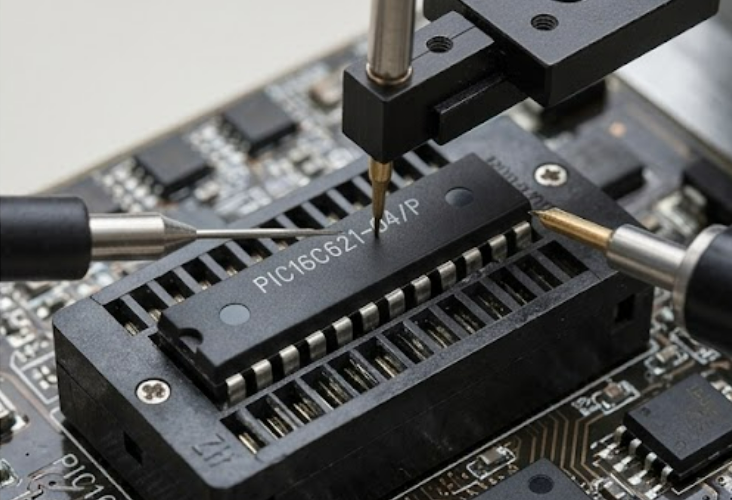
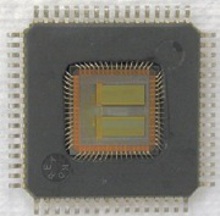
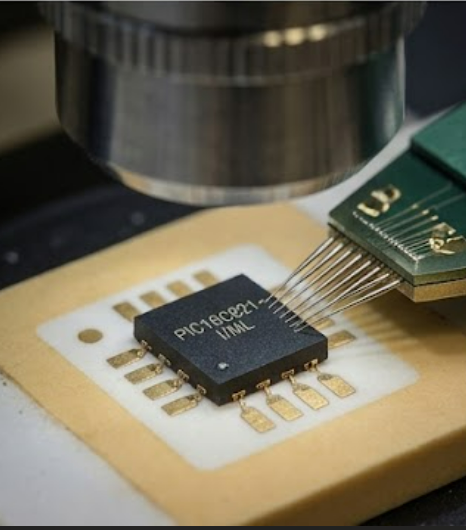
When a protected PIC16C621 requires program recovery, conventional debugging interfaces hit insurmountable walls erected by encrypted security fuses. The firmware trapped within these locked devices cannot be extracted through standard IC programmers or JTAG interfaces—Microchip‘s protective design intentionally severs communication pathways between external tools and internal memory arrays. Professional recovery operations demand sophisticated physical intervention: technicians decapsulate the chip package using precise chemical etching or mechanical milling to expose the silicon substrate beneath embedded bond wires. Once the die is visible, advanced probing stations attack specific circuit nodes with nanosecond-precision voltage pulses designed to break readout protection without corrupting the binary contents. This delicate hack circumvents secured boundaries by exploiting timing vulnerabilities or power-rail manipulation, ultimately enabling specialists to retrieve complete heximal and binary file representations from both FLASH and EEPROM regions. The extracted data then undergoes comprehensive decode processing to reconstruct functional logic, variable mappings, and operational states into human-readable engineering documentation.
The PIC16C62X have enhanced core features, eight-level deep stack, and multiple internal and external interrupt sources. The separate instruction and data buses of the Harvard architecture allow a 14-bit wide instruction word with the separate 8-bit wide data.
The two-stage instruction pipeline allows all instructions to execute in a single-cycle, except for program branches (which require two cycles). A total of 35 instructions (reduced instruction set) are available. Additionally, a large register set gives some of the architectural innovations used to achieve a very high performance.
The driving force behind microcontrollerprogram recovery extends far beyond mere technical curiosity—it represents an economic lifeline for organizations managing aging infrastructure. Original equipment manufacturers frequently abandon obsolete product lines, leaving end users with locked silicon containing irreplaceable calibration tables, safety certification evidence, and proprietary control methodologies. Our clone and duplicate services transform this vulnerability into resilience by generating exact firmware replicas that preserve every bit of embedded operational intelligence. For automotive suppliers, recovering source code equivalents from encrypted engine management modules ensures compliance with emissions regulations without complete powertrain redesign. Industrial automation clients leverage recovered programarchives to fabricate replacement controllers for production lines where downtime costs exceed thousands of dollars hourly. Medical device manufacturers depend on precise duplicate capabilities to maintain FDA-validated therapeutic instruments whose protected software cannot be arbitrarily rewritten without triggering extensive re-certification protocols.
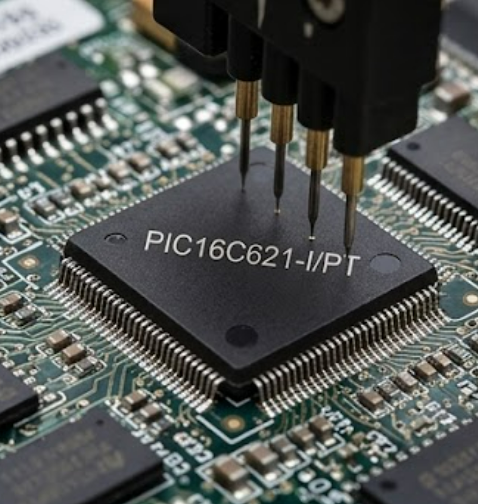
We specialize in comprehensive PIC16C621 recovery solutions that convert inaccessible locked silicon into fully documented engineering assets. Our cleanroom laboratories decapsulateprotected devices with surgical precision, while our proprietary fault-injection methodologies break even the most stringent secured configurations to retrieve intact memory contents. Whether you require immediate clone production for failed field units, duplicate generation for next-generation hardware migration, or complete decode services to reconstruct source code from raw binary file extractions, we deliver actionable results. Our technical team transforms encrypted firmware into comprehensive archive repositories—complete with heximal dumps, EEPROM data maps, and functional documentation—ensuring your embedded systems never again face extinction from irrecoverable program loss. Contact us to liberate your microcontroller intelligence and secure decades of continued operational excellence.
 Posted in

Reverse Engineering Microcontroller PIC16C620 Code
The Microchip PIC16C620 occupies a distinctive position in the pantheon of embedded computing history as one of the most widely deployed 8-bit microcontrollers across industrial automation, automotive electronics, telecommunications infrastructure, and medical device manufacturing. This protected CMOS flash-based MCU introduced developers to a robust Harvard architecture featuring 512 words of program memory, 80 bytes of data RAM, and integrated EEPROM storage for parameter retention—capabilities that made it the backbone of countless control systems during the late 1990s and early 2000s.
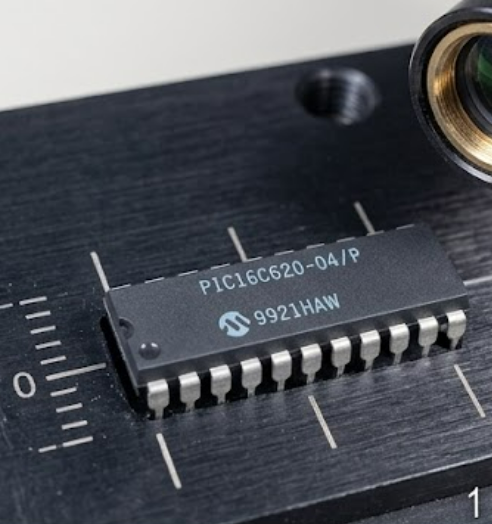
Its embedded peripheral suite including comparators, timers, and synchronous serial ports enabled engineers to construct sophisticated sensing and actuation platforms without external component proliferation. From precision fluid dispensers in pharmaceutical production lines to anti-lock braking modules in vehicles, the PIC16C620’s reliability cemented its presence in equipment designed for decades of continuous operation. Even today, locked instances of this secured chip continue governing critical processes in power generation stations, railway signaling networks, and legacy telecommunications switching equipment where replacement would trigger catastrophic certification cascades.
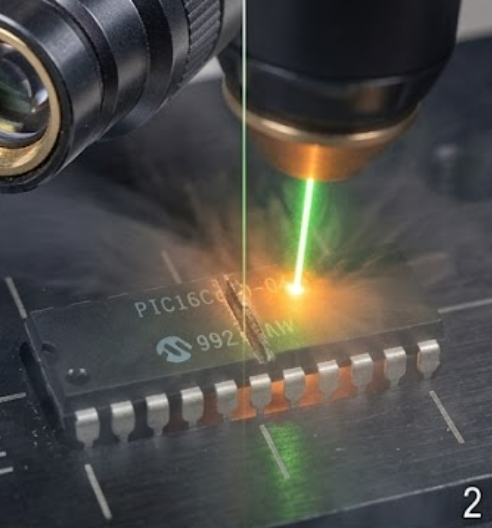
When manufacturers encounter a protected PIC16C620 whose original source code has vanished through corporate restructuring, supplier bankruptcy, or decades of institutional knowledge erosion, the challenge transcends simple component replacement. The firmware residing within this encrypted device represents irreplaceable operational intelligence—calibration curves, safety interlocks, proprietary communication handshakes, and regulatory compliance logic that cannot be replicated through guesswork. Professional reverse engineering of this microcontroller demands a systematic technical approach: specialists first decapsulate the IC package to expose the silicon die, then employ focused ion beam workstations or laser voltage probing to attack the memory array without triggering protective self-destruction mechanisms. Through precise electrical manipulation, engineers can break the secured readout barriers and retrieve the raw binary or heximal file from flash and EEPROM regions. Subsequent analysis decodes the instruction sequences, reconstructs functional blocks, and generates comprehensive documentation that transforms opaque machine code into comprehensible engineering archives. This process requires not merely equipment investment but deep architectural fluency with PLD-adjacent timing behaviors and embedded system design paradigms.
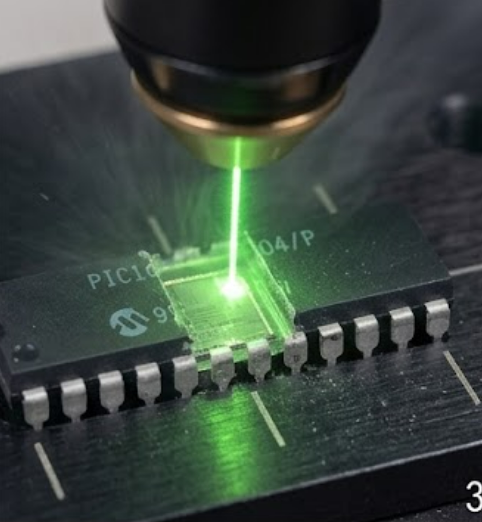
High Performance RISC CPU:
· Only 35 instructions to learn
· All single-cycle instructions (200 ns), except for program branches which are two-cycle
· Operating speed:
– DC – 20 MHz clock input
– DC – 200 ns instruction cycle
Interrupt capability can decide if the difficulty
16 special function hardware registers
8-level deep hardware stack
Direct, Indirect and Relative addressing modes
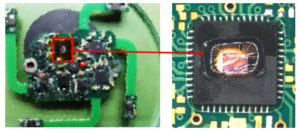
Peripheral Features:
· 13 I/O pins with individual direction control
· High current sink/source for direct LED drive
· Analog comparator module with:
– Two analog comparators
– Programmable on-chip voltage reference (VREF) module
– Programmable input multiplexing from device inputs and internal voltage reference after Reverse engineering Microcontroller PIC16C620 Code
– Comparator outputs can be output signals
· Timer0: 8-bit timer/counter with 8-bit programmable prescaler
Special Microcontroller Features:
· Power-on Reset (POR)
· Power-up Timer (PWRT) and Oscillator Start-up Timer (OST)
· Brown-out Reset
· Watchdog Timer (WDT) with its own on-chip RC oscillator for reliable operation.
The commercial imperative driving such hack-resistant microcontroller analysis stems from the brutal economics of industrial infrastructure maintenance. Organizations cannot afford to duplicate millions of dollars in certification testing, production line revalidation, or safety authority reapproval when a single locked control module fails. Our clone and duplicate services enable manufacturers to produce exact functional replacements of protected PIC16C620 devices, ensuring that program behavior remains bit-for-bit identical to original specifications. By retrieving the complete firmware image—including both flashprogram space and EEPROMdata parameters—we empower clients to fabricate drop-in replacement ICs or migrate functionality to modern microcontrollers while preserving every nuance of legacy operation. This capability proves especially vital for encrypted medical devices where FDA validation ties directly to specific software execution paths, or for telecommunications PLD-integrated systems where protocol timing tolerances measure in microseconds.
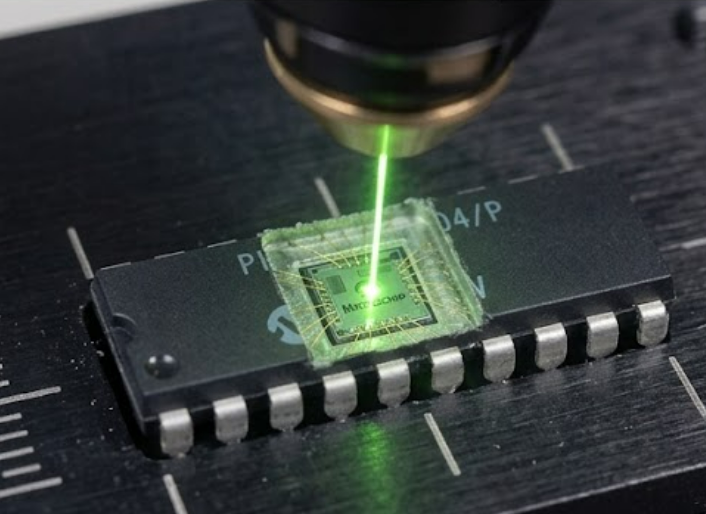
Our technical team delivers comprehensive PIC16C620 reverse engineering solutions that transform secured silicon into actionable engineering assets. We decapsulateprotected devices in controlled cleanroom environments, breaklocked readout defenses through advanced fault injection techniques, and decodeencrypted instruction streams into fully documented source code equivalents. Whether your objective is to clone existing firmware for immediate production continuity, duplicate legacy control behaviors for next-generation hardware migration, or retrieve critical calibration data from EEPROM regions, we provide complete binary and heximalfile extraction with full technical documentation. Our archive generation process ensures that embedded intelligence never again faces extinction from locked silicon obsolescence, converting vulnerable single points of failure into robust, reproducible engineering foundations for decades of continued operation.
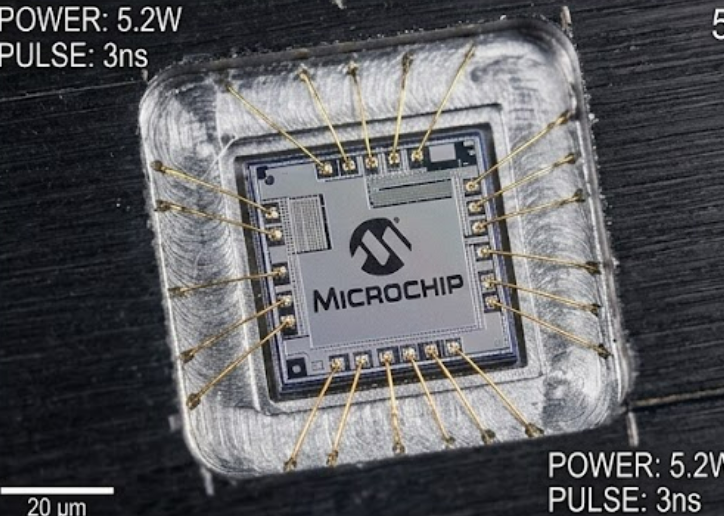
Recover Chip PIC16HV785 Hex
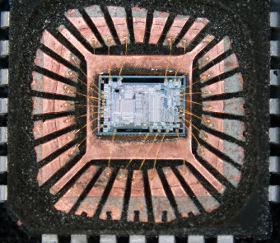
Recover Chip PIC16HV785 Hex include the content from both its eeprom and flash, belows we can introduce the program memory organization:
PROGRAM MEMORY ORGANIZATION
The PIC16F785/HV785 has a 13-bit program counter capable of addressing an 8k x 14 program memory space. Only the first 2k x 14 (0000h-07FFh) for the PIC16F785/HV785 is physically implemented. Accessing a location above these boundaries will cause a wrap around within the first 2k x 14 space. The Reset vector is at 0000h and the interrupt vector is at 0004h.
Recover Chip PIC16HV785 Hex
DATA MEMORY ORGANIZATION
The data memory is partitioned into four banks, which contain the General Purpose Registers (GPR) and the Special Function Registers (SFR). The Special Function Registers are located in the first 32 locations of each bank. Register locations 20h-7Fh in Bank 0 and A0h-BFh in Bank 1 are General Purpose Registers, implemented as static RAM.
The last sixteen register locations in Bank 1 (F0h-FFh), Bank 2 (170h-17Fh), and Bank 3 (1F0h-1FFh) point to addresses 70h-7Fh in Bank 0. All other RAM is unimplemented and returns ‘0’ when read.
PROGRAM MEMORY MAP AND STACK FOR THE PIC16F785/HV785
Seven address bits are required to access any location in a data memory bank which can also facilitate the process of IC Cloning. Two additional bits are required to access the four banks. When data memory is accessed directly, the seven Least Significant address bits are contained within the opcode and the two Most Significant bits are contained in the STATUS register for the purpose of recover chip PIC16HV785 Hex.
RP0 and RP1 bits of the STATUS register are the two Most Significant data memory address bits and are also known as the bank select bits. Table 2-1 lists how to access the four banks of registers.
Reverse Engineering Microcontroller PIC16F747 Code
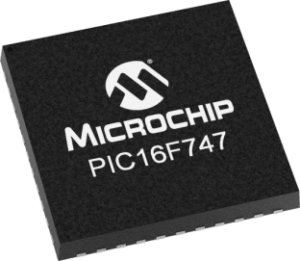
We can Reverse engineering Microcontroller PIC16F747 Code, please view the Microcontroller PIC16F747 features for your reference:
Special Microcontroller Features:
· Fail-Safe Clock Monitor for protecting critical applications against crystal failure when Reverse engineering Microcontroller code;
· Two-Speed Start-up mode for immediate code execution
· Power-on Reset (POR), Power-up Timer (PWRT) and Oscillator Start-up Timer (OST)
· Programmable Code Protection can be used also for Break Microcontroller PIC18F4220 Binary
· Processor Read Access to Program Memory
· Power-Saving Sleep mode
· In-Circuit Serial Programming (ICSP) via two pins
· MPLAB® In-Circuit Debug (ICD) via two pins
· MCLR pin function replaceable with input only pin
DEVICE OVERVIEW
This document contains device specific information about the following devices:
PIC16F737/767 devices are available only in 28-pin packages, while PIC16F747 devices are available in 40-pin and 44-pin packages. All devices in the PIC16F7X7 family share common architecture with the following differences:
· The PIC16F737 and PIC16F767 have one-half of the total on-chip memory of the PIC16F747 and PIC16F777.
· The 28-pin devices have 3 I/O ports, while the 40/44-pin devices have 5.
· The 28-pin devices have 16 interrupts, while the 40/44-pin devices have 17.
· The 28-pin devices have 11 A/D input channels, while the 40/44-pin devices have 14.
· The Parallel Slave Port is implemented only on the 40/44-pin devices.
· Low-Power modes: RC_RUN allows the core and peripherals to be clocked from the INTRC, while SEC_RUN allows the core and peripherals to be clocked from the low-power Timer1. Refer to Section 4.7 “Power-Managed Modes” for further details for the purpose of Reverse engineering Microcontroller code.
Reverse Engineering Microcontroller PIC16F747 Code
· Internal RC oscillator with eight selectable frequencies, including 31.25 kHz, 125 kHz, 250 kHz, 500 kHz, 1 MHz, 2 MHz, 4 MHz and 8 MHz. The INTRC can be configured as a primary or secondary clock source when Crack MCU. Refer to Section 4.5 “Internal Oscillator Block” for further details.
Break IC PIC12F635 Program
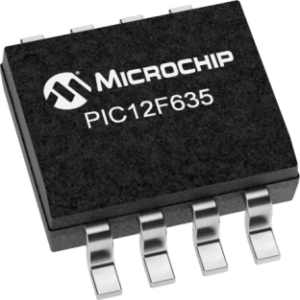
We can break IC PIC12F635 Program, please view the PIC12F635 features for your reference:
High-Performance RISC CPU:
· Only 35 instructions to learn:
– All single-cycle instructions except branches
· Operating speed:
– DC – 20 MHz oscillator/clock input
– DC – 200 ns instruction cycle
· Interrupt capability
· 8-level deep hardware stack
· Direct, Indirect and Relative Addressing modes
Special Microcontroller Features:
· Precision Internal Oscillator:
– Factory calibrated to ±1%
– Software selectable frequency range of 8 MHz to 31 kHz
– Software tunable
– Two-Speed Start-up mode
– Crystal fail detect for critical applications
· Clock mode switching for low power operation
· Power-saving Sleep mode
· Wide operating voltage range (2.0V-5.5V)
· Industrial and Extended Temperature range
· Power-on Reset (POR)
· Wake-up Reset (WUR)
Break IC PIC12F635 Program
· Independent weak pull-up/pull-down resistors
· Programmable Low-Voltage Detect (PLVD)
· Power-up Timer (PWRT) and Oscillator Start-up Timer (OST)
· Brown-out Detect (BOD) with software control option
· Enhanced Low-Current Watchdog Timer (WDT) with on-chip oscillator (software selectable nominal 268 seconds with full prescaler) with software enable
· Multiplexed Master Clear with pull-up/input pin
· Programmable code protection (program and data independent)
· High-Endurance Flash/EEPROM cell to crack MCU
– 100,000 write Flash endurance
– 1,000,000 write EEPROM endurance
– Flash/Data EEPROM Retention: > 40 years for the purpose of break IC PIC12F635 Program
Low Power Features:
· Standby Current:
– 1 nA @ 2.0V, typical
· Operating Current:
– 8.5 ìA @ 32 kHz, 2.0V, typical
– 100 ìA @ 1 MHz, 2.0V, typical
· Watchdog Timer Current:
– 1 ìA @ 2.0V, typical
Break IC PIC12F609 Flash Heximal
Break IC PIC12F609 Flash Heximal means the flash memory will have to set up as unlock status, in order to do that we must have an clear idea about its organization:
Program Memory Organization
The PIC12F609 has a 13-bit program counter capable of addressing an 8K x 14 program memory space. Only the first 1K x 14 (0000h-03FFh) for the PIC12F609 is physically implemented. Accessing a location above these boundaries will cause a wraparound within the first 1K x 14 space. The Reset vector is at 0000h and the interrupt vector is at 0004h.
Break IC PIC12F609 Flash Heximal
Data Memory Organization
The data memory (see Figure 2-2) is partitioned into two banks, which contain the General Purpose Registers (GPR) and the Special Function Registers (SFR). The Special Function Registers are located in the first 32 locations of each bank. Register locations 40h-7Fh in Bank 0 are General Purpose Registers, implemented as static RAM. Register locations F0h-FFh in Bank 1 point to addresses 70h-7Fh in Bank 0. All other RAM is unimplemented and returns ‘0’ when read. The RP0 bit of the STATUS register is the bank select bit.
The Special Function Registers are registers used by the CPU and peripheral functions for controlling the desired operation of the device. These registers are static RAM which can be manipulated by Recover MCU PIC16F877 Program.
The special registers can be classified into two sets: core and peripheral. The Special Function Registers associated with the “core” are described in this section. Those related to the operation of the peripheral features are described in the section of that peripheral feature.
The STATUS register, shown in Register 2-1, contains:
· the arithmetic status of the ALU
· the Reset status
· the bank select bits for data memory (RAM)
The STATUS register can be the destination for any instruction, like any other register. If the STATUS register is the destination for an instruction that affects the Z, DC or C bits, then the write to these three bits is disabled. These bits are set or cleared according to the device logic in order to Break IC PIC16F876A Binary. Furthermore, the TO and PD bits are not writable. Therefore, the result of an instruction with the STATUS register as destination may be different than intended for the purpose of Break IC PIC12F609 Flash Heximal.
Break IC PIC16F616 Heximal
Break IC PIC16F616 Heximal starts from get some knowledge about its structure:
PIC16F616/16HV616 only:
· A/D Converter:
– 10-bit resolution
– 8 external input channels
– 2 internal reference channels
· Timer2: 8-bit timer/counter with 8-bit period register, prescaler and postscaler
· Enhanced Capture, Compare, PWM module:
– 16-bit Capture, max. resolution 12.5 ns
– 16-bit Compare, max. resolution 200 ns
– 10-bit PWM with 1, 2 or 4 output channels, programmable “dead time”, max. frequency 20 kHz
Program Memory Organization of PIC16F616/16HV616
The PIC16F610/616/16HV610/616 has a 13-bit program counter capable of addressing an 8k x 14 program memory space. Only the first 1K x 14 (0000h-3FF) for the PIC16F610/16HV610 and the first 2K x 14 (0000h-07FFh) for the PIC16F616/16HV616 is physically implemented to facilitate the process of Recover MCU PIC16F648A Firmware.
Accessing a location above these boundaries will cause a wraparound within the first 1K x 14 space (PIC16F610/16HV610) and 2K x 14 space (PIC16F616/16HV616). The Reset vector is at 0000h and the interrupt vector is at 0004h to ease the process of MCU Cracking.
The data memory (see Figure 2-4) is partitioned into two banks, which contain the General Purpose Registers (GPR) and the Special Function Registers (SFR). The Special Function Registers are located in the first 32 locations of each bank.
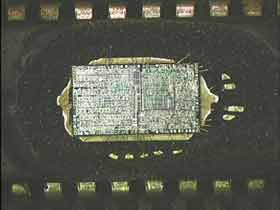
Break IC PIC16F616 Heximal
PIC16F610/16HV610 Register locations 40h-7Fh in Bank 0 are General Purpose Registers, implemented PC gram counter capable of addressing an 8k x 14 program memory space. Only the first 1K x 14 (0000h-3FF) for the PIC16F610/16HV610 and the first 2K x 14 (0000h-07FFh) for the PIC16F616/16HV616 is physically implemented to facilitate the process of Copy Microcontroller PIC16F737 Flash.
Accessing a location above these boundaries will cause a wraparound within the first 1K x 14 space (PIC16F610/16HV610) and 2K x 14 space (PIC16F616/16HV616). The Reset vector is at 0000h and the interrupt vector is at 0004h after Break IC PIC16F616 Heximal
Break IC PIC16F610 Binary
We can break IC PIC16F610 Binary, please view the Microchip IC PIC16F610 features for your reference:
High-Performance RISC CPU:
· Only 35 instructions to learn:
– All single-cycle instructions except branches
· Operating speed:
– DC – 20 MHz oscillator/clock input
– DC – 200 ns instruction cycle
· Interrupt capability
· 8-level deep hardware stack
· Direct, Indirect and Relative Addressing modes
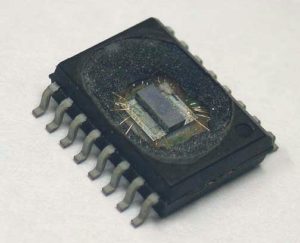
Break IC PIC16F610 Binary
Special Microcontroller Features:
· Precision Internal Oscillator:
– Factory calibrated to ±1%, typical
– User selectable frequency: 4 MHz or 8 MHz
· Power-Saving Sleep mode
· Voltage range:
– PIC16F610/616: 2.0V to 5.5V
– PIC16HV610/616: 2.0V to user defined maximum (see note)
· Industrial and Extended Temperature range
· Power-on Reset (POR)
· Power-up Timer (PWRT) and Oscillator Start-up Timer (OST)
· Brown-out Reset (BOR)
· Watchdog Timer (WDT) with independent oscillator for reliable operation only after the process of Attack MCU PIC12F675 Binary has been completed.
· Multiplexed Master Clear with pull-up/input pin
· Programmable code protection
· High Endurance Flash:
– 100,000 write Flash endurance
– Flash retention: > 40 years for the purpose of break IC PIC16F610 Binary
Low-Power Features:
· Standby Current:
– 50 nA @ 2.0V, typical
· Operating Current:
– 20 ìA @ 32 kHz, 2.0V, typical
– 220 ìA @ 4 MHz, 2.0V, typical
· Watchdog Timer Current:
– 1 ìA @ 2.0V, typical
Peripheral Features:
· Shunt Voltage Regulator (PIC16HV610/616 only):
– 5 volt regulation
– 4 mA to 50 mA shunt range
· 11 I/O pins and 1 input only
– High current source/sink for direct LED drive
– Interrupt-on-Change pins
– Individually programmable weak pull-ups
· Analog Comparator module with:
– Two analog comparators
– Programmable on-chip voltage reference (CVREF) module (% of VDD)
– Fixed Voltage Reference
– Comparator inputs and outputs externally accessible
– SR Latch
– Built-In Hysteresis (user selectable)
· Timer0: 8-bit timer/counter with 8-bit programmable prescaler
· Enhanced Timer1:
– 16-bit timer/counter with prescaler
– External Timer1 Gate (count enable)
– Option to use OSC1 and OSC2 in LP mode as Timer1 oscillator if INTOSC mode selected
– Timer1 oscillator
· In-Circuit Serial ProgrammingTM (ICSPTM) via two pins
Break IC PIC16F690 Code
The Program Counter (PC) is 13 bits wide. The low byte comes from the PCL register, which is a readable and writable register in order to Break IC PIC16F690 Code. The high byte (PC<12:8>) is not directly readable or writable and comes from PCLATH. On any Reset, the PC is cleared. Figure 2-9 shows the two situations for the loading of the PC.
The upper example in Figure 2-9 shows how the PC is loaded on a write to PCL (PCLATH<4:0> → PCH). The lower example in Figure 2-9 shows how the PC is loaded during aCALL or GOTO instruction (PCLATH<4:3> → PCH).
Executing any instruction with the PCL register as the destination simultaneously causes the Program Counter PC<12:8> bits (PCH) to be replaced by the contents of the PCLATH register.
This allows the entire contents of the program counter to be changed by writing the desired upper 5 bits to the PCLATH register to facilitate the process of Break IC PIC16C556A Software. When the lower 8 bits are written to the PCL register, all 13 bits of the program counter will change to the values contained in the PCLATH register and those being written to the PCL register.
ospace:none’>Figure 2-9 shows how the PC is loaded during aCALL or GOTO instruction (PCLATH<4:3> → PCH).
to the program counter (ADDWF PCL). Care should be exercised when jumping into a look-up table or program branch table (computed GOTO) by modifying the PCL register.

Break IC PIC16F690 Code
Assuming that PCLATH is set to the table start address, if the table length is greater than 255 instructions or if the lower 8 bits of the memory address rolls over from 0xFF to 0×00 in the middle of nd those being written to the PCL register. ospace:none’>Figure 2-9 shows how the PC is loaded during aCALL or GOTO instruction (PCLATH<4:3> → PCH).
the table, then PCLATH must be incremented for each address rollover that occurs between the table beginning and the target location within the table. For more information refer to Application Note AN556,
The INDF register is not a physical register. Addressing the INDF register will cause indirect addressing. Indirect addressing is possible by using the INDF register. Any instruction using the INDF register actually instruction (PCLATH<4:3> → PCH) can cause the problem on Copy Microcontroller PIC16CR83 Heximal.
accesses data pointed to by the File Select Register (FSR). Reading INDF itself indirectly will produce 00h. Writing to the INDF register indirectly results in a no operation (although Status bits may be affected). An effective 9-bit address is obtained by concatenating the 8-bit FSR and the IRP bit of the STATUS register before the MCU cracking has begun.
A simple program to clear RAM location 20h-2Fh using indirect addressing is shown in Example 2-1 address rolls over from 0xFF to 0×00 in the middle of nd those being written to the PCL register. ospace:none’>Figure 2-9 shows how the PC is loaded during aCALL or GOTO instruction (PCLATH<4:3> → PCH) for the purpose of Break IC PIC16F690 Code.
Break IC PIC16F689 Software
The data memory is partitioned into four banks which contain the General Purpose Registers (GPR) and the Special Function Registers (SFR). The Special Function Registers are located in the first 32 locations of each bank, in order to Break IC PIC16F689 Software, we need to figure out the location of special function register.
The General Purpose Registers, implemented as static RAM, are located in the last 96 locations of each Bank. Register locations F0h-FFh in Bank 1, 170h-17Fh in Bank 2 and 1F0h-1FFh in Bank 3 point to addresses 70h-7Fh in Bank 0.
The actual number of General Purpose Resisters (GPR) in each Bank depends on the device. Details are shown in Figures 2-4 through 2-8. All other RAM is unimplemented and returns ‘0’ when Reset Vector 0000h read. RP<1:0> of the STATUS register are the bank select bits.
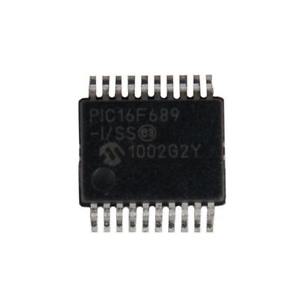
Break IC PIC16F689 Software
The register file is organized as 128 x 8 in the PIC16F687 and 256 x 8 in the PIC16F689. Each register is accessed, either directly or indirectly, through the File Select Register (FSR) (see Section 2.4 “Indirect Addressing, INDF and FSR Registers”). SPECIAL FUNCTION REGISTERS:
The Special Function Registers are registers used by the CPU and peripheral functions for controlling the desired operation of the device (see Tables 2-1 through 2-4). These registers are static RAM which are useful when Break Microcontroller PIC18F4220 Binary.
The special registers can be classified into two sets: core and peripheral. The Special Function Registers associated with the “core” are described in this section. Registers related to the operation of peripheral features are described in the section of that peripheral feature.
The STATUS register, shown in Register 2-1, contains:
· the arithmetic status of the ALU
· the Reset status
· the bank select bits for data memory (GPR and SFR)
The STATUS register can be the destination for any instruction, like any other register. If the STATUS register is the destination for an instruction that affects the Z, DC or C bits, then the write to these three bits is disabled. These bits are set or cleared according to the device logic to facilitate the process of Unlock Microcontroller. Furthermore, the TO and PD bits are not writable. Therefore, the result of an instruction with the STATUS register as destination may be different than intended for the purpose.