 Recover MCU PIC16C622A Software
 February 27th, 2015 |
  Author:
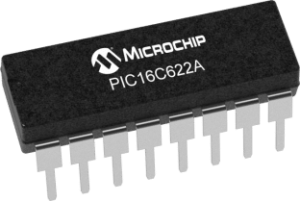
 The PIC16C622A microcontroller is widely celebrated across industrial manufacturing, automotive sub-systems, commercial security setups, and smart consumer appliances due to its efficient 8-bit architecture, an integrated analog comparator module, and highly flexible power-managed modes. This versatile microcontroller acts as the central brain for thousands of legacy hardware applications, coordinating precise operations using proprietary instructions safely embedded deep within its silicon fabric. However, component obsolescence or unexpected corporate mergers frequently leave engineering teams stranded without the original engineering files when a system needs maintenance or migration. When a critical device breaks down and the underlying blueprint is entirely missing, finding a reliable method to pull the original software becomes an absolute operational necessity. Our engineering lab specializes in advanced extraction techniques designed specifically to safely recover MCU PIC16C622A software, providing a seamless lifeline that protects your operational continuity and restores complete access to your valuable hardware logic.
The high performance of the PIC16C62X family can be attributed to a number of architectural features commonly found in RISC microprocessors. To begin with, the PIC16C62X uses a Harvard architecture, in which, program and data are accessed from separate memories using separate busses. This improves bandwidth over traditional von Neumann architecture where program and data are fetched from the same memory. Separating program and data memory further allows instructions to be sized differently than 8-bit wide data word. Instruction opcodes are 14-bits wide making it possible to have all single word instructions.
A 14-bit wide program memory access bus fetches a 14-bit instruction in a single cycle. A two-stage pipeline overlaps fetch and execution of instructions, Consequently, all instructions (35) execute in a single-cycle (200 ns @ 20 MHz) except for program branches. The PIC16C620A and PIC16CR620A address 512 x 14 on-chip program memory. The PIC16C621(A) addresses 1K x 14 program memory. The PIC16C622(A) addresses 2K x 14 program memory. All program memory is internal. The PIC16C62X can directly or indirectly address its register files or data memory. All special function registers including the program counter are mapped in the data memory. The PIC16C62X have an orthogonal (symmetrical) instruction set that makes it possible to carry out any operation on any register using any addressing mode.
This symmetrical nature and lack of ‘special optimal situations’ make programming with the PIC16C62X simple yet efficient. In addition, the learning curve is reduced significantly. The PIC16C62X devices contain an 8-bit ALU and working register. The ALU is a general purpose arithmetic unit. It performs arithmetic and Boolean functions between data in the working register and any register file.
The ALU is 8-bit wide and capable of addition, subtraction, shift and logical operations. Unless otherwise mentioned, arithmetic operations are two’s complement in nature. In two-operand instructions, typically one operand is the working register (W register). The other operand is a file register or an immediate constant. In single operand instructions, the operand is either the W register or a file register. The W register is an 8-bit working register used for ALU operations. It is not an addressable register. Depending on the instruction executed, the ALU may affect the values of the Carry (C), Digit Carry (DC), and Zero (Z) bits in the STATUS register. The C and DC bits operate as a Borrow and Digit Borrow out bit, respectively, bit in subtraction. See the SUBLW and SUBWF instructions for examples.
Extracting code from a locked microcontroller requires navigating sophisticated hardware-level barriers intentionally designed to prevent unauthorized access. To bypass these complex layout constraints, our laboratory utilizes a meticulous, multi-stage physical and electrical process. First, technicians carefully decapsulate the outer epoxy packaging of the integrated circuit using specialized chemical agents, exposing the raw silicon micro-architecture beneath. Once the internal structures are fully visible under high-power microscopy, we carefully attack the internal security mechanisms. By manipulating the internal memory arrays through targeted micro-probing or precise laser tuning, our team can safely bypass the protective code fuses and security bits without degrading the underlying hardware. This allows us to smoothly decode the architecture, break through the embedded encryption, and safely retrieve the complete, unmodified binary data. The ultimate result of this non-destructive extraction is a flawless heximal file, giving you a perfect digital copy of the original machine instructions.
The primary purpose of choosing to hack or decode a heavily secured microcontroller is to safeguard proprietary operational logic from disappearing due to supply chain disruption. When companies cannot locate their original source code, firmware, or system archive, our specialized recovery services step in to prevent a catastrophic, multi-million dollar system redesign. Whether your original software architecture is stored in vintage OTP EPROM, modern flash, or specialized external PLD memory blocks, our custom extraction tools can read and copy every hidden sector. Once the internal program data and configuration matrices are fully extracted, our engineers can seamlessly duplicate the behavior of the device. This comprehensive data capture allows you to clone the original system performance perfectly, giving your team the power to burn the recovered file onto modern, readily available replacement microcontrollers without experiencing a single day of system downtime.
Partnering with an elite laboratory to bypass protected microcontrollers delivers immense financial and technical advantages to project managers and product developers alike. Instead of devoting hundreds of expensive engineering hours to completely reverse-engineering and rewriting an embedded system from scratch—a risky process that frequently introduces dangerous software bugs—our recovery service delivers a direct path to a fully verified, operational firmware file. This complete structural continuity ensures that every newly manufactured duplicate board acts precisely like your original field-tested units. By turning to our specialized extraction services, you effectively eliminate the existential risks of component obsolescence, shield your intellectual property from turning obsolete, and establish a highly stable, long-term framework to manage and update your legacy hardware infrastructure for years to come.
 Posted in Recover Chip