 Recover MCU PIC16C63A Firmware
 March 5th, 2015 |
  Author:
 The PIC16C63A has earned a reputation as a dependable microcontroller for industrial and commercial electronics that require stable operation over many years. Even though newer devices have entered the market, countless legacy systems continue to rely on this controller because of its mature architecture, reliable peripheral integration, and predictable performance. It can be found in industrial automation equipment, security systems, environmental monitoring devices, communication interfaces, consumer electronics, laboratory instruments, automotive accessories, and intelligent control modules. Within these applications, the microcontroller stores essential firmware, operational program logic, calibration data, and system parameters inside its internal memory resources.
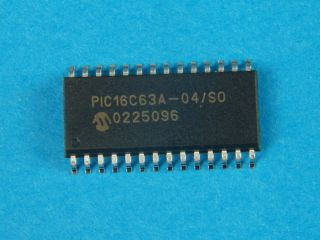
As these products remain in service for decades, manufacturers frequently discover that the original source code, binary, heximal development file, or engineering archive has been misplaced or no longer exists. At the same time, the device may be configured as protected, locked, secured, or encrypted, making recovery of valuable engineering information significantly more challenging. In these situations, preserving the embedded knowledge inside the MCU becomes essential for continued maintenance, product upgrades, and manufacturing continuity.
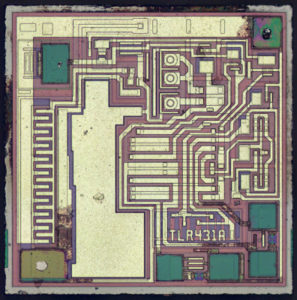
We can Recover MCU PIC16C63A Firmware, please view the MCU PIC16C63A features for your reference:
PIC16CXX Microcontroller Core Features:
· High performance RISC CPU
· Only 35 single word instructions to learn
· All single cycle instructions except for program branches which are two cycle
· Operating speed: DC – 20 MHz clock input DC – 200 ns instruction cycle
· 4 K x 14 words of Program Memory, 192 x 8 bytes of Data Memory (RAM)
· Interrupt capability
· Eight-level deep hardware stack
· Direct, indirect and relative addressing modes
· Power-on Reset (POR)
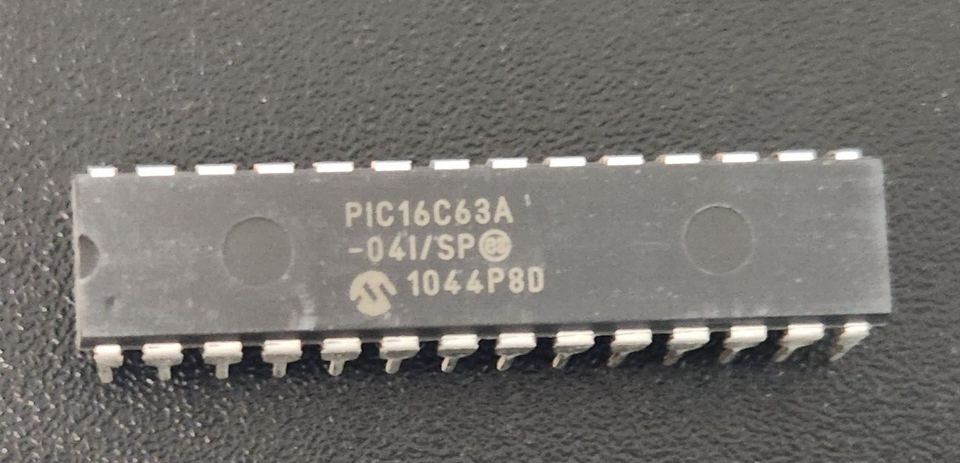
· Power-up Timer (PWRT) and Oscillator Start-up Timer (OST)
· Watchdog Timer (WDT) with its own on-chip RC oscillator for reliable operation
· Programmable code protection
· Power-saving SLEEP mode crystal/clock
· Timer2: 8-bit timer/counter with 8-bit period register, prescaler and postscaler
· Capture, Compare, PWM modules
– Capture is 16-bit, max. resolution is 200 ns
– Compare is 16-bit, max. resolution is 200 ns
– PWM max. resolution is 10-bit
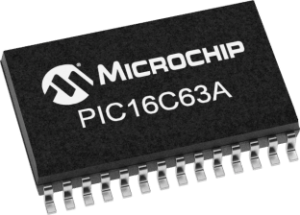
· 8-bit multichannel Analog-to-Digital converter
· Synchronous Serial Port (SSP) with SPITM and I2CTM
· Universal Synchronous Asynchronous Receiver Transmitter (USART/SCI)
· Parallel Slave Port (PSP), 8-bits wide with external RD, WR and CS controls
· Brown-out detection circuitry for Brown-out Reset (BOR)
· Selectable oscillator options
· Low power, high speed CMOS EPROM technology
· Wide operating voltage range: 2.5V to 5.5V
· High Sink/Source Current 25/25 mA
· Commercial, Industrial and Automotive temperature ranges after Recover MCU PIC16C63A Firmware
· Low power consumption:
– < 5 mA @ 5V, 4 MHz
– 23 µA typical @ 3V, 32 kHz
– < 1.2 µA typical standby current
Our Recover MCU PIC16C63A firmware service is designed to help equipment manufacturers, maintenance organizations, and authorized product owners regain access to valuable engineering assets stored within legacy microcontrollers. Using advanced laboratory analysis together with structured recovery workflows, our engineering team can retrieve available firmware, organize historical binary and heximal images, and reconstruct meaningful engineering data from internal memory.
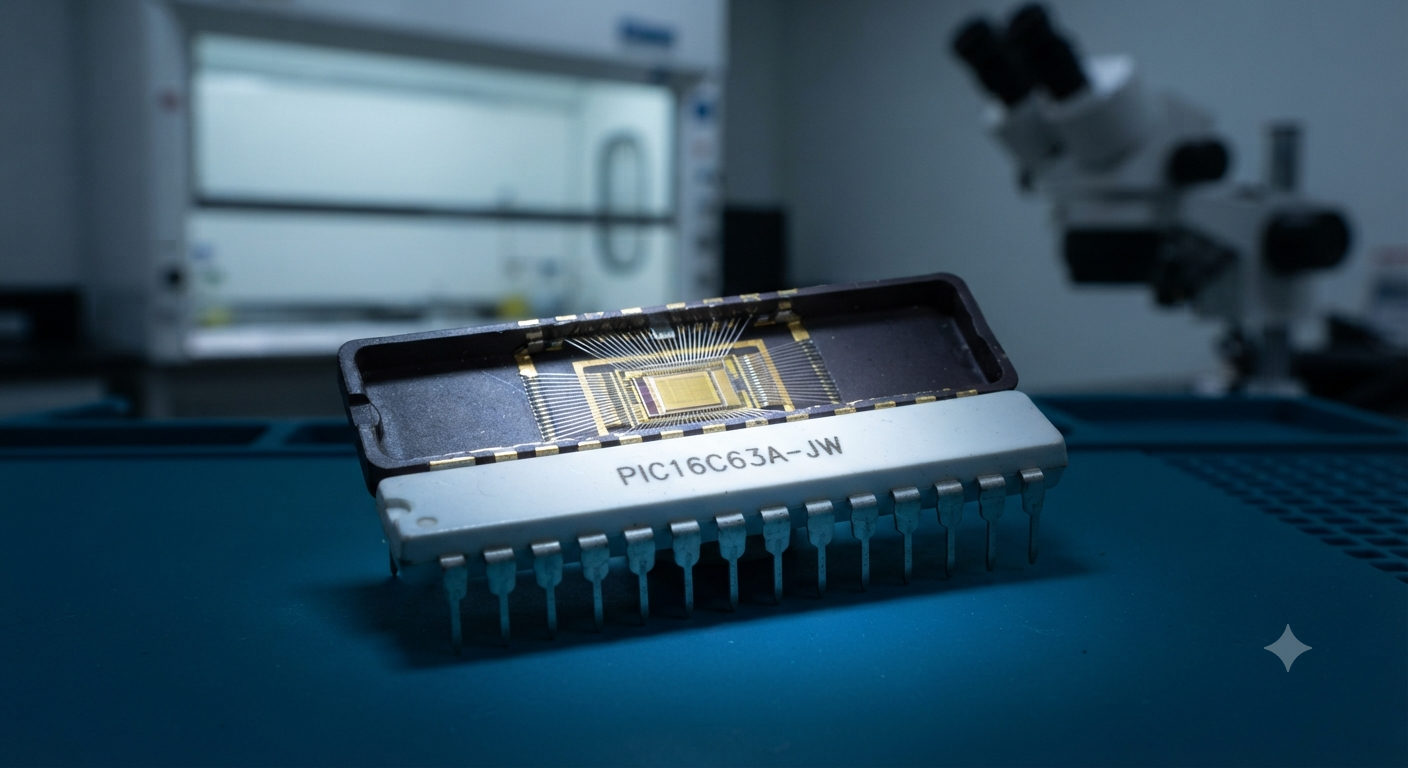
Depending on the project requirements and the condition of the device, carefully controlled semiconductor examination, including specialized decapsulate procedures where appropriate, may assist in understanding the storage organization of the microcontroller. Sophisticated decode techniques are then used to interpret recovered program structures and convert fragmented data into organized file and archive formats suitable for engineering evaluation. For organizations maintaining discontinued products, the recovered information can support documentation rebuilding, compatibility verification, controlled clone development, and limited duplicate manufacturing of existing hardware.
Projects involving protected, locked, or encrypted devices are evaluated individually so the most appropriate recovery methodology can be selected. Rather than simply attempting to attack, break, or hack a device, our objective is to preserve valuable embedded engineering information while respecting customer ownership and authorization requirements.
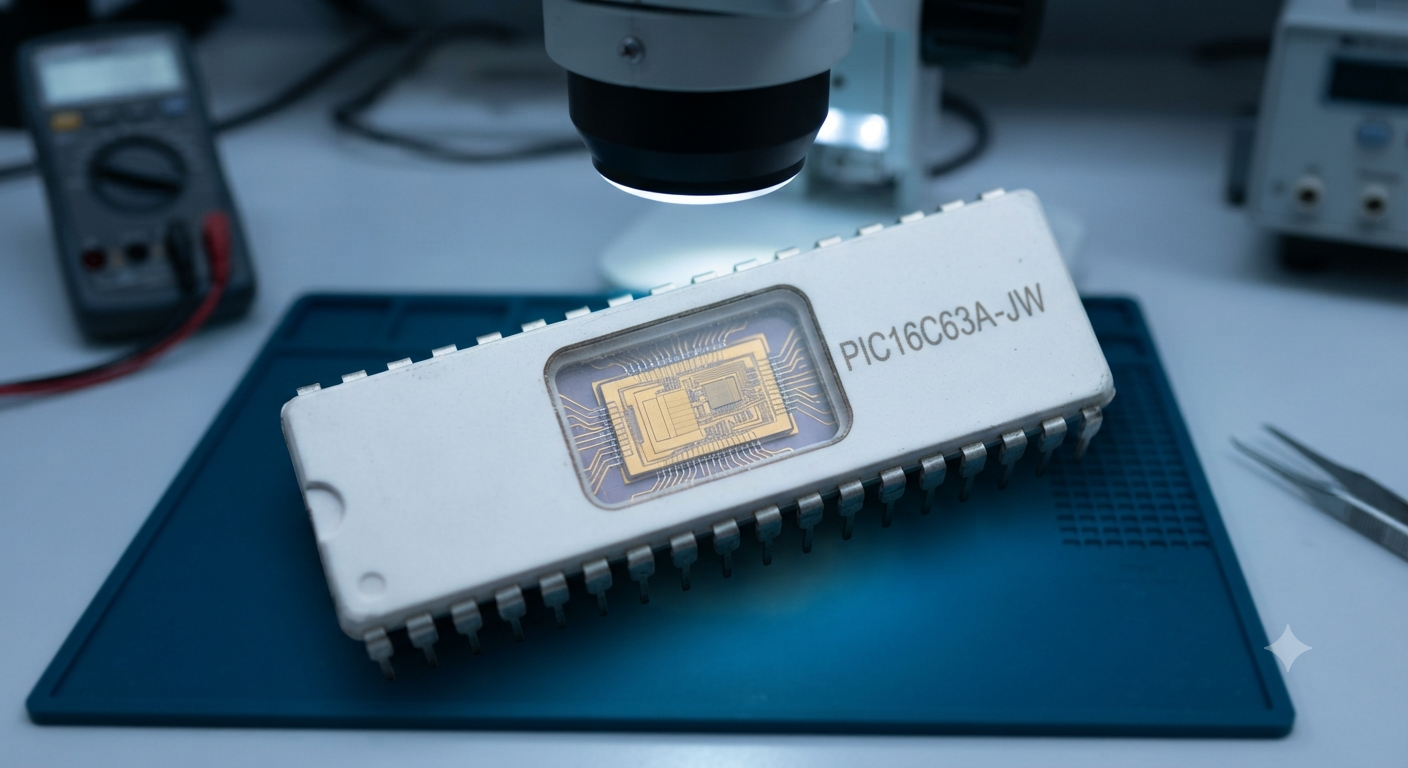
Every firmware recovery project requires a combination of semiconductor expertise and software analysis. Our workflow begins with a comprehensive assessment of the MCU to determine the condition of its internal memory, the integrity of stored data, and the feasibility of reconstructing the original firmware. Once the available binary or heximal information has been collected, multiple validation stages are performed to ensure consistency and completeness. Engineers analyze relationships between recovered program sections, configuration information, and supporting archive records to rebuild useful engineering resources.
Where appropriate, advanced laboratory techniques assist in examining difficult-to-access memory regions that have been configured with additional protective security mechanisms. The recovered source code references, file structures, and firmware images provide valuable technical insight that can be used to understand product operation, verify historical revisions, support hardware migration, or facilitate future redevelopment. Throughout the process, the emphasis remains on accurate retrieve, careful decode, and reliable preservation of embedded knowledge rather than destructive experimentation.
For end users, recovering the PIC16C63A firmware offers practical advantages that extend well beyond obtaining a simple memory image. Access to historical firmware, validated binary files, organized archive records, and reconstructed source code can significantly reduce redevelopment costs while extending the service life of existing products. Engineering teams are able to maintain legacy equipment, replace obsolete components, improve technical documentation, and support future modernization without redesigning proven systems from the beginning.
Whether the objective is lifecycle management, long-term maintenance, compatibility analysis, or preservation of valuable embedded intellectual property, our recovery service transforms inaccessible engineering assets into reusable technical resources. By combining extensive experience in embedded electronics, firmware analysis, and memory recovery, we provide customers with a dependable solution that helps preserve critical technologies and supports the continued success of legacy electronic products for many years to come.
 Posted in Recover Chip