Archive for the ‘Recover Chip’ Category
 Recover Chip PIC16C73B Firmware
 March 8th, 2015 |
  Author:
 The PIC16C73B is a proven and reliable microcontroller widely used in long-term electronic applications that require stable control performance, compact design, and dependable operation. As a mature MCU platform, this IC has been integrated into industrial automation equipment, automotive control modules, consumer electronics, communication devices, measurement instruments, security products, and specialized embedded controllers. The architecture of this microprocessor allows developers to store important firmware, application program instructions, configuration data, and operational parameters inside internal memory resources, including eeprom and program storage areas.
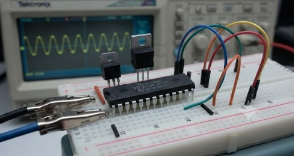
Many of these products remain active in the market for decades, but companies often encounter difficulties when original development documents, software archives, or engineering files are lost. Furthermore, the internal resources of the chip may be configured with protective, protected, locked, secured, or encrypted settings to safeguard intellectual property. When direct access to the original binary, heximal, source code, or firmware archive is unavailable, professional recovery services become essential for maintaining and extending the lifecycle of valuable electronic products.
The PIC16C73B devices fit nicely in many applications ranging from security and remote sensors to appliance control and automotive. The EPROM technology makes customization of application programs (transmitter codes, motor speeds, receiver frequencies, etc.) extremely fast and convenient.
The small footprint packages make this microcontroller series perfect for all applications with space limitations. Low cost, low power, high performance, ease of use and I/O flexibility make the PIC16C65B devices very versatile, even in areas where no microcontroller use has been considered before (e.g., timer functions, serial communication, capture and compare, PWM functions and coprocessor applications).
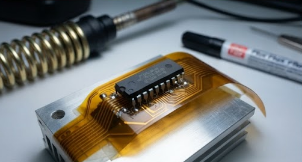
Users familiar with the PIC16C5X microcontroller family will realize that this is an enhanced version of the PIC16C5X architecture. Please refer to Appendix A for a detailed list of enhancements. Code written for the PIC16C5X can be easily ported to the PIC16CXX family of devices.
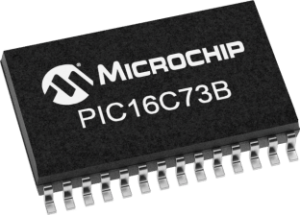
PICmicro® devices are supported by the complete line of Microchip Development tools. Please refer to Section 15.0 for more details about Microchip’s development tools which can also being used for Microcontroller Unlocking.
Our “Recover Chip PIC16C73B firmware” service provides specialized support for authorized recovery, analysis, and preservation of embedded software resources stored inside legacy microcontroller systems. Through advanced engineering evaluation, our specialists can analyze the internal structure of the MCU, identify available firmware content, and assist in recovering valuable memory information from the target IC. Depending on device condition and project requirements, carefully controlled semiconductor analysis methods, including specialized decapsulate procedures, may be applied to gain deeper understanding of internal storage structures. Using advanced recovery workflows, engineers can retrieve available binary images, organize heximal information, and reconstruct meaningful data from internal storage areas.
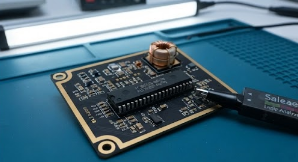
Sophisticated decode processes help transform recovered information into structured file and archive formats, allowing engineers to study original program behavior and preserve important technical knowledge. For projects involving encrypted, secured, or locked devices, our team evaluates the device architecture and applies suitable analysis methods to understand available resources. The recovered firmware, eeprom content, and embedded data can support product maintenance, redesign projects, compatibility evaluation, and controlled clone or duplicate development where authorized.
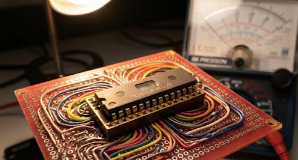
A variety of frequency ranges and packaging options are available. Depending on application and production requirements, the proper device option can be selected using the information in the PIC16C73B Product Identification System section at the end of this data sheet. When placing orders, please use that page of the data sheet to specify the correct part number. For the PIC16C7X family, there are two device “types” as indicated in the device number.
The recovery process involves a combination of hardware investigation and software-level analysis. Engineers first examine the physical condition of the chip, evaluate the relationship between the internal memory, firmware structure, and hardware operation, then perform detailed analysis of recovered information. During this stage, specialized tools may assist in processing extracted binary and heximal data, identifying important sections of the original program, and reconstructing historical firmware structures. In some cases, laboratory-level inspection and controlled decapsulate techniques may help analyze difficult-to-access areas within the semiconductor structure. The objective is to understand the operation of the microprocessor and preserve valuable embedded resources rather than simply extracting raw information. Through detailed evaluation of flash, eeprom, and memory organization, our specialists can support the recovery of important source code references, configuration data, and software archives. This capability is especially valuable for obsolete products where original design files, programming environments, or engineering documentation are no longer available. Instead of rebuilding a complete system from zero, customers can utilize recovered firmware and technical archive resources to maintain proven hardware platforms.
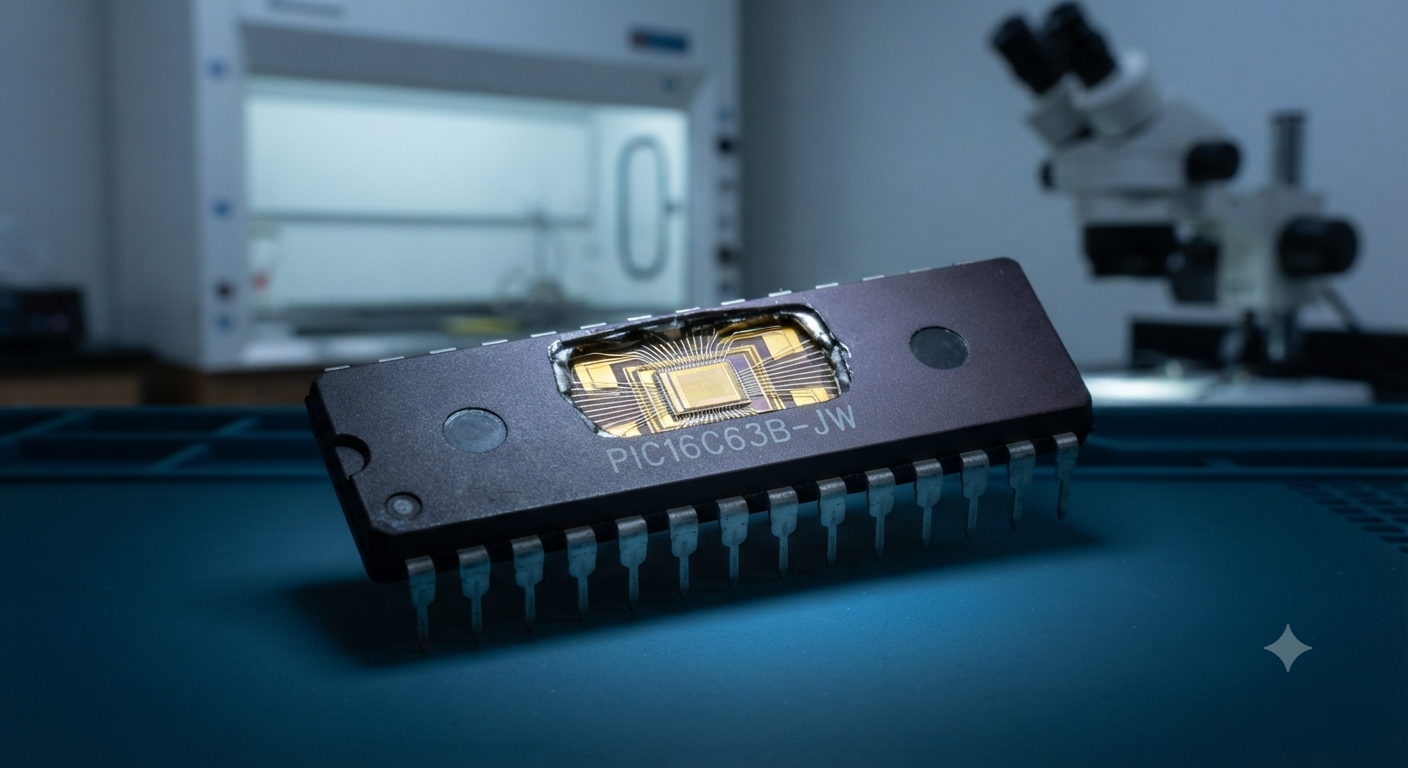
For manufacturers, engineering companies, and maintenance providers, recovering PIC16C73B firmware delivers significant practical benefits. Access to historical program files, reconstructed binary resources, and organized data archives helps reduce redevelopment costs, improve troubleshooting efficiency, and extend the operational life of existing equipment. Companies can preserve legacy designs, support discontinued products, and prepare future upgrades with greater confidence. By combining experience in microcontroller analysis, embedded firmware recovery, and electronic system preservation, our service provides a reliable solution for transforming inaccessible information inside a PIC16C73B IC into valuable engineering resources. Whether the goal is restoration, redesign, compatibility improvement, or long-term product support, our recovery capability helps customers protect their technological investments and maintain continuity across critical embedded applications.
 Posted in
Reverse Engineering Microcontroller PIC16C65B Eeprom
The PIC16C65B is a classic and reliable microcontroller widely used in long-life electronic products where stability, compatibility, and predictable operation are essential. As a mature MCU platform, this IC has been integrated into industrial controllers, communication equipment, automotive electronics, measurement instruments, security systems, laboratory devices, and consumer products. Its architecture provides dependable control processing while supporting internal eeprom and memory resources for storing operational firmware, configuration parameters, and application program information.
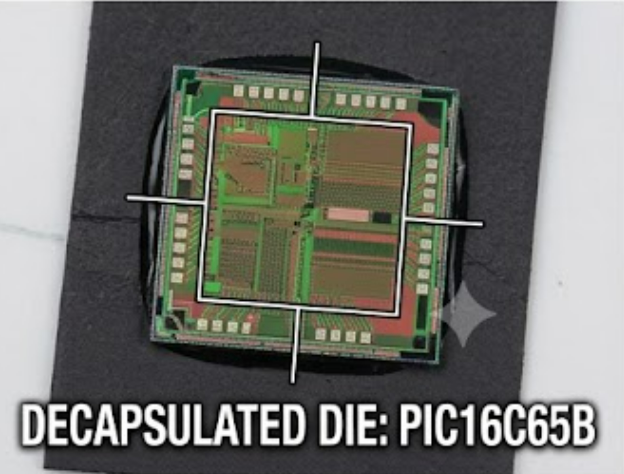
Many products based on this chip continue operating in the field for many years, but manufacturers and maintenance teams often face challenges when original design documents, development files, or software archives are no longer available. In addition, the stored data inside the device may be configured with protective, protected, locked, or secured mechanisms, making access to the original binary, heximal, and source code resources difficult. Under these circumstances, professional reverse engineering services become an effective solution for preserving valuable embedded technology.
The separate instruction and data buses of the Harvard architecture allow a 14-bit wide instruction word with the separate 8-bit wide data. The two stage instruction pipeline allows all instructions to execute in a single cycle, except for program branches, which require two cycles. A total of 35 instructions (reduced instruction set) are available.
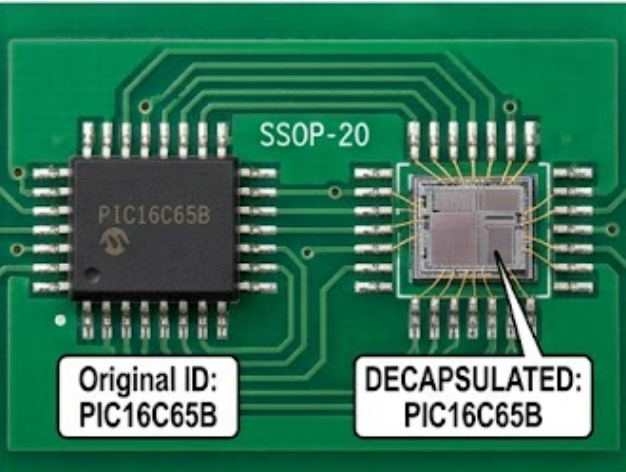
Additionally, a large register set gives some of the architectural innovations used to achieve a very high performance. The PIC16C65B devices have 22 I/O pins. The PIC16C65B/74B devices have 33 I/O pins. Each device has 192 bytes of RAM.
Our “Reverse Engineering Microcontroller PIC16C65B eeprom” service focuses on analyzing, recovering, and documenting the valuable information stored inside legacy microprocessor systems. Through advanced engineering analysis, our specialists can evaluate the internal structure of the MCU, identify stored firmware resources, and support the recovery of available eeprom, memory, and embedded data. Depending on the condition of the target IC and project requirements, controlled semiconductor inspection and specialized decapsulate techniques may be applied to assist deeper analysis of the internal architecture.
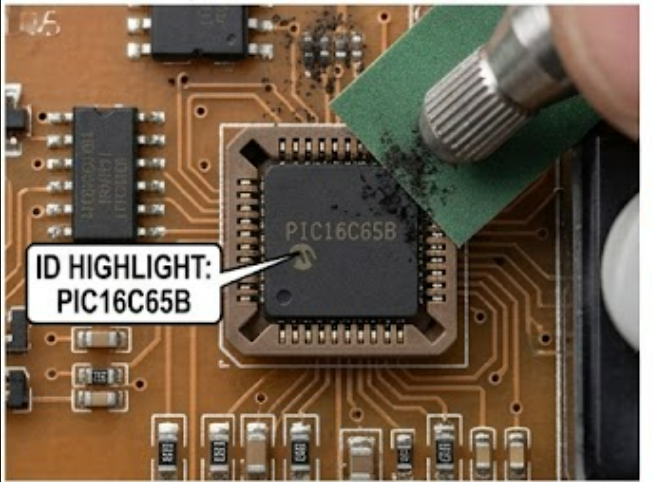
By combining hardware evaluation with software interpretation methods, we can retrieve meaningful binary and heximal information, organize fragmented file structures, and rebuild historical archive resources. Advanced decode processes help transform collected information into understandable engineering data, allowing customers to analyze original program behavior and preserve important design knowledge. For authorized projects involving encrypted, secured, or locked devices, our engineers apply professional recovery approaches to study the device configuration and determine suitable methods for accessing available information. The recovered resources can support product documentation, maintenance, redesign, compatibility studies, and controlled clone or duplicate development when required.
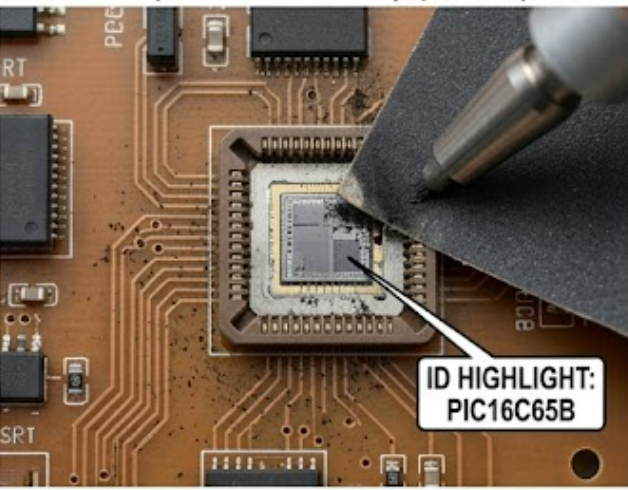
In addition, several peripheral features are available, including: three timer/ counters, two Capture/Compare/PWM modules, and two serial ports which can be applied. The Synchronous Serial Port (SSP) can be configured as either a 3-wire Serial Peripheral Interface (SPI) or the two-wire Inter-Integrated Circuit (I 2C) bus. The Universal Synchronous Asynchronous Receiver Transmitter (USART) is also known as the Serial Communications Interface or SCI. Also, a 5- channel high speed 8-bit A/D is provided. The 8-bit resolution is ideally suited for applications requiring low cost analog interface, e.g., thermostat control, pressure sensing, etc. The PIC16C73B devices have special features to reduce external components, thus reducing cost, enhancing system reliability and reducing power consumption.
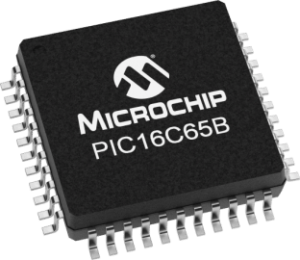
There are four oscillator options, of which the single pin RC oscillator provides a low cost solution, the LP oscillator minimizes power consumption, XT is a standard crystal, and the HS is for high speed crystal. The SLEEP (power-down) feature provides a power-saving mode. The user can wake-up the chip from SLEEP through several external and internal interrupts and RESETS.
The reverse engineering process for the PIC16C65B involves multiple stages of investigation rather than a single extraction operation. Engineers first examine the physical condition of the chip, identify the storage organization, and evaluate the relationship between the internal eeprom, firmware structure, and application logic. During the analysis stage, specialized tools may be used to decode recovered binary information and compare it with existing hardware behavior.
When necessary, laboratory procedures can include carefully managed decapsulate operations to gain additional visibility into internal structures. The objective is to understand how the original microcontroller operates and reconstruct useful engineering resources without losing critical information. By analyzing embedded flash, eeprom, and memory-related components, specialists can recover valuable data that supports future development. This capability is especially important for obsolete electronic products where the original manufacturer files, software environment, or source documentation have disappeared. Instead of completely redesigning a proven system, engineers can use recovered firmware, program information, and technical archive records to extend product availability and improve maintenance efficiency.
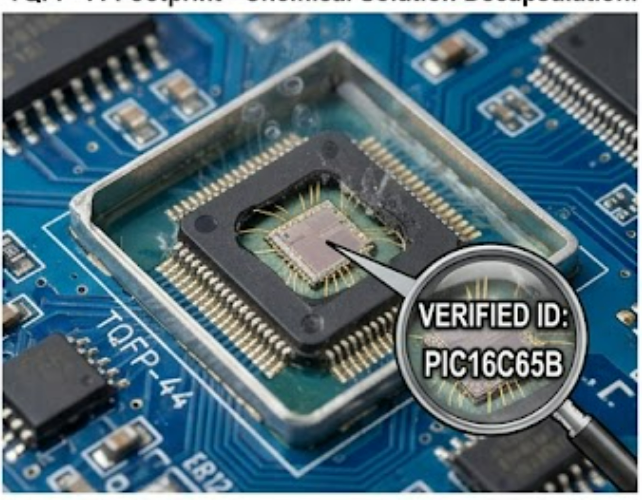
For end users, PIC16C65B eeprom reverse engineering provides significant advantages in preserving existing investments and reducing engineering costs. Companies can maintain legacy equipment, reproduce discontinued control boards, verify historical designs, and support future upgrades using recovered technical resources. Access to original firmware, organized binary files, reconstructed source code references, and validated data archives enables faster troubleshooting and more efficient product lifecycle management. Whether the goal is restoration, redesign, compatibility improvement, or long-term technical preservation, our service helps convert inaccessible information inside an embedded IC into valuable engineering knowledge. With professional experience in microcontroller, microprocessor, and firmware analysis, we provide a reliable pathway for recovering critical electronic assets and extending the operational life of important embedded systems.
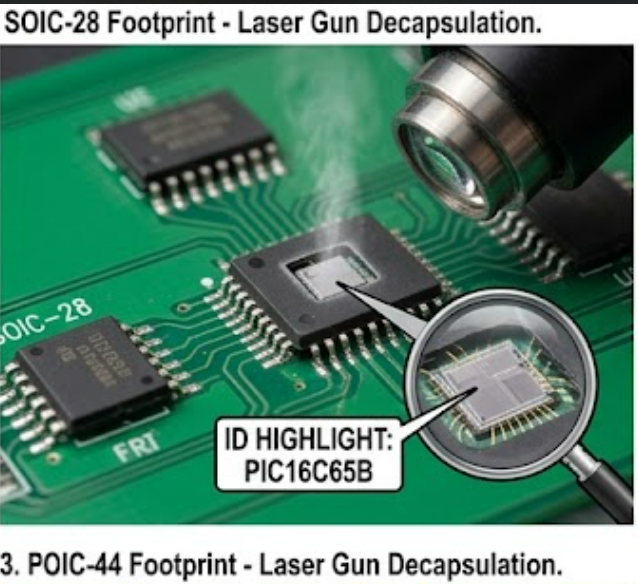
Recover MCU PIC16C63A Firmware
The PIC16C63A has earned a reputation as a dependable microcontroller for industrial and commercial electronics that require stable operation over many years. Even though newer devices have entered the market, countless legacy systems continue to rely on this controller because of its mature architecture, reliable peripheral integration, and predictable performance. It can be found in industrial automation equipment, security systems, environmental monitoring devices, communication interfaces, consumer electronics, laboratory instruments, automotive accessories, and intelligent control modules. Within these applications, the microcontroller stores essential firmware, operational program logic, calibration data, and system parameters inside its internal memory resources.
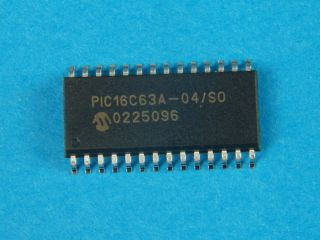
As these products remain in service for decades, manufacturers frequently discover that the original source code, binary, heximal development file, or engineering archive has been misplaced or no longer exists. At the same time, the device may be configured as protected, locked, secured, or encrypted, making recovery of valuable engineering information significantly more challenging. In these situations, preserving the embedded knowledge inside the MCU becomes essential for continued maintenance, product upgrades, and manufacturing continuity.
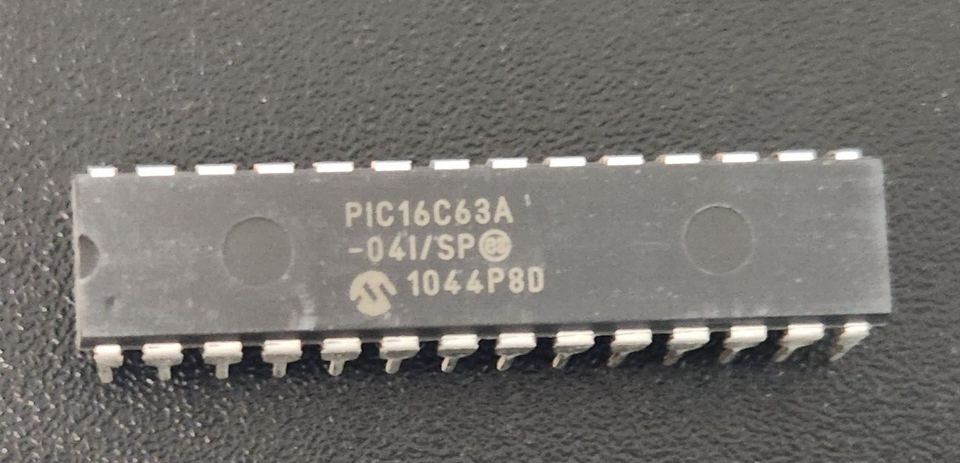
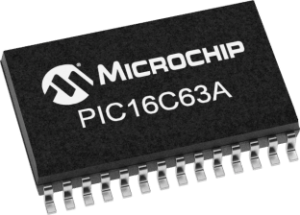
We can Recover MCU PIC16C63A Firmware, please view the MCU PIC16C63A features for your reference:
PIC16CXX Microcontroller Core Features:
· High performance RISC CPU
· Only 35 single word instructions to learn
· All single cycle instructions except for program branches which are two cycle
· Operating speed: DC – 20 MHz clock input DC – 200 ns instruction cycle
· 4 K x 14 words of Program Memory, 192 x 8 bytes of Data Memory (RAM)
· Interrupt capability
· Eight-level deep hardware stack
· Direct, indirect and relative addressing modes
· Power-on Reset (POR)
· Power-up Timer (PWRT) and Oscillator Start-up Timer (OST)
· Watchdog Timer (WDT) with its own on-chip RC oscillator for reliable operation
· Programmable code protection
· Power-saving SLEEP mode crystal/clock
· Timer2: 8-bit timer/counter with 8-bit period register, prescaler and postscaler
· Capture, Compare, PWM modules
– Capture is 16-bit, max. resolution is 200 ns
– Compare is 16-bit, max. resolution is 200 ns
– PWM max. resolution is 10-bit
· 8-bit multichannel Analog-to-Digital converter
· Synchronous Serial Port (SSP) with SPITM and I2CTM
· Universal Synchronous Asynchronous Receiver Transmitter (USART/SCI)
· Parallel Slave Port (PSP), 8-bits wide with external RD, WR and CS controls
· Brown-out detection circuitry for Brown-out Reset (BOR)
· Selectable oscillator options
· Low power, high speed CMOS EPROM technology
· Wide operating voltage range: 2.5V to 5.5V
· High Sink/Source Current 25/25 mA
· Commercial, Industrial and Automotive temperature ranges after Recover MCU PIC16C63A Firmware
· Low power consumption:
– < 5 mA @ 5V, 4 MHz
– 23 µA typical @ 3V, 32 kHz
– < 1.2 µA typical standby current
Our Recover MCU PIC16C63A firmware service is designed to help equipment manufacturers, maintenance organizations, and authorized product owners regain access to valuable engineering assets stored within legacy microcontrollers. Using advanced laboratory analysis together with structured recovery workflows, our engineering team can retrieve available firmware, organize historical binary and heximal images, and reconstruct meaningful engineering data from internal memory.
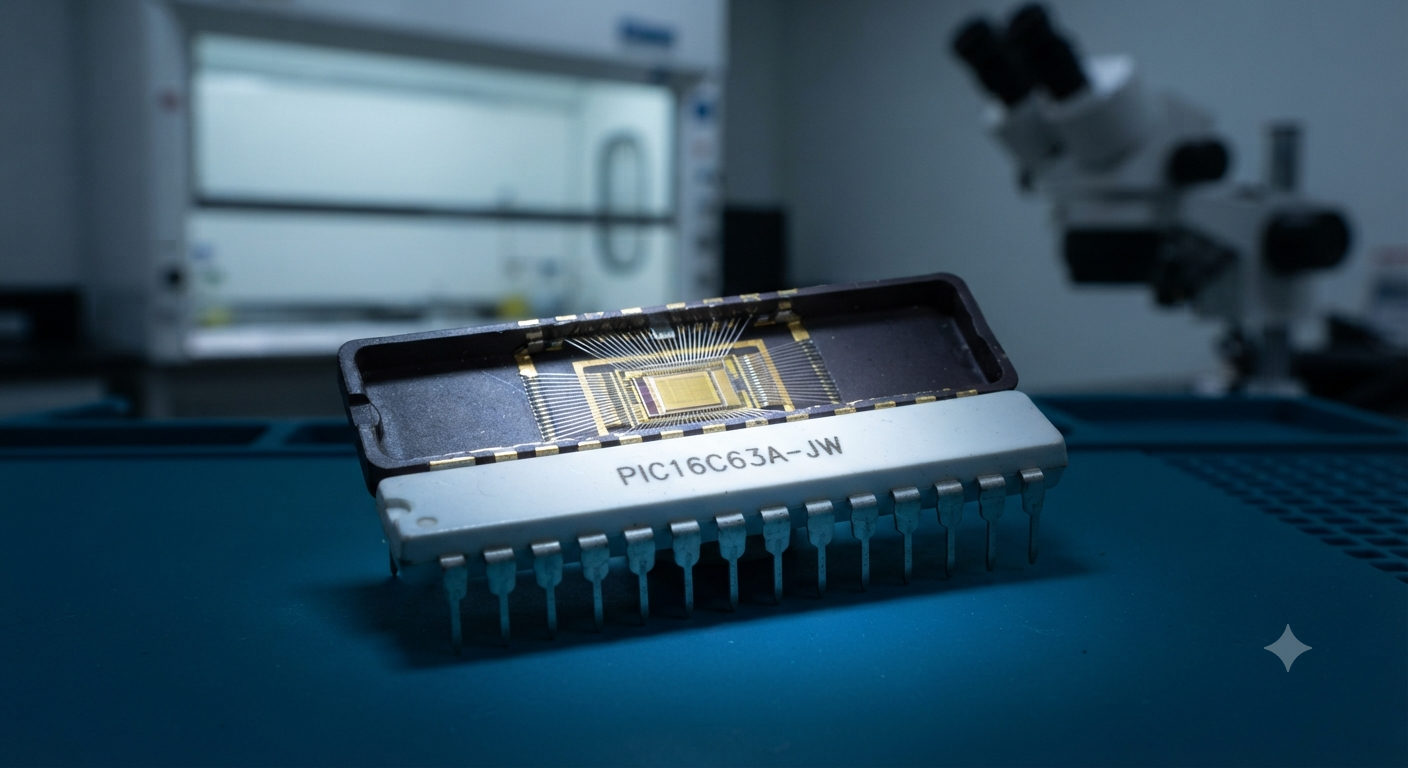
Depending on the project requirements and the condition of the device, carefully controlled semiconductor examination, including specialized decapsulate procedures where appropriate, may assist in understanding the storage organization of the microcontroller. Sophisticated decode techniques are then used to interpret recovered program structures and convert fragmented data into organized file and archive formats suitable for engineering evaluation. For organizations maintaining discontinued products, the recovered information can support documentation rebuilding, compatibility verification, controlled clone development, and limited duplicate manufacturing of existing hardware.
Projects involving protected, locked, or encrypted devices are evaluated individually so the most appropriate recovery methodology can be selected. Rather than simply attempting to attack, break, or hack a device, our objective is to preserve valuable embedded engineering information while respecting customer ownership and authorization requirements.
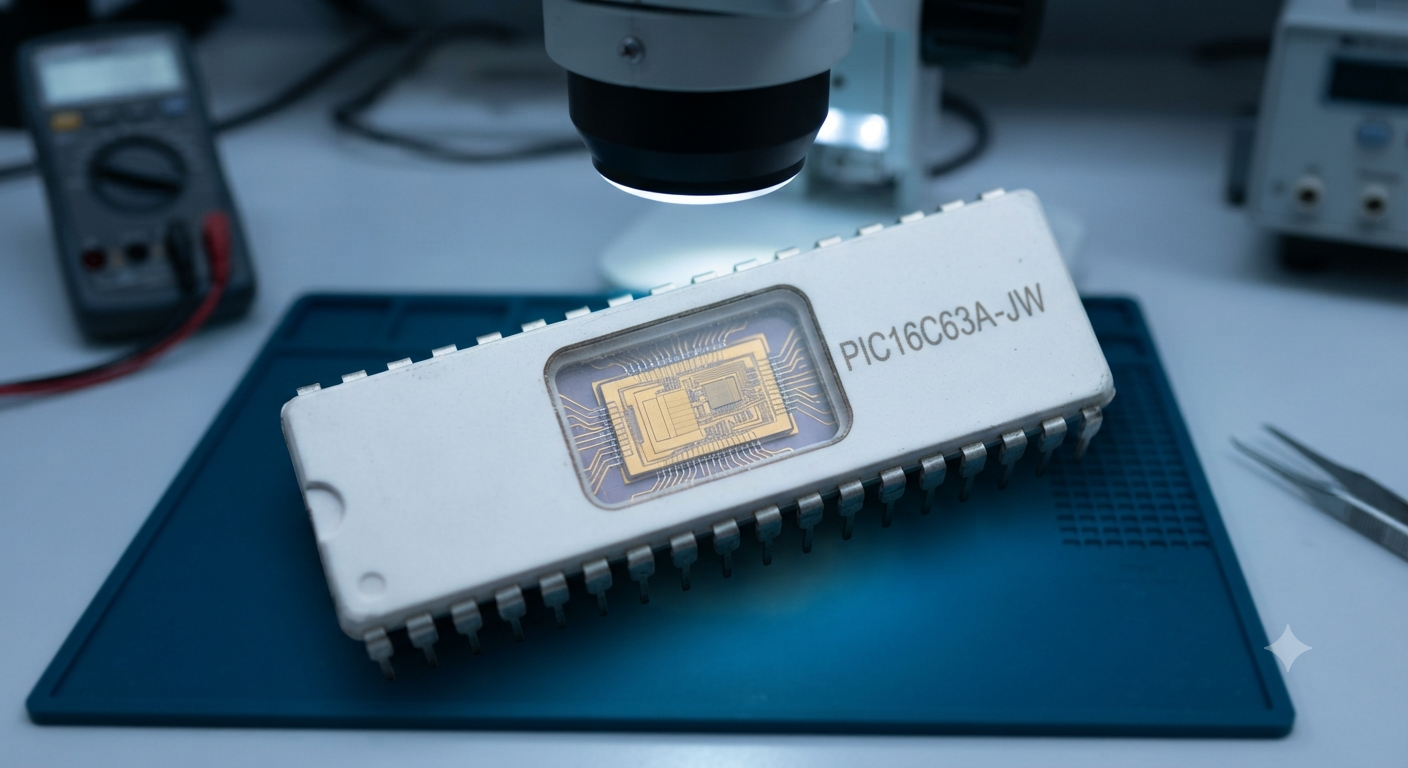
Every firmware recovery project requires a combination of semiconductor expertise and software analysis. Our workflow begins with a comprehensive assessment of the MCU to determine the condition of its internal memory, the integrity of stored data, and the feasibility of reconstructing the original firmware. Once the available binary or heximal information has been collected, multiple validation stages are performed to ensure consistency and completeness. Engineers analyze relationships between recovered program sections, configuration information, and supporting archive records to rebuild useful engineering resources.
Where appropriate, advanced laboratory techniques assist in examining difficult-to-access memory regions that have been configured with additional protective security mechanisms. The recovered source code references, file structures, and firmware images provide valuable technical insight that can be used to understand product operation, verify historical revisions, support hardware migration, or facilitate future redevelopment. Throughout the process, the emphasis remains on accurate retrieve, careful decode, and reliable preservation of embedded knowledge rather than destructive experimentation.
For end users, recovering the PIC16C63A firmware offers practical advantages that extend well beyond obtaining a simple memory image. Access to historical firmware, validated binary files, organized archive records, and reconstructed source code can significantly reduce redevelopment costs while extending the service life of existing products. Engineering teams are able to maintain legacy equipment, replace obsolete components, improve technical documentation, and support future modernization without redesigning proven systems from the beginning.
Whether the objective is lifecycle management, long-term maintenance, compatibility analysis, or preservation of valuable embedded intellectual property, our recovery service transforms inaccessible engineering assets into reusable technical resources. By combining extensive experience in embedded electronics, firmware analysis, and memory recovery, we provide customers with a dependable solution that helps preserve critical technologies and supports the continued success of legacy electronic products for many years to come.
Recover Chip PIC16C62B Eeprom
The PIC16C62B has been a dependable microcontroller in countless embedded applications for many years. Its compact architecture, stable operating characteristics, and low power consumption have made it a popular choice for industrial automation equipment, security controllers, consumer electronics, environmental monitoring devices, medical instruments, communication interfaces, and automotive accessories. Within these products, the microcontroller stores critical firmware, application program logic, operational data, and configuration parameters inside internal eeprom and other memory resources. As equipment remains in service long after development has ended, manufacturers frequently discover that the original source code, binary, heximal, engineering file, or project archive has disappeared. At the same time, the device itself is often configured with protected, locked, secured, or encrypted settings to safeguard valuable intellectual property throughout the product lifecycle.
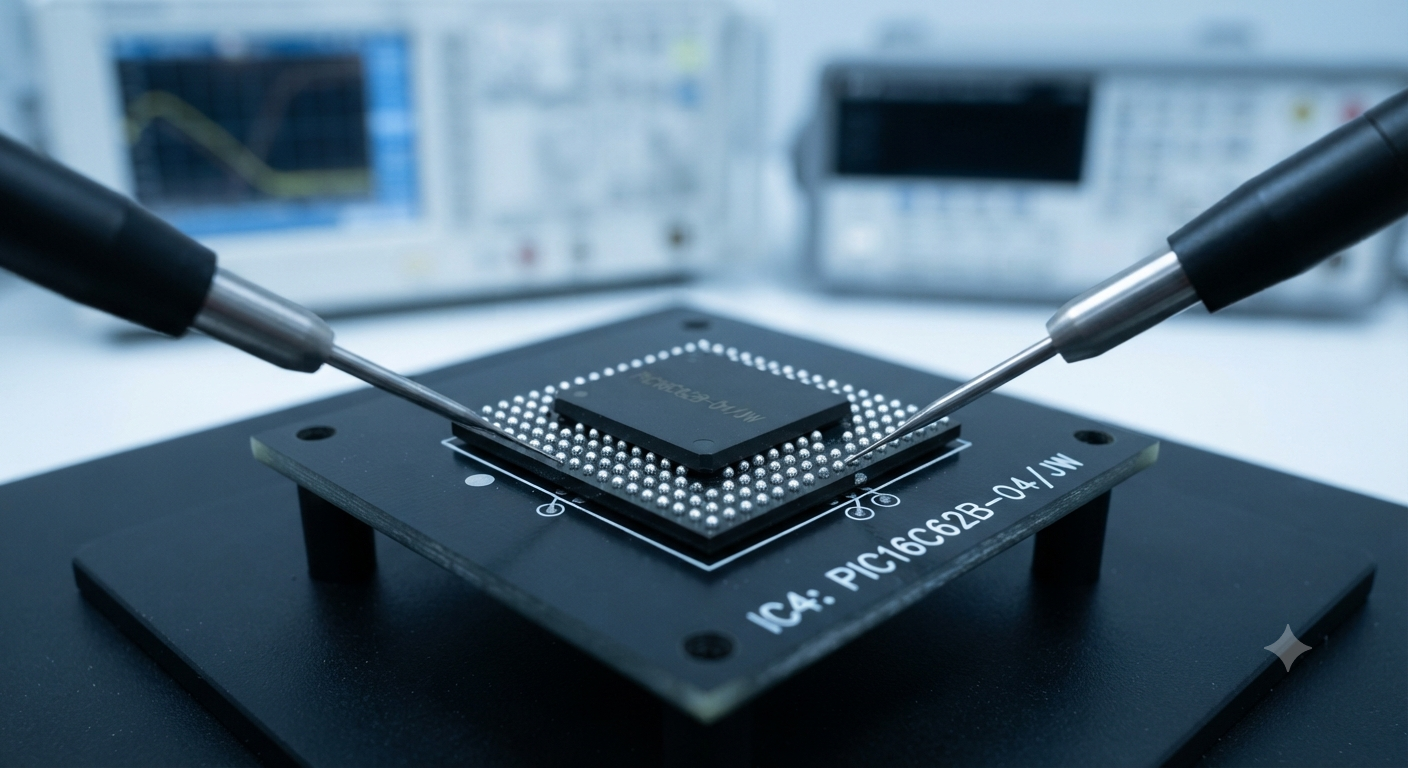
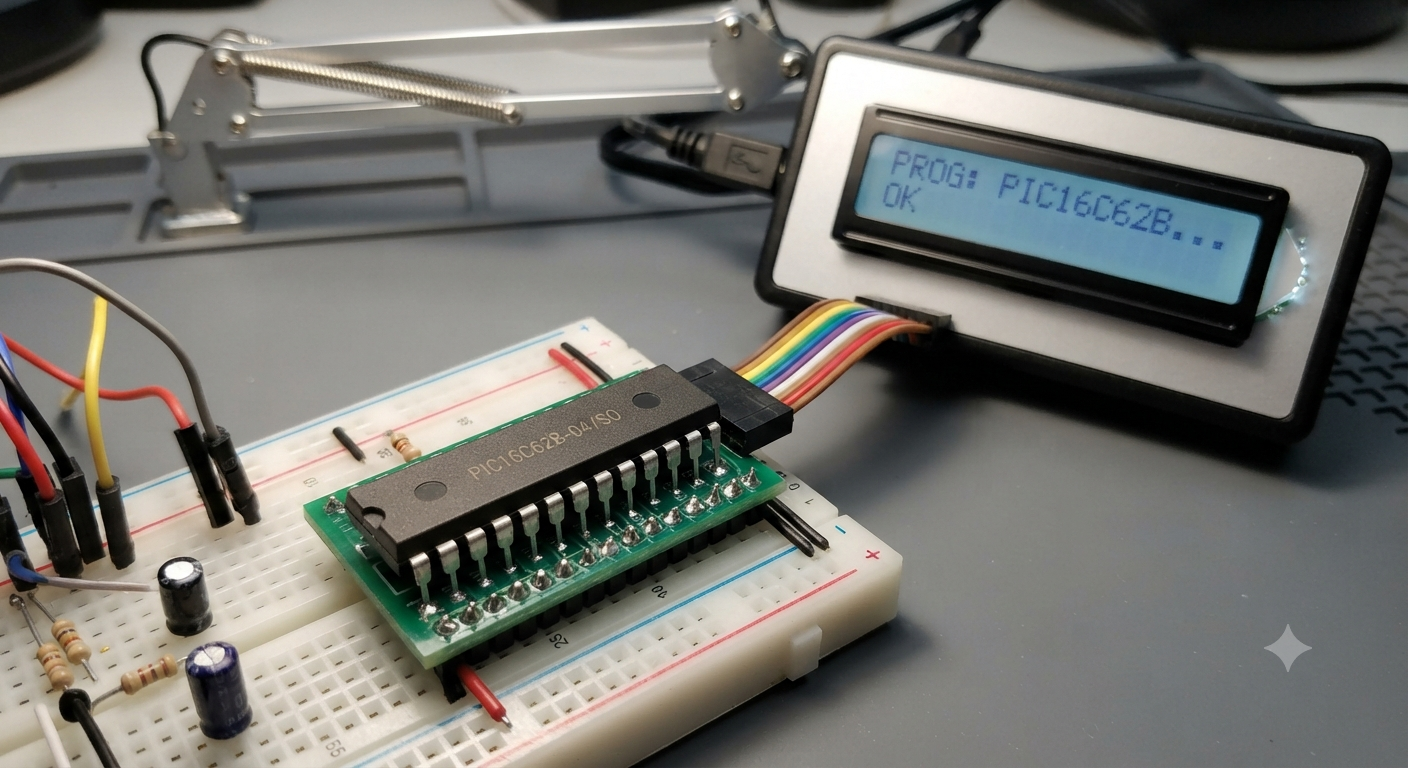
We can recover Chip PIC16C62B Eeprom, please view the Chip PIC16C62B features for your reference:
Microcontroller Core Features:
· High-performance RISC CPU
· Only 35 single word instructions to learn
· All single cycle instructions except for program branches, which are two cycle
· Operating speed: DC – 20 MHz clock input DC – 200 ns instruction cycle
· 2K x 14 words of Program Memory, 128 x 8 bytes of Data Memory (RAM)
· Interrupt capability
· Eight level deep hardware stack
· Direct, indirect, and relative addressing modes
· Power-on Reset (POR)
· Power-up Timer (PWRT) and Oscillator Start-up Timer (OST)
· Watchdog Timer (WDT) with its own on-chip RC oscillator for reliable operation
· Brown-out detection circuitry for Brown-out Reset (BOR)
· Programmable code-protection
· Power saving SLEEP mode
· Selectable oscillator options
· Low-power, high-speed CMOS EPROM technology
· Fully static design
· In-Circuit Serial Programming (ICSP)
· Wide operating voltage range: 2.5V to 5.5V
· High Sink/Source Current 25/25 mA
· Commercial, Industrial and Extended temperature ranges
· Low-power consumption:
– < 2 mA @ 5V, 4 MHz
– 22.5 µA typical @ 3V, 32 kHz
– < 1 µA typical standby current
Peripheral Features:
· Timer0: 8-bit timer/counter with 8-bit prescaler
· Timer1: 16-bit timer/counter with prescaler, can be incremented during sleep via external crystal/clock
· Timer2: 8-bit timer/counter with 8-bit period register, prescaler and postscaler
· Capture, Compare, PWM module
· Capture is 16-bit, max. resolution is 12.5 ns,
Compare is 16-bit, max. resolution is 200 ns, PWM maximum resolution is 10-bit
· 8-bit multi-channel Analog-to-Digital converter
Our “Recover Chip PIC16C62B eeprom” service is designed to help equipment owners and authorized manufacturers regain access to these important engineering assets. Using advanced laboratory analysis and structured recovery techniques, our specialists can retrieve valuable firmware, organize historical data, and reconstruct available binary and heximal information from internal memory. Depending on the condition of the device and project requirements, controlled semiconductor examination, including carefully managed decapsulate procedures where appropriate, may assist the recovery process. Sophisticated decode methods help interpret recovered program structures and organize them into meaningful file and archive formats for engineering evaluation. When customers need to preserve existing products or maintain production continuity, recovered information can support compatible clone verification, controlled duplicate manufacturing, documentation rebuilding, and long-term maintenance planning. Projects involving highly protected or encrypted devices are evaluated individually to determine the most appropriate recovery methodology while respecting ownership and authorization requirements.
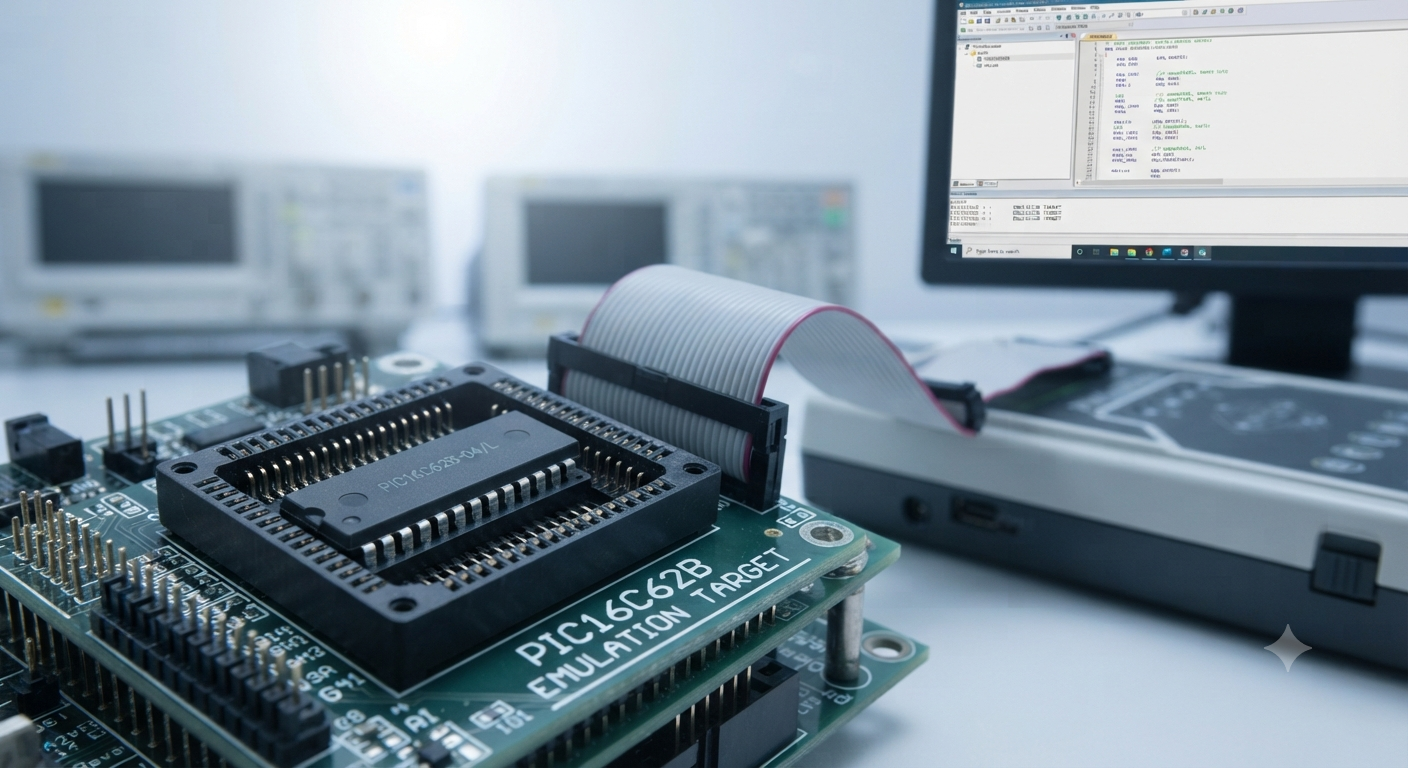
The recovery workflow combines extensive hardware knowledge with advanced firmware analysis. Engineers first evaluate the condition of the microcontroller and its internal memory organization before collecting available data from the device. Recovered binary images are validated and processed to reconstruct meaningful firmware, application program behavior, and historical source code references whenever feasible. Throughout the process, specialized analytical tools are used to decode storage structures and verify the consistency of recovered archive contents. Where legally authorized, advanced laboratory techniques may assist in understanding inaccessible memory regions that have been configured with locked, secured, or protective settings. Rather than simply attempting to attack, break, or hack a device, the objective is to preserve valuable engineering information and transform fragmented electronic assets into reliable technical documentation that supports future product development.
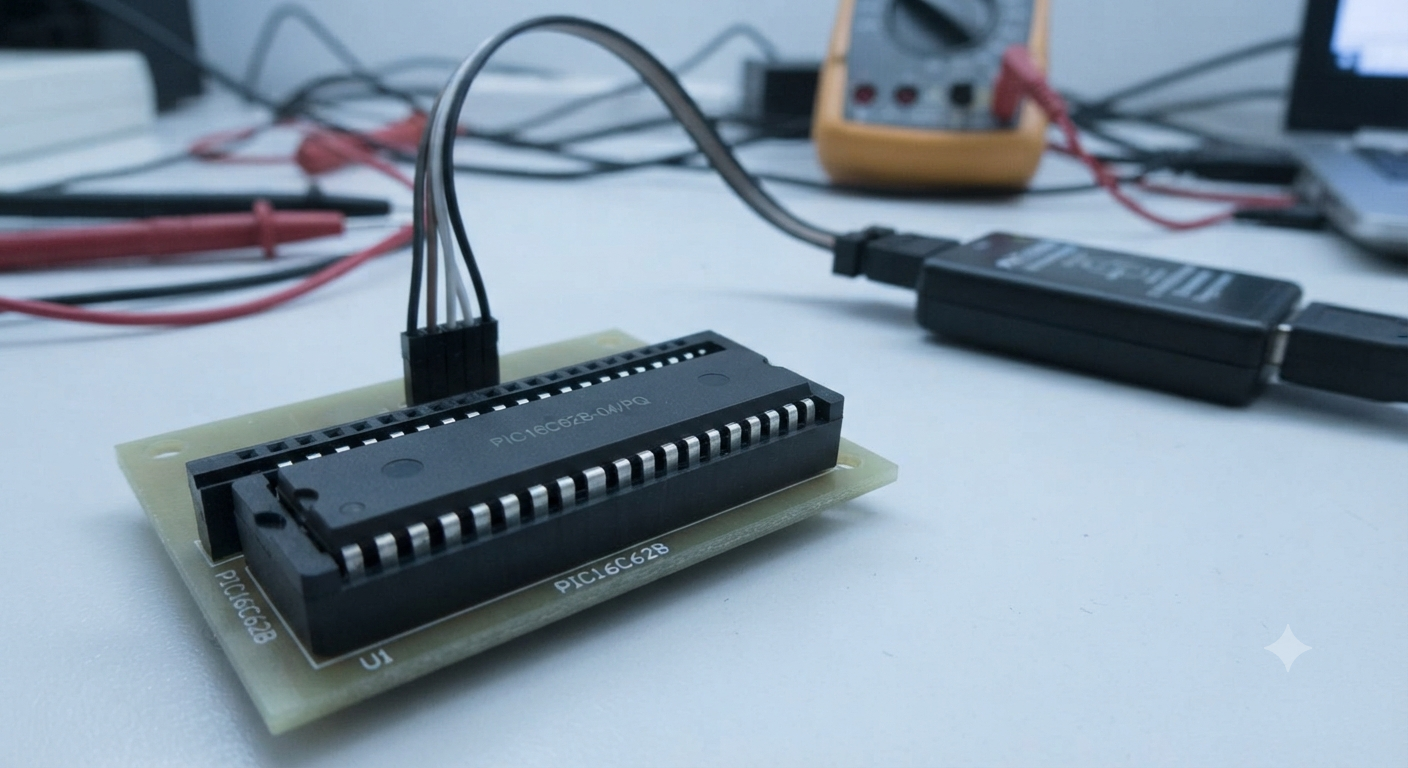
For manufacturers, maintenance providers, and engineering organizations, recovering PIC16C62B eeprom contents delivers significant long-term value. Access to historical firmware, organized data archives, reconstructed source code, and validated program information can reduce redevelopment costs, extend product life, improve repair capability, and preserve compatibility across multiple hardware generations. Instead of redesigning proven systems from the beginning, organizations can utilize recovered engineering resources to maintain legacy equipment and support future modernization projects. With extensive experience in embedded firmware analysis and memory recovery, our service provides a dependable solution for preserving valuable electronic knowledge and ensuring that important technologies remain available for years to come.
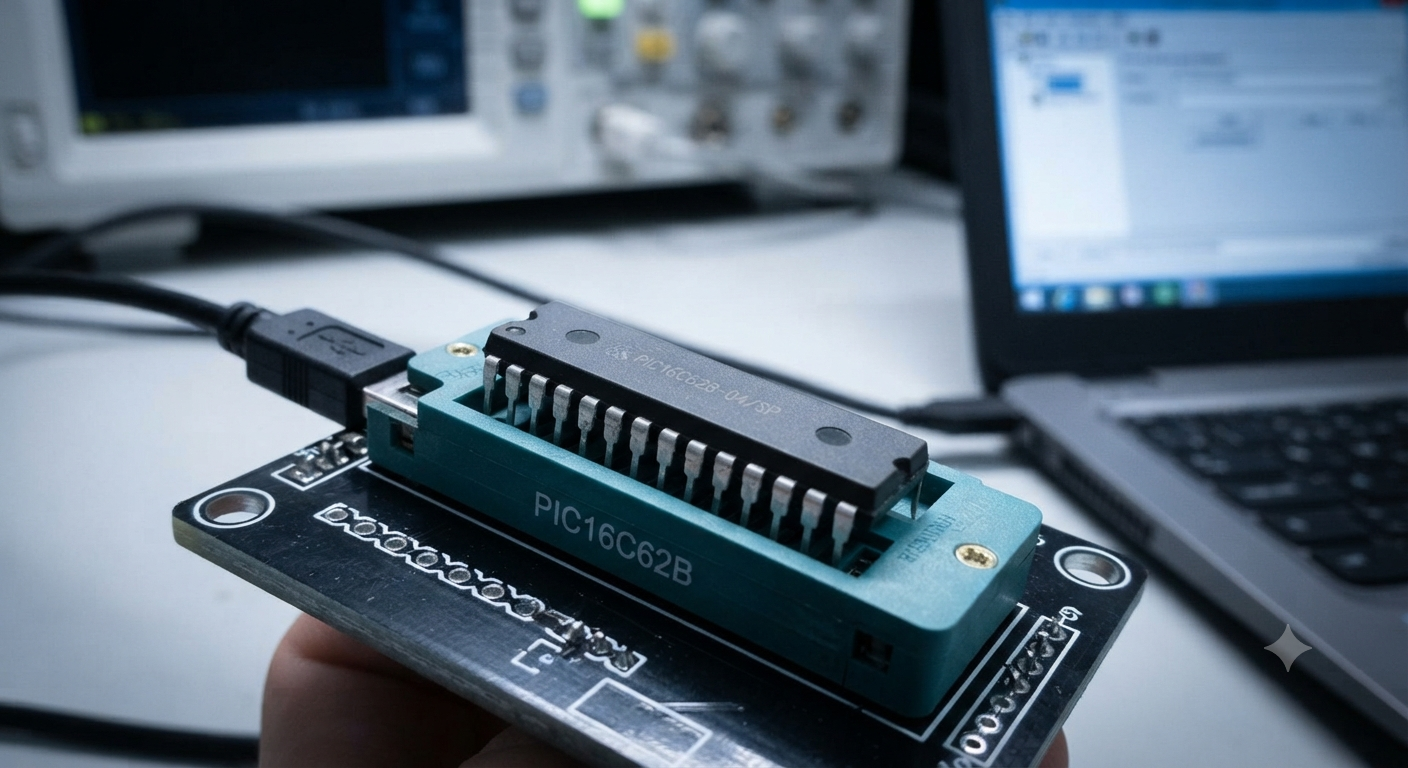
Recover MCU PIC16C622A Software
The PIC16C622A microcontroller is widely celebrated across industrial manufacturing, automotive sub-systems, commercial security setups, and smart consumer appliances due to its efficient 8-bit architecture, an integrated analog comparator module, and highly flexible power-managed modes. This versatile microcontroller acts as the central brain for thousands of legacy hardware applications, coordinating precise operations using proprietary instructions safely embedded deep within its silicon fabric. However, component obsolescence or unexpected corporate mergers frequently leave engineering teams stranded without the original engineering files when a system needs maintenance or migration. When a critical device breaks down and the underlying blueprint is entirely missing, finding a reliable method to pull the original software becomes an absolute operational necessity. Our engineering lab specializes in advanced extraction techniques designed specifically to safely recover MCU PIC16C622A software, providing a seamless lifeline that protects your operational continuity and restores complete access to your valuable hardware logic.
The high performance of the PIC16C62X family can be attributed to a number of architectural features commonly found in RISC microprocessors. To begin with, the PIC16C62X uses a Harvard architecture, in which, program and data are accessed from separate memories using separate busses. This improves bandwidth over traditional von Neumann architecture where program and data are fetched from the same memory. Separating program and data memory further allows instructions to be sized differently than 8-bit wide data word. Instruction opcodes are 14-bits wide making it possible to have all single word instructions.
A 14-bit wide program memory access bus fetches a 14-bit instruction in a single cycle. A two-stage pipeline overlaps fetch and execution of instructions, Consequently, all instructions (35) execute in a single-cycle (200 ns @ 20 MHz) except for program branches. The PIC16C620A and PIC16CR620A address 512 x 14 on-chip program memory. The PIC16C621(A) addresses 1K x 14 program memory. The PIC16C622(A) addresses 2K x 14 program memory. All program memory is internal. The PIC16C62X can directly or indirectly address its register files or data memory. All special function registers including the program counter are mapped in the data memory. The PIC16C62X have an orthogonal (symmetrical) instruction set that makes it possible to carry out any operation on any register using any addressing mode.
This symmetrical nature and lack of ‘special optimal situations’ make programming with the PIC16C62X simple yet efficient. In addition, the learning curve is reduced significantly. The PIC16C62X devices contain an 8-bit ALU and working register. The ALU is a general purpose arithmetic unit. It performs arithmetic and Boolean functions between data in the working register and any register file.
The ALU is 8-bit wide and capable of addition, subtraction, shift and logical operations. Unless otherwise mentioned, arithmetic operations are two’s complement in nature. In two-operand instructions, typically one operand is the working register (W register). The other operand is a file register or an immediate constant. In single operand instructions, the operand is either the W register or a file register. The W register is an 8-bit working register used for ALU operations. It is not an addressable register. Depending on the instruction executed, the ALU may affect the values of the Carry (C), Digit Carry (DC), and Zero (Z) bits in the STATUS register. The C and DC bits operate as a Borrow and Digit Borrow out bit, respectively, bit in subtraction. See the SUBLW and SUBWF instructions for examples.
Extracting code from a locked microcontroller requires navigating sophisticated hardware-level barriers intentionally designed to prevent unauthorized access. To bypass these complex layout constraints, our laboratory utilizes a meticulous, multi-stage physical and electrical process. First, technicians carefully decapsulate the outer epoxy packaging of the integrated circuit using specialized chemical agents, exposing the raw silicon micro-architecture beneath. Once the internal structures are fully visible under high-power microscopy, we carefully attack the internal security mechanisms. By manipulating the internal memory arrays through targeted micro-probing or precise laser tuning, our team can safely bypass the protective code fuses and security bits without degrading the underlying hardware. This allows us to smoothly decode the architecture, break through the embedded encryption, and safely retrieve the complete, unmodified binary data. The ultimate result of this non-destructive extraction is a flawless heximal file, giving you a perfect digital copy of the original machine instructions.
The primary purpose of choosing to hack or decode a heavily secured microcontroller is to safeguard proprietary operational logic from disappearing due to supply chain disruption. When companies cannot locate their original source code, firmware, or system archive, our specialized recovery services step in to prevent a catastrophic, multi-million dollar system redesign. Whether your original software architecture is stored in vintage OTP EPROM, modern flash, or specialized external PLD memory blocks, our custom extraction tools can read and copy every hidden sector. Once the internal program data and configuration matrices are fully extracted, our engineers can seamlessly duplicate the behavior of the device. This comprehensive data capture allows you to clone the original system performance perfectly, giving your team the power to burn the recovered file onto modern, readily available replacement microcontrollers without experiencing a single day of system downtime.
Partnering with an elite laboratory to bypass protected microcontrollers delivers immense financial and technical advantages to project managers and product developers alike. Instead of devoting hundreds of expensive engineering hours to completely reverse-engineering and rewriting an embedded system from scratch—a risky process that frequently introduces dangerous software bugs—our recovery service delivers a direct path to a fully verified, operational firmware file. This complete structural continuity ensures that every newly manufactured duplicate board acts precisely like your original field-tested units. By turning to our specialized extraction services, you effectively eliminate the existential risks of component obsolescence, shield your intellectual property from turning obsolete, and establish a highly stable, long-term framework to manage and update your legacy hardware infrastructure for years to come.
Recover Chip PIC16F620A Binary
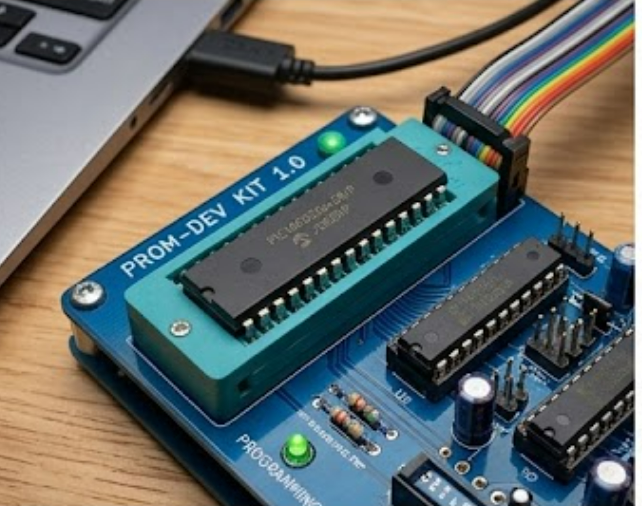
The PIC16F620A is a compact and highly reliable microcontroller that has been widely adopted in industrial controls, consumer electronics, security equipment, instrumentation, automotive accessories, and communication devices. Despite its relatively simple architecture, this MCU provides robust performance for a wide range of embedded applications where cost, stability, and long-term reliability are critical. Many manufacturers rely on the PIC16F620A to store proprietary firmware, operational program logic, and important data within its internal memory. As products mature and documentation becomes unavailable, recovering the original binary, heximal, or source code stored inside the device often becomes essential for maintenance, repair, and product continuity.
Family and Upward Compatibility
Those users familiar with the PIC16C5X family of microcontrollers will realize that this is an enhanced version of the PIC16C5X architecture. Please refer to Appendix A for a detailed list of enhancements. Code written for the PIC16C5X can be easily ported to PIC16C62X family of devices (Appendix B).
The PIC16C62X family fills the niche for users wanting to migrate up from the PIC16C5X family and not needing various peripheral features of other members of the PIC16XX mid-range microcontroller family.
Development Support
The PIC16C62X family is supported by a full-featured macro assembler, a software simulator, an in-circuit emulator, a low-cost development programmer and a full-featured programmer. A “C” compiler and fuzzy logic support tools are also available.
PIC16C62X DEVICE VARIETIES
A variety of frequency ranges and packaging options are available. Depending on application and production requirements the proper device option can be selected using the information in the PIC16C62X Product Identification System section at the end of this data sheet.
When placing orders, please use this page of the data sheet to specify the correct part number.
With the advancement of today’s modern circuit board technology, it is more important than ever to have specialists available to help you at a moment’s notice.
Our engineering and commercial teams collectively have a vast amount of electronic experience covering field include Consumer Electronics, Industrial Automation Electronics, Wireless Communication Electronics., etc. For more information please contact us through email.
Our “Recover Chip PIC16F620A Binary” service specializes in helping customers regain access to valuable digital assets that may be stored within protected, locked, or encrypted microcontrollers. Using advanced semiconductor analysis techniques, our engineers can attack, break, and decode various protection mechanisms designed to prevent direct access to the device’s internal memory. Depending on the specific security configuration, specialized decapsulate procedures may be employed to expose critical structures of the silicon die, allowing accurate retrieval of firmware, binary data, and heximal files.
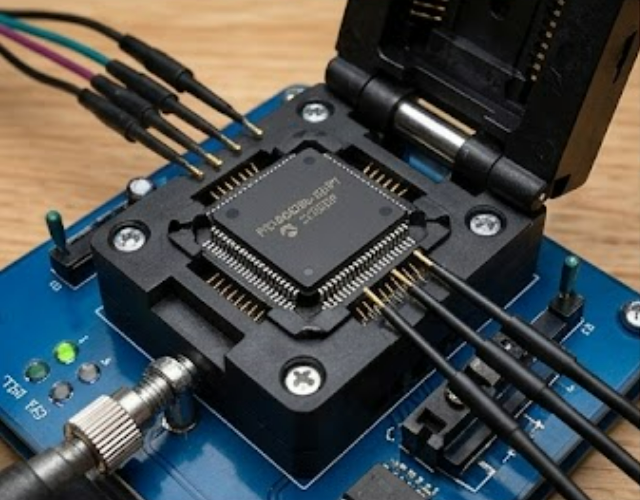
Through detailed analysis of internal flash, EEPROM, and configuration regions, we can recover complete data archives that would otherwise remain inaccessible. Once extracted, the recovered program file can be reconstructed into usable source code representations, enabling customers to better understand, maintain, or migrate their products. Whether the objective is to clone an obsolete design, duplicate a legacy controller, or preserve important intellectual property, our recovery process provides a dependable solution.
The technical workflow combines multiple layers of expertise. Physical examination and decapsulation techniques are carefully integrated with sophisticated software tools capable of decoding raw binary structures and organizing fragmented data files into coherent firmware archives. During this process, engineers may hack through proprietary security implementations, analyze protected memory regions, and reconstruct missing portions of the original program. Special attention is given to preserving the integrity of the recovered embedded data, ensuring that extracted source code, heximal archives, and configuration information accurately reflect the original device behavior. This methodology allows successful recovery even when dealing with highly secured or encrypted devices that have resisted conventional readout approaches.
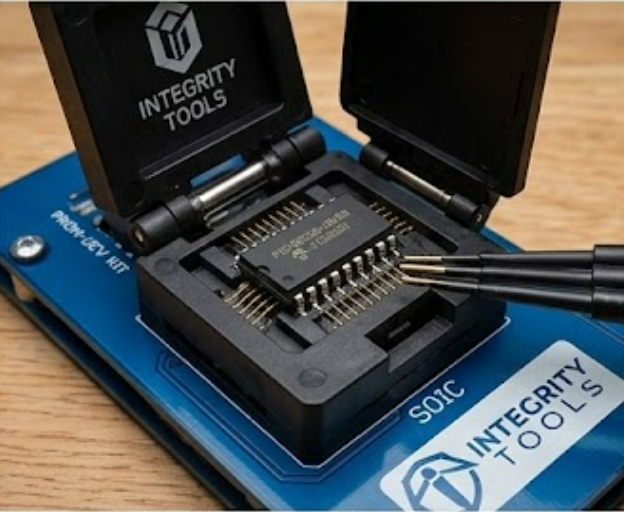
For end users, the benefits of PIC16F620A binary retrieval extend far beyond simple data extraction. Recovering original firmware can dramatically reduce redevelopment costs, shorten engineering schedules, and eliminate the need to redesign proven products from the ground up. Manufacturers can maintain legacy equipment, restore unavailable program files, create compatible replacement hardware, and duplicate critical systems for ongoing production. Engineering teams can also analyze recovered data archives to improve existing designs or support future product generations. By leveraging our expertise in retrieving, breaking, and reconstructing secured embedded memory, customers gain access to valuable technical resources that might otherwise be permanently lost. Our service helps transform inaccessible PIC16F620A devices into reusable engineering assets, ensuring long-term support and continuity for important electronic products.
Recover Chip PIC16C621 Program
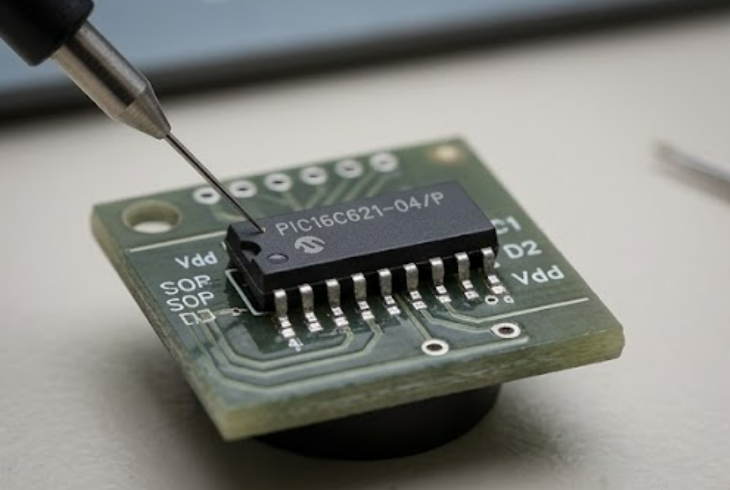
The Microchip PIC16C621 stands as a pivotal evolution in embedded 8-bit architecture, bridging the gap between early microcontroller simplicity and modern industrial demands through its enhanced peripheral integration and robust memory subsystems. This secured device delivers 1K words of program FLASH, 128 bytes of data RAM, and dedicated EEPROM for non-volatile parameter storage—specifications that positioned it as the control brain across diverse sectors including automotive climate systems, industrial weighing scales, smart metering infrastructure, and security access panels. Its embedded analog comparator modules and precision timer arrays enabled designers to construct closed-loop control systems without external PLD supplementation, reducing bill-of-materials complexity while improving electromagnetic reliability. The PIC16C621’s protective code configuration bits allowed manufacturers to safeguard proprietary algorithms, yet this same locked security architecture now threatens operational continuity as original development teams disperse and documentation archives deteriorate. From conveyor belt controllers in food processing plants to infusion pump regulators in hospital wards, this microcontroller continues executing mission-critical logic that organizations cannot afford to lose.
Special Microcontroller Features (cont’d)
Programmable code protection
Power saving SLEEP mode
Selectable oscillator options
Serial in-circuit programming (via two pins)
Four user programmable ID locations
CMOS Technology:
· Low-power, high-speed CMOS EPROM technology
· Fully static design
· Wide operating voltage range
– PIC16C62X – 2.5V to 6.0V
– PIC16C62XA – 2.5V to 5.5V
– PIC16CR620A – 2.0V to 5.5V
· Commercial, industrial and extended temperature range
· Low power consumption
– < 2.0 mA @ 5.0V, 4.0 MHz
– 15 µA typical @ 3.0V, 32 kHz
– < 1.0 µA typical standby current @ 3.0V
GENERAL DESCRIPTION
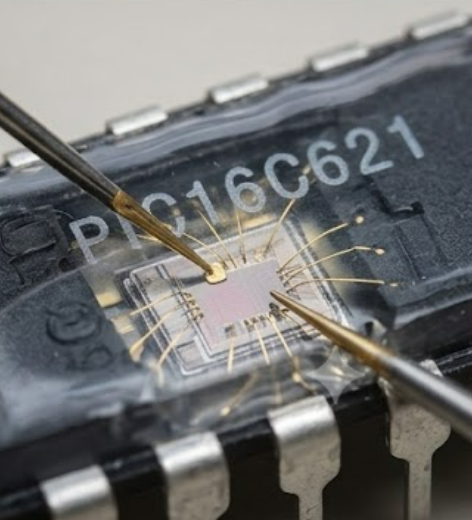
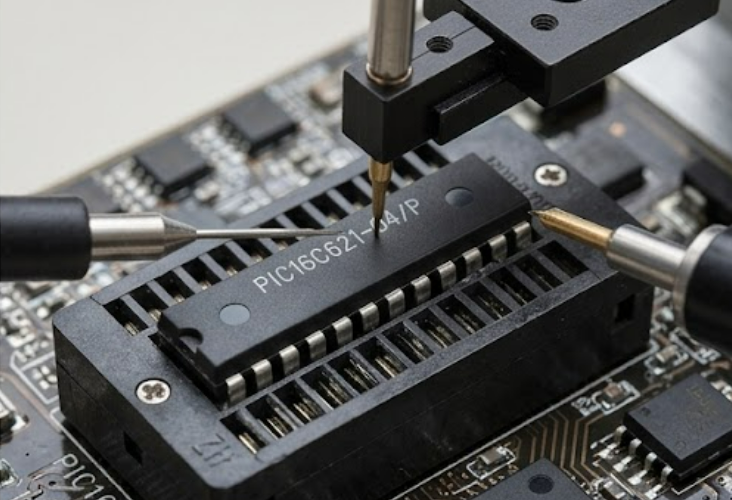
When a protected PIC16C621 requires program recovery, conventional debugging interfaces hit insurmountable walls erected by encrypted security fuses. The firmware trapped within these locked devices cannot be extracted through standard IC programmers or JTAG interfaces—Microchip‘s protective design intentionally severs communication pathways between external tools and internal memory arrays. Professional recovery operations demand sophisticated physical intervention: technicians decapsulate the chip package using precise chemical etching or mechanical milling to expose the silicon substrate beneath embedded bond wires. Once the die is visible, advanced probing stations attack specific circuit nodes with nanosecond-precision voltage pulses designed to break readout protection without corrupting the binary contents. This delicate hack circumvents secured boundaries by exploiting timing vulnerabilities or power-rail manipulation, ultimately enabling specialists to retrieve complete heximal and binary file representations from both FLASH and EEPROM regions. The extracted data then undergoes comprehensive decode processing to reconstruct functional logic, variable mappings, and operational states into human-readable engineering documentation.
The PIC16C62X have enhanced core features, eight-level deep stack, and multiple internal and external interrupt sources. The separate instruction and data buses of the Harvard architecture allow a 14-bit wide instruction word with the separate 8-bit wide data.
The two-stage instruction pipeline allows all instructions to execute in a single-cycle, except for program branches (which require two cycles). A total of 35 instructions (reduced instruction set) are available. Additionally, a large register set gives some of the architectural innovations used to achieve a very high performance.
The driving force behind microcontrollerprogram recovery extends far beyond mere technical curiosity—it represents an economic lifeline for organizations managing aging infrastructure. Original equipment manufacturers frequently abandon obsolete product lines, leaving end users with locked silicon containing irreplaceable calibration tables, safety certification evidence, and proprietary control methodologies. Our clone and duplicate services transform this vulnerability into resilience by generating exact firmware replicas that preserve every bit of embedded operational intelligence. For automotive suppliers, recovering source code equivalents from encrypted engine management modules ensures compliance with emissions regulations without complete powertrain redesign. Industrial automation clients leverage recovered programarchives to fabricate replacement controllers for production lines where downtime costs exceed thousands of dollars hourly. Medical device manufacturers depend on precise duplicate capabilities to maintain FDA-validated therapeutic instruments whose protected software cannot be arbitrarily rewritten without triggering extensive re-certification protocols.
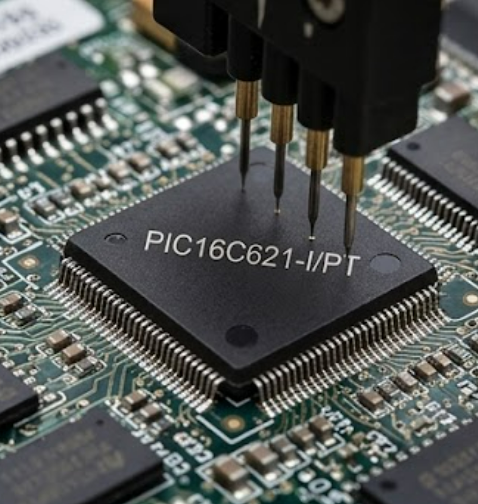
We specialize in comprehensive PIC16C621 recovery solutions that convert inaccessible locked silicon into fully documented engineering assets. Our cleanroom laboratories decapsulateprotected devices with surgical precision, while our proprietary fault-injection methodologies break even the most stringent secured configurations to retrieve intact memory contents. Whether you require immediate clone production for failed field units, duplicate generation for next-generation hardware migration, or complete decode services to reconstruct source code from raw binary file extractions, we deliver actionable results. Our technical team transforms encrypted firmware into comprehensive archive repositories—complete with heximal dumps, EEPROM data maps, and functional documentation—ensuring your embedded systems never again face extinction from irrecoverable program loss. Contact us to liberate your microcontroller intelligence and secure decades of continued operational excellence.
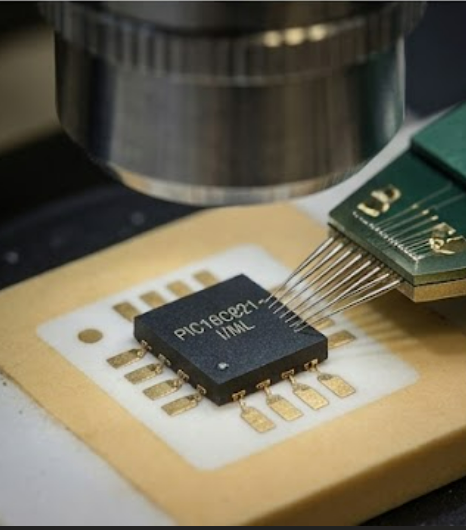
Reverse Engineering Microcontroller PIC16C620 Code
The Microchip PIC16C620 occupies a distinctive position in the pantheon of embedded computing history as one of the most widely deployed 8-bit microcontrollers across industrial automation, automotive electronics, telecommunications infrastructure, and medical device manufacturing. This protected CMOS flash-based MCU introduced developers to a robust Harvard architecture featuring 512 words of program memory, 80 bytes of data RAM, and integrated EEPROM storage for parameter retention—capabilities that made it the backbone of countless control systems during the late 1990s and early 2000s.
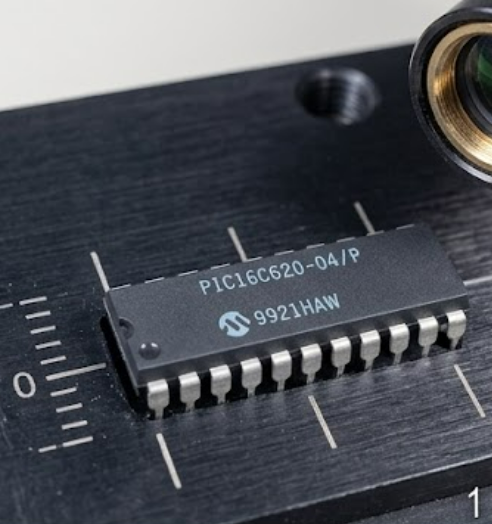
Its embedded peripheral suite including comparators, timers, and synchronous serial ports enabled engineers to construct sophisticated sensing and actuation platforms without external component proliferation. From precision fluid dispensers in pharmaceutical production lines to anti-lock braking modules in vehicles, the PIC16C620’s reliability cemented its presence in equipment designed for decades of continuous operation. Even today, locked instances of this secured chip continue governing critical processes in power generation stations, railway signaling networks, and legacy telecommunications switching equipment where replacement would trigger catastrophic certification cascades.
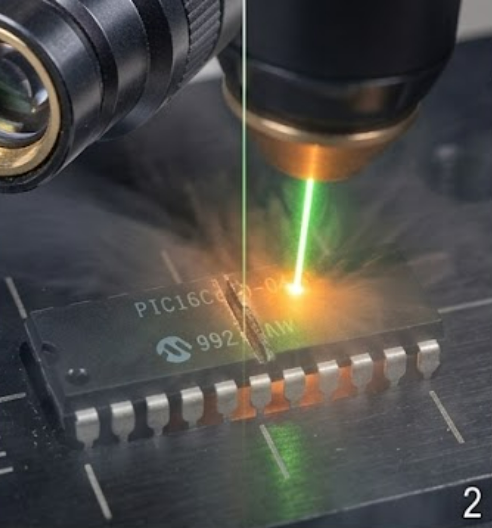
When manufacturers encounter a protected PIC16C620 whose original source code has vanished through corporate restructuring, supplier bankruptcy, or decades of institutional knowledge erosion, the challenge transcends simple component replacement. The firmware residing within this encrypted device represents irreplaceable operational intelligence—calibration curves, safety interlocks, proprietary communication handshakes, and regulatory compliance logic that cannot be replicated through guesswork. Professional reverse engineering of this microcontroller demands a systematic technical approach: specialists first decapsulate the IC package to expose the silicon die, then employ focused ion beam workstations or laser voltage probing to attack the memory array without triggering protective self-destruction mechanisms. Through precise electrical manipulation, engineers can break the secured readout barriers and retrieve the raw binary or heximal file from flash and EEPROM regions. Subsequent analysis decodes the instruction sequences, reconstructs functional blocks, and generates comprehensive documentation that transforms opaque machine code into comprehensible engineering archives. This process requires not merely equipment investment but deep architectural fluency with PLD-adjacent timing behaviors and embedded system design paradigms.
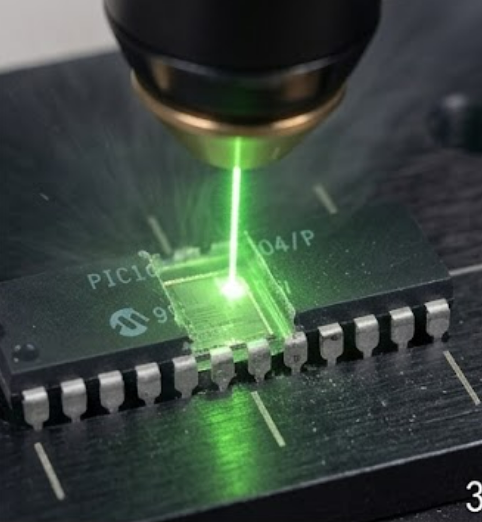
High Performance RISC CPU:
· Only 35 instructions to learn
· All single-cycle instructions (200 ns), except for program branches which are two-cycle
· Operating speed:
– DC – 20 MHz clock input
– DC – 200 ns instruction cycle
Interrupt capability can decide if the difficulty
16 special function hardware registers
8-level deep hardware stack
Direct, Indirect and Relative addressing modes
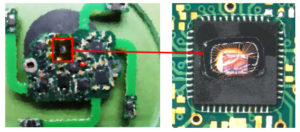
Peripheral Features:
· 13 I/O pins with individual direction control
· High current sink/source for direct LED drive
· Analog comparator module with:
– Two analog comparators
– Programmable on-chip voltage reference (VREF) module
– Programmable input multiplexing from device inputs and internal voltage reference after Reverse engineering Microcontroller PIC16C620 Code
– Comparator outputs can be output signals
· Timer0: 8-bit timer/counter with 8-bit programmable prescaler
Special Microcontroller Features:
· Power-on Reset (POR)
· Power-up Timer (PWRT) and Oscillator Start-up Timer (OST)
· Brown-out Reset
· Watchdog Timer (WDT) with its own on-chip RC oscillator for reliable operation.
The commercial imperative driving such hack-resistant microcontroller analysis stems from the brutal economics of industrial infrastructure maintenance. Organizations cannot afford to duplicate millions of dollars in certification testing, production line revalidation, or safety authority reapproval when a single locked control module fails. Our clone and duplicate services enable manufacturers to produce exact functional replacements of protected PIC16C620 devices, ensuring that program behavior remains bit-for-bit identical to original specifications. By retrieving the complete firmware image—including both flashprogram space and EEPROMdata parameters—we empower clients to fabricate drop-in replacement ICs or migrate functionality to modern microcontrollers while preserving every nuance of legacy operation. This capability proves especially vital for encrypted medical devices where FDA validation ties directly to specific software execution paths, or for telecommunications PLD-integrated systems where protocol timing tolerances measure in microseconds.
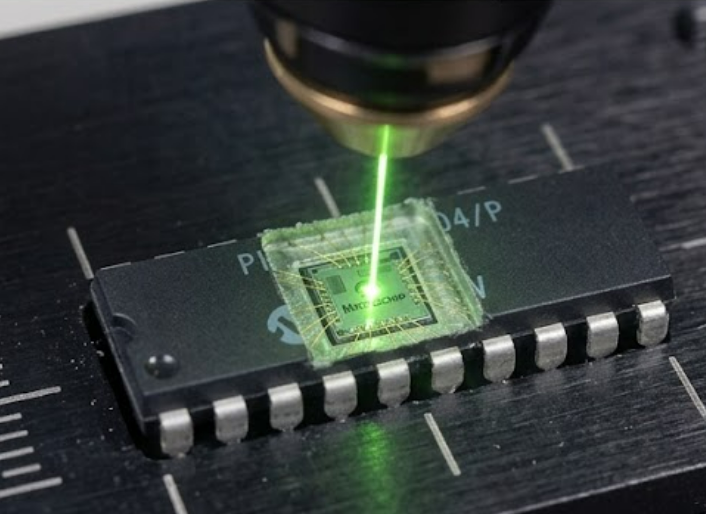
Our technical team delivers comprehensive PIC16C620 reverse engineering solutions that transform secured silicon into actionable engineering assets. We decapsulateprotected devices in controlled cleanroom environments, breaklocked readout defenses through advanced fault injection techniques, and decodeencrypted instruction streams into fully documented source code equivalents. Whether your objective is to clone existing firmware for immediate production continuity, duplicate legacy control behaviors for next-generation hardware migration, or retrieve critical calibration data from EEPROM regions, we provide complete binary and heximalfile extraction with full technical documentation. Our archive generation process ensures that embedded intelligence never again faces extinction from locked silicon obsolescence, converting vulnerable single points of failure into robust, reproducible engineering foundations for decades of continued operation.
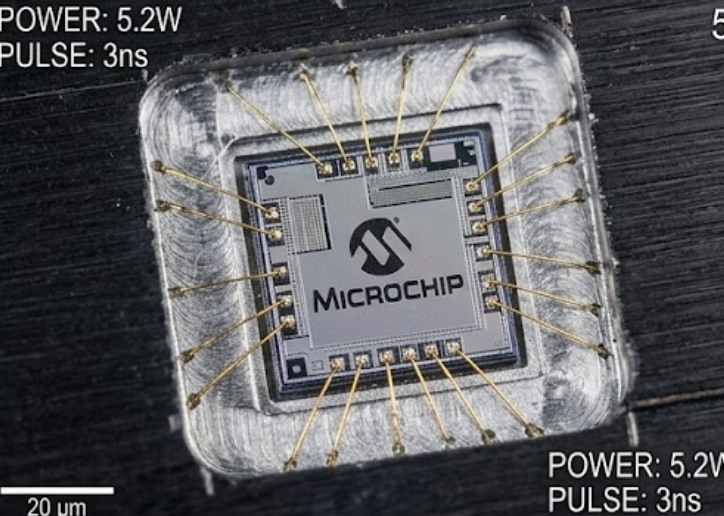
Recover Chip PIC16HV785 Hex
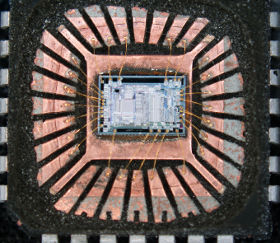
Recover Chip PIC16HV785 Hex include the content from both its eeprom and flash, belows we can introduce the program memory organization:
PROGRAM MEMORY ORGANIZATION
The PIC16F785/HV785 has a 13-bit program counter capable of addressing an 8k x 14 program memory space. Only the first 2k x 14 (0000h-07FFh) for the PIC16F785/HV785 is physically implemented. Accessing a location above these boundaries will cause a wrap around within the first 2k x 14 space. The Reset vector is at 0000h and the interrupt vector is at 0004h.
Recover Chip PIC16HV785 Hex
DATA MEMORY ORGANIZATION
The data memory is partitioned into four banks, which contain the General Purpose Registers (GPR) and the Special Function Registers (SFR). The Special Function Registers are located in the first 32 locations of each bank. Register locations 20h-7Fh in Bank 0 and A0h-BFh in Bank 1 are General Purpose Registers, implemented as static RAM.
The last sixteen register locations in Bank 1 (F0h-FFh), Bank 2 (170h-17Fh), and Bank 3 (1F0h-1FFh) point to addresses 70h-7Fh in Bank 0. All other RAM is unimplemented and returns ‘0’ when read.
PROGRAM MEMORY MAP AND STACK FOR THE PIC16F785/HV785
Seven address bits are required to access any location in a data memory bank which can also facilitate the process of IC Cloning. Two additional bits are required to access the four banks. When data memory is accessed directly, the seven Least Significant address bits are contained within the opcode and the two Most Significant bits are contained in the STATUS register for the purpose of recover chip PIC16HV785 Hex.
RP0 and RP1 bits of the STATUS register are the two Most Significant data memory address bits and are also known as the bank select bits. Table 2-1 lists how to access the four banks of registers.
Recover MCU 12F508 Code
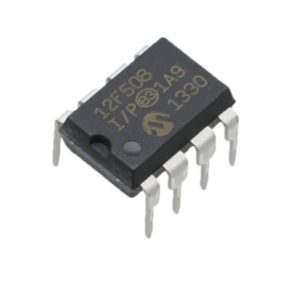
Recover MCU 12F508 Code will begin from the basic features of it:
High-Performance RISC CPU:
· Only 33 single word instructions to learn
· All instructions are single cycle (1 µs) except for program branches which are two-cycle
· Operating speed: DC – 4 MHz clock input DC – 1 µs instruction cycle.
· Power-On Reset (POR)
· Device Reset Timer (DRT)
· Watchdog Timer (WDT) with its own on-chip RC oscillator for reliable operation
· Programmable code-protection in order to Recover Microcontroller PIC16F506 Binary
Recover MCU 12F508 Code
· 1,000,000 erase/write cycle EEPROM data memory
· EEPROM data retention > 40 years
· Power saving SLEEP mode
· Wake-up from SLEEP on pin change
· Internal weak pull-ups on I/O pins
· Internal pull-up on MCLR pin
· Selectable oscillator options:
– INTRC: Internal 4 MHz RC oscillator
– EXTRC: External low-cost RC oscillator
– XT: Standard crystal/resonator
– LP: Power saving, low frequency crystal
CMOS Technology:
· Low power, high speed CMOS EPROM/ROM technology
· Fully static design
· Wide operating voltage range
12-bit wide instructions
8-bit wide data path
Seven special function hardware registers
Two-level deep hardware stack
Direct, indirect and relative addressing modes for
· Wide temperature range:
– Commercial: 0°C to +70°C
– Industrial: -40°C to +85°C
– Extended: -40°C to +125°C
· Low power consumption
– < 2 mA @ 5V, 4 MHz
data and instructions
· Internal 4 MHz RC oscillator with programmable calibration
· In-circuit serial programming
– 15 µA typical @ 3V, 32 KHz
– < 1 µA typical standby current