 Copy Microcontroller PIC16CR83 Heximal
 September 25th, 2014 |
  Author:
 Copy Microcontroller PIC16CR83 Heximal
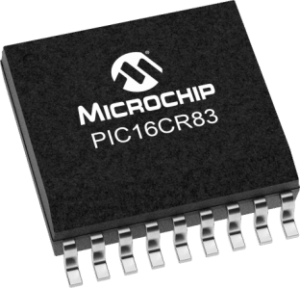
A variety of frequency ranges and packaging options are available in the process of Copy Microcontroller PIC16CR83 Heximal. Depending on application and production requirements the proper device option can be selected using the information in this section. When placing orders, please use the “PIC16F8X Product Identification System” at the back of this data sheet to specify the correct part number.
There are four device “types” as indicated in the device number.
1. F, as in PIC16F84. These devices have Flash program memory and operate over the standard voltage range.
2. LF, as in PIC16LF84. These devices have Flash;
LCR, as in PIC16LCR84. These devices have ROM program memory and operate over an extended voltage range.
When discussing memory maps and other architectural features, the use of F and CR also implies the LF and LCR versions.
These devices are offered in the lower cost plastic package, even though the device can be erased and reprogrammed. This allows the same device to be used for prototype development and pilot programs as well as production.
A further advantage of the electrically-erasable Flash version is that it can be erased and reprogrammed in-circuit, or by device programmers, such as Microchip’s PICSTART® Plus or PRO MATE® II programmers.
Copy Microcontroller PIC16CR83 Heximal
Microchip offers a QTP Programming Service for factory production orders. This service is made available for users who choose not to program a medium to high quantity of units and whose code patterns have stabilized. The devices have all Flash locations and configuration options already programmed by the factory. Certain code and prototype verification procedures do apply before production shipments are available from Copy Microcontroller PIC16CR83 Heximal.
For information on submitting a QTP code, please contact your Microchip Regional Sales Office.
Microchip offers the unique programming service where a few user-defined locations in each device are programmed with different serial numbers. The serial numbers may be random, pseudo-random or sequential.
Serial programming allows each device to have a unique number which can serve as an entry-code, password or ID number.device where the program memory is a ROM. These Some of Microchip’s devices have a corresponding devices give a cost savings over Microchip’s traditional user programmed devices (EPROM, EEPROM). ROM devices (PIC16CR8X) do not allow serialization information in the program memory space. The user may program this information into the Data EEPROM.
 Posted in
Recover Chip PIC16F883 Eeprom
Recover Chip PIC16F883 Eeprom
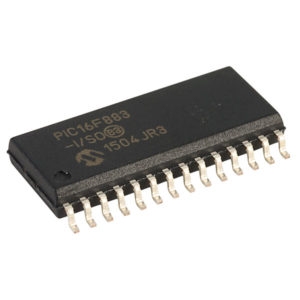
Recover Chip PIC16F883 Eeprom and flash memory, it is useful to recover the content from the memory and then make PIC16F883 cloned unit which can replace these broken units:
Low-Power Features:
· Standby Current:
– 50 nA @ 2.0V, typical
· Operating Current:
– 11 ìA @ 32 kHz, 2.0V, typical
– 220 ìA @ 4 MHz, 2.0V, typical
· Watchdog Timer Current:
– 1 ìA @ 2.0V, typical
Peripheral Features:
· 24/35 I/O Pins with Individual Direction Control:
– High current source/sink for direct LED drive
– Interrupt-on-Change pin
– Individually programmable weak pull-ups
– Ultra Low-Power Wake-up (ULPWU)
· Analog Comparator Module
– Two analog comparators
– Programmable on-chip voltage reference (CVREF) module (% of VDD)
– Fixed voltage reference (0.6V)
– Comparator inputs and outputs externally accessible
Recover Chip PIC16F883 Eeprom
– SR Latch mode
– External Timer1 Gate (count enable)
· A/D Converter:
– 10-bit resolution and 11/14 channels
· Timer0: 8-bit Timer/Counter with 8-bit Programmable Prescaler
· Enhanced Timer1:
– 16-bit timer/counter with prescaler
– External Gate Input mode
– Dedicated low-power 32 kHz oscillator
· Timer2: 8-bit Timer/Counter with 8-bit Period Register, Prescaler and Postscaler
· Enhanced Capture, Compare, PWM+ Module:
– 16-bit Capture, max. resolution 12.5 ns
– Compare, max. resolution 200 ns
– 10-bit PWM with 1, 2 or 4 output channels, programmable “dead time”, max. frequency 20 kHz
– PWM output steering control
· Capture, Compare, PWM Module:
– 16-bit Capture, max. resolution 12.5 ns
– 16-bit Compare, max. resolution 200 ns
– 10-bit PWM, max. frequency 20 kHz
· Enhanced USART Module:
– Supports RS-485, RS-232, and LIN 2.0
– Auto-Baud Detect
– Auto-Wake-Up on Start bit
· In-Circuit Serial ProgrammingTM (ICSPTM) via Two Pins
· Master Synchronous Serial Port (MSSP) Module supporting 3-wire SPI (all 4 modes) and I2C™
Master and Slave Modes with I2C Address Mask
Copy Microcontroller PIC16F887 File
Copy Microcontroller PIC16F887 File
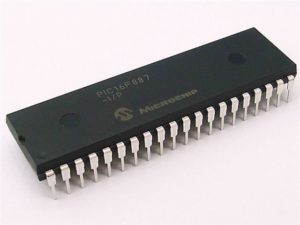
A computed GOTO is accomplished by adding an offset to the program counter (ADDWF PCL). Care should be exercised when jumping into a look-up table or program branch table (computed GOTO) by modifying the PCL register when Copy Microcontroller PIC16F887 File.
Assuming that PCLATH is set to the table start address, if the table length is greater than 255 instructions or if the lower 8 bits of the memory address rolls over from 0xFF to 0×00 in the middle of the table, then PCLATH must be incremented for each address rollover that occurs between the table beginning and the target location within the table.
Copy Microcontroller PIC16F887 File
For more information refer to Application Note AN556, “Implementing a Table Read” (DS00556)
There are as many as thirty-five general purpose I/O pins available. Depending on which peripherals are enabled, some or all of the pins may not be available as general purpose I/O. In general, when a peripheral is enabled, the associated pin may not be used as a general purpose I/O pin.
PORTA is a 8-bit wide, bidirectional port. The corresponding data direction register is TRISA (Register 3-2). Setting a TRISA bit (= 1) will make the corresponding PORTA pin an input enabled, the associated pin may not be used as a general purpose I/O pin. output driver).
Clearing a TRISA bit (= 0) will make the corresponding PORTA pin an output (i.e., enables output driver and puts the contents of the output latch on the selected pin). Example 3-1 shows how to initialize PORTA.
Reading the PORTA register (Register 3-1) reads the status of the pins, whereas writing to it will write to the PORT latch. All write operations are read-modify-write address rolls over from 0xFF to 0×00 in the middle of operations. Therefore, a write to a port implies that the port pins are read, this value is modified and then written to the PORT data latch from Copy Microcontroller PIC16F887 File.
The TRISA register (Register 3-2) controls the PORTA pin output drivers, even when they are being used as analog inputs. The user should ensure the bits in the TRISA register are maintained set when using them as analog inputs. I/O pins configured as analog input always read “0″.
Additional Pin Functions
RA0 also has an Ultra Low-Power Wake-up option. The next three sections describe these functions.
The ANSEL register (Register 3-3) is used to configure the Input mode of an I/O pin to analog. Setting the appropriate ANSEL bit high will cause all digital reads on the pin to be read as ‘0’ and allow analog functions on the pin to operate correctly.
The state of the ANSEL bits has no affect on digital output functions. A pin with TRIS clear and ANSEL set will still operate as a digital output, but the Input mode will be analog. This can cause unexpected behavior when executing read-modify-write instructions on the affected port.
Copy Chip PIC16F87 Code
Copy Chip PIC16F87 Code
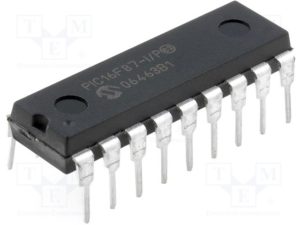
Copy Chip PIC16F87 Code from the memory which include flash and eeprom, then the program will be rewrite to other blank PIC16F87 which will perform the same functions as original PIC16F87 microcontroller:
Low-Power Features:
· Power Managed modes:
Copy Chip PIC16F87 Code
– Primary RUN: RC oscillator, 76 µA, 1 MHz, 2V
– RC_RUN: 7 µA, 31.25 kHz, 2V
– SEC_RUN: 9 µA, 32 kHz, 2V
– SLEEP: 0.1 µA, 2V
· Timer1 Oscillator: 1.8 µA, 32 kHz, 2V
· Watchdog Timer: 2.2 µA, 2V
· Two-Speed Oscillator Start-up Oscillators:
· Three Crystal modes:
– LP, XT, HS: up to 20 MHz
· Two External RC modes
– ECIO: up to 20 MHz
· Internal oscillator block:
– 8 user selectable frequencies: 31 kHz, 125 kHz, 250 kHz, 500 kHz, 1 MHz, 2 MHz, 4 MHz, 8 MHz
Peripheral Features:
· Capture, Compare, PWM (CCP) module:
– Capture is 16-bit, max. resolution is 12.5 ns
– Compare is 16-bit, max. resolution is 200 ns
– PWM max. resolution is 10-bit
· 10-bit, 7-channel Analog-to-Digital Converter
· Synchronous Serial Port (SSP) with SPI™ (Master/Slave) and I2C™ (Slave)
· Addressable Universal Synchronous Asynchronous Receiver Transmitter (USART/SCI) with 9-bit address detection:
– RS-232 operation using internal oscillator (no external crystal required)
· Dual Analog Comparator module:
– Programmable on-chip voltage reference
– Programmable input multiplexing from device inputs and internal voltage reference
– Comparator outputs are externally accessible
Special Microcontroller Features:
· 100,000 erase/write cycles Enhanced FLASH program memory typical
· 1,000,000 typical erase/write cycles EEPROM data memory typical
· EEPROM Data Retention: > 40 years
· In-Circuit Serial Programming™ (ICSP™) – via two pins
· Processor read/write access to program memory
· Low-Voltage Programming
· In-Circuit Debugging via two pins
· Extended Watchdog Timer (WDT):
– Programmable period from 1 ms to 268s
· Wide operating voltage range: 2.0V to 5.5V
Break IC PIC16F88 Data
Break IC PIC16F88 Data
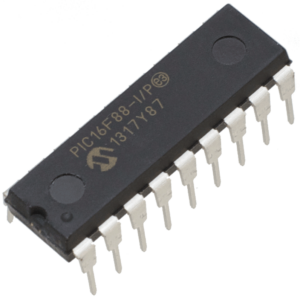
This document contains device specific information for the operation of Break IC PIC16F88 Data. Additional information may be found in the PICmicro® Mid-Range MCU Reference Manual (DS33023) which may be downloaded from the Microchip website.
This Reference Manual should be considered a complementary document to this data sheet, and is highly recommended breaking for a better understanding of the device architecture and operation of the peripheral modules.
The PIC16F88 belongs to the Mid-Range family of the PICmicro® devices. Block diagrams of the devices are shown in Figure 1-1 and Figure 1-2. These devices contain features that are new to the PIC16 product line:
· Low-power modes: RC_RUN allows the core and peripherals to be clocked from the INTRC, while SEC_RUN allows the core and peripherals to be clocked from the low-power Timer1.
Break IC PIC16F88 Data
· Internal RC oscillator with eight selectable frequencies, including 31.25 kHz, 125 kHz, 250 kHz, 500 kHz, 1 MHz, 2 MHz, 4 MHz, and 8 MHz. The INTRC can be configured as a primary or secondary clock source.
· The Timer1 module current consumption has been greatly reduced from 20 µA (previous PIC16 devices) to 1.8 µA typical (32 kHz at 2V), which is ideal for real-time clock applications.
· Extended Watchdog Timer (WDT) that can have a programmable period from 1 ms to 268s. The WDT has its own 16-bit prescaler.
· Two-Speed Start-up: When the oscillator is configured for LP, XT, or HS, this feature will clock the device from the INTRC while the oscillator is warming up. This, in turn, will enable almost immediate code execution.
· The A/D module has a new register for PIC16 devices named ANSEL. This register allows easier configuration of analog or digital I/O pins.
Recover Microcontroller PIC16F71 Binary
Recover Microcontroller PIC16F71 Binary
Recover Microcontroller PIC16F71 Binary from its memory which include flash and eeprom, then transfer it to other blank Microcontroller PIC16F71 which will provide the same functions:
GENERAL INSTRUCTION
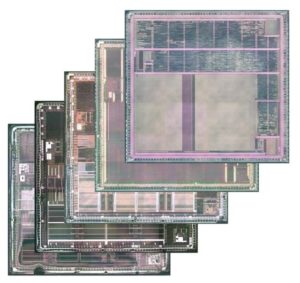
All PIC16/17 microcontrollers employ an advanced RISC architecture. The PIC16CXX microcontroller family has enhanced core features, eight-level deep stack, and multiple internal and external interrupt sources.
The separate instruction and data buses of the Harvard architecture allow a 14-bit wide instruction word with the separate 8-bit wide data. The two stage instruction pipeline allows all instructions to execute in a single cycle, except for program branches which require two cycles.
Recover Microcontroller PIC16F71 Binary
A total of 35 instructions (reduced instruction set) are available. Additionally, a large register set gives some of the architectural innovations used to achieve a very high performance.
The PIC16C710/71 devices have 36 bytes of RAM, the PIC16C711 has 68 bytes of RAM and the PIC16C715 has 128 bytes of RAM. Each device has 13 I/O pins. In addition a timer/counter is available. Also a 4-channel high-speed 8-bit A/D is provided if recover microcontroller. The 8-bit resolution is ideally suited for applications requiring low-cost analog interface, e.g. thermostat control, pressure sensing.
Break IC PIC16F715 Firmware
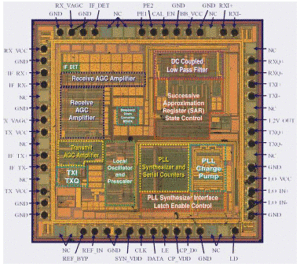
We can Break IC PIC16F715 Firmware, please view the IC PIC16F715 features for your reference:
PIC16C71X devices are supported by the complete line of Microchip Development tools. Please refer to Section 10.0 for more details about Microchip’s development tools.
A variety of frequency ranges and packaging options are available. Depending on application and production requirements, the proper device option can be selected using the information in the PIC16C71X Product Identification System section at the end of this data sheet.
When placing orders, please use that page of the data sheet to specify the correct part number.
For the PIC16C71X family, there are two device “types” as indicated in the device number:
1. C, as in PIC16C71. These devices have EPROM type memory and operate over the standard voltage range.
2. LC, as in PIC16LC71. These devices have EPROM type memory and operate over an extended voltage range.
The UV erasable version, offered in CERDIP package is optimal for prototype development and pilot programs.
Break IC PIC16F715 Firmware
This version can be erased and reprogrammed to any of the oscillator modes.
Microchip’s PICSTART® Plus and PRO MATE® II programmers both support programming of the PIC16C71X.
One-Time-Programmable (OTP) Devices
The OTP devices, packaged in plastic packages, permit the user to program them once. In addition to the program memory, the configuration bits must also be programmed.
Microchip offers a QTP Programming Service for factory production orders. This service is made available for users who choose not to program a medium to high quantity of units and whose code patterns have stabilized.
The devices are identical to the OTP devices but with all EPROM locations and configuration options already programmed by the factory. Certain code and prototype verification procedures apply before production shipments are available. Please contact your local Microchip Technology sales office for more details.
Recover Microcontroller PIC16F506 Binary
The PIC12F510/16F506 devices from Microchip Technology are low-cost, high-performance, 8-bit, fully-static, Flash-based CMOS microcontrollers. They employ a RISC architecture with only 33 single-word/single-cycle instructions which can faciliate the process of Recover Microcontroller PIC16F506 Binary. All instructions are single-cycle except for program branches, which take two cycles.
The PIC12F510/16F506 devices deliver performance in an order of magnitude higher than their competitors in the same price category. The 12-bit wide instructions are highly symmetrical, resulting in a typical 2:1 code compression over other 8-bit microcontrollers in its class. The easy-to-use and easy-to-remember instruction set reduces development time significantly.
The PIC12F510/16F506 products are equipped with special features that reduce system cost and power requirements. The Power-on Reset (POR) and Device Reset Timer (DRT) eliminate the need for external Reset circuitry.
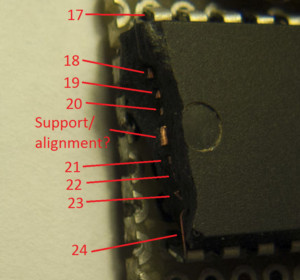
There are four oscillator configurations to choose from (six on the PIC16F506) when Recover Microcontroller, including INTOSC Internal Oscillator mode and the power-saving LP (Low-power) Oscillator mode. Power-saving Sleep mode, Watchdog Timer and code protection features improve system cost, power and reliability.
The PIC12F510/16F506 devices allow the customer to take full advantage of Microchip’s price leadership in Flash programmable microcontrollers, while benefiting from the Flash programmable flexibility.
The PIC12F510/16F506 products are supported by a full-featured macro assembler, a software simulator, an in-circuit emulator, a ‘C’ compiler, a low-cost development programmer and a full featured programmer. All the tools are supported on IBM® PC and compatible machines.
The PIC12F510/16F506 devices fit in applications ranging from personal care appliances and security systems to low-power remote transmitters/receivers.
The Flash technology makes customizing application programs (transmitter codes, appliance settings, receiver frequencies, etc.) extremely fast and convenient for Recover Microcontroller PIC16F506 Binary. The small footprint packages, for through hole or surface mounting, make these microcontrollers perfect for applications with space limitations.
Low-cost, low power, high-performance when Recover Microcontroller, ease-of-use and I/O flexibility make the PIC12F510/16F506 devices very versatile, even in areas where no microcontroller use has been considered before (e.g., timer functions, logic and PLDs in larger systems and coprocessor applications). significantly.
The PIC12F510/16F506 products are equipped with special features that reduce system cost and power requirements. The Power-on Reset (POR) and Device Reset Timer (DRT) eliminate the need for external Reset circuitry.
There are four oscillator configurations to choose from (six on the PIC16F506), including INTOSC Internal Oscillator mode and the power-saving LP (Low-power) Oscillator mode. Power-saving Sleep mode, Watchdog Timer and code protection features improve system cost, power and reliability.
The PIC12F510/16F506 devices allow the customer to take full advantage of Microchip’s price leadership in Flash programmable microcontrollers, while benefiting from the Flash programmable flexibility.
The PIC12F510/16F506 products are supported by a full-featured macro assembler, a software simulator, an in-circuit emulator, a ‘C’ compiler, a low-cost development programmer and a full featured programmer. All the tools are supported on IBM® PC and compatible machines.
Attack IC PIC16F57 Program
The Microchip PIC16F57 is a robust 8-bit microcontroller widely used in consumer electronics, industrial controllers, automotive modules, and various embedded systems. With its compact architecture, onboard I/O, and reliable performance, it is a preferred solution in many secured or proprietary control units. However, the firmware, binary, or heximal files stored within these chips are often protected or encrypted, making them inaccessible without expert intervention.
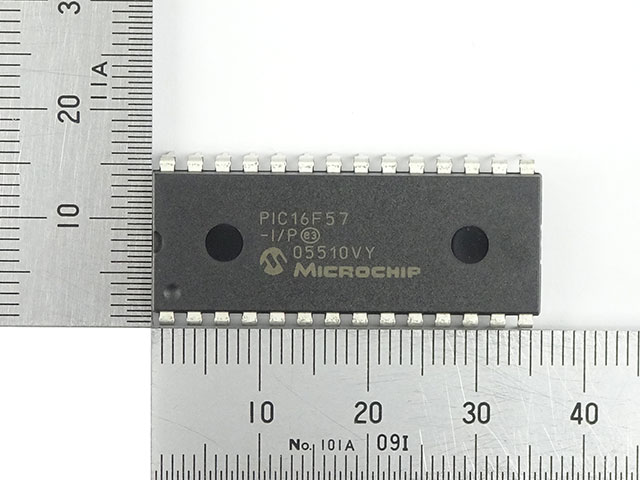
At Circuit Engineering Co., LTD, we provide professional services to attack IC PIC16F57 program protection mechanisms, enabling clients to recover, copy, or restore the original program data. Whether the chip is locked, secured, or obfuscated, our team is equipped with the latest tools and methodologies to crack and decrypt the internal memory, including flash and EEPROM sections.
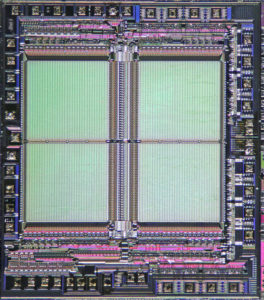
The PIC16F5X from Microchip Technology is a family of low-cost, high-performance, 8-bit, fully static, Flash based CMOS microcontrollers. It employs a RISC architecture with only 33 single-word/single-cycle instructions. All instructions are single cycle except for program branches which take two cycles by Attack IC PIC16F57 Program. The PIC16F5X delivers performance an order of magnitude higher than its competitors in the same price category.
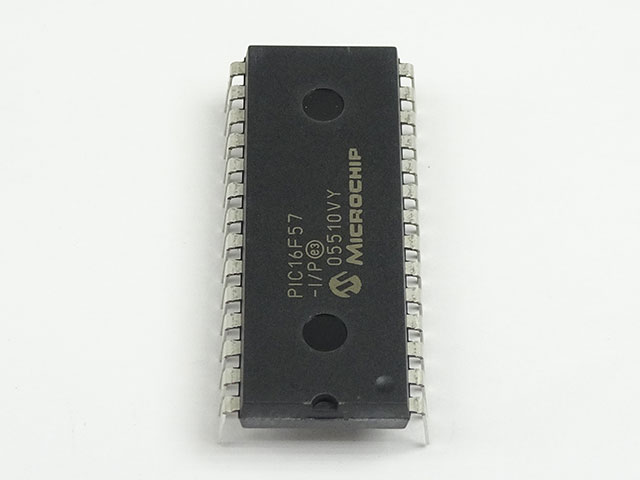
The 12-bit wide instructions are highly symmetrical resulting in 2:1 code compression over other 8-bit microcontrollers in its class. The easy-to-use and easy-to-remember instruction set reduces development time significantly.
The PIC16F5X products are equipped with special features that reduce system cost and power requirements. The Power-on Reset (POR) and Device Reset Timer (DRT) eliminate the need for external Reset circuitry.
There are four oscillator configurations to choose from, including the power-saving LP (Low Power) oscillator and cost saving RC oscillator. Power-saving Sleep mode, Watchdog Timer and code protection features improve system cost, power and reliability.
The PIC16F57 is a baseline 12-bit core MCU with a 2K x 12-word flash program memory, 72 bytes of RAM, and 16 I/O pins. It is notable for its simplicity and low cost, making it ideal for mass-produced applications like remote controllers, basic logic units, small motors, timers, and more. In legacy systems where documentation has been lost or when a supplier no longer provides source support, reverse engineering becomes the only solution to continue development or maintenance.
Our service is especially valuable to:
- OEMs needing to duplicate legacy designs.
- Engineers aiming to clone or migrate control logic to a modern platform.
- Security analysts looking to decode encrypted systems for vulnerability assessments.
- Researchers interested in system behavior analysis or functional replication.
The PIC16F5X products are supported by a full-featured macro assembler, a software simulator, a low-cost development programmer and a full featured programmer. All the tools are supported on IBM® PC and compatible machines.
We begin with physical or electrical-level attacks to bypass code protection bits embedded in the PIC16F57. Once access is achieved, we dump the program file—usually in heximal format—from the internal memory. After extraction, we optionally provide detailed analysis, disassembly, and conversion to assembly or even C-style source code, depending on the client’s needs.
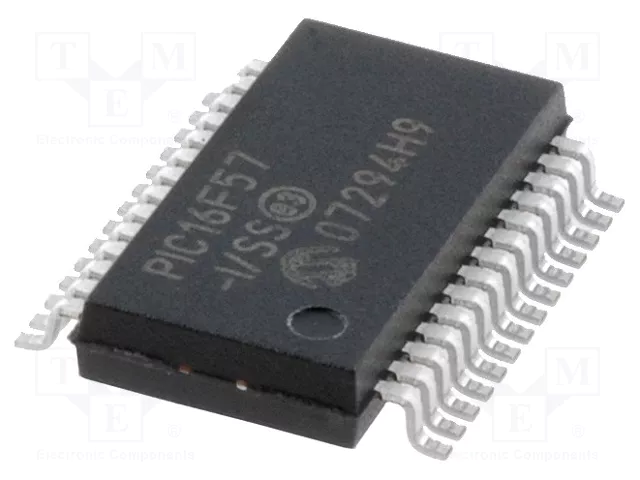
Whether your chip is locked, masked, or fused, we have experience dealing with a wide range of protected microcontrollers and can offer customized recovery or cloning solutions.
The PIC16F5X series fits perfectly in applications ranging from high-speed automotive and appliance motor control to low-power remote transmitters/receivers, pointing devices and telecom processors. The Flash technology makes customizing application programs from Attack IC PIC16F57 Program (transmitter codes, motor speeds, receiver frequencies, etc.) extremely fast and convenient.
The small footprint packages, for through hole or surface mounting, make this microcontroller series perfect for applications with space limitations. Low-cost, low-power, high performance, ease of use and I/O flexibility make the PIC16F5X series very versatile, even in areas where no microcontroller use has been considered before (e.g., timer functions, replacement of “glue” logic in larger systems, co-processor applications).
It’s important to understand that our service is tailored for legitimate recovery, engineering evaluation, or system restoration purposes. Clients rely on us not only for our technical proficiency but also for our professional handling of confidential projects. All engagements are strictly private and aligned with legal and ethical standards.
If you’re facing a development halt due to inaccessible code within a PIC16F57, or if you’re looking to unlock archived data or restore a functional system from a non-functional unit, we’re here to help. With our “Attack IC PIC16F57 Program” service, we help you regain control of your systems by retrieving the irreplaceable firmware buried deep inside secured embedded chips.
Let us help you bring the hidden logic back to light. Contact us today to discuss your project in confidence.
Break IC PIC16F648A Heximal
FLASH devices can be erased and re-programmed electrically which is a critical feature when Break IC PIC16F648A Heximal. This allows the same device to be used for prototype development, pilot programs and production.
A further advantage of the electrically erasable FLASH is that it can be erased and reprogrammed in-circuit, or by device programmers, such as Microchip’s PICSTART® Plus, or PRO MATE® II programmers.
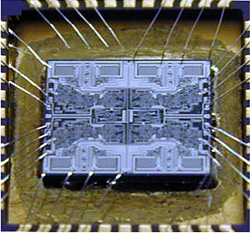
The high performance of the PIC16F648A family can be attributed to a number of architectural features commonly found in RISC microprocessors. To begin with, the PIC16F648A uses a Harvard architecture, in which program and data are accessed from separate memories using separate busses.
Break IC PIC16F648A Heximal
This improves bandwidth over traditional von Neumann architecture where program and data are fetched from the same memory when Break IC PIC16F648A Heximal. Separating program and data memory further allows instructions to be sized differently than 8-bit wide data word. Instruction opcodes are 14-bits wide making it possible to have all single word instructions.
A 14-bit wide program memory access bus fetches a 14-bit instruction in a single cycle. A two-stage pipeline overlaps fetch and execution of instructions. Consequently, all instructions (35) execute in a single-cycle (200 ns @ 20 MHz) except for program branches.
(QTP) Devices Microchip offers a QTP Programming Service for factory production orders. This service is made available for users who chose not to program a medium to high quantity of units and whose code patterns have stabilized.
The devices are standard FLASH devices but with all program locations and configuration options already programmed by the factory. Certain code and prototype verification procedures apply before production shipments are available.
Microchip offers a unique programming service where a few user-defined locations in each device are programmed with different serial numbers. The serial numbers may be random, pseudo-random or sequential. Serial programming allows each device to have a unique number, which can serve as an entry-code, password or ID number.