Archive for the ‘Break IC’ Category
 Break MCU MC9S12XDG128 Heximal
 April 17th, 2014 |
  Author:
 Break MCU MC9S12XDG128 and extract Heximal from Microcontroller MC9S12XDG128 flash memory, the security fuse bit of microprocessor MC9S12XDG128 can be disable and turn the status from locked to unlocked one;
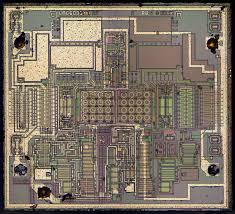
Break MCU MC9S12XDG128 and extract Heximal from Microcontroller MC9S12XDG128 flash memory, the security fuse bit of microprocessor MC9S12XDG128 can be disable and turn the status from locked to unlocked one
The MC9S12XD family will retain the low cost, power consumption, EMC and code-size efficiency advantages currently enjoyed by users of Freescale’s existing 16-Bit MC9S12 MCU Family.
Based around an enhanced S12 core, the MC9S12XD family will deliver 2 to 5 times the performance of a 25-MHz S12 whilst retaining a high degree of pin and code compatibility with the S12.
The MC9S12XD family introduces the performance boosting XGATE module. Using enhanced DMA functionality, this parallel processing module offloads the CPU by providing high-speed data processing and transfer between peripheral modules, RAM, Flash EEPROM and I/O ports. Providing up to 80 MIPS of performance additional to the CPU, the XGATE can access all peripherals, Flash EEPROM and the RAM block after Break Microcontroller samsung s3f9454 software.
The MC9S12XD family is composed of standard on-chip peripherals including up to 512 Kbytes of Flash EEPROM, 32 Kbytes of RAM, 4 Kbytes of EEPROM, six asynchronous serial communications interfaces (SCI), three serial peripheral interfaces (SPI), an 8-channel IC/OC enhanced capture timer, an 8-channel, 10-bit analog-to-digital converter, a 16-channel, 10-bit analog-to-digital converter, an 8-channel pulse-width modulator (PWM), five CAN 2.0 A, B software compatible modules (MSCAN12), two inter-IC bus blocks, and a periodic interrupt timer. The MC9S12XD family has full 16-bit data paths throughout.
The non-multiplexed expanded bus interface available on the 144-pin versions allows an easy interface to external memories The inclusion of a PLL circuit allows power consumption and performance to be adjusted to suit operational requirements. System power consumption can be further improved with the new “fast exit from stop mode” feature before Microchip PIC32MX440F512H Binary reading.
In addition to the I/O ports available in each module, up to 25 further I/O ports are available with interrupt capability allowing wake-up from stop or wait mode. Family members in 144-pin LQFP will be available with external bus interface and parts in 112-pin LQFP or 80-pin QFP package without external bus interface. See Appendix E Derivative Differences for package options.
 Posted in Break IC |
  Tags: break mcu embedded binary, break mcu embedded content, break mcu embedded data, break mcu embedded file, break mcu embedded flash, break mcu embedded heximal, break mcu embedded software |
  Comments Closed
Break IC S3F9454B Firmware
Modern embedded systems often rely on microcontrollers with advanced protection features to guard their firmware and prevent unauthorized access. One such example is the Samsung S3F9454B, a commonly used 8-bit microcontroller in consumer electronics and industrial equipment. With integrated EEPROM, flash memory, and protective locking mechanisms, the S3F9454B is designed to keep its internal firmware, binary, and data secure. However, there are legitimate cases where users may need to break IC S3F9454B firmware — for system recovery, product maintenance, reverse engineering, or migration to a new platform.
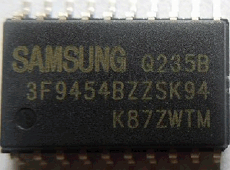
At CIRCUIT ENGINEERING CO.,LTD, we specialize in helping clients crack, hack, decode, decrypt, and unlock protected firmware embedded in microcontrollers like the S3F9454B. Our expert team can restore lost source code, copy firmware from working units, or clone devices by bypassing or neutralizing the chip’s internal security features.
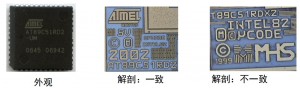
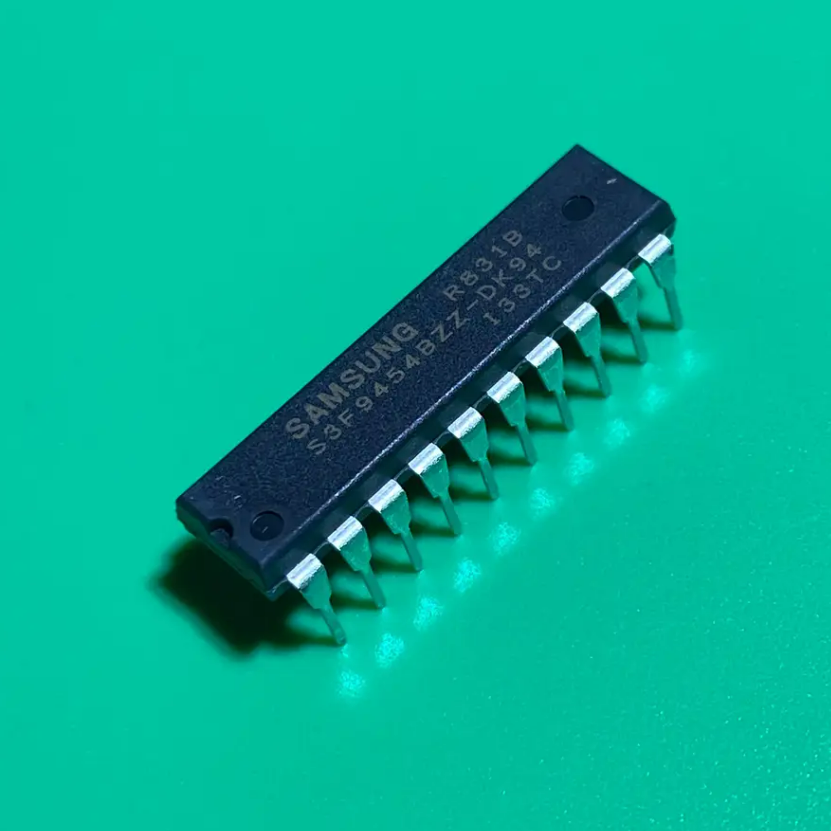
Break IC S3F9454B protective system and readout firmware from samsung Microcontroller S3F9454B, the format of firmware will be heximal which can be reprogramme to blank MCU S3F9454B flash memory;
The S3F9454B MCU is part of Samsung’s family of 8-bit microcontrollers built for embedded control in electronic appliances, automotive systems, industrial automation, and smart devices. Its key features include:
- Flash Memory for program storage
- Built-in EEPROM for non-volatile data retention
- Multiple I/O ports
- Internal oscillator
- Integrated ADCs for sensor input
- On-chip protection mechanisms against firmware read-back and duplication
These features make it ideal for compact applications, but they also complicate the process when original firmware is lost, or updates are required without access to source code.
OVERVIEW
The SAM88RCRI instruction set is designed to support the large register file. It includes a full complement of 8-bit arithmetic and logic operations. There are 41 instructions. No special I/O instructions are necessary because I/O control and data registers are mapped directly into the register file. Flexible instructions for bit addressing, rotate, and shift operations complete the powerful data manipulation capabilities of the SAM88RCRI instruction set after MCU STM32F107RCT6 code recovery.
REGISTER ADDRESSING
To access an individual register, an 8-bit address in the range 0-255 or the 4-bit address of a working register is specified. Paired registers can be used to construct 13-bit program memory or data memory addresses. For detailed information about register addressing, please refer to Chapter 2, “Address Spaces”.
ADDRESSING MODES
There are six addressing modes: Register (R), Indirect Register (IR), Indexed (X), Direct (DA), Relative (RA), and Immediate (IM). For detailed descriptions of these addressing modes, please refer to Chapter 3, “Addressing Modes” when microcontroller PIC16F684 firmware copying.
We provide a full suite of services to break the IC S3F9454B firmware and retrieve, duplicate, or clone the content from the chip’s flash, EEPROM, and program memory. Our process includes:
Secure IC Extraction: We physically and logically access the chip to extract firmware without damaging the original device.
Firmware Dumping: We open the locked firmware and retrieve heximal files, binary archives, and other secured memory data.
Decryption and Analysis: If the firmware is encrypted, we use advanced analysis and brute-force techniques to decrypt and decode it.
Disassembly & Decompilation: Our engineers can convert raw firmware into readable assembly language, and in many cases, reconstruct C/C++ source code for easier modification or reuse.
Duplication and Cloning: We can copy firmware from one device to another, creating working clones for replacement, testing, or legacy system replication.
Our clients range from electronics manufacturers and repair shops to researchers and security analysts. Common reasons to use our service include:
- Lost or corrupted firmware recovery
- Legacy system support where original source code is missing
- Competitive analysis or product teardowns
- Security audits and vulnerability research
- Product maintenance or feature expansion
With our support, companies can avoid costly delays, replace discontinued parts, or perform critical upgrades on systems where the firmware is locked and otherwise inaccessible.
Circuit Engineering Company Limited continues to be recognized as the Southern China Leader in Services for IC Break, MCU attack, Chip Recover, Microcontroller Copy service. With the advancement of today’s modern circuit board technology, it is more important than ever to have specialists available to help you at a moment’s notice. Our engineering and commercial teams collectively have a vast amount of electronic experience covering field include Consumer Electronics, Industrial Automation Electronics, Wireless Communication Electronics., etc. For more information please contact us through email.
Attack Chip dsPIC33FJ256GP506A Software
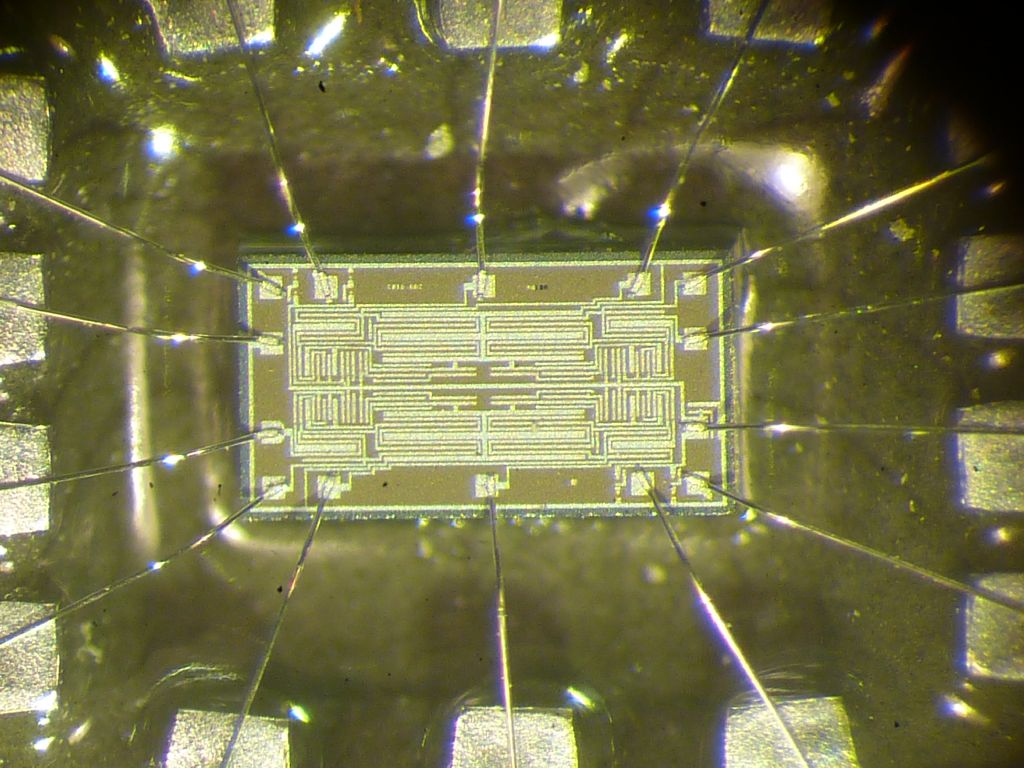
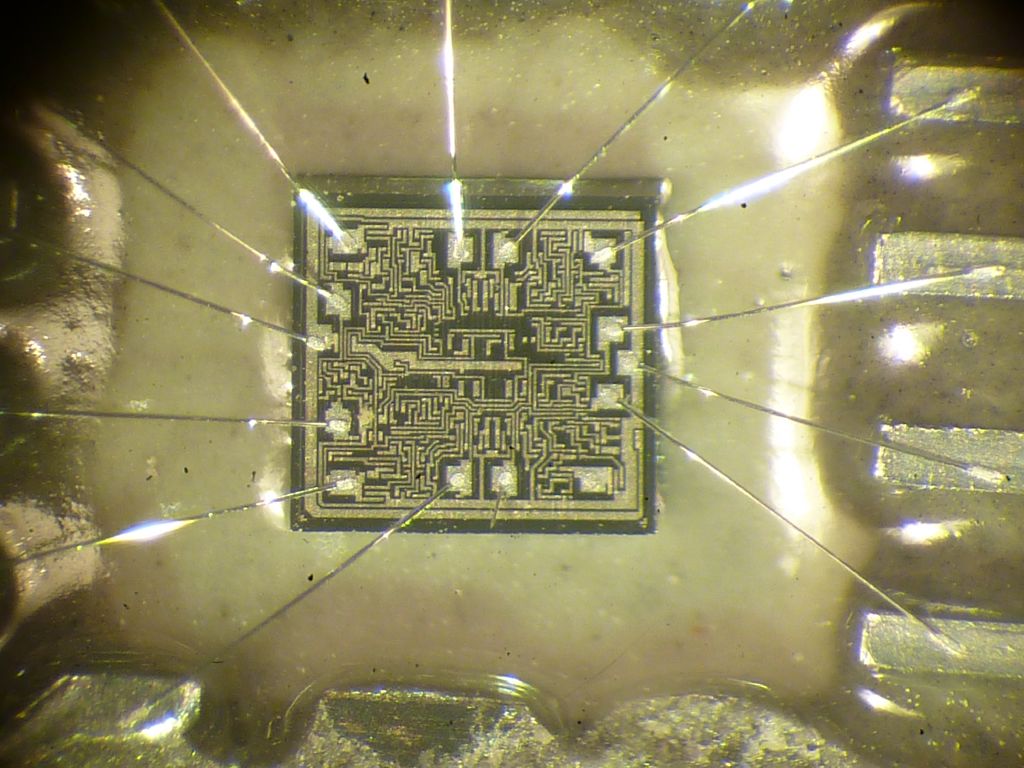
The dsPIC33FJ256GP506A is a high-performance digital signal controller from Microchip, widely used in industrial, automotive, and embedded systems. However, its security mechanisms can be compromised through advanced techniques such as firmware dumping, reverse engineering, and decryption. This article explores methods to crack, decode, and clone the program stored in its flash memory and EEPROM.
El dsPIC33FJ256GP506A es un controlador de señales digitales de alto rendimiento de Microchip, ampliamente utilizado en sistemas industriales, automotrices y embebidos. Sin embargo, sus mecanismos de seguridad pueden verse comprometidos mediante técnicas avanzadas como el volcado de firmware, la ingeniería inversa y el descifrado. Este artículo explora métodos para descifrar, decodificar y clonar el programa almacenado en su memoria flash y EEPROM.
1. Dumping Firmware from Flash Memory
The primary step in attacking the dsPIC33FJ256GP506A is extracting the binary code from its internal flash memory. Attackers often use hardware tools like a programmer/debugger (PICKit, ICD, or J-Tag) to dump the firmware. If read protection is enabled, more invasive methods like decapsulating the chip and using microprobing or laser fault injection may be required.
Once extracted, the heximal data can be analyzed using disassemblers (IDA Pro, Ghidra) to reverse engineer the source code.
2. Breaking EEPROM Memory Protection
Many devices store critical data (encryption keys, calibration values) in EEPROM memory. Attackers can dump EEPROM contents using I2C/SPI sniffers or direct memory reading via debug interfaces. If the data is encrypted, brute-force attacks or side-channel analysis may help decrypt it.
DsPIC33FJ256GP506A to wydajny cyfrowy kontroler sygnału firmy Microchip, szeroko stosowany w systemach przemysłowych, motoryzacyjnych i wbudowanych. Jednak jego mechanizmy bezpieczeństwa mogą zostać naruszone za pomocą zaawansowanych technik, takich jak zrzucanie oprogramowania układowego, inżynieria wsteczna i deszyfrowanie. W tym artykule omówiono metody łamania, dekodowania i klonowania programu przechowywanego w pamięci flash i EEPROM.
3. Decoding and Reverse Engineering the Program File
After obtaining the binary dump, the next step is decoding the program file. Tools like Binary Ninja or Radare2 assist in converting machine code into readable assembly. Skilled attackers can reconstruct the original logic, modify functionalities, or clone the firmware for unauthorized replication.
4. Restoring Modified Firmware
Once reverse-engineered, attackers may modify the firmware to bypass security checks or introduce malicious code. The altered binary code can be re-flashed into a new chip, effectively cloning the original device.
5. Security Countermeasures
To prevent such attacks, developers should:
Enable code protection (CPS, WDT)
Use secure bootloaders with encryption (AES, RSA)
Implement tamper detection mechanisms
Obfuscate critical source code
Conclusion
The dsPIC33FJ256GP506A is vulnerable to firmware extraction, reverse engineering, and cloning if proper security measures are not applied. By understanding attack methods like memory dumping, decryption, and binary analysis, developers can better protect their designs from unauthorized recovery and copying.
For secure applications, always use hardware security modules (HSM) and encrypted firmware updates to mitigate risks.
Attack Chip dsPIC33FJ256GP506A and compromise Microcontroller dsPIC33FJ256GP506 tamper resistance system, readout MCU software from dsPIC33FJ256 flash and eeprom memory
Attack Chip dsPIC33FJ256GP506A and compromise Microcontroller dsPIC33FJ256GP506 tamper resistance system, readout MCU software from dsPIC33FJ256 flash and eeprom memory;
Operating Conditions
· 3.0V to 3.6V, -40ºC to +150ºC, DC to 20 MIPS
· 3.0V to 3.6V, -40ºC to +125ºC, DC to 40 MIPS
Core: 16-bit dsPIC33F CPU
Timers/Output Compare/Input Capture
· Up to nine 16-bit timers/counters. Can pair up to make four 32-bit timers;
· Eight Output Compare modules configurable as timers/counters;
Code-efficient (C and Assembly) architecture
Two 40-bit wide accumulators
Single-cycle (MAC/MPY) with dual data fetch
Single-cycle mixed-sign MUL plus hardware divide
· Eight Input Capture modules
Communication Interfaces
· Two UART modules (10 Mbps)
– With support for LIN 2.0 protocols and IrDA®
· Two 4-wire SPI modules (15 Mbps)

dsPIC33FJ256GP506A یک کنترل کننده سیگنال دیجیتال با کارایی بالا از Microchip است که به طور گسترده در سیستم های صنعتی، خودروسازی و تعبیه شده استفاده می شود. با این حال، مکانیسمهای امنیتی آن میتواند از طریق تکنیکهای پیشرفتهای مانند تخلیه سیستمافزار، مهندسی معکوس و رمزگشایی به خطر بیفتد. این مقاله روش هایی برای کرک کردن، رمزگشایی و شبیه سازی برنامه ذخیره شده در حافظه فلش و EEPROM آن را بررسی می کند.
Clock Management
· Up to two I2C™ modules (up to 1 Mbaud) with ±2% internal oscillator
Programmable PLLs and oscillator clock sources
Fail-Safe Clock Monitor (FSCM)
Independent Watchdog Timer (WDT)
Fast wake-up and start-up
SMBus support
· Up to two Enhanced CAN (ECAN) modules (1 Mbaud) with 2.0B support
· Data Converter Interface (DCI) module with I2S codec support
Power Management
· Low-power management modes (Sleep, Idle, Doze)
· Integrated Power-on Reset and Brown-out Reset
· 2.1 mA/MHz dynamic current (typical)
· 50 μA IPD current (typical)
Advanced Analog Features
· Two ADC modules:
– Configurable as 10-bit, 1.1 Msps with four S&H or 12-bit, 500 ksps with one S&H
– 18 analog inputs on 64-pin devices and up to 32 analog inputs on 100-pin devices
· Flexible and independent ADC trigger sources
Input/Output
· Sink/Source up to 10 mA (pin specific) for standard VOH/VOL, up to 16 mA (pin specific) for non-standard VOH1
· 5V-tolerant pins
· Selectable open drain, pull-ups, and pull-downs
· Up to 5 mA overvoltage clamp current
· External interrupts on all I/O pins
Qualification and Class B Support
· AEC-Q100 REVG (Grade 1 -40ºC to +125ºC)
· AEC-Q100 REVG (Grade 0 -40ºC to +150ºC)
· Class B Safety Library, IEC 60730
Debugger Development Support
Packages
In-circuit and in-application programming
Two program and two complex data breakpoints
IEEE 1149.2-compatible (JTAG) boundary scan
Trace and run-time watch
Posted in Break IC |
Tags: чупя mcu lotsked binario, чупя mcu lotsked eprom, чупя mcu lotsked fecha, чупя mcu lotsked filete, чупя mcu lotsked flash, чупя mcu lotsked heksimal, чупя mcu lotsked memoria, чупя mcu lotsked programa en el lugar, чупя mcu lotsked softvare, чупя mcu lotsked tsode |
Comments Closed
Attack MCU MSP430G2452IPW14R Heximal
Attack MCU MSP430G2452IPW14R Hexadecimal: Firmware Extraction and Reverse Engineering
The MSP430G2452IPW14R is a low-power microcontroller from Texas Instruments, widely used in embedded systems. However, its flash memory and EEPROM memory can be targeted for firmware extraction, reverse engineering, or cloning. This article explores methods to crack, decode, and dump the hexadecimal data from this MCU.
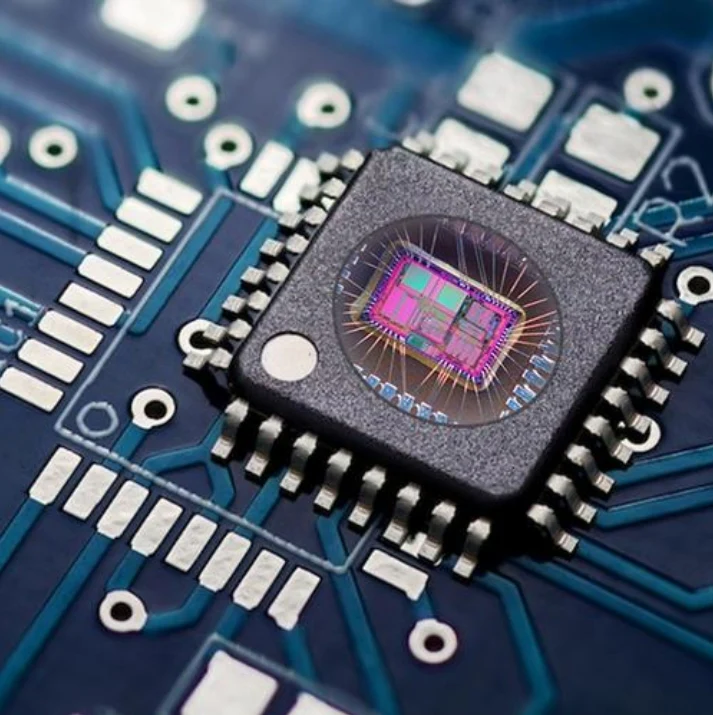
MSP430G2452IPW14R è un microcontrollore a bassa potenza di Texas Instruments, ampiamente utilizzato nei sistemi embedded. Tuttavia, la sua memoria flash e la sua memoria EEPROM possono essere prese di mira per l’estrazione del firmware, il reverse engineering o la clonazione. Questo articolo esplora i metodi per crackare, decodificare e scaricare i dati esadecimali da questa MCU.
Dumping Firmware from Flash Memory
To extract the program file from the MSP430G2452IPW14R, attackers often use JTAG or SBW (Spy-Bi-Wire) interfaces. By connecting a programmer like the MSP-FET or a universal flash tool, the binary code can be read out and saved as a hex file. Some advanced techniques involve power glitching or timing attacks to bypass security fuses.
Decrypting and Reverse Engineering
Once the heximal data is dumped, the next step is decoding the firmware. Since the MSP430 uses a 16-bit RISC architecture, disassemblers like IDA Pro or Ghidra can help reverse engineer the source code. If the firmware is encrypted, brute-force attacks or side-channel analysis may be required to crack the protection.
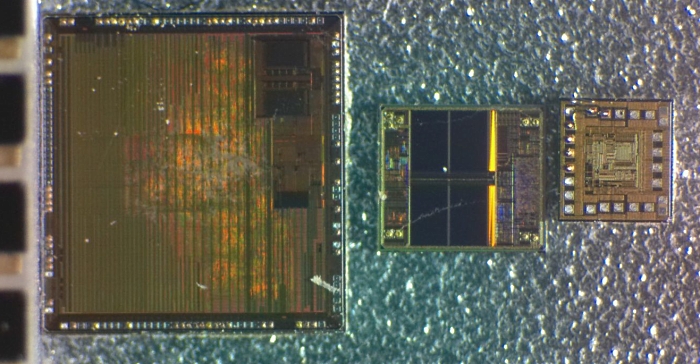
MSP430G2452IPW14R से प्रोग्राम फ़ाइल को निकालने के लिए, हमलावर अक्सर JTAG या SBW (स्पाई-बाय-वायर) इंटरफेस का उपयोग करते हैं। MSP-FET या यूनिवर्सल फ्लैश टूल जैसे प्रोग्रामर को कनेक्ट करके, बाइनरी कोड को पढ़ा जा सकता है और हेक्स फ़ाइल के रूप में सहेजा जा सकता है। कुछ उन्नत तकनीकों में सुरक्षा फ़्यूज़ को बायपास करने के लिए पावर ग्लिचिंग या टाइमिंग अटैक शामिल हैं।
Cloning and Firmware Restoration
After successful decryption, the binary archive can be copied to another MSP430 chip, enabling cloning of the original device. Some attackers decapsulate the MCU to perform microprobing on the flash memory for direct data extraction.
Security Countermeasures
To prevent such attacks, developers should:
Enable read-out protection bits
Use encrypted firmware updates
Implement secure bootloaders
Despite these measures, skilled attackers can still break the security using advanced reverse engineering techniques. Therefore, protecting sensitive hexadecimal firmware remains a critical challenge in embedded security.
By understanding these attack vectors, engineers can better defend against firmware theft and unauthorized cloning of the MSP430G2452IPW14R.
Attack MCU MSP430G2452IPW14R flash memory and extract heximal from Microcontroller MSP430G2452, the status of Microprocessor will be reset from locked to open one after get access to the databus
Attack MCU MSP430G2452IPW14R flash memory and extract heximal from Microcontroller MSP430G2452, the status of Microprocessor will be reset from locked to open one after get access to the databus;
FEATURES
Low Supply Voltage Range: 1.8 V to 3.6 V
Ultra-Low Power Consumption
– Active Mode: 220 µA at 1 MHz, 2.2 V
– Standby Mode: 0.5 µA
– Off Mode (RAM Retention): 0.1 µA
Five Power-Saving Modes
Ultra-Fast Wake-Up From Standby Mode in Less Than 1 µs
16-Bit RISC Architecture, 62.5-ns Instruction Cycle Time Basic Clock Module Configurations
– Internal Frequencies up to 16 MHz With
Four Calibrated Frequencies
– Internal Very-Low-Power Low-Frequency (LF) Oscillator
– 32-kHz Crystal
– External Digital Clock Source
One 16-Bit Timer_A With Three Capture/Compare Registers
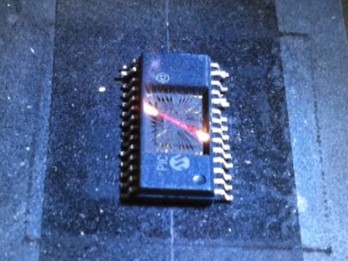
След като шестнадесетичните данни бъдат изхвърлени, следващата стъпка е декодирането на фърмуера. Тъй като MSP430 използва 16-битова RISC архитектура, дизасемблери като IDA Pro или Ghidra могат да помогнат за обратното проектиране на изходния код. Ако фърмуерът е криптиран, може да са необходими груби атаки или анализ на страничния канал, за да се пробие защитата.
Up to 16 Touch-Sense Enabled I/O Pins
Universal Serial Interface (USI) Supporting SPI and I2C
10-Bit 200-ksps Analog-to-Digital (A/D)
Converter With Internal Reference, Sample-and-Hold, and Autoscan (MSP430G2x52 Only)
On-Chip Comparator for Analog
Brownout Detector Serial Onboard Programming,
No External Programming Voltage Needed,
Programmable Code Protection by Security Fuse
On-Chip Emulation Logic With Spy-Bi-Wire Interface
Family Members are Summarized in Table 1 Package Options
– TSSOP: 14 Pin, 20 Pin
– PDIP: 20 Pin
– QFN: 16 Pin
For Complete Module Descriptions, See the MSP430x2xx Family User’s Guide (SLAU144)
Attack IC TMS320F28232PGFA Software
Attack IC TMS320F28232PGFA DSP MCU, reset the status of DSP Microcontroller TMS320F28232PGFA from locked to unlocked one through MCU cracking process, software of MCU’s flash memory can readout;
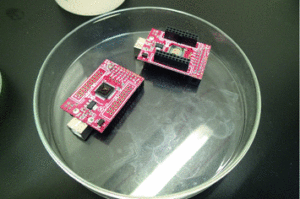
Attack IC TMS320F28232PGFA DSP MCU, reset the status of DSP Microcontroller TMS320F28232PGFA from locked to unlocked one through MCU cracking process, software of MCU’s flash memory can readout
· High-Performance Static CMOS Technology
– Up to 150 MHz (6.67-ns Cycle Time)
– 1.9-V/1.8-V Core, 3.3-V I/O Design
· High-Performance 32-Bit CPU (TMS320C28x)
– IEEE-754 Single-Precision Floating-Point
Unit (FPU) (F2833x only)
– 16 x 16 and 32 x 32 MAC Operations
– 16 x 16 Dual MAC
– Harvard Bus Architecture
– Fast Interrupt Response and Processing
– Unified Memory Programming Model
– Code-Efficient (in C/C++ and Assembly)
· Six-Channel DMA Controller (for ADC, McBSP, ePWM, XINTF, and SARAM)
· 16-Bit or 32-Bit External Interface (XINTF)
– Over 2M x 16 Address Reach
· On-Chip Memory
– F28335, F28235: 256K x 16 Flash, 34K x 16 SARAM
– F28334, F28234: 128K x 16 Flash, 34K x 16 SARAM
– F28332, F28232: 64K x 16 Flash, 26K x 16 SARAM
– 1K x 16 OTP ROM
· Boot ROM (8K x 16)
– With Software Boot Modes (via SCI, SPI, CAN, I2C, McBSP, XINTF, and Parallel I/O)
– Standard Math Tables
· Clock and System Control
– Dynamic PLL Ratio Changes Supported
– On-Chip Oscillator
– Watchdog Timer Module
· GPIO0 to GPIO63 Pins Can Be Connected to One of the Eight External Core Interrupts
· Peripheral Interrupt Expansion (PIE) Block That Supports All 58 Peripheral Interrupts
· 128-Bit Security Key/Lock
– Protects Flash/OTP/RAM Blocks
– Prevents Firmware Reverse Engineering
· Enhanced Control Peripherals
– Up to 18 PWM Outputs
– Up to 6 HRPWM Outputs With 150 ps MEP Resolution
– Up to 6 Event Capture Inputs
– Up to 2 Quadrature Encoder Interfaces
– Up to 8 32-Bit Timers
(6 for eCAPs and 2 for eQEPs)
– Up to 9 16-Bit Timers
(6 for ePWMs and 3 XINTCTRs)
· Three 32-Bit CPU Timers
· Serial Port Peripherals
– Up to 2 CAN Modules
– Up to 3 SCI (UART) Modules
– Up to 2 McBSP Modules (Configurable as SPI)
– One SPI Module
– One Inter-Integrated-Circuit (I2C) Bus
· 12-Bit ADC, 16 Channels
– 80-ns Conversion Rate
– 2 x 8 Channel Input Multiplexer
– Two Sample-and-Hold
– Single/Simultaneous Conversions
– Internal or External Reference
· Up to 88 Individually Programmable, Multiplexed GPIO Pins With Input Filtering
· JTAG Boundary Scan Support (1)
· Advanced Emulation Features
– Analysis and Breakpoint Functions
– Real-Time Debug via Hardware
· Development Support Includes
– ANSI C/C++ Compiler/Assembler/Linker
– Code Composer Studio™ IDE
– DSP/BIOS™
– Digital Motor Control and Digital Power Software Libraries
Low-Power Modes and Power Savings
– IDLE, STANDBY, HALT Modes Supported
– Disable Individual Peripheral Clocks
· Endianness: Little Endian
· Package Options:
– Lead-free, Green Packaging
– Low-Profile Quad Flatpack (PGF, PTP)
– MicroStar BGA™ (ZHH)
– Plastic BGA (ZJZ)
· Temperature Options:
– A: –40°C to 85°C (PGF, ZHH, ZJZ)
– S: –40°C to 125°C (PTP, ZJZ)
– Q: –40°C to 125°C (PTP, ZJZ)
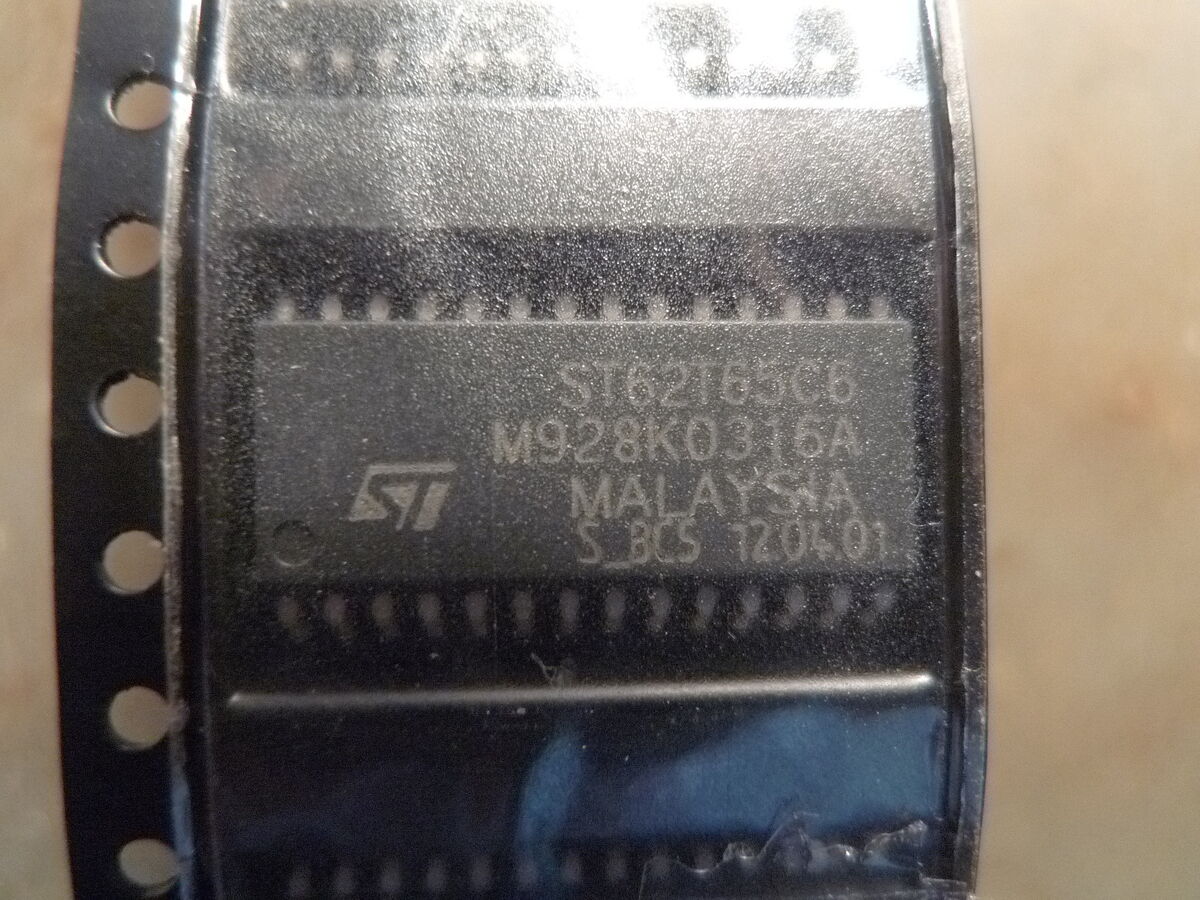
Recover IC ST62T65C6 Software
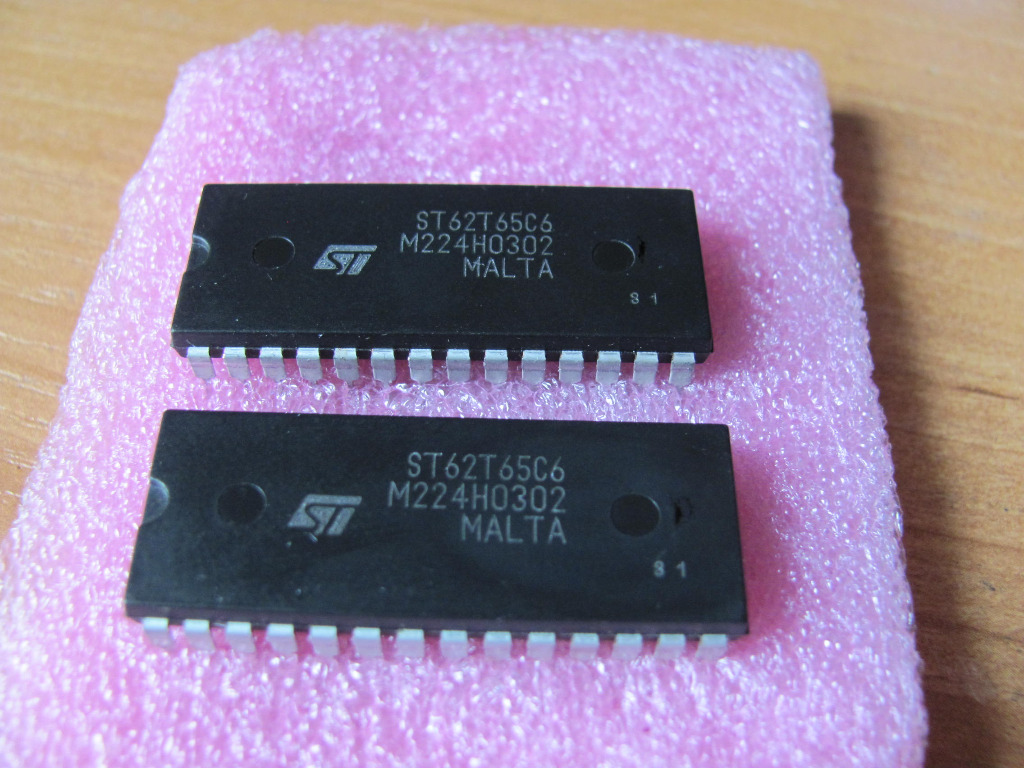
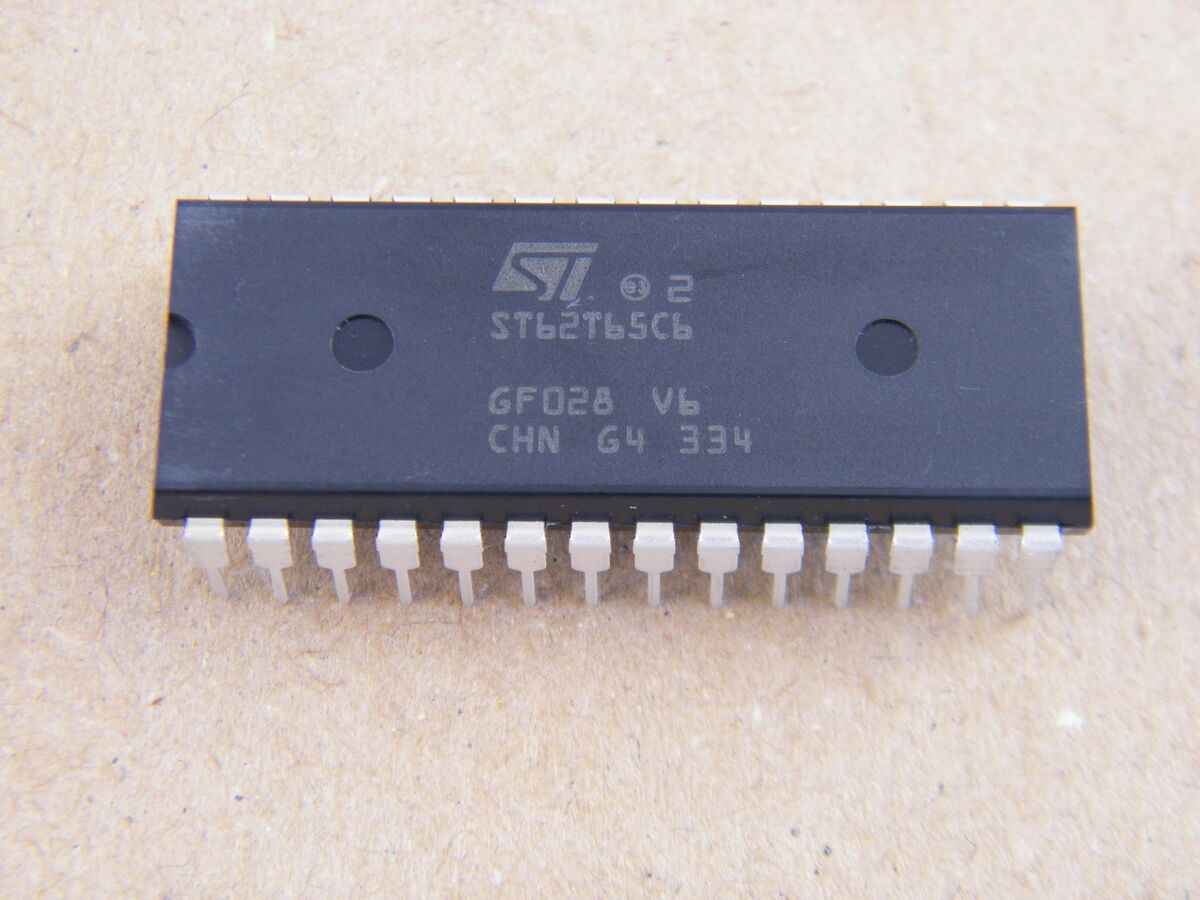
The ST62T65C6 microcontroller, developed by STMicroelectronics, is widely used in embedded systems, industrial automation, and consumer electronics. However, many of these chips come with protected firmware, making it challenging to access, modify, or migrate stored binary data. At [Your Company Name], we specialize in recovering IC ST62T65C6 software, helping clients readout, crack, and decrypt locked memory archives for system analysis, replication, or debugging purposes.
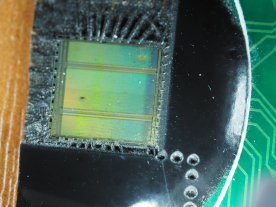
Recover IC ST62T65C6 Software from MCU ST62T65C6 flash memory, reset the security fuse bit status by focus ion beam technique which is the most important part for microcontroller unlocking, readout firmware from MCU
Recover IC ST62T65C6 Software from MCU ST62T65C6 flash memory, reset the security fuse bit status by focus ion beam technique which is the most important part for microcontroller unlocking, readout firmware from MCU;
Features
■ 3.0 to 6.0V supply operating range
■ 8 MHz maximum clock frequency
■ -40 to +125°C operating temperature range
■ Run, Wait and Stop modes
■ 5 interrupt vectors
■ Look-up table capability in program memory
■ Data storage in program memory: user selectable size
STMicroelectronics द्वारा विकसित ST62T65C6 माइक्रोकंट्रोलर का व्यापक रूप से एम्बेडेड सिस्टम, औद्योगिक स्वचालन और उपभोक्ता इलेक्ट्रॉनिक्स में उपयोग किया जाता है। हालाँकि, इनमें से कई चिप्स संरक्षित फ़र्मवेयर के साथ आते हैं, जिससे संग्रहीत बाइनरी डेटा तक पहुँचना, संशोधित करना या माइग्रेट करना चुनौतीपूर्ण हो जाता है। हम IC ST62T65C6 सॉफ़्टवेयर को पुनर्प्राप्त करने में विशेषज्ञ हैं, जो क्लाइंट को सिस्टम विश्लेषण, प्रतिकृति या डिबगिंग उद्देश्यों के लिए लॉक किए गए मेमोरी अभिलेखागार को पढ़ने, क्रैक करने और डिक्रिप्ट करने में मदद करते हैं।
■ Data RAM: 128 bytes
■ Data EEPROM: 128 bytes (not in ST6255C)
■ User programmable options
■ 21 I/O pins, fully programmable as:
– Input with pull-up resistor
– Input without pull-up resistor
– Input with interrupt generation
– Open-drain or push-pull output
– Analog Input
■ 8 I/O lines can sink up to 30 mA to drive LEDs or TRIACs directly
– 8-bit Timer/Counter with 7-bit programmable prescaler
■ 8-bit Auto-reload timer with 7-bit programmable prescaler (AR Timer)
■ Digital watchdog
■ Oscillator safe guard (not in ST6265B ROM devices)
■ Low voltage detector for safe reset (not in ST6265B ROM devices)
■ 8-bit A/D converter with 13 analog inputs
■ 8-bit synchronous peripheral interface (SPI)
■ On-chip clock oscillator can be driven by quartz crystal, ceramic resonator or RC network
■ User configurable power-on reset
(See end of Datasheet for Ordering Information)
Table 1. Device summary
Mikrokontroler ST62T65C6, opracowany przez STMicroelectronics, jest szeroko stosowany w systemach wbudowanych, automatyce przemysłowej i elektronice użytkowej. Jednak wiele z tych układów jest wyposażonych w chronione oprogramowanie układowe, co utrudnia dostęp, modyfikację lub migrację przechowywanych danych binarnych. Specjalizujemy się w odzyskiwaniu oprogramowania IC ST62T65C6, pomagając klientom odczytywać, łamać i odszyfrowywać zablokowane archiwa pamięci w celu analizy systemu, replikacji lub celów debugowania.
■ One external non-maskable interrupt
■ ST626x-EMU2 Emulation and Development
System (connects to an MS-DOS PC via a parallel port)
Circuit Engineering Company Limited continues to be recognized as the Southern China Leader in Services for read IC, MCU recovery, Chip decrypt, Microcontroller copy service. With the advancement of today’s modern circuit board technology, it is more important than ever to have specialists available to help you at a moment’s notice. Our engineering and commercial teams collectively have a vast amount of electronic experience covering field include Consumer Electronics, Industrial Automation Electronics, Wireless Communication Electronics., etc. For more information please contact us through email.
Il microcontrollore ST62T65C6, sviluppato da STMicroelectronics, è ampiamente utilizzato nei sistemi embedded, nell’automazione industriale e nell’elettronica di consumo. Tuttavia, molti di questi chip sono dotati di firmware protetto, il che rende difficile accedere, modificare o migrare i dati binari archiviati. Siamo specializzati nel recupero del software IC ST62T65C6, aiutando i clienti a leggere, decifrare e decifrare gli archivi di memoria bloccati per scopi di analisi, replica o debug del sistema.
Posted in Break IC |
Tags: recover ic encrypted binary, recover ic encrypted content, recover ic encrypted data, recover ic encrypted file, recover ic encrypted flash, recover ic encrypted heximal, recover ic encrypted software |
Comments Closed
Read Microcontroller HT68F40 Heximal
Read Microcontroller HT68F40 Heximal from flash memory, and then copy MCU HT68F40 code to new MCU which will provide the same functions as master microcomputer HT68F40 by crack Microprocessor security fuse bit;
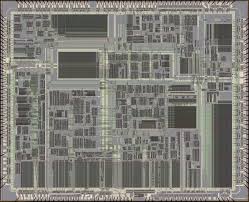
Read Microcontroller HT68F40 Heximal from flash memory, and then copy MCU HT68F40 code to new MCU which will provide the same functions as master microcomputer HT68F40 by crack Microprocessor security fuse bit;
Features
CPU Features
· Operating Voltage:
Peripheral Features
· Flash Program Memory: 1K´14 ~ 12K´16
fSYS= 8MHz: 2.2V~5.5V
fSYS= 12MHz: 2.7V~5.5V
fSYS= 20MHz: 4.5V~5.5V
Up to 0.2ms instruction cycle with 20MHz system clock at VDD=5V
Power down and wake-up functions to reduce power consumption
Five oscillators:
External Crystal – HXT
External 32.768kHz Crystal – LXT
· RAM Data Memory: 64´8 ~ 576´8
· EEPROM Memory: 32´8~256´8
· Watchdog Timer function
· Up to 50 bidirectional I/O lines
· Software controlled 4-SCOM lines LCD driver with 1/2 bias
· Multiple pin-shared external interrupts
· Multiple Timer Module for time measure, input capture, compare match output, PWM output
External RC – ERC
Internal RC – HIRC
Internal 32kHz RC – LIRC
single pulse output function
Serial Interfaces Module – SIM for SPI or I2C
Dual Comparator functions
Multi-mode operation: NORMAL, SLOW, IDLE and SLEEP
Fully integrated internal 4MHz, 8MHz and 12MHz
Dual Time-Base functions for generation of fixed time interrupt signals
Low voltage reset function oscillator requires no external components
All instructions executed in one or two instruction cycles
Table read instructions
63 powerful instructions
Up to 12-level subroutine nesting
Bit manipulation instruction
· Low voltage detect function
· Wide range of available package types
General Description
The HT68FXX series of devices are Flash Memory I/O type 8-bit high performance RISC architecture microcontrollers. Offering users the convenience of Flash Memory multi-programming features, these devices also include a wide range of functions and features. Other memory includes an area of RAM Data Memory as well as an area of EEPROM memory for storage of non-volatile data such as serial numbers, calibration data etc for the purpose of read Microcontroller.
Multiple and extremely flexible Timer Modules provide timing, pulse generation and PWM generation functions. Analog features include dual comparator functions. Communication with the outside world is catered for by including fully integrated SPI or I2C interface functions, two popular interfaces which provide designers with a means of easy communication with external peripheral hardware. Protective features such as an internal Watchdog Timer, Low Voltage Reset and Low Voltage Detector coupled with excellent noise immunity and ESD protection ensure that reliable operation is maintained in hostile electrical environments.
A full choice of HXT, LXT, ERC, HIRC and LIRC oscillator functions are provided including a fully integrated system oscillator which requires no external components for its implementation. The ability to operate and switch dynamically between a range of operating modes using different clock sources gives users the ability to optimise microcontroller operation and minimise power consumption.
The inclusion of flexible I/O programming features, Time-Base functions along with many other features ensure that the devices will find excellent use in applications such as electronic metering, environmental monitoring, handheld instruments, household appliances, electronically controlled tools, motor driving in addition to many others.
Posted in Break IC |
Tags: read microcontroller protect binary, read microcontroller protect content, read microcontroller protect data, read microcontroller protect file, read microcontroller protect flash, read microcontroller protect heximal, read microcontroller protect software |
Comments Closed
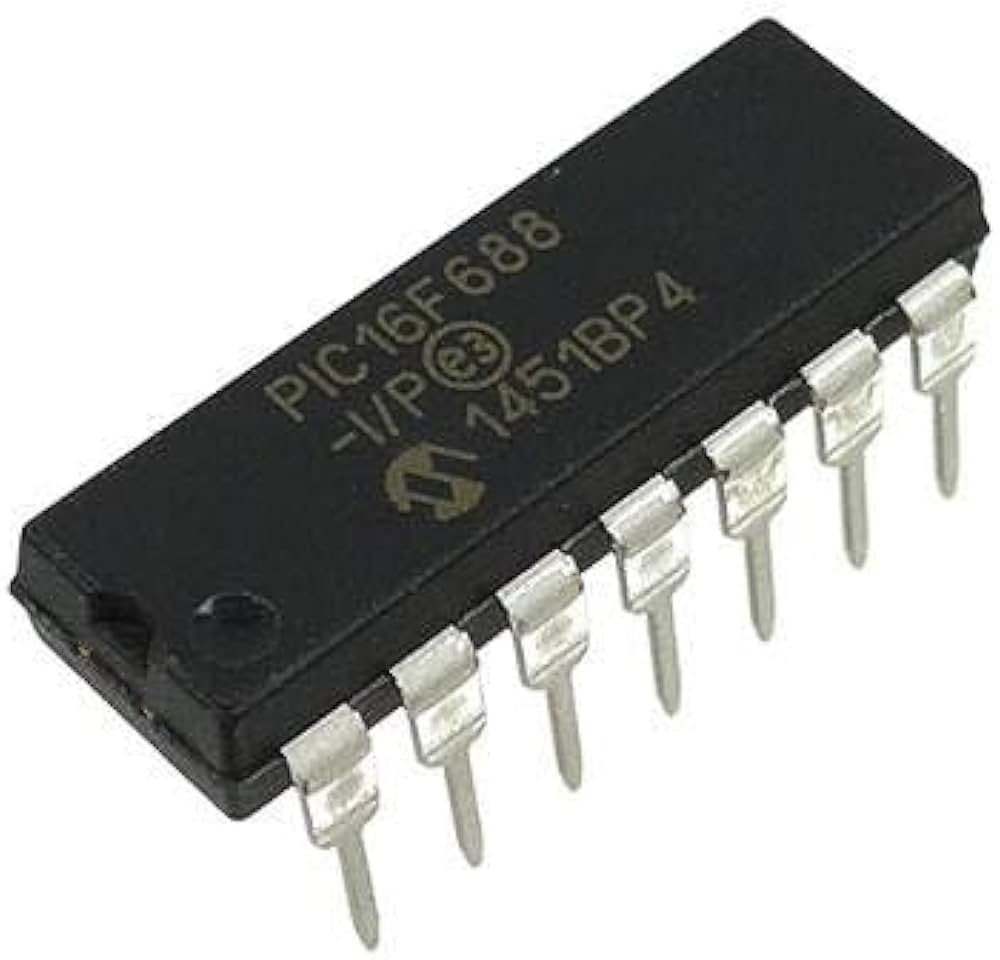
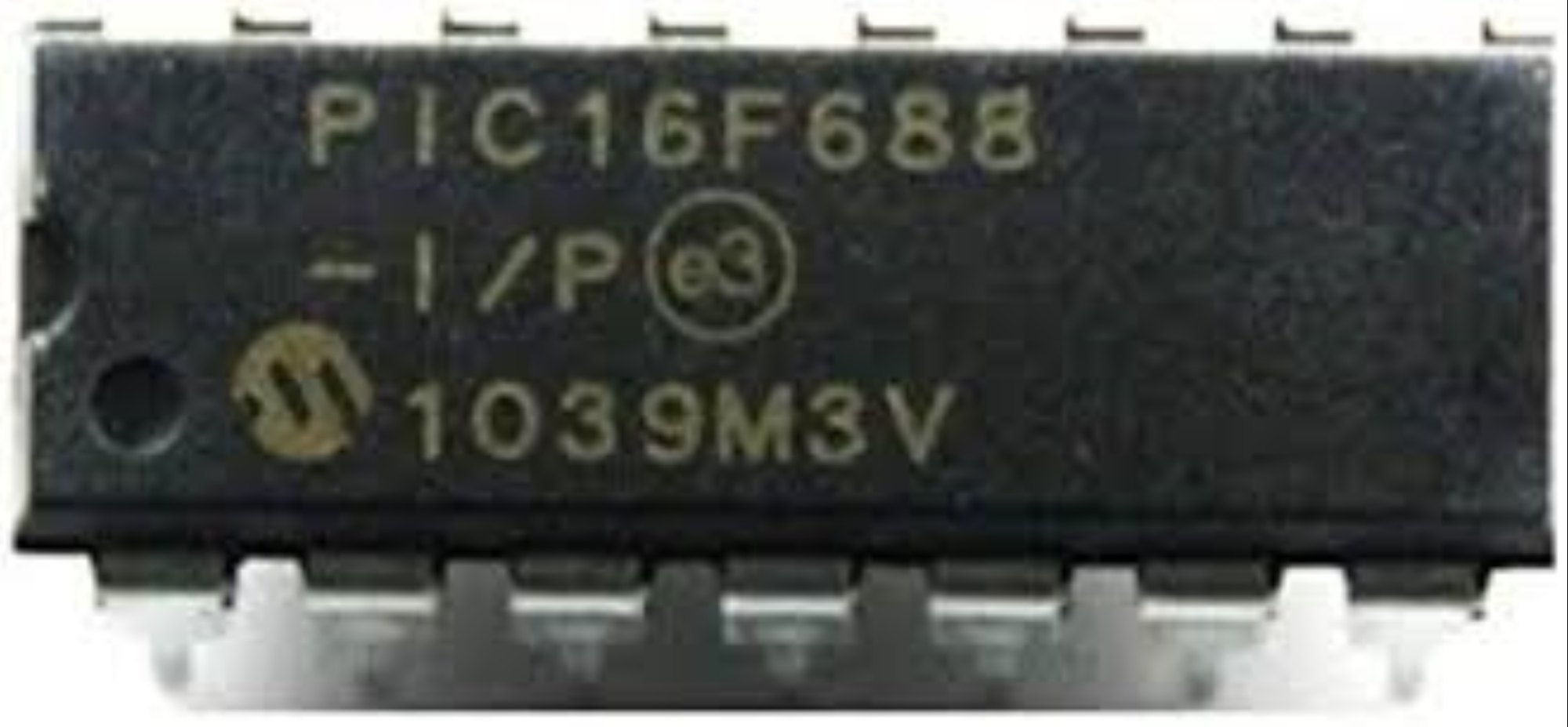
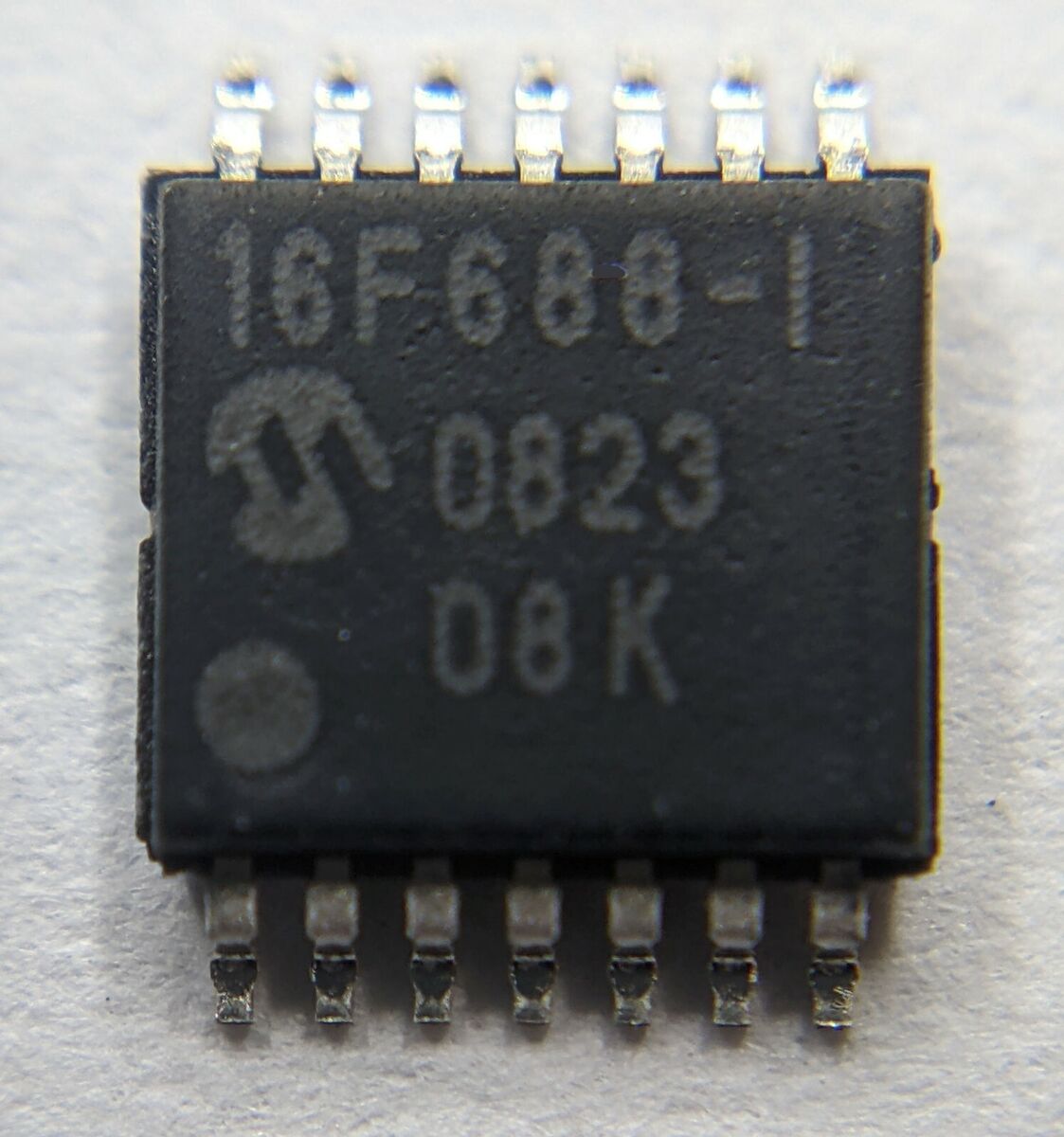
Read MCU PIC16F688 Software
The PIC16F688 microcontroller, developed by Microchip Technology, is a popular choice for embedded systems due to its compact size, low power consumption, and versatile features. However, many applications store protected or encrypted firmware in the flash memory or EEPROM, making it difficult to access, modify, or duplicate the program files. At [Your Company Name], we specialize in reading MCU PIC16F688 software, helping clients decode, decrypt, and unlock secured firmware archives for recovery, analysis, or duplication purposes.
Los microcontroladores como el PIC16F688 están equipados con fusibles de seguridad y mecanismos de cifrado para evitar el acceso no autorizado a los datos binarios almacenados en la memoria flash o EEPROM. Esta protección garantiza la seguridad de los archivos de firmware confidenciales, pero también presenta dificultades para los usuarios que necesitan restaurar, copiar o clonar el programa embebido por motivos legítimos, como actualizaciones del sistema, ingeniería inversa o creación de copias de seguridad. Nuestro proceso: Cómo leemos el software del MCU PIC16F688
Extracción de firmware: Con herramientas especializadas, eludimos los mecanismos de seguridad para leer de forma segura la memoria flash y EEPROM bloqueada, extrayendo el archivo de programa binario o hexadecimal sin dañar el microcontrolador.
Understanding PIC16F688 Firmware Protection
Microcontrollers like the PIC16F688 are equipped with security fuses and encryption mechanisms to prevent unauthorized access to the binary data stored in flash or EEPROM memory. This protection ensures that sensitive firmware files remain secure but also creates challenges for users who need to restore, copy, or clone the embedded program for legitimate reasons, such as system upgrades, reverse engineering, or backup creation.
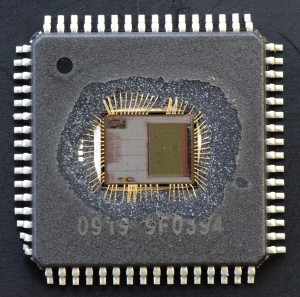
Read MCU PIC16F688 Software out in the format of heximal or binary, silicon package of Microcontroller PIC16F688 will be dissolved by chemical solution according to MCU crack principle, and copy firmware to new microcomputer PIC16F688 for MCU clone
Read MCU PIC16F688 Software out in the format of heximal or binary, silicon package of Microcontroller PIC16F688 will be dissolved by chemical solution according to MCU crack principle, and copy firmware to new microcomputer PIC16F688 for Microprocessor PIC16F688 clone;
High-Performance RISC CPU:
· Only 35 Instructions to Learn:
– All single-cycle instructions except branches
· Operating Speed:
– DC – 20 MHz oscillator/clock input
– DC – 200 ns instruction cycle
· Interrupt Capability
· 8-level Deep Hardware Stack
Low-Power Features:
PIC16F688 gibi mikrodenetleyiciler, flaş veya EEPROM belleğinde depolanan ikili verilere yetkisiz erişimi önlemek için güvenlik sigortaları ve şifreleme mekanizmalarıyla donatılmıştır. Bu koruma, hassas aygıt yazılımı dosyalarının güvenli kalmasını sağlar ancak sistem yükseltmeleri, tersine mühendislik veya yedekleme oluşturma gibi meşru nedenlerle gömülü programı geri yüklemesi, kopyalaması veya klonlaması gereken kullanıcılar için zorluklar yaratır.
· Standby Current:
– 50 nA @ 2.0V, typical
· Operating Current:
– 11 ìA @ 32 kHz, 2.0V, typical
– 220 ìA @ 4 MHz, 2.0V, typical
· Watchdog Timer Current:
– 1 ìA @ 2.0V, typical
· Direct, Indirect and Relative Addressing modes
Peripheral Features:
Special Microcontroller Features:
· Precision Internal Oscillator:
– Factory calibrated to ±1%
– Software selectable frequency range of 8 MHz to 125 kHz
– Software tunable
– Two-Speed Start-Up mode
– Crystal fail detect for critical applications
– Clock mode switching during operation for power savings
· Power-Saving Sleep mode
· Wide Operating Voltage Range (2.0V-5.5V)
· Industrial and Extended Temperature Range
· Power-on Reset (POR)
· Power-up Timer (PWRT) and Oscillator Start-up Timer (OST)
· Enhanced Low-Current Watchdog Timer (WDT) with on-chip oscillator (software selectable nominal 268 seconds with full prescaler) with software enable
Microcontroladores como o PIC16F688 são equipados com fusíveis de segurança e mecanismos de criptografia para impedir o acesso não autorizado aos dados binários armazenados na memória flash ou EEPROM. Essa proteção garante que os arquivos de firmware confidenciais permaneçam seguros, mas também cria desafios para os usuários que precisam restaurar, copiar ou clonar o programa embarcado por motivos legítimos, como atualizações do sistema, engenharia reversa ou criação de backup.
· Multiplexed Master Clear with Weak Pull-up or Input Only Pin
· Programmable Code Protection
· High-Endurance Flash/EEPROM Cell:
– 100,000 write Flash endurance
– 1,000,000 write EEPROM endurance
– Flash/Data EEPROM retention: > 40 years
· 12 I/O Pins with Individual Direction Control:
– High-current source/sink for direct LED drive
– Interrupt-on-change pin
– Individually programmable weak pull-ups
– Ultra Low-Power Wake-up
· Analog Comparator module with:
– Two analog comparators
– Programmable On-chip Voltage Reference (CVREF) module (% of VDD)
– Comparator inputs and outputs externally accessible
· A/D Converter:
– 10-bit resolution and 8 channels
· Timer0: 8-bit Timer/Counter with 8-bit Programmable Prescaler
· Enhanced Timer1:
– 16-bit timer/counter with prescaler
– External Timer1 Gate (count enable)
– Option to use OSC1 and OSC2 in LP mode as
Timer1 oscillator if INTOSC mode selected
· Enhanced USART Module:
– Supports RS-485, RS-232, LIN 2.0/2.1 and J2602
– Auto-Baud Detect
– Auto-wake-up on Start bit
· In-Circuit Serial Programming™ (ICSP™) via two pins
Posted in Break IC |
Tags: read mcu embedded binary, read mcu embedded content, read mcu embedded data, read mcu embedded file, read mcu embedded flash, read mcu embedded heximal, read mcu embedded software |
Comments Closed
Read IC Microchip PIC32MX440F512H Binary
Read IC Microchip PIC32MX440F512H Binary out from MCU PIC32MX440F512H flash memory, crack Microcontroller PIC32MX440F512H tamper resistance system and then extract firmware from Microprocessor memory;

Read IC Microchip PIC32MX440F512H Binary out from MCU PIC32MX440F512H flash memory, crack Microcontroller PIC32MX440F512H tamper resistance system and then extract firmware from Microprocessor memory
High-Performance 32-bit RISC CPU:
· MIPS32® M4K® 32-bit core with 5-stage pipeline
· 80 MHz maximum frequency
· 1.56 DMIPS/MHz (Dhrystone 2.1) performance at 0 wait state Flash access
· Single-cycle multiply and high-performance divide unit
· MIPS16e® mode for up to 40% smaller code size
· Two sets of 32 core register files (32-bit) to reduce interrupt latency
· Prefetch Cache module to speed execution from Flash
Microcontroller Features:
· Operating temperature range of -40ºC to +105ºC
· Operating voltage range of 2.3V to 3.6V
· 32K to 512K Flash memory (plus an additional 12 KB of boot Flash)
· 8K to 32K SRAM memory
· Pin-compatible with most PIC24/dsPIC® DSC devices
· Multiple power management modes
· Multiple interrupt vectors with individually programmable priority
· Fail-Safe Clock Monitor Mode
· Configurable Watchdog Timer with on-chip Low-Power RC Oscillator for reliable operation
Peripheral Features:
· Atomic SET, CLEAR and INVERT operation on select peripheral registers
· Up to 4-channel hardware DMA with automatic data size detection
· USB 2.0-compliant full-speed device and On-The-Go (OTG) controller
· USB has a dedicated DMA channel
· 3 MHz to 25 MHz crystal oscillator
· Internal 8 MHz and 32 kHz oscillators
· Separate PLLs for CPU and USB clocks
· Two I2C™ modules
– RS-232, RS-485 and LIN support
– IrDA® with on-chip hardware encoder and decoder if read IC
· Up to two SPI modules
· Parallel Master and Slave Port (PMP/PSP) with 8-bit and 16-bit data and up to 16 address lines
· Hardware Real-Time Clock and Calendar (RTCC)
· Five 16-bit Timers/Counters (two 16-bit pairs combine to create two 32-bit timers)
· Five capture inputs
· Five compare/PWM outputs
· Five external interrupt pins
· High-Speed I/O pins capable of toggling at up to 80 MHz
· High-current sink/source (18 mA/18 mA) on all I/O pins
· Configurable open-drain output on digital I/O pins
Debug Features:
· Two programming and debugging Interfaces:
– 2-wire interface with unintrusive access and real-time data exchange with application
– 4-wire MIPS® standard enhanced JTAG interface
· Unintrusive hardware-based instruction trace
· IEEE Standard 1149.2-compatible (JTAG) boundary scan
Analog Features:
· Up to 16-channel 10-bit Analog-to-Digital Converter:
– 1000 ksps conversion rate
– Conversion available during Sleep, Idle
· Two Analog Comparators after read IC
Posted in Break IC |
Tags: read ic locked binary, read ic locked content, read ic locked data, read ic locked file, read ic locked flash, read ic locked heximal, read ic locked software |
Comments Closed
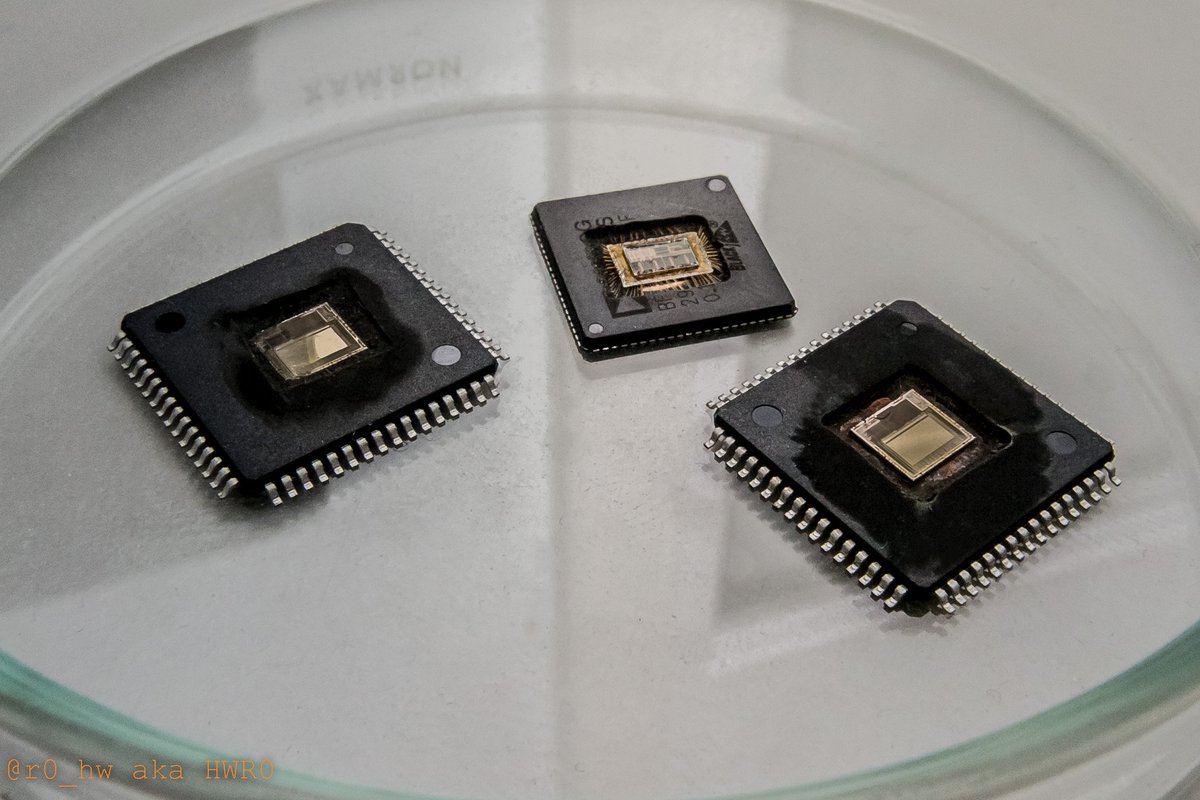
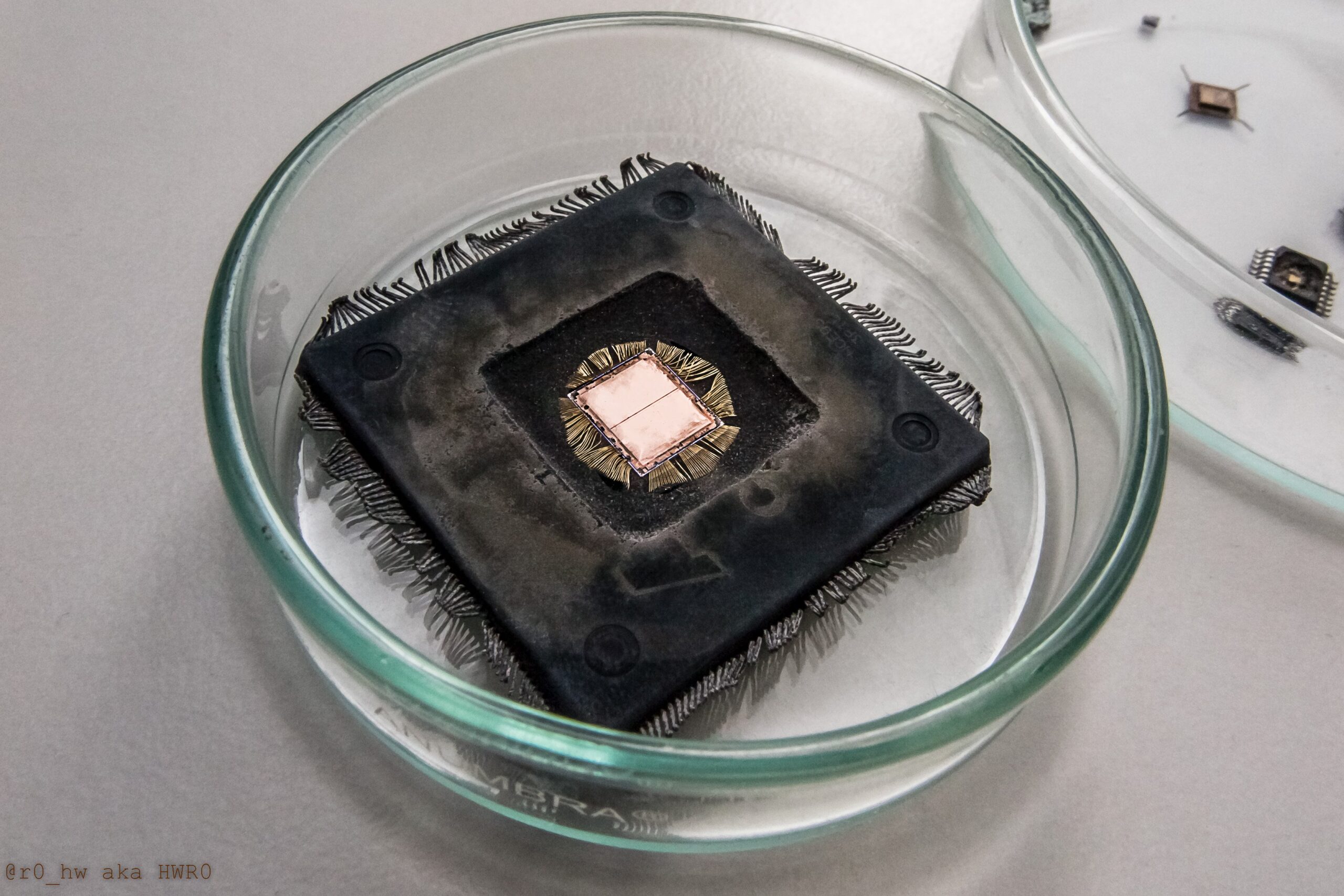
Break Chip ATmel ATmega48PV Heximal
Break Chip Atmel ATmega48P Heximal: Unlocking Protected Firmware and EEPROM Data
The Atmel ATmega48P microcontroller is widely used in embedded systems due to its low-power RISC architecture, flash memory, and EEPROM storage. However, many of these chips are secured with protective encryption, making it difficult to access, modify, or duplicate their firmware binary, EEPROM data, and heximal program files. At [Your Company Name], we specialize in breaking the Atmel ATmega48P chip, helping clients restore, decrypt, and unlock protected memory for debugging, cloning, and system migration.
Atmel ATmega48P mikrodenetleyicisi, düşük güç tüketimli RISC mimarisi, flaş belleği ve EEPROM depolaması nedeniyle gömülü sistemlerde yaygın olarak kullanılır. Ancak, bu yongaların çoğu koruyucu şifrelemeyle güvence altına alınmıştır ve bu da ürün yazılımı ikili, EEPROM verileri ve heximal program dosyalarına erişmeyi, bunları değiştirmeyi veya çoğaltmayı zorlaştırır. Circuit engineering co.,ltd’de Atmel ATmega48P yongasını kırma konusunda uzmanlaşıyoruz ve müşterilerin hata ayıklama, klonlama ve sistem geçişi için korumalı belleği geri yüklemelerine, şifresini çözmelerine ve kilidini açmalarına yardımcı oluyoruz.
How We Break ATmega48P Heximal and Firmware Protection
-
Firmware Extraction & Memory Dumping
Using advanced techniques, we copy and decrypt the locked flash and EEPROM memory from the ATmega48P microcontroller. This process allows us to retrieve the heximal binary archive stored in the chip. -
Decrypting & Cracking Secured Program Files
Once extracted, the firmware binary is analyzed to decode and decrypt the encrypted program structure. Our advanced tools help us hack and open the protected EEPROM memory, providing full access to critical system data. -
Disassembly & Source Code Reconstruction
The extracted heximal data and binary firmware are disassembled and converted into human-readable source code, enabling further modifications, optimizations, or system enhancements. -
Cloning & Duplication of ATmega48P Firmware
After successfully cracking the protective encryption, we copy, clone, and duplicate the embedded firmware, allowing clients to use the program on other ATmega48P microcontrollers or transfer it to a compatible system.
El microcontrolador Atmel ATmega48P se utiliza ampliamente en sistemas embebidos gracias a su arquitectura RISC de bajo consumo, memoria flash y almacenamiento EEPROM. Sin embargo, muchos de estos chips están protegidos con cifrado, lo que dificulta el acceso, la modificación o la duplicación de su binario de firmware, datos EEPROM y archivos de programa heximales. En circuit engineering co.,ltd, nos especializamos en descifrar el chip Atmel ATmega48P, ayudando a nuestros clientes a restaurar, descifrar y desbloquear la memoria protegida para la depuración, la clonación y la migración de sistemas.
Why Choose Our ATmega48P Reverse Engineering Service?
-
Expertise in Atmel Microcontrollers – We specialize in hacking, unlocking, and decrypting ATmega48P firmware, ensuring precise extraction and recovery.
-
Advanced Security Bypass Techniques – We use cutting-edge decryption and firmware cracking methods to break even the most protected and locked memory files.
-
Confidentiality & Precision – Our team ensures that restored and decoded firmware remains confidential and optimized for further use.
If you need to restore, crack, or duplicate a secured ATmega48P firmware archive, contact us today. Our break chip Atmel ATmega48P heximal service ensures a seamless firmware recovery and program extraction process, empowering you with full control over your embedded systems.
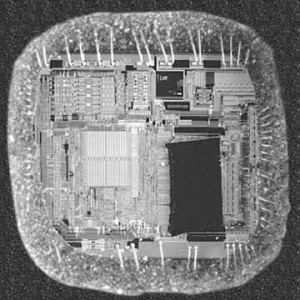
Break Chip ATmel ATmega48PV and extract heximal from MCU ATmega48PV program memory, unlock microcontroller ATmega48PV security fuse by focus ion beam, and recover firmware from both of its memory
Break Chip ATmel ATmega48PV and extract heximal from MCU ATmega48PV program memory, unlock microcontroller ATmega48PV security fuse by focus ion beam, and recover firmware from both of its memory;
Features
· High Performance, Low Power Atmel® AVR® 8-Bit Microcontroller
· Advanced RISC Architecture
– 131 Powerful Instructions – Most Single Clock Cycle Execution
– 32 x 8 General Purpose Working Registers when break Chip
– Fully Static Operation
– Up to 20 MIPS Throughput at 20 MHz
– On-chip 2-cycle Multiplier
High Endurance Non-volatile Memory Segments
– 4/8/16K Bytes of In-System Self-Programmable Flash progam memory
– 256/512/512 Bytes EEPROM
– 512/1K/1K Bytes Internal SRAM
– Write/Erase Cycles: 10,000 Flash/100,000 EEPROM
– Data retention: 20 years at 85°C/100 years at 25°C(1)
8-bit Microcontroller
– Optional Boot Code Section with Independent Lock Bits
In-System Programming by On-chip Boot Program
True Read-While-Write Operation
– Programming Lock for Software Security
Peripheral Features
– Two 8-bit Timer/Counters with Separate Prescaler and Compare Mode
– One 16-bit Timer/Counter with Separate Prescaler, Compare Mode, and Capture Mode
– Real Time Counter with Separate Oscillator
– Six PWM Channels for the purpose of break Chip
– 8-channel 10-bit ADC in TQFP and QFN/MLF package Temperature Measurement
– 6-channel 10-bit ADC in PDIP Package Temperature Measurement
– Programmable Serial USART
– Master/Slave SPI Serial Interface
– Byte-oriented 2-wire Serial Interface (Philips I2C compatible)
– Programmable Watchdog Timer with Separate On-chip Oscillator
– On-chip Analog Comparator
– Interrupt and Wake-up on Pin Change if break Chip
Special Microcontroller Features
– Power-on Reset and Programmable Brown-out Detection
– Internal Calibrated Oscillator
– External and Internal Interrupt Sources
– Six Sleep Modes: Idle, ADC Noise Reduction, Power-save, Power-down, Standby, and Extended Standby I/O and Packages
– 23 Programmable I/O Lines
– 28-pin PDIP, 32-lead TQFP, 28-pad QFN/MLF and 32-pad QFN/MLF
Operating Voltage:
– 1.8 – 5.5V for ATmega48P/88P/168PV
– 2.7 – 5.5V for ATmega48P/88P/168P
Temperature Range:
– -40°C to 85°C
Speed Grade:
– ATmega48P/88P/168PV: 0 – 4 MHz @ 1.8 – 5.5V, 0 – 10 MHz @ 2.7 – 5.5V
– ATmega48P/88P/168P: 0 – 10 MHz @ 2.7 – 5.5V, 0 – 20 MHz @ 4.5 – 5.5V
Low Power Consumption at 1 MHz, 1.8V, 25°C:
– Active Mode: 0.3 mA
– Power-down Mode: 0.1 µA
– Power-save Mode: 0.8 µA (Including 32 kHz RTC)