Archive for the ‘Recover MCU’ Category
 Attack MCU TMX320F28027PTA Archive
 June 5th, 2014 |
  Author:
Attack MCU TMX320F28027PTA Archive
We can Attack MCU TMX320F28027PTA Archive, please view MCU TMX320F28027PTA features for your reference:
Highlights
– High-Efficiency 32-Bit CPU ( TMS320C28x™)
– 60-MHz, 50-MHz, and 40-MHz Devices
– Single 3.3-V Supply
– Integrated Power-on and Brown-out Resets
– Two Internal Zero-pin Oscillators
– Up to 22 Multiplexed GPIO Pins
– Three 32-Bit CPU Timers
– On-Chip Flash, SARAM, OTP Memory
– Code-security Module
– Serial Port Peripherals (SCI/SPI/I2C)
– Enhanced Control Peripherals
· Low Device and System Cost:
– Single 3.3-V Supply
– No Power Sequencing Requirement
– Integrated Power-on and Brown-out Resets
– Small Packaging, as Low as 38-Pin Available
– Low Power
– No Analog Support Pins
· Clocking:
– Two Internal Zero-pin Oscillators
– On-Chip Crystal Oscillator/External Clock Input
– Dynamic PLL Ratio Changes Supported
Enhanced Pulse Width Modulator (ePWM) And High-Resolution PWM (HRPWM)
– Watchdog Timer Module
– Missing Clock Detection Circuitry
· Enhanced Capture (eCAP)
· Analog-to-Digital Converter (ADC)
· On-Chip Temperature Sensor
· Comparator
– 38-Pin and 48-Pin Packages
· High-Efficiency 32-Bit CPU ( TMS320C28x™)
– 60 MHz (16.67-ns Cycle Time)
– 50 MHz (20-ns Cycle Time)
– 40 MHz (25-ns Cycle Time)
– 16 x 16 and 32 x 32 MAC Operations
– 16 x 16 Dual MAC
– Harvard Bus Architecture
– Atomic Operations
– Fast Interrupt Response and Processing
– Unified Memory Programming Model
– Code-Efficient (in C/C++ and Assembly)
· Endianness: Little Endian
· Up to 22 Individually Programmable, Multiplexed GPIO Pins With Input Filtering
· Peripheral Interrupt Expansion (PIE) Block That Supports All Peripheral Interrupts to Unlock Microcontroller
· Three 32-Bit CPU Timers
· Independent 16-Bit Timer in Each ePWM
Module
· On-Chip Memory
– Flash, SARAM, OTP, Boot ROM Available
· 128-Bit Security Key/Lock
– Protects Secure Memory Blocks
– Prevents Firmware Reverse Engineering
· Serial Port Peripherals
– One SCI (UART) Module
– One SPI Module
– One Inter-Integrated-Circuit (I2C) Bus
· Advanced Emulation Features
– Analysis and Breakpoint Functions
– Real-Time Debug via Hardware
· 2802x, 2802xx Packages
– 38-Pin DA Thin Shrink Small-Outline Package (TSSOP)
– 48-Pin PT Low-Profile Quad Flatpack (LQFP)
 Posted in Recover MCU |
  Tags: папраўляцца мікракантролер binary, папраўляцца мікракантролер code, папраўляцца мікракантролер data, папраўляцца мікракантролер eeprom, папраўляцца мікракантролер file, папраўляцца мікракантролер firmware, папраўляцца мікракантролер flash, папраўляцца мікракантролер heximal, папраўляцца мікракантролер memory, папраўляцца мікракантролер program |
  Comments Closed
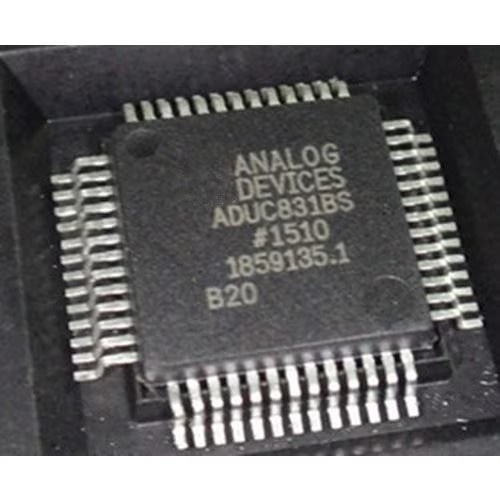
Attack IC ADUC831BSZ Firmware
The Analog Devices ADUC831BSZ is a powerful single-chip microcontroller that integrates a high-performance 8051 core with precision analog-to-digital converters and flash memory. Widely adopted in industrial automation, instrumentation, automotive electronics, and consumer devices, this chip is often deployed in environments where reliability and accuracy are paramount. To protect proprietary intellectual property, manufacturers frequently enable protective fuse bits and implement locked or encrypted firmware. This creates challenges when users need to access, restore, or modify the binary, heximal, or source code stored in its flash memory or EEPROM.
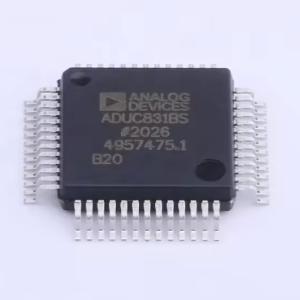
The Need for Firmware Recovery
There are many scenarios where end users require access to the firmware program of the ADUC831BSZ. For example:
- Recovering lost or corrupted data archives.
- Migrating existing systems to new hardware platforms.
- Conducting security audits or patching vulnerabilities.
- Cloning or duplicating a system for production scaling.
In such cases, the demand arises for a professional service to attack IC ADUC831BSZ firmware in order to crack, hack, decode, or decrypt the locked system and extract the protected program file.
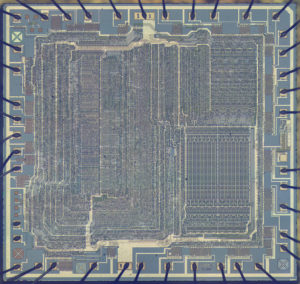
General Steps of Unlocking and Extraction
Breaking the secured firmware of the ADUC831BSZ involves carefully engineered procedures. The most general steps include:
- Chip Identification – Recognizing the exact microcontroller variant and analyzing its fuse bit configuration.
- Protection Analysis – Studying the enabled security features, whether it involves simple code-lock mechanisms or encrypted flash memory.
- Fuse Bit Disablement – Using advanced techniques to bypass or disable protective bits without damaging the device.
- Firmware Dumping – Extracting the heximal file or binary program from the flash and EEPROM memory.
- Disassembly and Decryption – Decoding the low-level instructions, restoring the firmware to a usable format, and if required, reconstructing C/C++ source code.
These steps demand a combination of deep expertise in embedded systems and custom-engineered hardware interfaces to ensure successful recovery.
Unique Features of ADUC831BSZ
The ADUC831BSZ stands out due to:
- Integrated high-precision ADC/DAC for mixed-signal processing.
- On-chip flash memory with programmable protection levels.
- Low-power consumption, making it suitable for battery-powered devices.
- Enhanced embedded security, designed to safeguard proprietary program data.
While these features benefit developers, they also increase the difficulty of unlocking or copying the firmware once security measures are enabled.
Applications of Firmware Extraction
By successfully attacking and unlocking the firmware, end users gain the ability to:
- Restore original program files from damaged devices.
- Copy and clone embedded systems for legacy support.
- Duplicate memory archives for large-scale deployment.
- Perform reverse engineering for debugging, compatibility testing, or academic research.
Such capabilities are especially valuable in industrial control systems, medical instrumentation, automotive modules, and consumer electronics, where firmware access is often the key to extending the lifecycle of equipment or ensuring continued support.
Conclusion
The process to attack IC ADUC831BSZ firmware is not trivial, given the device’s protected and secured architecture. However, with advanced methods, it is possible to unlock, open, crack, and decode the embedded binary program stored inside its memory. The recovered heximal data can then be restored into functional form, enabling duplication, modification, or further development. This service provides clients with the essential access required to keep their embedded systems functional, optimized, and future-ready.
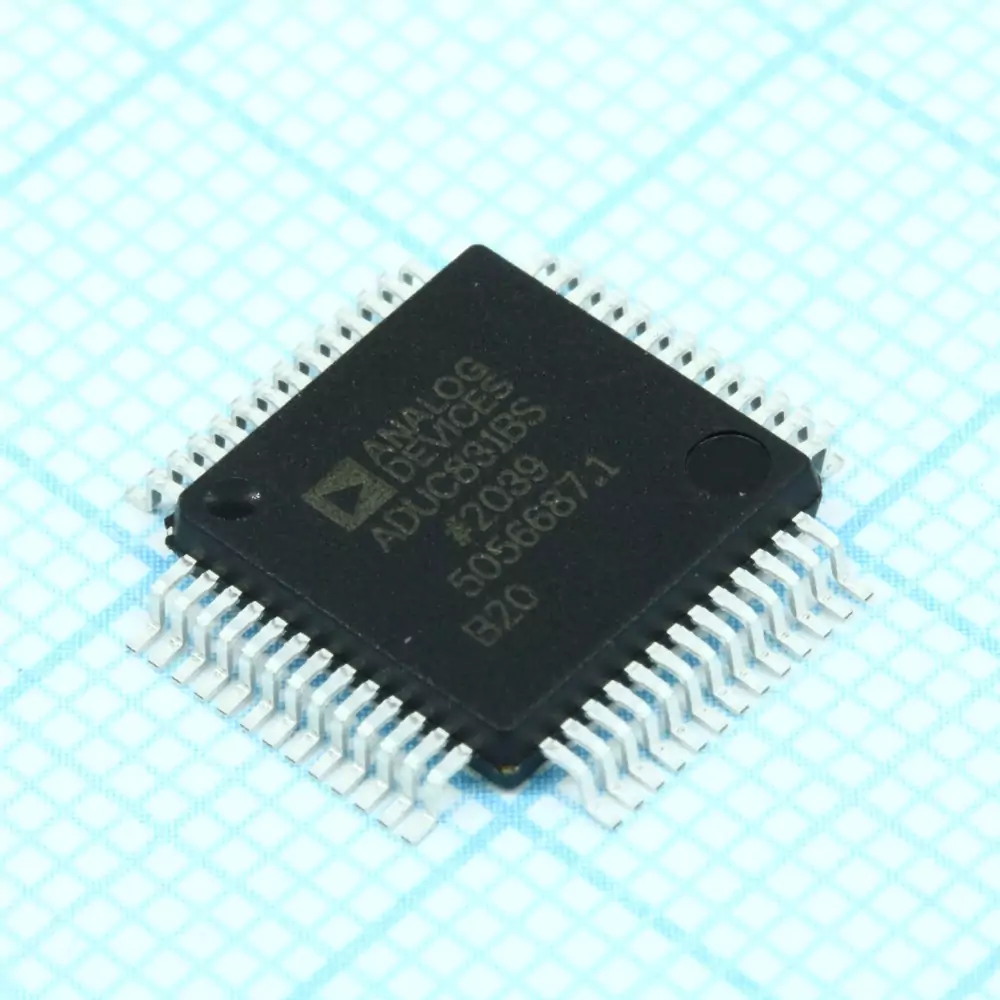
Attack Chip PIC18F66K90 software
Attack Chip PIC18F66K90 software
Attack Chip PIC18F66K90 starts from decapsulate the microcontroller silicon package and locate the security fuse bit which has been viewed an most commonly way to crack MCU, then extract the software out from the memory;
Low-Power Features:
· Power-Managed modes:
– Run: CPU on, peripherals on
– Idle: CPU off, peripherals on
– Sleep: CPU off, peripherals off
· Two-Speed Oscillator Start-up
· Fail-Safe Clock Monitor
· Power-Saving Peripheral Module Disable (PMD)
· Ultra Low-Power Wake-up
· Fast Wake-up, 2 ms Typical
· Low-Power WDT, 300 nA Typical
· Ultra Low 50 nA Input Leakage
· Run mode Currents Down to very low 5.5 mA, Typical
· Idle mode Currents Down to very low 2.2 mA, Typical
· Sleep mode Current Down to very low 20 nA, Typical
· RTCC Current Down to very low 700 nA, Typical
· LCD Current Down to very low 300 nA, Typical
LCD Driver and Keypad Features:
· Direct LCD Panel Drive Capability:
– Can drive LCD panel while in Sleep mode
· Up to 48 Segments and 192 Pixels, Software-Selectable
· Programmable LCD Timing module:
– Multiple LCD timing sources available
– Up to four commons: static, 1/2, 1/3 or 1/4 multiplex
– Bias configuration: Static, 1/2 or 1/3
· Low-Power Resistor Bias Network for LCD
Peripheral Highlights:
· Ten or eight CCP/ECCP modules:
– Seven Capture/Compare/PWM (CCP) modules
– Three Enhanced Capture/Compare/PWM (ECCP) modules
· Eleven 8/16-Bit Timer/Counter modules:
– Timer0 – 8/16-bit timer/counter with 8-bit programmable prescaler
– Timer1,3,5,7 – 16-bit timer/counter
– Timer2,4,6,8,10,12 – 8-bit timer/counter
· Three Analog Comparators
· Configurable Reference Clock Output
· Hardware Real-Time Clock and Calendar (RTCC) module with Clock, Calendar and Alarm Functions
– Time-out from 0.5s to 1 year
· Charge Time Measurement Unit (CTMU)
– Capacitance measurement for mTouch™ Sensing
– Time measurement with 1 ns typical resolution
· High-Current Sink/Source 25 mA/25 mA (PORTB and PORTC)
· Up to Four External Interrupts
· Two Master Synchronous Serial Port (MSSP) modules:
– 3/4-wire SPI (supports all four SPI modes)
– I2C™ Master and Slave mode
Special Microcontroller Features:
· Priority Levels for Interrupts
Operating Voltage Range: 1.8V to 5.5V
On-Chip 3.3V Regulator
Operating Speed up to 64 MHz
Up to 128 Kbytes On-Chip Flash Program Memory Data EEPROM of 1,024 Bytes
4K x 8 General Purpose Registers (SRAM)
10,000 Erase/Write Cycle Flash Program
Memory, Typical 1,000,000 Erase/write Cycle Data EEPROM
Memory, Typical Flash Retention 40 Years, Minimum
Three Internal Oscillators: LF-INTRC (31 kHz),
MF-INTOSC (500 kHz) and HF-INTOSC (16 MHz)
Self-Programmable under Software Control
· 8 x 8 Single-Cycle Hardware Multiplier
· Extended Watchdog Timer (WDT):
– Programmable period from 4 ms to 4,194s (about 70 minutes)
· In-Circuit Serial Programming™ (ICSP™) via
Two Pins
· In-Circuit Debug via Two Pins
· Programmable:
– BOR
– LVD
· Two Enhanced Addressable USART modules:
– LIN/J2602 support
– Auto-Baud Detect (ABD)
· 12-Bit A/D Converter with up to 24 Channels:
– Auto-acquisition and Sleep operation
– Differential Input mode of operation
Posted in Recover MCU |
Tags: възвръщам микроконтролер binary, възвръщам микроконтролер code, възвръщам микроконтролер data, възвръщам микроконтролер eeprom, възвръщам микроконтролер file, възвръщам микроконтролер firmware, възвръщам микроконтролер flash, възвръщам микроконтролер heximal, възвръщам микроконтролер memory, възвръщам микроконтролер program, възвръщам микроконтролер software |
Comments Closed
Attack Microcontroller PIC18F66K90 Heximal
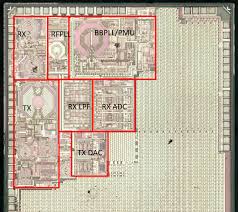
Attack Microcontroller PIC18F66K90 Heximal
Attack Microcontroller PIC18F66K90 locked memory cell include flash and eeprom, disable the security fuse bits and get access to the databus of MCU then readout the Heximal and clone content to new IC;
Low-Power Features:
· Power-Managed modes:
– Run: CPU on, peripherals on
– Idle: CPU off, peripherals on
– Sleep: CPU off, peripherals off
· Two-Speed Oscillator Start-up
· Fail-Safe Clock Monitor
· Power-Saving Peripheral Module Disable (PMD)
· Ultra Low-Power Wake-up
· Fast Wake-up, 2 ms Typical
· Low-Power WDT, 300 nA Typical
· Ultra Low 50 nA Input Leakage
· Run mode Currents Down to very low 5.5 mA, Typical
· Idle mode Currents Down to very low 2.2 mA, Typical
· Sleep mode Current Down to very low 20 nA, Typical
· RTCC Current Down to very low 700 nA, Typical
· LCD Current Down to very low 300 nA, Typical LCD Driver and Keypad Features:
· Direct LCD Panel Drive Capability:
– Can drive LCD panel while in Sleep mode
· Up to 48 Segments and 192 Pixels, Software-Selectable
· Programmable LCD Timing module:
– Multiple LCD timing sources available
– Up to four commons: static, 1/2, 1/3 or 1/4 multiplex
– Bias configuration: Static, 1/2 or 1/3
· Low-Power Resistor Bias Network for LCD Peripheral Highlights:
· Ten or eight CCP/ECCP modules:
– Seven Capture/Compare/PWM (CCP) modules
– Three Enhanced Capture/Compare/PWM (ECCP) modules
· Eleven 8/16-Bit Timer/Counter modules:
– Timer0 – 8/16-bit timer/counter with 8-bit programmable prescaler
– Timer1,3,5,7 – 16-bit timer/counter
– Timer2,4,6,8,10,12 – 8-bit timer/counter
· Three Analog Comparators
· Configurable Reference Clock Output
· Hardware Real-Time Clock and Calendar (RTCC) module with Clock, Calendar and Alarm Functions
– Time-out from 0.5s to 1 year
· Charge Time Measurement Unit (CTMU):
– Capacitance measurement for mTouch™ Sensing
– Time measurement with 1 ns typical resolution
· High-Current Sink/Source 25 mA/25 mA (PORTB and PORTC)
· Up to Four External Interrupts
· Two Master Synchronous Serial Port (MSSP) modules:
– 3/4-wire SPI (supports all four SPI modes)
– I2C™ Master and Slave mode
Special Microcontroller Features:
· Priority Levels for Interrupts
Operating Voltage Range: 1.8V to 5.5V
On-Chip 3.3V Regulator
Operating Speed up to 64 MHz
Up to 128 Kbytes On-Chip Flash Program Memory Data EEPROM of 1,024 Bytes
4K x 8 General Purpose Registers (SRAM)
10,000 Erase/Write Cycle Flash Program
Memory, Typical 1,000,000 Erase/write Cycle Data EEPROM
Memory, Typical Flash Retention 40 Years, Minimum
Three Internal Oscillators: LF-INTRC (31 kHz),
MF-INTOSC (500 kHz) and HF-INTOSC (16 MHz)
Self-Programmable under Software Control
· 8 x 8 Single-Cycle Hardware Multiplier
· Extended Watchdog Timer (WDT):
– Programmable period from 4 ms to 4,194s (about 70 minutes)
· In-Circuit Serial Programming™ (ICSP™) via Two Pins
· In-Circuit Debug via Two Pins
· Programmable:
– BOR
– LVD
· Two Enhanced Addressable USART modules:
– LIN/J2602 support
– Auto-Baud Detect (ABD)
· 12-Bit A/D Converter with up to 24 Channels:
– Auto-acquisition and Sleep operation
– Differential Input mode of operation
Posted in Recover MCU |
Tags: възвръщам mcu binary, възвръщам mcu code, възвръщам mcu data, възвръщам mcu eeprom, възвръщам mcu file, възвръщам mcu firmware, възвръщам mcu flash, възвръщам mcu heximal, възвръщам mcu memory, възвръщам mcu program |
Comments Closed
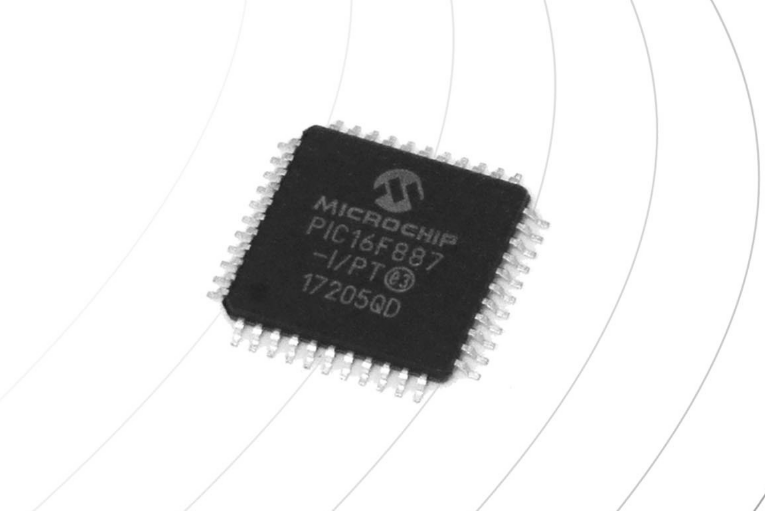
Attack MCU PIC16F887 Program
The Microchip PIC16F887 microcontroller is widely used in embedded systems for industrial, automotive, and consumer applications. Known for its versatility, low power consumption, and built-in peripherals, this 8-bit MCU features flash memory, EEPROM, and an internal oscillator, making it a popular choice for compact and cost-effective designs. However, its widespread use in protected and secured systems also means that its internal program and data are often locked or encrypted to prevent tampering or duplication.
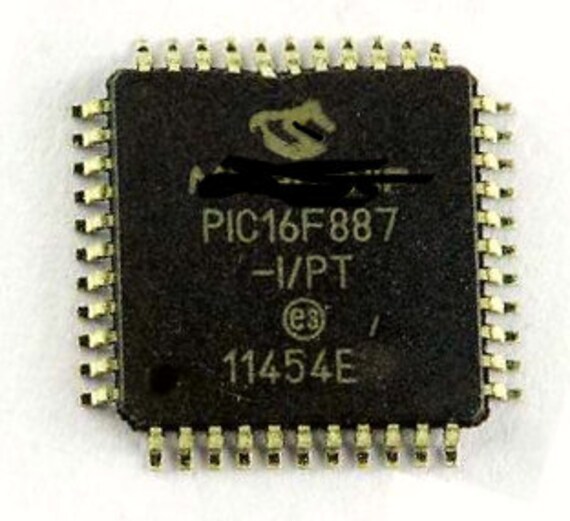
At circuit engineering co.,ltd, we offer advanced services to attack MCU PIC16F887 program protections and help clients restore, crack, or copy the original heximal firmware and binary contents. Whether you’ve lost the original source, need to clone a locked device, or require a duplicate for maintenance or migration, our reverse engineering solutions provide access to the flash, EEPROM, and program memory of secured PIC16F887 microcontrollers.
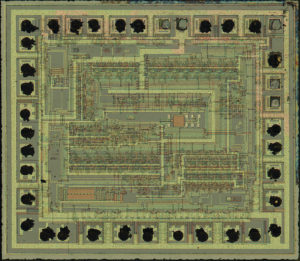
Attack MCU PIC16F887 tamper resistance system and readout the Program and data from its flash memory and eeprom memory, clone firmware to new IC which will provide the same functions as original Microcontroller PIC16F887;
Module: Analog-To-Digital Converter (ADC) Module
Selecting the VP6 reference as the analog input source (CHS<3:0> = 1111) for the ADC conversion after sampling another analog channel with input voltages approximately greater than 3.6V can temporarily disturb the HFINTOSC oscillator.
4. Module: MSSP (SPI Master Mode)
With MSSP in SPI Master mode, FOSC/64 or Timer2/2 clock rate and CKE = 0, a write collision may occur if SSPBUF is loaded immediately after the transfer is complete after Attack MCU. A delay may be required after the MSSP Interrupt Flag bit, SSPIF, is set or the Buffer Full bit, BF, is set and before writing SSPBUF. If the delay is insufficiently short, a write register and NOT during the start of an actual ADC conversion using the GO/DONE bit in the ADCON0 register.
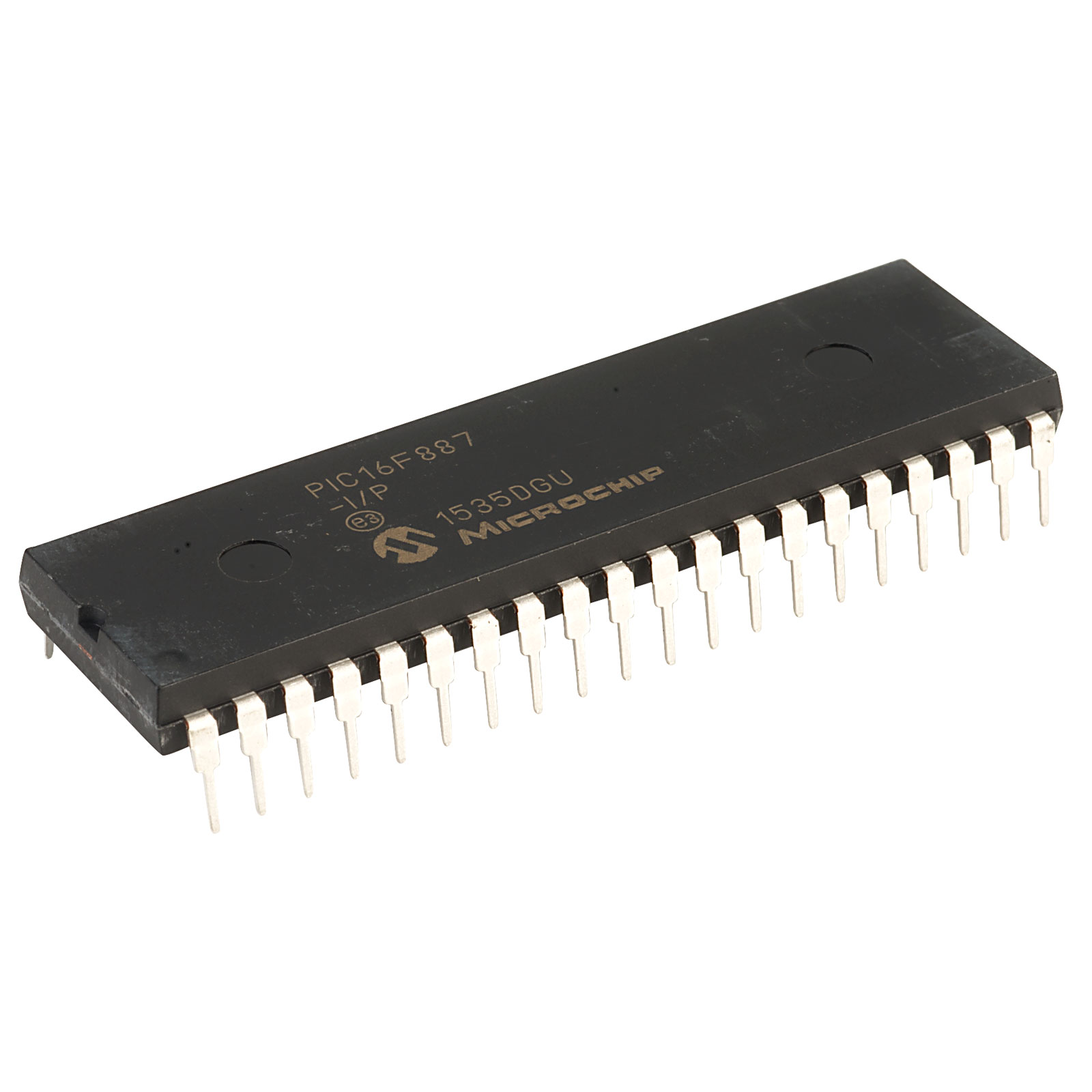
Microchip has integrated multiple protection mechanisms into the PIC16F887 to prevent unauthorized access. From code protection bits to memory locking, these security features are designed to make decrypting or decoding the firmware difficult for the average user. However, with years of hands-on experience and access to proprietary techniques and tools, our engineering team can hack these barriers and retrieve the original data, even from obfuscated or heavily encrypted firmware images.
We don’t simply dump raw memory—we provide complete, structured hex files or even human-readable source code where possible. Our process may involve full-chip readout, flash memory analysis, EEPROM data extraction, and program reconstruction, ensuring nothing critical is left behind.
This only occurs when selecting the VP6 reference ADC channel using the CHS<3:0> bits in the ADCON0 collision may occur as indicated by the WCOL bit being set.
Select an ADC channel with input voltages lower than 3.6V prior to selecting the VP6 reference voltage input. Any analog channel can be used, even if that channel is configured as a digital I/O (configured as an output) that is driving the output pin low when Attack MCU. An alternative is to configure the CVREF module to output a voltage less than 3.6V and then selecting that analog channel CHS<3:0> = 1110 as the analog input source.
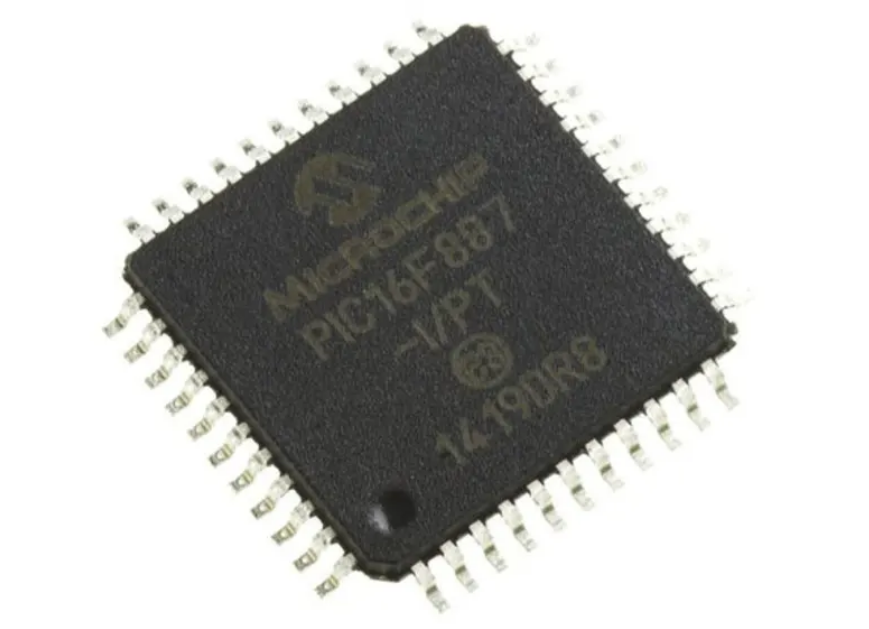
Add a software delay of one SCK period after detecting the completed transfer and prior to updating the SSPBUF contents. Verify the WCOL bit is clear after writing SSPBUF. If the WCOL is set, clear the bit in software and rewrite the SSPBUF register.
Date Codes that pertain to this issue:
All engineering and production devices.
Affected Silicon Revisions
The PIC16F887 is widely appreciated for:
- 14-bit instruction set with 368 bytes of RAM and 256 bytes of EEPROM
- 8K x 14 words of Flash program memory
- 35 flexible I/O pins and support for multiple communication protocols (USART, SPI, I2C)
- Integrated ADCs, comparators, and timers
- Low power sleep modes for energy-sensitive applications
This embedded chip is commonly found in:
- Industrial sensor systems
- Smart home controllers
- HVAC controllers
- Educational development boards
- Low-cost automation devices
Due to its versatility, it’s often reused across multiple projects—making it especially frustrating when firmware is locked or when original source code is lost.
Our clients come from diverse industries—repair technicians, industrial OEMs, system integrators, and even researchers. We offer personalized consultation and confidential service to ensure that your objectives are met, whether you need to open a firmware file, clone a working board, or duplicate a system before a hardware refresh.
Our full service includes:
- Decryption and decoding of protected PIC16F887 firmware
- Memory dump and recovery of hex/binary files
- Reverse engineering of flash and EEPROM contents
- Optional conversion to partial or full C-like source code
If you need to attack MCU PIC16F887 program security for legitimate repair, recovery, or development purposes, our service delivers reliable, efficient, and professional support. We understand the complexity of protected embedded systems and are ready to help you regain control of your devices by unlocking valuable program archives and firmware data.
Contact Circuit Engineering CO., LTD today to learn more or schedule a consultation.
Posted in Recover MCU |
Tags: copiare chip, copiare circuito integrato, copiare ic, copiare mcu, copiare microcontrollore, riprodurre chip, riprodurre circuito integrato, riprodurre ic, riprodurre mcu, riprodurre microcontrollore |
Comments Closed
Attack Microcontroller W77E058A40DL Flash
The W77E058A40DL is a highly integrated microcontroller from Nuvoton, designed for embedded control applications where reliability, performance, and code security are critical. Its on-chip flash memory, hardware protection mechanisms, and integrated peripherals make it ideal for use in industrial controllers, consumer electronics, and secure embedded systems. However, when the original firmware, program, or binary file becomes inaccessible due to corruption, loss, or vendor lock-down, users are often left without options—until now.
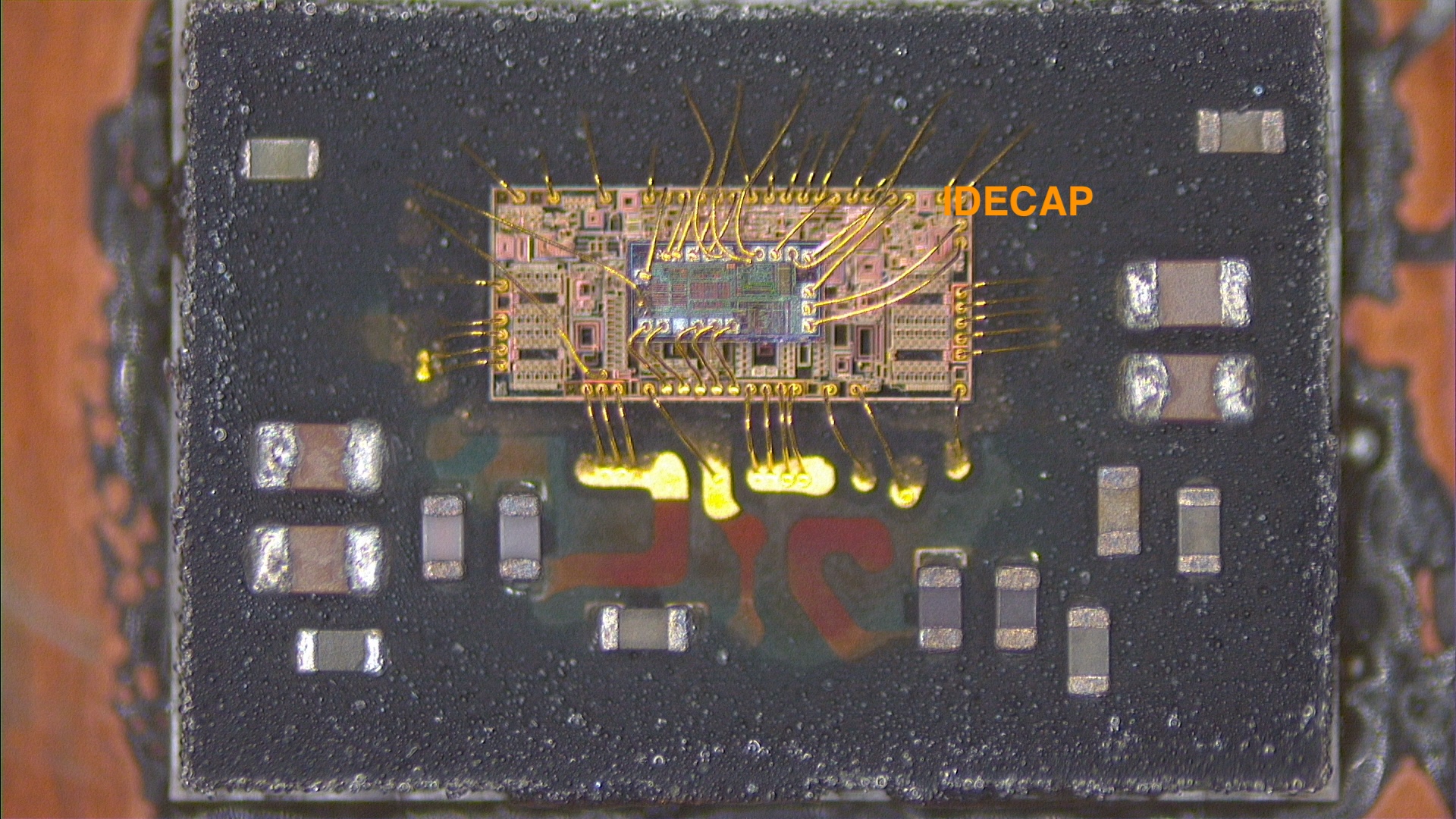
At CIRCUIT ENGINEERING CO.,LTD, we specialize in helping clients attack microcontroller W77E058A40DL flash to restore valuable data, clone or copy locked programs, and recover original heximal files from even the most protected or encrypted microcontrollers. We offer professional-grade solutions to decode, decrypt, and unlock embedded source code and memory contents from the W77E058A40DL and similar MCUs.
Attack Microcontroller W77E058A40DL Flash memory and disable the protective mechanism on it, extract firmware out from the MCU;
The W77E058A40DL features hardware-level security designed to resist traditional access techniques. It includes lock bits that prevent readout of the internal flash memory, EEPROM, and firmware archive. These security settings can be triggered either by developers to protect intellectual property or automatically by embedded system design standards.
Such secured microcontrollers are excellent for manufacturers but pose a challenge for technicians, developers, or product owners needing to restore, repair, or duplicate legacy systems with lost source code or inaccessible firmware.
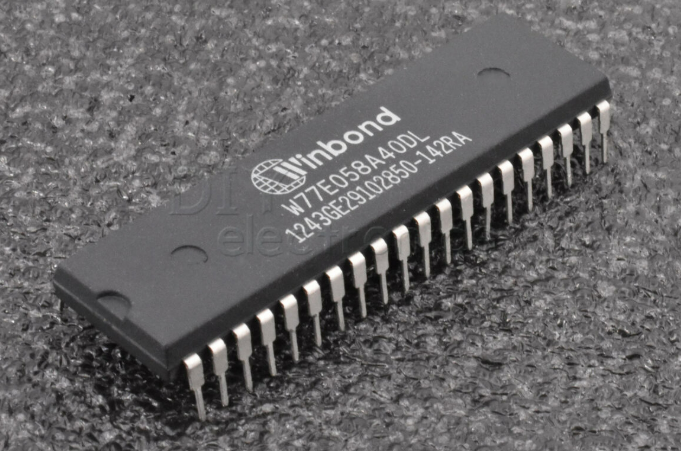
Using advanced hardware and software methods, our engineers can attack microcontroller W77E058A40DL flash protections and extract the original heximal, binary, or firmware data. Through a combination of:
- Chip-level decapsulation
- Low-level memory probing
- Flash dumping and signal-level analysis
- Proprietary decrypting techniques
—we can safely and non-destructively retrieve your original data and convert it into usable formats, such as a hex file, binary image, or even disassembled source code.
The W77E058A40DL is widely used in automated industrial systems, communication modules, access control devices, and legacy consumer electronics. Many of these applications run in mission-critical environments, where any failure, firmware loss, or inability to update can result in operational downtime and financial loss.
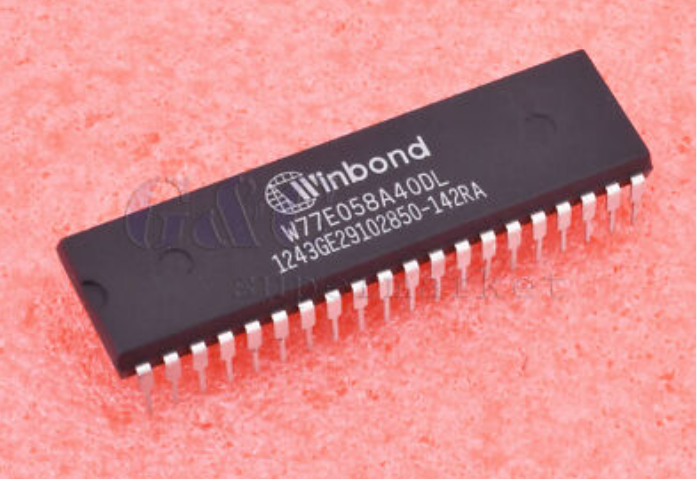
When the firmware is lost or encrypted, or when the only working unit exists without any backup, we offer the means to open the chip’s secured memory, duplicate the content, and recover functional program files for future use, system upgrades, or forensic analysis.
FEATURES
8-bit CMOS microcontroller
High speed architecture of 4 clocks/machine cycle runs up to 40 MHz
Pin compatible with standard 80C52
Instruction-set compatible with MCS-51
Four 8-bit I/O Ports
One extra 4-bit I/O port and Wait State control signal (available on 44-pin PLCC/QFP package)
Three 16-bit Timers
12 interrupt sources with two levels of priority
On-chip oscillator and clock circuitry
Two enhanced full duplex serial ports
32 KB Flash EPROM
256 bytes scratch-pad RAM
1 KB on-chip SRAM for MOVX instruction
Programmable Watchdog Timer
Dual 16-bit Data Pointers
Software programmable access cycle to external RAM/peripherals
Packages:
− Lead Free(RoHS) DIP 40:
W77E058A40DL
− Lead Free(RoHS) PLCC 44: W77E058A40PL
− Lead Free(RoHS) PQFP 44: W77E058A40FL
GENERAL DESCRIPTION
The W77E058 is a fast 8051 compatible microcontroller with a redesigned processor core without wasted clock and memory cycles. As a result, it executes every 8051 instruction faster than the
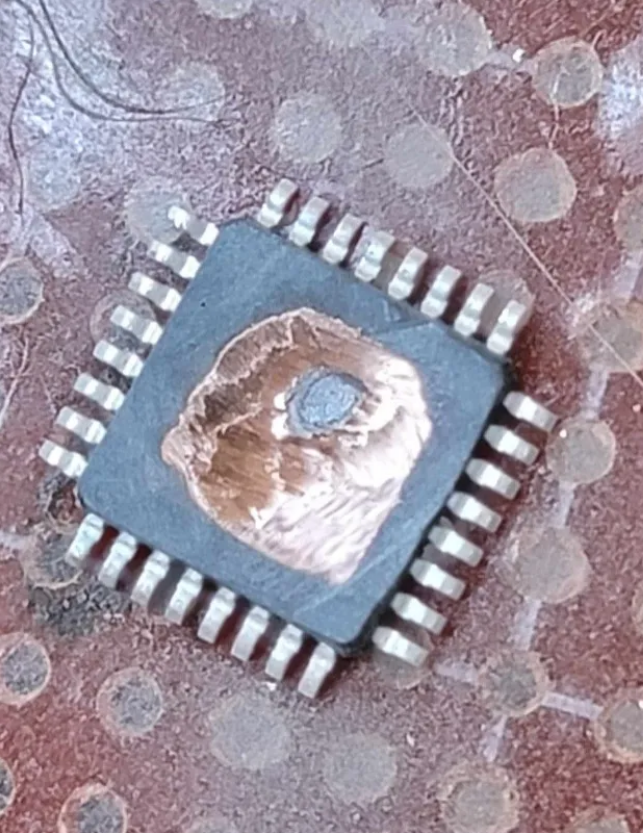
original 8051 for the same crystal speed. Typically, the instruction executing time of W77E058 is 1.5 to 3 times faster then that of traditional 8051, depending on the type of instruction when Attack Microcontroller. In general, the overall performance is about 2.5 times better than the original for the same crystal speed. Giving the same throughput with lower clock speed, power consumption has been improved. Consequently, the W77E058 is a fully static CMOS design; it can also be operated at a lower crystal clock. The W77E058 contains 32 KB Flash EPROM, and provides operating voltage from 4.5V to 5.5V before Attack Microcontroller. All W77E058 types also support on-chip 1 KB SRAM without external memory component and glue logic, saving more I/O pins for users’ application usage if they use on-chip SRAM instead of external SRAM.
Posted in Recover MCU |
Tags: възстановявам mcu bin, възстановявам mcu data, възстановявам mcu eeprom, възстановявам mcu file, възстановявам mcu firmware, възстановявам mcu flash, възстановявам mcu hex, възстановявам mcu memory, възстановявам mcu program, възстановявам mcu software |
Comments Closed
Attack Chip PIC16F72 Heximal
The PIC16F72 microcontroller from Microchip Technology is a widely adopted 8-bit MCU known for its low-power performance, integrated peripherals, and cost-effectiveness. It’s commonly embedded in home appliances, industrial control systems, consumer electronics, and automotive interfaces. However, when the internal firmware of a protected or locked PIC16F72 chip needs to be accessed—whether for system recovery, legacy support, or firmware analysis—users face significant security barriers.

At CIRCUIT ENGINEERING CO.,LTD, we offer a highly specialized service designed to attack chip PIC16F72 heximal and help clients crack, decrypt, or unlock the secured contents of the microcontroller’s flash, EEPROM, and memory. Our service enables users to restore, copy, or duplicate critical system data, including proprietary binary or heximal firmware and source code stored inside the chip.
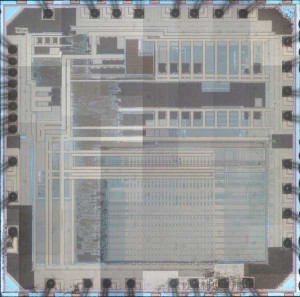
Attack Chip PIC16F72 and extract content from memory out then copy the code to other blank microcontroller PIC16F72, the format of code will be Heximal;
Devices Included In This Data Sheet:
Low-Power Features:
· Standby Current:
– 40 nA @ 1.8V, typical
· Operating Current:
The PIC16F72 MCU features a combination of three timers, an enhanced capture/compare PWM module, and multiple channels of 8-bit ADC. With an internal oscillator, watchdog timer, and up to 5 MIPS of performance at 20 MHz, this chip delivers reliable embedded control with minimal external components. This makes it popular in mission-critical and space-constrained applications where robust performance and minimal energy consumption are priorities.
However, these MCUs are often secured with memory protection schemes designed to prevent unauthorized access to the internal program and data files. For engineers, integrators, or OEMs needing to maintain, upgrade, or recover legacy systems, this protection becomes an obstacle rather than a safeguard.

High-Performance RISC CPU
· Only 35 Instructions to Learn:
– All single-cycle instructions except branches
· Operating Speed:
– DC – 16 MHz oscillator/clock input
– DC – 250 ns instruction cycle
· Up to 4K x 14 Words of Flash Program Memory
· Up to 256 bytes of Data Memory (RAM)
· Interrupt Capability
· 8-Level Deep Hardware Stack
· Direct, Indirect and Relative Addressing modes
· Processor Self-Write/Read access to Program Memory
Special Microcontroller Features:
Our process is a hybrid of low-level hardware interaction and high-level firmware analysis. We use non-invasive and semi-invasive techniques to attack chip PIC16F72 heximal and extract the original firmware without damaging the physical package. After bypassing the protective layers, we decode, clone, and copy the raw heximal data, which is then structured into a usable archive or converted to high-level source code for debugging, modification, or reprogramming purposes.
We also help clients restore corrupted or lost files by reconstructing partially erased firmware, offering a complete unlock solution that ensures continuity of embedded applications.

· Precision Internal Oscillator:
– 16 MHz or 500 kHz operation
– Factory calibrated to ±1%, typical
– Software tunable
– Software selectable ÷1, ÷2, ÷4 or ÷8 divider
· Power-Saving Sleep mode
· Industrial and Extended Temperature Range
· Power-on Reset (POR)
· Power-up Timer (PWRT)
· Brown-out Reset (BOR)
· Multiplexed Master Clear with Pull-up/Input Pin
· Programmable Code Protection
· In-Circuit Serial ProgrammingTM (ICSPTM) via Two Pins
· 128 Bytes High-Endurance Flash:
– 100,000 write Flash endurance (minimum)
· Wide Operating Voltage Range:
– 1.8V to 5.5V (PIC16F720/721)
– 1.8V to 3.6V (PIC16LF720/721)
– 35 mA/MHz @ 1.8V, typical
· Low-Power Watchdog Timer Current:
– 500 nA @ 1.8V, typical
Peripheral Features:
· Up to 17 I/O Pins and 1 Input-only Pin:
– High-current source/sink for direct LED drive
– Interrupt-on-change pins
– Individually programmable weak pull-ups
· A/D Converter:
– 8-bit resolution
– 12 channels
– Selectable Voltage reference
· Timer0: 8-Bit Timer/Counter with 8-Bit Programmable Prescaler
· Enhanced Timer1
– 16-bit timer/counter with prescaler
– External Gate Input mode with toggle and single shot modes
– Interrupt-on-gate completion
· Timer2: 8-Bit Timer/Counter with 8-Bit Period Register, Prescaler and Postscaler
· Capture, Compare, PWM module (CCP)
– 16-bit Capture, max resolution 12.5 ns
– 16-bit Compare, max resolution 250 ns
– 10-bit PWM, max frequency 15 kHz
· Addressable Universal Synchronous
Asynchronous Receiver Transmitter (AUSART)
· Synchronous Serial Port (SSP)
– SPI (Master/Slave)
– I2CTM (Slave) with Address Mask
Who Needs This Service?
- OEMs who’ve lost access to original firmware
- Repair centers needing to refurbish or replicate boards
- Developers wanting to migrate or upgrade systems
- Security analysts aiming to assess embedded vulnerabilities
- Automation integrators maintaining legacy industrial equipment
Why Choose Us?
- Advanced Toolsets: We deploy state-of-the-art equipment and custom decapsulation rigs to interact with secured Microchip ICs.
- Confidential Service: All projects are handled with strict confidentiality and IP respect.
- Custom Output Formats: Recovered binary, heximal, or source code outputs can be tailored for use in MPLAB or other toolchains.
- Extensive Experience: We’ve worked on hundreds of PIC chips, giving us deep knowledge of their encrypted, locked, and embedded architecture.
Final Thoughts
Breaking into a secured PIC16F72 is not about unauthorized access—it’s about enabling legitimate users to regain control of their own technology. With our attack chip PIC16F72 heximal service, we help you open up locked systems, decrypt vital firmware, and recover valuable data from devices that would otherwise be unreachable. Contact us today to find out how we can support your project through expert reverse engineering of Microchip’s protected MCU technology.
Attack IC MB90F598 Firmware
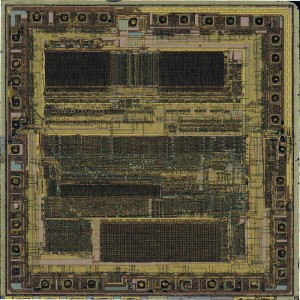
We can Break IC MB90F598 Firmware, please view the IC MB90F598 features below for your reference:
The MB90595/595G series with FULL-CAN*1 interface and FLASH ROM is especially designed for automotive and industrial applications. Its main features are two on board CAN Interfaces, which conform to V2.0 Part A and Part B, while supporting a very flexible message buffer scheme and so offering more functions than a normal full CAN approach when Attack IC.
The instruction set of F2MC-16LX CPU core inherits an AT architecture of the F2MC*2 family with additional instruction sets for high-level languages, extended addressing mode, enhanced multiplication/division instructions, and enhanced bit manipulation instructions. The microcontroller has a 32-bit accumulator for processing long word data after Attack IC.
The MB90595/595G series has peripheral resources of 8/10-bit A/D converters, UART (SCI), extended I/O serial interface, 8/16-bit PPG timer, I/O timer (input capture (ICU), output compare (OCU)) and stepping motor controller if Attack IC.
*1: Controller Area Network (CAN) – License of Robert Bosch GmbH
*2: F2MC stands for FUJITSU Flexible Microcontroller.
Clock
Embedded PLL clock multiplication circuit
Operating clock (PLL clock) can be selected from divided-by-2 of oscillation or one to four times the oscillation (at oscillation of 4 MHz, 4 MHz to 16 MHz) before Attack IC.
Minimum instruction execution time: 62.5 ns (operation at oscillation of 4 MHz, four times the oscillation clock, VCC of 5.0 V)
Instruction set to optimize controller applications
Rich data types (bit, byte, word, long word)
Rich addressing mode (23 types)
Enhanced signed multiplication/division instruction and RETI instruction functions after Attack IC
Enhanced precision calculation realized by the 32-bit accumulator
· Instruction set designed for high level language (C language) and multi-task operations
Adoption of system stack pointer
Enhanced pointer indirect instructions
Barrel shift instructions
· Program patch function (for two address pointers)
· Enhanced execution speed: 4-byte instruction queue
· Enhanced interrupt function: 8 levels, 34 factors when Attack IC
· Automatic data transmission function independent of CPU operation
Extended intelligent I/O service function (EI2OS): Up to 10 channels
· Embedded ROM size and types
Mask ROM: 128 Kbytes
Flash ROM: 128 Kbytes
Embedded RAM size: 4 Kbytes (MB90V595/595G : 6 Kbytes)
· Flash ROM
Supports automatic programming, Embedded Algorithm TM*
Write/Erase/Erase-Suspend/Resume commands after Attack IC
A flag indicating completion of the algorithm
Hard-wired reset vector available in order to point to a fixed boot sector
Erase can be performed on each block
Block protection with external programming voltage
· Low-power consumption (stand-by) mode
Sleep mode (mode in which CPU operating clock is stopped)
Stop mode (mode in which oscillation is stopped)
CPU intermittent operation mode
Hardware stand-by mode
· Process: 0.5 µm CMOS technology
· I/O port
General-purpose I/O ports: 78 ports
Push-pull output and Schmitt trigger input.
Programmable on each bit as I/O or signal for peripherals for Attack IC.
· Timer
Watchdog timer: 1 channel
8/16-bit PPG timer: 8/16-bit × 6 channels
16-bit re-load timer: 2 channels
· 16-bit I/O timer
Input capture: 4 channels
Output compare: 4 channels
· Extended I/O serial interface: 1 channel
· UART0
With full-duplex double buffer (8-bit length)
Clock asynchronized or clock synchronized (with start/stop bit) transmission can be selectively used.
UART1 (SCI)
With full-duplex double buffer (8-bit length)
Clock asynchronized or clock synchronized serial transmission (I/O extended transmission) can be selectively used if Attack IC.
· Stepping motor controller (4 channels)
· External interrupt circuit (8 channels)
A module for starting an extended intelligent I/O service (EI2OS) and generating an external interrupt which is triggered by an external input.
· Delayed interrupt generation module: Generates an interrupt request for switching tasks.
· 8/10-bit A/D converter (8 channels)
8/10-bit resolution can be selectively used.
Starting by an external trigger input.
· FULL-CAN interface: 1 channel
Conforming to Version 2.0 Part A and Part B
Flexible message buffering (mailbox and FIFO buffering can be mixed) after Attack IC
· 18-bit Time-base counter
· External bus interface: Maximum address space 16 Mbytes
*: Embedded Algorithm is a trademark of Advanced Micro Devices Inc.
Posted in Recover MCU |
Tags: копирам mcu bin, копирам mcu code, копирам mcu data, копирам mcu eeprom, копирам mcu file, копирам mcu firmware, копирам mcu flash, копирам mcu hex, копирам mcu memory, копирам mcu program |
Comments Closed
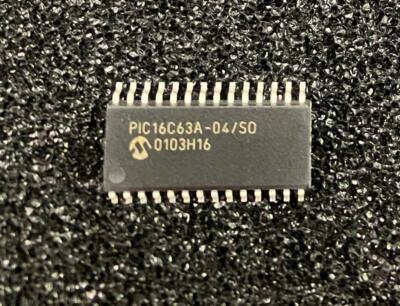
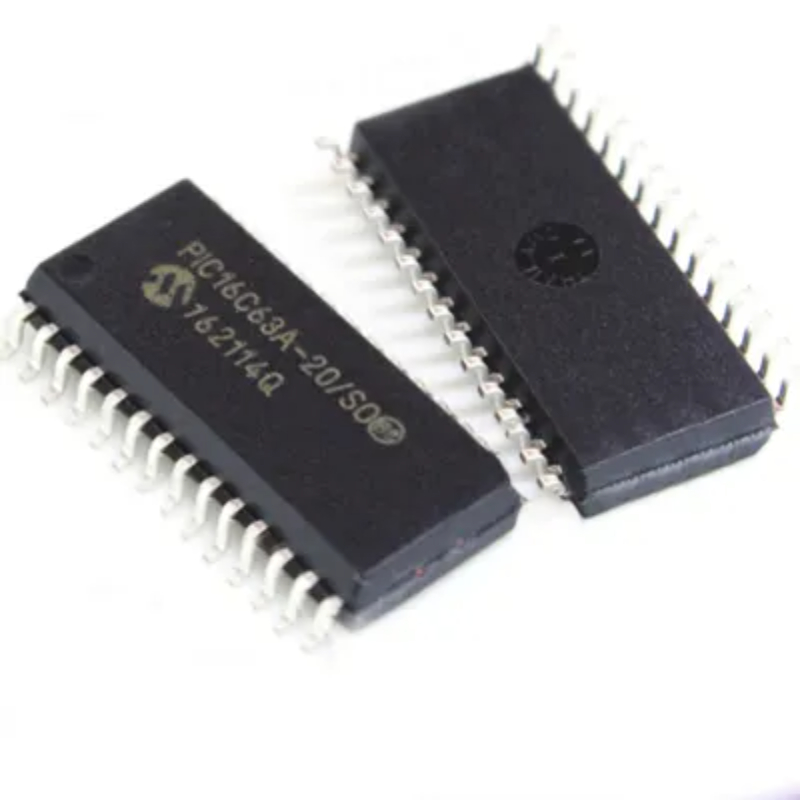
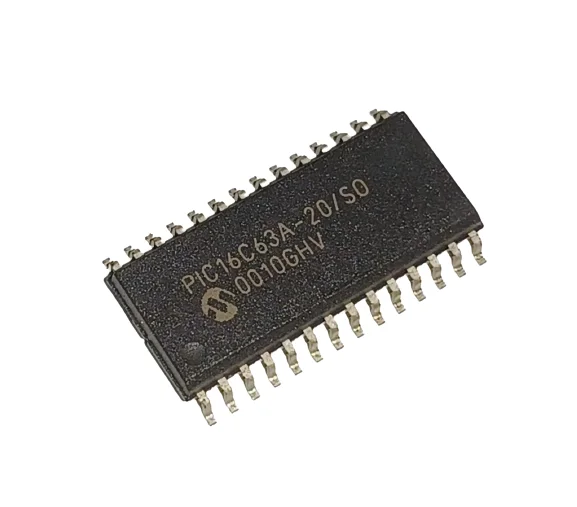
Attack Microcontroller PIC16C63A Heximal
In the realm of embedded systems, Microchip’s PIC16 series microcontrollers are widely used for their reliability, simplicity, and broad integration into industrial and commercial electronics. However, these microcontrollers often come with protective mechanisms that prevent unauthorized access to their embedded firmware, especially in legacy models like the PIC16C63A. At CIRCUIT ENGINEERING CO.,LTD, we offer advanced solutions to attack Microcontroller PIC16C63A heximal, allowing our clients to crack, decode, and restore valuable program data locked behind layers of secured flash memory.
oferecemos soluções avançadas para atacar o Microcontrolador PIC16C63A Heximal, permitindo que nossos clientes quebrem, decodifiquem e restaurem dados valiosos de programas bloqueados por camadas de memória flash segura. Quando a documentação original é perdida ou você precisa clonar um dispositivo legado para manutenção ou substituição, o acesso ao conteúdo binário original torna-se crítico. Infelizmente, segmentos de EEPROM e flash bloqueados ou criptografados frequentemente dificultam esses esforços. É aí que nosso serviço de ataque a microcontroladores se torna essencial. Utilizamos técnicas especializadas para descriptografar, copiar e extrair o arquivo de programa heximal de microcontroladores protegidos, oferecendo acesso total ao código-fonte original ou à sua forma mais próxima possível.
Why Attack a Protected PIC16C63A?
When original documentation is lost, or you need to clone a legacy device for maintenance or replacement, accessing the original binary content becomes critical. Unfortunately, locked or encrypted EEPROM and flash segments often hinder such efforts. That’s where our microcontroller attack service becomes essential. We use specialized techniques to decrypt, copy, and extract the heximal program file from secured microcontrollers, giving you full access to the original source code or its closest possible form.
Tailored Process for PIC16C63A Firmware Extraction
Here’s how we approach each project involving the PIC16C63A:
1. Device Preparation
We begin by identifying the exact chip configuration, including memory layout, protection fuses, and voltage thresholds. The PIC16C63A typically features code protection bits that prevent straightforward access, so our team uses non-invasive and semi-invasive hardware probing techniques to prepare the device for data access.
2. Protection Bypass
The core of the process involves unlocking the protected flash memory. Depending on the device’s revision, we may exploit known vulnerabilities or employ glitching and fault injection techniques to bypass the microcontroller’s security. This phase is where we essentially attack the microcontroller PIC16C63A heximal at the hardware level.
3. Memory Dump
Once the protection is bypassed, we directly interface with the chip’s memory and dump the firmware, EEPROM data, and other critical content. This archived binary is often saved as a .hex file, representing the raw machine code the device runs.
4. Reverse Engineering (Optional)
If required, we can take the extracted heximal firmware and decode it into more readable assembly language or even decompiled C source code, making it easier to analyze or repurpose for your application.
5. Validation and Cloning
The final phase involves testing the duplicated program file by reprogramming it into a compatible blank microcontroller, ensuring it operates identically to the original. This allows you to clone, backup, or modify the firmware for future development or troubleshooting.
हम मेमोरी लेआउट, सुरक्षा फ़्यूज़ और वोल्टेज थ्रेसहोल्ड सहित सटीक चिप कॉन्फ़िगरेशन की पहचान करके शुरू करते हैं। PIC16C63A में आमतौर पर कोड सुरक्षा बिट्स होते हैं जो सीधे एक्सेस को रोकते हैं, इसलिए हमारी टीम डिवाइस को डेटा एक्सेस के लिए तैयार करने के लिए गैर-आक्रामक और अर्ध-आक्रामक हार्डवेयर जांच तकनीकों का उपयोग करती है।, प्रक्रिया के मूल में संरक्षित फ्लैश मेमोरी को अनलॉक करना शामिल है। डिवाइस के संशोधन के आधार पर, हम ज्ञात कमजोरियों का फायदा उठा सकते हैं या माइक्रोकंट्रोलर की सुरक्षा को बायपास करने के लिए गड़बड़ और दोष इंजेक्शन तकनीकों को नियोजित कर सकते हैं। यह वह चरण है जहाँ हम अनिवार्य रूप से हार्डवेयर स्तर पर माइक्रोकंट्रोलर PIC16C63A हेक्सिमल पर हमला करते हैं।, एक बार सुरक्षा को बायपास कर देने के बाद, हम सीधे चिप की मेमोरी से जुड़ते हैं और फ़र्मवेयर, EEPROM डेटा और अन्य महत्वपूर्ण सामग्री को डंप करते हैं। यह संग्रहीत बाइनरी अक्सर .hex फ़ाइल के रूप में सहेजी जाती है, जो डिवाइस द्वारा चलाए जाने वाले कच्चे मशीन कोड का प्रतिनिधित्व करती है।
Attack Microcontroller PIC16C63A protective memory and readout heximal of MCU PIC16C63A flash memory, microprocessor PIC16C63A unlocking process will normally start from chip surface decapsulation;
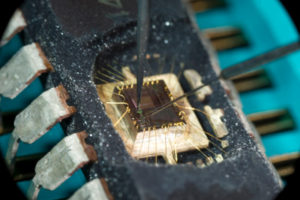
Attack Microcontroller PIC16C63A protective memory and readout heximal of MCU PIC16C63A flash memory, microprocessor PIC16C63A unlocking process will normally start from chip surface decapsulation
Devices included in this data sheet:
PIC16C7X Peripheral Features:
· Timer0: 8-bit timer/counter with 8-bit prescaler
· Timer1: 16-bit timer/counter with prescaler can be incremented during SLEEP via external
PIC16CXX Microcontroller Core Features:
· High performance RISC CPU
· Only 35 single word instructions to learn
· All single cycle instructions except for program branches which are two cycle
· Operating speed: DC – 20 MHz clock input
DC – 200 ns instruction cycle
· 4 K x 14 words of Program Memory,
192 x 8 bytes of Data Memory (RAM)
· Interrupt capability
· Eight-level deep hardware stack
· Direct, indirect and relative addressing modes
· Power-on Reset (POR)
· Power-up Timer (PWRT) and Oscillator Start-up Timer (OST)
· Watchdog Timer (WDT) with its own on-chip RC oscillator for reliable operation
· Programmable code protection
· Power-saving SLEEP mode crystal/clock
· Timer2: 8-bit timer/counter with 8-bit period register, prescaler and postscaler
· Capture, Compare, PWM modules
– Capture is 16-bit, max. resolution is 200 ns
– Compare is 16-bit, max. resolution is 200 ns
– PWM max. resolution is 10-bit
· 8-bit multichannel Analog-to-Digital converter
· Synchronous Serial Port (SSP) with SPITM and I2CTM
· Universal Synchronous Asynchronous Receiver Transmitter (USART/SCI)
· Parallel Slave Port (PSP), 8-bits wide with external RD, WR and CS controls when Attack Microcontroller
· Brown-out detection circuitry for Brown-out Reset (BOR) Pin Diagram: PDIP, Windowed CERDIP
· Selectable oscillator options
· Low power, high speed CMOS EPROM technology
· Wide operating voltage range: 2.5V to 5.5V
· High Sink/Source Current 25/25 mA
· Commercial, Industrial and Automotive temperature ranges
· Low power consumption:
– < 5 mA @ 5V, 4 MHz
– 23 mA typical @ 3V, 32 kHz
– < 1.2 mA typical standby current
Additional Device Support: PIC16CE625 and Beyond
In addition to the PIC16C63A, we also offer cracking and firmware duplication services for other secured MCUs like the PIC16CE625. These chips include embedded security features similar to the C63A and require precise techniques to unlock safely.
임베디드 시스템 분야에서 Microchip의 PIC16 시리즈 마이크로컨트롤러는 뛰어난 신뢰성, 단순성, 그리고 산업 및 상업용 전자 기기와의 폭넓은 통합성으로 널리 사용되고 있습니다. 하지만 이러한 마이크로컨트롤러는 특히 PIC16C63A와 같은 레거시 모델의 경우, 임베디드 펌웨어에 대한 무단 접근을 차단하는 보호 메커니즘을 갖추고 있는 경우가 많습니다. CIRCUIT ENGINEERING CO.,LTD는 마이크로컨트롤러 PIC16C63A Heximal을 공격하는 고급 솔루션을 제공하여 고객이 보안 플래시 메모리 계층에 잠긴 귀중한 프로그램 데이터를 해독, 디코딩 및 복원할 수 있도록 지원합니다. 보호된 PIC16C63A를 공격해야 하는 이유는 무엇일까요? 원본 문서가 분실되었거나 유지 관리 또는 교체를 위해 레거시 장치를 복제해야 하는 경우, 원본 바이너리 콘텐츠에 접근하는 것이 매우 중요합니다. 하지만 잠겨 있거나 암호화된 EEPROM 및 플래시 세그먼트는 이러한 접근을 어렵게 만드는 경우가 많습니다. 바로 이러한 경우, 당사의 마이크로컨트롤러 공격 서비스가 필수적입니다. 저희는 특수 기술을 사용하여 보안 마이크로컨트롤러에서 헥시멀 프로그램 파일을 복호화, 복사 및 추출하여 원본 소스 코드 또는 가장 유사한 형태에 대한 완전한 접근 권한을 제공합니다.
Conclusion
Whether you need to unlock, copy, or restore firmware from a protected PIC microcontroller, our team offers secure, legal, and confidential services tailored to your situation. By combining expert knowledge with cutting-edge tools, we make it possible to attack microcontroller PIC16C63A heximal and recover essential program files that others can’t reach.
Contact us today to find out how we can help you decrypt, clone, and recover your legacy or protected embedded system firmware.
Posted in Recover MCU |
Tags: екстрахирам интегрална схема lotsked bin, екстрахирам интегрална схема lotsked code, екстрахирам интегрална схема lotsked content, екстрахирам интегрална схема lotsked data, екстрахирам интегрална схема lotsked eeprom, екстрахирам интегрална схема lotsked file, екстрахирам интегрална схема lotsked firmware, екстрахирам интегрална схема lotsked hex, екстрахирам интегрална схема lotsked memory, екстрахирам интегрална схема lotsked program |
Comments Closed
Attack MCU PIC16CE625 Program
How to Attack MCU PIC16CE625 Program and Dump Protected Firmware
Microchip’s PIC16CE625 is a popular 8-bit microcontroller frequently used in embedded applications due to its reliability and low power consumption. However, when its program memory is locked, encrypted, or protected, accessing the embedded firmware becomes a challenge—especially for engineers, analysts, or developers who need to clone, restore, or modify the system. At [Your Company Name], we specialize in attacking the MCU PIC16CE625 program to help clients unlock, decrypt, and extract its secured binary or heximal firmware.
Nuestro procedimiento para atacar la protección del MCU PIC16CE625 Análisis inicial: Comenzamos inspeccionando el chip objetivo con lupa y probando la instrumentación para identificar esquemas de protección y posibles puertas traseras. Conexión de la interfaz: Mediante técnicas de sondeo precisas, establecemos acceso físico a la memoria flash o EEPROM, a menudo mediante la interfaz directa de pines o el acceso a la traza de la PCB. Protección de bypass: Nuestro servicio se centra en explotar las vulnerabilidades conocidas en los mecanismos de protección de código del PIC16CE625. Dependiendo de la configuración, esto puede implicar fallos de alimentación, manipulación del reloj o microsondeo para desbloquear la memoria bloqueada. Volcado de firmware: Una vez evadida la protección, realizamos un volcado completo del archivo de firmware (incluyendo flash, EEPROM y bits de configuración) a un formato binario o hexadecimal legible.
Our Procedure to Attack PIC16CE625 MCU Protection
-
Initial Analysis: We begin by inspecting the target chip under magnification and test instrumentation to identify protection schemes and potential backdoors.
-
Interface Connection: Using precise probing techniques, we establish physical access to the flash or EEPROM memory, often through direct pin interfacing or PCB trace access.
-
Bypass Protection: The core of our service focuses on exploiting known vulnerabilities in the PIC16CE625’s code protection mechanisms. Depending on the configuration, this may involve power glitching, clock manipulation, or microprobing to crack the locked memory.
-
Firmware Dumping: Once protection is bypassed, we perform a full dump of the firmware archive—including flash, EEPROM, and configuration bits—into a readable binary or heximal format.
-
Reverse Engineering (Optional): We can optionally decode, decompile, or convert the dumped memory into C/C++ source code, enabling clients to review or reuse the logic for debugging, porting, or enhancement.
-
Verification & Delivery: The extracted program data is verified for integrity and then delivered to the client in the required format (e.g., binary file, Intel HEX, or disassembled source code).
Нашата процедура за атакуване на защитата на MCU PIC16CE625 Първоначален анализ: Започваме с проверка на целевия чип под увеличение и тестваме инструменти, за да идентифицираме схеми за защита и потенциални задни врати. Интерфейсна връзка: Използвайки прецизни техники за сондиране, ние установяваме физически достъп до флаш или EEPROM паметта, често чрез директно свързване на пинове или достъп до PCB трасиране. Защита от заобикаляне: Основата на нашата услуга е използването на известни уязвимости в механизмите за защита на кода на PIC16CE625. В зависимост от конфигурацията, това може да включва прекъсване на захранването, манипулиране на тактовата честота или микросондиране за разбиване на заключената памет. Дъмпинг на фърмуера: След като защитата бъде заобиколена, ние извършваме пълен дъмп на фърмуерния архив – включително флаш паметта, EEPROM и конфигурационните битове – в четлив двоичен или шестнадесетичен формат.
Services We Offer
We provide a complete solution to copy, clone, or duplicate the protected firmware of PIC16CE625 microcontrollers. Our techniques help clients overcome vendor lock-in, recover lost firmware, or analyze device behavior. All services are conducted with strict confidentiality and professionalism.
Whether you need to hack a legacy device, restore a lost firmware file, or unlock a secured embedded program, our experts can help you access the internal logic of the PIC16CE625 MCU.
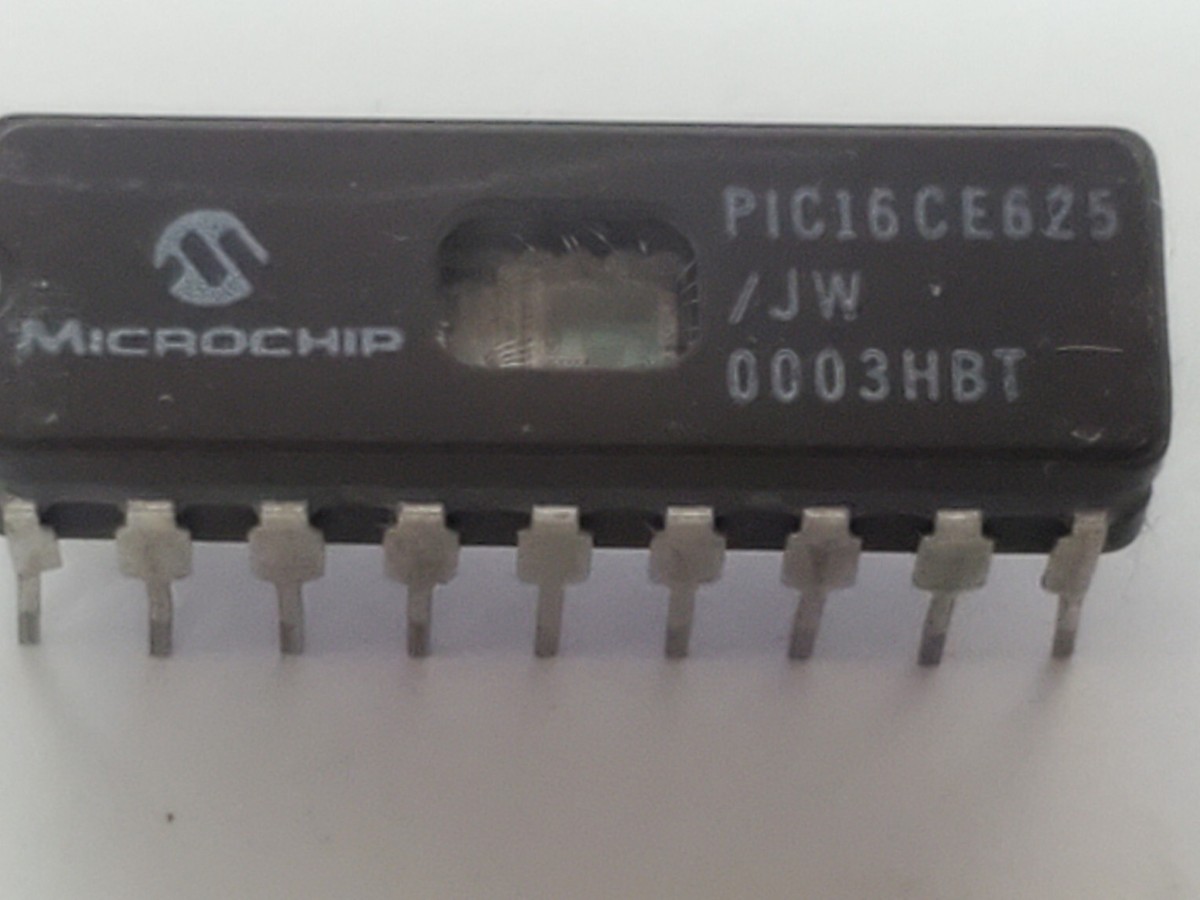
Attack MCU PIC16CE625 locked memory and extract program from Microcontroller PIC16CE625 flash memory, disable the security fuse bit after crack Microprocessor PIC16CE625 so the microprobes will be able to get access to the internal memory
Attack MCU PIC16CE625 locked memory and extract program from Microcontroller PIC16CE625 flash memory, disable the security fuse bit after crack Microprocessor PIC16CE625 so the microprobes will be able to get access to the internal memory;
Interrupt capability 16 special function hardware registers
8-level deep hardware stack
Direct, Indirect and Relative addressing modes
Peripheral Features:
· 13 I/O pins with individual direction control
· High current sink/source for direct LED drive
· Analog comparator module with:
– Two analog comparators
– Programmable on-chip voltage reference (VREF) module
– Programmable input multiplexing from device inputs and internal voltage reference
– Comparator outputs can be output signals
· Timer0: 8-bit timer/counter with 8-bit programmable prescaler
Special Microcontroller Features:
· In-Circuit Serial Programming (ICSP™) (via two pins)
· Power-on Reset (POR)
· Power-up Timer (PWRT) and Oscillator Start-up Timer (OST)
· Brown-out Reset
· Watchdog Timer (WDT) with its own on-chip RC oscillator for reliable operation
PIC16CE625 MCU Korumasına Saldırma Prosedürümüz İlk Analiz: Hedef çipi büyütme altında inceleyerek ve koruma şemalarını ve olası arka kapıları belirlemek için enstrümantasyonu test ederek başlıyoruz. Arayüz Bağlantısı: Hassas sondaj teknikleri kullanarak, genellikle doğrudan pin arayüzü veya PCB iz erişimi yoluyla flaş veya EEPROM belleğine fiziksel erişim sağlıyoruz. Baypas Koruması: Hizmetimizin özü, PIC16CE625’in kod koruma mekanizmalarındaki bilinen güvenlik açıklarından yararlanmaya odaklanır. Yapılandırmaya bağlı olarak, bu, kilitli belleği kırmak için güç arızası, saat manipülasyonu veya mikro sondaj içerebilir. Ürün Yazılımı Dökümü: Koruma atlatıldıktan sonra, flaş, EEPROM ve yapılandırma bitleri dahil olmak üzere ürün yazılımı arşivinin tam bir dökümünü okunabilir bir ikili veya altıgen biçime dönüştürüyoruz. Tersine Mühendislik (İsteğe Bağlı): İsteğe bağlı olarak, dökülen belleği kod çözebilir, derleyebilir veya C/C++ kaynak koduna dönüştürebiliriz; böylece istemcilerin hata ayıklama, taşıma veya geliştirme için mantığı gözden geçirmesini veya yeniden kullanmasını sağlayabiliriz.
Special Microcontroller Features (cont’d)
· 1,000,000 erase/write cycle EEPROM data memory
· EEPROM data retention > 40 years
· Programmable code protection
· Power saving SLEEP mode
· Selectable oscillator options
· Four user programmable ID locations
CMOS Technology:
· Low-power, high-speed CMOS EPROM/EEPROM technology
· Fully static design
· Wide operating voltage range – 2.5V to 5.5V
· Commercial, industrial and extended temperature range
· Low power consumption
– < 2.0 mA @ 5.0V, 4.0 MHz
– 15 mA typical @ 3.0V, 32 kHz
– < 1.0 mA typical standby current @ 3.0V
Posted in Recover MCU |
Tags: атакувам интегрална схема entsrapted bin, атакувам интегрална схема entsrapted code, атакувам интегрална схема entsrapted data, атакувам интегрална схема entsrapted eeprom, атакувам интегрална схема entsrapted file, атакувам интегрална схема entsrapted firmware, атакувам интегрална схема entsrapted flash, атакувам интегрална схема entsrapted hex, атакувам интегрална схема entsrapted memory, атакувам интегрална схема entsrapted program, атакувам интегрална схема entsrapted software |
Comments Closed