 Attack MCU PIC16C558 Program
 August 10th, 2000 |
  Author:
 The PIC16C558 is a widely deployed microcontroller designed for cost-sensitive yet reliable embedded applications. Unlike a PLD, this MCU integrates processing capability with on-chip memory, making it ideal for consumer electronics, industrial control units, home appliances, automotive subsystems, and security devices. Its architecture allows compact storage of operational firmware, including control program logic and essential data within internal EPROM/EEPROM-like memory structures. In most production environments, the source code, binary, or heximal file embedded inside the chip is deliberately protected, locked, or encrypted to prevent duplication and safeguard intellectual property. However, this also creates challenges when original design archives are lost or when long-term system maintenance is required.
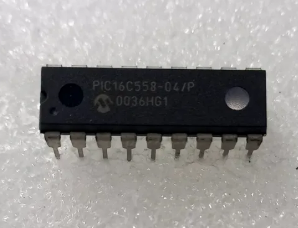
Our “Attack MCU PIC16C558 Program” service is built to attack, break, and decode these secured microcontrollers with precision and reliability. By leveraging advanced decapsulate techniques combined with electrical fault analysis, we are able to retrieve internal memory content, including firmware, structured binary, and heximal data files. Even when the MCU is heavily protected or features multiple layers of encryption, our engineers can effectively hack through these barriers to extract usable data archives. The recovered program file is then reconstructed into readable source code, allowing clients to fully understand and reuse the original design. This enables seamless clone and duplicate operations, whether for legacy product support, compatibility upgrades, or reverse engineering analysis of existing systems.
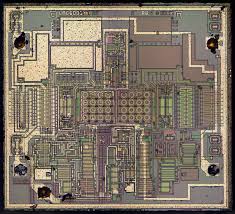
Attack MCU PIC16C558 secured system by disable the security fuse bit embedded in the microcontroller PIC16C558 , extract microprocessor program and data from flash memory;
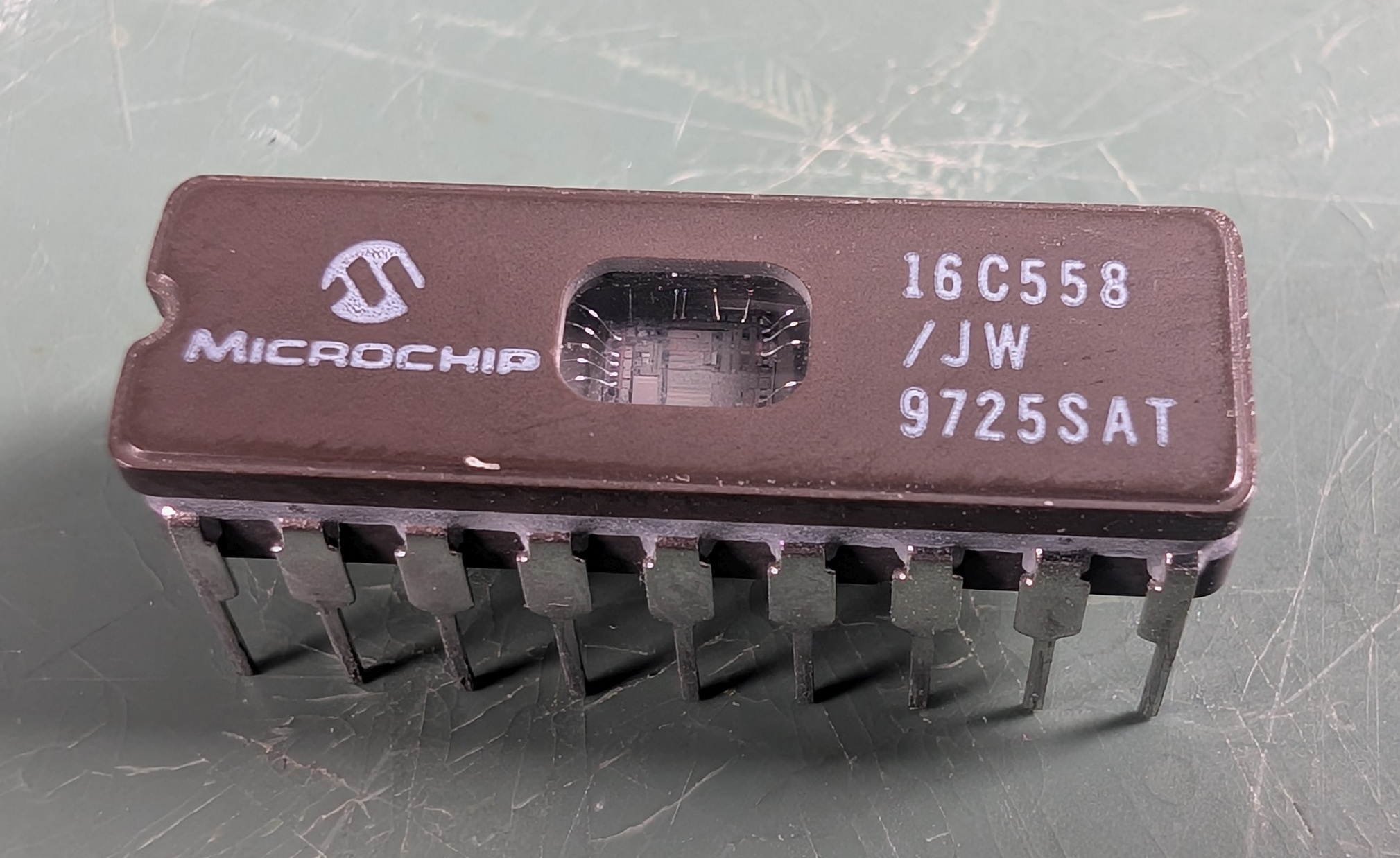
The UV erasable version, offered in CERDIP package is optimal for prototype development and pilot programs. This version can be erased and reprogrammed to any of the oscillator modes.
Microchip offers a QTP Programming Service for factory production orders. This service is made available for users who choose not to program a medium to high quantity of units and whose code patterns have stabilized when Attack MCU. The devices are identical to the OTP devices but with all EPROM locations and configuration options already programmed by the factory. Certain code and prototype verification procedures apply before production shipments are available.
Microchip offers a unique programming service where a few user-defined locations in each device are programmed with different serial numbers. The serial numbers may be random, pseudo-random or sequential. The high performance of the PIC16C55X(A) family can be attributed to a number of architectural features commonly found in RISC microprocessors.
To begin with, the PIC16C55X(A) uses a Harvard architecture, in which, program and data are accessed from separate memories using separate busses after Attack MCU. This improves bandwidth over traditional von Neumann architecture where program and data are fetched from the same memory. Separating program and data memory further allows instructions to be sized differently than 8-bit wide data words. Instruction opcodes are 14-bits wide making it possible to have all single word instructions.
A 14-bit wide program memory access bus fetches a 14-bit instruction in a single cycle. A two-stage pipeline overlaps fetch and execution of instructions. Consequently, all instructions (35) execute in a single-cycle (200 ns @ 20 MHz) except for program branches.
The PIC16C554(A) addresses 512 x 14 on-chip program memory. The PIC16C556A addresses 1K x 14 program memory. The PIC16C558(A) addresses 2K x 14 program memory. All program memory is internal. The PIC16C55X(A) can directly or indirectly address its register files or data memory.
All special function registers including the program counter are mapped into the data memory. The PIC16C55X(A) have an orthogonal (symmetrical) instruction set that makes it possible to carry out any operation on any register using any addressing mode. This symmetrical nature and lack of ‘special optimal situations’ make programming with the PIC16C55X(A) simple yet efficient. In addition, the learning curve is reduced significantly.
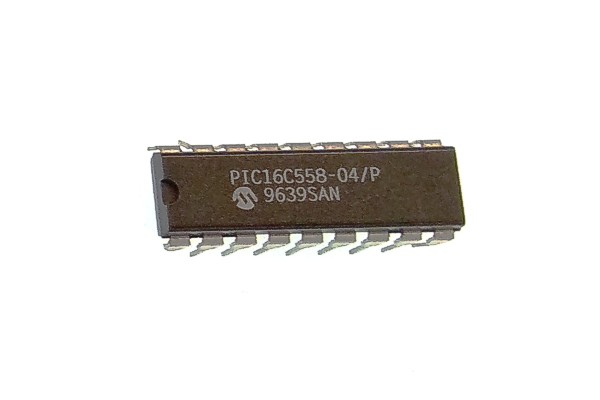
The availability of OTP devices is especially useful for customers who need the flexibility for frequent code updates and small volume applications. In addition to the program memory, the configuration bits must also be programmed.
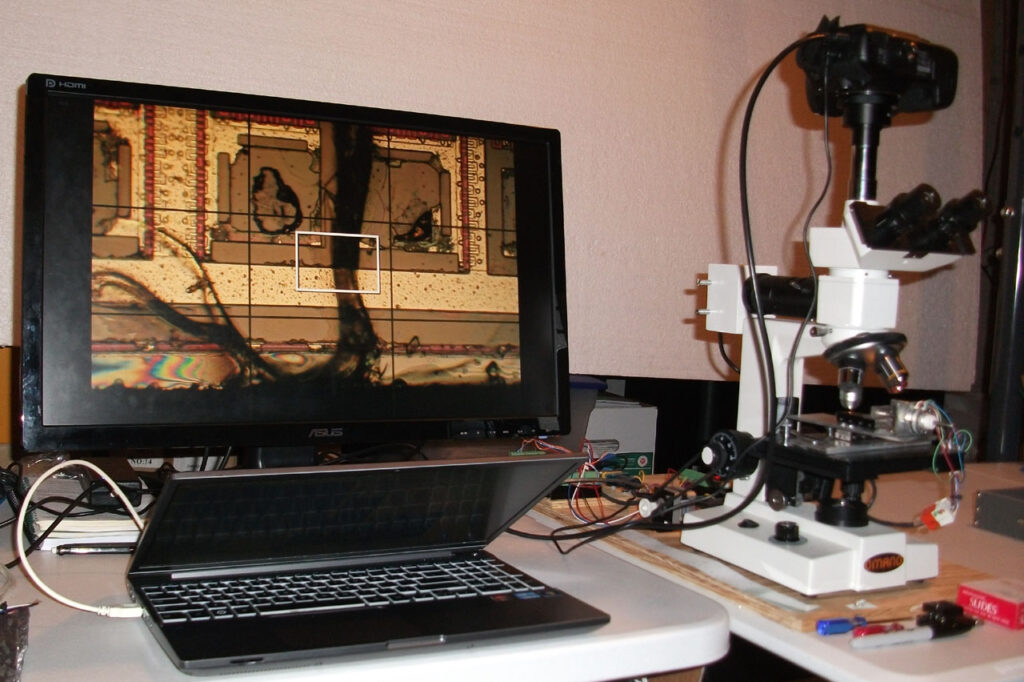
From a technical workflow perspective, the process combines silicon-level access with sophisticated decode algorithms. During decapsulation, the chip package is carefully opened to expose the die, enabling direct probing and controlled retrieval of embedded data from internal memory cells. The extracted binary is then processed through proprietary tools that translate raw data into structured firmware archives, ensuring that each file is complete and logically consistent. This hybrid methodology allows us to overcome even highly secured and encrypted configurations, delivering not just raw dumps but fully interpretable program structures. Through careful validation, we ensure the reconstructed source code accurately reflects the original MCU behavior, making it suitable for redevelopment or system integration.
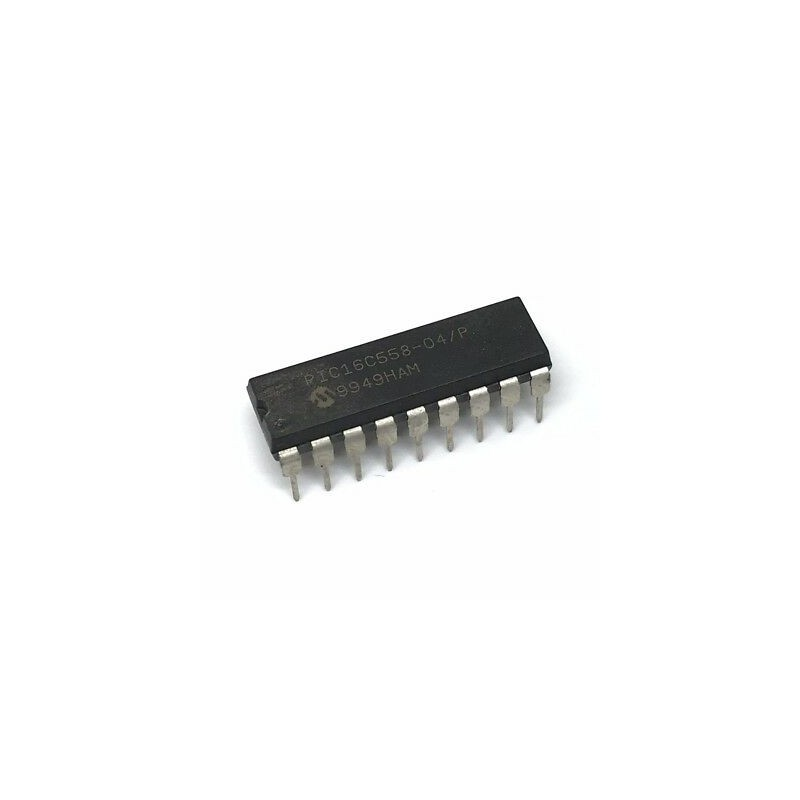
The ability to attack, decode, and recover a locked PIC16C558 brings significant advantages to end users across multiple industries. Companies facing discontinued components, unavailable documentation, or supply chain disruptions can regain control over critical firmware and data assets without costly redesigns. By extracting and duplicating the original program, clients can extend product lifecycles, maintain system compatibility, and accelerate engineering workflows. Ultimately, our service transforms inaccessible embedded memory into actionable knowledge, providing a dependable pathway to restore, analyze, and replicate the functional core of PIC-based systems with confidence and efficiency.
 Posted in Recover MCU