Posts Tagged ‘slomiti žeton archive’
 Copy CPLD XC2C128_VQ100 Content
 August 5th, 2014 |
  Author:
 The XC2C128_VQ100 is a high-performance PLD widely integrated into modern embedded systems requiring deterministic logic control and flexible configuration. With its non-volatile architecture and efficient power profile, this device is frequently used in telecommunications infrastructure, industrial controllers, automotive electronics, and aerospace subsystems. It manages complex logic operations while securely storing critical firmware, program structures, and configuration data within internal memory. In many deployments, this information is intentionally protected, locked, or encrypted, preventing unauthorized duplication of valuable source code, binary, or heximal files that define the device’s functionality.
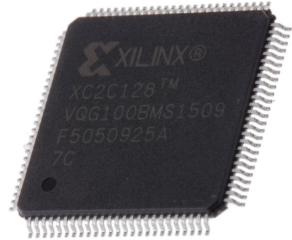
Our “Copy CPLD XC2C128_VQ100 Content” service is engineered to attack, break, and decode even the most secured and protective configurations embedded within the chip. By applying advanced decapsulate techniques alongside non-invasive electrical analysis, we can retrieve critical firmware, extract structured binary and heximal data, and reconstruct usable source code from the internal memory space. Whether the design is stored in flash, EEPROM, or proprietary configuration cells, our process enables us to effectively hack through encrypted and locked barriers. The recovered archive is then processed into a complete program file, allowing clients to clone, duplicate, or redeploy the original logic design across new hardware platforms with precision and consistency.
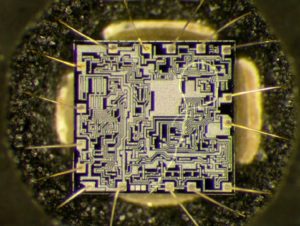
We can Copy CPLD XC2C128_VQ100 Content, please view below CPLD XC2C128_VQ100 features for your reference:
Features
· Optimized for 1.8V systems
– Industry’s fastest low power CPLD
– Densities from 32 to 512 macrocells
· Industry’s best 0.18 micron CMOS CPLD
– Optimized architecture for effective logic synthesis by Copy CPLD XC2C128_VQ100 Content
– Multi-voltage I/O operation — 1.5V to 3.3V
· Advanced system features
– Fastest in system programming
· 1.8V ISP using IEEE 1532 (JTAG) interface
– On-The-Fly Reconfiguration (OTF)
– IEEE1149.1 JTAG Boundary Scan Test
– Optional Schmitt trigger input (per pin)
– Multiple I/O banks on all devices
– Unsurpassed low power management
– SSTL2_1,SSTL3_1, and HSTL_1 on 128 macrocell and denser devices
– Hot pluggable PLA architecture
– Superior pinout retention
– 100% product term routability across function block Wide package availability including fine pitch:
– Chip Scale Package (CSP) BGA, Fine Line BGA, TQFP, PQFP, VQFP, and QFN packages
Free software support for all densities using Xilinx® WebPACK™ tool Industry leading nonvolatile 0.18 micron CMOS
· DataGATE external signal control
– Flexible clocking modes
· Optional DualEDGE triggered registers
· Clock divider (÷ 2,4,6,8,10,12,14,16)
· CoolCLOCK
– Global signal options with macrocell control
· Multiple global clocks with phase selection per macrocell
· Multiple global output enables
· Global set/reset
– Abundant product term clocks, output enables and set/resets
– Efficient control term clocks, output enables and set/resets for each macrocell and shared across function blocks from Copy CPLD XC2C128_VQ100 Content
– Advanced design security
– Open-drain output option for Wired-OR and LED drive
– Optional bus-hold, 3-state or weak pullup on select I/O pins
– Optional configurable grounds on unused I/Os
– Mixed I/O voltages compatible with 1.5V, 1.8V, process
– Guaranteed 1,000 program/erase cycles
– Guaranteed 20 year data retention
Family Overview
Xilinx CoolRunner™-II CPLDs deliver the high speed and ease of use associated with the XC9500/XL/XV CPLD family with the extremely low power versatility of the XPLA3 family in a single MCU Recovery. This means that the exact same parts can be used for high-speed data communications.
computing systems and leading edge portable products, with the added benefit of In System Programming. Low power consumption and high-speed operation are combined into a single family that is easy to use and cost effective. Clocking techniques and other power saving features extend the users’ power budget. The design features are supported starting with Xilinx ISE® 4.1i WebPACK tool.
From a technical perspective, the methodology combines both physical inspection and algorithmic reconstruction. During the decapsulation stage, the silicon structure is exposed to allow direct interaction with internal nodes, enabling deeper retrieval of embedded data. Parallel to this, logical decode procedures interpret raw binary dumps into structured firmware formats, ensuring that each file within the archive is accurate and functional. This dual approach significantly improves the success rate when dealing with highly protected or encrypted CPLD devices. As a result, clients receive not just raw data, but a refined and usable representation of the original program and source code, ready for analysis, modification, or reproduction.
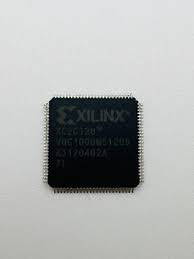
The ability to copy, clone, and restore CPLD content has become essential in industries facing component discontinuation, lack of design documentation, or the need for system replication. By leveraging our expertise to attack, decode, and extract secured memory, customers gain full access to otherwise inaccessible firmware and data assets. This enables efficient maintenance, redesign, and long-term support of critical systems without dependence on original suppliers. Ultimately, our service provides a reliable and technically robust pathway to unlock, understand, and duplicate the functional core of the XC2C128_VQ100, delivering measurable value in both engineering flexibility and operational continuity.
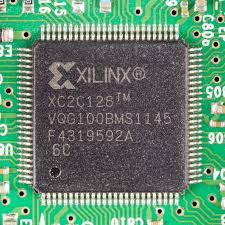
 Posted in
  Tags:
Tags: 