 Break MCU ATmega1280V Eeprom
 October 26th, 2012 |
  Author:
 Break MCU ATmega1280V Eeprom memory for its data, and flash memory for its program, then extract files from both Microcontroller memories, disable the fuse bit by Microprocessor cracking;
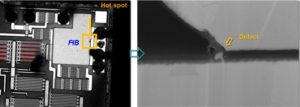
Break MCU ATmega1280V Eeprom memory for its data, and flash memory for its program, then extract files from both Microcontroller memories, disable the fuse bit by Microprocessor cracking
Please view the MCU ATMEGA1280V features for your reference:
To program and verify the AT89S53 in the parallel programming mode, the following sequence is recommended after break MCU eeprom:
Power-up sequence:
Apply power between VCC and GND pins.
Set RST pin to “H”.
Apply a 3 MHz to 24 MHz clock to XTAL1 pin and wait for at least 10 milliseconds to break MCU dsPIC30F4011 eeprom.
Set PSEN pin to “L”
ALE pin to “H”
EA pin to “H” and all other pins to “H”.
Apply the appropriate combination of “H” or “L” logic levels to pins P2.6, P2.7, P3.6, P3.7 to select one of the programming operations shown in the eeprom Programming Modes table.
Apply the desired byte address to pins P1.0 to P1.7 and P2.0 to P2.5.
Apply data to pins P0.0 to P0.7 for Write Code operation.
Raise EA/VPP to 12V to enable eeprom programming, erase or verification.
Pulse ALE/PROG once to program a byte in the Code memory array, or the lock bits. The byte-write cycle is self-timed and typically takes 1.5 ms.
To verify the byte just programmed, bring pin P2.7 to “L” and read the programmed data at pins P0.0 to P0.7.
Repeat steps 3 through 7 changing the address and data for the entire 12K-byte array or until the end of the object file is reached.
Power-off sequence will affect the process of break MCU SAF-C164CI-8EM firmware eeprom:
Set XTAL1 to “L”.
Set RST and EA pins to “L”.
Turn VCC power off.
The AT89S53 features DATA Polling to indicate the end of a write cycle. During a write cycle in the parallel or serial programming mode, an attempted read of the last byte written will result in the complement of the written datum on P0.7 (parallel mode), and on the MSB of the serial output byte on MISO (serial mode).
Once the write cycle has been completed, true data are valid on all outputs, and the next cycle may begin. DATA Polling may begin any time after a write cycle has been initiated.
The progress of byte programming in the parallel programming mode can also be monitored by the RDY/BSY output signal. Pin P3.4 is pulled Low after ALE goes High during programming to indicate BUSY. P3.4 is pulled High again when programming is done to indicate READY.
PCB Reverse Engineering Rationale
PCB Reverse Engineering Rationale is to extract wiring diagram from existing printed circuit board which has been out of production or not easy to get access to the new purchasing due to various reasons;
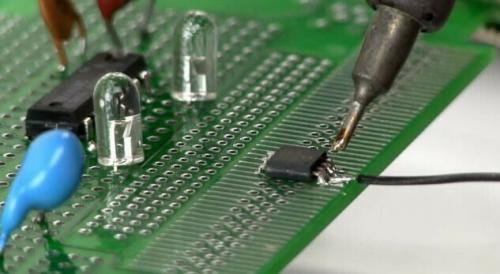
One method of controlling the high costs of replenishment spares is by pcb reverse engineering.
PCB Reverse engineering is the process of duplicating an item, functionally and dimensionally, by physically examining and measuring existing parts to develop the technical data (physical and material characteristics) required for competitive procurement.
The PCB reverse engineering process may be performed on specific items which are currently purchased sole-source. This may be due to limited data rights, in inadequate TDP, a diminished or non-existent source of supply, or as part of a Product Improvement Program (PIP).
Normally, PCB card cloning will not be cost effective unless the items under consideration are of a high dollar value or are procured in large quantities. Such items may be reverse engineered if an economical savings over their acquisition life cycle is demonstrated, and if other methods of acquiring the necessary technical data for competitive reprocurement are either more costly or not available.
Article quote from MLK-HDBK-115A(ARMY)
 Posted in PCB Clone |
  Tags: circuit board reverse engineering, circuit card reverse engineering, pcb board reverse engineering, pcb circuit reverse engineering, pcb plate reverse engineering, printed circuit board reverse engineering, printed wiring board reverse engineering, pwb reverse engineering |
  Comments Closed
Reverse Engineering Microcomputer ATmega2560 Program
Reverse Engineering Microcomputer ATmega2560 internal memory, and extract MCU ATmega2560 Program out from flash memory, crack Microcontroller ATmega2560 security fuse bit by focus ion beam technique;
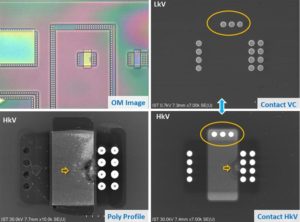
Reverse Engineering Microcomputer ATmega2560 internal memory, and extract MCU ATmega2560 Program out from flash memory, crack Microcontroller ATmega2560 security fuse bit by focus ion beam technique
If lock bits LB1 and LB2 have not been programmed, the programmed Code can be read back via the address and data lines for verification. The state of the lock bits can also be verified directly in the parallel programming mode when copying infineon saf-xc888cm-8ffi binary.
In the serial programming mode, the state of the lock bits can only be verified indirectly by observing that the lock bit features are enabled. In the parallel programming mode, Microcomputer erase is initiated by using the proper combination of control signals and by holding ALE/PROG low for 10 ms.
The Code array is written with all “1”s in the Microcomputer Erase operation. In the serial programming mode, a Microcomputer erase operation is initiated by issuing the Microcomputer Erase instruction. In this mode, Microcomputer erase is self-timed and takes about 16 ms.
During Microcomputer erase, a serial read from any address location will return 00H at the data outputs. A programmable fuse is available to disable Serial Programming if the user needs maximum system security after recover Microcomputer C8051F340 firmware.
The Serial Programming Fuse can only be programmed or erased in the Parallel Programming Mode. The AT89S53 is shipped with the Serial Programming Mode enabled.
Reading the Signature Bytes: The signature bytes are read by the same procedure as a normal verification of locations 030H and 031H, except that P3.6 and P3.7 must be pulled to a logic low. The values returned are as follows:
(030H) = 1EH indicates manufactured by Atmel
(031H) = 53H indicates 89S53
Every code byte in the program array can be written, and the entire array can be erased, by using the appropriate combination of control signals. The write operation cycle is self-timed and once initiated, will automatically time itself to completion.
All major programming vendors offer worldwide support for the Atmel microcontroller series. Please contact your local programming vendor for the appropriate software revision.
PCB Reverse Engineering Background in the U.S. department of Defense
PCB Reverse Engineering Background has a profound effect over the past years which is helping the engineer to restore circuit board schematic diagram from original physical samples include the gerber file, layout drawing and BOM list;
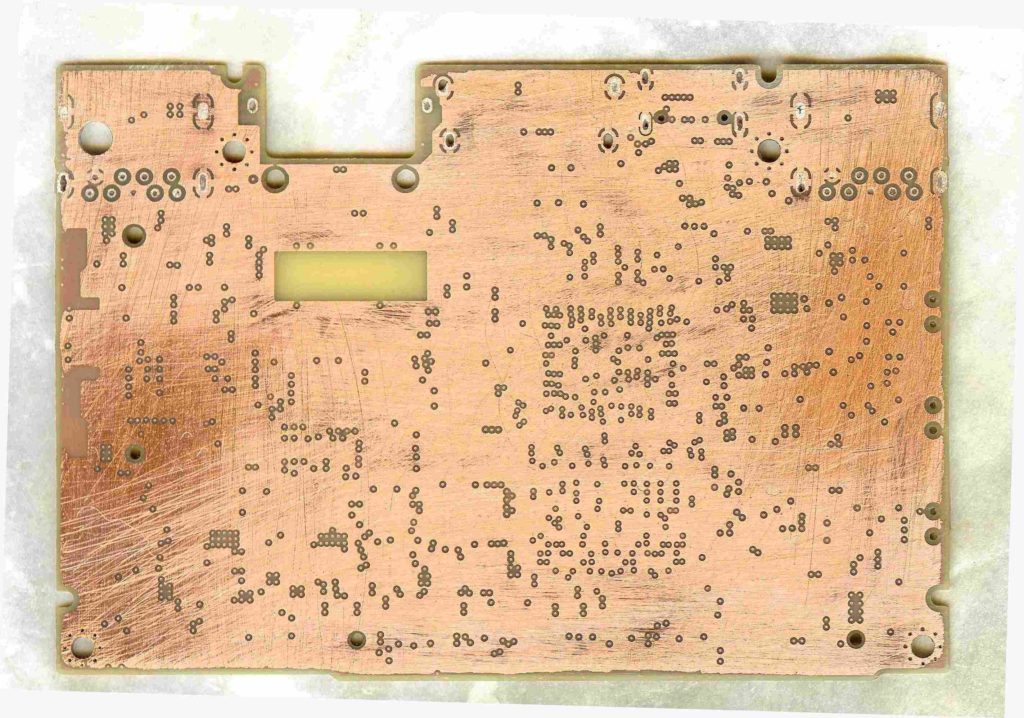
Defense contractors who supply systems, equipment and spare parts during the initial production phase of a weapon system acquisition in which they have performed in the development, frequently become the “sole-source” for follow-on procurements.
The cost of items procured under these sole source conditions are sometimes inflated beyond their true value. Consequently, procurement costs for spare parts consume an increasingly larger share of the defense dollar. Recent emphasis on the prices paid for spare parts dictates the need for competition.
Congress and the Department of Defense (DOD) directed the military services to increase competition in an effort to reduce the cost of spare parts. The Defense Acquisition Regulation Supplement No. 6 (DAR-S6), dated 1 June 1983, titled: DOD Replenishment Parts Breakout Program, was promulgated to encourage competition and reduce restrictive features which limit competitive procurement.
Article quote from MLK-HDBK-115A(ARMY)
Reverse Engineering IC Flash
Reverse Engineering IC Flash is starting point of Microcontroller reverse engineering, target MCU will be delayer one by one in the reverse order of Microprocessor manufacturing, the purpose is to figure out the security fuse bit and cut it off;
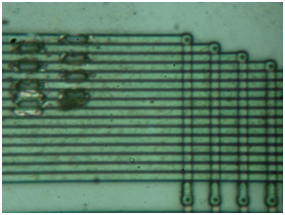
Reverse Engineering IC Flash is starting point of Microcontroller reverse engineering, target MCU will be delayer one by one in the reverse order of Microprocessor manufacturing, the purpose is to figure out the security fuse bit and cut it off
Read program and data out from Microcontroller memory requires direct access to the internal components of the device. If it is a security module or a USB dongle, then it has to be opened to get access to the internal memory chips. In the case of a smartcard or a microcontroller, the packaging should be removed followed by FIB or laser depassivation to get access to the internal wires buried deep under the passivation layer of the chip.
Such ic decryption method normally require a well equipped and knowledgeable ic attacker to succeed. Meanwhile, invasive ic extraction are becoming constantly more demanding and expensive, as feature sizes shrink and device complexity increases.
Posted in Break IC |
Tags: cpld flash reverse engineering, cypress ic flash reverse engineering, dsp flash reverse engineering, dsp mcu flash reverse engineering, fpga flash reverse engineering, mcu flash reverse engineering, pld flash reverse engineering, smartcard flash reverse engineering |
Comments Closed
Decode MCU ATmega2560V Program
Decode MCU ATmega2560V Program from encrypted flash memory is a process of Microcontroller firmware extraction, reset the status of microprocessor ATmega2560V by unlocking;
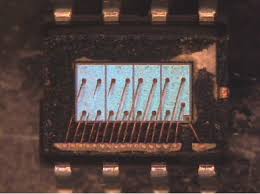
We can decode mcu ATMEGA2560V program, please view the mcu ATMEGA2560V features for your reference:
The Code memory array can be programmed using the serial SPI bus while RST is pulled to VCC. The serial interface consists of pins SCK, MOSI (input) and MISO (output) when copy mcu at89c55wd binary.
After RST is set high, the Programming Enable instruction needs to be executed first before program/erase operations can be executed. An auto-erase cycle is built into the self-timed programming operation (in the serial mode ONLY) and there is no need to first execute the Chip Erase instruction unless any of the lock bits have been programmed.
The Chip Erase operation turns the content of every memory location in the Code array into FFH. The Code memory array has an address space of 0000H to 2FFFH.
Either an external system clock is supplied at pin XTAL1 or a crystal needs to be connected across pins XTAL1 and XTAL2. The maximum serial clock (SCK) frequency should be less than 1/40 of the crystal frequency. With a 24 MHz oscillator clock, the maximum SCK frequency is 600 kHz. To program and verify the AT89S53 in the serial programming mode, the following sequence is recommended:
Power-up sequence: Apply power between VCC and GND pins. Set RST pin to “H”. If a crystal is not connected across pins XTAL1 and XTAL2, apply a 3 MHz to 24 MHz clock to XTAL1 pin and wait for at least 10 milliseconds if attack mcu atmega162 flash program.
Enable serial programming by sending the Programming Enable serial instruction to pin MOSI/P1.5. The frequency of the shift clock supplied at pin SCK/P1.7 needs to be less than the CPU clock at XTAL1 divided by 40..
The Code array is programmed one byte at a time by supplying the address and data together with the appropriate Write instruction.
The selected memory location is first automatically erased before new data is written. The write cycle is self-timed and typically takes less than 2.5 ms at 5V. Any memory location can be verified by using the Read instruction which returns the content at the selected address at serial output MISO/P1.6 before attack microcontroller w77e058a40dl flash program.
At the end of a programming session, RST can be set low to commence normal operation. Power-off sequence (if needed): Set XTAL1 to “L” (if a crystal is not used). Set RST to “L”. Turn VCC power off.
Break IC Flash
Break IC flash could be also applied to the device communication protocol in order to find any hidden functions embedded by the software developer for testing and upgrade purposes.
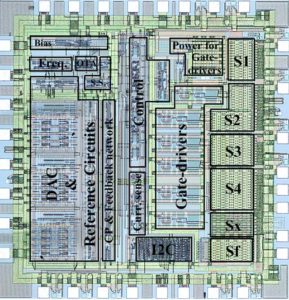
Break IC flash could be also applied to the device communication protocol in order to find any hidden functions embedded by the software developer for testing and upgrade purposes
IC Chip manufacturers very often embed hardware test interfaces for postproduction testing of their semiconductor devices. If the security protection for these interfaces is not properly designed, the ic attacker can exploit it to get access to the on-chip memory. In smartcards such test interfaces are normally located outside the chip circuit and physically removed after the test operation, eliminating any possibility of use by outsiders.
Any security system, either software or hardware, could also have holes in its design and there is always a small chance that an ic cloner would eventually find one with brute force random testing. Careful design of the security protection, followed by proper evaluation, could help avoid many problems and make such MCU attack virtually impossible.
Posted in Break IC |
Tags: chip flash break, cpld flash break, cypress ic flash break, dsp flash break, dsp mcu flash break, fpga flash break, mcu flash break, pld flash break, smartcard flash break |
Comments Closed
Read IC Program
Another possible brute force ic decryption when you are trying to Read IC Program, applicable to many semiconductor chips, is applying an external high voltage signal (normally twice the power supply) to the chip’s pins to find out whether one of them has any transaction like entering into a factory test or programming mode.
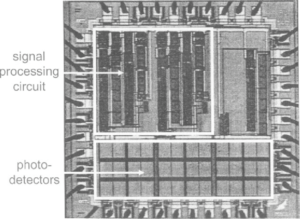
Another possible brute force ic decryption when you are trying to Read IC Program, applicable to many semiconductor chips, is applying an external high voltage signal (normally twice the power supply) to the chip’s pins to find out whether one of them has any transaction like entering into a factory test or programming mode
In fact, such pins can be easily found with a digital multimeter because they do not have a protection diode to the power supply line. Once sensitivity to a high voltage is found for any pin, MCU Cracker can try a systematic search on possible combinations of logic signals applied to other pins to figure out which of them are used for the test/programming mode and exploit this opportunity.
Posted in Break IC |
Tags: cpld program read, cypress ic program read, dsp mcu program read, dsp program read, fpga program read, mcu program read, pld program read |
Comments Closed
Clone IC Program
Clone IC Program from memory which include flash and eeprom memory, reset the status of Microcontroller Chip from locked to open one;
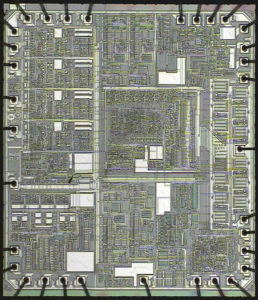
Clone IC Program from memory which include flash and eeprom memory,
One of the most effective ways of IC Clone is by Brute force MCU cracking, can be also applied to a hardware design implemented into an ASIC or a CPLD. In this case the IC attacker tries to apply all possible logic combinations to the input of the device while observing all its outputs. That kind of ic break could be also called black-box analysis because the ic decryption expert does not have to know anything about the design of the device under test.
He only tries to understand the function of the device by trying all possible combinations of signals. This approach works well only for relatively small logic devices. Another problem when extracting program from IC memory will face is that designs implemented in CPLDs or ASICs have flip-flops, so the output will probably be function of both the previous state and the input. But the search space can be significantly reduced if the signals are observed and analysed beforehand. For example, clock inputs, data buses and some control signals could be easily identified, significantly reducing the area of search.
Posted in Break IC |
Tags: cpld program clone, cypress ic program clone, dsp mcu program clone, dsp program clone, fpga program clone, mcu program clone, pld program clone |
Comments Closed
Decrypt Microprocessor ATmega1281 Eeprom
Decrypt Microprocessor ATmega1281 Eeprom and extract MCU ATmega1281 code from flash memory, prepare Microcontroller ATmega1281 unit clone by copy the firmware to new MCU unit;
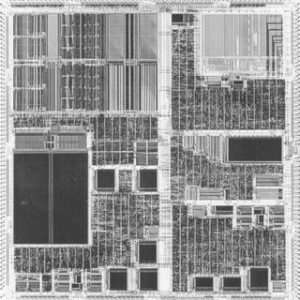
Decrypt Microprocessor ATmega1281 Eeprom and extract MCU ATmega1281 code from flash memory, prepare Microcontroller ATmega1281 unit clone by copy the firmware to new MCU unit
The Instruction Set for Serial Programming follows a 3-byte protocol and is shown in the following table: Stresses beyond those listed under “Absolute Maximum Ratings” may cause permanent damage to the device.
This is a stress rating only and functional operation of the device at these or any other conditions beyond those indicated in the operational sections of this specification is not implied if breaking PIC16F716 heximal memory.
Exposure to absolute maximum rating conditions for extended periods may affect device reliability. Under operating conditions, load capacitance for Port 0, ALE/PROG, and PSEN = 100 pF; load capacitance for all other outputs = 80 pF.
Typical values contained in this datasheet are based on simulations and characterization of other AVR microcontrollers manufactured on the same process technology. Min and Max values will be available after the device is characterized. The ATmega1281 is a low-power CMOS 8-bit microcontroller based on the AVR enhanced RISC architecture.
By executing powerful instructions in a single clock cycle, the ATmega1281 achieves throughputs approaching 1 MIPS per MHz allowing the system designer to optimize power consumption versus processing speed.
The AVR core combines a rich instruction set with 32 general purpose working registers. All the 32 registers are directly connected to the Arithmetic Logic Unit (ALU), allowing two independent registers to be accessed in one single instruction executed in one clock cycle.
The resulting architecture is more code efficient while achieving throughputs up to ten times faster than conventional CISC microcontrollers.