 Crack IC Flash
 October 17th, 2012 |
  Author:
 Crack IC Flash memory and extract the content inside flash memory, the program can be reprogramme to new MCU which can provide the same functions as originals;
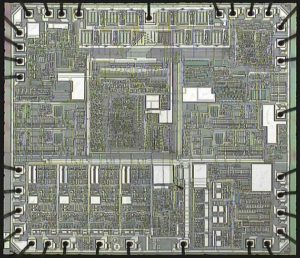
Crack IC Flash memory and extract the content inside flash memory, the program can be reprogramme to new MCU which can provide the same functions as originals
‘Brute force’ has different meanings for cryptography and semiconductor hardware. A brute force MCU breaking would be defined as the methodical application of a large set of trials for a key to the system. This is usually done with a computer or an array of FPGAs delivering patterns at high speed and looking for success.
One example could be the password protection scheme used in microcontrollers, such as the Texas Instruments MSP430 family. The password itself is 32 bytes (256 bits) long which is more than enough to withstand direct brute force ic decode. But the password is allocated at the same memory addresses as the CPU interrupt vectors.
That, firstly, reduces the area of search as the vectors always point to even addresses within memory. Secondly, when the software gets updated, only a small part of the password is changed because most of the interrupt subroutines pointed to by the vectors are very likely to stay at the same addresses. As a result, if the ic breaker knows one of the previous passwords he could easily do a systematic search and find the correct password in a reasonable time.
 Posted in Break IC |
  Tags: chip flash crack, cpld flash crack, cypress ic flash crack, dsp flash crack, dsp mcu flash crack, fpga flash crack, mcu flash crack, pld flash crack, smartcard flash crack |
  Comments Closed
Hack IC Program
Hack IC Program locked in the flash memory, remove the fuse bit of the Microcontroller by cracking technique, extract code from master MCU and reprogramme the file to new MCU;
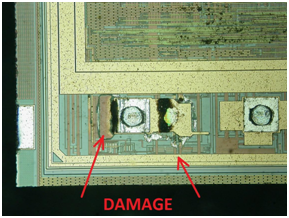
Hack IC Program locked in the flash memory, remove the fuse bit of the Microcontroller by cracking technique, extract code from master MCU and reprogramme the file to new MCU
As one of the most effective method of IC crack, To prevent these ic program attack happen, the designer should carefully calculate the number of CPU cycles that take place when the password is compared and make sure they are the same for correct and incorrect passwords. For example, in the Motorola 68HC08 microcontrollers family the internal ROM bootloader allows access to the Flash memory only if the correct eight-byte password was entered first. To achieve that, extra NOP commands were added to the program making the processing time equal for both correct and incorrect bytes of the password. That gives good protection against timing mcu attacks. Some microcontrollers have an internal RC generator mode of operation in which the CPU running frequency depends upon the power supply voltage and the die temperature. This makes timing analysis more difficult as the mcu cracker has to stabilize the device temperature and reduce any fluctuations and noise on the power supply line. Some smartcards have an internally randomised clock signal to make measurements of the time delays useless for the ic break.
Posted in Break IC |
Tags: cpld program hack, cypress ic program hack, dsp mcu program hack, dsp program hack, fpga program hack, mcu program hack, pld program hack |
Comments Closed
Attack IC Flash
Attack IC Flash memory by cut off the security fuse bit embedded among memories and center processor, read firmware out from flash, eeprom or ROM memory of Microcontroller, clone the heximal to new MCU;
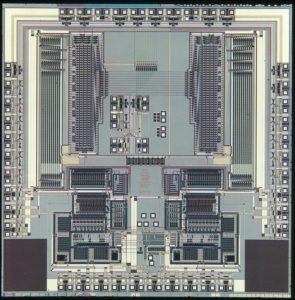
Attack IC Flash memory by cut off the security fuse bit embedded among memories and center processor, read firmware out from flash, eeprom or ROM memory of Microcontroller, copy the heximal to new MCU
Timing ic attacks flash can be applied to microcontrollers whose security protection is based on passwords, or to access control systems that use cards or keys with fixed serial numbers, for example, Dallas iButton products. The common mistake in such systems is the way the serial number of the entered key is verified against the database. Very often the system checks each byte of the key against one entry in the database and stops as soon as an incorrect byte is found.
Then it switches to the next entry in the database until it reaches the end. So the ic cracker can easily measure the time between the input of the last key and the request for another key and figure out how many coincidences were found. With a relatively small number of attempts, he will be able to find one of the matching keys.
Posted in Break IC |
Tags: chip attack flash, cpld attack flash, cypress ic attack flash, dsp attack flash, dsp mcu attack flash, fpga attack flash, mcu attack flash, pld attack flash, smartcard attack flash |
Comments Closed
Extract IC Flash
Extract IC Flash memory content and copy code to new MCU memory which will provide the same functions as original Microcontroller;
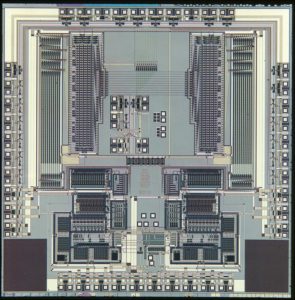
Extract IC Flash memory content and copy code to new MCU memory which will provide the same functions as original Microcontroller
To conduct the ic flash extraction, the ic attacker one needs to collect a set of messages, together with their processing time, e.g. question-answer delay. Many cryptographic algorithms were found to be vulnerable to timing ic cracks. The main reason why this happens is in the software implementation of each algorithm.
That includes performance optimisation to bypass unnecessary branching and conditional operations, cache memory usage, non-fixed time processor instructions such as multiplication and division, and a wide variety of other causes. As a result performance characteristics typically depend on both the encryption key and the input data.
To prevent such MCU code restoration, the techniques used for blinding signatures can be used . The general idea is to prevent the attacker knowing the input to the modular exponentiation operation by mixing the input with a chosen random value.
Posted in Break IC |
Tags: chip flash extract, cpld flash extract, dsp flash extract, fpga flash extract, mcu flash extract, pld flash extract, smartcard flash extract |
Comments Closed
Restore IC Program
Manufacturers often protect their devices by securing the source code, binary files, or EEPROM data within the chip. This prevents competitors from copying or duplicating their designs. However, there are legitimate reasons to restore an IC’s program, such as:
-
Recovering lost firmware from a damaged MCU
-
Repairing devices with corrupted flash memory
-
Analyzing secured code for security research
-
Cloning legacy systems where original files are no longer available
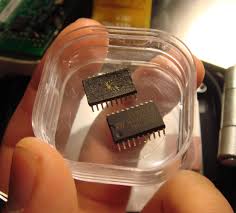
Para chips altamente protegidos, o desencapsulamento envolve a abertura física do CI para acessar o chip de silício. Usando microprobes, os especialistas podem despejar os dados hexagonais diretamente das células de memória. Este método é frequentemente usado em engenharia reversa para recuperar firmware de MCUs obsoletos ou bloqueados. Alguns chips podem ser atacados usando análise de energia ou ataques de temporização para descriptografar dados protegidos. Ao monitorar flutuações de energia ou tempos de execução, os pesquisadores podem decodificar o firmware criptografado sem precisar da chave original. Muitos microcontroladores têm portas de depuração ocultas (JTAG, SWD) que permitem acesso direto à memória flash. Se essas interfaces não forem desabilitadas, os invasores podem despejar o arquivo binário inteiro e restaurá-lo em outro chip. Se o MCU armazenar seu programa em uma EEPROM externa ou memória flash, o chip pode ser dessoldado e lido usando um programador. Este método é comum para replicar ou clonar firmware de dispositivos mais antigos. Para firmware criptografado, ataques de força bruta ou falhas de voltagem (injeção de falha) podem ser usados para contornar a segurança e extrair o código-fonte.
Methods to Extract and Restore IC Data
To break or hack into a secured chip, engineers use various techniques:
1. Decapsulation and Microprobing
For highly protected chips, decapsulation involves physically opening the IC to access the silicon die. Using microprobes, experts can dump the heximal data directly from the memory cells. This method is often used in reverse engineering to recover firmware from obsolete or locked MCUs.
2. Side-Channel Attacks
Some chips can be attacked using power analysis or timing attacks to decrypt secured data. By monitoring power fluctuations or execution times, researchers can decode the encrypted firmware without needing the original key.
3. Firmware Dumping via Debug Interfaces
Many microcontrollers have hidden debug ports (JTAG, SWD) that allow direct access to the flash memory. If these interfaces are not disabled, attackers can dump the entire binary file and restore it to another chip.
4. EEPROM/Flash Chip Removal
If the MCU stores its program in an external EEPROM or flash memory, the chip can be desoldered and read using a programmer. This method is common for replicating or cloning firmware from older devices.
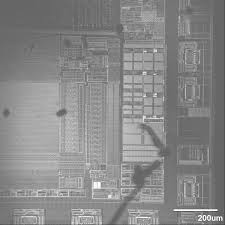
Đối với các chip được bảo vệ cao, quá trình tách vỏ liên quan đến việc mở IC vật lý để truy cập vào khuôn silicon. Sử dụng các đầu dò vi mô, các chuyên gia có thể đổ dữ liệu hex trực tiếp từ các ô nhớ. Phương pháp này thường được sử dụng trong kỹ thuật đảo ngược để khôi phục chương trình cơ sở từ các MCU đã lỗi thời hoặc bị khóa. Một số chip có thể bị tấn công bằng cách sử dụng phân tích công suất hoặc tấn công thời gian để giải mã dữ liệu được bảo mật. Bằng cách theo dõi các biến động công suất hoặc thời gian thực hiện, các nhà nghiên cứu có thể giải mã chương trình cơ sở được mã hóa mà không cần khóa gốc. Nhiều bộ vi điều khiển có các cổng gỡ lỗi ẩn (JTAG, SWD) cho phép truy cập trực tiếp vào bộ nhớ flash. Nếu các giao diện này không bị vô hiệu hóa, kẻ tấn công có thể dump toàn bộ tệp nhị phân và khôi phục nó vào một chip khác. Nếu MCU lưu trữ chương trình của mình trong EEPROM hoặc bộ nhớ flash bên ngoài, chip có thể được hàn lại và đọc bằng một bộ lập trình. Phương pháp này phổ biến để sao chép hoặc nhân bản chương trình cơ sở từ các thiết bị cũ hơn. Đối với chương trình cơ sở được mã hóa, có thể sử dụng các cuộc tấn công bằng vũ lực hoặc lỗi điện áp (tiêm lỗi) để bỏ qua bảo mật và trích xuất mã nguồn.
5. Brute-Force and Fault Injection
For encrypted firmware, brute-force attacks or voltage glitching (fault injection) can be used to bypass security and extract the source code.
Restore IC Program from its embedded flash memory and eeprom memory has to change the status of Microcontroller from encrypted to un-encrypted, then readout code from MCU memory with universal programmer;
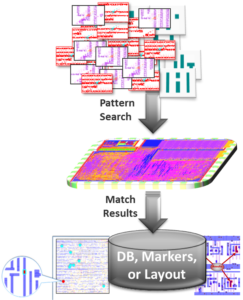
Restore IC Program from its embedded flash memory and eeprom memory has to change the status of Microcontroller from encrypted to un-encrypted, then readout code from MCU memory with universal programmer
Semiconductor manufacturers offer valuable customers an easy way to increase the protection of their products: IC chips with custom marking on the packages instead of standard chip names. That gives the impression that the final product was designed using ASICs or full custom ICs.
‘Everyone knows’ that ASICs offer very good protection against different sorts of ic attacks and only well equipped and highly skilled ic crackers could succeed with br restore IC program from them. This may stop many potential mcu attackers fiddling with the product.
However, a determined mcu cracker could try an easy way to check whether this chip was actually an ASIC. The easy way is to note which pins are connected to power supply, ground, clock, reset, serial, and other interfaces, and to compare all this information with the database of suspect microcontrollers or other ICs.

Для высокозащищенных чипов декапсуляция подразумевает физическое открытие ИС для доступа к кремниевому кристаллу. Используя микрозонды, эксперты могут выгружать шестнадцатеричные данные непосредственно из ячеек памяти. Этот метод часто используется при обратном проектировании для восстановления прошивки устаревших или заблокированных микроконтроллеров. Некоторые чипы можно атаковать с помощью анализа питания или атак по времени для расшифровки защищенных данных. Отслеживая колебания питания или время выполнения, исследователи могут расшифровать зашифрованную прошивку без необходимости использования оригинального ключа. Многие микроконтроллеры имеют скрытые отладочные порты (JTAG, SWD), которые обеспечивают прямой доступ к флэш-памяти. Если эти интерфейсы не отключены, злоумышленники могут сбросить весь двоичный файл и восстановить его на другой чип. Если микроконтроллер хранит свою программу во внешней EEPROM или флэш-памяти, чип можно выпаять и прочитать с помощью программатора. Этот метод распространен для копирования или клонирования прошивок со старых устройств. Для зашифрованной прошивки можно использовать атаки методом подбора или сбой напряжения (внедрение неисправностей), чтобы обойти защиту и извлечь исходный код.
This works very reliably, as each microcontroller family has its own characteristic pinout. Once similarities are found the suspected microcontroller could be verified by placing it into a programming device or universal programmer and trying to read it.
Break Microcontroller ATmega1281V Firmware
Break Microcontroller ATmega1281V embedded memory include flash and eeprom, extract firmware from MCU memory after reset the security fuse bit by focus ion beam technique, which is commonly method for microcontroller unlocking;
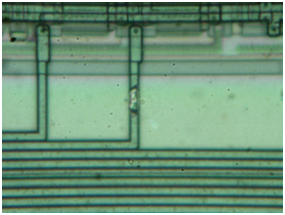
Break Microcontroller ATmega1281V embedded memory include flash and eeprom, extract firmware from MCU memory after reset the security fuse bit by focus ion beam technique, which is commonly method for microcontroller unlocking
The ATmega1281 provides the following features: 64K/128K/256K bytes of In-System Programmable Flash with Read-While-Write capabilities, 4K bytes EEPROM, 8K bytes SRAM, 54/86 general purpose I/O lines, 32 general purpose working registers when Microcontroller MC68HC11A0FN3 binary recovery.
Real Time Counter (RTC), six flexible Timer/Counters with compare modes and PWM, 4 USARTs, a byte oriented 2-wire Serial Interface, a 16-channel, 10-bit ADC with optional differential input stage with programmable gain, programmable Watchdog Timer with Internal Oscillator, an SPI serial port, IEEE std. 1149.1 compliant JTAG test interface, also used for accessing the On-chip Debug system and programming and six firmware selectable power saving modes if break Microcontroller LPC2132FBD64 firmware.
The Idle mode stops the CPU while allowing the SRAM, Timer/Counters, SPI port, and interrupt system to continue functioning. The Power-down mode saves the register contents but freezes the Oscillator, disabling all other chip functions until the next interrupt or Hardware Reset.
In Power-save mode, the asynchronous timer continues to run, allowing the user to maintain a timer base while the rest of the devMicrocontrollere is sleeping.
The ADC Noise Reduction mode stops the CPU and all I/O modules except Asynchronous Timer and ADC, to minimize switching noise during ADC conversions. In Standby mode, the Crystal/Resonator Oscillator is running while the rest of the devMicrocontrollere is sleeping.
This allows very fast start-up combined with low power consumption. In Extended Standby mode, both the main Oscillator and the Asynchronous Timer continue to run. The devMicrocontrollere is manufactured using Atmel’s high-density nonvolatile memory technology if break Microcontroller MC68HC11F1CFN3 heximal.
The On-chip ISP Flash allows the program memory to be reprogrammed in-system through an SPI serial interface, by a conventional nonvolatile memory programmer, or by an On-chip Boot program running on the AVR core. The boot program can use any interface to download the application.
Firmware in the Boot Flash section will continue to run while the Application Flash section is updated, providing true Read-While-Write operation. By combining an 8-bit RISC CPU with In-System Self-Program mable Flash on a Microcontroller chip, the Atmel ATmega1281 is a powerful Microcontroller that provides a highly flexible and cost effective solution to many embedded Microcontroller.
Copy IC Program
Copy IC Program from secured microcontroller flash program memory and eeprom data memory needs to crack Microcontroller firmware protective system, after that the firmware can be readout directly from Microprocessor memory cell;
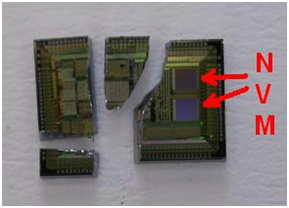
Copy IC Program from secured microcontroller flash program memory and eeprom data memory needs to crack Microcontroller firmware protective system
When ic attacker invests a huge amount of money to reverse engineer a pay-TV access card. Then he disassembles the internal code from the card, learning everything that happens during authorisation and operation. Very likely he would be able to find vulnerabilities which give unlimited access to the subscription channels.
For example, by applying a power glitch at just the right moment to cause a malfunction of the CPU. Once he succeeded he could either offer the subscription service at a very competitive price, or sell equipment for counterfeiting the card to malicious people.
Obviously such an ic cracker needs to invest some capital to do this. But once he launches a pirate device on the market, it will be mcu attacked by others. This time the mcu crack will not be so expensive, because pirate devices are normally based on standard microcontrollers which have much lower security protection than pay-TV smartcards.
Very likely the device will be cracked in a few weeks, and the secondary attackers will flood the market with their clones. Fairly soon, the information on how to build pirate devices becomes available on the Internet and anyone can build pirate devices at almost no cost. So the pay-TV service provider loses millions of dollars; sometimes the original ic breaker is sued or prosecuted.
But because the lost profit was distributed among all the pirates and dishonest subscribers, the service provider hardly gets any money back. The only effect of such actions is to threaten the copyer community with punishment. In addition the service provider will have to spend a fortune on redesigning his access control system, choosing and developing software for the new smartcard, and distributing cards to the subscribers.
Posted in Break IC |
Tags: chip program copy, cpld program copy, dsp program copy, fpga program copy, mcu program copy, pld program copy |
Comments Closed
Decrypt Microprocessor ATmega2561 Dump
Decrypt Microprocessor ATmega2561 memory and extract dump from flash memory and eeprom memory, the content include program and data which will be presented in the format of binary or heximal;
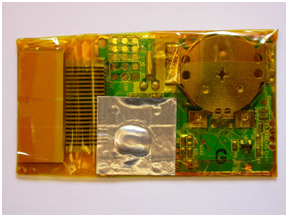
Decrypt Microprocessor ATmega2561 memory and extract dump from flash memory and eeprom memory, the content include program and data which will be presented in the format of binary or heximal
The ATmega2561 AVR is supported with a full suite of program and system development tools including: C compilers, macro assemblers, program debugger/simulators, in-circuit emulators, and evaluation kits. Each device in the ATmega2561 family differs only in memory size and number of pins. Table 1 summarizes the different configurations for the six devices.
Port A is an 8-bit bi-directional I/O port with internal pull-up resistors (selected for each bit). The Port A output buffers have symmetrical drive characteristics with both high sink and source capability before decrypt copy microcontroller P87C51X2BBD binary.
As inputs, Port A pins that are externally pulled low will source current if the pull-up resistors are activated. The Port A pins are tri-stated when a reset condition becomes active, even if the clock is not running. Port B is an 8-bit bi-directional I/O port with internal pull-up resistors (selected for each bit).
The Port B output buffers have symmetrical drive characteristics with both high sink and source capability. As inputs, Port B pins that are externally pulled low will source current if the pull-up resistors are activated when recovery Microprocessor AT89C4051 heximal.
The Port B pins are tri-stated when a reset condition becomes active, even if the clock is not running. Port B has better driving capabilities than the other ports.
Port C is an 8-bit bi-directional I/O port with internal pull-up resistors (selected for each bit). The Port C output buffers have symmetrical drive characteristics with both high sink and source capability. As inputs, Port C pins that are externally pulled low will source current if the pull-up resistors are activated. The Port C pins are tri-stated when a reset condition becomes active, even if the clock is not running.
Port D is an 8-bit bi-directional I/O port with internal pull-up resistors (selected for each bit). The Port D output buffers have symmetrical drive characteristics with both high sink and source capability.
As inputs, Port D pins that are externally pulled low will source current if the pull-up resistors are activated. The Port D pins are tri-stated when a reset condition becomes active, even if the clock is not running.
Recover IC Program
Recover IC Program from secured MCU flash memory, the fuse bit of microcontroller will be cut by focus ion beam which one of the most commonly method for MCU crack and then copy code to new microprocesor;
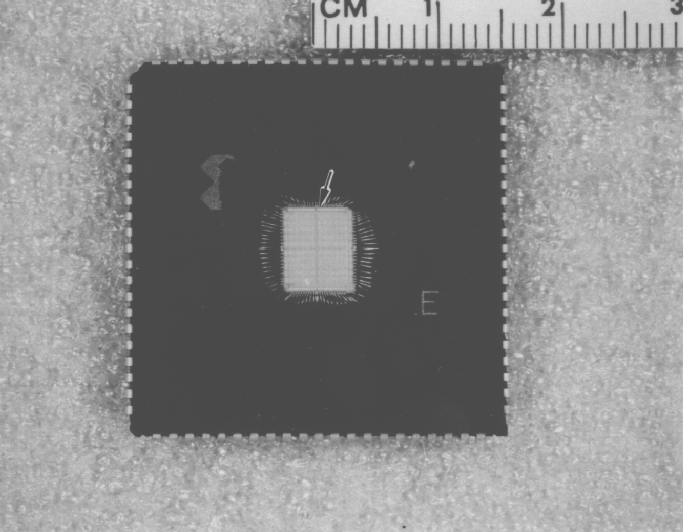
Non-invasive ic attacks can be either passive or active. Passive ic cracks, also called side-channel IC code decoding, do not involve any interaction with the ic recover program device but, usually, observation of its signals and electromagnetic emissions. Examples of such mcu breaking are power analysis and timing attacks. Active ic cracks, like brute force and glitch attacks, involve playing with the signals applied to the device including the power supply line.
One example of a simple non-invasive recover ic program could be cloning a device based on SRAM FPGA as it is configured at a power-up. The ic program recover could easily connect to the JTAG interface wires used for configuring the chip and, with either an oscilloscope or a logic analyser, grab all the signals.
Then he can thoroughly analyse the waveforms and replay the commands in his own design. He could also slightly change the bitstream to disguise the fact of cloning as usually only half of the FPGA resources are used, leaving a room to fiddle with the configuration without harming device operation.
Also the JTAG interface itself gives some freedom in the sequence of the signals being applied so that the waveforms used to configure the pirate copy will look different from the original. In addition, the ic program recover could mix the row addresses during the upload, giving the impression of a completely different design.
Posted in Break IC |
Tags: cpld program recovery, dsp program recovery, fpga program recovery, mcu program recovery, pld program recovery |
Comments Closed
Decrypt IC Program
Decrypt IC Program from locked microcontroller’s flash and eeprom memory, and then copy firmware out from MCU by programmer, rewrite the heximal to new MCU for cloning;
A non-invasive ic crack does not require any initial preparations of the device under test. The ic attacker can either tap the wires to the device, or plug it into a test circuit for the analysis. Once found, these mcu cracks could be easily scaled and their reproduction does not involve very much cost.
In addition, no tamper evidence is left after they are applied. Therefore they are considered to be the most serious threat to the hardware security of any device. At the same time it usually takes a lot of time and effort to find an ic program decryption on any particular device.
This often involves reverse engineering the device in the sense of either disassembling its software or understanding its hardware layout.
Posted in Break IC |
Tags: cpld decrypt program, dsp decrypt program, fpga decrypt program, mcu decrypt program, pld decrypt program |
Comments Closed