 Reverse Engineering Microcontroller ATMEGA1281 Program
 September 29th, 2010 |
  Author:
 The ATMEGA1281 microcontroller is a highly regarded 8-bit AVR RISC-based processor that serves as the computing core for numerous sophisticated industrial networks, automated agricultural monitoring systems, wireless sensor meshes (ZigBee/IEEE 802.15.4), and advanced marine instrumentation. Known for its unique features like its high-density 128 KB self-programming flash, an independent 4 KB eeprom sector, 86 programmable I/O lines, and real-time counter capabilities, this chip handles heavy communication and data processing workloads smoothly. The critical operational instructions that orchestrate these complex tasks are kept running autonomously as an embedded program deep within the hardware. However, unexpected supply chain disruptions or lost corporate archives frequently leave engineering teams completely stranded without the original source code or development files when a legacy control unit requires an emergency upgrade. Our professional laboratory provides highly secure, specialized technical solutions for reverse engineering microcontroller ATMEGA1281 program code, offering a reliable, non-destructive path to reclaiming your essential product blueprints.
Features
High Performance, Low Power AVR® 8-Bit Microcontroller
Advanced RISC Architecture
– 135 Powerful Instructions – Most Single Clock Cycle Execution
– 32 x 8 General Purpose Working Registers
– Fully Static Operation
– Up to 16 MIPS Throughput at 16 MHz
– On-Chip 2-cycle Multiplier
Non-volatile Program and Data Memories
– 64K/128K/256K Bytes of In-System Self-Programmable Flash
Endurance: 10,000 Write/Erase Cycles
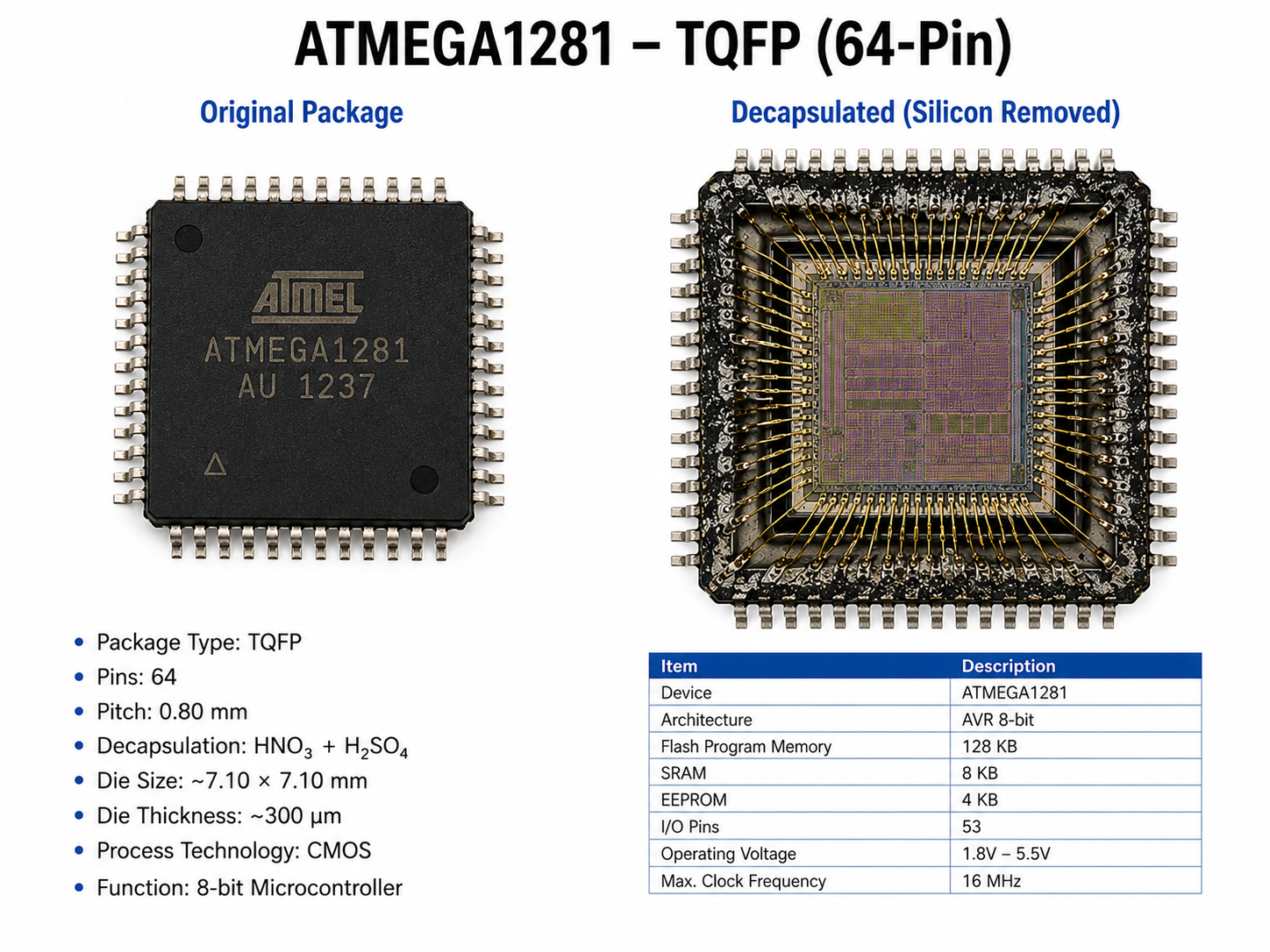
Yüksek büyütmeli mikroskop altında dahili devre yapısı tamamen görünür hale geldikten sonra, harici AVR ATMEGA1281 mikrodenetleyici okuma komutlarını engelleyen gömülü kilit bitlerini ve koruyucu kod sigortalarını aşmak için özel ekipmanlar kullanılır.
Dahili voltaj seviyelerinin hassas şekilde ayarlanması veya bellek yapılandırma düzeni üzerinde lokal mikro-problama uygulanması sayesinde ekibimiz AVR ATMEGA1281 MCU’ya zarar vermeden donanım durumunu geçici olarak değiştirebilir.
Bu yöntem sayesinde korunan firmware verileri, ikili veri yapıları ve yapılandırma parametreleri gizli flash ve bellek alanlarından doğrudan elde edilebilir.
Bu titiz laboratuvar sürecinin nihai çıktısı, tüm orijinal makine komutlarını eksiksiz şekilde yansıtan temiz ve doğrulanmış bir hexadecimal dosyadır.
– Optional Boot Code Section with Independent Lock Bits
In-System Programming by On-chip Boot Program
True Read-While-Write Operation
– 4K Bytes EEPROM
Endurance: 100,000 Write/Erase Cycles
– 8K Bytes Internal SRAM
– Up to 64K Bytes Optional External Memory Space
– Programming Lock for Software Security
JTAG (IEEE std. 1149.1 compliant) Interface
– Boundary-scan Capabilities According to the JTAG Standard
– Extensive On-chip Debug Support
– Programming of Flash, EEPROM, Fuses, and Lock Bits through the JTAG Interface
Peripheral Features
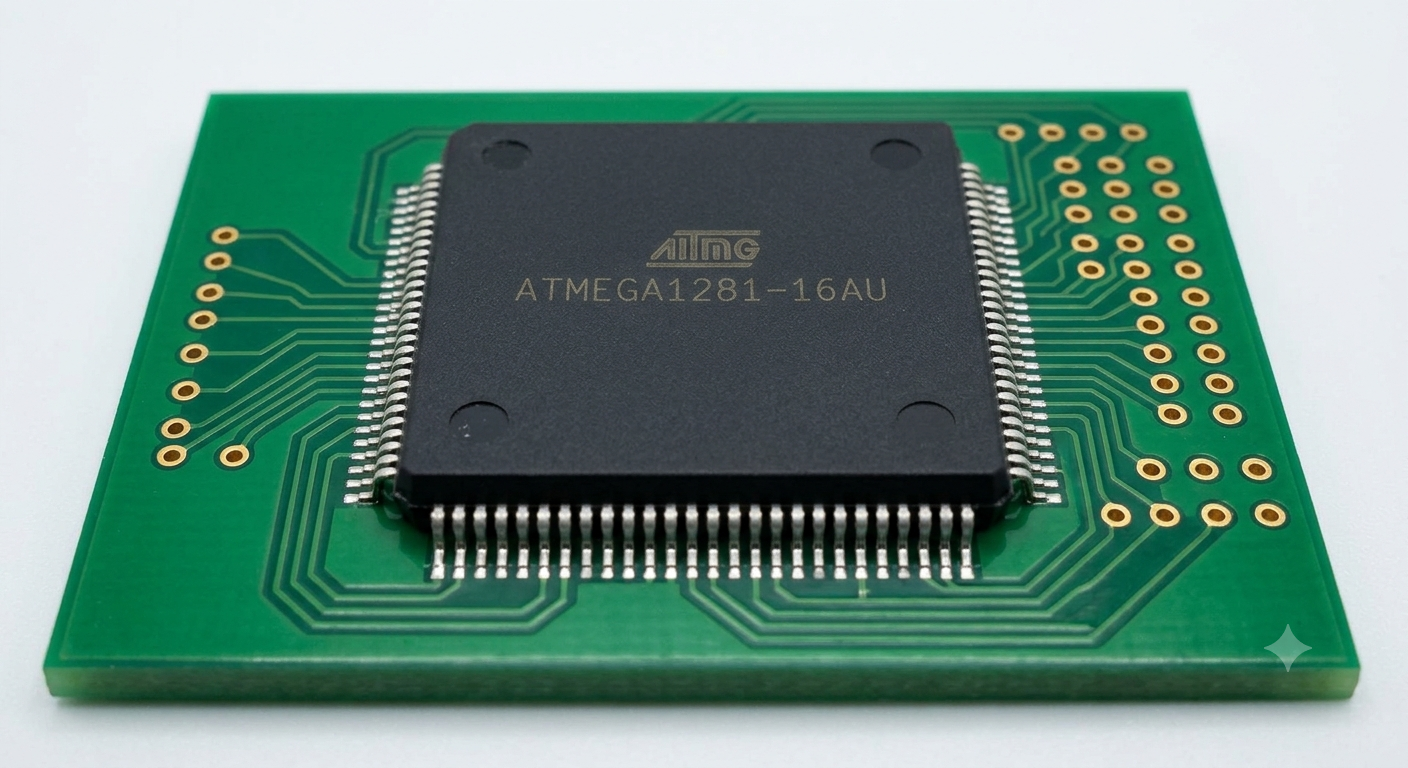
Po pełnym uwidocznieniu obwodów wewnętrznych pod mikroskopem o dużym powiększeniu wykorzystujemy specjalistyczny sprzęt do obejścia wbudowanych bitów blokady i zabezpieczających bezpieczników kodu, które uniemożliwiają zewnętrzne polecenia odczytu mikrokontrolera AVR ATMEGA1281.
Poprzez precyzyjną regulację poziomów napięcia lub zastosowanie lokalnego mikrosondowania bezpośrednio na układzie konfiguracji pamięci, nasz zespół może tymczasowo zmodyfikować stan sprzętu bez uszkadzania MCU AVR ATMEGA1281.
Pozwala to odzyskać chronione firmware, dane binarne i parametry konfiguracyjne bezpośrednio z ukrytych sektorów pamięci i pamięci flash.
Końcowym rezultatem tej precyzyjnej procedury laboratoryjnej jest czysty i zweryfikowany plik szesnastkowy, który wiernie odwzorowuje każdą oryginalną instrukcję maszynową.
– Two 8-bit Timer/Counters with Separate Prescaler and Compare Mode
– Four 16-bit Timer/Counter with Separate Prescaler, Compare- and Capture Mode
– Real Time Counter with Separate Oscillator
– Four 8-bit PWM Channels
– Six/Twelve PWM Channels with Programmable Resolution from 2 to 16 Bits (ATmega1281/2561, ATmega640/1280/2560)
– Output Compare Modulator
– 8/16-channel, 10-bit ADC
– Two/Four Programmable Serial USART (ATmega1281/2561,ATmega640/1280/2560)
– Master/Slave SPI Serial Interface
– Byte Oriented 2-wire Serial Interface
– Programmable Watchdog Timer with Separate On-chip Oscillator after Reverse engineering Microcontroller
– On-chip Analog Comparator
– Interrupt and Wake-up on Pin Change
Special Microcontroller Features
– Power-on Reset and Programmable Brown-out Detection
– Internal Calibrated Oscillator
– External and Internal Interrupt Sources when Reverse engineering Microcontroller
– Six Sleep Modes: Idle, ADC Noise Reduction, Power-save, Power-down, Standby, and Extended Standby
I/O and Packages

Jakmile jsou vnitřní obvody plně viditelné pod vysoce zvětšující mikroskopií, používáme specializované vybavení pro obejití vestavěných zamykacích bitů a ochranných pojistek kódu, které blokují externí příkazy čtení mikrokontroléru AVR ATMEGA1281.
Přesným nastavením interních napěťových úrovní nebo lokalizovaným mikrosondováním přímo na konfiguraci paměti může náš tým dočasně změnit hardwarový stav bez poškození MCU AVR ATMEGA1281.
To umožňuje získat chráněný firmware, binární data a konfigurační parametry přímo ze skrytých sektorů flash a paměti.
Výsledkem tohoto pečlivého laboratorního postupu je čistý a ověřený hexadecimální soubor, který přesně zachycuje všechny původní strojové instrukce.
– 51/86 Programmable I/O Lines (ATmega1281/2561, ATmega640/1280/2560)
– 64-lead (ATmega1281/2561)
– 100-lead (ATmega640/1280/2560)
– 100-lead TQFP (64-lead TQFP Option)
Temperature Range:
– -40°C to 85°C Industrial if Reverse engineering Microcontroller
Speed Grade:
Programmable Flash
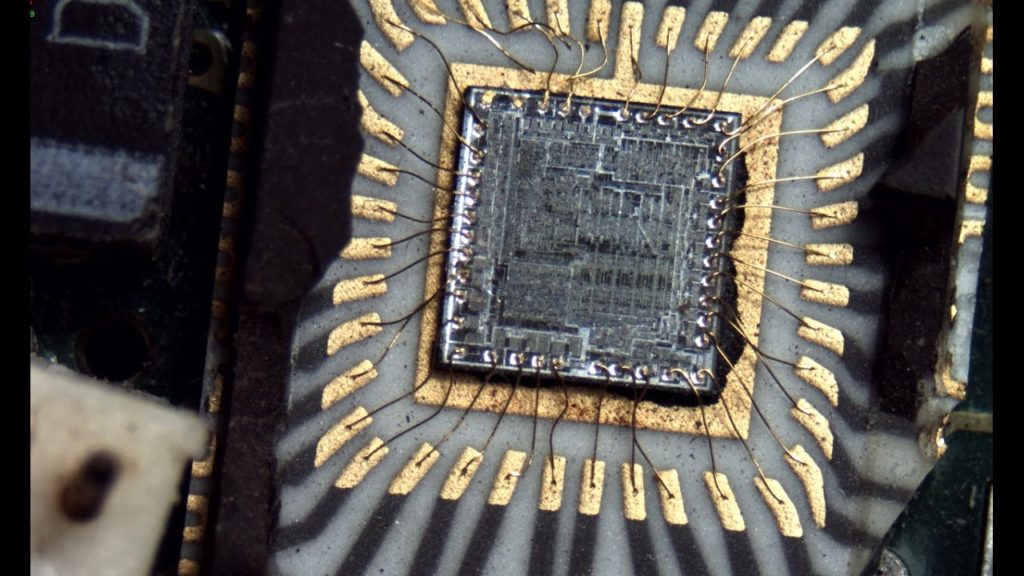
Overriding the high-level security architecture of a locked AVR chip requires deep expertise in physical semiconductor manipulation and electrical engineering. To successfully attack, break, and decode the internal readout protections natively built into this chip, our lab technicians first decapsulate the outer protective plastic packaging of the integrated circuit to expose the raw silicon die underneath. Once the internal circuitry is completely visible under high-magnification microscopy, we deploy specialized equipment to bypass the embedded lock bits and protective code fuses that prevent external read commands. By precisely adjusting the internal voltage levels or using localized micro-probing directly on the memory configuration layout, our team can temporarily modify the hardware state without damaging the chip. This allows us to retrieve the tightly guarded firmware, binary data, and configuration parameters directly out of the hidden flash and memory sectors. The final output of this meticulous laboratory procedure is a pristine, verified heximal file that perfectly captures every original machine command.
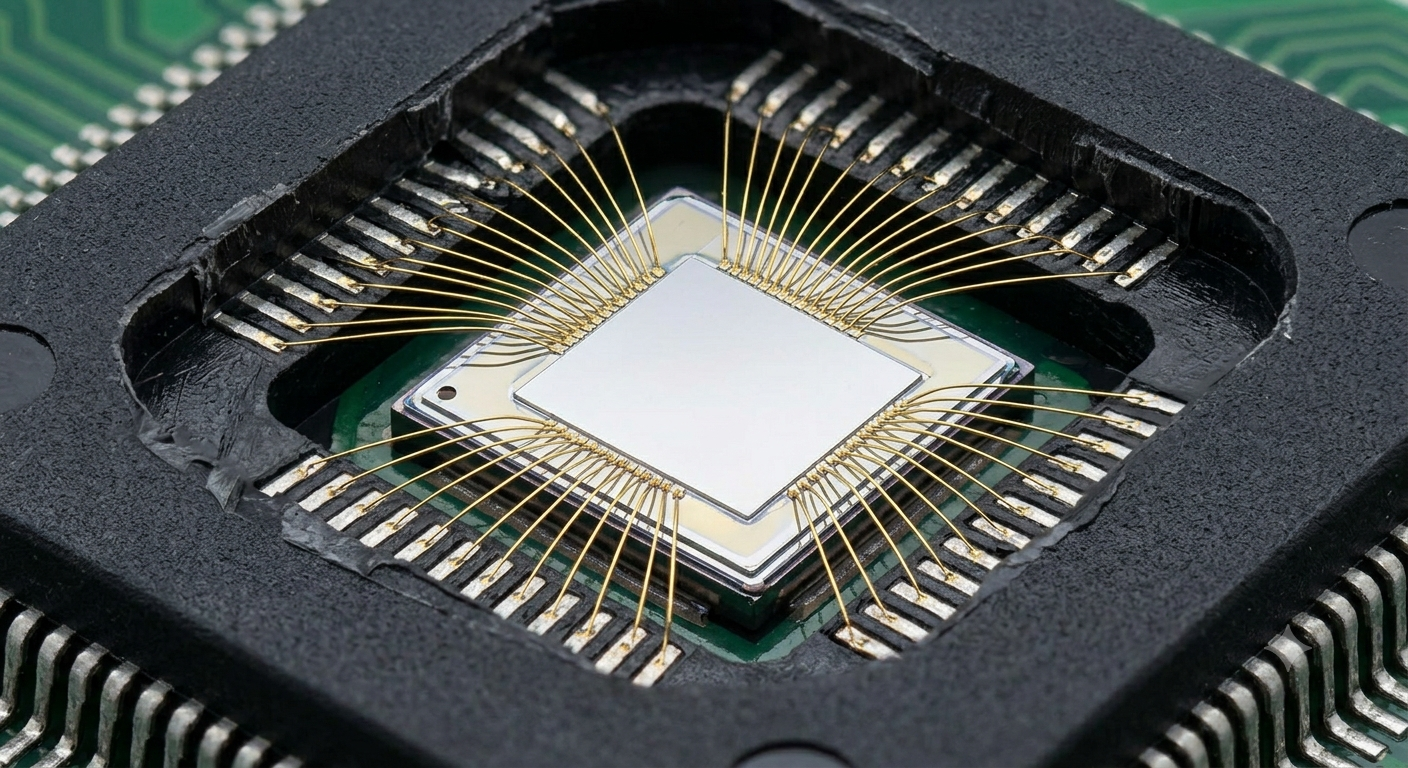
След като вътрешната схема стане напълно видима под високократна микроскопия, използваме специализирано оборудване за заобикаляне на вградените заключващи битове и защитните кодови предпазители, които блокират външните команди за прочит на микроконтролера AVR ATMEGA1281.
Чрез прецизно регулиране на вътрешните нива на напрежение или използване на локализирано микросондиране директно върху конфигурацията на паметта, нашият екип може временно да промени хардуерното състояние без да повреди AVR ATMEGA1281 MCU.
Това позволява извличането на защитен фърмуер, бинарни данни и конфигурационни параметри директно от скритите Flash и паметни области.
Крайният резултат от тази прецизна лабораторна процедура е чист и проверен шестнадесетичен файл, който точно възпроизвежда всяка оригинална машинна команда.
Replicating Firmware to Protect Long-Term Manufacturing Continuity
The ultimate purpose of choosing to hack, duplicate, or extract code from a secured microcontroller layout is to eliminate single-point supply chain vulnerabilities and prevent the extreme costs of a ground-up software redesign. When access to an active product archive is lost, engineers utilize our specialized extraction services to safely salvage the vital logic required to clone and maintain the device’s exact operational performance. Whether the target control routines are stored inside the primary memory blocks or associated external PLD elements, our reading tools pull every byte of information safely. Once our team successfully extracts the raw program file, your developers gain the immediate capability to duplicate the software behavior onto a modern, readily available replacement microcontroller. This comprehensive recovery ensures you can maintain absolute system continuity, compile a fresh software backup, and confidently manufacture drop-in replacement boards without experiencing unexpected line stoppages or market obsolescence.
Strategic Advantages and Real-World Benefits for the End User
Partnering with an elite laboratory to decode and extract encrypted or protected hardware software provides immense technical and financial benefits to product managers and maintenance engineers alike. Instead of spending months of expensive engineering time attempting to manually reverse-engineer and re-code a complex system from scratch—which invariably introduces fresh programming bugs—our laboratory provides a direct pipeline to a functional, verified binary file. This complete structural continuity ensures that every newly produced duplicate board behaves exactly like the original, field-tested units your customers depend on daily. Our custom extraction service effectively eliminates the typical supply chain risks associated with obsolete chips, safeguards your intellectual property from losing its utility, and gives you a stable, long-term foundation to manage your hardware deployments smoothly for decades to come.
 Posted in Reverse Engineer Microcontroller