 Retrieve Encrypted GD32F330R8T6 Code: LQFP64 64 KB Recovery
 August 25th, 2014 |
 Author:
The GD32F330R8T6 sits at the top of the F330 family’s packaging: an LQFP64 body with 55 GPIO, 64 KB of flash and 16 KB of SRAM — twice the SRAM of any smaller F330 — around a Cortex-M4 core at 84 MHz. Chips with this many pins are system controllers, not bit players, and the firmware inside them tends to be the largest and least documented in the building. To retrieve encrypted GD32F330R8T6 code is a straightforward statement of the job: get the 64 KB past the read protection, then turn it into code a maintenance engineer can actually work with.
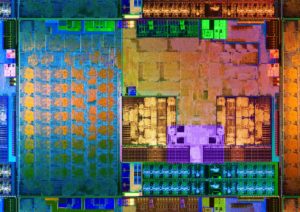
The family’s largest footprint
Sixty-four leads change what the chip is asked to do. The R8T6 drives displays, talks to several peripherals at once, and often carries the parts of the application the customer most wants back — communication protocols, calibration logic, the state machines that make the product a product. The extra 8 KB of SRAM hints at an application that used its memory budget seriously. All of that lives in the flash array, and none of it is archived anywhere else.
The lock is no different
Family consistency works in our favour here. The protection is the standard option-byte security level, sampled by the flash controller out of reset: level 1 blocks both the debug port and the USART bootloader from the main array while the application keeps running, and level 2 seals the part permanently. The failure a customer reports is always the same — a board that works and a programmer that sees nothing. The route past it is the timed-fault method we use across the line, documented for the GD32F330C8T6 and the wider flash recovery flow, and the LQFP64’s accessible pins make the fault delivery stable.
Reading the array
With the check fallen through, the 64 KB streams out in a single session, captured twice and checksummed before anyone trusts it. The option bytes come with the read so the report states the original lock level — important if replacement parts are ever programmed to match the fleet. Nothing in the process erases or stresses the array; the image either comes out whole or the attempt is reported honestly.
From image to working code
| Stage | Output | Purpose |
|---|---|---|
| Verified binary | Complete 64 KB image | The master copy, checksummed |
| Disassembly | Documented program flow | Understanding and audit |
| Rebuilt source | Editable C where scoped | Long-term maintenance |
| Donor image | Clone-ready file | Replacement hardware |
Most R8T6 jobs want more than the binary. The disassembly maps the vector table and interrupt handlers, identifies version strings, and shows which of the 55 GPIO the firmware actually drives. Where a rebuild is in scope, the recovered structure becomes editable C — the same reconstruction we describe for the GD32F330K6U6 source code jobs, scaled to a larger image.
How the R8T6 compares with its siblings
The protection architecture is shared right across the GigaDevice M4 lines, so experience with the GD32F330F8P6TR clones on TSSOP20, the GD32F330K8U6 duplications on QFN32, and the connectivity-line parts we handle such as the GD32F305VET6 transfers directly. What changes between them is capture size and handling, not principle.
Why the SRAM matters here
The R8T6’s 16 KB of SRAM is the largest in the F330 family, and although SRAM is volatile and does not survive power loss, the applications that need it tend to be the ones with the most to recover. A larger working memory means a larger, more structured codebase, and that changes how the disassembly is read — more state, more buffers, more interrupt-driven logic to reconstruct. The recovery itself targets the flash, where the program and its data pages live; the SRAM budget is the reason the flash is worth this much effort to bring back intact. For boards built around this part, that intact image is usually the difference between a maintained product and a dead one, which is why the double-read discipline is non-negotiable on a part this central.
Delivery
A retrieval returns the verified binary, the option-byte state, the disassembly or rebuilt source as agreed, and a checksum report tying every file to the original read. Send the locked chip or the board it controls — with a part this central, the board schematic is always welcome, but the chip alone is enough to start.
 Posted in Recover MCU