Archive for the ‘Recover Chip’ Category

PostHeaderIcon Recover Chip PIC16F689 Flash

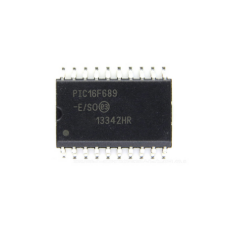
When a device depends on a Microchip PIC16F689 for control, timing, or sensor interfacing, losing access to the on-chip flash or EEPROM can halt production, disrupt service, or erase critical calibration data. Our service, searchable under the keyword Recover Chip PIC16F689 Flash, helps legitimate owners and authorized technicians open, readout, restore, and duplicate the firmware/binary/heximal contents of this microcontroller while maintaining strict legal, ethical, and confidentiality standards. We emphasize recovery and preservation — not publishing methods to crack or illegally hack protections.
Zaščiten mikrokontroler Microchip PIC16F689 združuje programski bliskovni pomnilnik, EEPROM in periferne naprave z mešanimi signali v kompaktnem ohišju. Njegova postavitev pomnilnika in konfiguracijski biti na čipu vplivajo na to, kako se izvorna koda (če je na voljo) preslika v surove datoteke in kako se shranjujejo občutljivi podatki o kalibraciji. Ker številne zasnove uporabljajo zaščitne nastavitve za preprečevanje nepooblaščenega kopiranja, je treba obnovitev skrbno načrtovati, da se izognemo poškodbi dragocenih podatkov. Naša prizadevanja so usmerjena v etično obnovitev. Storitve vključujejo: validirano ekstrakcijo zaščitnih slik mikroprocesorja Microchip PIC16F689 na čipu, ki ustvarjajo heksimalne ali binarne izpise (kjer je to zakonito), preverjanja integritete in dokumentirano preverjanje ter povzetke razstavljanja na visoki ravni, ki inženirjem pomagajo pri interpretaciji obnovljenega programa. Pomagamo lahko pri obnovi šifriranega mikrokontrolerja Microchip PIC16F689 v delovanje z uporabo obnovljenih slik in pri pripravi migracijskih paketov za nadomestne plošče. Ne ponujamo podrobnih navodil za vdor, dešifriranje ali obhod proizvajalčevih zaščit – vsa dela se izvajajo le z dokazilom o lastništvu ali izrecnim pooblastilom.

The PIC16F689 is commonly embedded in devices where small, reliable control programs and configuration archives are essential. Clients come to us to restore corrupted program files, copy firmware for authorized spares provisioning, clone configuration data for scaled deployment, or duplicate critical archives before servicing legacy systems. In many scenarios the firmware or memory image is protected, locked, or encrypted by design, so an authorized recovery partner is required to retrieve usable program files without risking further damage.
Recover Chip PIC16F689 Flash

We can Recover Chip PIC16F689 Flash, please view the CHIP PIC16F689 features below for your reference:

High-Performance RISC CPU:

· Only 35 Instructions to Learn:

– All single-cycle instructions except branches

· Operating Speed:

– DC – 20 MHz oscillator/clock input

– DC – 200 ns instruction cycle

· Interrupt Capability

· 8-level Deep Hardware Stack

Low-Power Features:

The PIC16F689’s blend of I/O, timers, and analog features makes it popular across many industries:

  • Consumer electronics and appliance controllers.
  • Industrial monitoring and simple automation modules.
  • Instrumentation such as small data loggers and measurement front-ends.
  • Aftermarket automotive or specialty embedded projects that rely on compact, efficient code.

In these contexts, recovered binary or heximal files enable quicker repairs, validated backups, and smoother migration to replacement hardware.
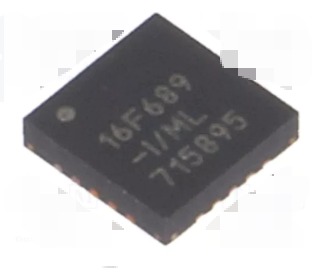
Zabezpečený mikrokontrolér Microchip PIC16F689 integruje programovou flash paměť, EEPROM a periferie se smíšenými signály v kompaktním pouzdře. Jeho rozložení paměti a konfigurační bity na čipu ovlivňují, jak se zdrojový kód (pokud je k dispozici) mapuje na nezpracované soubory a jak jsou uložena citlivá kalibrační data. Protože mnoho návrhů používá ochranná nastavení, aby se zabránilo neoprávněnému kopírování, musí být obnova pečlivě naplánována, aby se zabránilo poškození cenných dat. Naše zakázky jsou zaměřeny na etickou obnovu. Služby zahrnují: validovanou extrakci ochranných obrazů mikroprocesoru Microchip PIC16F689 na čipu, která vytváří heximální nebo binární výpisy (pokud je to zákonné), kontroly integrity a dokumentované ověření a shrnutí disassembleru na vysoké úrovni, které pomáhají inženýrům interpretovat obnovený program. Můžeme vám pomoci s obnovením provozu šifrovaného mikrokontroléru Microchip PIC16F689 pomocí obnovených obrazů a s přípravou migračních balíčků pro náhradní desky. Neposkytujeme podrobné pokyny k prolomení, dešifrování nebo obcházení ochranných zařízení výrobce – veškerá práce se provádí pouze s dokladem o vlastnictví nebo výslovným povolením.

· Standby Current:

– 50 nA @ 2.0V, typical

· Operating Current:

– 11 ìA @ 32 kHz, 2.0V, typical

– 220 ìA @ 4 MHz, 2.0V, typical

· Watchdog Timer Current:

– 1 ìA @ 2.0V, typical


· Direct, Indirect and Relative Addressing modes

Peripheral Features:


Special Microcontroller Features:

· Precision Internal Oscillator:

– Factory calibrated to ±1%

– Software selectable frequency range of 8 MHz to 125 kHz

– Software tunable

– Two-Speed Start-Up mode

– Crystal fail detect for critical applications

– Clock mode switching during operation for power savings

· Power-Saving Sleep mode

· Wide Operating Voltage Range (2.0V-5.5V)

· Industrial and Extended Temperature Range

· Power-on Reset (POR)

· Power-up Timer (PWRT) and Oscillator Start-up Timer (OST)

· Brown-out Reset (BOR) with Software Control Option
Apsaugotas „Microchip PIC16F689“ mikrovaldiklis kompaktiškame korpuse integruoja programos „flash“ atmintį, EEPROM ir mišraus signalo periferinius įrenginius. Jo atminties išdėstymas ir konfigūracijos bitai luste daro įtaką tam, kaip šaltinio kodas (jei yra) susiejamas su neapdorotais failais ir kaip saugomi jautrūs kalibravimo duomenys. Kadangi daugelyje konstrukcijų taikomi apsauginiai nustatymai, siekiant užkirsti kelią neteisėtam kopijavimui, atkūrimas turi būti kruopščiai suplanuotas, kad būtų išvengta vertingų duomenų sugadinimo. Mūsų užduotys yra orientuotos į etišką atkūrimą. Paslaugos apima: patvirtintą „Microchip PIC16F689“ apsauginio mikroprocesoriaus luste esančių vaizdų išgavimą, sukuriant šešioliktainius arba dvejetainius išklotinius (kur tai leidžiama), vientisumo patikrinimus ir dokumentuotą patvirtinimą, bei aukšto lygio išardymo santraukas, kurios padeda inžinieriams interpretuoti atkurtą programą. Galime padėti atkurti užšifruotą „Microchip PIC16F689“ mikrovaldiklį, naudojant atkurtus vaizdus, ​​ir paruošti perkėlimo paketus pakeitimo plokštėms. Mes neteikiame nuoseklių instrukcijų, kaip nulaužti, iššifruoti ar apeiti gamintojo apsaugą – visi darbai atliekami tik turint nuosavybės įrodymą arba aiškų leidimą.

· Enhanced Low-Current Watchdog Timer (WDT) with on-chip oscillator (software selectable nominal 268 seconds with full prescaler) with software enable

· Multiplexed Master Clear with Weak Pull-up or Input Only Pin

· Programmable Code Protection

· High-Endurance Flash/EEPROM Cell:

– 100,000 write Flash endurance

– 1,000,000 write EEPROM endurance

– Flash/Data EEPROM retention: > 40 years

· 12 I/O Pins with Individual Direction Control:

– High-current source/sink for direct LED drive

– Interrupt-on-change pin

– Individually programmable weak pull-ups

– Ultra Low-Power Wake-up

· Analog Comparator module with:

– Two analog comparators

– Programmable On-chip Voltage Reference (CVREF) module (% of VDD)

– Comparator inputs and outputs externally accessible

· A/D Converter:

– 10-bit resolution and 8 channels

· Timer0: 8-bit Timer/Counter with 8-bit Programmable Prescaler

· Enhanced Timer1:

– 16-bit timer/counter with prescaler

– External Timer1 Gate (count enable)

– Option to use OSC1 and OSC2 in LP mode as Timer1 oscillator if INTOSC mode selected

· Enhanced USART Module:

– Supports RS-485, RS-232, LIN 2.0/2.1 and J2602

– Auto-Baud Detect

– Auto-wake-up on Start bit

· In-Circuit Serial Programming™ (ICSP™) via two pins
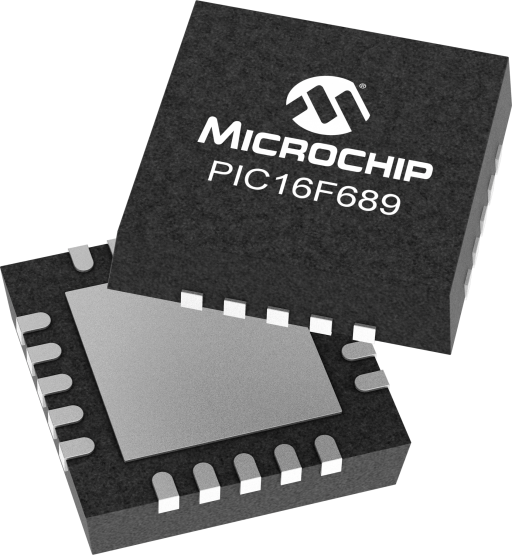
Turvaline Microchip PIC16F689 mikrokontroller integreerib programmi välkmälu, EEPROM-i ja segasignaaliga välisseadmed kompaktsesse korpusesse. Selle mälupaigutus ja kiibil olevad konfiguratsioonibitid mõjutavad seda, kuidas lähtekood (kui see on saadaval) toorfailideks kaardistatakse ja kuidas tundlikke kalibreerimisandmeid salvestatakse. Kuna paljud konstruktsioonid rakendavad volitamata kopeerimise vältimiseks kaitseseadeid, tuleb taastamine hoolikalt planeerida, et vältida väärtuslike andmete rikkumist. Meie ülesanded on suunatud eetilisele taastamisele. Teenused hõlmavad järgmist: Microchip PIC16F689 kaitsva mikroprotsessori kiibil olevate kujutiste valideeritud ekstraheerimine, mis loob heksa- või binaarseid koopiaid (kui see on seaduslik), terviklikkuse kontrollid ja dokumenteeritud verifitseerimine ning kõrgetasemelised lahtivõtmise kokkuvõtted, mis aitavad inseneridel taastatud programmi tõlgendada. Saame abistada Microchip PIC16F689 krüptitud mikrokontrolleri töökorras taastamisel taastatud kujutiste abil ja migratsioonipakettide ettevalmistamisel asendusplaatide jaoks. Me ei paku samm-sammult juhiseid tootja kaitse murdmiseks, dekrüpteerimiseks või möödahiilimiseks – kogu töö tehakse ainult omandiõiguse tõendi või selgesõnalise volituse olemasolul.

The PIC16F689 integrates program flash, EEPROM, and mixed-signal peripherals in a compact package. Its memory layout and on-chip configuration bits influence how the source code (if available) maps to raw files and how sensitive calibration data is stored. Because many designs apply protective settings to prevent unauthorized copying, recovery must be planned carefully to avoid corrupting valuable data.

What we provide (high level & non-actionable)

Our engagements are oriented around ethical recovery. Services include: validated extraction of on-chip images producing heximal or binary dumps (where lawful), integrity checks and documented verification, and high-level disassembly summaries to help engineers interpret the recovered program. We can assist with restoring devices to operation using recovered images and preparing migration packages for replacement boards. We do not provide step-by-step instructions to crack, decrypt, or bypass manufacturer protections — all work is performed only with proof of ownership or explicit authorization.

Conceptual workflow and purpose

A responsible recovery effort begins with authorization and a risk assessment. Non-destructive techniques are used to obtain a reliable memory archive, which is then validated and annotated. The primary purpose is practical: reduce downtime, secure backups, enable authorized copying or cloning, and preserve investment in specialized hardware.

Benefits and limitations

Clients gain rapid restoration of functionality, secure copies of previously inaccessible firmware and configuration archives, and the ability to duplicate systems for authorized maintenance. Limitations can include partial corruption, proprietary integrity checks, or layered locked settings — outcomes that may restrict full source-level recovery. We make feasibility and likely results clear before work begins.

Legal & ethical safeguards

Every project requires ownership verification and a confidentiality agreement. Our mission is to unlock and recover embedded software for lawful, constructive purposes only — repair, continuity, authorized audit, and migration.

If you need to Recover Chip PIC16F689 Flash for legitimate recovery or maintenance, our experienced team provides confidential, professional support to retrieve and document embedded firmware while protecting your IP and operational continuity.

PostHeaderIcon Recover Microcontroller TMS320F2812PGFA Firmware

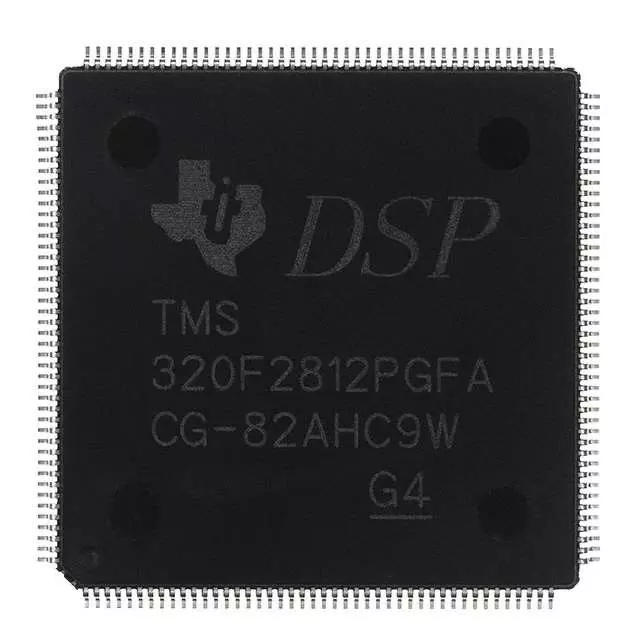
The Texas Instruments TMS320F2812PGFA is a powerful digital signal processor (DSP) microcontroller widely used in high-performance industrial and automotive applications. Its ability to handle complex real-time control systems makes it a cornerstone in embedded designs such as motor drives, robotics, power conversion, and automotive electronics. However, with its advanced functionality comes sophisticated security mechanisms, designed to keep its firmware protected from unauthorized access. When the original source code, binary, or heximal file becomes inaccessible due to locked or encrypted flash memory, the need arises to recover microcontroller TMS320F2812PGFA firmware for further analysis, modification, or duplication.
Existem inúmeras situações em que engenheiros ou usuários finais podem precisar restaurar ou recuperar o firmware deste microcontrolador protegido TMS320F2812PGFA. O arquivo original do programa pode ser perdido, corrompido ou armazenado em arquivos obsoletos. Em outros casos, as empresas podem precisar copiar ou clonar o firmware de um chip protegido para outro para reparo, teste ou duplicação em massa. Os bits de fusível de proteção do TMS320F2812PGFA, uma vez ativados, restringem o acesso normal à memória, tornando as ferramentas de leitura convencionais ineficazes. Isso cria a necessidade de técnicas especializadas para desbloquear ou abrir o dispositivo. Recuperar firmware protegido ou criptografado do microcontrolador TMS320F2812PGFA criptografado requer experiência avançada, métodos precisos e um conhecimento de segurança de hardware e software. Ao aplicar técnicas comprovadas para quebrar memória bloqueada, decodificar dados binários e desbloquear arquivos de programa criptografados do microprocessador TMS320F2812PGFA protegido, é possível restaurar o firmware original e duplicá-lo do microprocessador de proteção TMS320F2812PGFA para aplicações práticas. Isso garante que sistemas embarcados valiosos continuem operando com eficiência, ao mesmo tempo que permite que engenheiros analisem e aprimorem projetos existentes.

Why Recovery Services Are Needed

There are countless situations where engineers or end users may need to restore or recover the firmware from this secured device. The original program file may be lost, corrupted, or stored in obsolete archives. In other cases, businesses may need to copy or clone the firmware from one protected chip to another for repair, testing, or mass duplication. The protective fuse bits of the TMS320F2812PGFA, once enabled, restrict normal access to the memory, making conventional readout tools ineffective. This creates a need for specialized techniques to unlock or open the device.

Unique Features of the TMS320F2812PGFA

This microcontroller offers unique advantages that make it a preferred choice across industries:

  • High-Performance DSP Core: Capable of handling advanced algorithms in real-time.
  • Extensive On-Chip Memory: Integrated flash and RAM for storing data, firmware, and critical program files.
  • Peripheral Integration: Includes ADCs, communication interfaces, and PWM modules for motor and control systems.
  • Security Features: Locking mechanisms and encryption options designed to protect sensitive firmware.

Because of these features, recovering firmware from this chip requires not just basic tools, but deep technical expertise in bypassing secured mechanisms without damaging the device.

General Steps in Breaking Protection
Existen innumerables situaciones en las que los ingenieros o usuarios finales podrían necesitar restaurar o recuperar el firmware de este MCU protegido TMS320F2812PGFA. El archivo de programa original podría perderse, corromperse o almacenarse en archivos obsoletos. En otros casos, las empresas podrían necesitar copiar o clonar el firmware de un chip protegido a otro para su reparación, prueba o duplicación masiva. Los fusibles de protección del TMS320F2812PGFA, una vez activados, restringen el acceso normal a la memoria, lo que hace ineficaces las herramientas de lectura convencionales. Esto crea la necesidad de técnicas especializadas para desbloquear o abrir el dispositivo. Recuperar el firmware protegido o cifrado del microcontrolador TMS320F2812PGFA cifrado requiere experiencia avanzada, métodos precisos y un buen conocimiento de la seguridad tanto de hardware como de software. Al aplicar técnicas probadas para desbloquear memoria bloqueada, decodificar datos binarios y desbloquear archivos de programa cifrados del MCU TMS320F2812PGFA protegido, es posible restaurar el firmware original y duplicarlo desde el microprocesador TMS320F2812PGFA para aplicaciones prácticas. Esto garantiza que los valiosos sistemas embebidos sigan funcionando eficientemente, a la vez que permite a los ingenieros analizar y mejorar los diseños existentes.

Although exact methods vary depending on chip configuration, the general process for cracking or decoding protected microcontrollers like the TMS320F2812PGFA involves several stages:

  1. Device Analysis – Identifying the locked memory regions, security fuse states, and encryption measures applied.
  2. Physical or Logical Access – Applying precision tools to interface with memory and bypass protective barriers.
  3. Disabling Fuse Bit Protection – Specialized methods are used to neutralize fuse-bit restrictions without corrupting stored data.
  4. Firmware Extraction – Once unlocked, the heximal firmware is read out from flash, EEPROM, or other memory banks.
  5. Conversion & Reconstruction – The extracted binary or data file is decoded into a usable format, sometimes decompiled into C/C++ source code for easier analysis.
  6. Verification & Duplication – The recovered firmware is validated and can be duplicated, copied, or cloned onto new devices as required.

Applications Across Industries

The TMS320F2812PGFA is commonly embedded in:

  • Industrial Automation Systems – Robotics, motor drives, and process controllers.
  • Automotive Electronics – Engine management, braking, and safety systems.
  • Power Systems – Renewable energy inverters, UPS units, and high-efficiency converters.
  • Aerospace and Defense – Rugged control systems requiring reliable real-time DSP performance.

In each of these fields, losing access to the embedded firmware could mean costly downtime or inability to restore critical equipment. That is why professional services to recover microcontroller TMS320F2812PGFA firmware are invaluable.
Recover Microcontroller TMS320F2812PGFA Firmware

We can Recover Microcontroller TMS320F2812PGFA Firmware, please view below the Microcontroller TMS320F2812PGFA features for your reference:

High-Performance Static CMOS Technology

– 150 MHz (6.67-ns Cycle Time)

– Low-Power (1.8-V Core at 135 MHz, 1.9-V Core at 150 MHz, 3.3-V I/O) Design

· JTAG Boundary Scan Support (1)

· High-Performance 32-Bit CPU ( TMS320C28x™)

– 16 x 16 and 32 x 32 MAC Operations

– 16 x 16 Dual MAC

– Harvard Bus Architecture

– Atomic Operations

– Fast Interrupt Response and Processing

– Unified Memory Programming Model

– 4M Linear Program/Data Address Reach

– Code-Efficient (in C/C++ and Assembly)
Il existe d'innombrables situations où les ingénieurs ou les utilisateurs finaux peuvent avoir besoin de restaurer ou de récupérer le micrologiciel de ce microcontrôleur sécurisé TMS320F2812PGFA. Le fichier programme original peut être perdu, corrompu ou stocké dans des archives obsolètes. Dans d'autres cas, les entreprises peuvent avoir besoin de copier ou de cloner le micrologiciel d'une puce protégée vers une autre à des fins de réparation, de test ou de duplication en masse. Une fois activés, les fusibles de protection du TMS320F2812PGFA restreignent l'accès normal à la mémoire, rendant les outils de lecture conventionnels inefficaces. Il est donc nécessaire de recourir à des techniques spécialisées pour déverrouiller ou ouvrir le dispositif. La récupération du micrologiciel protégé ou chiffré du microcontrôleur TMS320F2812PGFA chiffré requiert une expertise pointue, des méthodes précises et une compréhension approfondie de la sécurité matérielle et logicielle. En appliquant des techniques éprouvées pour déchiffrer la mémoire verrouillée, décoder les données binaires et déverrouiller les fichiers programmes chiffrés du microcontrôleur TMS320F2812PGFA sécurisé, il est possible de restaurer le micrologiciel d'origine et de le dupliquer à partir du microprocesseur de protection TMS320F2812PGFA pour des applications pratiques. Cela garantit le bon fonctionnement des systèmes embarqués, tout en permettant aux ingénieurs d'analyser et d'améliorer les conceptions existantes.
Il existe d’innombrables situations où les ingénieurs ou les utilisateurs finaux peuvent avoir besoin de restaurer ou de récupérer le micrologiciel de ce microcontrôleur sécurisé TMS320F2812PGFA. Le fichier programme original peut être perdu, corrompu ou stocké dans des archives obsolètes. Dans d’autres cas, les entreprises peuvent avoir besoin de copier ou de cloner le micrologiciel d’une puce protégée vers une autre à des fins de réparation, de test ou de duplication en masse. Une fois activés, les fusibles de protection du TMS320F2812PGFA restreignent l’accès normal à la mémoire, rendant les outils de lecture conventionnels inefficaces. Il est donc nécessaire de recourir à des techniques spécialisées pour déverrouiller ou ouvrir le dispositif. La récupération du micrologiciel protégé ou chiffré du microcontrôleur TMS320F2812PGFA chiffré requiert une expertise pointue, des méthodes précises et une compréhension approfondie de la sécurité matérielle et logicielle. En appliquant des techniques éprouvées pour déchiffrer la mémoire verrouillée, décoder les données binaires et déverrouiller les fichiers programmes chiffrés du microcontrôleur TMS320F2812PGFA sécurisé, il est possible de restaurer le micrologiciel d’origine et de le dupliquer à partir du microprocesseur de protection TMS320F2812PGFA pour des applications pratiques. Cela garantit le bon fonctionnement des systèmes embarqués, tout en permettant aux ingénieurs d’analyser et d’améliorer les conceptions existantes.

– TMS320F24x/LF240x Processor Source Code Compatible to Copy microcontroller

· On-Chip Memory

– Flash Devices: Up to 128K x 16 Flash (Four 8K x 16 and Six 16K x 16 Sectors)

– ROM Devices: Up to 128K x 16 ROM

– 1K x 16 OTP ROM

– L0 and L1: 2 Blocks of 4K x 16 Each Single-Access RAM (SARAM)

– H0: 1 Block of 8K x 16 SARAM

– M0 and M1: 2 Blocks of 1K x 16 Each SARAM

· Boot ROM (4K x 16)

– With Software Boot Modes

– Standard Math Tables

· External Interface (2812)

– Over 1M x 16 Total Memory

– Programmable Wait States

– Programmable Read/Write Strobe Timing

– Three Individual Chip Selects

· Endianness: Little Endian

· Clock and System Control

– Dynamic PLL Ratio Changes Supported

– On-Chip Oscillator

– Watchdog Timer Module

· Three External Interrupts

· Peripheral Interrupt Expansion (PIE) Block That Supports 45 Peripheral Interrupts

· Three 32-Bit CPU-Timers

· 128-Bit Security Key/Lock

– Protects Flash/ROM/OTP and L0/L1 SARAM

– Prevents Firmware Reverse-Engineering

· Motor Control Peripherals

– Two Event Managers (EVA, EVB)

– Compatible to 240xA Devices

· Serial Port Peripherals

– Serial Peripheral Interface (SPI)

– Two Serial Communications Interfaces (SCIs), Standard UART

– Enhanced Controller Area Network (eCAN)

– Multichannel Buffered Serial Port (McBSP)

· 12-Bit ADC, 16 Channels

– 2 x 8 Channel Input Multiplexer

– Two Sample-and-Hold

– Single/Simultaneous Conversions
Es gibt unzählige Situationen, in denen Ingenieure oder Endbenutzer die Firmware des gesicherten Mikrocontrollers TMS320F2812PGFA wiederherstellen müssen. Die ursprüngliche Programmdatei kann verloren gegangen, beschädigt oder in veralteten Archiven gespeichert sein. In anderen Fällen müssen Unternehmen die Firmware möglicherweise von einem geschützten Chip auf einen anderen kopieren oder klonen, um sie zu reparieren, zu testen oder massenhaft zu duplizieren. Die Schutzsicherungsbits des TMS320F2812PGFA schränken nach ihrer Aktivierung den normalen Zugriff auf den Speicher ein und machen herkömmliche Auslesetools unwirksam. Dies erfordert spezielle Techniken zum Entsperren oder Öffnen des Geräts. Die Wiederherstellung geschützter oder verschlüsselter Firmware vom verschlüsselten Mikrocontroller TMS320F2812PGFA erfordert fortgeschrittenes Fachwissen, präzise Methoden und ein Verständnis von Hardware- und Softwaresicherheit. Durch den Einsatz bewährter Techniken zum Knacken gesperrter Speicher, Dekodieren binärer Daten und Entsperren verschlüsselter Programmdateien der gesicherten MCU TMS320F2812PGFA ist es möglich, die Original-Firmware wiederherzustellen und sie für praktische Anwendungen vom geschützten Mikroprozessor TMS320F2812PGFA zu duplizieren. Dies stellt sicher, dass wertvolle eingebettete Systeme weiterhin effizient arbeiten, und ermöglicht es Ingenieuren gleichzeitig, bestehende Designs zu analysieren und zu verbessern.

– Fast Conversion Rate: 80 ns/12.5 MSPS

· Up to 56 General-Purpose I/O (GPIO) Pins

· Advanced Emulation Features

– Analysis and Breakpoint Functions

– Real-Time Debug via Hardware

· Development Tools Include

– ANSI C/C++ Compiler/Assembler/Linker

– Code Composer Studio™ IDE

– DSP/BIOS™

– JTAG Scan Controllers(1)

· Low-Power Modes and Power Savings

– IDLE, STANDBY, HALT Modes Supported

– Disable Individual Peripheral Clocks

Recovering protected or encrypted firmware from the TMS320F2812PGFA requires advanced expertise, precise methods, and an understanding of both hardware and software security. By applying proven techniques to crack locked memory, decode binary data, and unlock encrypted program files, it becomes possible to restore the original firmware and duplicate it for practical applications. This ensures that valuable embedded systems continue to operate efficiently, while also allowing engineers to analyze and improve upon existing designs.

PostHeaderIcon Recover MCU dsPIC30F6013A30IP Firmware

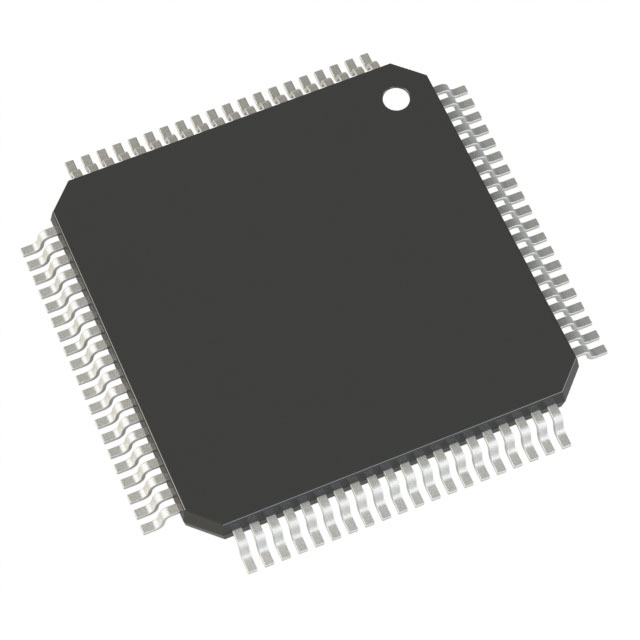
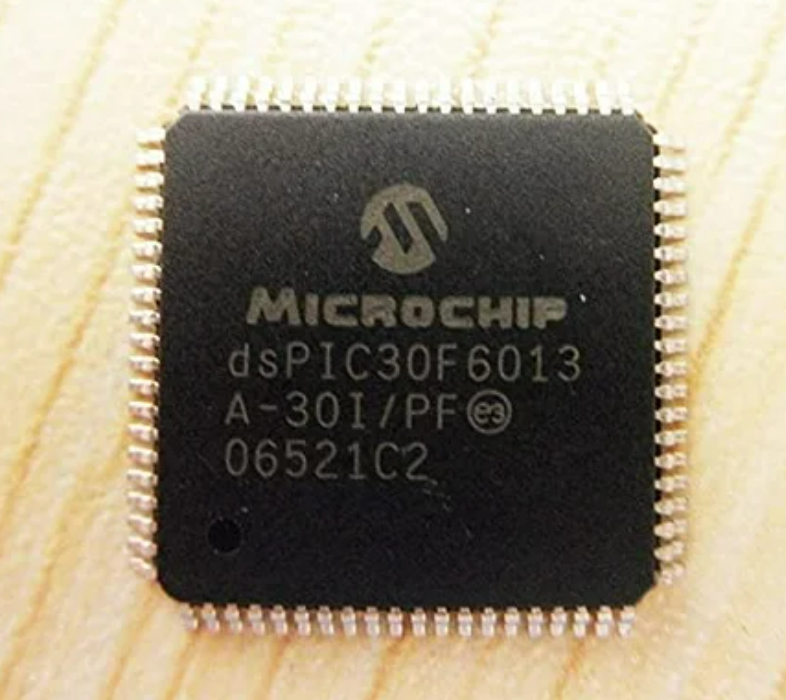
The Microchip dsPIC30F6013A is a powerful 16-bit Digital Signal Controller (DSC) widely adopted in industrial automation, automotive systems, medical devices, and high-performance embedded applications. Its combination of digital signal processing with traditional microcontroller capabilities makes it a popular choice for engineers who require real-time control and reliability. However, the very features that make this chip valuable—such as its protective lock bits, secured program memory, and encrypted data storage—also create challenges when users need to access or recover MCU dsPIC30F6013A firmware.
O firmware atua como o coração de qualquer projeto embarcado. Os arquivos binários ou hexagonais armazenados na memória flash, EEPROM e outras regiões de memória controlam todas as operações do sistema MCU Microchip dsPIC30F6013A. Quando esse firmware é corrompido, bloqueado ou inacessível, todo o dispositivo pode ficar inutilizável. A capacidade de restaurar, copiar ou duplicar o arquivo de programa original é essencial para manutenção, suporte a legados ou desenvolvimento posterior.
A recuperação do firmware do MCU dsPIC30F6013A é um processo complexo que requer experiência em engenharia reversa, bypass criptográfico e manuseio seguro de memória. Ao extrair e restaurar os arquivos de programa e dados protegidos deste versátil microcontrolador de proteção Microchip dsPIC30F6013A, é possível estender a vida útil de sistemas embarcados valiosos, replicar funções críticas ou simplesmente proteger contra perda de dados. Para as indústrias que dependem do microprocessador criptografado dsPIC30F6013A, a capacidade de recuperar seu firmware pode ser a chave para manter a competitividade e garantir a operação contínua de equipamentos vitais.
O firmware atua como o coração de qualquer projeto embarcado. Os arquivos binários ou hexagonais armazenados na memória flash, EEPROM e outras regiões de memória controlam todas as operações do sistema MCU Microchip dsPIC30F6013A. Quando esse firmware é corrompido, bloqueado ou inacessível, todo o dispositivo pode ficar inutilizável. A capacidade de restaurar, copiar ou duplicar o arquivo de programa original é essencial para manutenção, suporte a legados ou desenvolvimento posterior. A recuperação do firmware do MCU dsPIC30F6013A é um processo complexo que requer experiência em engenharia reversa, bypass criptográfico e manuseio seguro de memória. Ao extrair e restaurar os arquivos de programa e dados protegidos deste versátil microcontrolador de proteção Microchip dsPIC30F6013A, é possível estender a vida útil de sistemas embarcados valiosos, replicar funções críticas ou simplesmente proteger contra perda de dados. Para as indústrias que dependem do microprocessador criptografado dsPIC30F6013A, a capacidade de recuperar seu firmware pode ser a chave para manter a competitividade e garantir a operação contínua de equipamentos vitais.

Why Firmware Recovery Matters

Firmware serves as the heart of any embedded design. The binary or heximal files stored in the flash, EEPROM, and other memory regions control every operation of the system. When this firmware becomes corrupted, locked, or otherwise inaccessible, the entire device may be unusable. Being able to restore, copy, or duplicate the original program file is essential for maintenance, legacy support, or further development.

In many cases, manufacturers activate fuse bits to prevent outsiders from reading the firmware. While these security measures help protect intellectual property, they can also create difficulties for end users who legitimately need access to their own firmware. Our specialized service focuses on overcoming these barriers and providing a reliable path to recover the required data.

General Steps to Unlock Protected Firmware

Recovering dsPIC30F6013A firmware often involves several stages:

  1. Initial Device Analysis – Inspecting the target chip, identifying the security status, and verifying the condition of the flash and EEPROM.
  2. Bypassing Protection – Techniques to disable fuse bits or bypass secured configurations, allowing access to the locked memory.
  3. Data Extraction – Reading out the binary or heximal archive from the program memory and EEPROM.
  4. Disassembly and Conversion – When needed, decoding or decompiling the binary file into more understandable forms such as assembly or partial source code.
  5. Validation and Restoration – Ensuring that the recovered file is accurate, functional, and ready for reprogramming into new devices or used for analysis.

These steps may require advanced tools and a combination of hardware probing, cryptographic decode/decrypt methods, and firmware hacking strategies.
El firmware es el núcleo de cualquier diseño embebido. Los archivos binarios o hexadecimales almacenados en la memoria flash, EEPROM y otras regiones de memoria controlan cada operación del sistema MCU Microchip dsPIC30F6013A. Cuando este firmware se corrompe, se bloquea o se vuelve inaccesible, el dispositivo puede quedar inutilizable. Poder restaurar, copiar o duplicar el archivo de programa original es esencial para el mantenimiento, el soporte de sistemas heredados o el desarrollo posterior.
Recuperar el firmware del MCU dsPIC30F6013A es un proceso complejo que requiere experiencia en ingeniería inversa, omisión criptográfica y gestión segura de memoria. Al extraer y restaurar los archivos de programa y datos protegidos de este versátil microcontrolador Microchip dsPIC30F6013A, es posible prolongar la vida útil de valiosos sistemas embebidos, replicar funciones críticas o simplemente protegerlos contra la pérdida de datos. Para las industrias que dependen del microprocesador encriptado dsPIC30F6013A, tener la capacidad de recuperar su firmware puede ser la clave para mantener la competitividad y garantizar el funcionamiento continuo de equipos vitales.
El firmware es el núcleo de cualquier diseño embebido. Los archivos binarios o hexadecimales almacenados en la memoria flash, EEPROM y otras regiones de memoria controlan cada operación del sistema MCU Microchip dsPIC30F6013A. Cuando este firmware se corrompe, se bloquea o se vuelve inaccesible, el dispositivo puede quedar inutilizable. Poder restaurar, copiar o duplicar el archivo de programa original es esencial para el mantenimiento, el soporte de sistemas heredados o el desarrollo posterior. Recuperar el firmware del MCU dsPIC30F6013A es un proceso complejo que requiere experiencia en ingeniería inversa, omisión criptográfica y gestión segura de memoria. Al extraer y restaurar los archivos de programa y datos protegidos de este versátil microcontrolador Microchip dsPIC30F6013A, es posible prolongar la vida útil de valiosos sistemas embebidos, replicar funciones críticas o simplemente protegerlos contra la pérdida de datos. Para las industrias que dependen del microprocesador encriptado dsPIC30F6013A, tener la capacidad de recuperar su firmware puede ser la clave para mantener la competitividad y garantizar el funcionamiento continuo de equipos vitales.

Applications of dsPIC30F6013A

The dsPIC30F6013A is widely used in:

  • Automotive systems – engine control, sensor interfaces, and powertrain modules.
  • Industrial automation – motor control, real-time monitoring, and robotics.
  • Medical equipment – secured embedded devices for patient monitoring and diagnostics.
  • Consumer electronics – high-efficiency devices where digital signal processing is critical.

In each case, the ability to unlock, open, or recover the firmware ensures product longevity, supports upgrades, and enables manufacturers or end users to duplicate or redevelop systems without losing functionality.
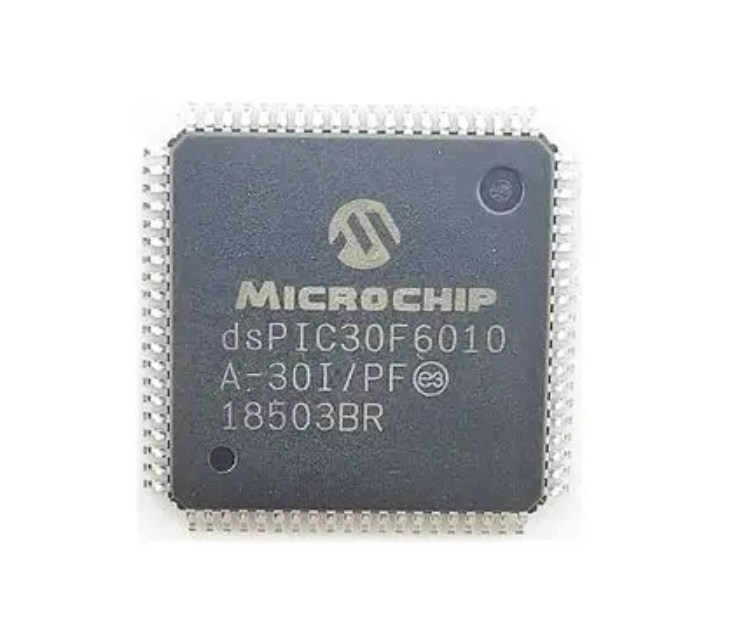
Recover MCU dsPIC30F6013A30IP Firmware

We can Recover MCU dsPIC30F6013A30IP Firmware, please view below MCU DSPIC30F6013A30IP features for your reference:

The dsPIC30F family of DSCs contains a region of on-chip memory used to simplify device programming. This region of memory can store a programming executive, which allows the dsPIC30F to be programmed faster than the traditional means. Once the programming executive is stored to memory by an external programmer (such as Microchip’s MPLAB ICD 2, MPLAB PM3, PRO MATE® II, or MPLAB REAL uses control codes to serially execute instructions on the dsPIC30F device.

This specification describes the ICSP and Enhanced ICSP   programming   methods.   Section 3.0 “Programming Executive Application” describes the programming executive application and Section 5.0 “Device Programming” describes its application programmer’s interface for the host programmer before Recover MCU.  Section 11.0  “ICSP™  Mode” describes the ICSP programming method. ICE™), it can then interact with the external programmer to efficiently program devices.
Le micrologiciel (firmware) est au cœur de toute conception embarquée. Les fichiers binaires ou hexadécimaux stockés dans la mémoire flash, l'EEPROM et d'autres zones mémoire contrôlent chaque opération du microcontrôleur Microchip dsPIC30F6013A. Lorsque ce micrologiciel est corrompu, verrouillé ou inaccessible, l'ensemble du dispositif peut devenir inutilisable. La restauration, la copie ou la duplication du fichier programme d'origine est essentielle à la maintenance, à la prise en charge des composants hérités ou au développement ultérieur.
La récupération du micrologiciel du microcontrôleur dsPIC30F6013A est un processus complexe qui requiert une expertise en rétro-ingénierie, en contournement cryptographique et en gestion sécurisée de la mémoire. L'extraction et la restauration des fichiers programme et données protégés de ce microcontrôleur polyvalent Microchip dsPIC30F6013A permettent de prolonger la durée de vie des systèmes embarqués, de répliquer des fonctions critiques ou simplement de se protéger contre la perte de données. Pour les industries qui utilisent le microprocesseur chiffré dsPIC30F6013A, la capacité de récupération du micrologiciel peut être essentielle au maintien de la compétitivité et à la continuité du fonctionnement des équipements vitaux.
Le micrologiciel (firmware) est au cœur de toute conception embarquée. Les fichiers binaires ou hexadécimaux stockés dans la mémoire flash, l’EEPROM et d’autres zones mémoire contrôlent chaque opération du microcontrôleur Microchip dsPIC30F6013A. Lorsque ce micrologiciel est corrompu, verrouillé ou inaccessible, l’ensemble du dispositif peut devenir inutilisable. La restauration, la copie ou la duplication du fichier programme d’origine est essentielle à la maintenance, à la prise en charge des composants hérités ou au développement ultérieur. La récupération du micrologiciel du microcontrôleur dsPIC30F6013A est un processus complexe qui requiert une expertise en rétro-ingénierie, en contournement cryptographique et en gestion sécurisée de la mémoire. L’extraction et la restauration des fichiers programme et données protégés de ce microcontrôleur polyvalent Microchip dsPIC30F6013A permettent de prolonger la durée de vie des systèmes embarqués, de répliquer des fonctions critiques ou simplement de se protéger contre la perte de données. Pour les industries qui utilisent le microprocesseur chiffré dsPIC30F6013A, la capacité de récupération du micrologiciel peut être essentielle au maintien de la compétitivité et à la continuité du fonctionnement des équipements vitaux.

2.1 Hardware Requirements

The programmer and programming executive have a master-slave relationship, where the programmer is the master programming device and the programming executive is the slave.

Circuit Engineering Company Limited continues to be recognized as the Southern China Leader in Services for IC Break, MCU attack, MCU Recover, Microcontroller Copy service. With the advancement of today’s modern circuit board technology, it is more important than ever to have specialists available to help you at a moment’s notice. Our engineering and commercial teams collectively have a vast amount of electronic experience covering field include Consumer Electronics, Industrial Automation Electronics, Wireless Communication Electronics., etc. For more information please contact us through email.

Recovering MCU dsPIC30F6013A firmware is a complex process that requires expertise in reverse engineering, cryptographic bypass, and secure memory handling. By extracting and restoring the protected program and data files from this versatile microcontroller, it becomes possible to extend the life of valuable embedded systems, replicate critical functions, or simply safeguard against data loss. For industries relying on the dsPIC30F6013A, having the ability to recover its firmware can be the key to maintaining competitiveness and ensuring continued operation of vital equipment.
Die Firmware bildet das Herzstück jedes Embedded-Designs. Die im Flash-Speicher, EEPROM und anderen Speicherbereichen gespeicherten Binär- oder Hexadezimaldateien steuern alle Vorgänge des MCU Microchip dsPIC30F6013A-Systems. Wird die Firmware beschädigt, gesperrt oder anderweitig unzugänglich, kann das gesamte Gerät unbrauchbar werden. Die Möglichkeit, die ursprüngliche Programmdatei wiederherzustellen, zu kopieren oder zu duplizieren, ist für Wartung, Legacy-Support oder Weiterentwicklung unerlässlich.
Die Wiederherstellung der MCU dsPIC30F6013A-Firmware ist ein komplexer Prozess, der Fachwissen in Reverse Engineering, kryptografischer Umgehung und sicherer Speicherverwaltung erfordert. Durch das Extrahieren und Wiederherstellen der geschützten Programm- und Datendateien dieses vielseitigen, schützenden dsPIC30F6013A-Mikrocontrollers von Microchip lässt sich die Lebensdauer wertvoller Embedded-Systeme verlängern, kritische Funktionen replizieren oder einfach vor Datenverlust schützen. Für Branchen, die auf den verschlüsselten Mikroprozessor dsPIC30F6013A angewiesen sind, kann die Möglichkeit, dessen Firmware wiederherzustellen, der Schlüssel zur Erhaltung der Wettbewerbsfähigkeit und zur Gewährleistung des kontinuierlichen Betriebs wichtiger Geräte sein.
Die Firmware bildet das Herzstück jedes Embedded-Designs. Die im Flash-Speicher, EEPROM und anderen Speicherbereichen gespeicherten Binär- oder Hexadezimaldateien steuern alle Vorgänge des MCU Microchip dsPIC30F6013A-Systems. Wird die Firmware beschädigt, gesperrt oder anderweitig unzugänglich, kann das gesamte Gerät unbrauchbar werden. Die Möglichkeit, die ursprüngliche Programmdatei wiederherzustellen, zu kopieren oder zu duplizieren, ist für Wartung, Legacy-Support oder Weiterentwicklung unerlässlich. Die Wiederherstellung der MCU dsPIC30F6013A-Firmware ist ein komplexer Prozess, der Fachwissen in Reverse Engineering, kryptografischer Umgehung und sicherer Speicherverwaltung erfordert. Durch das Extrahieren und Wiederherstellen der geschützten Programm- und Datendateien dieses vielseitigen, schützenden dsPIC30F6013A-Mikrocontrollers von Microchip lässt sich die Lebensdauer wertvoller Embedded-Systeme verlängern, kritische Funktionen replizieren oder einfach vor Datenverlust schützen. Für Branchen, die auf den verschlüsselten Mikroprozessor dsPIC30F6013A angewiesen sind, kann die Möglichkeit, dessen Firmware wiederherzustellen, der Schlüssel zur Erhaltung der Wettbewerbsfähigkeit und zur Gewährleistung des kontinuierlichen Betriebs wichtiger Geräte sein.

PostHeaderIcon Recover Chip MC9S08DZ32ACLC Firmware

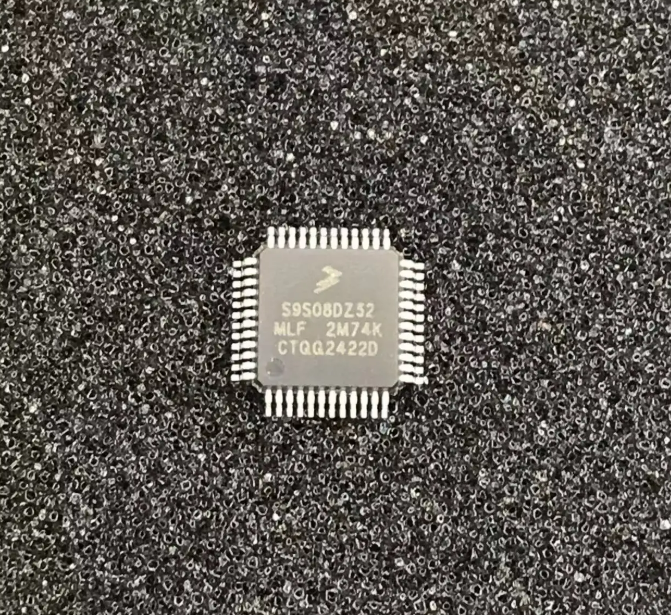
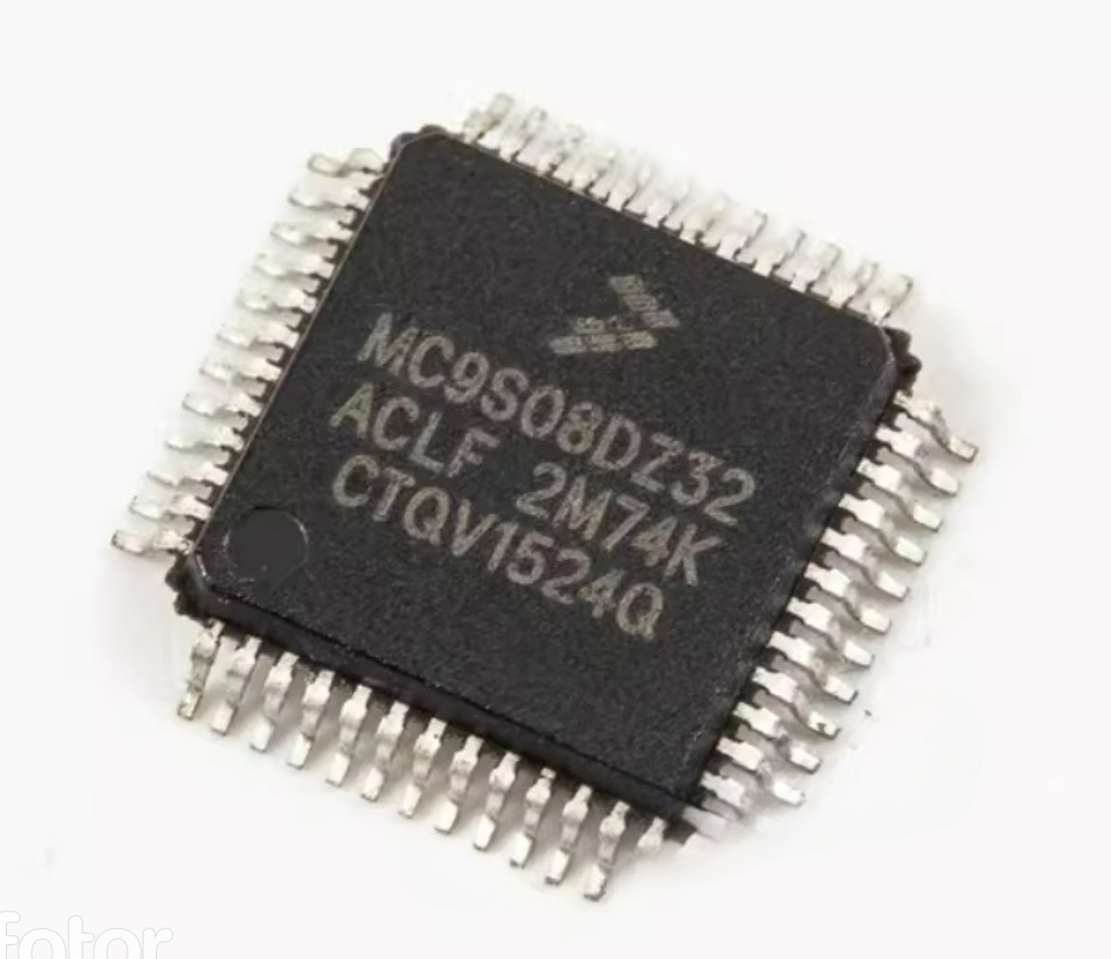
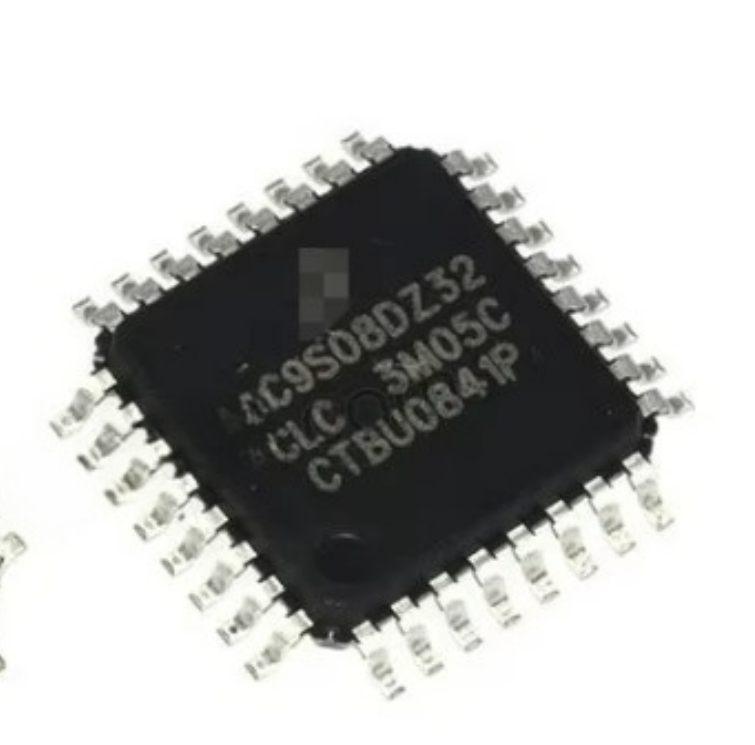
The MC9S08DZ32ACLC microcontroller, developed by Freescale (now NXP), is widely used in automotive, industrial, and consumer electronics applications. Its popularity stems from its reliable performance, low power consumption, and robust integration of flash memory, EEPROM, and peripheral features. However, recovering firmware from this protected and embedded chip poses significant challenges due to its security mechanisms. At Circuit Engineering Co., Ltd, we offer professional and precise services to recover Chip MC9S08DZ32ACLC firmware, enabling access to valuable system-level data and binary files for legitimate engineering and recovery purposes.
Güvenli mikrodenetleyici Freescale MC9S08DZ32ACLC'nin içindeki flash ve EEPROM belleğin kilidini açmak, şifresini çözmek ve aygıt yazılımını çıkarmak için donanım inceleme, yazılım kırma ve aygıt yazılımı kod çözme tekniklerinin bir kombinasyonunu kullanıyoruz. Uzmanlığımız, veri bütünlüğünü ve eksiksizliğini koruyarak güvenli çipleri kırmamıza ve ikili/onaltılık dosyaları çoğaltmamıza olanak tanır. Erişim sağlandıktan sonra, program verilerini kopyalayıp klonlayarak, okunabilir bir onaltılık dosyaya geri yükler veya gerektiğinde derleme veya kaynak kodu formatlarında yeniden oluştururuz. Bu, müşterilerimizin programı yalnızca kurtarmalarına değil, aynı zamanda güncel ürün geliştirme, güvenlik denetimleri veya sistem geçişi için analiz etmelerine, test etmelerine veya değiştirmelerine de olanak tanır. Kilitli veya güvenli sistemlerden kilitli Freecale MC9S08DZ32ACLC mikroişlemci yazılımını kurtarın, gömülü flash içeriklerini yeni birimlere kopyalayın ve çoğaltın, kayıp aygıt yazılımı dosyalarını, EEPROM verilerini veya arşivlenmiş program yapılarını geri yükleyin, analiz veya yeniden kullanım için ikili aygıt yazılımını kodunu çözün ve şifresini çözün, tersine mühendislik veya hata ayıklama için şifreli mikrobilgisayar Freescale MC9S08DZ32A program belleğinin kilidini açın, yeniden programlama veya dokümantasyon için yeniden yapılandırılmış altıgen veya ikili dosyalar sağlayın
Güvenli mikrodenetleyici Freescale MC9S08DZ32ACLC’nin içindeki flash ve EEPROM belleğin kilidini açmak, şifresini çözmek ve aygıt yazılımını çıkarmak için donanım inceleme, yazılım kırma ve aygıt yazılımı kod çözme tekniklerinin bir kombinasyonunu kullanıyoruz. Uzmanlığımız, veri bütünlüğünü ve eksiksizliğini koruyarak güvenli çipleri kırmamıza ve ikili/onaltılık dosyaları çoğaltmamıza olanak tanır. Erişim sağlandıktan sonra, program verilerini kopyalayıp klonlayarak, okunabilir bir onaltılık dosyaya geri yükler veya gerektiğinde derleme veya kaynak kodu formatlarında yeniden oluştururuz. Bu, müşterilerimizin programı yalnızca kurtarmalarına değil, aynı zamanda güncel ürün geliştirme, güvenlik denetimleri veya sistem geçişi için analiz etmelerine, test etmelerine veya değiştirmelerine de olanak tanır. Kilitli veya güvenli sistemlerden kilitli Freecale MC9S08DZ32ACLC mikroişlemci yazılımını kurtarın, gömülü flash içeriklerini yeni birimlere kopyalayın ve çoğaltın, kayıp aygıt yazılımı dosyalarını, EEPROM verilerini veya arşivlenmiş program yapılarını geri yükleyin, analiz veya yeniden kullanım için ikili aygıt yazılımını kodunu çözün ve şifresini çözün, tersine mühendislik veya hata ayıklama için şifreli mikrobilgisayar Freescale MC9S08DZ32A program belleğinin kilidini açın, yeniden programlama veya dokümantasyon için yeniden yapılandırılmış altıgen veya ikili dosyalar sağlayın

Why Recover MC9S08DZ32ACLC Firmware?

This chip is commonly deployed in automotive control modules, dashboards, sensors, and smart motor applications. Engineers, OEMs, and repair technicians often face situations where the original firmware is lost, corrupted, or no longer accessible due to locked or encrypted flash memory. In such cases, recreating the product, cloning behavior, or simply restoring the embedded function becomes impossible without access to the original firmware. That’s where our service becomes essential.

Our Advanced Firmware Recovery Process

We utilize a combination of hardware probing, software cracking, and firmware decoding techniques to unlock, decrypt, and extract the firmware from the flash and EEPROM memory inside the MC9S08DZ32ACLC. Our expertise allows us to crack secured chips and duplicate the binary/heximal files while maintaining data integrity and completeness.

Once access is established, we copy and clone the program data, restoring it into a readable hex file or reconstructing it into assembly or source code formats as needed. This allows our clients to not only recover the program but also analyze, test, or modify it for updated product development, security audits, or system migration.
Wykorzystujemy połączenie technik sondowania sprzętowego, łamania oprogramowania i dekodowania oprogramowania układowego, aby odblokować, odszyfrować i wyodrębnić oprogramowanie układowe z pamięci flash i EEPROM w zabezpieczonym mikrokontrolerze Freescale MC9S08DZ32ACLC. Nasze doświadczenie pozwala nam łamać zabezpieczone układy scalone i duplikować pliki binarne/heksymalne, zachowując integralność i kompletność danych. Po uzyskaniu dostępu kopiujemy i klonujemy dane programu, przywracając je do czytelnego pliku heksadecymalnego lub rekonstruując je do formatu assemblera lub kodu źródłowego, w zależności od potrzeb. Pozwala to naszym klientom nie tylko odzyskać program, ale także analizować go, testować lub modyfikować w celu aktualizacji produktu, audytów bezpieczeństwa lub migracji systemu. Odzyskiwanie zablokowanego oprogramowania układowego mikroprocesora Freecale MC9S08DZ32ACLC z zablokowanych lub zabezpieczonych systemów, klonowanie i duplikowanie zawartości pamięci flash do nowych jednostek, przywracanie utraconych plików oprogramowania układowego, danych EEPROM lub zarchiwizowanych struktur programów, dekodowanie i odszyfrowywanie binarnego oprogramowania układowego w celu analizy lub ponownego wykorzystania, odblokowywanie zaszyfrowanej pamięci programowej mikrokomputera Freescale MC9S08DZ32A w celu inżynierii wstecznej lub debugowania, dostarczanie zrekonstruowanych plików heksadecymalnych lub binarnych w celu przeprogramowania lub dokumentacji

Key Services We Provide:

  • Recover Chip MC9S08DZ32ACLC Firmware from locked or secured systems
  • Clone and duplicate the embedded flash contents into new units
  • Restore lost firmware files, EEPROM data, or archived program structures
  • Decode and decrypt binary firmware for analysis or reuse
  • Unlock encrypted program memory for reverse engineering or debugging
  • Provide reconstructed heximal or binary files for reprogramming or documentation

Unique Features of the MC9S08DZ32ACLC

This 8-bit MCU from Freescale features:

  • Up to 32KB of flash memory and 2KB EEPROM
  • Internal clock generators and multiple communication interfaces (CAN, SCI, SPI, I²C)
  • Enhanced control and diagnostics support for automotive-grade environments
  • Advanced interrupt handling and low EMI design, making it ideal for mission-critical applications

Its robust security options—including memory protection schemes—make firmware access nearly impossible without specialized equipment and technical insight. That’s why your choice of service provider is critical.
Utilizziamo una combinazione di tecniche di hardware probing, software cracking e decodifica del firmware per sbloccare, decrittografare ed estrarre il firmware dalla memoria flash ed EEPROM all'interno del microcontrollore protetto Freescale MC9S08DZ32ACLC. La nostra esperienza ci consente di crackare chip protetti e duplicare i file binari/esadecimali, mantenendo l'integrità e la completezza dei dati. Una volta stabilito l'accesso, copiamo e cloniamo i dati del programma, ripristinandoli in un file esadecimale leggibile o ricostruendoli in formato assembly o codice sorgente, a seconda delle necessità. Questo consente ai nostri clienti non solo di recuperare il programma, ma anche di analizzarlo, testarlo o modificarlo per lo sviluppo di prodotti aggiornati, audit di sicurezza o migrazione di sistemi. Recupera il firmware del microprocessore Freecale MC9S08DZ32ACLC bloccato da sistemi bloccati o protetti, clona e duplica il contenuto flash incorporato in nuove unità, ripristina i file del firmware persi, i dati EEPROM o le strutture del programma archiviate, decodifica e decrittografa il firmware binario per l'analisi o il riutilizzo, sblocca la memoria del programma crittografata del microcomputer Freescale MC9S08DZ32A per il reverse engineering o il debug, fornisce file esadecimali o binari ricostruiti per la riprogrammazione o la documentazione
Utilizziamo una combinazione di tecniche di hardware probing, software cracking e decodifica del firmware per sbloccare, decrittografare ed estrarre il firmware dalla memoria flash ed EEPROM all’interno del microcontrollore protetto Freescale MC9S08DZ32ACLC. La nostra esperienza ci consente di crackare chip protetti e duplicare i file binari/esadecimali, mantenendo l’integrità e la completezza dei dati. Una volta stabilito l’accesso, copiamo e cloniamo i dati del programma, ripristinandoli in un file esadecimale leggibile o ricostruendoli in formato assembly o codice sorgente, a seconda delle necessità. Questo consente ai nostri clienti non solo di recuperare il programma, ma anche di analizzarlo, testarlo o modificarlo per lo sviluppo di prodotti aggiornati, audit di sicurezza o migrazione di sistemi. Recupera il firmware del microprocessore Freecale MC9S08DZ32ACLC bloccato da sistemi bloccati o protetti, clona e duplica il contenuto flash incorporato in nuove unità, ripristina i file del firmware persi, i dati EEPROM o le strutture del programma archiviate, decodifica e decrittografa il firmware binario per l’analisi o il riutilizzo, sblocca la memoria del programma crittografata del microcomputer Freescale MC9S08DZ32A per il reverse engineering o il debug, fornisce file esadecimali o binari ricostruiti per la riprogrammazione o la documentazione

Trusted, Confidential, and Accurate

All projects handled by our engineering team are executed with strict confidentiality and technical accuracy. Whether you’re looking to restore a malfunctioning device, duplicate firmware for production, or analyze a secured program archive, we deliver results efficiently and securely.
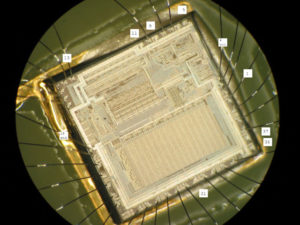
Recover Chip MC9S08DZ32ACLC Firmware

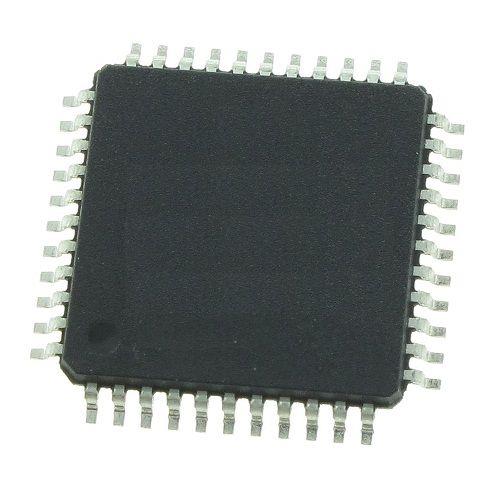
We can Recover Chip MC9S08DZ32ACLC Firmware, please view below the Chip MC9S08DZ32ACLC features for your reference:

8-Bit HCS08 Central Processor Unit (CPU)

· 40-MHz HCS08 CPU (20-MHz bus)

· HC08 instruction set with added BGND instruction

· Support for up to 32 interrupt/reset sources

On-Chip Memory

· Flash read/program/erase over full operating voltage and temperature

— MC9S08DZ60 = 60K

— MC9S08DZ48 = 48K

— MC9S08DZ32 = 32K

— MC9S08DZ16 = 16K

· Up to 2K EEPROM in-circuit programmable memory;

8-byte single-page or 4-byte dual-page erase sector;

Program and Erase while executing Flash; Erase abort

· Up to 4K random-access memory (RAM)

Power-Saving Modes

· Two very low power stop modes

· Reduced power wait mode

· Very low power real time interrupt for use in run, wait, and stop Clock Source Options

· Oscillator (XOSC) — Loop-control Pierce oscillator;

Crystal or ceramic resonator range of 31.25 kHz to 38.4 kHz or 1 MHz to 16 MHz

· Multi-purpose Clock Generator (MCG) — PLL and FLL modes (FLL capable of 1.5% deviation using internal temperature compensation); Internal reference clock with trim adjustment (trimmed at factory, with trim value stored in flash); External reference with oscillator/resonator options in the process of Copy microcontroller
Ми використовуємо комбінацію методів апаратного зондування, злому програмного забезпечення та декодування прошивки для розблокування, розшифрування та вилучення прошивки з флеш-пам'яті та EEPROM-пам'яті всередині захищеного мікроконтролера Freescale MC9S08DZ32ACLC. Наш досвід дозволяє нам зламувати захищені мікросхеми та дублювати двійкові/шістнадцяткові файли, зберігаючи цілісність та повноту даних. Після встановлення доступу ми копіюємо та клонуємо дані програми, відновлюючи їх у читабельний шістнадцятковий файл або реконструюючи їх у форматі асемблера чи вихідного коду за потреби. Це дозволяє нашим клієнтам не тільки відновлювати програму, але й аналізувати, тестувати або модифікувати її для розробки оновлених продуктів, аудитів безпеки або міграції системи. Відновлення прошивки заблокованого мікропроцесора Freecale MC9S08DZ32ACLC із заблокованих або захищених систем, клонування та дублювання вбудованого вмісту флеш-пам'яті в нові пристрої, відновлення втрачених файлів прошивки, даних EEPROM або архівованих структур програм, декодування та розшифрування двійкової прошивки для аналізу або повторного використання, розблокування зашифрованої пам'яті програм мікрокомп'ютера Freescale MC9S08DZ32A для зворотного проектування або налагодження, надання реконструйованих шістнадцяткових або двійкових файлів для перепрограмування або документування.
Ми використовуємо комбінацію методів апаратного зондування, злому програмного забезпечення та декодування прошивки для розблокування, розшифрування та вилучення прошивки з флеш-пам’яті та EEPROM-пам’яті всередині захищеного мікроконтролера Freescale MC9S08DZ32ACLC. Наш досвід дозволяє нам зламувати захищені мікросхеми та дублювати двійкові/шістнадцяткові файли, зберігаючи цілісність та повноту даних. Після встановлення доступу ми копіюємо та клонуємо дані програми, відновлюючи їх у читабельний шістнадцятковий файл або реконструюючи їх у форматі асемблера чи вихідного коду за потреби. Це дозволяє нашим клієнтам не тільки відновлювати програму, але й аналізувати, тестувати або модифікувати її для розробки оновлених продуктів, аудитів безпеки або міграції системи. Відновлення прошивки заблокованого мікропроцесора Freecale MC9S08DZ32ACLC із заблокованих або захищених систем, клонування та дублювання вбудованого вмісту флеш-пам’яті в нові пристрої, відновлення втрачених файлів прошивки, даних EEPROM або архівованих структур програм, декодування та розшифрування двійкової прошивки для аналізу або повторного використання, розблокування зашифрованої пам’яті програм мікрокомп’ютера Freescale MC9S08DZ32A для зворотного проектування або налагодження, надання реконструйованих шістнадцяткових або двійкових файлів для перепрограмування або документування.

System Protection

· Watchdog computer operating properly (COP) reset with option to run from backup dedicated 1-kHz internal clock source or bus clock

· Low-voltage detection with reset or interrupt; selectable trip points

· Illegal opcode detection with reset

· Illegal address detection with reset

· Flash block protect

· Loss-of-lock protection


Peripherals

· ADC — 24-channel, 12-bit resolution, 2.5 ìs conversion time, automatic compare function, temperature sensor, internal bandgap reference channel

· ACMPx — Two analog comparators with selectable interrupt on rising, falling, or either edge of comparator output; compare option to fixed internal bandgap reference voltage.

· MSCAN — CAN protocol – Version 2.0 A, B; standard and extended data frames; Support for remote frames; Five receive buffers with FIFO storage scheme; Flexible identifier acceptance filters programmable as: 2 x 32-bit, 4 x 16-bit, or 8 x 8-bit

· SCIx — Two SCIs supporting LIN 2.0 Protocol and SAE J2602 protocols; Full duplex non-return to zero (NRZ); Master extended break generation; Slave extended break detection; Wakeup on active edge.

· SPI — Full-duplex or single-wire bidirectional; Double-buffered transmit and receive; Master or Slave mode; MSB-first or LSB-first shifting

· IIC — Up to 100 kbps with maximum bus loading; Multi-master operation; Programmable slave address; General Call Address; Interrupt driven byte-by-byte data transfer

· TPMx — One 6-channel (TPM1) and one 2-channel (TPM2); Selectable input capture, output compare, or buffered edge-aligned PWM on each channel.

· RTC — (Real-time counter) 8-bit modulus counter with binary or decimal based prescaler; Real-time clock capabilities using external crystal and RTC for precise time base, time-of-day, calendar or task scheduling functions; Free running on-chip low power oscillator (1 kHz) for cyclic wake-up without external components Input/Output

· 53 general-purpose input/output (I/O) pins and 1 input-only pin

· 24 interrupt pins with selectable polarity on each pin.

· Hysteresis and configurable pull device on all input pins.

· Configurable slew rate and drive strength on all output pins.

Package Options

· 64-pin low-profile quad flat-pack (LQFP) — 10×10 mm

· 48-pin low-profile quad flat-pack (LQFP) — 7×7 mm

· 32-pin low-profile quad flat-pack (LQFP) — 7×7 mm

PostHeaderIcon Recover Chip C8051F340 Firmware

The Silicon Labs C8051F340 is a powerful embedded microcontroller widely used in industrial control systems, USB devices, instrumentation, and other high-performance applications. With integrated USB 2.0 functionality, high-speed 8051 core, and multiple I/O peripherals, it offers a compact yet feature-rich solution for developers. However, when the firmware, heximal file, or internal flash memory becomes corrupted, lost, or inaccessible due to security locking mechanisms, it presents a significant challenge for developers, maintainers, or forensic analysts.
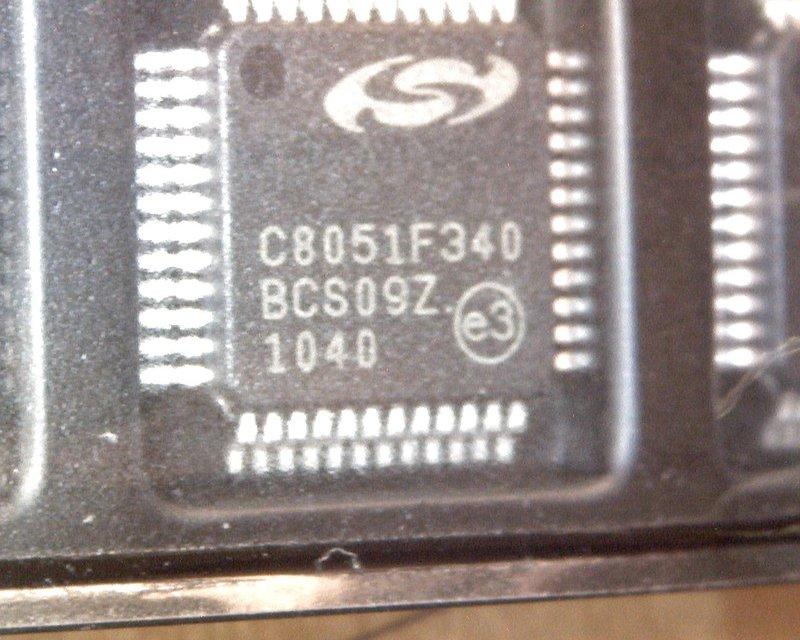
Мы предоставляем экспертные услуги по восстановлению прошивки микропроцессора Silicon Labs C8051F340 с защищённых или защищённых устройств, независимо от того, были ли данные зашифрованы, заблокированы или подвергнуты воздействию проприетарных функций защиты. Наши передовые технологии позволяют нам восстанавливать, взламывать, разблокировать и даже клонировать важные программные файлы, включая архив флеш-памяти и данные EEPROM в двоичном или шестнадцатеричном формате, из зашифрованного микроконтроллера Silicon Labs C8051F340, содержимого памяти или двоичных архивов, хранящихся во флеш-памяти или EEPROM микроконтроллера Silicon Labs C8051F340.

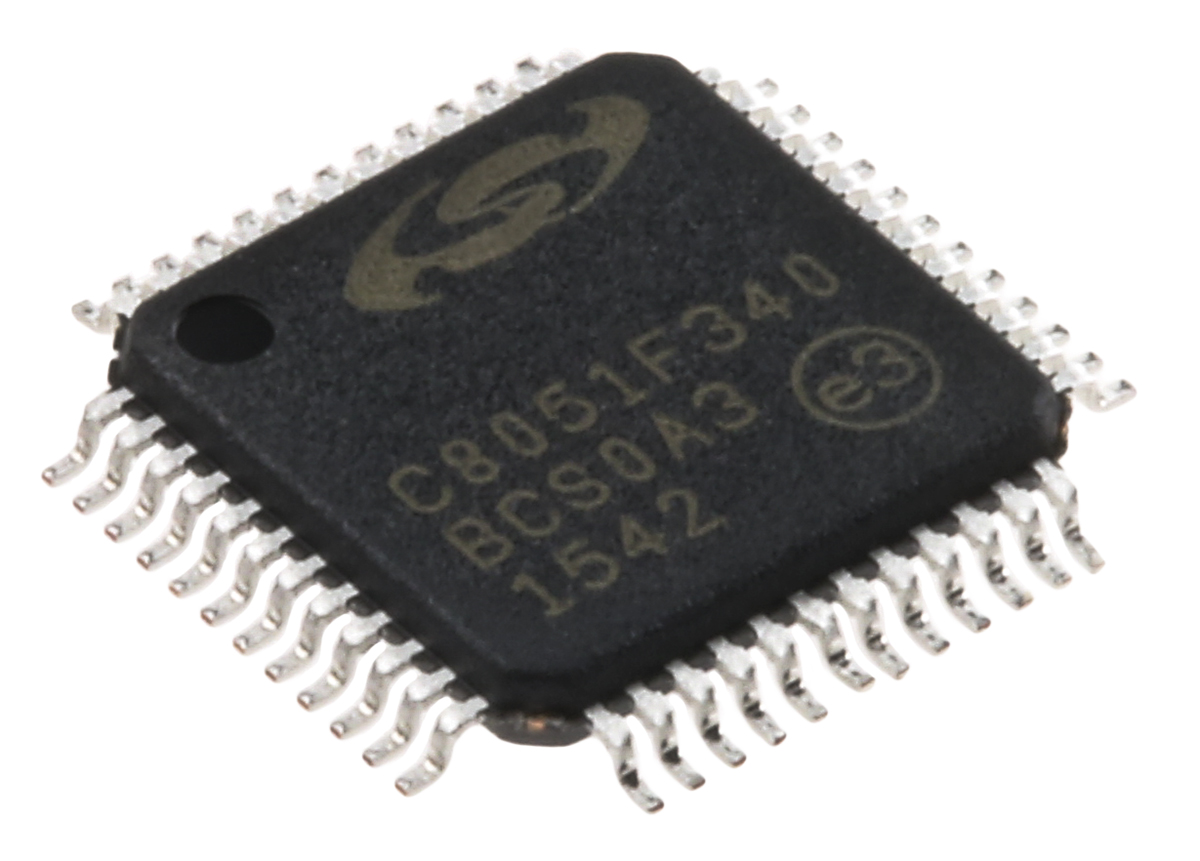
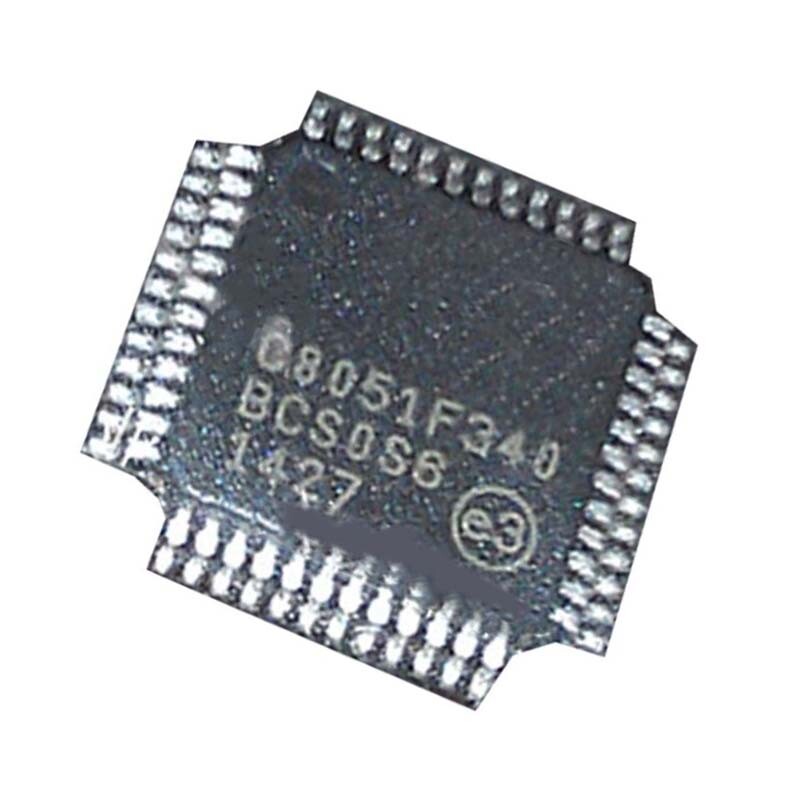
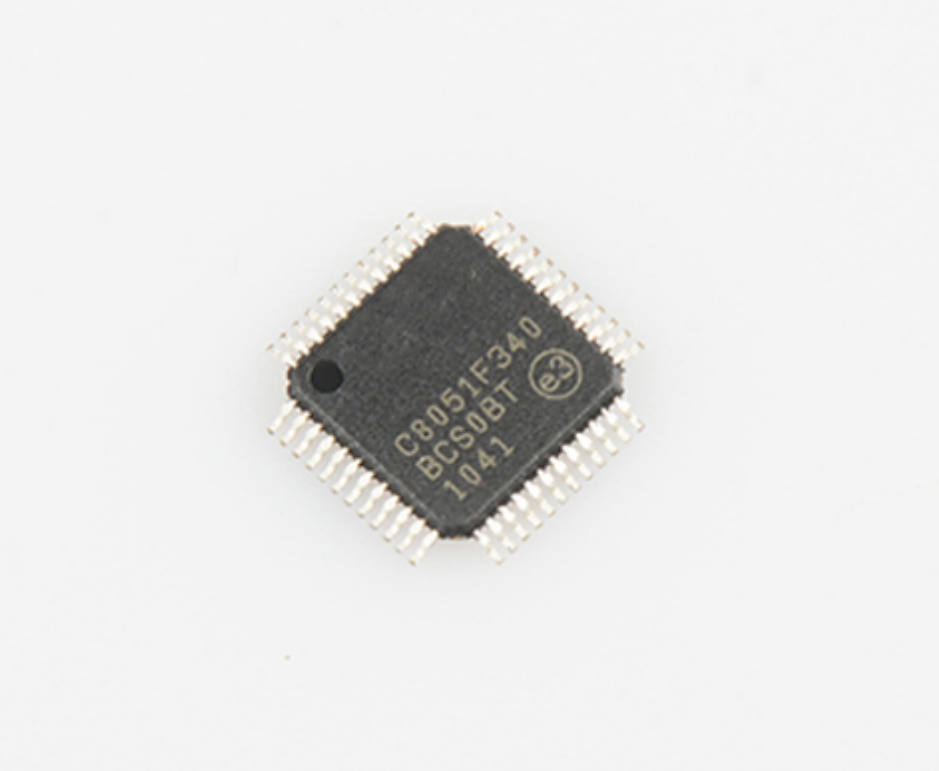
At CIRCUIT ENGINEERING CO., LTD, we provide expert services to recover chip C8051F340 firmware from secured or protected devices—whether the data has been encrypted, locked, or subjected to proprietary code protection features. Our advanced techniques allow us to restore, crack, unlock, and even clone the essential program files, memory contents, or binary archives stored inside the flash or EEPROM of the MCU.
Recover Chip C8051F340 Firmware

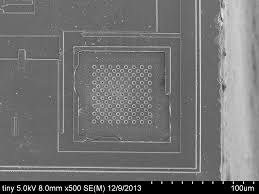
Recover Chip C8051F340 Firmware include the program from flash and data from eeprom memory through MCU Cracking technique, then replicate the content to other blank Microcontroller C8051F340;

The C8051F340 integrates code security features that prevent easy access to the internal firmware, especially through standard debugging or programming tools. Once the read protection is enabled, developers are typically locked out from reading or duplicating the original source code, even when they are the rightful owners of the system.

Using a combination of hardware-assisted attack methods, low-level protocol analysis, and carefully designed reverse engineering routines, our engineers can decode, decrypt, and copy the secured firmware binary or heximal file from the microcontroller. We handle devices in a non-destructive manner whenever possible, ensuring the integrity of the hardware while extracting the vital program data or code archive.
Poskytujeme odborné služby pro obnovu firmwaru zabezpečeného mikroprocesoru C8051F340 od Silicon Labs ze zabezpečených i chráněných zařízení – ať už byla data šifrována, uzamčena nebo podrobena ochranným funkcím proprietárního kódu. Naše pokročilé techniky nám umožňují obnovit, prolomit, odemknout a dokonce klonovat základní programové soubory, včetně archivu flash paměti a dat EEPROM paměti v binárním nebo hexamovém formátu, ze šifrovaného mikrokontroléru Silicon Labs C8051F340, obsahu paměti nebo binárních archivů uložených ve flash paměti nebo EEPROM ochranného mikrokontroléru Silicon Labs C8051F340.

Many end users or manufacturers come to us for one of several reasons:

Losing the firmware file for a secured chip like the C8051F340 can bring an entire production line or critical application to a halt. Our firmware recovery service ensures that your valuable intellectual property is not permanently lost.

Analog Peripherals

High Speed 8051 µC Core 10-Bit ADC (C8051F340/1/2/3/4/5/6/7/A/B only)

Pipelined instruction architecture; executes 70% of Up to 200 ksps

Built-in analog multiplexer with single-ended and differential mode

VREF from external pin, internal reference, or VDD

Instructions in 1 or 2 system clocks 48 MIPS and 25 MIPS versions available.

Expanded interrupt handler

·   Built-in temperature sensor

·   External conversion start input option

Two comparators Internal voltage reference

Memory

– 4352 or 2304 Bytes RAM

– 64 or 32 kB Flash; In-system programmable in 512-byte
Szakértői szolgáltatásokat nyújtunk a Silicon Labs biztonságos C8051F340 mikroprocesszor firmware-jének helyreállításához biztosított vagy védett eszközökről – függetlenül attól, hogy az adatok titkosítottak, zároltak vagy saját kódvédelmi funkcióknak voltak-e kitéve. Fejlett technikáink lehetővé teszik számunkra, hogy visszaállítsuk, feltörjük, feloldjuk és akár klónozzuk is a létfontosságú programfájlokat, beleértve a flash memória archívumot és az eeprom memória adatokat bináris vagy heximális formátumban a titkosított Silicon Labs C8051F340 mikrovezérlőből, a memória tartalmából vagy a Silicon Labs védő C8051F340 mikrovezérlő flash vagy EEPROM memóriájában tárolt bináris archívumokból.

(C8051F340/1/2/3/4/5/6/7/A/B only)

– Brown-out detector and POR Circuitry

USB Function Controller

– USB specification 2.0 compliant

– Full speed (12 Mbps) or low speed (1.5 Mbps) operation sectors

Digital Peripherals

– 40/25 Port I/O; All 5 V tolerant with high sink current

– Hardware enhanced SPI™, SMBus™, and one or two enhanced UART serial ports

Integrated clock recovery; no external crystal required for full speed or low speed

Supports eight flexible endpoints 1 kB USB buffer memory

Four general purpose 16-bit counter/timers

16-bit programmable counter array (PCA) with five capture/compare modules

External Memory Interface (EMIF)

Integrated transceiver; no external resistors required

Clock Sources

On-Chip Debug

Internal Oscillator: ±0.25% accuracy with clock recovery

On-chip debug circuitry facilitates full speed, non-intruenabled. Supports all USB and UART modes sive in-system debug (No emulator required) Provides breakpoints, single stepping, inspect/modify memory and registers

External Oscillator: Crystal, RC, C, or clock (1 or 2 Pin modes)

Low Frequency (80 kHz) Internal Oscillator Superior performance to emulation systems using ICE-chips, target pods, and sockets

Voltage Supply Input: 2.7 to 5.25 V

– Voltages from 3.6 to 5.25 V supported using On-Chip Voltage Regulator

– Can switch between clock sources on-the-fly
Pružamo stručne usluge za oporavak firmvera zaštićenog mikroprocesora Silicon Labs C8051F340 sa zaštićenih uređaja - bez obzira na to jesu li podaci šifrirani, zaključani ili podvrgnuti vlasničkim značajkama zaštite koda. Naše napredne tehnike omogućuju nam vraćanje, probijanje, otključavanje, pa čak i kloniranje bitnih programskih datoteka, uključujući arhivu flash memorije i podatke eeprom memorije u binarnom ili heksadecimalnom formatu iz šifriranog mikrokontrolera Silicon Labs C8051F340, sadržaja memorije ili binarnih arhiva pohranjenih unutar flash ili EEPROM-a zaštitnog mikrokontrolera Silicon Labs C8051F340.
Pružamo stručne usluge za oporavak firmvera zaštićenog mikroprocesora Silicon Labs C8051F340 sa zaštićenih uređaja – bez obzira na to jesu li podaci šifrirani, zaključani ili podvrgnuti vlasničkim značajkama zaštite koda. Naše napredne tehnike omogućuju nam vraćanje, probijanje, otključavanje, pa čak i kloniranje bitnih programskih datoteka, uključujući arhivu flash memorije i podatke eeprom memorije u binarnom ili heksadecimalnom formatu iz šifriranog mikrokontrolera Silicon Labs C8051F340, sadržaja memorije ili binarnih arhiva pohranjenih unutar flash ili EEPROM-a zaštitnog mikrokontrolera Silicon Labs C8051F340.

Packages

– 48-pin TQFP (C8051F340/1/4/5/8/C)

– 32-pin LQFP (C8051F342/3/6/7/9/A/B/D)

– 5×5 mm 32-pin QFN (C8051F342/3/6/7/9/A/B)

Temperature Range: –40 to +85 °C

We offer a full-service solution: from physical chip access to disassembly, heximal decoding, and even C-source reconstruction. Whether your C8051F340 has been locked, encrypted, or is simply part of a secured legacy embedded system, we are equipped to open, copy, and replicate its full functionality.

Reach out to Circuit Engineering Co., LTD today and let us help you recover chip C8051F340 firmware — securely, professionally, and with precision.

PostHeaderIcon Recover Microcontroller STM32F103RET6TR Code

Recover Microcontroller STM32F103RET6TR Code from its memory which include the flash and eeprom, then copy the program to blank MCU STM32F103RET6 after MCU Cracking;
Recover Microcontroller STM32F103RET6TR Code from its memory which include the flash and eeprom, then copy the program to blank MCU STM32F103RET6 after MCU Cracking;

Recover Microcontroller STM32F103RET6TR Code from its memory which include the flash and eeprom, then copy the program to blank MCU STM32F103RET6 after MCU Cracking;

Features

ARM 32-bit Cortex™-M3 CPU Core

– 72 MHz maximum frequency, 1.25 DMIPS/MHz (Dhrystone 2.1) performance at 0 wait state memory access

– Single-cycle multiplication and hardware division

Memories

– 16 or 32 Kbytes of Flash memory

VFQFPN48 (7 × 7 mm)

VFQFPN36 (6 × 6 mm)

– 6 or 10 Kbytes of SRAM Clock, reset and supply management

– 2.0 to 3.6 V application supply and I/Os

– POR, PDR, and programmable voltage detector (PVD)

– 4-to-16 MHz crystal oscillator

– Internal 8 MHz factory-trimmed RC

– Internal 40 kHz RC

– PLL for CPU clock

– 32 kHz oscillator for RTC with calibration Low power

– Sleep, Stop and Standby modes

– VBAT supply for RTC and backup registers 2 x 12-bit, 1 µs A/D converters (up to 16 channels)

– Conversion range: 0 to 3.6 V

– Dual-sample and hold capability

– Temperature sensor DMA

– 7-channel DMA controller Debug mode

– Serial wire debug (SWD) & JTAG interfaces 6 timers

– Two 16-bit timers, each with up to 4 IC/OC/PWM or pulse counter and quadrature (incremental) encoder input

– 16-bit, motor control PWM timer with dead-time generation and emergency stop

– 2 watchdog timers (Independent and Window)

– SysTick timer 24-bit downcounter 6 communication interfaces

– 21 x I2C interface (SMBus/PMBus)

– 2 × USARTs (ISO 7816 interface, LIN, IrDA capability, modem control)

– 1 × SPI (18 Mbit/s)

– CAN interface (2.0B Active)

– USB 2.0 full-speed interface

CRC calculation unit, 96-bit unique ID Packages are ECOPACK®

– Peripherals supported: timers, ADC, SPIs, I2Cs and USARTs Up to 51 fast I/O ports

– 26/37/51 I/Os, all mappable on 16 external interrupt vectors and almost all 5 V-tolerant

PostHeaderIcon Recover MCU P89LPC925FDH Heximal

Recover MCU P89LPC925FDH Heximal

Recover MCU P89LPC925FDH Heximal

Recover MCU P89LPC925FDH Heximal from its memory include eeprom and flash through Microcontroller unlocking technique, the content will be extracted out from the memory in the format of binary or heximal.

4 kB/8 kB Flash code memory with 1 kB erasable sectors, 64-byte erasable page size, and single byte erase.

256-byte RAM data memory.

Two 16-bit counter/timers. Each timer may be configured to toggle a port output upon timer overflow or to become a PWM output.

Real-Time clock that can also be used as a system timer.

4-input 8-bit multiplexed A/D converter/single DAC output. Two analog comparators with selectable inputs and reference source.

Enhanced UART with fractional baud rate generator, break detect, framing error detection, automatic address detection and versatile interrupt capabilities.

400 kHz byte-wide I2C-bus communication port.

Configurable on-chip oscillator with frequency range and RC oscillator options (selected by user programmed Flash configuration bits). The RC oscillator (factory calibrated to ±1 %) option allows operation without external oscillator components. Oscillator options support frequencies from 20 kHz to the maximum operating frequency of 18 MHz. The RC oscillator option is selectable and fine tunable.

2.4 V to 3.6 V VDD operating range. I/O pins are 5 V tolerant (may be pulled up or driven to 5.5 V).

15 I/O pins minimum. Up to 18 I/O pins while using on-chip oscillator and reset options.

20-pin TSSOP package.

A high performance 80C51 CPU provides instruction cycle times of 111 ns to 222 ns for all instructions except multiply and divide when executing at 18 MHz.

This is six times the performance of the standard 80C51 running at the same clock frequency. A lower clock frequency for the same performance results in power savings and reduced EMI.

In-Application Programming of the Flash code memory. This allows changing the code in a running application.

Serial Flash programming allows simple in-circuit production coding. Flash security bits prevent reading of sensitive application programs.

Watchdog timer with separate on-chip oscillator, requiring no external components. The watchdog prescaler is selectable from eight values.

Low voltage reset (Brownout detect) allows a graceful system shutdown when power fails. May optionally be configured as an interrupt.

Idle and two different Power-down reduced power modes. Improved wake-up from Power-down mode (a low interrupt input starts execution). Typical Power-down current is 1 µA (total Power-down with voltage comparators disabled).

Active-LOW reset. On-chip power-on reset allows operation without external reset components. A reset counter and reset glitch suppression circuitry prevent spurious and incomplete resets. A software reset function is also available.

Oscillator Fail Detect. The watchdog timer has a separate fully on-chip oscillator allowing it to perform an oscillator fail detect function.

Programmable port output configuration options:

x quasi-bidirectional,

x open drain,

x push-pull,

x input-only.

Port ‘input pattern match’ detect. Port 0 may generate an interrupt when the value of the pins match or do not match a programmable pattern.

LED drive capability (20 mA) on all port pins. A maximum limit is specified for the entire chip.

Controlled slew rate port outputs to reduce EMI. Outputs have approximately 10 ns minimum ramp times.

Only power and ground connections are required to operate the P89LPC924/925 when internal reset option is selected.

s Four interrupt priority levels.

Eight keypad interrupt inputs, plus two additional external interrupt inputs.

Second data pointer.

Schmitt trigger port inputs.

Emulation support.

PostHeaderIcon Recover IC P87LPC767FN Software

Recover IC P87LPC767FN Software in the format of binary of heximal after crack MCU tamper resistance system, the content of the code will include the program from flash and data from eeprom, then copy the firmware into other blank Microcontroller P87LPC767FN which will provide the same functions;
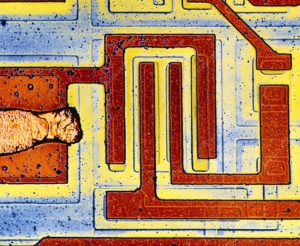
Recover IC P87LPC767FN Software in the format of binary of heximal, the content of the code will include the program from flash and data from eeprom

Recover IC P87LPC767FN Software in the format of binary of heximal, the content of the code will include the program from flash and data from eeprom

Eight keypad interrupt inputs, plus two additional external interrupt inputs.

· Four interrupt priority levels

· Watchdog timer with separate on-chip oscillator, requiring no external components. The watchdog timeout time is selectable from 8 values.

· Active low reset. On-chip power-on reset allows operation with no

GENERAL DESCRIPTION

The 87LPC767 is a 20-pin single-chip microcontroller designed for low pin count applications demanding high-integration, low cost solutions over a wide range of performance requirements . A member of the Philips low pin count family, the 87LPC767 offers programmable oscillator configurations for high and low speed crystals or RC operation, wide operating voltage range, programmable port output configurations, selectable Schmitt trigger inputs, LED drive outputs, and a built-in watchdog timer. The 87LPC767 is based on an accelerated 80C51 processor architecture that executes instructions at twice the rate of standard 80C51 devices.


FEATURES

· An accelerated 80C51 CPU provides instruction cycle times of 300–600 ns for all instructions except multiply and divide when executing at 20 MHz. Execution at up to 20 MHz when VDD = 4.5 V to 6.0 V, 10 MHz when VDD = 2.7 V to 6.0 V.

· Four-channel multiplexed 8-bit A/D converter. Conversion time of 9.3 µS at fOSC = 20 MHz.

· 2.7 V to 6.0 V operating range for digital functions.

· 4 K bytes EPROM code memory.

· 128 byte RAM data memory.

· 32-byte customer code EPROM allows serialization of devices, storage of setup parameters, etc.

· Two 16-bit counter/timers. Each timer may be configured to toggle a port output upon timer overflow.

· Two analog comparators.

· Full duplex UART.

· I2C communication port.

· Low voltage reset. One of two preset low voltage levels may be selected to allow a graceful system shutdown when power fails. May optionally be configured as an interrupt.

· Oscillator Fail Detect. The watchdog timer has a separate fully on-chip oscillator, allowing it to perform an oscillator fail detect function.

· Configurable on-chip oscillator with frequency range and RC oscillator options (selected by user programmed EPROM bits).

The RC oscillator option allows operation with no external oscillator components.

· Programmable port output configuration options: quasi-bidirectional, open drain, push-pull, input-only.

· Selectable Schmitt trigger port inputs.

· LED drive capability (20 mA) on all port pins.

· Controlled slew rate port outputs to reduce EMI. Outputs have approximately 10 ns minimum ramp times.

· 15 I/O pins minimum. Up to 18 I/O pins using on-chip oscillator and reset options.

· Only power and ground connections are required to operate the 87LPC767 when fully on-chip oscillator and reset options are selected.

· Serial EPROM programming allows simple in-circuit production coding. Two EPROM security bits prevent reading of sensitive application programs.

· Idle and Power Down reduced power modes. Improved wakeup from Power Down mode (a low interrupt input starts execution).

Typical Power Down current is 1 µA.

· 20-pin DIP and SO packages.

PostHeaderIcon Recover Chip MC68HC11A0FN3 Binary

The Motorola/Freescale MC68HC11A0FN3 is a powerful 8-bit microcontroller widely used in industrial control, automotive electronics, robotics, and legacy embedded systems. Known for its on-chip EEPROM, robust flash memory, and versatile I/O capabilities, this chip has long served as the backbone of many secure and high-performance applications. However, its protected architecture, often with fuse-bit security or memory lockout mechanisms, makes it extremely difficult for users to access or recover the internal binary or firmware once programmed.

O MCU protegido MC68HC11A0FN3 é frequentemente encontrado em aplicações onde o firmware é bloqueado, criptografado ou protegido para proteger a propriedade intelectual. Mas o que acontece quando os arquivos originais são perdidos, o sistema apresenta mau funcionamento ou uma atualização de firmware é necessária? A maioria das ferramentas prontas para uso não ajuda em nada diante dos fusíveis de segurança do chip e do layout de memória protegido. É aqui que nossa equipe intervém — com precisão e discrição. Oferecemos a capacidade de crackear, hackear ou desbloquear a memória interna do microcontrolador de proteção MC68HC11A0FN3. Aplicando metodologias avançadas de microprobing, análise de sinal ou desabilitação de fusíveis, podemos descriptografar, decodificar e abrir a região de memória bloqueada do microprocessador MC68HC11A0FN3 para recuperar o programa, arquivo ou arquivo de dados original.

We specialize in advanced microcontroller security bypassing. Our premium service to recover chip MC68HC11A0FN3 binary is tailored for professionals needing access to original firmware, source code, or heximal data stored inside this secured embedded device.
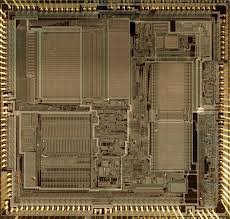
Recover Chip MC68HC11A0FN3 Binary from Microcontroller MC68HC11A0FN3 program memory, unlock microprocessor MC68HC11A0FN3 security fuse bit and extract heximal out from memory

Recover Chip MC68HC11A0FN3 Binary from Microcontroller MC68HC11A0FN3 program memory, unlock microprocessor MC68HC11A0FN3 security fuse bit and extract heximal out from memory;

The MC68HC11A0FN3 is frequently found in applications where the firmware is locked, encrypted, or protected to safeguard intellectual property. But what happens when original files are lost, the system malfunctions, or a firmware update is required? Most off-the-shelf tools are helpless when faced with the chip’s security fuses and protected memory layout.

This is where our team steps in—with precision and discretion. We offer the ability to crack, hack, or unlock the internal memory of secured MCUs like the MC68HC11A0FN3. By applying advanced microprobing, signal analysis, or fuse-disabling methodologies, we can decrypt, decode, and open the locked memory region to retrieve the original program, archive, or data file.

· Power Saving STOP and WAIT Modes

· 4 Kbytes of On-Chip ROM

· 192 Bytes of On-Chip RAM (All Saved During Standby)

· 16-Bit Timer System

— 3 Input Capture (IC) Channels

— 4 Output Compare (OC) Channels

— One IC or OC Channel (Software Selectable)

Our MC68HC11A0FN3 reverse engineering and data extraction services include:

Защищенный микроконтроллер MC68HC11A0FN3 часто встречается в приложениях, где прошивка заблокирована, зашифрована или защищена для защиты интеллектуальной собственности. Но что происходит, когда исходные файлы утеряны, система дает сбой или требуется обновление прошивки? Большинство готовых инструментов беспомощны перед защитными предохранителями чипа и защищенной структурой памяти. Вот тут-то наша команда и вступает в дело — с точностью и осмотрительностью. Мы предлагаем возможность взломать, взломать или разблокировать внутреннюю память защитного микроконтроллера MC68HC11A0FN3. Применяя передовые методы микрозондирования, анализа сигналов или отключения предохранителей, мы можем расшифровать, декодировать и открыть заблокированную область памяти микропроцессора MC68HC11A0FN3, чтобы получить исходную программу, архив или файл данных.

· 8-Bit Pulse Accumulator

· Real-Time Interrupt Circuit

· Computer Operating Properly (COP) Watchdog System

· Synchronous Serial Peripheral Interface (SPI)

· Asynchronous Nonreturn to Zero (NRZ) Serial Communications Interface (SCI)

· 26 Input/Output (I/O) Pins

— 16 Bidirectional I/O Pins

— 3 Input Only Pins

— 3 Output Only Pins (One Output Only Pin in the 40-Pin Package)

· Available in a 44-Pin Plastic Leaded Chip Carrier (PLCC) and 40-Pin Dual In-Line Package (DIP)

2.1 VDD, VSS, and EVSS

This chip is not just a legacy device; it remains embedded in critical systems such as:

  • Automotive ECUs: Engine control, ABS, and dashboard systems.
  • Industrial Automation: Programmable controllers, safety relays, and process monitors.
  • Medical Devices: Legacy diagnostic machines and custom sensors.
  • Aerospace Systems: Avionic support tools and aircraft diagnostics.

Many of these systems still rely on the original code running on the MC68HC11A0FN3. Without proper access, maintaining or upgrading them becomes nearly impossible.

Power is supplied to the MCU through VDD and VSS. VSS is the power supply, and VSS is ground. EVSS, available on the 44-pin PLCC, is an additional ground pin that must be grounded with VSS. The MCU operates from a single 5-volt (nominal) power supply before MCU PIC32MX440F512H binary copying. Very fast signal transitions occur on the MCU pins.

The short rise and fall times place high, short duration current demands on the power supply. To prevent noise problems, provide good power supply bypassing at the MCU. Also, use bypass capacitors that have good high-frequency characteristics and situate them as close to the MCU as possible. Bypass requirements vary, depending on how heavily the MCU pins are loaded.

MCU MC68HC11A0FN3 được bảo mật thường được tìm thấy trong các ứng dụng mà chương trình cơ sở bị khóa, mã hóa hoặc được bảo vệ để bảo vệ quyền sở hữu trí tuệ. Nhưng điều gì xảy ra khi các tệp gốc bị mất, hệ thống trục trặc hoặc cần cập nhật chương trình cơ sở? Hầu hết các công cụ có sẵn đều bất lực khi đối mặt với cầu chì bảo mật và bố cục bộ nhớ được bảo vệ của chip. Đây là lúc nhóm của chúng tôi vào cuộc—với độ chính xác và sự thận trọng. Chúng tôi cung cấp khả năng bẻ khóa, hack hoặc mở khóa bộ nhớ trong của vi điều khiển bảo vệ MC68HC11A0FN3. Bằng cách áp dụng các phương pháp vi thăm dò, phân tích tín hiệu hoặc vô hiệu hóa cầu chì tiên tiến, chúng tôi có thể giải mã, giải mã và mở vùng bộ nhớ vi xử lý MC68HC11A0FN3 bị khóa để truy xuất chương trình, lưu trữ hoặc tệp dữ liệu gốc.

2.2 Reset (RESET)

An active low bidirectional control signal, RESET, acts as an input to initialize the MCU to a known startup state. It also acts as an open-drain output to indicate that an internal failure has been detected in either the clock monitor or COP watchdog circuit. The CPU distinguishes between internal and external reset conditions by sensing whether the reset pin rises to a logic one in less than two E-clock cycles after a reset has occurred. It is not advisable to connect an external resistor-capacitor (RC) power-up delay circuit to the reset pin of M68HC11 devices because the circuit charge time.

2.3 Crystal Driver and External Clock Input (XTAL, EXTAL)

These two pins provide the interface for either a crystal or a CMOS compatible clock to control the internal clock generator circuitry. The frequency applied to these pins is four times higher than the desired E-clock rate after Recover MCU PIC16F913 bin.

The XTAL pin is normally left unterminated when an external CMOS compatible clock input is connected to the EXTAL pin. However, a 10 kΩ to 100 kΩ load resistor connected from XTAL to ground can be used to reduce RFI noise emission. The XTAL output is normally intended to drive only a crystal. The XTAL output can be buffered with a high impedance buffer, or it can be used to drive the EXTAL input of another M68HC11.

PostHeaderIcon Recover Microcontroller 430G2452 Heximal

Our specialized service enables you to recover Microcontroller 430G2452 heximal code, helping you bypass locked or encrypted firmware and extract essential data. Whether your objective is to restore a legacy system, copy a failed firmware image, or clone a working configuration for backup or migration, our team provides safe and reliable solutions.

Nuestro servicio especializado le permite recuperar el código hexadecimal del microcontrolador MSP430G2452, lo que le ayuda a desbloquear el firmware bloqueado o cifrado y a extraer datos esenciales. Ya sea que su objetivo sea restaurar un sistema heredado con el microcontrolador MSP430G2452 protegido, copiar una imagen de firmware fallida o clonar una configuración funcional para realizar copias de seguridad o migrar, nuestro equipo ofrece soluciones seguras y confiables. Empleamos técnicas avanzadas asistidas por hardware para descifrar los mecanismos de protección del chip MCU MSP430G2452 bloqueado. Esto incluye desbloquear bits de fusibles protegidos, acceder a la memoria flash bloqueada y recuperar datos tanto de la memoria de programa como de segmentos similares a la EEPROM. Una vez desbloqueado el microprocesador MSP430G2452 cifrado, el firmware binario o hexadecimal extraído se procesa en código fuente legible o en un ensamblado anotado, según sus necesidades de análisis, portabilidad o documentación.

We employ advanced hardware-assisted techniques to crack and decode the protection mechanisms of the MCU. This includes overcoming secured fuse bits, accessing locked flash memory, and retrieving data from both program memory and EEPROM-like segments. Once unlocked, the extracted binary or heximal firmware is processed into readable source code or annotated assembly, depending on your need for analysis, porting, or documentation.

Recover Microcontroller 430G2452 Heximal out from MCU MSP430G2452 is a process start from Crack MCU MSP430G2452 protective system and disable its security fuse bit by focus ion beam, then copy the code fro new microcontroller

Recover Microcontroller 430G2452 Heximal out from MCU MSP430G2452 is a process start from Crack MCU MSP430G2452 protective system and disable its security fuse bit by focus ion beam, then copy the code fro new microcontroller;

FEATURES

Low Supply Voltage Range: 1.8 V to 3.6 V Ultra-Low Power Consumption

– Active Mode: 220 µA at 1 MHz, 2.2 V

– Standby Mode: 0.5 µA

– Off Mode (RAM Retention): 0.1 µA

Five Power-Saving Modes Ultra-Fast Wake-Up From Standby Mode in Less Than 1 µs 16-Bit RISC Architecture, 62.5-ns Instruction Cycle Time.

हमारी विशेष सेवा आपको सुरक्षात्मक माइक्रोकंट्रोलर MSP430G2452 हेक्सिमल कोड को पुनर्प्राप्त करने में सक्षम बनाती है, जिससे आपको लॉक या एन्क्रिप्टेड फ़र्मवेयर को बायपास करने और आवश्यक डेटा निकालने में मदद मिलती है। चाहे आपका उद्देश्य सुरक्षित माइक्रोकंट्रोलर MSP430G2452 के साथ विरासत प्रणाली को पुनर्स्थापित करना हो, विफल फ़र्मवेयर छवि की प्रतिलिपि बनाना हो, या बैकअप या माइग्रेशन के लिए कार्यशील कॉन्फ़िगरेशन को क्लोन करना हो, हमारी टीम सुरक्षित और विश्वसनीय समाधान प्रदान करती है। हम लॉक किए गए MSP430G2452 MCU चिप के सुरक्षा तंत्र को क्रैक और डिकोड करने के लिए उन्नत हार्डवेयर-सहायता प्राप्त तकनीकों का उपयोग करते हैं। इसमें सुरक्षित फ़्यूज़ बिट्स पर काबू पाना, लॉक की गई फ़्लैश मेमोरी तक पहुँचना और प्रोग्राम मेमोरी और EEPROM-जैसे सेगमेंट दोनों से डेटा पुनर्प्राप्त करना शामिल है। एन्क्रिप्टेड माइक्रोप्रोसेसर MSP430G2452 अनलॉक होने के बाद, निकाले गए बाइनरी या हेक्सिमल फ़र्मवेयर को विश्लेषण, पोर्टिंग या दस्तावेज़ीकरण की आपकी ज़रूरत के आधार पर पठनीय स्रोत कोड या एनोटेटेड असेंबली में संसाधित किया जाता है।

Basic Clock Module Configurations

– Internal Frequencies up to 16 MHz With

Four Calibrated Frequencies

– Internal Very-Low-Power Low-Frequency (LF) Oscillator

– 32-kHz Crystal

– External Digital Clock Source

One 16-Bit Timer_A With Three Capture/Compare Registers Up to 16 Touch-Sense Enabled I/O Pins

Universal Serial Interface (USI) Supporting SPI and I2C 10-Bit 200-ksps Analog-to-Digital (A/D)

Converter With Internal Reference, Sample-and-Hold, and Autoscan (MSP430G2x52 Only) On-Chip Comparator for Analog Brownout Detector Serial Onboard Programming, No External Programming Voltage Needed, Programmable Code Protection by Security Fuse On-Chip Emulation Logic With Spy-Bi-Wire Interface Family Members are Summarized:

Package Options

– TSSOP: 14 Pin, 20 Pin

– PDIP: 20 Pin

– QFN: 16 Pin

For Complete Module Descriptions, See the MSP430x2xx Family User’s Guide (SLAU144)

DESCRIPTION

The Texas Instruments MSP430™ family of ultra-low-power microcontrollers consist of several devices featuring different sets of peripherals targeted for various applications. The architecture, combined with five low-power modes, is optimized to achieve extended battery life in portable measurement applications.

The device features a powerful 16-bit RISC CPU, 16-bit registers, and constant generators that contribute to maximum code efficiency. The digitally controlled oscillator (DCO) allows wake-up from low-power modes to active mode in less than 1 µs.

당사의 전문 서비스를 통해 보호된 마이크로컨트롤러 MSP430G2452 16진수 코드를 복구하여 잠기거나 암호화된 펌웨어를 우회하고 필수 데이터를 추출할 수 있습니다. 보안 마이크로컨트롤러 MSP430G2452가 설치된 레거시 시스템을 복원하거나, 오류가 발생한 펌웨어 이미지를 복사하거나, 백업 또는 마이그레이션을 위해 작동 중인 구성을 복제하는 등 어떤 목적이든, 저희 팀은 안전하고 신뢰할 수 있는 솔루션을 제공합니다. 고급 하드웨어 지원 기술을 사용하여 잠긴 MSP430G2452 MCU 칩의 보호 메커니즘을 해독하고 디코딩합니다. 여기에는 보안 퓨즈 비트를 해독하고, 잠긴 플래시 메모리에 접근하고, 프로그램 메모리와 EEPROM 유사 세그먼트에서 데이터를 검색하는 작업이 포함됩니다. 암호화된 마이크로프로세서 MSP430G2452의 잠금이 해제되면, 추출된 바이너리 또는 16진수 펌웨어는 분석, 포팅 또는 문서화 필요에 따라 읽을 수 있는 소스 코드 또는 주석이 달린 어셈블리로 처리됩니다.

The MSP430G2x52 and MSP430G2x12 series of microcontrollers are ultra-low-power mixed signal microcontrollers with built-in 16-bit timers, and up to 16 I/O touch sense enabled pins and built-in communication capability using the universal serial communication interface and have a versatile analog comparator.

The MSP430G2x52 series have a 10-bit A/D converter. For configuration details see Table 1. Typical applications include low-cost sensor systems that capture analog signals, convert them to digital values, and then process the data for display or for transmission to a host system when attacking Microcontrolle ST62T15C6 firmware memory.

Core Services Offered:

  • Fuse Bit Bypass: Disable fuse protection to allow memory access.
  • Firmware Extraction: Retrieve full program memory, eeprom, and configuration data.
  • Binary/Heximal to Source: Convert raw memory dumps into readable C-like code or reconstruct assembly.
  • Data Recovery: Recover lost or corrupted firmware from damaged or bricked units.
  • System Cloning: Create functionally identical duplicates for hardware migration or replication.
  • Security Testing: Evaluate your system’s resilience by simulating a penetration attempt into encrypted or protected MCUs.

Why Choose Us?

Application Scenarios

MSP430G2452 is often deployed in wearable medical sensors, remote controls, industrial sensors, battery-operated meters, and consumer electronics. When the original source code is lost or the firmware becomes locked, our service ensures your product lifecycle doesn’t come to a halt. Recovering firmware from protected chips isn’t just about duplication—it’s about preserving investment, minimizing downtime, and enabling further innovation.