 Break CPLD EPM3128ATC100-7 Software
 August 3rd, 2014 |
  Author:
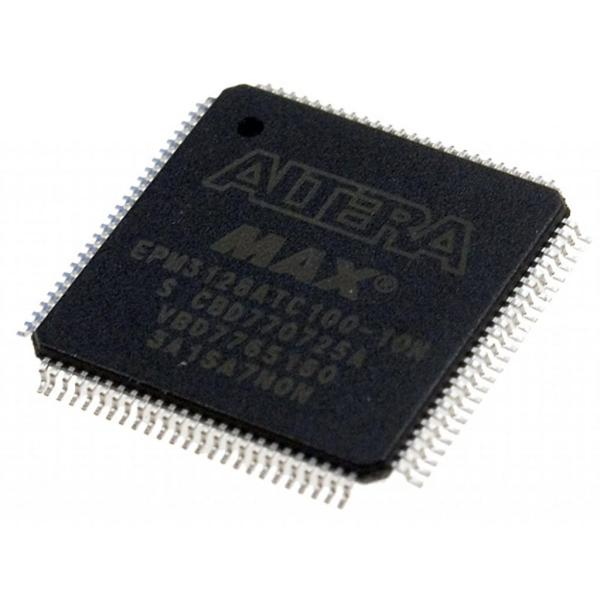
 The EPM3128ATC100-7 is a widely used CPLD (Complex Programmable Logic Device) designed for high-reliability digital logic applications where deterministic timing and flexible logic configuration are required. Unlike traditional microcontrollers, this device implements hardware-defined logic rather than sequential firmware execution, making it ideal for industrial automation, telecom interfaces, automotive electronics, medical instrumentation, and embedded control systems. Its non-volatile memory structure allows configuration data to be retained without external storage, enabling stable long-term deployment. However, when original design archive, configuration file, or logic source code is lost, maintaining or reproducing the system becomes extremely difficult. The Break CPLD EPM3128ATC100-7 Software service is designed to recover and reconstruct this critical embedded logic data for authorized users.
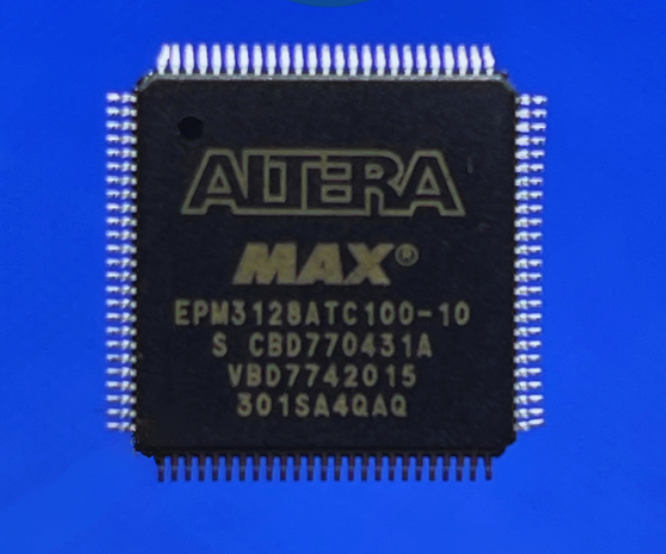
In many real-world applications, the EPM3128ATC100-7 is configured with protective, protected, locked, or encrypted security settings to prevent unauthorized access to its internal configuration memory. These protections secure the device’s program, binary, or heximal configuration data, making direct retrieval impossible through standard interfaces. Our service focuses on helping clients attack, break, or carefully decode these restrictions in a controlled engineering environment. By analyzing the embedded structure of the CPLD, we can retrieve configuration data, reconstruct the original logic program file, and rebuild usable archive outputs even when the device is fully secured. In advanced cases, controlled decapsulate techniques may be applied to access deeply embedded structures and extract configuration information from otherwise inaccessible memory regions. The goal is to recover consistent binary or heximal data that accurately represents the original device logic without compromising its integrity.
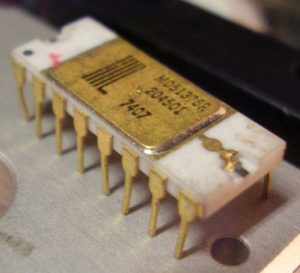
High–performance, low–cost CMOS EEPROM–based programmable logic devices (PLDs) built on a MAX® architecture 3.3-V in-system programmability (ISP) through the built–in IEEE Std. 1149.1 Joint Test Action Group (JTAG) interface with advanced pin-locking capability when Break CPLD EPM3128ATC100-7 Software.
– Enhanced ISP algorithm for faster programming
– ISP_Done bit to ensure complete programming
– Pull-up resistor on I/O pins during in–system programming
High–density PLDs ranging from 600 to 10,000 usable gates 4.5–ns pin–to–pin logic delays with counter frequencies of up to 227.3 MHz
MultiVoltTM I/O interface enabling the device core to run at 3.3 V, while I/O pins are compatible with 5.0–V, 3.3–V, and 2.5–V logic levels
Pin counts ranging from 44 to 256 in a variety of thin quad flat pack (TQFP), plastic quad flat pack (PQFP), plastic J–lead chip carrier (PLCC), and FineLine BGATM packages
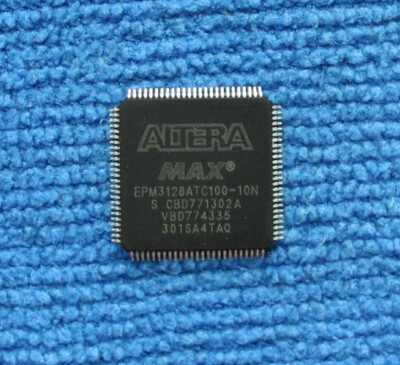
Hot–socketing support
Programmable interconnect array (PIA) continuous routing structure for fast, predictable performance.
PCI compatible
Bus–friendly architecture including programmable slew–rate control
Open–drain output option
Programmable macrocell flipflops with individual clear, preset, clock, and clock enable controls
Programmable power–saving mode for a power reduction of over 50% in each macrocell
Configurable expander product–term distribution, allowing up to 32 product terms per macrocell
Programmable security bit for protection of proprietary designs which is necessary to be removed when Break CPLD EPM3128ATC100-7 Software
Enhanced architectural features, including:
– 6 or 10 pin– or logic–driven output enable signals
– Two global clock signals with optional inversion
– Enhanced interconnect resources for improved routability
– Programmable output slew–rate control
Software design support and automatic place–and–route provided by Altera’s development systems for Windows–based PCs and Sun SPARCstations, and HP 9000 Series 700/800 workstations
Additional design entry and simulation support provided by EDIF 2 0 0 and 3 0 0 netlist files, library of parameterized modules (LPM), Verilog HDL, VHDL, and other interfaces to popular EDA tools from third–party manufacturers such as Cadence, Exemplar Logic, Mentor Graphics, OrCAD, Synopsys, Synplicity, and VeriBest.
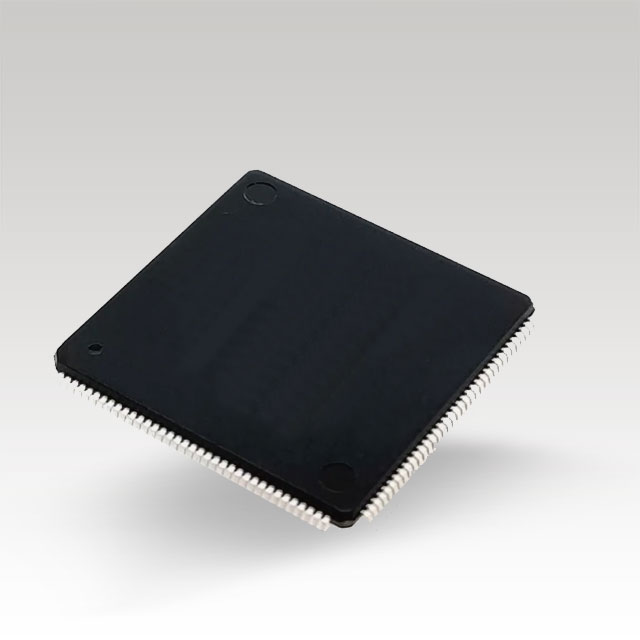
Programming support with the Altera master programming unit (MPU), MasterBlasterTM communications cable, ByteBlasterMVTM parallel port download cable, BitBlasterTM serial download cable as well as programming hardware from third–party manufacturers and any in–circuit tester that supports JamTM Standard Test and Programming Language (STAPL) Files (.jam), Jam STAPL Byte-Code Files (.jbc), or Serial Vector Format Files (.svf).
Once the configuration data has been successfully extracted, it must be processed into a usable format for engineering purposes. The retrieved binary or heximal files are decoded and mapped back into logical structures that reflect the original design intent. Although CPLDs do not store firmware in the traditional sense, their configuration still represents a functional equivalent of embedded program logic. By reconstructing this data, clients can clone or duplicate the original device behavior on replacement components or migrate the design to newer programmable logic platforms. This process allows recovery of critical embedded functionality even when original development files and source code are no longer available.
For system integrators, manufacturers, and maintenance teams, the value of the Break CPLD EPM3128ATC100-7 Software service is substantial. It enables continued operation of legacy systems, reduces the need for complete redesign, and preserves proven logic implementations that are difficult to reproduce from scratch. Instead of abandoning equipment due to locked or secured programmable devices, organizations can regain access to essential configuration data and embedded logic resources. By combining expertise in programmable logic devices with disciplined handling of protected and encrypted environments, this service provides a reliable and practical solution for recovering and reusing critical design assets across multiple industries.
 Posted in Break IC