Posts Tagged ‘copy microcontroller embedded flash’
 Retrieve Locked GD32F303CBT6 Flash: LQFP48 128 KB Read
 April 27th, 2014 |
 Author:
The GD32F303CBT6 doubles the smallest part’s memory: 128 KB of flash in the same LQFP48 footprint, still on the 120 MHz Cortex-M4. That second 64 KB is where the interesting code tends to live, which is exactly why owners lock it. When the read fails through every normal channel, the job is to retrieve the locked GD32F303CBT6 flash without a mass erase — and the first place people look, the system bootloader, is also the first place the chip says no.
The bootloader is not a back door
GigaDevice ships a bootloader in system memory that answers over USART and, on parts that include it, USB DFU. It can erase, program and read memory — but only while the security level permits. At SPC level 1 the read-memory command is explicitly rejected, and the bootloader will not hand over the main array no matter how the host frames the request. So a locked GD32F303CBT6 flash read cannot be coerced through the documented boot commands; the protection was designed precisely to stop that. The documented unlock path is equally useless here, because it erases the flash it is meant to free.
Where the 128 KB actually sits
The flash is a single contiguous array from 0x08000000, addressed linearly, with the option bytes living in a separate information block that the FMC guards. When the level-1 lock is active the entire 128 KB is hidden behind the same gate, not just a region. This is why partial reads and sector tricks fail: there is no open sector to start from. The recovery has to open the gate for the whole array at once, which is an attack on the check rather than on the storage, and it is the same early-boot fault injection used across the line. Our decapsulation notes cover the physical fallback when even that fails.
Paths that actually retrieve the image
Two routes reach the array on this part. The first is the same early-boot fault injection used on the smaller sibling: a glitch on the security-decision cycle opens the debug port long enough to pull the full image. The second, described in our power glitch notes, targets the supply during the FMC unlock so the array is presented to the bus before the lock re-asserts. Both preserve the 128 KB; neither performs the mass erase that would blank it. The choice between them comes down to how the specific unit behaves on the fixture, and we keep both ready so the part decides, not the method.
What the extra memory costs you
Doubling the flash does not change the lock, but it does change the capture. A 128 KB image takes longer to stream and is more exposed to a glitch that closes the port mid-read, so the read is verified in blocks and restarted from the last good sector rather than from zero. The table shows how the recovery decision scales with the protection level on this part.
| SPC level | Bootloader | Glitch read | Effort |
|---|---|---|---|
| 0 – open | direct | n/a | trivial |
| 1 – read lock | blocked | yes | moderate |
| 2 – chip lock | blocked | no | decap only |
Why a 128 KB part gets locked at all
The CBT6 is cheap and capable enough to end up in products where the firmware is the only thing of value: a sealed accessory, a locked peripheral, a controller whose maker has since disappeared. Locking it costs the owner nothing and costs a reader everything, which is the exact asymmetry that makes recovery worth doing. We see the same pattern on the smaller C8T6, and it explains why the protection is almost always level 1 rather than level 2. Most lockers want to stop casual copying, not a determined bench, so the read usually succeeds without destroying the part. Knowing the motive does not change the technique, but it tells you which path to try first and how likely the capture is to survive the attempt.
How the flash comes back
Once read, the 128 KB is verified against the option-byte block and delivered as a binary plus a map of where the boot and information regions sit. If the goal is to keep the unit alive, the image is placed into a blank restored flash and the option bytes are rewritten to level 0 so the clone behaves like an open part. This is how we retrieve locked GD32F303CBT6 flash without losing the code that made the original worth saving, and the same method feeds the binary decode step that follows extraction. The smaller part’s recovery is the same idea with less to capture.
 Posted in Recover Chip |
 Tags: copy microcontroller embedded binary, copy microcontroller embedded content, copy microcontroller embedded data, copy microcontroller embedded file, copy microcontroller embedded flash, copy microcontroller embedded heximal, copy microcontroller embedded software |
 Comments Closed
Copy Microcontroller PIC16F684 Firmware
The PIC16F684 microcontroller from Microchip is a popular choice for compact, low-power embedded applications. It is frequently found in consumer electronics, industrial controls, automotive systems, and security devices. Its cost-efficiency, reliability, and rich feature set make it ideal for a range of embedded projects. However, when developers or engineers need to copy microcontroller PIC16F684 firmware, they often face challenges due to protective mechanisms such as code locking, encryption, and memory protection fuses.
At Circuit Engineering Co.,LTD, we provide specialized services to restore, unlock, and duplicate firmware from protected microcontrollers like the PIC16F684. Whether for legacy system recovery, competitive analysis, or functional migration, we assist clients in decoding, reading out, and replicating embedded firmware safely and securely.
Understanding the Importance of Firmware Duplication
In many real-world scenarios, access to the original firmware binary or heximal file is lost or was never made available. This creates major difficulties for maintenance, upgrading, or cloning a system. Clients come to us when they need to copy microcontroller PIC16F684 firmware to:
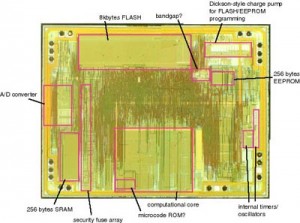
Copy Microcontroller PIC16F684 Firmware needs to unlock Microprocessor PIC16F684 security fuse bit, the silicon package can be removed by proper chemical solution, by focus ion beam will effectively modify the circuitry pattern of MCU PIC16F684
Copy Microcontroller PIC16F684 Firmware needs to unlock Microprocessor PIC16F684 security fuse bit, the silicon package can be removed by proper chemical solution, by focus ion beam will effectively modify the circuitry pattern of MCU PIC16F684;
High-Performance RISC CPU:
· Only 35 instructions to learn:
– All single-cycle instructions except branches
· Operating speed:
– DC – 20 MHz oscillator/clock input
– DC – 200 ns instruction cycle
· Interrupt capability
· 8-level deep hardware stack
Low-Power Features:
· Standby Current:
– 1 nA @ 2.0V, typical
· Operating Current:
– 8.5 µA @ 32 kHz, 2.0V, typical
– 100 µA @ 1 MHz, 2.0V, typical
· Watchdog Timer Current:
– 1 µA @ 2.0V, typical
· Direct, Indirect and Relative Addressing modes
Peripheral Features:
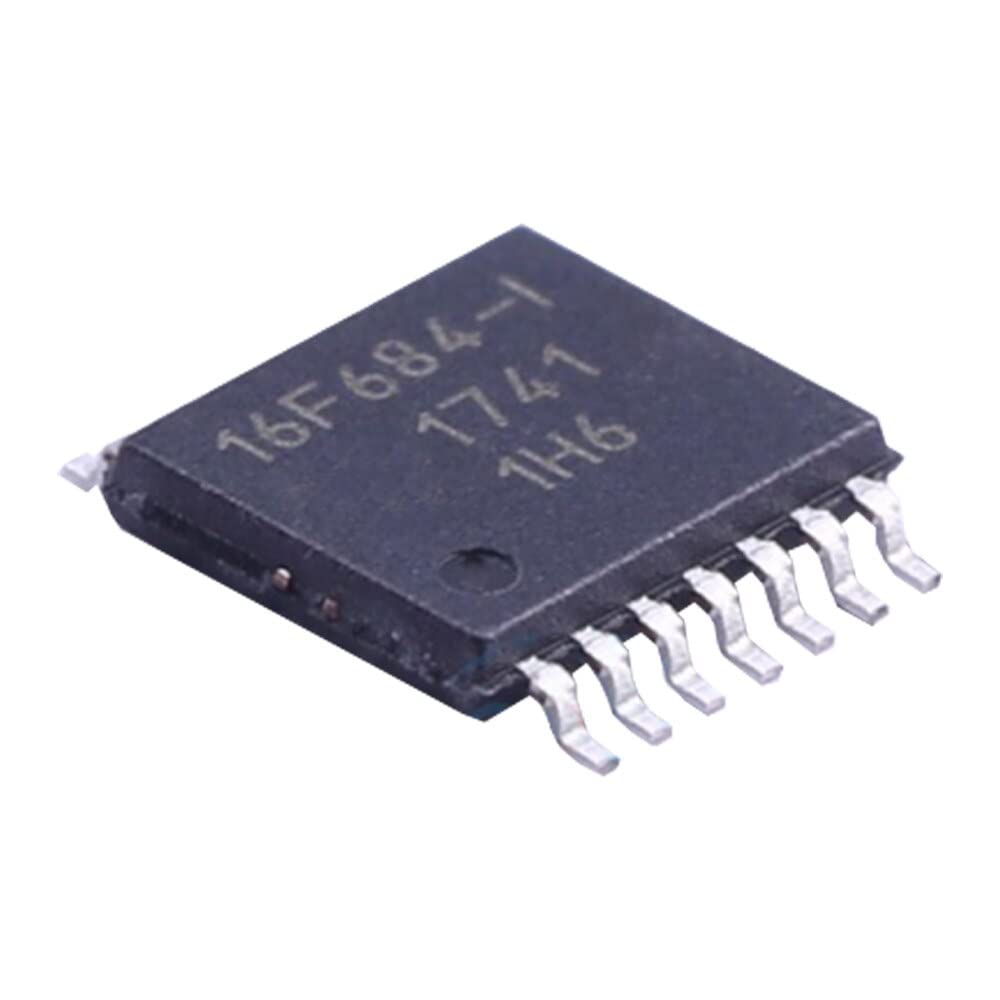
Mikrokontroler PIC16F684 firmy Microchip jest popularnym wyborem w przypadku kompaktowych, energooszczędnych aplikacji wbudowanych. Często można go znaleźć w elektronice użytkowej, sterowaniu przemysłowym, systemach samochodowych i urządzeniach zabezpieczających. Jego opłacalność, niezawodność i bogaty zestaw funkcji sprawiają, że idealnie nadaje się do wielu projektów wbudowanych. Jednak gdy programiści lub inżynierowie muszą skopiować oprogramowanie układowe mikrokontrolera PIC16F684, często stają przed wyzwaniami z powodu mechanizmów ochronnych, takich jak blokada kodu, szyfrowanie i bezpieczniki zabezpieczające pamięć.
Special Microcontroller Features:
· Precision Internal Oscillator:
– Factory calibrated to ±1%
– Software selectable frequency range of 8 MHz to 31 kHz
– Software tunable
– Two-speed Start-up mode
– Crystal fail detect for critical applications
– Clock mode switching during operation for power savings
· Power-saving Sleep mode
· Wide operating voltage range (2.0V-5.5V)
· Industrial and Extended Temperature range
· Power-on Reset (POR)
· Power-up Timer (PWRT) and Oscillator Start-up Timer (OST)
· Brown-out Detect (BOD) with software control option
· Enhanced low-current Watchdog Timer (WDT) with on-chip oscillator (software selectable nominal 268 seconds with full prescaler) with software enable;
· Multiplexed Master Clear with pull-up/input pin
· Programmable code protection
· High Endurance Flash/EEPROM cell:
– 100,000 write Flash endurance
– 1,000,000 write EEPROM endurance
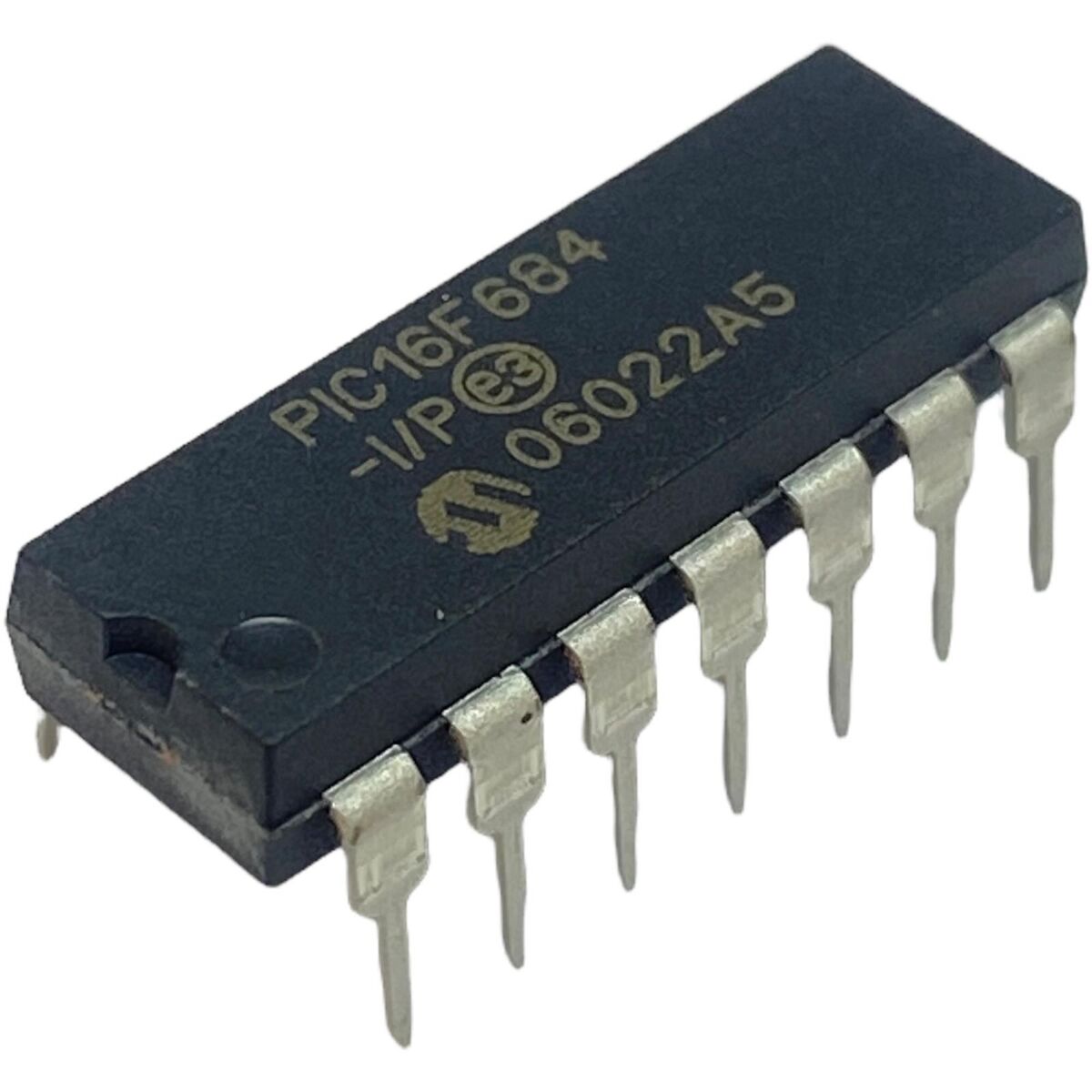
يُعد المتحكم الدقيق PIC16F684 من Microchip خيارًا شائعًا للتطبيقات المدمجة صغيرة الحجم ومنخفضة الطاقة. يُستخدم بكثرة في الإلكترونيات الاستهلاكية، وأجهزة التحكم الصناعية، وأنظمة السيارات، وأجهزة الأمن. تجعله فعاليته من حيث التكلفة، وموثوقيته، ومجموعة ميزاته الغنية مثاليًا لمجموعة من المشاريع المدمجة. ومع ذلك، عندما يحتاج المطورون أو المهندسون إلى نسخ البرامج الثابتة للمتحكم الدقيق PIC16F684، غالبًا ما يواجهون تحديات بسبب آليات الحماية مثل قفل الكود، والتشفير، وصمامات حماية الذاكرة.
– Flash/Data EEPROM retention: > 40 years
· 12 I/O pins with individual direction control:
– High current source/sink for direct LED drive
– Interrupt-on-pin change
– Individually programmable weak pull-ups
– Ultra Low-power Wake-up (ULPWU)
· Analog comparator module with:
– Two analog comparators
– Programmable on-chip voltage reference (CVREF) module (% of VDD)
– Comparator inputs and outputs externally accessible
· A/D Converter:
– 10-bit resolution and 8 channels
· Timer0: 8-bit timer/counter with 8-bit programmable prescaler· Enhanced Timer1:
– 16-bit timer/counter with prescaler
– External Gate Input mode
– Option to use OSC1 and OSC2 in LP mode as Timer1 oscillator if INTOSC mode selected
· Timer2: 8-bit timer/counter with 8-bit period register, prescaler and postscaler
· Enhanced Capture, Compare, PWM module:
– 16-bit Capture, max resolution 12.5 ns
– Compare, max resolution 200 ns
– 10-bit PWM with 1, 2 or 4 output channels, programmable “dead time”, max frequency 20 kHz
· In-Circuit Serial ProgrammingTM (ICSPTM) via two pins.
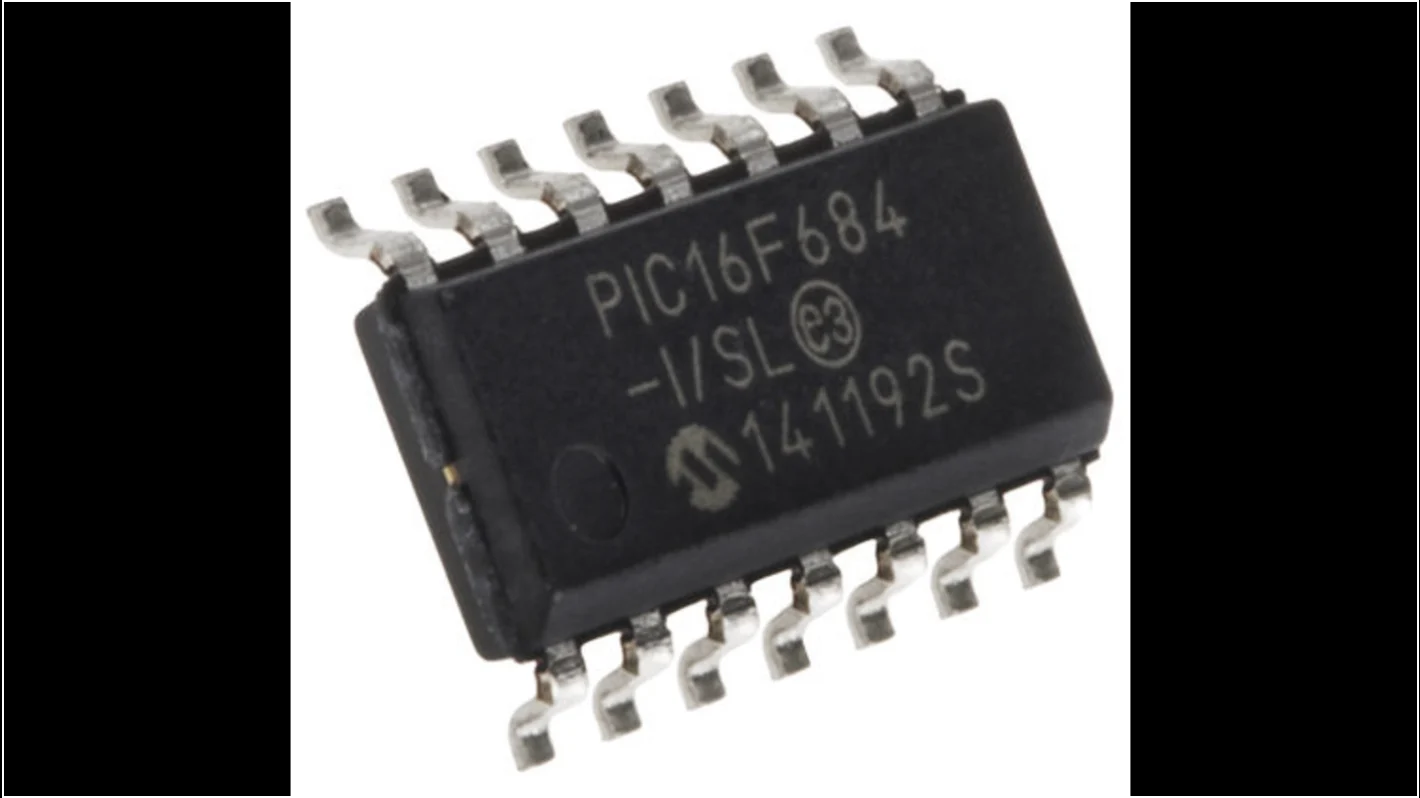
میکروکنترلر PIC16F684 از Microchip یک انتخاب محبوب برای برنامه های جاسازی شده فشرده و کم مصرف است. اغلب در لوازم الکترونیکی مصرفی، کنترل های صنعتی، سیستم های خودرو و دستگاه های امنیتی یافت می شود. مقرون به صرفه بودن، قابلیت اطمینان و مجموعه ویژگی های غنی آن را برای طیف وسیعی از پروژه های تعبیه شده ایده آل می کند. با این حال، زمانی که توسعهدهندگان یا مهندسان نیاز به کپی کردن میانافزار میکروکنترلر PIC16F684 دارند، اغلب به دلیل مکانیسمهای حفاظتی مانند قفل کد، رمزگذاری و فیوزهای محافظت از حافظه با چالشهایی مواجه میشوند.
Posted in Recover Chip |
Tags: copy microcontroller embedded bin, copy microcontroller embedded content, copy microcontroller embedded data, copy microcontroller embedded file, copy microcontroller embedded flash, copy microcontroller embedded hex, copy microcontroller embedded software, чупя чип protetsted bin, чупя чип protetsted code, чупя чип protetsted data, чупя чип protetsted eeprom, чупя чип protetsted file, чупя чип protetsted firmware, чупя чип protetsted flash, чупя чип protetsted hex, чупя чип protetsted memory, чупя чип protetsted program |
Comments Closed