Posts Tagged ‘break microcontroller encrypted data’
 Break Microcontroller Samsung S3F9454 Software
 March 31st, 2014 |
 Author:
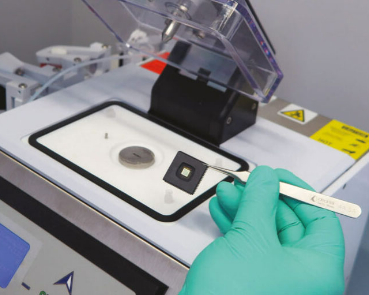
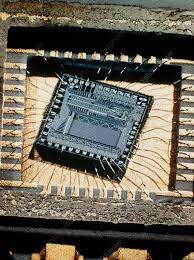
Break Microcontroller Samsung S3F9454 locked memory and extract MCU S3F9454 software from flash memory, the program will be cloned from Microprocessor through universal programmer, an adaptive socket will be required for the whole process;
Break Microcontroller Samsung S3F9454 locked memory and extract MCU S3F9454 software from flash memory, the program will be cloned from Microprocessor through universal programmer, an adaptive socket will be required for the whole process
The SAM88RCRI instruction set is designed to support the large register file. It includes a full complement of 8-bit arithmetic and logic operations. There are 41 instructions. No special I/O instructions are necessary because I/O control and data registers are mapped directly into the register file. Flexible instructions for bit addressing, rotate, and shift operations complete the powerful data manipulation capabilities of the SAM88RCRI instruction set when break Microcontroller.
Мікроконтролер Samsung S3F9454 широко використовується в промисловому, автомобільному та побутовому електроніці завдяки розширеним функціям та закріпленій вбудованій програмній програмі. Однак, коли прошивка, двійкова або EEPROM пам’яті заблокована або зашифрована, доступ до початкового вихідного коду стає проблемою. У [назві вашої компанії] ми спеціалізуємось на порушенні програмного забезпечення для мікроконтролера Samsung S3F9454, допомагаючи клієнтам розшифрувати, витягнути та відновити захищені дані для оптимізації системи, налагодження чи міграції.
To access an individual register, an 8-bit address in the range 0-255 or the 4-bit address of a working register is specified. Paired registers can be used to construct 13-bit program memory or data memory addresses. For detailed information about register addressing, please refer to Chapter 2, “Address Spaces”.
ADDRESSING MODES
There are six addressing modes: Register (R), Indirect Register (IR), Indexed (X), Direct (DA), Relative (RA), and Immediate (IM). For detailed descriptions of these addressing modes, please refer to Chapter 3, “Addressing Modes”.
FLAG DESCRIPTIONS
33Overflow Flag (FLAGS.4, V)
The V flag is set to “1″ when the result of a two’s-complement operation is greater than + 127 or less than – 128.
It is also cleared to “0″ following logic operations.
Microcontrolerul Samsung S3F9454 este utilizat pe scară largă în electronica industrială, auto și de consum datorită caracteristicilor sale avansate și a firmware -ului încorporat securizat. Cu toate acestea, atunci când firmware -ul, memoria binară sau EEPROM este blocată sau criptată, accesarea codului sursă original devine o provocare. La [numele companiei dvs.], suntem specializați în spargerea software -ului microcontroller Samsung S3F9454, ajutând clienții să decripteze, să extragă și să restabilească datele protejate pentru optimizarea sistemului, depanarea sau migrația.
Following arithmetic, logic, rotate, or shift operations, the sign bit identifies the state of the MSB of the result. A logic zero indicates a positive number and a logic one indicates a negative number.
Zero Flag (FLAGS.6, Z)
For arithmetic and logic operations, the Z flag is set to “1″ if the result of the operation is zero. For operations that test register bits, and for shift and rotate operations, the Z flag is set to “1″ if the result is logic zero.
Carry Flag (FLAGS.7, C)
The C flag is set to “1″ if the result from an arithmetic operation generates a carry-out from or a borrow to the bit 7 position (MSB). After rotate and shift operations, it contains the last value shifted out of the specified register. Program instructions can set, clear, or complement the carry flag.
The Samsung S3F9454 microcontroller is widely used in industrial, automotive, and consumer electronics due to its advanced features and secured embedded firmware. However, when the firmware, binary, or EEPROM memory is locked or encrypted, accessing the original source code becomes a challenge. At [Your Company Name], we specialize in breaking microcontroller Samsung S3F9454 software, helping clients decrypt, extract, and restore protected data for system optimization, debugging, or migration.
Microcontroller Samsung S3F9454 е широко използван в индустриалната, автомобилната и потребителската електроника поради своите усъвършенствани функции и защитената вградена фърмуер. Въпреки това, когато фърмуерът, бинарният или паметта на EEPROM са заключени или криптирани, достъпът до оригиналния изходен код се превръща в предизвикателство. На [Името на вашата компания] ние сме специализирани в счупването на микроконтролер Samsung S3F9454 софтуер, помагайки на клиентите да декриптират, извлекат и възстановят защитените данни за оптимизация на системата, отстраняване на грешки или миграция.
Our Approach to Breaking Samsung S3F9454 Software
-
Firmware Extraction & Memory Dumping – Using specialized tools, we unlock and copy the secured EEPROM and flash memory, retrieving the binary or heximal firmware archive stored inside the protected microcontroller.
-
Decryption & Binary Analysis – The extracted firmware file is often encrypted or encoded. We apply advanced cracking and decoding techniques to convert the raw heximal program data into a readable source code structure.
-
Disassembly & Reverse Engineering – The binary firmware is decompiled and analyzed, allowing us to restore the embedded program into a structured format. This step helps in hacking and cloning the secured microcontroller software for further modifications.
-
Firmware Duplication & Reprogramming – Once decoded and unlocked, the source code and program data can be duplicated, cloned, or copied for backup, migration to new hardware, or custom software development.
Why Choose Our Services?
The Samsung S3F9454 microcontroller features secure memory protection, real-time processing capabilities, and embedded flash storage, making it highly resilient against unauthorized access. Our firmware cracking and reverse engineering solutions ensure that even the most locked and protected microcontroller software can be restored and decrypted successfully.
If you need to extract, modify, or replicate the firmware or EEPROM memory inside a Samsung S3F9454 microcontroller, contact us today. We provide professional hacking, decoding, and duplication services to help you recover and optimize secured embedded systems.
 Posted in Break IC |
 Tags: break microcontroller encrypt flash, break microcontroller encrypted bin, break microcontroller encrypted content, break microcontroller encrypted data, break microcontroller encrypted file, break microcontroller encrypted heximal, break microcontroller encrypted software |
 Comments Closed
ATtiny24: High-Voltage Entry and What It Can Actually Reach
A fourteen-pin AVR has few pins to spare, and the programming interface needs four of them. When a designer needs one back, the fuse that frees the reset pin is the obvious candidate — and the consequence is a part that no serial programmer can enter.
The escape hatch is high-voltage programming: twelve volts on the reset pin puts the part into a mode where the fuse settings are irrelevant, because the very state that disables serial entry is what the high-voltage mode overrides.
What the mode does and does not do
It does three things:
- Restores the fuse byte, which is the documented way to undo a disabled serial interface.
- Reads the signature and the fuse bytes.
- Performs chip erase.
It does not read protected flash. This is the point that surprises people, and it is worth being blunt about: high-voltage programming on AVR is not a protection bypass. It is an alternate entry path. The lock bits are enforced by the same logic in both modes, and there is no mode in which the part hands over protected contents.
So the high-voltage adapter is a tool for recovering access, not for recovering data. Those are different objectives and they have different prospects.
Why the distinction matters commercially
If a device is locked in mode 2, no interface reads it. If a device is merely unreachable because a fuse disabled the serial port, the high-voltage path restores access and then everything proceeds normally — including, if the lock bits turn out to be clear, a full read.
That means the first question on an unresponsive part is not “is it locked” but “which of the two problems do I have”. They present identically at the programmer: no device detected. They have completely different answers.
| Condition | Serial entry | High-voltage entry | Flash readable |
|---|---|---|---|
| Unlocked, fuses normal | works | works | yes |
| Unlocked, reset pin disabled | fails | works | yes |
| Locked mode 2, fuses normal | works, read refused | works, read refused | no |
| Locked mode 2, reset disabled | fails | works, read refused | no |
The fourth row is the genuinely closed case, and it is the one a careful designer would choose. The second row is the easy case that looks hard.
Pins are the constraint
On a fourteen-pin part the programming pins are shared with port pins that also carry the ADC and the timer outputs. A product that uses all of them has already made decisions about which function wins.
Two consequences follow. First, the high-voltage adapter needs access to specific pins and a product’s board layout may make that physically awkward — headers may not expose them, and the pins may be loaded by circuitry that interferes with the twelve-volt pulse. Second, the twelve-volt pulse has to reach the reset pin without damaging anything else on that net, which in a product with a reset supervisor means knowing what else is connected.
That is a board-level examination, not a datasheet reading, and it is why a device that is trivial on a breadboard can be awkward in a potting-filled enclosure.
The sequence that wastes least
- Power at the design rail, measure at the socket.
- Try serial entry. If it works, read signature, fuses, lock byte before anything else.
- If serial fails, measure the reset pin while the programmer asserts it. A pin that does not follow means a fuse reassigned it, not that the die is dead.
- Move to high-voltage entry only after step 3.
- In high-voltage mode, read signature and fuses first. Only then decide about memory.
Step 3 is the one that saves the most time, because it distinguishes a configuration problem from a hardware failure with one probe.
Reading after access is restored
Once in, the small parts behave like every other AVR: page-based flash, byte-based EEPROM, lock bits gating the read commands. The array is small, so a full read is fast and there is no excuse for not reading it twice and comparing.
Two things are worth recording even when the read succeeds: the fuse byte, because it explains the access problem and predicts whether the same device will be reachable again next time, and the signature, because on a fourteen-pin family the members differ only in memory size and a mislabelled part is not unusual.
Related notes
- ATtiny24V and the debug-wire fuse — a second way to lose the reset pin.
- ATtiny84 and complete hex images — the same family with the largest array.
- ATmega644PA and RSTDISBL — the fuse behind all of this, explained.
FAQ
Does high-voltage mode bypass the lock bits? No. It bypasses a disabled interface, not code protection.
Can it restore a part whose serial port was disabled? Yes. That is its documented purpose.
Does twelve volts damage the part? Applied to the reset pin in the specified mode, no. Applied elsewhere, yes.
Is a locked, reset-disabled part recoverable? Not by either programming interface. That configuration is closed by design.
Conclusion
High-voltage programming is an entry path, not a key. It restores access that a fuse removed, it reads the fuse byte that explains the situation, and it performs the erase that clears the lock — while destroying the contents. Understanding that narrow scope prevents the most common misallocation of effort on a small AVR.
Posted in Break IC |
Tags: break microcontroller encrypted archive, break microcontroller encrypted binary, break microcontroller encrypted code, break microcontroller encrypted content, break microcontroller encrypted data, break microcontroller encrypted eeprom, break microcontroller encrypted file, break microcontroller encrypted firmware, break microcontroller encrypted heximal, break microcontroller encrypted information, break microcontroller encrypted memory, break microcontroller encrypted program |
Comments Closed