 Recover Chip PIC18F1330 Code
 August 23rd, 2014 |
  Author:
 The PIC18F1330 is a high‑performance 8‑bit microcontroller from Microchip, featuring 8KB of flash program memory, 256 bytes of EEPROM data storage, and 256 bytes of SRAM. It also includes a unique high‑voltage program interface and a built‑in motor control PWM module, making it ideal for automotive power windows, industrial servo drives, robotic actuators, and medical pump controllers. Unlike standard chips, the PIC18F1330 integrates embedded peripherals that require precisely tuned firmware to operate safely. Manufacturers often set protective lock bits to prevent unauthorised readout, turning the microcontroller into a secured black box. When the original source code is lost or the vendor discontinues support, the only archive of the binary file remains trapped inside the locked memory. Recovering that data becomes essential to avoid scrapping expensive equipment.
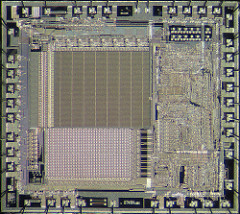
Memory Endurance: The Enhanced Flash cells for both program memory and data EEPROM are rated to last for many thousands of erase/write cycles – up to 100,000 for program memory and 1,000,000 for EEPROM. Data retention without refresh is conservatively estimated to be greater than 40 years.
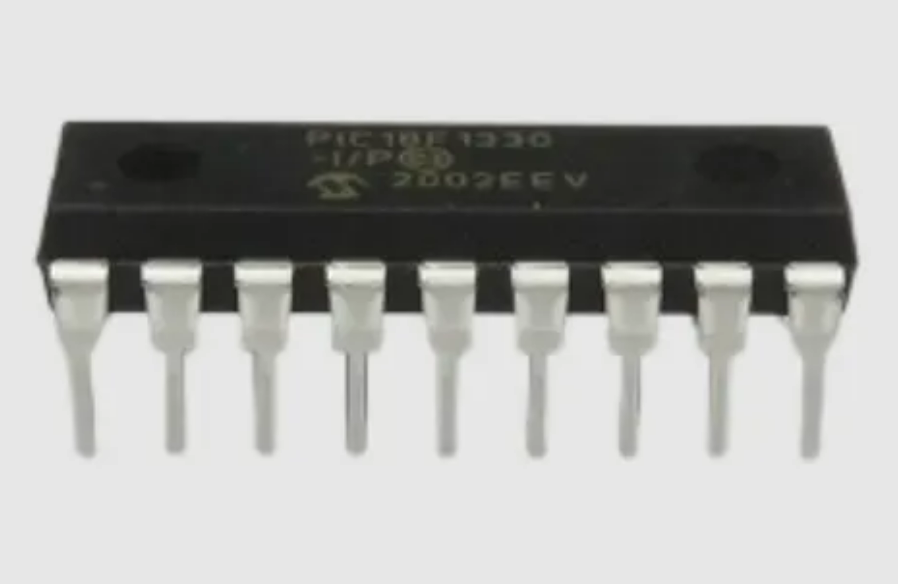
Self-Programmability: These devices can write to their own program memory spaces under internal software control. By using a boot loader routine located in the protected Boot Block at the top of program memory, it becomes possible to create an application that can update itself in the field.
To recover the firmware from a locked PIC18F1330, one cannot simply use a standard programmer because the protective encrypted lock bits block any readout of the flash or EEPROM. Our service employs advanced techniques to break this protection. First, we may decapsulate the chip using precision etching to expose the silicon die, then hack into the memory array via micro‑probing. Alternatively, we utilise fault injection or side‑channel analysis to decode the secured program without destroying the microcontroller. The goal is to retrieve the complete binary or heximal file that contains the original source code logic. Once extracted, we can clone or duplicate this firmware into a fresh PIC18F1330 chip, effectively restoring the embedded software. This attack on the protected memory does not alter the original data; it simply makes the archive accessible for legitimate maintenance and reverse engineering.
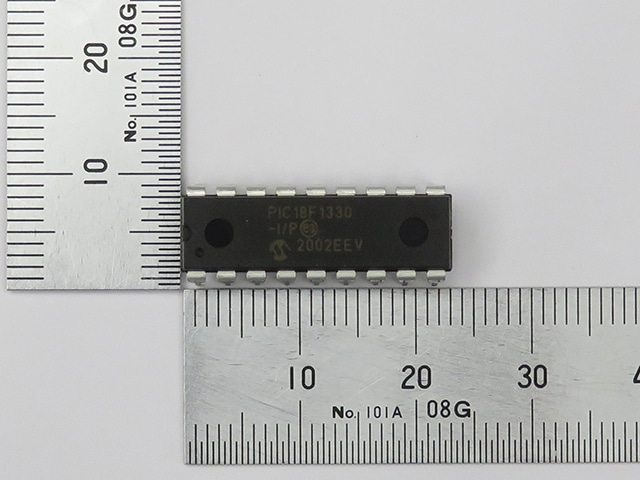
· Extended Instruction Set: The PIC18F1230/1330 family introduces an optional extension to the PIC18 instruction set, which adds eight new instructions and an Indexed Addressing mode. This extension, enabled as a device configuration option, has been specifically designed to optimize re-entrant application code originally developed in high-level languages, such as C.
· Power Control PWM Module: This module provides up to six modulated outputs for controlling half-bridge and full-bridge drivers. Other features include auto-shutdown on Fault detection and auto-restart to reactivate outputs once the condition has cleared.
· Enhanced Addressable USART: This serial communication module is capable of standard RS-232 operation and provides support for the LIN bus protocol. Other enhancements include automatic baud rate detection and a 16-bit Baud Rate Generator for improved resolution from Recover Chip PIC18F1330 Code.
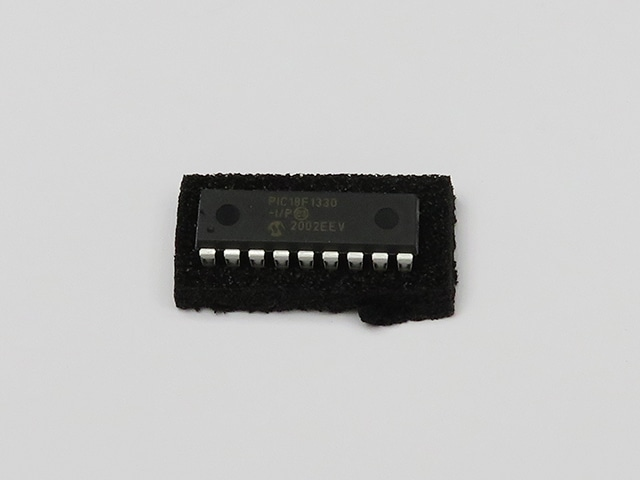
The market demand for recover services comes from three real‑world situations. First, obsolete equipment: many industrial motor drives and automotive modules still rely on the PIC18F1330, but the original source code file was lost when a supplier went bankrupt. Second, embedded firmware corruption: a flash memory bit‑flip can render the program non‑functional, and without a backup binary, the entire system stops. Third, reverse engineering for compatibility: companies need to clone a secured microcontroller to produce drop‑in replacements. By performing a clean decode and retrieve of the heximal archive, we enable clients to duplicate the program into new chips, avoiding costly redesigns. The benefit is tangible: extended product lifecycle, reduced e‑waste, and preserved intellectual property.
When the microcontroller is using the internal oscillator block, the EUSART provides stable operation for applications that talk to the outside world without using an external crystal (or its accompanying power requirement).
· 10-Bit A/D Converter: This module incorporates programmable acquisition time, allowing for a channel to be selected and a conversion to be initiated without waiting for a sampling period and thus, reducing code overhead.
· Extended Watchdog Timer (WDT): This enhanced version incorporates a 16-bit prescaler, allowing an extended time-out range that is stable across operating voltage and temperature.
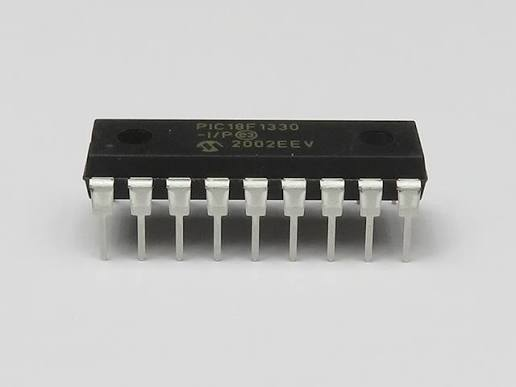
See Section 22.0 “Electrical Characteristics” for time-out periods. Devices in the PIC18F1230/1330 family are available in 18-pin, 20-pin and 28-pin packages. The devices are differentiated from each other in one way:
1. Flash program memory (4 Kbytes for PIC18F1230, 8 Kbytes for PIC18F1330). All other features for devices in this family are identical. Like all Microchip PIC18 devices, members of the PIC18F1230/1330 family are available as both standard and low-voltage devices.
Standard devices with Enhanced Flash memory, designated with an “F” in the part number (such as PIC18F1330), accommodate an operating VDD range of 4.2V to 5.5V. Low-voltage parts, designated by “LF” (such as PIC18LF1330), function over an extended VDD range of 2.0V to 5.5V.
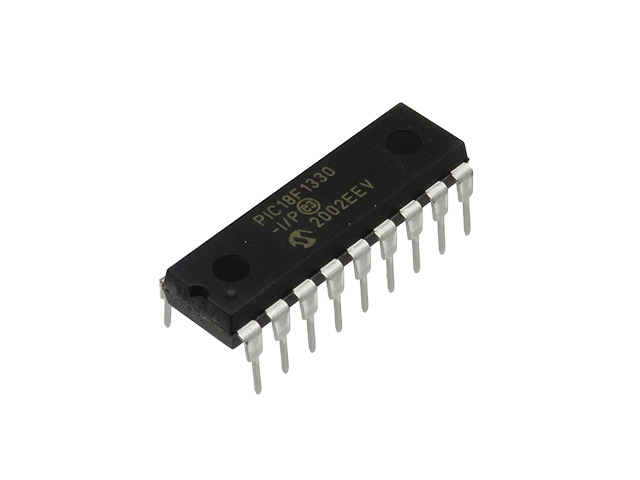
We offer confidential, fast, and professional recover services for the PIC18F1330 and many other microcontrollers. Every break procedure is performed with care to preserve the data integrity. Contact us with your locked chip, and we will decapsulate, decode, and retrieve the complete binary or heximal file – turning a protective memory into a usable archive for production, maintenance, or cloning.
 Posted in Recover Chip