 The Schematic Diagram Drawing Process for Reverse Engineered PCBs
 September 14th, 2011 |
 Author:
The schematic diagram drawing process for pcb reverse engineering begins after connectivity has been captured from the physical board and continues until a clean, annotated drawing is ready for review and fabrication. Turning a raw netlist into a usable schematic is a disciplined task that requires both tooling and engineering judgment. Components must be grouped by function, signals must be named consistently, and power paths must be clearly separated so the final document reads like an original design rather than a tangled web of nets. This article describes the step by step drawing process that transforms reverse engineered data into schematics a fabrication house can trust.
Preparing the Working Environment
Before any drawing starts, the engineer sets up a consistent project structure. This means loading the captured netlist, importing component footprints from a verified library, and configuring the schematic editor with the same grid and annotation rules used across the organization. A clean environment prevents mismatched reference designators later, which are a frequent source of confusion during review.
It also helps to import the board images as background references. Having the original layout visible while drawing keeps the schematic honest about how signals actually flow. Many teams begin by studying an extract wiring diagram from circuit board service output so they understand the physical routing before assigning logical structure.
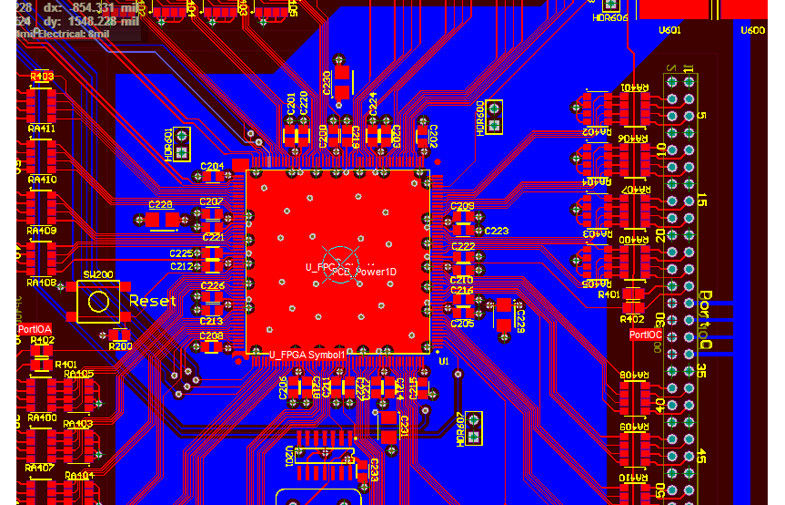
Placing Components and Establishing References
The next step places each component onto schematic sheets using its correct symbol. Reference designators should follow the original board markings wherever possible, because technicians repairing the hardware will look for U1, R12, or Q3 on the physical part. Where the original silkscreen is illegible, a consistent new scheme is assigned and documented in the bill of materials.
Grouping is critical. Power regulators belong near their loads, microcontroller subsystems are drawn as coherent blocks, and connectors are placed at sheet edges to reflect real interfaces. This functional organization is what separates a professional reverse engineered schematic from a flat net dump that no one can navigate.
Drawing Connectivity and Naming Signals
With parts placed, wires are drawn to match the captured nets. Signal names are assigned based on function: clock lines, reset nets, and bus signals get meaningful labels rather than generic node numbers. Naming discipline pays off during debugging, when an engineer needs to find a signal quickly across many sheets.
Power and ground are usually handled with global symbols instead of explicit wires to reduce clutter. This keeps the drawing readable while still documenting every connection. Where a programmable device sits on the board, cross checking against the mcu reverse engineering process step by step helps confirm that peripheral pins are labeled according to their firmware role rather than their physical position.
Review Checkpoints in the Drawing Process
Structured checkpoints keep the drawing accurate as it grows. The table below lists the stages where a formal review should occur.
| Review stage | What is checked | Common defect caught |
|---|---|---|
| Symbol assignment | Correct part per net | Wrong package mapped |
| Net connectivity | Wires match netlist | Missing or crossed link |
| Signal naming | Labels are meaningful | Duplicate net names |
| Power separation | Rails drawn clearly | Shorted domains |
| Final annotation | References consistent | Duplicate designators |
These checkpoints turn schematic drawing from a single pass gamble into a controlled process with traceable quality.
Validating Against the Physical Board
No schematic is complete until it is compared back to the hardware. Engineers sample critical nets with a multimeter or scope to confirm that the drawing matches reality, paying special attention to power sequencing and analog sections where small errors cause large failures. Discrepancies are corrected in the schematic, not rationalized away.
This validation step is where the pcb reverse engineering primary objective shows its value, because an accurate schematic is one of the unrestricted technical data elements that lets the board be repaired and reproduced without the original manufacturer. An extract circuit diagram from pcb board comparison further confirms that the logical drawing agrees with the physical copper.
Delivering Review-Ready Schematics
The finished deliverable is a set of annotated schematics accompanied by the netlist and bill of materials. Good documentation includes sheet indexes, revision history, and notes on any ambiguous nets that could not be fully verified. Fabrication houses and repair teams both benefit from this completeness, and a parallel restore schematic diagram from circuit board effort can supply the original manufacturer context where it still exists.
In practice, the schematic diagram drawing process for pcb recovery succeeds when it balances speed with rigor. A drawing that is clean, validated, and well organized becomes the foundation for every later modification, clone, or sustainment effort built on the reverse engineered board.
 Posted in
 Tags: