 Break Microcontroller TI MSP430F448 Firmware
 March 29th, 2014 |
  Author:
 Break Microcontroller TI MSP430F448 can help engineer to disable the protective mechanism of MCU MSP430F448, the firmware in the flash memory can be readout directly with universal programmer, then Microprocessor MSP430F448 cloning can be proceed.
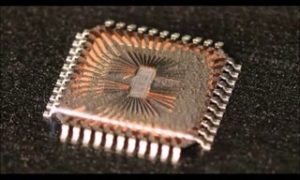
Break Microcontroller TI MSP430F448 can help engineer to disable the protective mechanism of MCU MSP430F448, the firmware in the flash memory can be readout directly with universal programmer
Low Supply-Voltage Range, 1.8 V to 3.6 V
Ultralow-Power Consumption:
– Active Mode: 280 µA at 1 MHz, 2.2 V
– Standby Mode: 1.1 µA
– Off Mode (RAM Retention): 0.1 µA
Five Power Saving Modes
Wake-Up From Standby Mode in 6 µs 16-Bit RISC Architecture,
125-ns Instruction Cycle Time
12-Bit A/D Converter With Internal
Reference, Sample-and-Hold and Autoscan
Feature
16-Bit Timer With Three† or Seven‡
Capture/Compare-With-Shadow Registers, Timer_B Serial Onboard Programming,
No External Programming Voltage Needed Programmable Code Protection by Security Fuse
Integrated LCD Driver for Up to 160 Segments
Family Members Include:
– MSP430F435:
16KB+256B Flash Memory,
512B RAM
– MSP430F436:
24KB+256B Flash Memory,
1KB RAM
– MSP430F437:
32KB+256B Flash Memory,
1KB RAM
16-Bit Timer With Three Capture/Compare Registers, Timer_A On-Chip Comparator Serial Communication Interface (USART), Select Asynchronous UART or Synchronous SPI by Software;
Two USARTs (USART0, USART1) In MSP430x44x Devices One USART (USART0) In MSP430x43x
Devices Brownout Detector Supply Voltage Supervisor/Monitor With Programmable Level Detection
– MSP430F447:
32KB+256B Flash Memory,
1KB RAM
– MSP430F448:
48KB+256B Flash Memory,
2KB RAM
– MSP430F449:
60KB+256B Flash Memory,
2KB RAM
For Complete Module Descriptions, See The MSP430x4xx Family User’s Guide
Literature Number SLAU056 ’F435, ’F436, and ’F437 devices ’F447, ’F448, and ’F449 devices
description
The Texas Instruments MSP430 series is an ultralow-power microcontroller family consisting of several devices featuring different sets of modules targeted to various applications. The microcontroller is designed to be battery operated for use in extended-time applications.
The MSP430 achieves maximum code efficiency with its 16-bit RISC architecture, 16-bit CPU-integrated registers, and a constant generator. The digitally-controlled oscillator provides wake-up from low-power mode to active mode in less than 6 µs.
The MSP430x43x and the MSP430x44x series are microcontroller configurations with two built-in 16-bit timers, a fast 12-bit A/D converter, one or two universal serial synchronous/asynchronous communication interfaces (USART), 48 I/O pins, and a liquid crystal driver (LCD) with up to 160 segments.
![A TI MSP430F448 mikrovezérlő egy alacsony teljesítményű, nagy teljesítményű chip, amelyet általában ipari, orvosi és autóipari alkalmazásokban használnak. Beágyazott flash memória, EEPROM és rögzített firmware -védelemmel rendelkezik az illetéktelen hozzáférés megakadályozása érdekében. Vannak azonban olyan esetek, amikor a felhasználóknak vissza kell állítaniuk, másolni vagy klónozniuk kell a firmware -t - akár biztonsági másolatot, hibakeresést, rendszer migrációját vagy fordított tervezését. A [Az Ön cégneve] oldalán a Mikrovezérlő TI MSP430F448 firmware törésére szakosodunk, segítve az ügyfelek dekódolását, dekódolását és a védett adatok feloldását az elemzéshez és a módosításhoz.](https://www.ic-crack.com/wp-content/uploads/2014/03/1.png)
A TI MSP430F448 mikrovezérlő egy alacsony teljesítményű, nagy teljesítményű chip, amelyet általában ipari, orvosi és autóipari alkalmazásokban használnak. Beágyazott flash memória, EEPROM és rögzített firmware -védelemmel rendelkezik az illetéktelen hozzáférés megakadályozása érdekében. Vannak azonban olyan esetek, amikor a felhasználóknak vissza kell állítaniuk, másolni vagy klónozniuk kell a firmware -t – akár biztonsági másolatot, hibakeresést, rendszer migrációját vagy fordított tervezését. A [Az Ön cégneve] oldalán a Mikrovezérlő TI MSP430F448 firmware törésére szakosodunk, segítve az ügyfelek dekódolását, dekódolását és a védett adatok feloldását az elemzéshez és a módosításhoz.
The TI MSP430F448 microcontroller is a low-power, high-performance chip commonly used in industrial, medical, and automotive applications. It features embedded flash memory, EEPROM, and secured firmware protection to prevent unauthorized access. However, there are cases where users need to restore, copy, or clone the firmware—whether for backup, debugging, system migration, or reverse engineering. At [Your Company Name], we specialize in breaking the microcontroller TI MSP430F448 firmware, helping clients decode, decrypt, and unlock protected data for analysis and modification.
Procedures to Crack TI MSP430F448 Firmware Protection
![Микроконтроллер TI MSP430F448 представляет собой высокопроизводительный чип, обычно используемый в промышленных, медицинских и автомобильных приложениях. Он оснащен встроенной флэш -памятью, EEPROM и защитой прошивки для предотвращения несанкционированного доступа. Тем не менее, есть случаи, когда пользователям необходимо восстановить, копировать или клонировать прошивку - будь то для резервного копирования, отладки, миграции системы или обратной инженерии. В [название вашей компании] мы специализируемся на нарушении прошивки микроконтроллера TI MSP430F448, помогая клиентам декодировать, расшифровать и разблокировать защищенные данные для анализа и модификации.](https://www.ic-crack.com/wp-content/uploads/2014/03/2.png)
Микроконтроллер TI MSP430F448 представляет собой высокопроизводительный чип, обычно используемый в промышленных, медицинских и автомобильных приложениях. Он оснащен встроенной флэш -памятью, EEPROM и защитой прошивки для предотвращения несанкционированного доступа. Тем не менее, есть случаи, когда пользователям необходимо восстановить, копировать или клонировать прошивку – будь то для резервного копирования, отладки, миграции системы или обратной инженерии. В [название вашей компании] мы специализируемся на нарушении прошивки микроконтроллера TI MSP430F448, помогая клиентам декодировать, расшифровать и разблокировать защищенные данные для анализа и модификации.
-
Firmware Extraction – We use advanced hardware tools to read and copy the flash and EEPROM memory, even when the firmware is protected or encrypted. Our techniques allow us to bypass security restrictions and gain access to the heximal or binary data stored in the microcontroller.
-
Disassembly and Reverse Engineering – After extracting the firmware, we decode and disassemble the locked program into machine-readable instructions. This process helps restore the embedded source code and allows deeper analysis of system behavior.
-
Decryption and Source Code Reconstruction – If the firmware is encrypted, we apply specialized algorithms to decrypt and reconstruct the original program. Our goal is to unlock the protected data archive and convert it into a readable and modifiable format.
-
Cloning and Duplication – Once the firmware is extracted and decrypted, we assist in duplicating or cloning the embedded program, making it transferable to other microcontrollers or systems. This step is crucial for system upgrades, debugging, and functional replication.
Why Choose Our TI MSP430F448 Hacking Service?
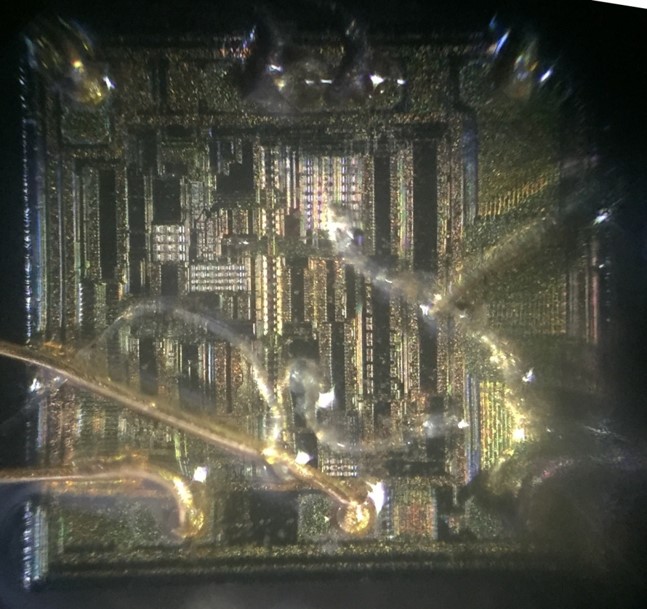
Stručnost u sigurnosnom zaobilaženju Microcontroller – Naš tim ima veliko iskustvo u pucanju zaključanog firmvera i dešifriranju osiguranih memorijskih datoteka.
Napredne tehnike dešifriranja – koristimo najnovije alati za hakiranje firmvera i obrnuti inženjering kako bismo osigurali točno i učinkovito vađenje podataka.
Stroga povjerljivost – Svi projekti upravljaju se s potpunom sigurnošću i povjerljivošću, osiguravajući integritet podataka i privatnost.
-
Expertise in Microcontroller Security Bypass – Our team has extensive experience in cracking locked firmware and decrypting secured memory files.
-
Advanced Decryption Techniques – We use the latest firmware hacking and reverse engineering tools to ensure accurate and efficient data extraction.
-
Strict Confidentiality – All projects are handled with full security and confidentiality, ensuring data integrity and privacy.
If you need to break, unlock, or copy the protected firmware of the TI MSP430F448 microcontroller, contact us today. Our professional reverse engineering solutions will help you restore and duplicate secured software with precision and reliability.
 Posted in Break IC |
  Tags: break microcontroller binary file, break microcontroller dump information, break microcontroller embedded firmware, break microcontroller encrypt program, break microcontroller flash content, break microcontroller heximal data, break microcontroller locked archive, break microcontroller protect eeprom, break microcontroller software memory, break microcontroller source code |
  Comments Closed
Break IC Renesas R5F2L388CNFP Firmware
Break IC Renesas R5F2L388CNFP protection, decapsulate the silicon package of Microcontroller R5F2L388CNFP and readout firmware from MCU R5F2L388CNFP data memory and code memory, then make R5F2L388CNFP MCU clone units through this firmware;
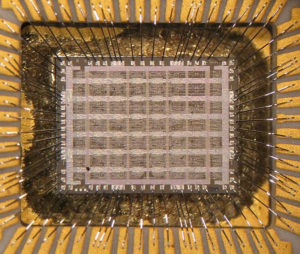
Break IC Renesas R5F2L388CNFP protection, decapsulate the silicon package of Microcontroller R5F2L388CNFP and readout firmware from MCU R5F2L388CNFP data memory and code memory, then make R5F2L388CNFP MCU clone units through this firmware
Features
The R8C/L35C Group, R8C/L36C Group, R8C/L38C Group, and R8C/L3AC Group of single-chip MCUs when incorporate the R8C CPU core, which implements a powerful instruction set for a high level of efficiency and supports a 1 Mbyte address space, allowing execution of instructions at high speed. In addition, the CPU core integrates a multiplier for high-speed operation processing.
Power consumption is low, and the supported operating modes allow additional power control. These MCUs are designed to maximize EMI/EMS performance.
Integration of many peripheral functions, including multifunction timer and serial interface, helps reduce the number of system components.
These groups have data flash (1 KB × 4 blocks) with the background operation (BGO) function.
Specification
CPU
Central processing unit R8C CPU core for the purpose of IC break
· Number of fundamental instructions: 89
· Minimum instruction execution time:
50 ns (f(XIN) = 20 MHz, VCC = 2.7 to 5.5 V)
200 ns (f(XIN) = 5 MHz, VCC = 1.8 to 5.5 V)
· Multiplier: 16 bits × 16 bits → 32 bits
· Multiply-accumulate instruction: 16 bits × 16 bits + 32 bits → 32 bits
· Operating mode: Single-chip mode (address space: 1 Mbyte)
Memory ROM/RAM
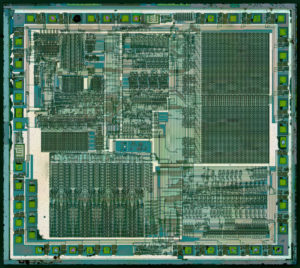
Break IC Renesas R5F2L388CNFP Firmware
Data flash
Refer to Tables 1.7 to 1.10 Product Lists.
Power Voltage detection circuit
Supply
Voltage
Detection
· Power-on reset
· Voltage detection 3 (detection level of voltage detection 0 and voltage detection 1 selectable)
I/O Ports Programmable
I/O ports
R8C/L35C Group
· CMOS I/O ports: 41, selectable pull-up resistor
· High current drive ports: 5
R8C/L36C Group
· CMOS I/O ports: 52, selectable pull-up resistor
· High current drive ports: 8
R8C/L38C Group
· CMOS I/O ports: 68, selectable pull-up resistor
· High current drive ports: 8 R8C/L3AC Group
· CMOS I/O ports: 88, selectable pull-up resistor
· High current drive ports: 16 Clock Clock generation circuits
4 circuits: XIN clock oscillation circuit
XCIN clock oscillation circuit (32 kHz)
High-speed on-chip oscillator (with frequency adjustment function)
Low-speed on-chip oscillator
· Oscillation stop detection:
XIN clock oscillation stop detection function
· Frequency divider circuit:
Division ratio selectable from 1, 2, 4, 8, and 16
· Low-power-consumption modes:
Standard operating mode (high-speed clock, low-speed clock, high-
speed on-chip oscillator, low-speed on-chip oscillator), wait mode,
stop mode, power-off mode
Real-time clock (timer RE)
Interrupts
R8C/L35C Group
· Number of interrupt vectors: 69
· External Interrupt: 9 (INT × 5, key input × 4)
· Priority levels: 7 levels
R8C/L36C Group
· Number of interrupt vectors: 69
· External Interrupt: 12 (INT × 8, key input × 4)
· Priority levels: 7 levels
R8C/L38C Group
· Number of interrupt vectors: 69
· External Interrupt: 16 (INT × 8, key input × 8)
· Priority levels: 7 levels
R8C/L3AC Group
· Number of interrupt vectors: 69
· External Interrupt: 16 (INT × 8, key input × 8)
· Priority levels: 7 levels
Watchdog Timer
· 14 bits × 1 (with prescaler)
· Selectable reset start function
· Selectable low-speed on-chip oscillator for watchdog timer
DTC (Data Transfer Controller)
· 1 channel
· Activation sources: 38
· Transfer modes: 2 (normal mode, repeat mode)
· Transfer modes: 2 (normal mode, repeat mode)
Reverse Engineering IC Embedded Memory
Reverse Engineering IC Embedded Memory need to experience a series of complicate process, and there are a lot of methods to reverse engineering IC embedded memory, and faulty injection technology can be used to analyze the IC, because this technology can help to locate the security fuse.
Although through this reverse engineering IC technology can’t locate the exact locations of security fuse, especially when using the flash light to inject the faulty, but it is no necessary to find out its exact locations, because security fuse can be shielded after the vulnerability point being found.
The facility is very similar to the laser scanning, the only different point is the facility is flash lamp instead of laser, de-capsulate the IC and places it on the test socket of electrical automatic platform.
Expose part of IC under the flash lamp, and then test the security fuse status, and then the location of photo-sensitivity can be found, in where the security fuse can be found too. Not only the security fuse, include all of the control circuit can be sensible to the faulty injection when reverse engineering IC embedded memory which could be more difficult to locate the security fuse.
But from the perspective, it has nothing to do about it, the security evaluation can be instructed by using the same procedures from the vulnerable IC point on the channel, if then each point on the surface of IC can be used to locate the security fuse and confirm if it can be shielded under the exposure of flash lamp within a short period of time.
Through the two time scanning on the PIC16F84 microcontroller IC from microchip, the result of comparison when reverse engineering IC can find the transistors embedded in the security fuse. Although the result can be obtained within a short period of time, but there is one point need to illustrate, it has smaller effect on the small features IC and modern microcontroller IC with multilayer top metal layers. One of the optional method is through backside laser scanning which need more precise and more expensive facilities since there are more noises in the Microcontroller reverse engineering.
Micron boost sales volume thanks to Elpida
Revenues for Micron’s first quarter of fiscal 2014 were USD 4.04 billion and were 42% higher compared to the fourth quarter of fiscal 2013 and 120 percent higher compared to the first quarter of fiscal 2013.
GAAP Income and Per Share Data – On a GAAP(1) basis, net income attributable to Micron shareholders was USD 358 million, or USD 0.30 per diluted share, compared to net income of USD 1.71 billion, or USD 1.51 per diluted share, in the fourth quarter of fiscal 2013 and a net loss of (USD 275) million, or (USD 0.27) per diluted share, in the first quarter of fiscal 2013.
Net income was USD 881 million, compared to net income of USD 317 million, in the fourth quarter of fiscal 2013.
Revenues from sales of DRAM products were 69 percent higher in the first quarter of fiscal 2014 compared to the fourth quarter of fiscal 2013 due primarily to an increase in sales volume resulting from the acquisition of Elpida.
Revenues from sales of NAND Flash products were 8 percent higher in the first quarter of fiscal 2014 compared to the fourth quarter of fiscal 2013 primarily due to an 11 percent increase in sales volume offset by a slight decrease in average selling prices.
The company’s consolidated gross margin improved to 32 percent in the first quarter of fiscal 2014 compared to 25 percent in the fourth quarter of fiscal 2013 primarily due to an increase in volume of products resulting from the acquisition of Elpida and to product mix.
Cash flows from operations for the first quarter of fiscal 2014 were USD 1.51 billion, while investments in capital expenditures were USD 669 million. The company ended the first fiscal quarter with cash and marketable investments of USD 4.41 billion.
Read more: http://evertiq.com/design/33563
Posted in PCB Clone |
Tags: extract atmega chip binary file, extract atmega chip dump information, extract atmega chip embedded firmware, extract atmega chip encrypt program, extract atmega chip flash eeprom, extract atmega chip heximal data, extract atmega chip locked archive, extract atmega chip protect content, extract atmega chip software memory, extract atmega chip source code |
Comments Closed
Advanced MP opens new logistics center
Component distributor, Advanced MP, has opened a new automated logistics center which has been successfully integrated into their global operation.
Thenew logistics center in San Clemente, California. The newly constructed 60,000 square foot logistics center provides more resources and storage space for inventory management services, and houses a quality control testing facility, with the addition of De-CAP, XRF and granite slab testing equipment, to their already existing in house QC testing equipment.
“The completion of this new logistics center is a great accomplishment for AMPT, and resource for our customers worldwide. In conjunction with the additional stocking space this new warehouse provides, the inclusion of the new quality testing equipment will optimize the turnaround time between receiving to shipment,” said Global Logistics Director, Mike England. “In addition to providing a quicker response to our customers special needs, bringing these testing amenities in house allows Advanced MP to improve cost for customers as well.”
Read more: http://evertiq.com/design/33541
Posted in PCB Clone |
Tags: extract winbond chip binary file, extract winbond chip dump information, extract winbond chip embedded firmware, extract winbond chip encrypt program, extract winbond chip flash eeprom, extract winbond chip heximal data, extract winbond chip locked archive, extract winbond chip protect content, extract winbond chip software memory, extract winbond chip source code |
Comments Closed
Mouser continues its rapid growth in Europe
Mouser Electronics, Inc. has outstripped the general distribution market in Europe, and expects to achieve year-on-year revenue growth figures of above 30% for 2013.
During Q4 -2013, the company is enjoying its best ever European quarter performance and September, October and November were all-time record months.
Future aggressive growth plans mean that Mouser is poised for further significant European growth in 2014. Explains European Marketing Director, Graham Maggs: “Here in Europe we are well ahead of our revenue targets and have grown our customer base by over 30% with new business coming from every industry sector. Semiconductors now represent over 40% of our sales, and, importantly, we have seen an 11% increase in the sales of parts that were introduced by the manufacturer in the last 12 months (NPI sales). These facts lead to the conclusion that we are now accepted as the design-fulfillment distributor of choice and go–to place for Newest Components.”
In order to service this increased business, Mouser plans to expand its resources at its European headquarters in Munich with the addition of more people who will concentrate on delivering focused technical content. Continues Maggs: “We must deliver the right information for design engineers, providing solutions-based material. That means that we must understand the customer’s business, and supply him not only with relevant applications and product information, but also provide details of the design ecosystem – to include software development system, development kits etc – as well as the myriad of other supporting power, inductive, passive and e/mech components that will complete his specific design.”
Read more: http://evertiq.com/design/33530
Posted in PCB Clone |
Tags: extract nxp chip binary file, extract nxp chip dump information, extract nxp chip embedded firmware, extract nxp chip encrypt program, extract nxp chip flash content, extract nxp chip heximal data, extract nxp chip locked archive, extract nxp chip protect eeprom, extract nxp chip software memory, extract nxp chip source code |
Comments Closed
Rambus signs with Samsung
Samsung Electronics and Rambus has signed a 10-year license agreement. The agreement extends the existing relationship between the companies, providing Samsung with access to Rambus’ technologies for inclusion in Samsung ICs.
The agreement requires quarterly royalty payments to Rambus of USD 15 million per quarter for the first five years, with an initial payment of USD 22 million for the fourth quarter of 2013. Payments in the second five-year period are variable and subject to market-related factors. The agreement further provides Samsung access to Rambus’ security technologies in system devices such as smart phones, tablets, and set-top boxes. The agreement is set to terminate in 2023. Other terms and details are confidential.
“This new 10-year agreement symbolizes our ability to add value to Samsung through our core memory and security technologies,” said Dr. Ron Black, president and chief executive officer at Rambus. “Extending this relationship for a longer term gives us the ability to work with the broader industry on a variety of exciting technology initiatives.”
Read more: http://evertiq.com/design/33520
Posted in PCB Clone |
Tags: extract philip chip binary file, extract philip chip dump information, extract philip chip embedded firmware, extract philip chip encrypt memory, extract philip chip flash content, extract philip chip heximal data, extract philip chip locked archive, extract philip chip protect eeprom, extract philip chip software program, extract philip chip source code |
Comments Closed
Samsung edges Apple for #1 ranking
ABI Research’s Enterprise Smartphone vendor matrix concluded that, overall, Samsung is number one followed closely by Apple, with BlackBerry rounding out the top three.
The vendor matrix ranks companies based on scoring in Implementation and Innovation categories. Nine smartphone OEMs were compared on eighteen criteria including workspace management solutions, partnerships and business customer adoption. Samsung’s large and diversified partner network coupled with it being the first Android OEM to offer an integrated enterprise solution pushed the company to the number one spot.
The vendor matrix score separating Samsung and Apple was less than a single point. Apple received extremely high marks in Implementation due to high iOS smartphone adoption by business users and because its smartphones are the most activated device within EMM/MDM platforms. Samsung, on the other hand, was ranked as more Innovative with a wider range of enterprise devices and better security features. Samsung’s higher Innovation scores lead to its number one ranking.
The third place ranking for BlackBerry was driven by lower Implementation scores, yet it still received high scores in Innovation. The company faces shrinking smartphone market share in an intense competitive environment. Even so, BlackBerry is still considered the gold standard in enterprise security supported by recent BES enhancements for multi-OS and dual-persona device management.
“There are two sets of OEM battles that need to be watched closely: Apple and Samsung and Nokia and BlackBerry,” comments senior analyst, Jason McNicol. “Apple and Samsung are quite interesting considering Apple’s smartphone innovations drove its lead in the enterprise over Samsung. But Samsung has learned quickly and has stolen the innovator role from Apple.”
McNicol continues, “BlackBerry and Nokia are battling for the number three spot in the enterprise mobility market. BlackBerry has more enterprise mobility experience; however, Nokia now has the backing of Microsoft. Couple these advantages with the recent struggles by Apple and Samsung means that opportunity exists for BlackBerry and Nokia to gain market share and subsequently improve their ranking.”
Practice Director Dan Shey adds, “With the maturing of the smartphone market, we expect OEMs to increasingly broaden their enterprise offerings. The result is that the rankings earned by Samsung, Apple, and BlackBerry will both shift and be challenged as enterprise becomes more reliant on mobile devices, apps, and services.”
Read more: http://evertiq.com/news/33513
Posted in PCB Clone |
Tags: extract syncmos chip binary file, extract syncmos chip dump information, extract syncmos chip embedded firmware, extract syncmos chip encrypt program, extract syncmos chip flash content, extract syncmos chip heximal data, extract syncmos chip locked archive, extract syncmos chip protect eeprom, extract syncmos chip software memory, extract syncmos chip source code |
Comments Closed
Tessera Technologies appoints Robert J. Andersen CFO
Tessera Technologies has appointed Robert J. Andersen as the Company’s executive vice president and chief financial officer (CFO).
Andersen will report to CEO Thomas Lacey and be responsible for the Company’s finance, accounting, strategic planning, investor relations and IT. John Allen, who had served as the Company’s acting CFO since June 2013, returned to his prior position as the Company’s senior vice president and corporate controller.
“Robert has a long successful track record in a number of public and private technology companies,” stated Lacey. “I have worked with Robert previously and know firsthand that his financial leadership, business acumen and team-building skills will be instrumental to the successful execution of our long-term strategy, which will drive value for our customers, partners, employees and stockholders. I also want to thank John Allen for his significant contributions during his tenure as acting CFO and I very much look forward to his on-going contributions to help lead the company forward.”
“I am excited to join Tessera, which is an innovative company at a crucial point in its growth strategy,” stated Andersen. “I look forward to working on the significant opportunities that lie ahead for the Company.”
Andersen most recently served from June 2011 to July 2013 as the CFO and executive vice president of G2 Holdings Corp. d/b/a Components Direct, a privately held provider of cloud-based product life cycle solutions, which was acquired by Avnet, Inc. in April 2013.
Read more: http://evertiq.com/design/33514
Posted in PCB Clone |
Tags: extract atmel chip binary file, extract atmel chip dump information, extract atmel chip embedded firmware, extract atmel chip encrypt program, extract atmel chip flash content, extract atmel chip heximal data, extract atmel chip locked archive, extract atmel chip protect eeprom, extract atmel chip software memory, extract atmel chip source code |
Comments Closed
PCB market grew slightly in October 2013
The October sales figures reported by German PCB manufacturers increased 4% sequentially and 2% YoY.
YTD, sales were 0.2 percent higher than those reported for the same period 2012, writes the German industry association ZVEI PCB and Electronic Systems.
Medium-size companies reported on somewhat lower figures that large-size and small-sized companies.
The order intake in October 2013 surpassed – YoY – that of September 2012 by one percent. YTD, order intake was three percent higher than that reported for the corresponding period in 2012. September 2013 was an exceptionally good month and order intake decreased 18% sequentially.
Read more: http://evertiq.com/news/33495
Posted in PCB Clone |
Tags: extract altera cpld binary file, extract altera cpld dump information, extract altera cpld embedded firmware, extract altera cpld encrypt program, extract altera cpld flash content, extract altera cpld heximal data, extract altera cpld locked archive, extract altera cpld protect eeprom, extract altera cpld software memory, extract altera cpld source code |
Comments Closed