 Microchip IC PIC18F26K83 Flash Heximal File Cloning
 November 11th, 2020 |
  Author:
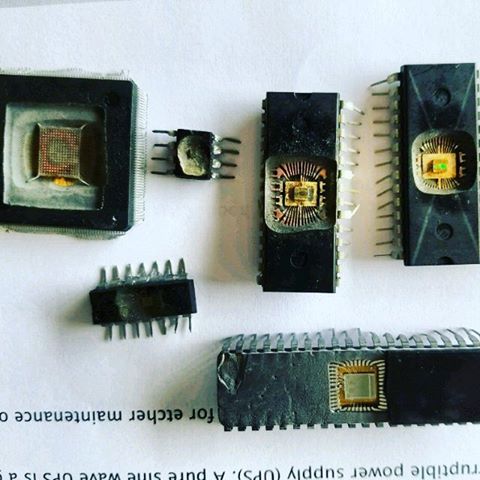
 Microchip IC PIC18F26K83 Flash Heximal File Cloning needs to unlock MICROCHIP PIC18F26K83 protection over its flash and eeprom memory, then replicate secured memory program of mcu pic18f26k83;
256 Bytes Data EEPROM
Programmable Code Protection
Direct, Indirect and Relative Addressing modes
Up to 32K bytes Program Flash Memory
Up to 2048 Bytes Data SRAM Memory
Operating Voltage Ranges:
– 1.8V to 3.6V (PIC18LF24/25K40 )
– 2.3V to 5.5V ( PIC18F24/25K40)
Temperature Range:
Industrial: -40°C to 85°C
Extended: -40°C to 125°C
Doze: CPU and Peripherals Running at Different Cycle Rates (typically CPU is lower)
Idle: CPU Halted While Peripherals Operate when breaking microchip mcu pic18f24k40 controller flash memory;
Sleep: Lowest Power Consumption
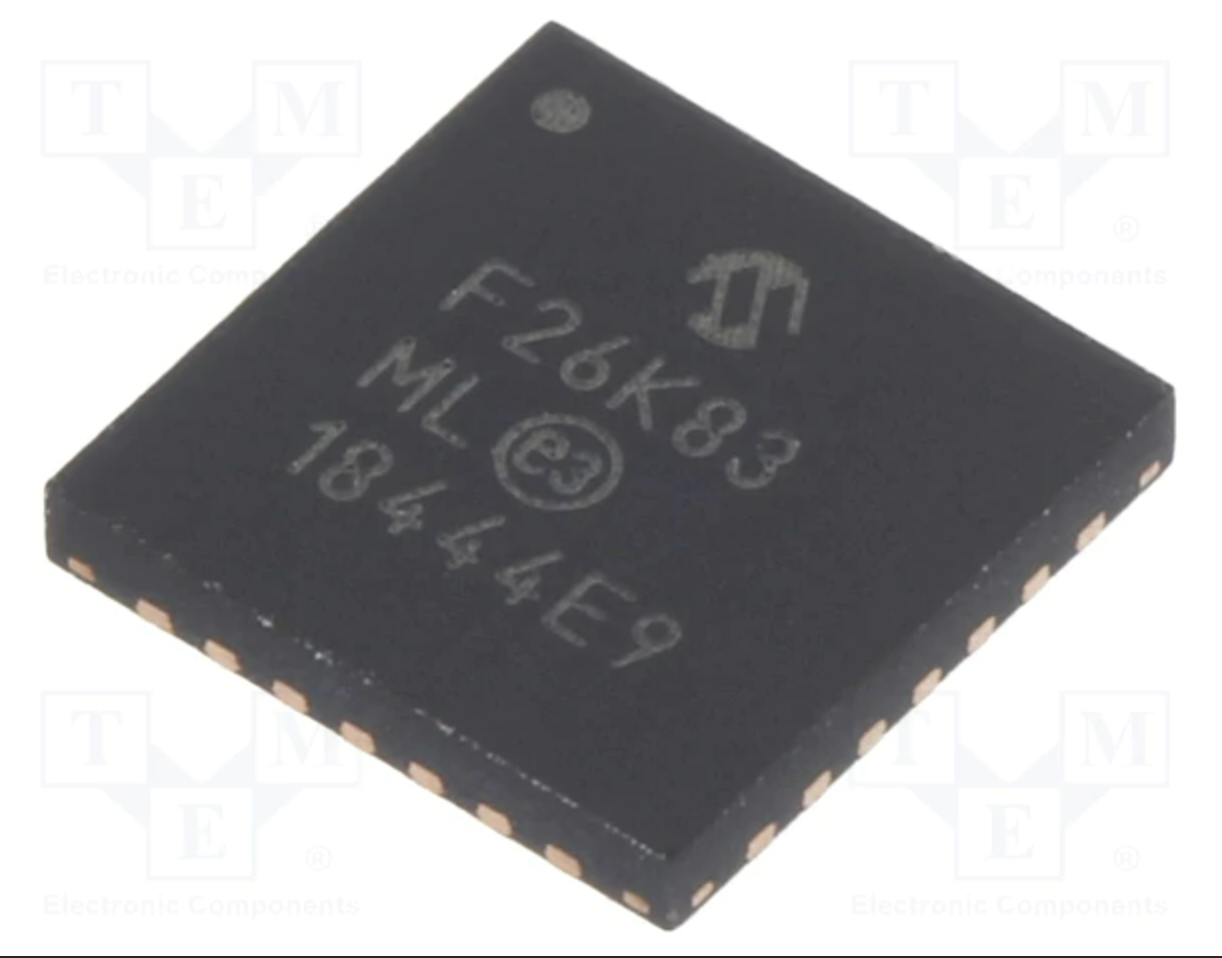
microchip IC PIC18F26K83 microcontrolador flash clonagem de arquivo heximal precisa desbloquear MICROCHIP PIC18F26K83 proteção sobre sua memória flash e eeprom, em seguida, replicar o programa de memória segura do MCU pic18f26k83;
Peripheral Module Disable (PMD):
Ability to selectively disable hardware module to minimize active power consumption of unused peripherals after reverse engineering mcu pic18f25k20 locked file;
Extreme Low-Power mode (XLP)
Sleep: 500 nA typical @ 1.8V
Sleep and Watchdog Timer: 900 nA typical @ 1.8V
Sleep mode: 50 nA @ 1.8V, typical
Windowed Watchdog Timer: 500 nA @ 1.8V, typical
Secondary Oscillator: 500 nA @ 32 kHz
Operating Current:
8 uA @ 32 kHz, 1.8V, typical
32 uA/MHz @ 1.8V, typical
 Posted in
Microchip Microprocessor PIC18F26K40 Flash Memory Breaking
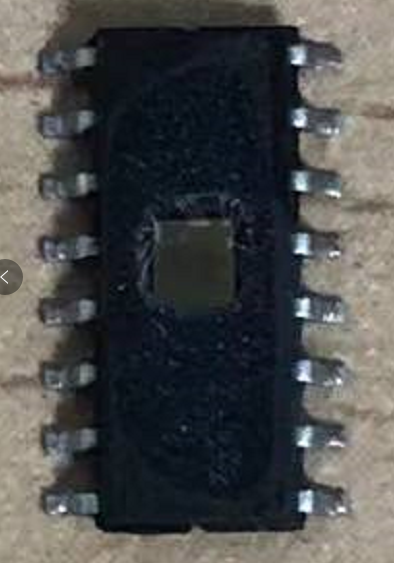
Microchip Microprocessor PIC18F26K40 Flash Memory Breaking will need to unlock secured mcu pic18f26k40 security fuse bit, then readout embedded flash firmware from microcontroller pic18f26k40 memory;
These PIC18(L)F24/25K40 microcontrollers feature Analog, Core Independent Peripherals and Communication Peripherals, combined with eXtreme Low-Power (XLP) technology for a wide range of general purpose and low-power applications when duplicate microchip mcu pic18f26k20 memory source code.
These 28 -pin devices are equipped with a 10-bit ADC with Computation (ADCC) automating Capacitive Voltage Divider (CVD) techniques for advanced touch sensing, averaging, filtering, oversampling and performing automatic threshold comparisons.
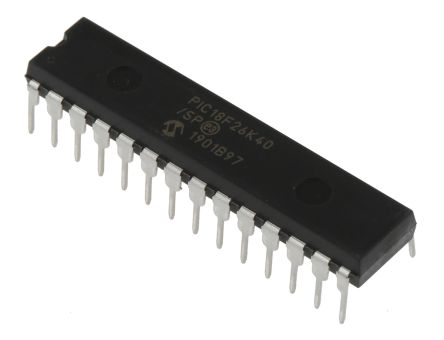
microchip microprocessador PIC18F26K40 quebra de memória flash precisará desbloquear seguro MCU pic18f26k40 fusível de segurança bit, em seguida, ler firmware flash incorporado do microcontrolador pic18f26k40 memória;
They also offer a set of Core Independent Peripherals such as Complementary Waveform Generator (CWG), Windowed Watchdog Timer (WWDT), Cyclic Redundancy Check (CRC)/Memory Scan, Zero-Cross Detect (ZCD) and Peripheral Pin Select (PPS), providing for increased design flexibility and lower system cost when attacking microchip mcu pic18f26k22 flash memory.
- C Compiler Optimized RISC Architecture
- Operating Speed:
- DC – 64 MHz clock input over the full VDD range
- 62.5 ns minimum instruction cycle
- Programmable 2-Level Interrupt Priority
- 31-Level Deep Hardware Stack
- Three 8-Bit Timers (TMR2/4/6) with Hardware Limit Timer (HLT)
- Four 16-Bit Timers (TMR0/1/3/5)
- Low-Current Power-on Reset (POR)
- Power-up Timer (PWRT)
- Brown-out Reset (BOR)
- Low-Power BOR (LPBOR) Option
- Windowed Watchdog Timer (WWDT):
- Watchdog Reset on too long or too short interval between watchdog clear events
- Variable prescaler selection
- Variable window size selection
- All sources configurable in hardware or software
Texas Instrument MSP430G2513 CPU Processor Flash Unlocking
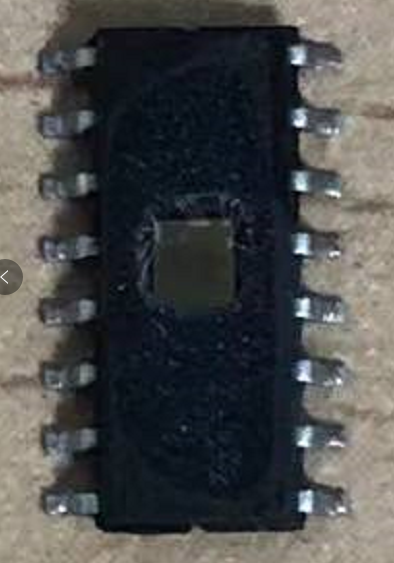
Texas Instrument MSP430G2513 CPU Processor Flash Unlocking refers to attack msp430g2513 secured flash memory by focus ion beam and then extract ti microprocessor msp430g2513 locked code from flash memory;
- To improve EMI on the XT1 oscillator, the following guidelines should be observed.
- Keep the trace between the device and the crystal as short as possible.
- Design a good ground plane around the oscillator pins.
- Prevent crosstalk from other clock or data lines into oscillator pins XIN and XOUT.
- Avoid running PCB traces underneath or adjacent to the XIN and XOUT pins.
- Use assembly materials and process that avoid any parasitic load on the oscillator XIN and XOUT pins.
- If a conformal coating is used, ensure that it does not induce capacitive or resistive leakage between the oscillator pins.
- Do not route the XOUT line to the JTAG header to support the serial programming adapter as shown in other documentation. This signal is no longer required for the serial programming adapter.
- Includes parasitic bond and package capacitance when replicating texas instrument msp430g2152 flash memory data (approximately 2 pF per pin).
Because the PCB adds additional capacitance, it is recommended to verify the correct load by measuring the ACLK frequency. For a correct setup, the effective load capacitance should always match the specification of the used crystal when break msp430g2412 locked flash memory.
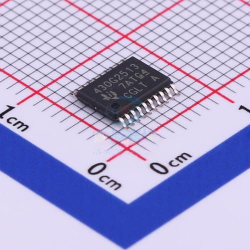
Texas Instrument MSP430G2513 CPU processore flash sblocco si riferisce all’attacco msp430g2513 protetto memoria flash da focus ion beam e quindi estrarre il codice bloccato del microprocessore ti msp430g2513 dalla memoria flash;
- Frequencies below the MIN specification set the fault flag. Frequencies above the MAX specification do not set the fault flag. Frequencies in between might set the flag.
- Measured with logic-level input frequency but also applies to operation with crystals.
Texas Instrument MSP430G2413 Microcontroller Flash Cracking
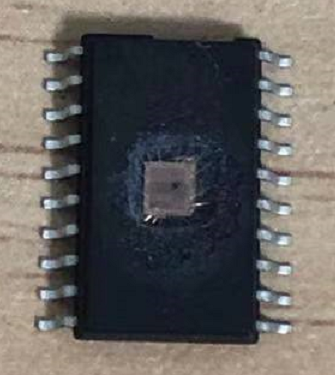
Texas Instrument MSP430G2413 Microcontroller Flash Cracking will need engineer to unlock encrypted mcu msp430g2413 protective fuse bit and readout flash program from mixed signal MCU directly;
Universal Serial Communications Interface (USCI)
The USCI module is used for serial data communication. The USCI module supports synchronous communication protocols such as SPI (3 or 4 pin) and I2C, and asynchronous communication protocols such as UART, enhanced UART with automatic baudrate detection (LIN), and IrDA. Not all packages support the USCI functionality when recover microcontroller msp430g2131 flash software program.
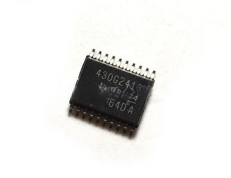
Texas Instrument MSP430G2413 microcontroller flash cracking avrà bisogno di ingegnere per sbloccare MCU crittografato MSP430G2413 bit fusibile protettivo e programma flash di lettura direttamente dall’MCU a segnale misto;
USCI_A0 provides support for SPI (3 or 4 pin), UART, enhanced UART, and IrDA. USCI_B0 provides support for SPI (3 or 4 pin) and I2C.
Comparator_A+
The primary function of the comparator_A+ module is to support precision slope analog-to-digital conversions, battery-voltage supervision, and monitoring of external analog signals.
ADC10 (MSP430G2x53 Only)
The ADC10 module supports fast 10-bit analog-to-digital conversions. The module implements a 10-bit SAR core, sample select control, reference generator, and data transfer controller (DTC) for automatic conversion result handling, allowing ADC samples to be converted and stored without any CPU intervention after break msp430g2452 locked microcontroller flash memory.
Altera CPLD EPM7256ATC144 Chip Eeprom Data Decoding
Altera CPLD EPM7256ATC144 Chip Eeprom Data Decoding needs to crack altera pld epm7256atc protective system and reset the status of CPLD IC from locked to unlock, extract embedded software from IC CPLD chip;
- See the Operating Requirements for Altera Devices Data Sheet.
- Minimum DC input voltage is –0.5 V. During transitions, the inputs may undershoot to –2.0 V for input currents less than 100 mA and periods shorter than 20 ns.
- For EPM7128A and EPM7256A devices only, VCC must rise monotonically.
- In MAX 7000AE devices, all pins, including dedicated inputs, I/O pins, and JTAG pins, may be driven before VCCINT and VCCIO are powered.
- These devices support in-system programming for –40° to 100° C. For in-system programming support between –40° and 0° C, contact Altera Applications.
These values are specified under the recommended operating conditions shown in Table 14 on page 28.
Le décodage de données de la puce Altera CPLD EPM7256ATC144 doit déchiffrer le système de protection Altera PLD EPM7256ATC et réinitialiser l’état de CPLD IC de verrouillé à déverrouiller, extraire le logiciel embarqué de la puce IC CPLD;
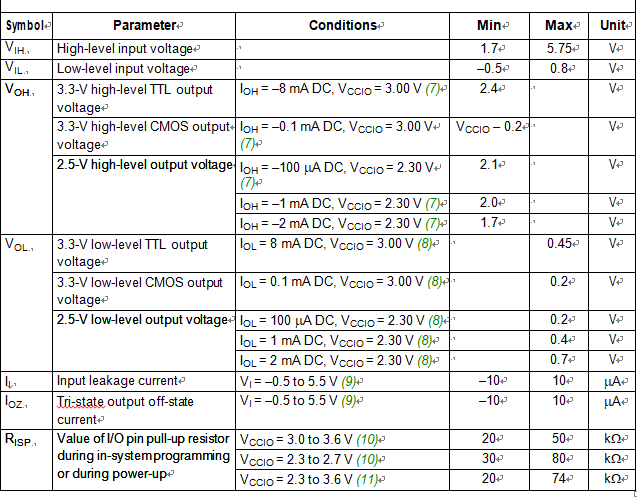
The parameter is measured with 50% of the outputs each sourcing the specified current. The IOH parameter refers to high-level TTL or CMOS output current for the purpose of recovering altera cpld epm7128alc eeprom program.
The parameter is measured with 50% of the outputs each sinking the specified current. The IOL parameter refers to low-level TTL or CMOS output current.
This value is specified for normal device operation. For MAX 7000AE devices, the maximum leakage current during power-up is ±300 mA. For EPM7128A and EPM7256A devices, leakage current during power-up is not specified which is especially useful features for recover cpld epm7032vtc system memory content.
(10) For EPM7128A and EPM7256A devices, this pull-up exists while a device is programmed in-system.
For MAX 7000AE devices, this pull-up exists while devices are programmed in-system and in unprogrammed devices during power-up.
Capacitance is measured at 25 °C and is sample-tested only. The OE1 pin (high-voltage pin during programming) has a maximum capacitance of 20 pF.
The POR time for MAX 7000AE devices (except MAX 7128A and MAX 7256A devices) does not exceed 100 ms. The sufficient VCCINT voltage level for POR is 3.0 V. The device is fully initialized within the POR time after VCCINT reaches the sufficient POR voltage level.
Attack Altera PLD EPM7256BTI144 Secured Eeprom
Attack Altera PLD EPM7256BTI144 Secured Eeprom and copy PLD jed file out from original eeprom memory area, the status of master altera pld epm7256bit unit will be decrypted;
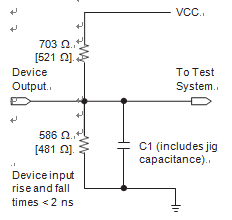
Power supply transients can affect AC measurements. Simultaneous transitions of multiple outputs should be avoided for accurate measurement. Threshold tests must not be performed under AC conditions.
Large-amplitude, fast-ground- current transients normally occur as the device outputs discharge the load capacitances in order to attack epm7064stc eeprom memory. When these transients flow through the parasitic inductance between the device ground pin and the test system ground, significant reductions in observable noise immunity can result.
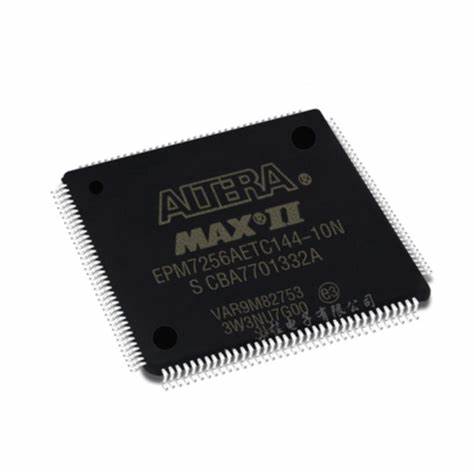
attaque Altera PLD EPM7256BTI144 eeprom sécurisé et copie PLD jed fichier hors de la zone de mémoire eeprom d’origine, le statut de l’unité maître Altera PLD EPM7256bit sera décrypté;
Numbers in brackets are for 2.5-V outputs. Numbers without brackets are for 3.3-V outputs.
Texas Instruments MSP430G2313 Microprocessor Breaking
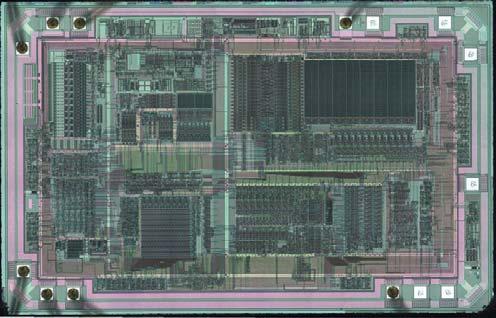
Texas Instruments MSP430G2313 Microprocessor Breaking refers to unlock the protection over msp430g2313 flash memory and eeprom memory, and then extract embedded code from mcu msp430g2313;
JTAG FUSE
over recommended ranges of supply voltage and operating free-air temperature (unless otherwise noted)
| PARAMETER | TEST CONDITIONS | MIN | MAX | UNIT | |
| VCC(FB) | Supply voltage during fuse-blow condition | TA = 25°C | 2.5 | V | |
| VFB | Voltage level on TEST for fuse blow | 6 | 7 | V | |
| IFB | Supply current into TEST during fuse blow | 100 | mA | ||
| tFB | Time to blow fuse | 1 | ms |
(1) Once the fuse is blown, no further access to the JTAG/Test, Spy-Bi-Wire, and emulation feature is possible, and JTAG is switched to bypass mode.
Calibration data is stored for both the DCO and for ADC10 organized in a tag-length-value structure by replicate msp430g2152 flash memory data.
La rupture du microprocesseur MSP430G2313 de Texas Instruments consiste à déverrouiller la protection sur la mémoire flash MSP430G2313 et la mémoire EEPROM, puis à extraire le code intégré du MCU MSP430G2313;
Table 10. Tags Used by the ADC Calibration Tags
| NAME | ADDRESS | VALUE | DESCRIPTION |
| TAG_DCO_30 | 0x10F6 | 0x01 | DCO frequency calibration at VCC = 3 V and TA = 30°C at calibration |
| TAG_ADC10_1 | 0x10DA | 0x10 | ADC10_1 calibration tag |
| TAG_EMPTY | – | 0xFE | Identifier for empty memory areas |
Texas Instruments MSP430G2213 Microcontroller Memory Reverse Engineering
Texas Instruments MSP430G2213 Microcontroller Memory Reverse Engineering technique will help to locate the security fuse bit of mcu msp430g2213 and crack it by focus ion beam, and then extract embedded heximal program out from msp430g2213 mcu;
RAM

Texas Instruments MSP430G2213 técnica de engenharia reversa de memória microcontrolador ajudará a localizar o bit de fusível de segurança do mcu msp430g2213 e quebrá-lo por feixe de íons de foco e, em seguida, extrair o programa heximal incorporado do msp430g2213 mcu
over recommended ranges of supply voltage and operating free-air temperature (unless otherwise noted)
| PARAMETER | TEST CONDITIONS | MIN MAX | UNIT |
| V(RAMh) RAM retention supply voltage (1) | CPU halted | 1.6 | V |
(1) This parameter defines the minimum supply voltage VCC when the data in RAM remains unchanged which can be used for restoring msp430g2001 heximal program. No program execution should happen during this supply voltage condition.
JTAG and Spy-Bi-Wire Interface
over recommended ranges of supply voltage and operating free-air temperature (unless otherwise noted)
| PARAMETER | TEST CONDITIONS | VCC | MIN | TYP | MAX | UNIT | ||
| fSBW | Spy-Bi-Wire input frequency | 2.2 V | 0 | 20 | MHz | |||
| tSBW,Low | Spy-Bi-Wire low clock pulse duration | 2.2 V | 0.025 15 | µs | ||||
| tSBW,En | Spy-Bi-Wire enable time (TEST high to acceptance of first clock edge | (1)) | 2.2 V | 1 | µs | |||
| tSBW,Ret | Spy-Bi-Wire return to normal operation time | 2.2 V | 15 | 100 | µs | |||
| fTCK | TCK input frequency(2) | 2.2 V | 0 | 5 | MHz | |||
| RInternal | Internal pulldown resistance on TEST | 2.2 V | 25 | 60 | 90 | kΩ |
Altera Programmable Logic Device EPM7128BUC169 Firmware Restoration
Altera Programmable Logic Device EPM7128BUC169 Firmware Restoration means the embedded eeprom memory inside original PLD EPM7128BUC processor will be unlocked and firmware can be fully extracted from IC CPLD;
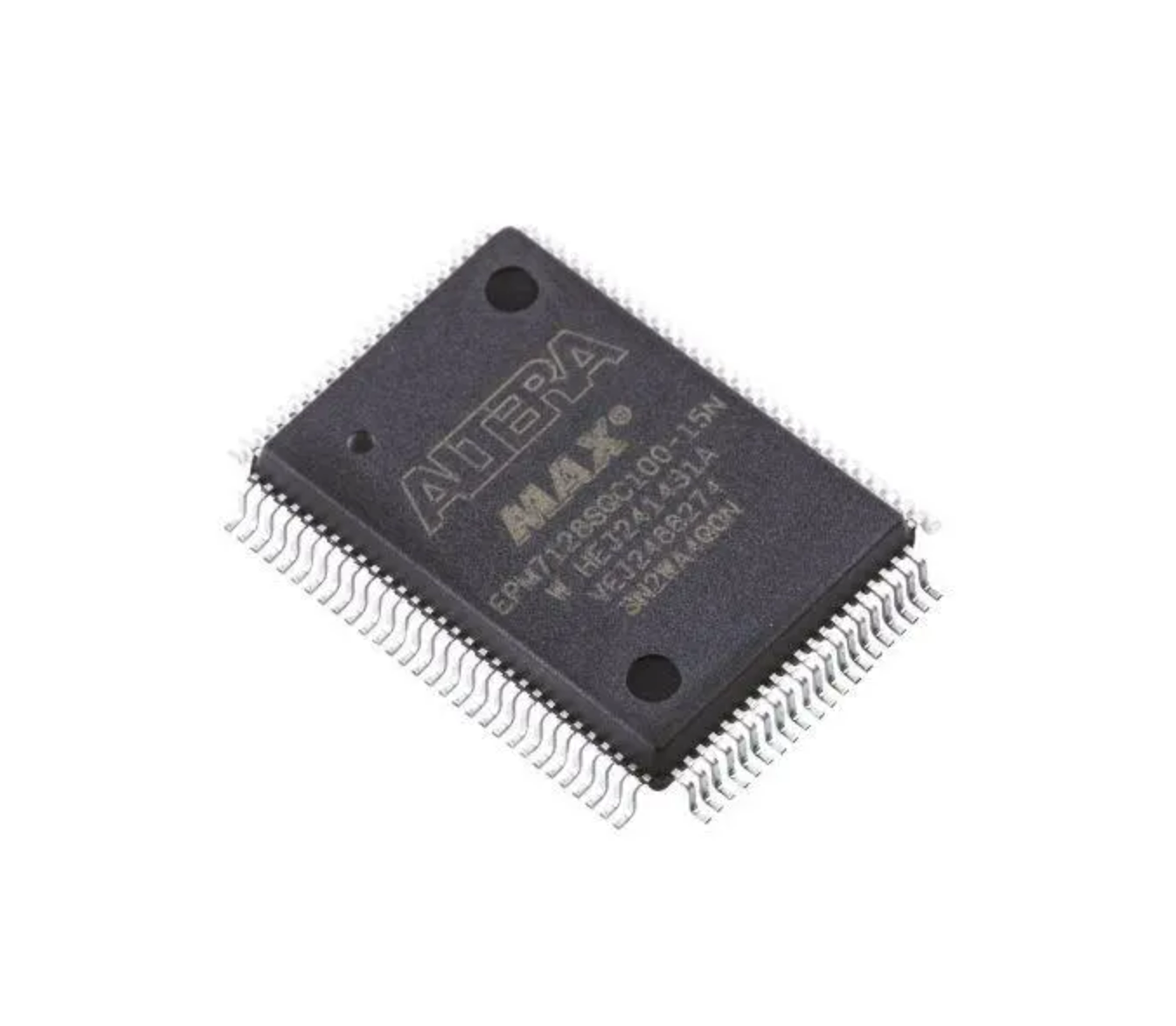
All MAX 7000A devices contain a programmable security bit that controls access to the data programmed into the device. When this bit is programmed, a design implemented in the device cannot be copied or retrieved.
This feature provides a high level of design security because programmed data within EEPROM cells is invisible. The security bit that controls this function, as well as all other programmed data, is reset only when the device is reprogrammed after reverse engineering cpld epm7032aeti44 memory.
Le dispositif logique programmable Altera EPM7128BUC169 la restauration du firmware signifient que la mémoire eeprom intégrée à l’intérieur du processeur PLD EPM7128BUC d’origine sera déverrouillée et que le firmware pourra être entièrement extrait de IC CPLD
MAX 7000A devices are fully tested. Complete testing of each
programmable EEPROM bit and all internal logic elements ensures 100% programming yield. AC test measurements are taken under conditions equivalent to those shown. Test patterns can be used and then erased during early stages of the production flow when recover cpld epm7128 embedded eeprom program.
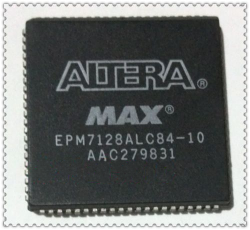
Altera CPLD EPM7128ALC Embedded Eeprom Program Recovery
Altera CPLD EPM7128ALC Embedded Eeprom Program Recovery is a process to unlock security fuse bit of EPM7128 CPLD chip and extract eeprom firmware from CPLD’s secured memory in the format of JED;
Because MAX 7000A devices can be used in a mixed-voltage environment, they have been designed specifically to tolerate any possible power-up sequence. The VCCIO and VCCINT power planes can be powered in any order.
Signals can be driven into MAX 7000AE devices before and during power- up (and power-down) without damaging the device.
Additionally, MAX 7000AE devices do not drive out during power-up when breaking altera cpld epm7064aetc protection. Once operating conditions are reached, MAX 7000AE devices operate as specified by the user.
Altera CPLD EPM7128ALC recuperación del programa eeprom integrado es un proceso para desbloquear el bit de fusible de seguridad de EPM7128 chip CPLD y extraer el firmware eeprom de la memoria segura de CPLD en el formato de JED
MAX 7000AE device I/O pins will not source or sink more than 300 µA of DC current during power-up. All pins can be driven up to 5.75 V during hot-socketing, except the OE1 and GLCRn pins.
The OE1 and GLCRn pins can be driven up to 3.6 V during hot-socketing. After VCCINT and VCCIO reach the recommended operating conditions, these two pins are 5.0-V tolerant which can be used for recover embedded eeprom firmware of EPM7032VTC cpld chipset.
EPM7128A and EPM7256A devices do not support hot-socketing and may drive out during power-up.