 Decapsulate Protected GD32F305VCT6 MCU: When Software Fails
 March 28th, 2010 |
 Author:
The GD32F305VCT6 is the 256 KB flash part in the larger LQFP100 body, and most of the locked units we see at this size are recoverable by the same fault-injection route as the smaller parts. But a fraction arrive at level 2, or with the debug path so aggressively shut that no glitch will land, and for those the only route left is to decapsulate the protected GD32F305VCT6 MCU and go at the silicon directly. This is the physical end of the recovery ladder, and it is a different craft from the electrical one.
When decapsulation is the only option
Level 2 on the FMC is permanent: the SPC field is latched so the debug and boot paths never open, and no fault on the boot sequence can change a decision that is no longer evaluated. Parts that have been physically protected, or that simply will not yield to a glitch after a reasonable number of attempts, also belong in this bucket. For all of them the array is intact on the die — it is only the doors that are gone — which is exactly the case where opening the package is worthwhile.
Removing the package
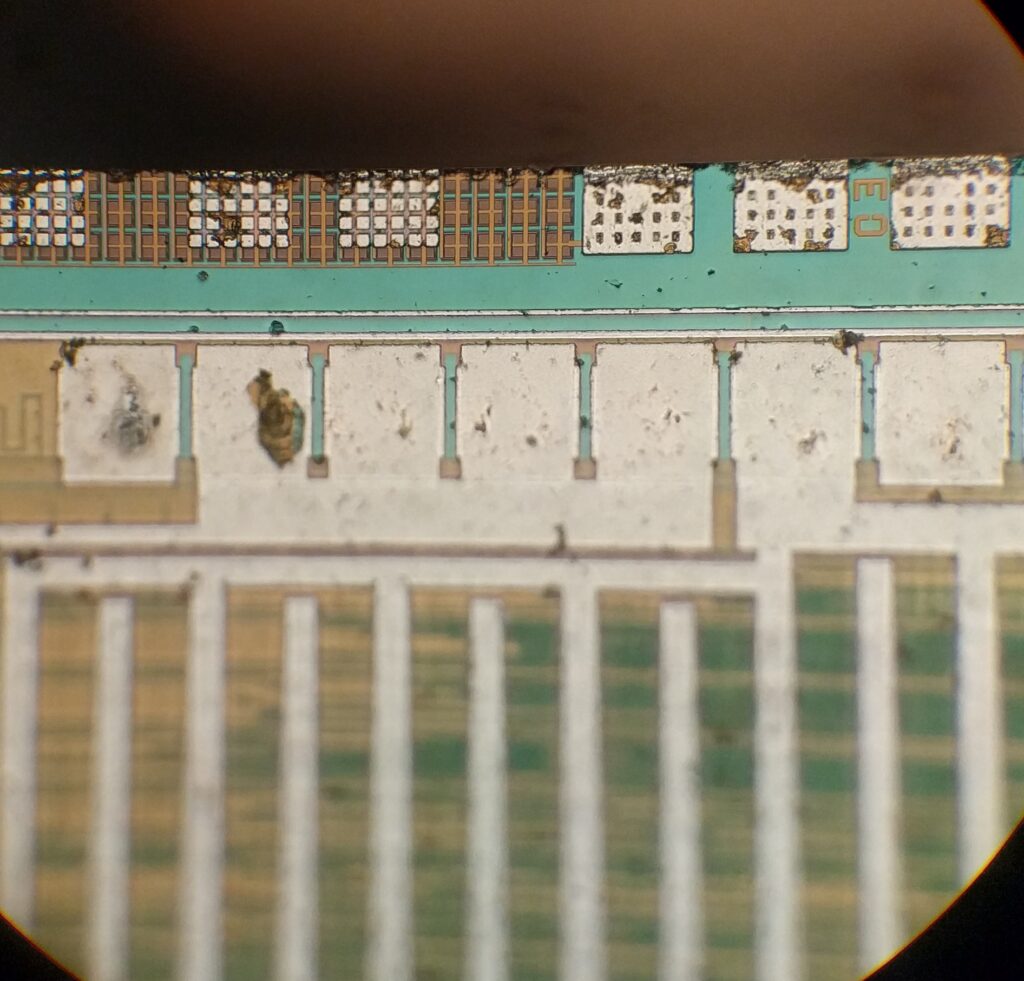
The LQFP100 is a plastic mold over the die and bond wires, and the first step is to remove that mold without damaging either. A controlled etch strips the encapsulant down to the passivation, exposing the metal layers while leaving the bond pads and the circuit intact. The part is then imaged from the front so the metal interconnect is documented before anything is touched. On a 100-lead part the bond wires are denser and the die larger than on the LQFP64, so the etch is watched more closely and stopped a fraction earlier to avoid nicking a wire that would otherwise be perfectly serviceable. The general method is the same one we use across the range and is set out in our notes on silicon package decapsulation.
Reaching the array from the back
With the front exposed the next move is often through the substrate. Silicon is transparent to infrared, so the die is imaged from the back through the thinned wafer, and the active area that holds the flash is located against the front metal. This backside view is what lets a probe or a edit reach the array without fighting the passivation on top. For a read it sets up a direct path to the stored bits; for a clone of the locked program it confirms where the data lives before anything is copied. The LQFP100’s larger die means the flash array occupies a bigger fraction of the floor and is easier to locate by the regular memory cell pattern it shows under infrared, which shortens the time spent aligning the probe.
FIB when a connection must be made or broken
Sometimes reaching the array is not enough and a connection has to be made or a line cut. A focused ion beam can deposit a new trace or sever an existing one with sub-micron precision, which is how a protection that lives in the wiring rather than in the code is handled. That capability is also what attacking the secured memory by fault injection avoids needing — a glitch that works is cheaper than a beam that must — but when the glitch will not land the beam is the backup.
What the LQFP100 body changes
The 100-lead package is larger and has more bond wires, so the etch and the imaging take longer and the handling is fussier, but the die inside carries the same 256 KB array as the LQFP64 RCT6. The protection model is identical; only the route to the silicon differs. The table below contrasts the two routes so the right one is chosen before the part is touched.
| Route | Needs | Used when |
|---|---|---|
| Glitch | level 1, open port | most locked units |
| Decap + backside | level 2 or stubborn | port will not yield |
| FIB edit | a wire to cut or make | protection in the wiring |
How the result is returned
The outcome of a decapsulation is the flash image, read directly from the exposed die, plus the documentation of how the part was opened. The work is destructive to the package but not to the data, and a clean read is what is delivered — the same image, reached by a longer road than the LQFP64 flash retrieval that works when the port cooperates.
 Posted in Reverse Engineer Microcontroller