 Copy MCU PIC16F916 Binary
 November 6th, 2010 |
  Author:
 The PIC16F916 microcontroller has become a popular solution in modern embedded electronics because of its compact architecture, integrated LCD controller, low power consumption, and dependable operating stability. It is commonly integrated into industrial automation systems, smart utility meters, access control equipment, automotive instruments, medical monitoring devices, portable electronics, and intelligent household products. As these systems continue operating for many years, companies frequently encounter situations where the original firmware archive, source code documentation, or production program file is no longer available. When a protected or secured MCU becomes the only remaining working unit inside a device, the ability to copy MCU PIC16F916 binary content becomes extremely important for maintenance, repair, product continuation, and hardware duplication. Our specialized service focuses on helping customers retrieve critical embedded data from locked, encrypted, or damaged microcontrollers while preserving operational compatibility with the original equipment.
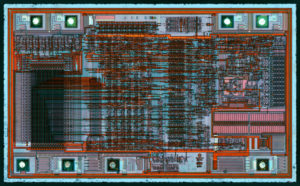
Our laboratory provides professional firmware extraction and MCU analysis solutions designed specifically for complex embedded recovery projects. Through advanced diagnostic methods, we can attack protected memory structures, break security limitations, and retrieve valuable binary, heximal, flash, EEPROM, and program archive data from secured devices. In many cases, manufacturers need to clone obsolete control boards, duplicate unavailable modules, or restore a missing firmware file from a locked PIC16F916 MCU after the original developer or supplier is no longer reachable. Depending on the chip condition and security level, the process may involve controlled decapsulate procedures, signal tracing, memory mapping, voltage analysis, or customized decoding techniques to access embedded firmware and encrypted data regions. Our engineers work with different types of protected architectures to decode MCU memory organization, recover damaged source code references, and retrieve binary program structures for production continuity and engineering analysis. For heavily secured applications, specialized hardware methods may also be used to hack inaccessible firmware areas and restore corrupted EEPROM or flash archive content without altering the original embedded logic.
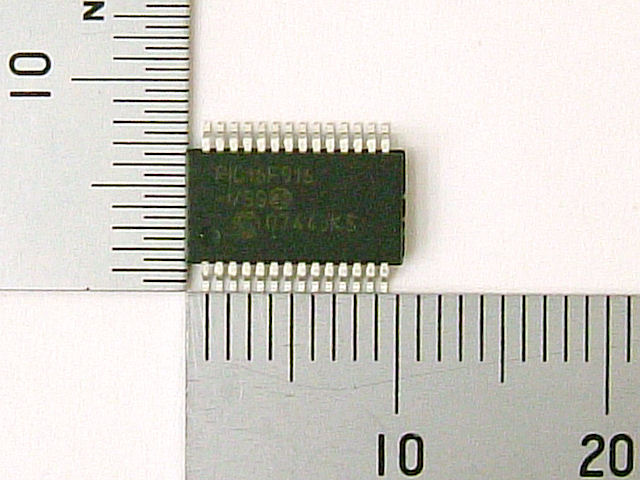
The PIC16F916 MCU is widely used in industries where long-term reliability and low operating power are essential. In industrial environments, it controls LCD display systems, temperature monitoring modules, intelligent relay units, and automation interfaces. In automotive electronics, the chip is often embedded inside dashboard controls, sensor communication systems, and compact display modules. Medical equipment manufacturers use this MCU in portable diagnostic instruments and monitoring systems because of its stable performance and compact embedded design. As products age, many companies discover that replacing an entire electronic platform is far more expensive than retrieving the original firmware binary or duplicating the protected MCU program already installed inside existing hardware. Our service helps end users clone functional units, duplicate legacy boards, recover secured memory data, and restore production continuity without redesigning the entire system architecture. Businesses also benefit from maintaining compatibility with older equipment, reducing development delays, and protecting long-term operational investments through reliable firmware recovery and binary extraction services.
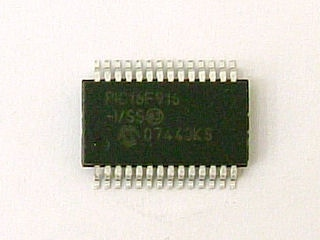
Every project involving Copy MCU PIC16F916 Binary services is handled with careful technical evaluation and strict confidentiality. Whether the objective is to retrieve a locked firmware archive, decode encrypted flash memory, clone a secured embedded MCU, or recover a damaged program file from EEPROM storage, our team develops a customized solution according to the protection level and hardware condition of the chip. By combining embedded engineering expertise with advanced reverse analysis techniques, we help customers duplicate critical firmware resources, restore inaccessible binary data, and preserve the functionality of important industrial and commercial systems. For companies facing obsolete hardware challenges, unavailable development files, or protected MCU limitations, our service provides an effective path toward firmware recovery, embedded system maintenance, and long-term equipment support.
DEVICE OVERVIEW
The PIC16F91X/946 devices are covered by this datasheet. They are available in 28/40/44/64-pin packages. Figure 1-1 shows a block diagram of the PIC16F913/916 device, Figure 1-2 shows a block diagram of the PIC16F914/917 device, and Figure 1-3 shows a block diagram of the PIC16F946 device. Table 1-1 shows the pinout descriptions.
MEMORY ORGANIZATION
The PIC16F91X/946 has a 13-bit program counter capable of addressing a 4K x 14 program memory space for the PIC16F913/914 (0000h-0FFFh) and an 8K x 14 program memory space for the PIC16F916/917 and PIC16F946 (0000h-1FFFh). Accessing a location above the memory boundaries for the PIC16F913 and PIC16F914 will cause a wrap around within the first 4K x 14 space. The Reset vector is at 0000h and the interrupt vector is at 0004h.
DATA MEMORY ORGANIZATION
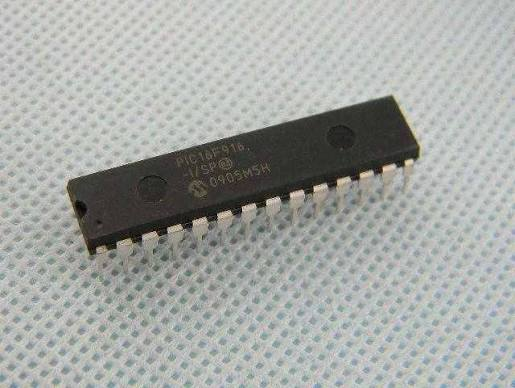
The data memory is partitioned into multiple banks which contain the General Purpose Registers (GPRs) and the Special Function Registers (SFRs). Bits RP0 and RP1 are bank select bits.
Bank 0 is selected
Bank 1 is selected
Bank 2 is selected
Bank 3 is selected
Each bank extends up to 7Fh (128 bytes). The lower locations of each bank are reserved for the Special Function Registers. Above the Special Function Registers are the General Purpose Registers, implemented as static RAM. All implemented banks contain Special Function Registers. Some frequently used Special Function Registers from one bank are mirrored in another bank for code reduction and quicker access.
2.2.1
GENERAL PURPOSE REGISTER
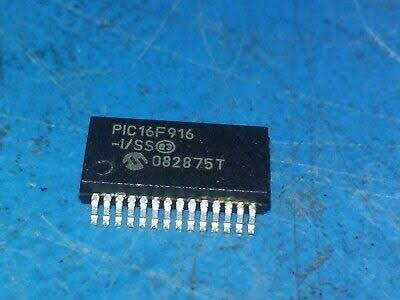
The register file is organized as 256 x 8 bits in the PIC16F913/914, 352 x 8 bits in the PIC16F916/917 and 336 x 8 bits in the PIC16F946. Each register is accessed either directly or indirectly through the File Select. Register (FSR) (see Section 2.5 “Indirect Addressing, INDF and FSR Registers”).
SPECIAL FUNCTION REGISTERS
The Special Function Registers are registers used by the CPU and peripheral functions for controlling the desired operation of the device (see Tables 2-1, 2-2, 2-3 and 2-4). These registers are static RAM. The Special Function Registers can be classified into two sets: core and peripheral. The Special Function Registers associated with the “core” are described in this section. Those related to the operation of the peripheral features are described in the section of that peripheral feature.
 Posted in Reverse Engineer Microcontroller