 Break Locked PIC18F4439 Processor Memory
 September 28th, 2018 |
 Author:
Break locked PIC18F4439 processor memory produces a narrow, verifiable deliverable rather than an open-ended extraction. The part is the 40-pin member of the 12 KB motor-control branch, with 640 bytes of RAM, a 256-byte data EEPROM, an 8-channel 10-bit ADC at up to 40 MHz, and both its array and its RAM are the smallest in the group. That combination shapes the plan: there is very little room for a resident bootloader and little room for the firmware to have parked working state in RAM, so the output is the flash image, the configuration word, the EEPROM and the ID, each of them proven.
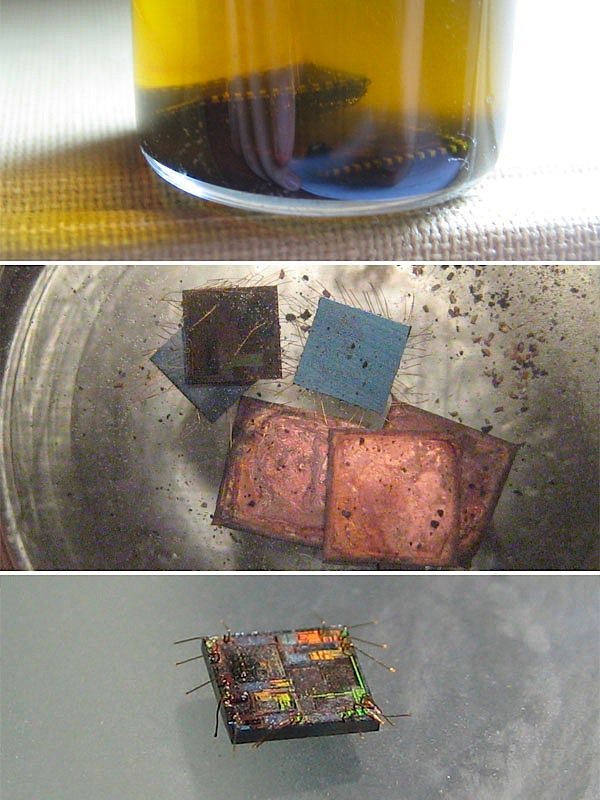
întrerupeți protecția memoriei microprocesorului Microcip PIC18F4439 și recuperați firmware-ul încorporat din memoria programului flash securizat de microcontroler PIC18F4439 și memoria de date eeprom, copiați codul sursă binar sau software-ul heximal în noul MCU blocat PIC18F4439 ca replicare;
Reading the configuration word and mapping the seal
ICSP entry needs a reset; LVP in CONFIG1H determines whether PGM alone is enough to reach programming mode or whether MCLR/VPP has to be driven to the programming voltage, and MCLRE decides whether that pin is still a reset line. From 0x300000 the configuration registers read out even with code locked: CONFIG5L carries CP3 through CP0, CONFIG5H carries CPD and CPB, and a protection bit reads 1 when the region is open. PIC18F4439 CP coverage statement is then a single sentence the client can act on: the boot block at 0x000000-0x0007FF under CPB, Block 0 at 0x000800-0x001FFF under CP0, the occupied part of Block 1 from 0x002000 under CP1, and the 256-byte data EEPROM under CPD. Only a full chip erase by a programmer clears any of them, and that erase costs program memory and the EEPROM together.
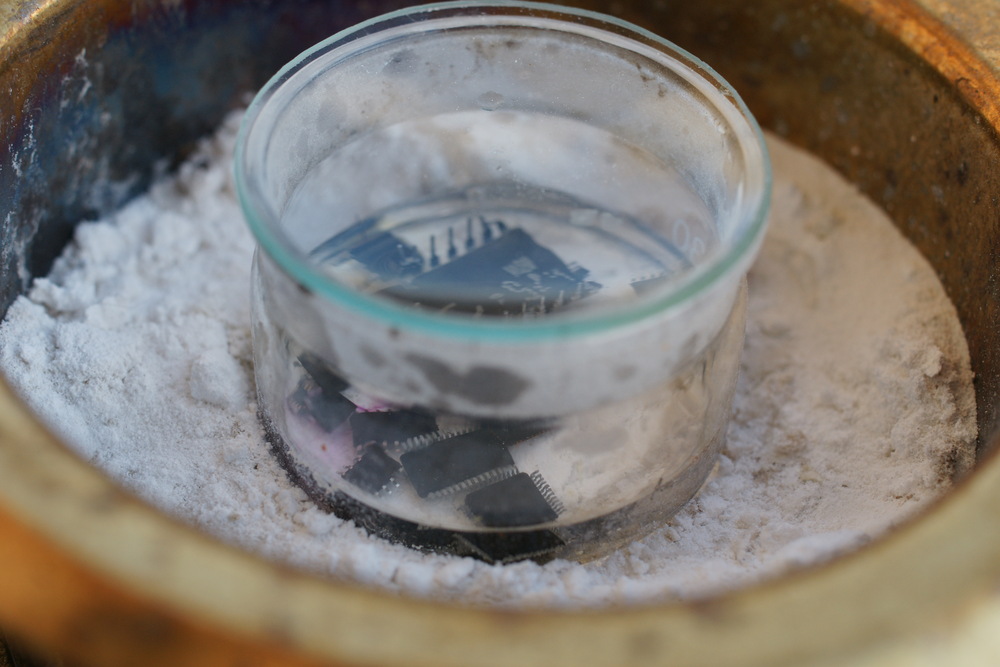
prolomit ochranu mikroprocesorové paměti Microchip PIC18F4439 a obnovit vestavěný firmware ze zabezpečené paměti flash programu PIC18F4439 a datové paměti eeprom, zkopírovat binární zdrojový kód nebo heximální software do nového uzamčeného MCU PIC18F4439 jako replikaci;
RAM that cannot hold a bootloader
The 640-byte RAM budget shapes the recovery in a way that is easy to underestimate. There is no room for a resident bootloader that would relocate itself into RAM and write back, because self-programming needs a contiguous free flash block to run from as well as RAM to execute in, and this part has neither to spare. It also means the firmware could not have held meaningful state in RAM across a power cycle, so anything worth recovering was in program memory or in the 256-byte EEPROM. PIC18F4439 640 byte RAM constraint is therefore also a statement about where the data was: if a calibration set is missing from the EEPROM, it was never in RAM, and no RAM-focused effort will produce it.
Verification before technique
The techniques available here are short and well documented, so PIC18F4439 verification over technique is the right emphasis. Read the configuration word, read what remains readable, erase only when there is no alternative, then prove the result. The proof is a read-back plus checksum, where the checksum is the sum of code memory contents, the masked configuration word and the ID locations, reduced to the low 16 bits. That checksum is reproducible on the client’s own programmer, which makes it evidence rather than assertion, so an image recovered from a suspect part can be compared against a known-good unit. The ID locations at 0x3FFFFE-0x3FFFFF give the device ID and silicon revision, and they separate a genuine PIC18F4439 from a sibling with a different peripheral mix, because the 8-channel 10-bit ADC is what a mismatched part would lack.
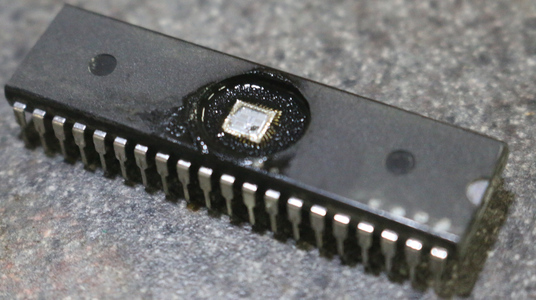
Break Microchip PIC18F4439 microprocessor memory protection and recover embedded firmware from secured microcontroller PIC18F4439 flash program memory and eeprom data memory, copy binary source code or heximal software to new locked MCU PIC18F4439 as replication;
Break locked PIC18F4439 processor memory: the deliverable manifest
The result is a PIC18F4439 12 KB narrow deliverable: four artefacts, each with its own proof.
| Deliverable | Size for this part | Source | Proof |
|---|---|---|---|
| Program memory image | 12 KB | flash readout after the chip erase | read-back plus 16-bit checksum |
| Configuration word | CONFIG registers from 0x300000 | programming mode read | masked checksum contribution |
| Data EEPROM | 256 bytes | readout with CPD cleared | byte-for-byte comparison of two reads |
| Device ID and revision | 2 words | 0x3FFFFE-0x3FFFFF | matches the failed part |
| User ID bytes | 8 bytes | 0x200000-0x200007 | matches the failed part |
| Working state in RAM | 640 bytes | volatile, lost at reset | documented as lost rather than inferred |
The neighbouring recoveries follow the same manifest discipline, as the PIC16F877 heximal recovery and PIC18F2520 binary recovery writeups show, and the ARM embedded firmware read procedure covers the equivalent task on another architecture. When the customer cannot identify the part at all, the cracking a part with no part number method applies first.
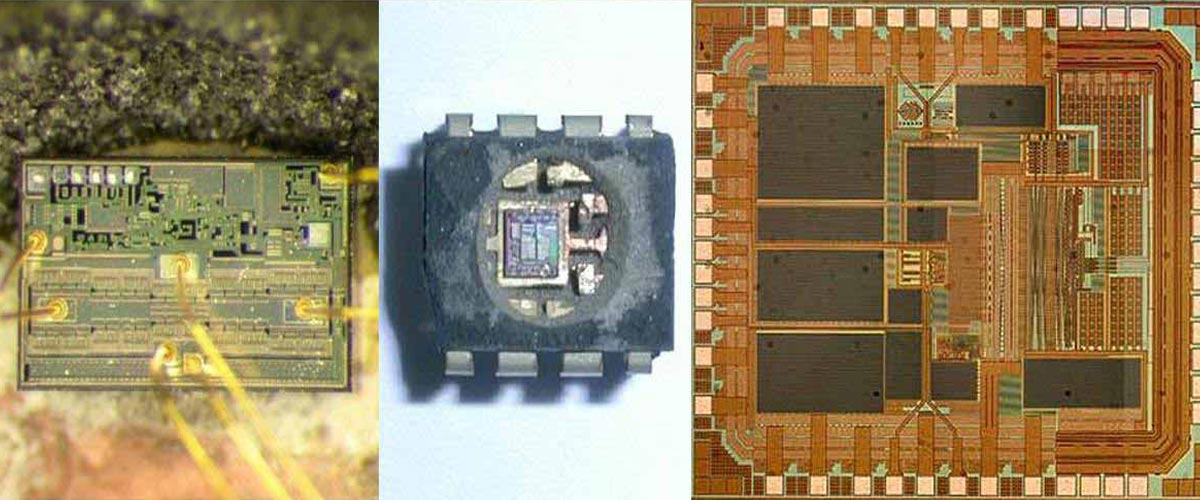
prekinuti zaštitu memorije Microchip PIC18F4439 mikroprocesora i oporaviti ugrađeni firmware iz osigurane flash programske memorije mikrokontrolera PIC18F4439 i eeprom podatkovne memorije, kopirati binarni izvorni kod ili heksimalni softver na novi zaključani MCU PIC18F4439 kao replikaciju;
Where the recovered image stops and the reconstruction begins
Once the twelve kilobytes are back, the work shifts from extraction to reconstruction: the 8-channel 10-bit ADC is assigned in code, so a restored image has to be checked against the hardware map of the machine it came from, and the EEPROM has to be repopulated with whatever calibration the original held. This is the stage where an image that verifies byte for byte can still be wrong for the equipment, which is why the manifest above lists the EEPROM and the identity bytes separately from the flash. The PIC18F452 program recovery writeup covers the same pattern on a neighbouring variant.
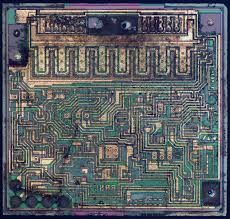
Break Microchip PIC18F4439 Microprocessor Memory
We break locked PIC18F4439 processor memory by producing a manifest of four artifacts with a checksum attached to each, and by stating plainly what the 640 bytes of RAM can never give back. Recovering and proving that package is handled by our lab.
 Posted in Break IC