 Recover Chip PIC16F689 Flash
 June 27th, 2014 |
  Author:
 When a device depends on a Microchip PIC16F689 for control, timing, or sensor interfacing, losing access to the on-chip flash or EEPROM can halt production, disrupt service, or erase critical calibration data. Our service, searchable under the keyword Recover Chip PIC16F689 Flash, helps legitimate owners and authorized technicians open, readout, restore, and duplicate the firmware/binary/heximal contents of this microcontroller while maintaining strict legal, ethical, and confidentiality standards. We emphasize recovery and preservation — not publishing methods to crack or illegally hack protections.
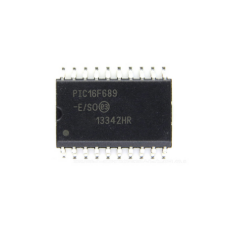
The PIC16F689 is commonly embedded in devices where small, reliable control programs and configuration archives are essential. Clients come to us to restore corrupted program files, copy firmware for authorized spares provisioning, clone configuration data for scaled deployment, or duplicate critical archives before servicing legacy systems. In many scenarios the firmware or memory image is protected, locked, or encrypted by design, so an authorized recovery partner is required to retrieve usable program files without risking further damage.
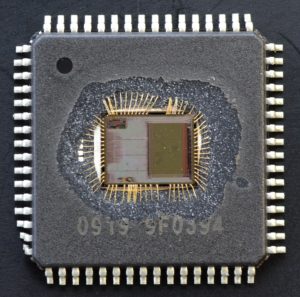
We can Recover Chip PIC16F689 Flash, please view the CHIP PIC16F689 features below for your reference:
High-Performance RISC CPU:
· Only 35 Instructions to Learn:
– All single-cycle instructions except branches
· Operating Speed:
– DC – 20 MHz oscillator/clock input
– DC – 200 ns instruction cycle
· Interrupt Capability
· 8-level Deep Hardware Stack
Low-Power Features:
The PIC16F689’s blend of I/O, timers, and analog features makes it popular across many industries:
- Consumer electronics and appliance controllers.
- Industrial monitoring and simple automation modules.
- Instrumentation such as small data loggers and measurement front-ends.
- Aftermarket automotive or specialty embedded projects that rely on compact, efficient code.
In these contexts, recovered binary or heximal files enable quicker repairs, validated backups, and smoother migration to replacement hardware.
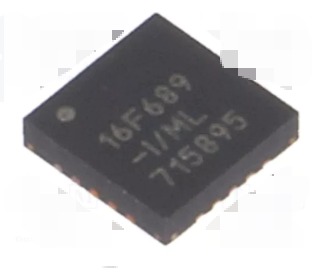
· Standby Current:
– 50 nA @ 2.0V, typical
· Operating Current:
– 11 ìA @ 32 kHz, 2.0V, typical
– 220 ìA @ 4 MHz, 2.0V, typical
· Watchdog Timer Current:
– 1 ìA @ 2.0V, typical
· Direct, Indirect and Relative Addressing modes
Peripheral Features:
Special Microcontroller Features:
· Precision Internal Oscillator:
– Factory calibrated to ±1%
– Software selectable frequency range of 8 MHz to 125 kHz
– Software tunable
– Two-Speed Start-Up mode
– Crystal fail detect for critical applications
– Clock mode switching during operation for power savings
· Power-Saving Sleep mode
· Wide Operating Voltage Range (2.0V-5.5V)
· Industrial and Extended Temperature Range
· Power-on Reset (POR)
· Power-up Timer (PWRT) and Oscillator Start-up Timer (OST)
· Brown-out Reset (BOR) with Software Control Option
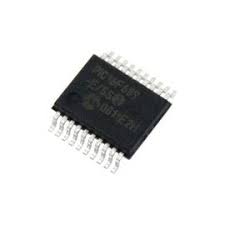
· Enhanced Low-Current Watchdog Timer (WDT) with on-chip oscillator (software selectable nominal 268 seconds with full prescaler) with software enable
· Multiplexed Master Clear with Weak Pull-up or Input Only Pin
· Programmable Code Protection
· High-Endurance Flash/EEPROM Cell:
– 100,000 write Flash endurance
– 1,000,000 write EEPROM endurance
– Flash/Data EEPROM retention: > 40 years
· 12 I/O Pins with Individual Direction Control:
– High-current source/sink for direct LED drive
– Interrupt-on-change pin
– Individually programmable weak pull-ups
– Ultra Low-Power Wake-up
· Analog Comparator module with:
– Two analog comparators
– Programmable On-chip Voltage Reference (CVREF) module (% of VDD)
– Comparator inputs and outputs externally accessible
· A/D Converter:
– 10-bit resolution and 8 channels
· Timer0: 8-bit Timer/Counter with 8-bit Programmable Prescaler
· Enhanced Timer1:
– 16-bit timer/counter with prescaler
– External Timer1 Gate (count enable)
– Option to use OSC1 and OSC2 in LP mode as Timer1 oscillator if INTOSC mode selected
· Enhanced USART Module:
– Supports RS-485, RS-232, LIN 2.0/2.1 and J2602
– Auto-Baud Detect
– Auto-wake-up on Start bit
· In-Circuit Serial Programming™ (ICSP™) via two pins
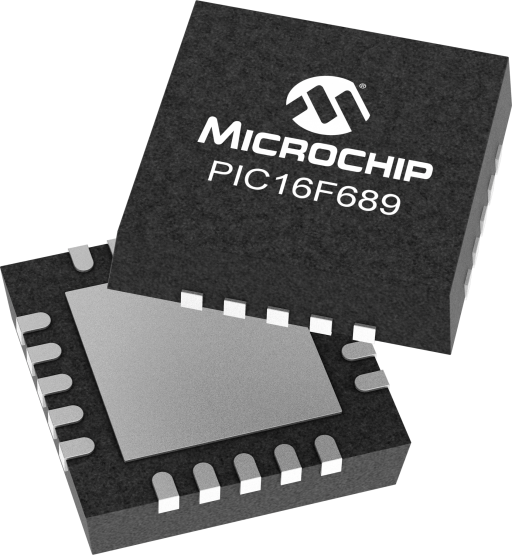
The PIC16F689 integrates program flash, EEPROM, and mixed-signal peripherals in a compact package. Its memory layout and on-chip configuration bits influence how the source code (if available) maps to raw files and how sensitive calibration data is stored. Because many designs apply protective settings to prevent unauthorized copying, recovery must be planned carefully to avoid corrupting valuable data.
What we provide (high level & non-actionable)
Our engagements are oriented around ethical recovery. Services include: validated extraction of on-chip images producing heximal or binary dumps (where lawful), integrity checks and documented verification, and high-level disassembly summaries to help engineers interpret the recovered program. We can assist with restoring devices to operation using recovered images and preparing migration packages for replacement boards. We do not provide step-by-step instructions to crack, decrypt, or bypass manufacturer protections — all work is performed only with proof of ownership or explicit authorization.
Conceptual workflow and purpose
A responsible recovery effort begins with authorization and a risk assessment. Non-destructive techniques are used to obtain a reliable memory archive, which is then validated and annotated. The primary purpose is practical: reduce downtime, secure backups, enable authorized copying or cloning, and preserve investment in specialized hardware.
Benefits and limitations
Clients gain rapid restoration of functionality, secure copies of previously inaccessible firmware and configuration archives, and the ability to duplicate systems for authorized maintenance. Limitations can include partial corruption, proprietary integrity checks, or layered locked settings — outcomes that may restrict full source-level recovery. We make feasibility and likely results clear before work begins.
Legal & ethical safeguards
Every project requires ownership verification and a confidentiality agreement. Our mission is to unlock and recover embedded software for lawful, constructive purposes only — repair, continuity, authorized audit, and migration.
If you need to Recover Chip PIC16F689 Flash for legitimate recovery or maintenance, our experienced team provides confidential, professional support to retrieve and document embedded firmware while protecting your IP and operational continuity.
 Posted in Recover Chip