 Recover Chip MC9S08DZ32ACLC Firmware
 May 22nd, 2014 |
  Author:
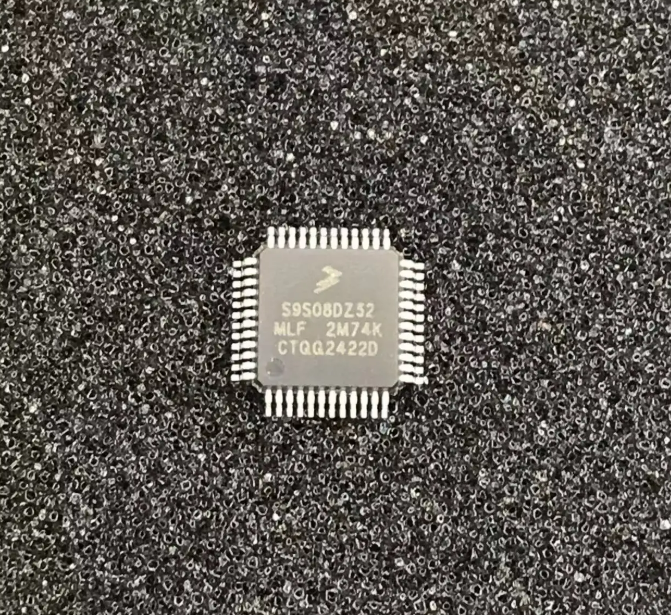
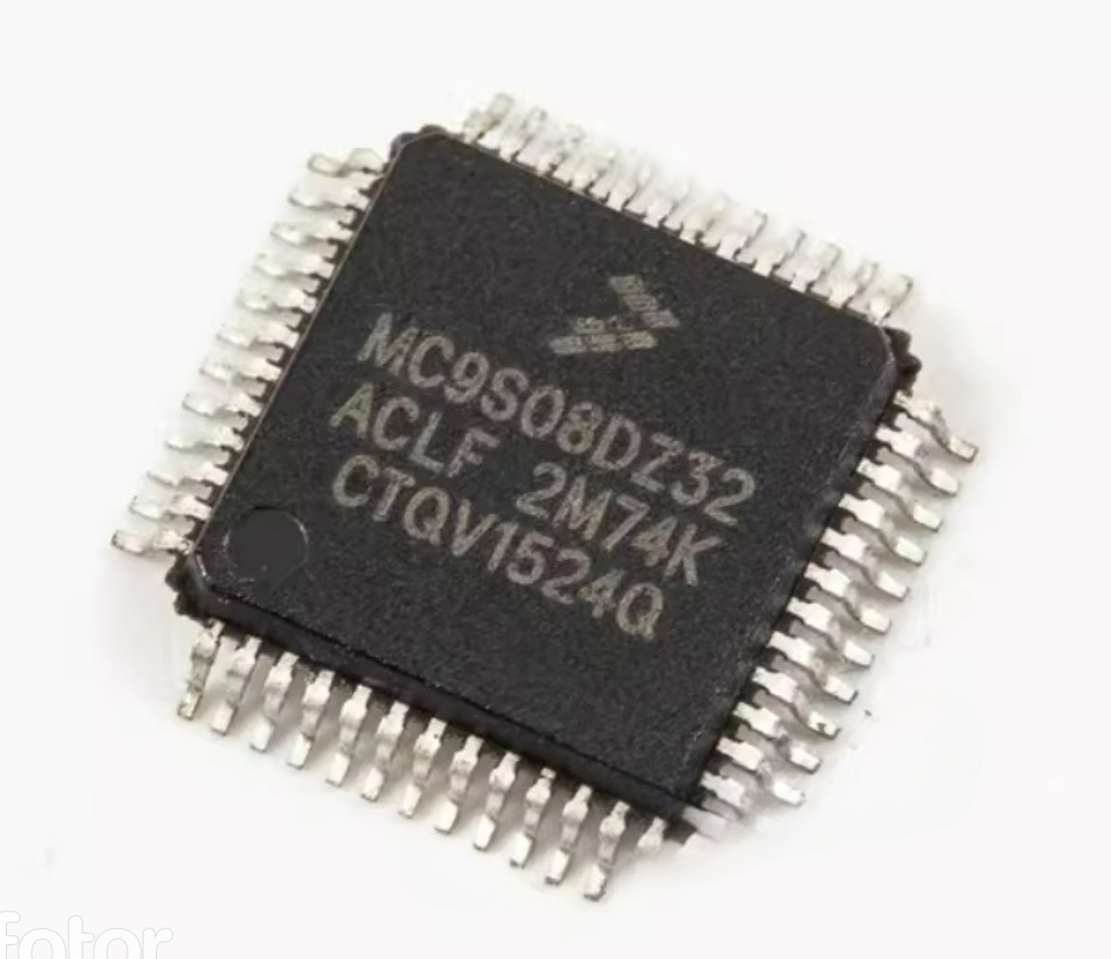
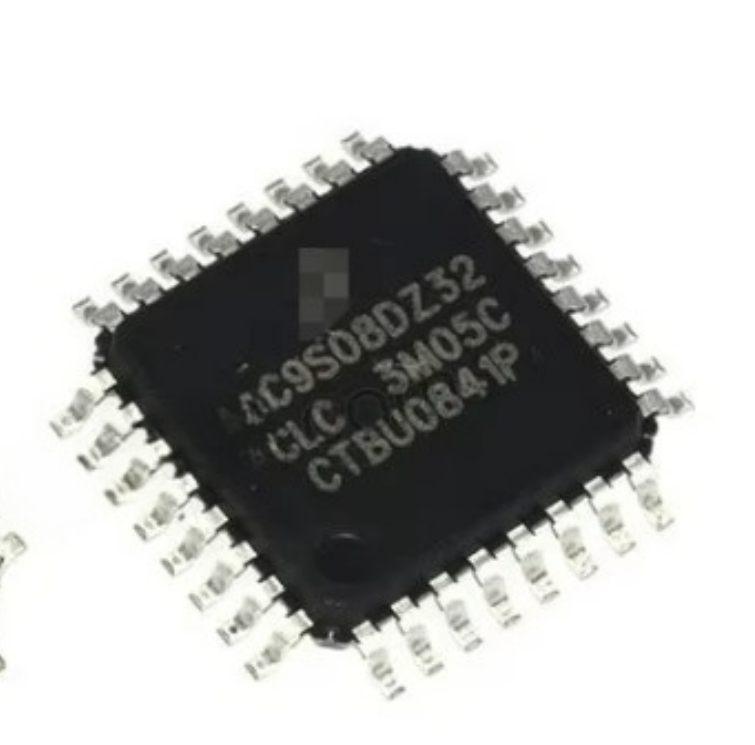
 The MC9S08DZ32ACLC microcontroller, developed by Freescale (now NXP), is widely used in automotive, industrial, and consumer electronics applications. Its popularity stems from its reliable performance, low power consumption, and robust integration of flash memory, EEPROM, and peripheral features. However, recovering firmware from this protected and embedded chip poses significant challenges due to its security mechanisms. At Circuit Engineering Co., Ltd, we offer professional and precise services to recover Chip MC9S08DZ32ACLC firmware, enabling access to valuable system-level data and binary files for legitimate engineering and recovery purposes.
Why Recover MC9S08DZ32ACLC Firmware?
This chip is commonly deployed in automotive control modules, dashboards, sensors, and smart motor applications. Engineers, OEMs, and repair technicians often face situations where the original firmware is lost, corrupted, or no longer accessible due to locked or encrypted flash memory. In such cases, recreating the product, cloning behavior, or simply restoring the embedded function becomes impossible without access to the original firmware. That’s where our service becomes essential.
Our Advanced Firmware Recovery Process
We utilize a combination of hardware probing, software cracking, and firmware decoding techniques to unlock, decrypt, and extract the firmware from the flash and EEPROM memory inside the MC9S08DZ32ACLC. Our expertise allows us to crack secured chips and duplicate the binary/heximal files while maintaining data integrity and completeness.
Once access is established, we copy and clone the program data, restoring it into a readable hex file or reconstructing it into assembly or source code formats as needed. This allows our clients to not only recover the program but also analyze, test, or modify it for updated product development, security audits, or system migration.
Key Services We Provide:
- Recover Chip MC9S08DZ32ACLC Firmware from locked or secured systems
- Clone and duplicate the embedded flash contents into new units
- Restore lost firmware files, EEPROM data, or archived program structures
- Decode and decrypt binary firmware for analysis or reuse
- Unlock encrypted program memory for reverse engineering or debugging
- Provide reconstructed heximal or binary files for reprogramming or documentation
Unique Features of the MC9S08DZ32ACLC
This 8-bit MCU from Freescale features:
- Up to 32KB of flash memory and 2KB EEPROM
- Internal clock generators and multiple communication interfaces (CAN, SCI, SPI, I²C)
- Enhanced control and diagnostics support for automotive-grade environments
- Advanced interrupt handling and low EMI design, making it ideal for mission-critical applications
Its robust security options—including memory protection schemes—make firmware access nearly impossible without specialized equipment and technical insight. That’s why your choice of service provider is critical.
Trusted, Confidential, and Accurate
All projects handled by our engineering team are executed with strict confidentiality and technical accuracy. Whether you’re looking to restore a malfunctioning device, duplicate firmware for production, or analyze a secured program archive, we deliver results efficiently and securely.
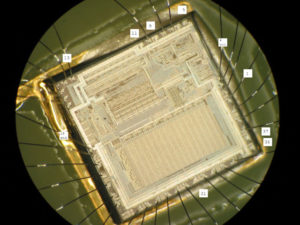
We can Recover Chip MC9S08DZ32ACLC Firmware, please view below the Chip MC9S08DZ32ACLC features for your reference:
8-Bit HCS08 Central Processor Unit (CPU)
· 40-MHz HCS08 CPU (20-MHz bus)
· HC08 instruction set with added BGND instruction
· Support for up to 32 interrupt/reset sources
On-Chip Memory
· Flash read/program/erase over full operating voltage and temperature
— MC9S08DZ60 = 60K
— MC9S08DZ48 = 48K
— MC9S08DZ32 = 32K
— MC9S08DZ16 = 16K
· Up to 2K EEPROM in-circuit programmable memory;
8-byte single-page or 4-byte dual-page erase sector;
Program and Erase while executing Flash; Erase abort
· Up to 4K random-access memory (RAM)
Power-Saving Modes
· Two very low power stop modes
· Reduced power wait mode
· Very low power real time interrupt for use in run, wait, and stop Clock Source Options
· Oscillator (XOSC) — Loop-control Pierce oscillator;
Crystal or ceramic resonator range of 31.25 kHz to 38.4 kHz or 1 MHz to 16 MHz
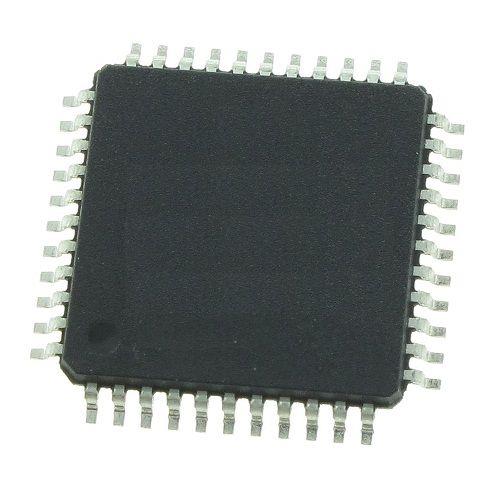
· Multi-purpose Clock Generator (MCG) — PLL and FLL modes (FLL capable of 1.5% deviation using internal temperature compensation); Internal reference clock with trim adjustment (trimmed at factory, with trim value stored in flash); External reference with oscillator/resonator options in the process of Copy microcontroller
System Protection
· Watchdog computer operating properly (COP) reset with option to run from backup dedicated 1-kHz internal clock source or bus clock
· Low-voltage detection with reset or interrupt; selectable trip points
· Illegal opcode detection with reset
· Illegal address detection with reset
· Flash block protect
· Loss-of-lock protection
Peripherals
· ADC — 24-channel, 12-bit resolution, 2.5 ìs conversion time, automatic compare function, temperature sensor, internal bandgap reference channel
· ACMPx — Two analog comparators with selectable interrupt on rising, falling, or either edge of comparator output; compare option to fixed internal bandgap reference voltage.
· MSCAN — CAN protocol – Version 2.0 A, B; standard and extended data frames; Support for remote frames; Five receive buffers with FIFO storage scheme; Flexible identifier acceptance filters programmable as: 2 x 32-bit, 4 x 16-bit, or 8 x 8-bit
· SCIx — Two SCIs supporting LIN 2.0 Protocol and SAE J2602 protocols; Full duplex non-return to zero (NRZ); Master extended break generation; Slave extended break detection; Wakeup on active edge.
· SPI — Full-duplex or single-wire bidirectional; Double-buffered transmit and receive; Master or Slave mode; MSB-first or LSB-first shifting
· IIC — Up to 100 kbps with maximum bus loading; Multi-master operation; Programmable slave address; General Call Address; Interrupt driven byte-by-byte data transfer
· TPMx — One 6-channel (TPM1) and one 2-channel (TPM2); Selectable input capture, output compare, or buffered edge-aligned PWM on each channel.
· RTC — (Real-time counter) 8-bit modulus counter with binary or decimal based prescaler; Real-time clock capabilities using external crystal and RTC for precise time base, time-of-day, calendar or task scheduling functions; Free running on-chip low power oscillator (1 kHz) for cyclic wake-up without external components Input/Output
· 53 general-purpose input/output (I/O) pins and 1 input-only pin
· 24 interrupt pins with selectable polarity on each pin.
· Hysteresis and configurable pull device on all input pins.
· Configurable slew rate and drive strength on all output pins.
Package Options
· 64-pin low-profile quad flat-pack (LQFP) — 10×10 mm
· 48-pin low-profile quad flat-pack (LQFP) — 7×7 mm
· 32-pin low-profile quad flat-pack (LQFP) — 7×7 mm
 Posted in Recover Chip