 Recover Chip MC68HC11A0FN3 Binary
 April 30th, 2014 |
  Author:
 The Motorola/Freescale MC68HC11A0FN3 is a powerful 8-bit microcontroller widely used in industrial control, automotive electronics, robotics, and legacy embedded systems. Known for its on-chip EEPROM, robust flash memory, and versatile I/O capabilities, this chip has long served as the backbone of many secure and high-performance applications. However, its protected architecture, often with fuse-bit security or memory lockout mechanisms, makes it extremely difficult for users to access or recover the internal binary or firmware once programmed.

We specialize in advanced microcontroller security bypassing. Our premium service to recover chip MC68HC11A0FN3 binary is tailored for professionals needing access to original firmware, source code, or heximal data stored inside this secured embedded device.
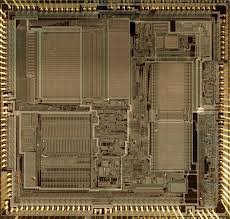
Recover Chip MC68HC11A0FN3 Binary from Microcontroller MC68HC11A0FN3 program memory, unlock microprocessor MC68HC11A0FN3 security fuse bit and extract heximal out from memory;
The MC68HC11A0FN3 is frequently found in applications where the firmware is locked, encrypted, or protected to safeguard intellectual property. But what happens when original files are lost, the system malfunctions, or a firmware update is required? Most off-the-shelf tools are helpless when faced with the chip’s security fuses and protected memory layout.
This is where our team steps in—with precision and discretion. We offer the ability to crack, hack, or unlock the internal memory of secured MCUs like the MC68HC11A0FN3. By applying advanced microprobing, signal analysis, or fuse-disabling methodologies, we can decrypt, decode, and open the locked memory region to retrieve the original program, archive, or data file.
· Power Saving STOP and WAIT Modes
· 4 Kbytes of On-Chip ROM
· 192 Bytes of On-Chip RAM (All Saved During Standby)
· 16-Bit Timer System
— 3 Input Capture (IC) Channels
— 4 Output Compare (OC) Channels
— One IC or OC Channel (Software Selectable)
Our MC68HC11A0FN3 reverse engineering and data extraction services include:

- Fuse Bit Disabling: We employ non-destructive or minimally invasive techniques to disable fuse bits, giving access to protected flash, EEPROM, and firmware memory.
- Binary Extraction: We can copy, clone, or duplicate the original binary or heximal data, even from secured or damaged chips.
- Conversion to Source Code: The recovered data can be disassembled and, in many cases, translated back to readable source code for audit, debugging, or redevelopment purposes.
- Firmware Recovery: Whether due to data loss, hardware failure, or lack of documentation, we can restore your device’s original firmware for continued operation or migration to modern hardware.
· 8-Bit Pulse Accumulator
· Real-Time Interrupt Circuit
· Computer Operating Properly (COP) Watchdog System
· Synchronous Serial Peripheral Interface (SPI)
· Asynchronous Nonreturn to Zero (NRZ) Serial Communications Interface (SCI)
· 26 Input/Output (I/O) Pins
— 16 Bidirectional I/O Pins
— 3 Input Only Pins
— 3 Output Only Pins (One Output Only Pin in the 40-Pin Package)
· Available in a 44-Pin Plastic Leaded Chip Carrier (PLCC) and 40-Pin Dual In-Line Package (DIP)
2.1 VDD, VSS, and EVSS
This chip is not just a legacy device; it remains embedded in critical systems such as:
- Automotive ECUs: Engine control, ABS, and dashboard systems.
- Industrial Automation: Programmable controllers, safety relays, and process monitors.
- Medical Devices: Legacy diagnostic machines and custom sensors.
- Aerospace Systems: Avionic support tools and aircraft diagnostics.
Many of these systems still rely on the original code running on the MC68HC11A0FN3. Without proper access, maintaining or upgrading them becomes nearly impossible.
Power is supplied to the MCU through VDD and VSS. VSS is the power supply, and VSS is ground. EVSS, available on the 44-pin PLCC, is an additional ground pin that must be grounded with VSS. The MCU operates from a single 5-volt (nominal) power supply before MCU PIC32MX440F512H binary copying. Very fast signal transitions occur on the MCU pins.
The short rise and fall times place high, short duration current demands on the power supply. To prevent noise problems, provide good power supply bypassing at the MCU. Also, use bypass capacitors that have good high-frequency characteristics and situate them as close to the MCU as possible. Bypass requirements vary, depending on how heavily the MCU pins are loaded.

2.2 Reset (RESET)
An active low bidirectional control signal, RESET, acts as an input to initialize the MCU to a known startup state. It also acts as an open-drain output to indicate that an internal failure has been detected in either the clock monitor or COP watchdog circuit. The CPU distinguishes between internal and external reset conditions by sensing whether the reset pin rises to a logic one in less than two E-clock cycles after a reset has occurred. It is not advisable to connect an external resistor-capacitor (RC) power-up delay circuit to the reset pin of M68HC11 devices because the circuit charge time.
2.3 Crystal Driver and External Clock Input (XTAL, EXTAL)
These two pins provide the interface for either a crystal or a CMOS compatible clock to control the internal clock generator circuitry. The frequency applied to these pins is four times higher than the desired E-clock rate after Recover MCU PIC16F913 bin.
The XTAL pin is normally left unterminated when an external CMOS compatible clock input is connected to the EXTAL pin. However, a 10 kΩ to 100 kΩ load resistor connected from XTAL to ground can be used to reduce RFI noise emission. The XTAL output is normally intended to drive only a crystal. The XTAL output can be buffered with a high impedance buffer, or it can be used to drive the EXTAL input of another M68HC11.
 Posted in
  Tags:
Tags: