PostHeaderIcon Copy Microcontroller PIC16C771 Firmware

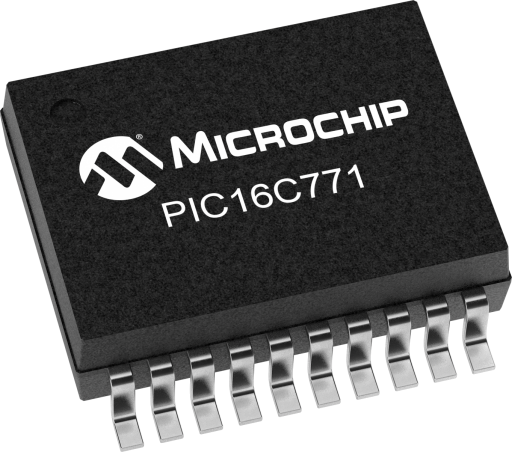
The PIC16C771 is a notable member of Microchip’s PIC family, featuring an integrated Analog-to-Digital Converter (ADC) and a sophisticated Capture/Compare/PWM module. These features made it a popular choice for applications requiring sensor interfacing and motor control. You would often find this microprocessor at the heart of early-generation automotive control units, specialized medical diagnostic devices, and precision industrial timers. Its architecture stores the critical operational program in internal flash and EEPROM memory. To prevent unauthorized access, Microchip equipped these chips with robust code protection fuses. When enabled, these locked and secured states make directly reading out the intelligible source code impossible, turning any attempt to clone the MCU into a complex reverse engineering puzzle.
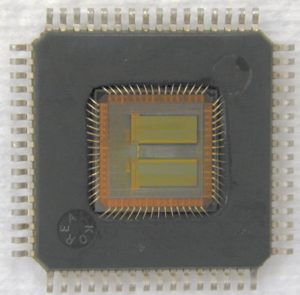
Copy Microcontroller PIC16C771 Firmware which include the program

Copy Microcontroller PIC16C771 Firmware which include the program of flash memory and data of eeprom memory, disable the security fuse bit by focus MCU cracking ion beam technique, extract code from MCU PIC16C771 memory;

The Special Function Registers are registers used by the CPU and Peripheral Modules for controlling the desired operation of the microcontrollere. These registers are implemented as microcontroller RAM.

The primary difficulty in any attempt to break the protection of the PIC16C771 lies in the very nature of its security design. The goal is to obtain a perfect binary or heximal dump of the memory contents, but the protected state actively prevents this. Standard programming interfaces are rendered useless for reading the firmware file. Therefore, engineers must employ advanced, non-invasive methods to attack the security mechanism. This can involve sophisticated techniques that require deep knowledge of the chip‘s physical and logical operation.
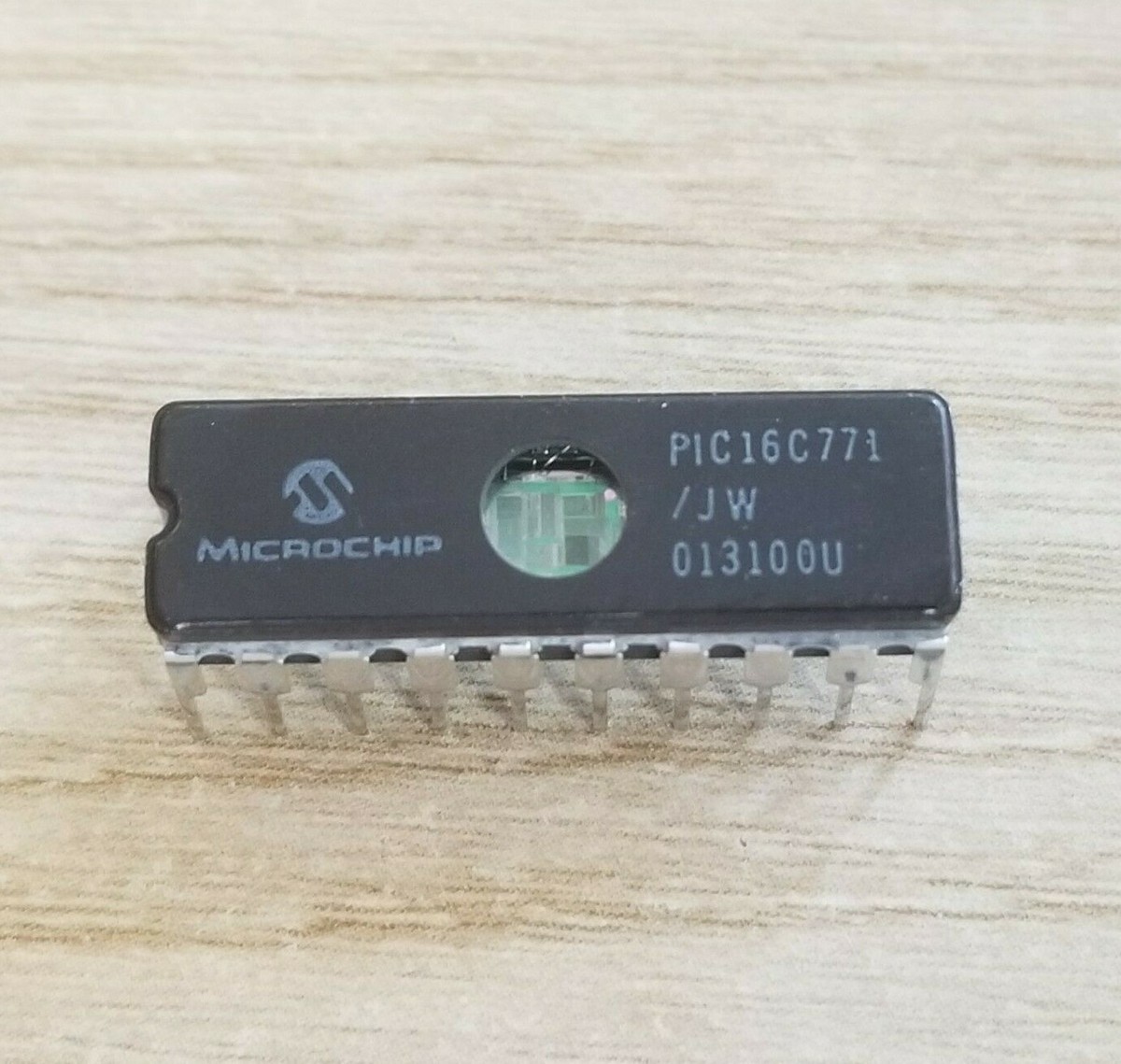
Aby se zabránilo neoprávněnému přístupu, společnost Microchip vybavila tyto čipy robustními ochrannými pojistkami kódu. Pokud jsou tyto uzamčené a zabezpečené stavy aktivovány, znemožňují přímé čtení srozumitelného zdrojového kódu, čímž se jakýkoli pokus o klonování zabezpečeného mikrokontroléru Microchip PIC16C771 stává složitou reverzně inženýrskou hádankou. Hlavní obtíž při jakémkoli pokusu o prolomení ochrany uzamčeného mikrokontroléru Microchip PIC16C771 spočívá v samotné povaze jeho bezpečnostního návrhu. Cílem je získat dokonalý binární nebo hexamový výpis obsahu paměti, ale chráněný stav tomu aktivně brání. Schopnost obnovit tento firmware je prvořadá. Umožňuje obnovit porouchaný systém, když nejsou k dispozici náhradní čipy nebo archivovaný zdrojový kód. Umožňuje klonování funkčního ochranného mikroprocesoru Microchip PIC16C771, aby se udržela v chodu kritická výrobní linka. Extrakce tohoto binárního souboru je navíc nezbytným prvním krokem pro jakýkoli budoucí projekt replikace funkčnosti systému na moderní a snadněji dostupné platformě. Hodnota nespočívá v krádeži duševního vlastnictví, ale v jeho získání zpět, aby se zajistila životnost a provozuschopnost životně důležitého průmyslového zařízení a klienti tak nebyli vystaveni katastrofickým prostojům a zastarávání.

The process is not about decrypting a file in the conventional sense, as the code isn’t always encrypted but rather physically locked away by fused bits. Successfully bypassing this requires a meticulous approach to replicate the conditions under which the microcontroller relinquishes its archive of operational data.

core (CPU) and peripheral. Those registers associated with the core functions are described in detail in this section. Those related to the operation of the peripheral features are described in detail in that peripheral feature section. For example, CLRF STATUS will clear the upper-three when breaking microcontroller TMS320F28044 heximal; The STATUS register, shown in Register 2-1, contains the arithmet microcontroller status of the ALU, the RESET status and the bank select bits for data memory.
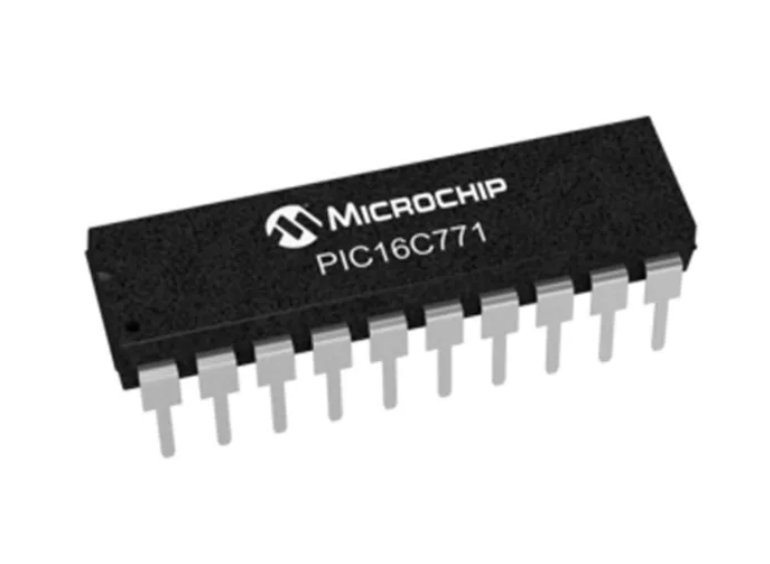
Da bi preprečili nepooblaščen dostop, je Microchip te čipe opremil z robustnimi varovalkami za zaščito kode. Ko so omogočena, ta zaklenjena in zavarovana stanja onemogočajo neposredno branje razumljive izvorne kode, zaradi česar se vsak poskus kloniranja zaščitenega mikrokontrolerja Microchip PIC16C771 spremeni v zapleteno sestavljanko obratnega inženiringa. Glavna težava pri vsakem poskusu preboja zaščite zaklenjenega mikrokontrolerja Microchip PIC16C771 je v sami naravi njegove varnostne zasnove. Cilj je pridobiti popoln binarni ali heksimalni izpis vsebine pomnilnika, vendar zaščiteno stanje to aktivno preprečuje. Zmožnost obnovitve te vdelane programske opreme je izjemnega pomena. Omogoča jim obnovitev okvarjenega sistema, ko nadomestni čipi ali arhivirana izvorna koda niso na voljo. Omogoča kloniranje delujočega zaščitnega mikroprocesorja Microchip PIC16C771 za ohranjanje delovanja kritične proizvodne linije. Poleg tega je ekstrahiranje te binarne datoteke bistveni prvi korak za vsak prihodnji projekt, ki želi podvojiti funkcionalnost sistema na sodobni, lažje dostopni platformi. Vrednost ni v kraji intelektualne lastnine, temveč v njeni pridobitvi, da se zagotovi dolgoživost in uporabnost vitalne industrijske opreme, s čimer se stranke rešijo pred katastrofalnimi izpadi in zastaranjem.

The STATUS register can be the destination for any instruction, as with any other register. If the STATUS register is the destination for an instruction that affects the Z, DC or C bits, then the write to these three bits is disabled. These bits are set or cleared according to the microcontroller log microcontroller. Furthermore, the TO and PD bits are not writable. Therefore, the result of an instruction with the STATUS register as destination may be different than intended.
attack microprocessor PIC16C771 fuse and readout flash memory content

attack microprocessor PIC16C771 fuse and readout flash memory content

It is recommended, therefore, that only BCF, BSF, SWAPF and MOVWF instructions are used to alter the STATUS register, because these instructions do not affect the Z, C or DC bits from the STATUS register. For other instructions not affecting any status bits, see the ”Instruction Set Summary. when break microcontroller PIC16F886 software

The program counter (PC) specifies the address of the instruction to fetch for execution. The PC is 13 bits wide. The low byte is called the PCL register. This register is readable and writable. The high byte is called the PCH register. This register contains the PC<12:8> bits and is not directly readable or writable. All updates to the PCH register occur through the PCLATH register.

PMICROCONTROLLER16C717/770/771 microcontrolleres are capable of addressing a continuous 8K word block of program memory. The CALL and GOTO instructions provide only 11 bits of address to allow branching within any 2K program

memory page. When doing a CALL or GOTO instruction, the upper 2 bits of the address are provided by PCLATH<4:3>. When doing a CALL or GOTO instruction, the user must ensure that the page select bits are programmed so that the desired program memory page is addressed.

A return instruction pops a PC address off the stack onto the PC register. Therefore, manipulation of the PCLATH<4:3> bits are not required for the return instructions ( POPs the address from the stack).

The stack allows a combination of up to 8 program calls and interrupts to occur. The stack contains the return address from this branch in program execution. Mid-range microcontroller have an 8-level deep x 13-bit wide hardware stack.
Volitamata juurdepääsu vältimiseks varustas Microchip need kiibid tugevate koodikaitsekaitsmetega. Lubatuna muudavad need lukustatud ja turvatud olekud arusaadava lähtekoodi otsese lugemise võimatuks, muutes kõik Microchipi PIC16C771 turvatud mikrokontrolleri kloonimise katsed keeruliseks pöördprojekteerimise pusleks. Microchipi PIC16C771 lukustatud mikrokontrolleri kaitse murdmise katsete peamine raskus seisneb selle turvadisaini olemuses. Eesmärk on saada mälu sisust täiuslik binaar- või heksameetriline väljavõte, kuid kaitstud olek takistab seda aktiivselt. Selle püsivara taastamise võimalus on ülioluline. See võimaldab neil taastada rikkis süsteemi, kui asenduskiibid või arhiveeritud lähtekood pole saadaval. See võimaldab kloonida funktsionaalse kaitsva Microchipi PIC16C771 mikroprotsessori, et hoida kriitiline tootmisliin töös. Lisaks on selle binaarfaili ekstraheerimine iga tulevase projekti esimene oluline samm süsteemi funktsionaalsuse kopeerimiseks kaasaegsel ja hõlpsamini kättesaadaval platvormil. Väärtus ei seisne intellektuaalomandi varastamises, vaid selle tagasinõudmises, et tagada elutähtsate tööstusseadmete pikaealisus ja töökõlblikkus, säästes kliente katastroofilistest seisakutest ja vananemisest.

The stack space is not part of either program or data space and the stack pointer is not readable or writable. The PC is Pushed onto the stack when a CALL instruction is executed or an interrupt causes a branch. The stack is Poped in the event of RETURN, RETLW or a RETFIE instruction execution. PCLATH is not modified when the stack is PUSHed or POPed.

After the stack has been PUSHed eight times, the ninth push overwrites the value that was stored from the first push. The tenth push overwrites the second push (and so on).

The INDF register is not a microcontroller register. Addressing INDF actually addresses the register whose address is contained in the FSR register (FSR is a pointer). This is indirect addressing.

Reading INDF itself indirectly (FSR = 0) will produce 00h. Writing to the INDF register indirectly results in a no-operation (although STATUS bits may be affected). A simple program to clear RAM locations 20h-2Fh using indirect addressing is shown in Example 2-1 Some pins for these I/O ports are multiplexed with an alternate function for the peripheral features on the microcontroller. In general, when a peripheral is enabled, that pin may not be used as a general purpose I/O pin which normally executed for cracking microcontroller pic16c771 fuse bit.

Additional information on I/O ports may be found in the microcontroller Mid-Range Reference  Manual, (DS33023). PORTA is a 8-bit wide bi-directional port. The corre-analog mode of the corresponding pins. sponding data direction register is TRISA. Setting a TRISA bit (=1) will make the corresponding PORTA pin an input, i.e., put the corresponding output driver in a hi-impedance mode. Clearing a TRISA bit (=0) will make the corresponding PORTA pin an output, i.e., put the contents of the output latch on the selected pin.
Siekdama užkirsti kelią neteisėtai prieigai, „Microchip“ šiuos lustus aprūpino patikimais kodo apsaugos saugikliais. Kai šios užrakintos ir apsaugotos būsenos įjungtos, tiesiogiai nuskaityti suprantamą šaltinio kodą neįmanoma, todėl bet koks bandymas klonuoti apsaugotą „Microchip PIC16C771“ mikrovaldiklį paverčiamas sudėtingu atvirkštinės inžinerijos galvosūkiu. Pagrindinis bet kokio bandymo nulaužti užrakinto „Microchip PIC16C771“ mikrovaldiklio apsaugą sunkumas slypi pačioje jo saugumo konstrukcijos prigimtyje. Tikslas yra gauti tobulą dvejetainį arba šešioliktainį atminties turinio išklotinę, tačiau apsaugota būsena aktyviai to neleidžia. Galimybė atkurti šią programinę-aparatinę įrangą yra nepaprastai svarbi. Tai leidžia atkurti sugedusią sistemą, kai nėra pakaitinių lustų ar archyvuoto šaltinio kodo. Tai leidžia klonuoti veikiantį apsauginį „Microchip PIC16C771“ mikroprocesorių, kad būtų galima palaikyti svarbios gamybos linijos veikimą. Be to, šio dvejetainio failo išgavimas yra būtinas pirmas žingsnis bet kokiam būsimam projektui, kuriuo siekiama atkartoti sistemos funkcionalumą modernioje, lengviau prieinamoje platformoje. Vertė slypi ne intelektinės nuosavybės vagystėje, o jos susigrąžinime, siekiant užtikrinti gyvybiškai svarbios pramoninės įrangos ilgaamžiškumą ir tinkamumą naudoti, taip apsaugant klientus nuo katastrofiškų prastovų ir pasenimo.

Reading the PORTA register reads the status of the pins, whereas writing to it will write to the port latch. All write operations are read-modify-write operations. Therefore, a write to a port implies that the port pins are read, this value is modified, and then written to the port data latch.

Pins RA<3:0> are multiplexed with analog functions, such as analog inputs to the A/D converter, analog VREF inputs, and the on-board band gap reference outputs. When the analog peripherals are using any of Pin RA4 is multiplexed with the Timer0 module clock input to become the RA4/T0CKI pin. The RA4/T0CKI pin is a Schmitt Trigger input and an open drain output.

crack mcu pic16c771 tamper resistance system and readout embedded firmware

Pin RA5 is multiplexed with the microcontroller reset (MCLR) and programming input (VPP) functions. The RA5/ MCLR/VPP input only pin has a Schmitt Trigger input buffer. All other RA port pins have Schmitt Trigger input buffers and full CMOS output buffers. Pins RA6 and RA7 are multiplexed with the oscillator input and output functions. The TRISA register controls the direction of the RA pins, even when they are being used as analog inputs. The user must ensure the bits in the TRISA register are maintained set when using them as analog inputs.

So, why would one need to hack or reverse engineer such a component? The motivation is almost always about preservation and modernization. For our clients, the ability to recover this firmware is paramount. It allows them to restore a failed system when replacement chips or archived source code are unavailable. It enables the cloning of a functional MCU to keep a critical production line running. Furthermore, extracting this binary is the essential first step for any future project to replicate the system’s functionality on a modern, more readily available platform. The value isn’t in stealing intellectual property, but in recovering it to ensure the longevity and serviceability of vital industrial equipment, saving clients from catastrophic downtime and obsolescence.

Comments are closed.