Archive for the ‘Recover Chip’ Category
 Reverse Engineering MCU ATMEGA640P Flash
 January 13th, 2010 |
  Author:
 Reverse Engineering MCU ATmega640P to figure out the location of security fuse bit of Microcontroller ATmega640P by MCU cracking technique, then extract code from microcontroller ATmega640P Flash memory;
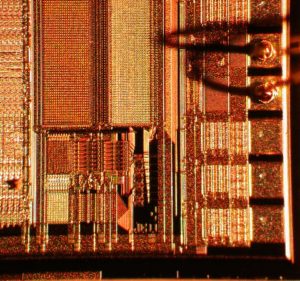
Reverse Engineering MCU ATMEGA640P to figure out the location of security fuse bit of Microcontroller ATmega640P by MCU cracking technique, then extract code
The Compare Output mode (COM0x1:0) bits have two functions. The Waveform Generator uses the COM0x1:0 bits for defining the Output Compare (OC0x) state at the next Compare Match. Also, the COM0x1:0 bits control the OC0x pin output source. Figure 41 shows a simplified schematic of the logic affected by the COM0x1:0 bit setting if MCU ATmega644 code recovering.
The I/O Registers, I/O bits, and I/O pins in the figure are shown in bold. Only the parts of the general I/O Port Control Registers (DDR and PORT) that are affected by the COM0x1:0 bits are shown. When referring to the OC0x state, the reference is for the internal OC0x Register, not the OC0x pin. If a system reset occur, the OC0x Register is reset to “0”.
The general I/O port function is overridden by the Output Compare (OC0x) from the Waveform Generator if either of the COM0x1:0 bits are set. However, the OC0x pin direction (input or output) is still controlled by the Data Direction Register (DDR) for the port pin. The Data Direction Register bit for the OC0x pin (DDR_OC0x) must be set as output before the OC0x value is visible on the pin. The port override function is independent of the Waveform Generation mode.
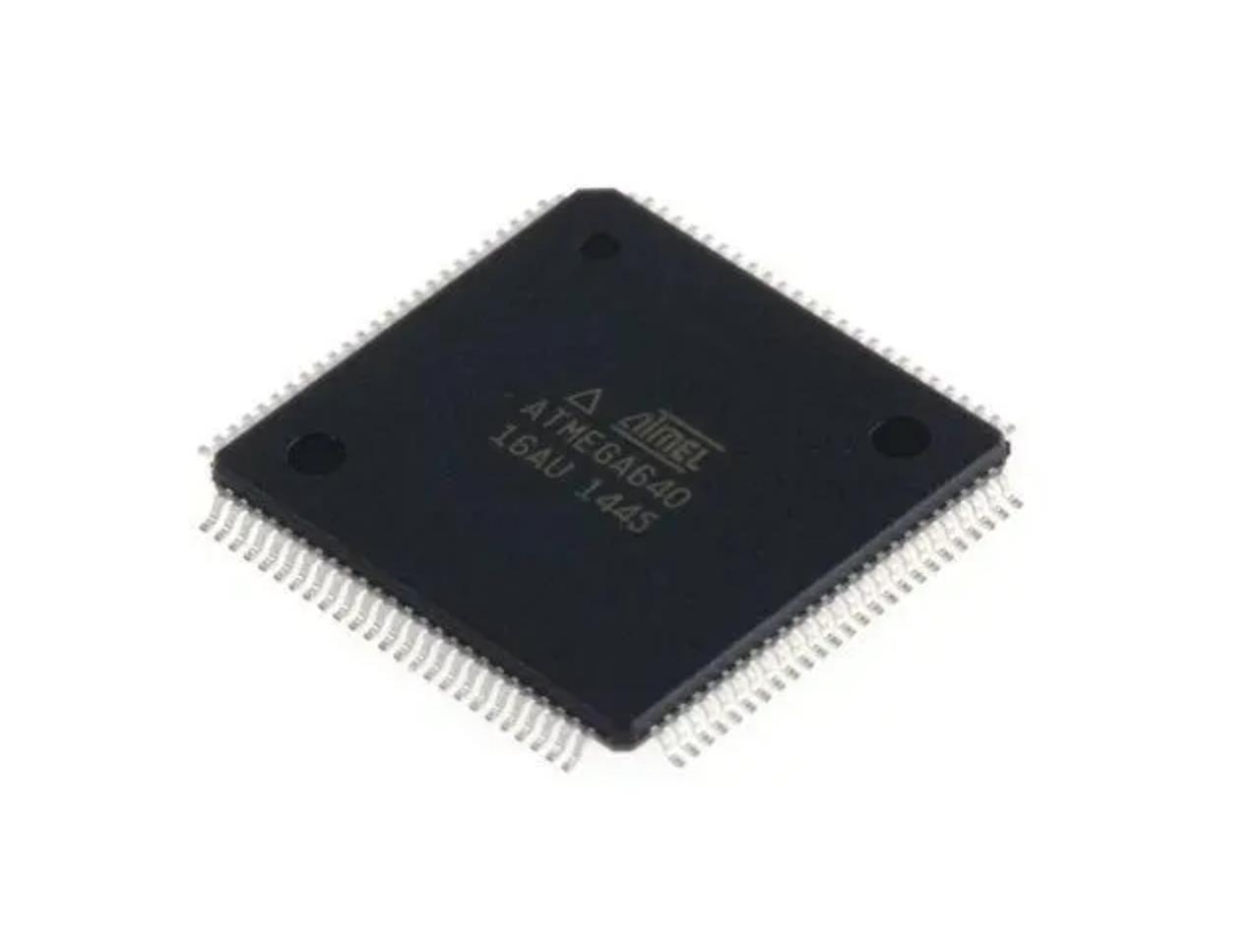
unlock ATMEGA640A atmel microprocessor secured and recover embedded heximal data from flash memory
The design of the Output Compare pin logic allows initialization of the OC0x state before the output is enabled. Note that some COM0x1:0 bit settings are reserved for certain modes of operation. See “8-bit Timer/Counter Register Description”.
The Waveform Generator uses the COM0x1:0 bits differently in Normal, CTC, and PWM modes. For all modes, setting the COM0x1:0 = 0 tells the Waveform Generator that no action on the OC0x Register is to be performed on the next Compare Match.
For compare output actions in the non-PWM modes refer to Table 70 on page 128. For fast PWM mode, refer to Table 71 on page 128, and for phase correct PWM refer to Table 72 on page 129. A change of the COM0x1:0 bits state will have effect at the first Compare Match after the bits are written. For non-PWM modes, the action can be forced to have immediate effect by using the FOC0x strobe bits.
Recover MCU PIC16F73 Binary
Recover MCU PIC16F73 Binary from flash memory and data extracted from eeprom memory of Microcontroller, reprogramme the firmware into blank MCU PIC16F73 for Microprocessor cloning;
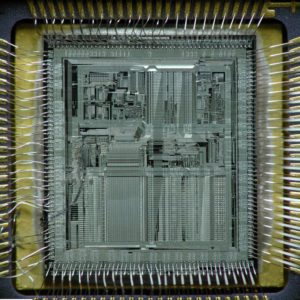
Recover MCU PIC16F73 Binary from flash memory and data extracted from eeprom memory of Microcontroller, reprogramme the firmware into blank MCU PIC16F73 for Microprocessor cloning
High Performance RISC CPU:
· High performance RISC CPU
· Only 35 single word instructions to learn
· All single cycle instructions except for program branches which are two-cycle
· Operating speed: DC – 20 MHz clock input DC – 200 ns instruction cycle
· Up to 8K x 14 words of FLASH Program Memory, Up to 368 x 8 bytes of Data Memory (RAM)
· Pinout compatible to the PIC16C73B/74B/76/77
· Pinout compatible to the PIC16F873/874/876/877
· Interrupt capability (up to 12 sources)
· Eight level deep hardware stack
· Direct, Indirect and Relative Addressing modes
· Processor read access to program memory
Special Microcontroller Features:
· Power-on Reset (POR)
· Power-up Timer (PWRT) and
Oscillator Start-up Timer (OST)
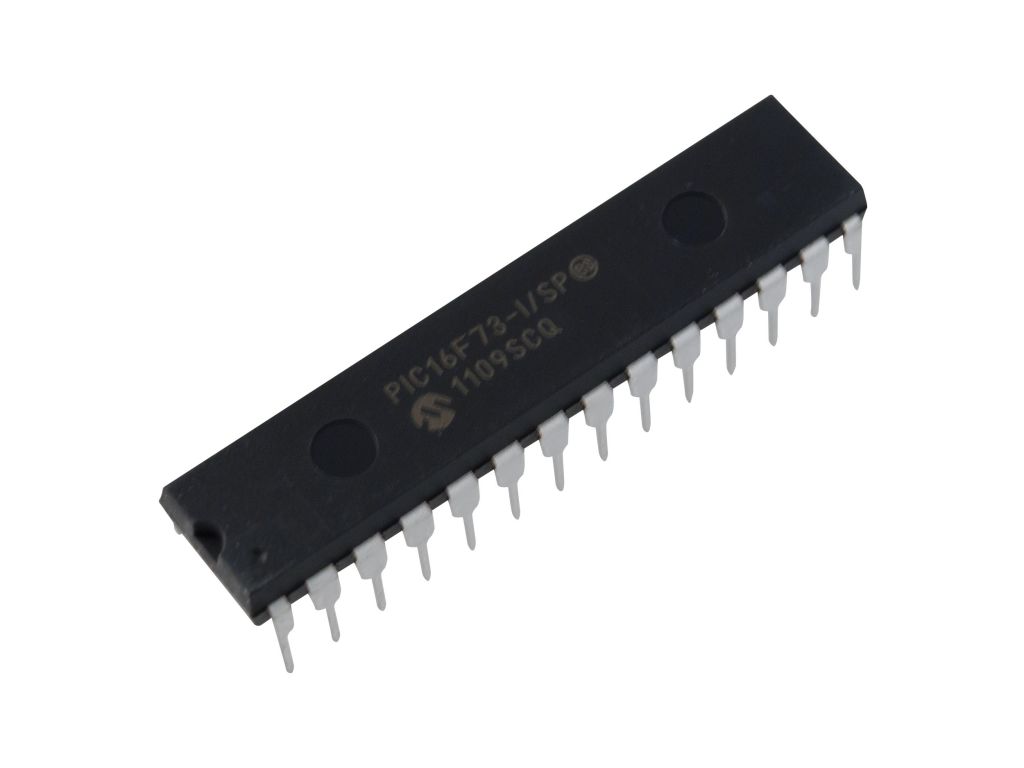
unlock PIC16F73 microprocessor fuse bit and open mcu flash memory and eeprom memory to readout heximal program and binary data
· Watchdog Timer (WDT) with its own on-chip RC oscillator for reliable operation
· Programmable code protection
· Power saving SLEEP mode
· Selectable oscillator options
· In-Circuit Serial Programming (ICSP) via two pins
Peripheral Features:
· Timer0: 8-bit timer/counter with 8-bit prescaler
· Timer1: 16-bit timer/counter with prescaler, can be incremented during SLEEP via external crystal/clock
· Timer2: 8-bit timer/counter with 8-bit period register, prescaler and postscaler
· Two Capture, Compare, PWM modules if Recover mcu binary
– Capture is 16-bit, max. resolution is 12.5 ns
– Compare is 16-bit, max. resolution is 200 ns
– PWM max. resolution is 10-bit
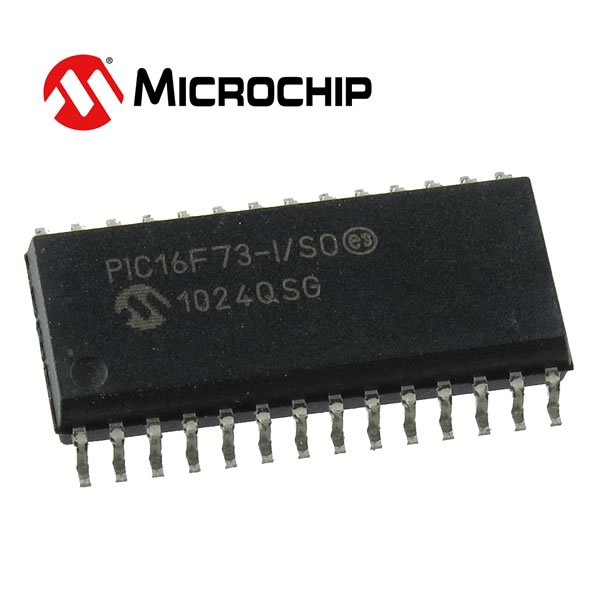
recover pic16F73 mcu chip flash memory code and clone the program firmware to new microcontroller
· 8-bit, up to 8-channel Analog-to-Digital converter
· Synchronous Serial Port (SSP) with SPI (Master mode) and I2C (Slave)
· Universal Synchronous Asynchronous Receiver Transmitter (USART/SCI)
· Parallel Slave Port (PSP), 8-bits wide with external RD, WR and CS controls (40/44-pin only)
· Brown-out detection circuitry for Brown-out Reset (BOR)
Recover MCU PIC16F72A Firmware
Recover MCU PIC16F72A Firmware in the format of binary or heximal, reset the configurate bits of Microcontroller PIC16F72A from locked to open one by crack microcontroller fuse bit, then readout code from MCU;
Recover MCU PIC16F72A Firmware in the format of binary or heximal, reset the configurate bits of Microcontroller PIC16F72A from locked to open one by crack microcontroller fuse bit, then readout code from MCU
This document contains device specific information for the operation of the PIC16F72 device. Additional information may be found in the PIC™ Mid-Range MCU Reference Manual (DS33023), which may be downloaded from the Microchip website. The Reference Manual should be considered a complementary document to this data sheet, and is highly recommended reading for a better understanding of the device architecture and operation of the peripheral modules.
The PIC16F72 belongs to the Mid-Range family of the PIC devices. The program memory contains 2K words, which translate to 2048 instructions, since each 14-bit program memory word is the same width as each device instruction. The data memory (RAM) contains 128 bytes after recover mcu AT89C4051 heximal.
There are 22 I/O pins that are user configurable on a pin-to-pin basis. Some pins are multiplexed with other device functions. These functions include:
· External interrupt
· Change on PORTB interrupt
· Timer0 clock input
· Timer1 clock/oscillator
· Capture/Compare/PWM
· A/D converter
· SPI/I2C
Table 1-1 details the pinout of the device with descriptions and details for each pin.
There are two memory blocks in the PIC16F72 device. These are the program memory and the data memory. Each block has separate buses so that concurrent access can occur. Program memory and data memory are explained in this section. Program memory can be read internally by the user code (see Section 7.0).
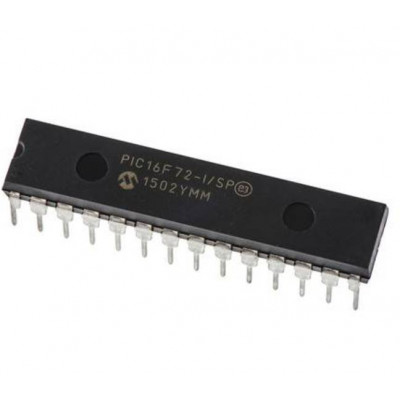
crack mcu PIC16F72A fuse bit and dump embedded firmware file from flash and eeprom memory
The data memory can further be broken down into the general purpose RAM and the Special Function Registers (SFRs). The operation of the SFRs that control the “core” are described here. The SFRs used to control the peripheral modules are described in the section discussing each individual peripheral module.
Additional information on device memory may be found in the PIC™ Mid-Range Reference Manual, (DS33023).
PIC16F72 devices have a 13-bit program counter capable of addressing a 8K x 14 program memory space.
The address range for this program memory is 0000h 07FFh. Accessing a location above the physically implemented address will cause a wraparound.
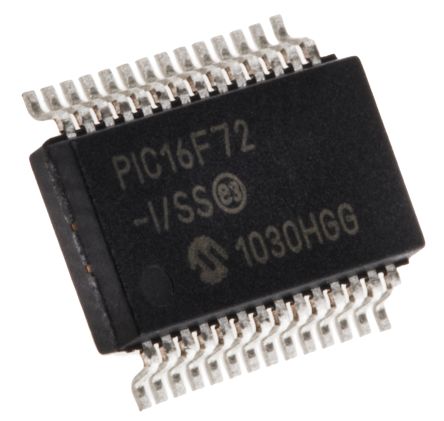
decrypt PIC16F72A microcontroller fuse bit and readout flash program code and eeprom data heximal
The RESET Vector is at 0000h and the Interrupt Vector is at 0004h.
The Data Memory is partitioned into multiple banks that contain the General Purpose Registers and the Special Function Registers. Bits RP1 (STATUS<6>) and RP0 (STATUS<5>) are the bank select bits.
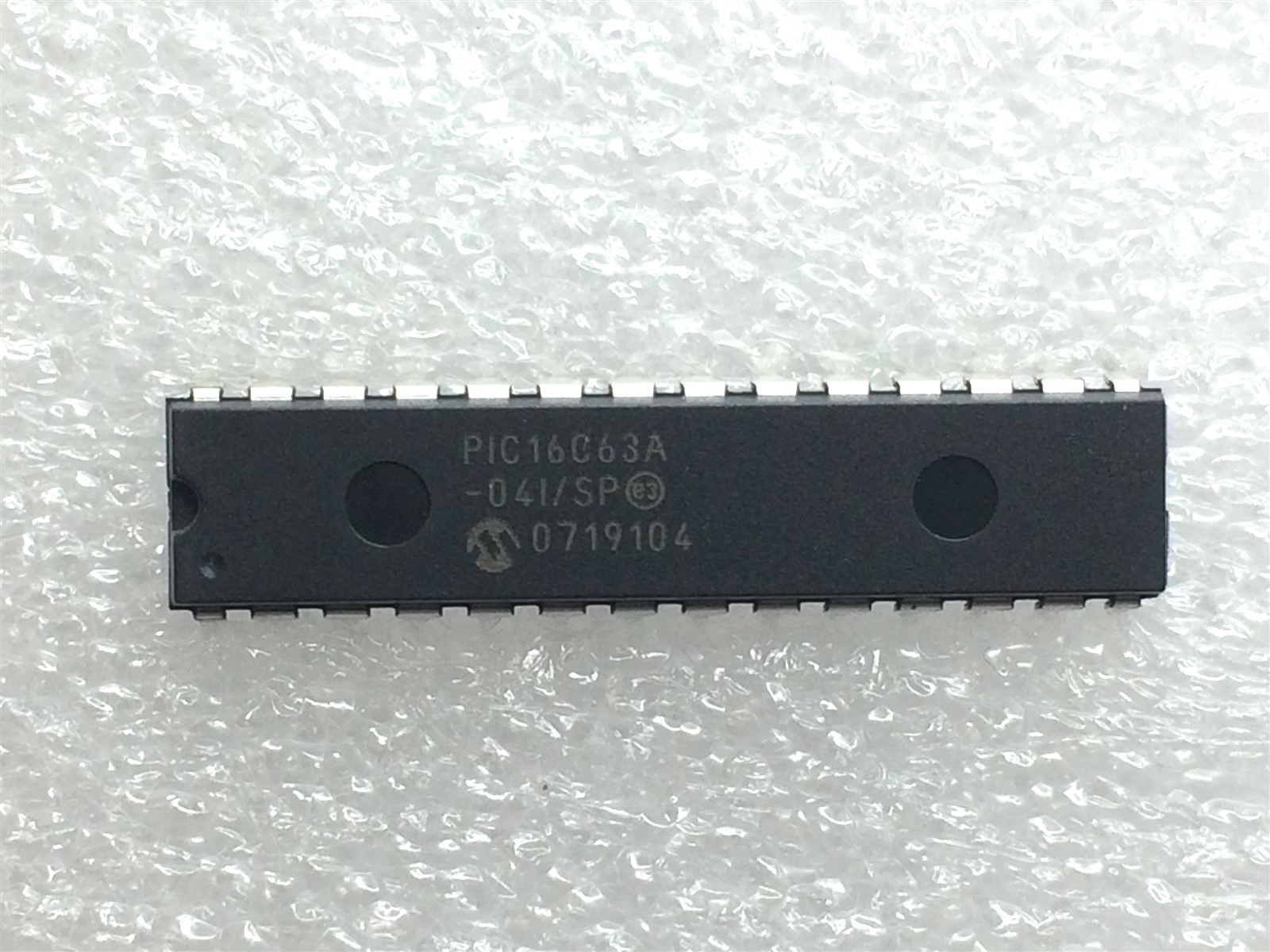
Recover MCU PIC16C63A Software
When a device built around the Microchip PIC16C63A becomes non-functional due to corrupted code, lost archives, or locked flash settings, regaining access to its embedded program is often essential. Our service, searchable under the keyword Recover MCU PIC16C63A Software, helps legitimate owners and authorized technicians open, readout, restore, and duplicate the firmware/binary/heximal contents of these microcontrollers. We focus on safe, confidential recovery that produces usable program files without revealing methods to bypass protections.
Why clients request recovery
The PIC16C63A is commonly embedded in long-lived products where original source code or production files may no longer be accessible. Typical, lawful reasons to request recovery include the need to restore corrupted flash, copy an existing program for authorized spares, clone configuration archives for manufacturing, or duplicate data before servicing legacy equipment. In each case, extracting a verified binary or heximal archive can save extensive redevelopment time and minimize downtime.
Where the PIC16C63A is used
This MCU appears across many sectors due to its compact feature set and reliable I/O:
- Consumer appliances and household electronics.
- Industrial controllers for simple automation tasks.
- Measurement instruments and data loggers.
- Hobbyist and aftermarket systems requiring straightforward control and modest memory.
Because these applications often hold critical calibration data and configuration files, the device’s flash or EEPROM may be treated as a protected or locked asset.
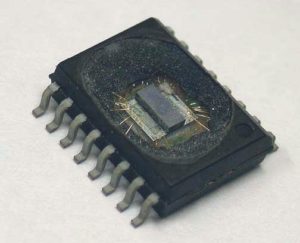
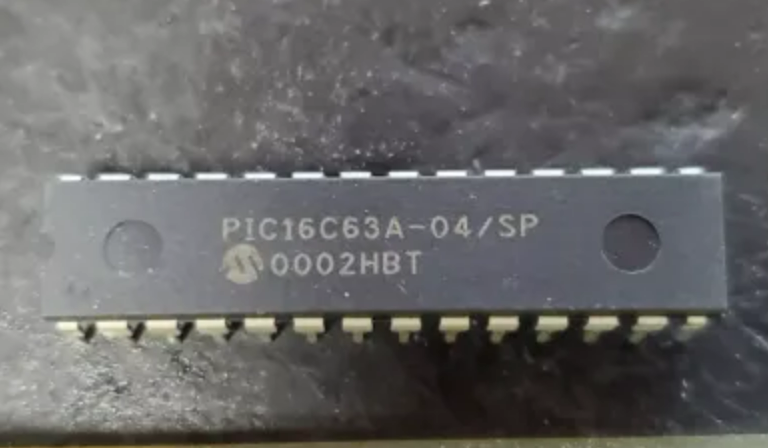
Recover MCU PIC16C63A software from Microcontroller PIC16C63A flash memory, the status of microprocessor PIC16C63A can be reset from locked to unlocked one by MCU cracking technology;
PIC16CXX Microcontroller Core Features:
· High performance RISC CPU
· Only 35 single word instructions to learn
· All single cycle instructions except for program branches which are two cycle
· Operating speed: DC – 20 MHz clock input DC – 200 ns instruction cycle
· 4 K x 14 words of Program Memory, 192 x 8 bytes of Data Memory (RAM)
· Interrupt capability
· Eight-level deep hardware stack
· Direct, indirect and relative addressing modes
· Power-on Reset (POR)
· Power-up Timer (PWRT) and Oscillator Start-up Timer (OST)
· Watchdog Timer (WDT) with its own on-chip RC oscillator for reliable operation
Unique features that influence recovery
The PIC16C63A combines modest on-chip program memory with simple analog/digital peripherals and EEPROM for persistent settings. Its memory layout and debugging interfaces influence how the program file is stored and what parts of the memory are most important to recover — for example, calibration tables or small data archives. These constrained resources, plus occasional secured or encrypted configurations, make careful, authorized handling essential.
What we provide (high level, non-actionable)
Our service centers on ethically obtaining recoverable firmware images and delivering practical recovery artifacts. Deliverables typically include validated heximal or binary dumps, integrity and checksum reports, and high-level annotations to help engineers interpret recovered data. We can assist clients to restore devices to operational status using recovered program images, and prepare migration packages for replacement hardware. Importantly, we do not provide instructions to crack or hack protections — all work is performed only with proof of ownership or explicit authorization.
General idea and purpose (conceptual)
A responsible recovery engagement begins with authorization, followed by a non-destructive effort to produce a reliable memory archive. The purpose is to unlock access to a device’s program and data so the end user can perform legitimate tasks: repair, authorized cloning, migration, or compliance audits. Recovered source-level reconstruction is sometimes possible, but in many cases the primary outcome is a verified binary/heximal archive and assembly-level annotations.
· Programmable code protection against mcu pic16c63a memory data unlocking
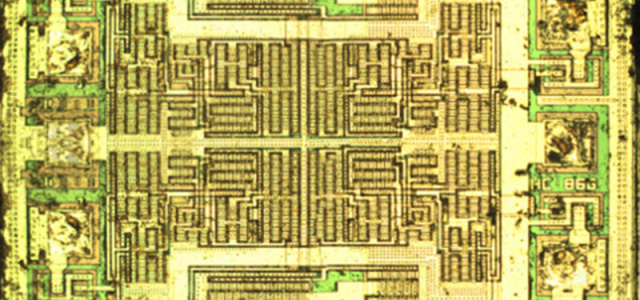
· Power-saving SLEEP mode crystal/clock
· Timer2: 8-bit timer/counter with 8-bit period register, prescaler and postscaler
· Capture, Compare, PWM modules
– Capture is 16-bit, max. resolution is 200 ns
– Compare is 16-bit, max. resolution is 200 ns
– PWM max. resolution is 10-bit
· 8-bit multichannel Analog-to-Digital converter
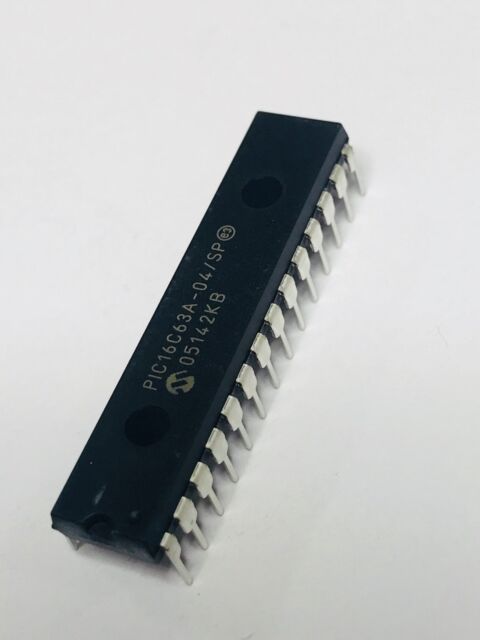
crack mcu PIC16C63A DIP fuse bit and readout embedded firmware from flash memory
· Synchronous Serial Port (SSP) with SPITM and I2CTM
· Universal Synchronous Asynchronous Receiver Transmitter (USART/SCI)
· Parallel Slave Port (PSP), 8-bits wide with external RD, WR and CS controls
· Brown-out detection circuitry for Brown-out Reset (BOR)
· Selectable oscillator options
· Low power, high speed CMOS EPROM technology
· Wide operating voltage range: 2.5V to 5.5V
· High Sink/Source Current 25/25 mA
· Commercial, Industrial and Automotive temperature ranges
· Low power consumption:
– < 5 mA @ 5V, 4 MHz
– 23 µA typical @ 3V, 32 kHz
– < 1.2 µA typical standby current
Benefits and typical outcomes
Clients gain secure backups of previously inaccessible firmware, reduced downtime, and the ability to copy or duplicate systems for spares and production. Recovered program files enable testing, debugging, and redeployment without rebuilding software from scratch.
Challenges and limitations
Obstacles may include layered protections, partial data corruption, variant memory maps, or integrity checks that limit full reconstruction. We communicate feasibility up front and prioritize preserving device integrity throughout the process.
All projects require explicit authorization and are governed by confidentiality agreements. If you need to Recover MCU PIC16C63A Software for legitimate recovery, maintenance, or archival purposes, our experienced team provides secure, professional support to retrieve and document your embedded program data while protecting your IP and operational continuity.
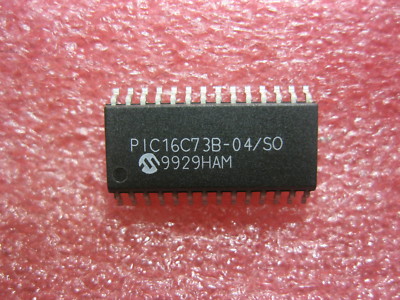
Recover IC PIC16C73B Firmware
When a legacy device built around the Microchip PIC16C73B becomes inaccessible due to corrupted memory, lost program archives, or protective flash settings, organizations and engineers often face disruption. Our service—labeled Recover IC PIC16C73B Firmware—helps legitimate owners and authorized technicians safely open, readout, restore, and duplicate the embedded firmware/binary/heximal images stored on this classic MCU. We emphasize lawful engagement, confidentiality, and non-destructive handling while delivering recovery artifacts that support maintenance, migration, and compliance needs.
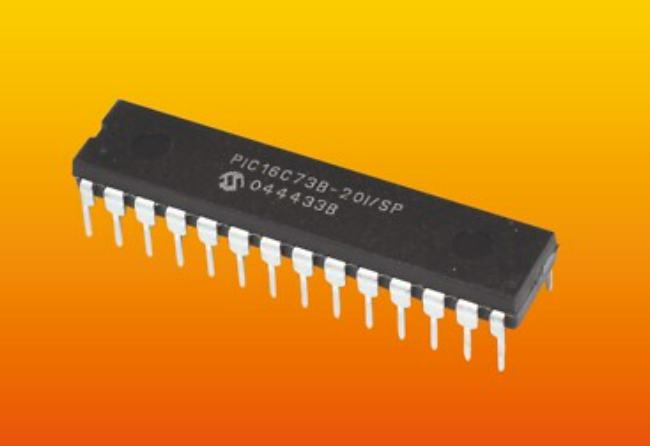
Devices using the PIC16C73B frequently store critical program logic, calibration data, or archived configuration files that are essential to ongoing operation. Being able to copy, clone, or duplicate a device’s flash and EEPROM contents enables rapid repair after failures, authorized spares provisioning, and continuity for long-lived products whose original source code may be lost. In many cases, recovery is the only practical path to restore functionality without full redesign.
Typical uses and industries
The PIC16C73B’s simplicity and reliable I/O make it a staple in many sectors:
- Industrial control and instrumentation (timers, simple PLC add-ons).
- Consumer products and appliances where low-cost, low-power control is sufficient.
- Measurement equipment and data loggers that require modest nonvolatile storage.
- Legacy and aftermarket automotive or hobbyist systems that depend on sustained support.
Across these applications, a recovered binary/heximal archive can enable authorized updates, verification, and redeployment.
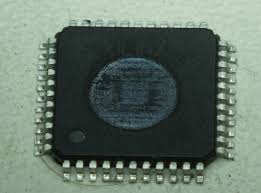
Recover IC PIC16C73B Firmware from MCU PIC16C73B flash memory, reset the status of microcontroller from locked to open by crack Microcontroller security fuse bit;
A highly reliable Watchdog Timer (WDT), with its own on-ic RC oscillator, provides protection against software lockup, and also provides one way of waking the device from SLEEP.
A UV erasable CERDIP packaged version is ideal for code development, while the cost effective One-Time-Programmable (OTP) version is suitable for production in any volume.
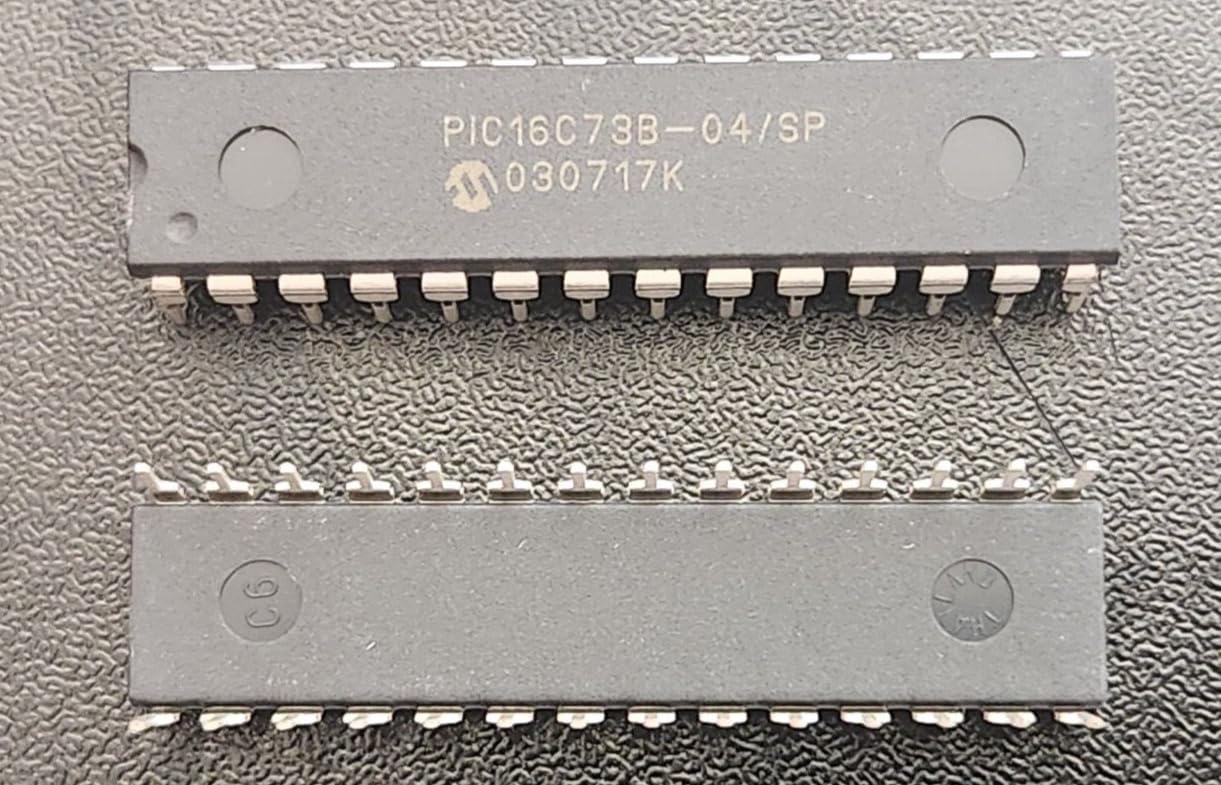
The PIC16C73B devices fit nicely in many applications ranging from security and remote sensors to appliance control and automotive. The EPROM technology makes customization of application programs (transmitter codes, motor speeds, receiver frequencies, etc.) extremely fast and convenient after Crack mcu pic16c73b flash and eeprom memory, readout embedded program/data from them.
The small footprint packages make this microcontroller series perfect for all applications with space limitations. Low cost, low power, high performance, ease of use and I/O flexibility make the PIC16C65B devices very versatile, even in areas where no microcontroller use has been considered before (e.g., timer functions, serial communication, capture and compare, PWM functions and coprocessor applications).
Users familiar with the PIC16C5X microcontroller family will realize that this is an enhanced version of the PIC16C5X architecture. Please refer to Appendix A for a detailed list of enhancements. Code written for the PIC16C5X can be easily ported to the PIC16CXX family of devices (Appendix B).
PICmicrochip® devices are supported by the complete line of Microchip Development tools. Please refer to Section 15.0 for more details about Microchip’s development tools.
Unique features that affect recovery
The PIC16C73B combines modest on-chip program memory with EEPROM and basic analog/digital peripherals. Its architecture often stores vital parameters in small memory regions; when those regions are protected or the device is configured as locked, careful, authorized work is required to avoid damaging the stored data. These constrained memory maps and modest debug interfaces shape how recovery projects are scoped and executed.
What we provide (high-level, non-actionable)
Our service focuses on ethical recovery and analysis without revealing methods to bypass protections. Deliverables commonly include validated heximal or binary dumps of the device’s memory where lawful, high-level disassembly summaries to aid engineers, and documented reports describing what was recovered and how it can be used for repair or migration. We can assist clients to restore devices to operation, prepare migration packages for replacement hardware, and duplicate archived program files for authorized manufacturing runs.
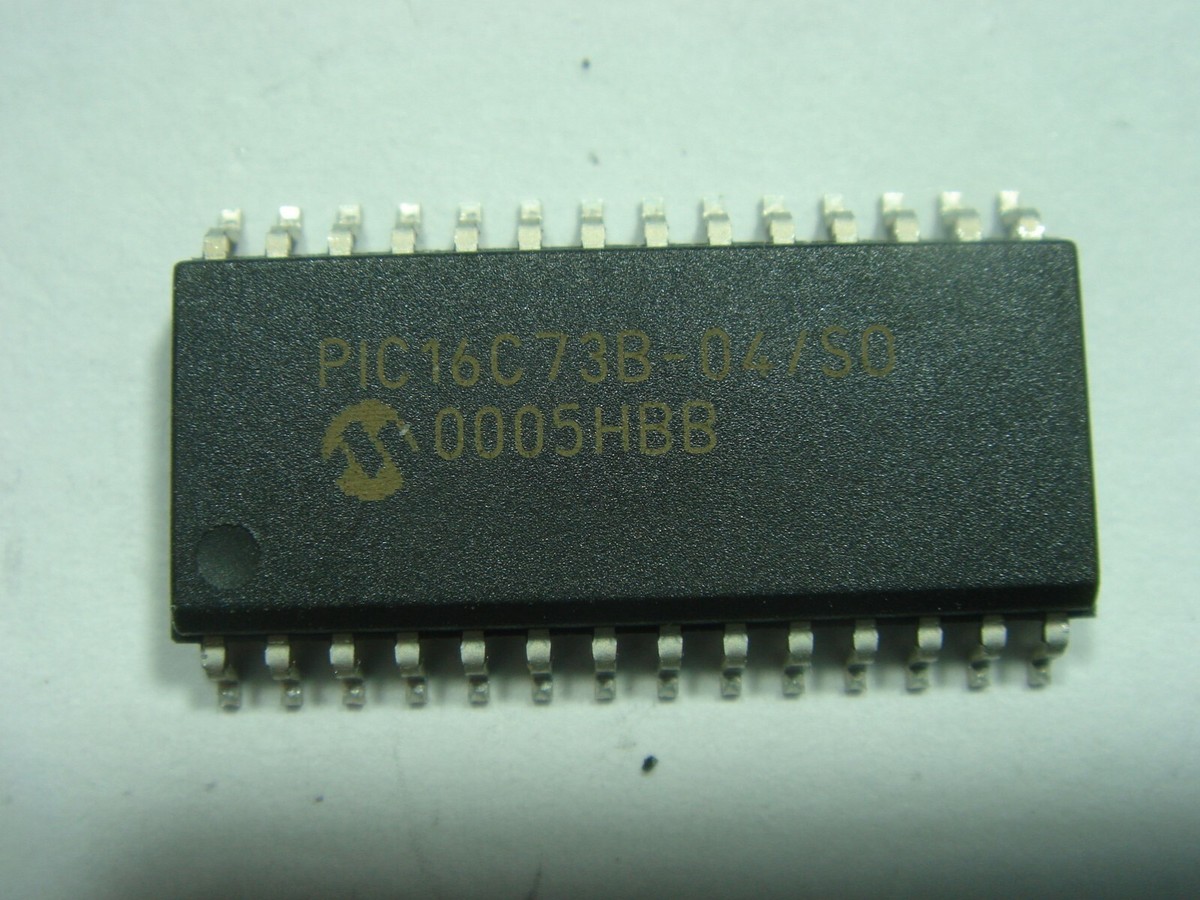
General approach and purpose (conceptual)
Every project begins with verification of ownership and a risk assessment. We prioritize non-destructive techniques to obtain a reliable memory archive, validate integrity through checksums and testing, and annotate the recovered program file so it can be used for authorized maintenance or redevelopment. The primary purposes are to reduce downtime, preserve intellectual property under the client’s control, and enable safe continuation of service for legacy systems.
A variety of frequency ranges and packaging options are available. Depending on application and production requirements, the proper device option can be selected using the information in the PIC16C63A/65B/73B/74B Product Identification System section at the end of this data sheet when Reading mcu pic16c73b eeprom memory content. When placing orders, please use that page of the data sheet to specify the correct part number.
Benefits to end users
Clients gain faster restoration of service, secure backups of previously inaccessible firmware, and the ability to copy or clone systems for authorized spares and production. Recovered data supports troubleshooting, compliance checks, and lifespan extension for specialized equipment.
Challenges and limitations
Difficulties may include layered manufacturer protections, partial corruption of memory regions, or variant chip revisions with differing memory maps. Not every project yields full source-level code; often the realistic outcome is a verified binary/heximal archive with assembly-level annotations.
Legal & ethical safeguards
We require explicit authorization and operate under confidentiality agreements. We do not provide instructions to illegally crack, hack, or decrypt protections for unauthorized purposes. Our focus is on constructive, lawful recovery: to unlock and restore embedded systems for their rightful owners.
If you need to Recover IC PIC16C73B Firmware for legitimate repair, migration, or archival purposes, our experienced team offers secure, professional support to retrieve and document your embedded program data while safeguarding your assets and operational continuity.
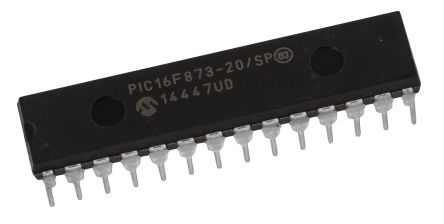
Recover IC PIC16F873 Heximal
The Microchip PIC16F873 is a widely used 8-bit microcontroller in industrial, automotive, and consumer electronics applications. Known for its reliability, low power consumption, and integrated peripherals, it is often deployed in embedded systems where firmware is stored in flash memory and EEPROM. Many of these systems are protected, locked, or even encrypted to safeguard intellectual property. However, when original firmware is lost, damaged, or inaccessible, users face the critical challenge of retrieving the heximal file to restore normal functionality.
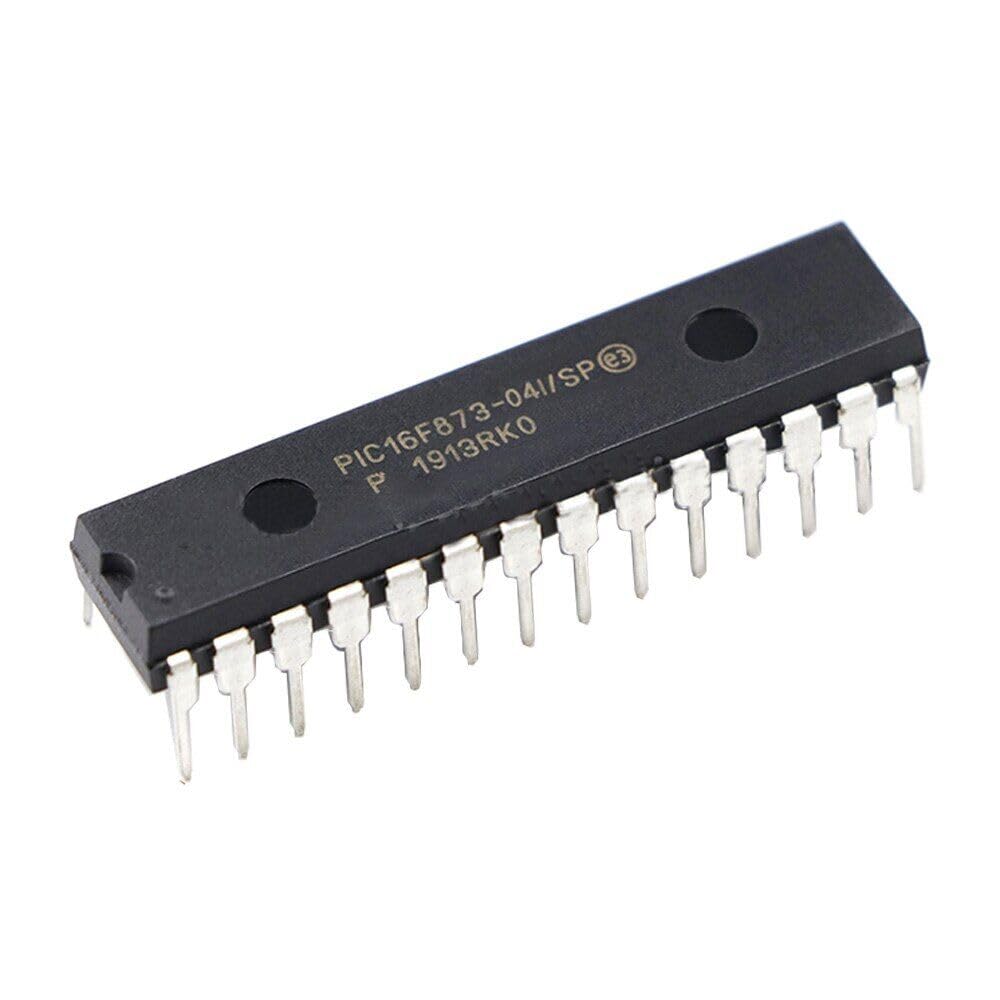
At CIRCUIT ENGINEERING CO., LTD, we specialize in Recover IC PIC16F873 Heximal services. Our engineering team has the expertise to unlock, crack, hack, decode, and decrypt even secured PIC16F873 devices, enabling clients to regain access to valuable binary and source code data stored in their program memory or EEPROM.
Our Recovery Process
- Secure Device Handling – We begin with careful examination of the IC to ensure no physical damage occurs during extraction.
- Firmware Access Techniques – Using advanced hardware interfaces and proprietary methods, we can open protected microcontrollers and bypass security measures without harming the device.
- Heximal File Extraction – The recovered firmware is output in heximal format, which can be directly re-programmed into a replacement chip or used for further analysis.
- Optional Disassembly – Upon request, we can copy, clone, or duplicate the extracted program into other compatible PIC devices, or reverse-engineer it into readable source code for development purposes.
Applications of PIC16F873
The PIC16F873 is popular in:
- Industrial control systems – managing sensors, motors, and process automation.
- Automotive electronics – supporting dashboard controls, security modules, and diagnostic systems.
- Consumer devices – from household appliances to small gadgets requiring reliable microcontroller performance.
- Communication equipment – handling protocol conversion, signal processing, and embedded messaging systems.
Its integrated flash memory, on-chip EEPROM, and low-power architecture make it ideal for long-term deployments where updates are rare but reliability is essential.
Why Choose Our Service
- Technical Expertise – Years of hands-on experience with Microchip devices ensures we can deal with both old and modern protection schemes.
- Advanced Tools – We employ precision hardware programmers, fault-injection systems, and firmware analysis software to achieve high recovery success rates.
- Confidentiality Guaranteed – All data, files, and archives are handled with strict non-disclosure protocols.
- Custom Solutions – Whether your goal is to restore a failed device, duplicate a working program, or conduct in-depth firmware analysis, we tailor our process to meet your needs.
Conclusion
Losing firmware from a secured PIC16F873 microcontroller can halt operations, cause costly downtime, and threaten product continuity. Our Recover IC PIC16F873 Heximal service is designed to give you back control — quickly, safely, and with full technical support. By recovering and restoring your heximal file, we ensure your systems stay operational and your investment in embedded technology remains protected.
If you need professional assistance to recover, unlock, or restore your PIC16F873 firmware, contact CIRCUIT ENGINEERING CO., LTD today for a secure and effective solution.
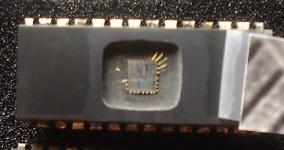
Recover IC PIC16F873 Heximal out from Microcontroller PIC16F873 secured memory, remove the protection over MCU PIC16F873 by Unlocking microcontroller security fuse bit, and readout the firmware from MCU flash memory;
Devices Included in this Data Sheet:
Analog Features:
· 10-bit, up to 8-channel Analog-to-Digital Converter (A/D)
· Brown-out Reset (BOR)
High-Performance RISC CPU:
· Only 35 single-word instructions to learn
· All single-cycle instructions except for program branches, which are two-cycle
· Operating speed: DC – 20 MHz clock input DC – 200 ns instruction cycle
· Up to 8K x 14 words of Flash Program Memory,
Up to 368 x 8 bytes of Data Memory (RAM),
Up to 256 x 8 bytes of EEPROM Data Memory
· Pinout compatible to other 28-pin or 40/44-pin PIC16CXXX and PIC16FXXX microcontrollers
Peripheral Features:
· Timer0: 8-bit timer/counter with 8-bit prescaler
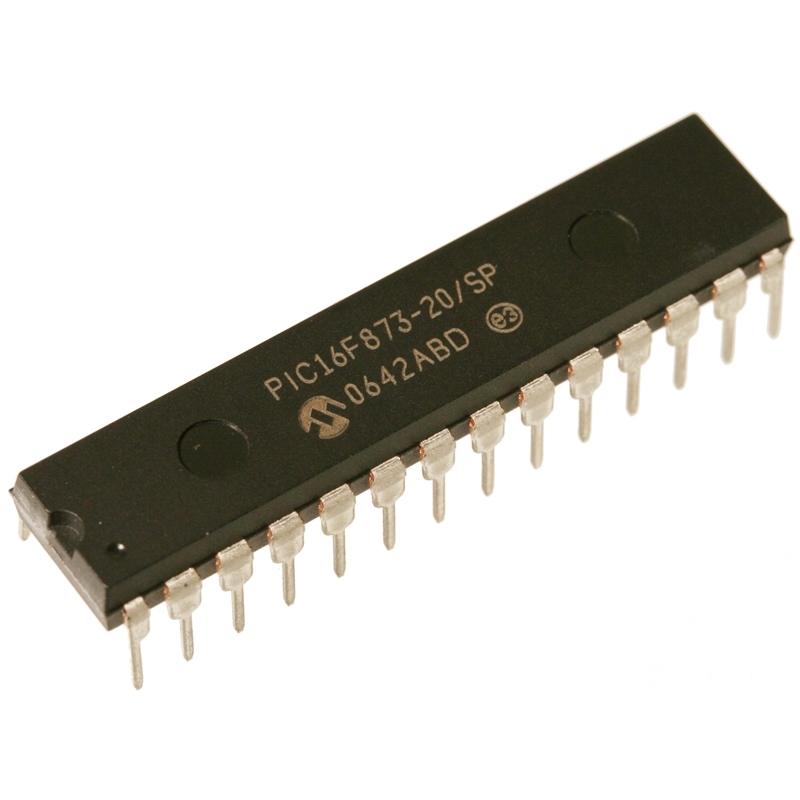
decrypt locked mcu PIC16F873 flash memory and extract embedded firmware from flash memory
· Timer1: 16-bit timer/counter with prescaler, can be incremented during Sleep via external crystal/clock
· Timer2: 8-bit timer/counter with 8-bit period register, prescaler and postscaler
· Two Capture, Compare, PWM modules
– Capture is 16-bit, max. resolution is 12.5 ns
– Compare is 16-bit, max. resolution is 200 ns
– PWM max. resolution is 10-bit
· Synchronous Serial Port (SSP) with SPI™ (Master mode) and I2C™ (Master/Slave)
· Universal Synchronous Asynchronous Receiver Transmitter (USART/SCI) with 9-bit address detection
· Parallel Slave Port (PSP) – 8 bits wide with external RD, WR and CS controls (40/44-pin only)
· Brown-out detection circuitry for Brown-out Reset (BOR)
· Analog Comparator module with:
– Two analog comparators
– Programmable on-chip voltage reference (VREF) module
– Programmable input multiplexing from device inputs and internal voltage reference
– Comparator outputs are externally accessible
Special Microcontroller Features:
· 100,000 erase/write cycle Enhanced Flash program memory typical
· 1,000,000 erase/write cycle Data EEPROM memory typical
· Data EEPROM Retention > 40 years
· Self-reprogrammable under software control
· In-Circuit Serial Programming™ (ICSP™) via two pins
· Single-supply 5V In-Circuit Serial Programming
· Watchdog Timer (WDT) with its own on-chip RC oscillator for reliable operation
· Programmable code protection
· Power saving Sleep mode
· Selectable oscillator options
· In-Circuit Debug (ICD) via two pins CMOS Technology:
· Low-power, high-speed Flash/EEPROM technology
· Fully static design
· Wide operating voltage range (2.0V to 5.5V)
· Commercial and Industrial temperature ranges
· Low-power consumption
 Posted in Recover Chip |
  Tags: капіраваць encrypted mcu binary, капіраваць encrypted mcu code, капіраваць encrypted mcu data, капіраваць encrypted mcu eeprom, капіраваць encrypted mcu file, капіраваць encrypted mcu firmware, капіраваць encrypted mcu flash, капіраваць encrypted mcu heximal, капіраваць encrypted mcu memory, капіраваць encrypted mcu program |
  Comments Closed
Recover MCU PIC16F648A Firmware
Recover MCU PIC16F648A Firmware from microcontroller PIC16F648A flash memory is the result of MCU cracking, after application of this technique over the master MCU PIC16F648A with original program into it;
Recover MCU PIC16F648A Firmware from microcontroller PIC16F648A flash memory is the result of MCU cracking, after application of this technique over the master MCU PIC16F648A with original program into it
A variety of frequency ranges and packaging options are available. Depending on application and production requirements, the proper device option can be selected using the information in the PIC16F648A Product Identification System, at the end of this data sheet. When placing orders, please use this page of the data sheet to specify the correct part number.
FLASH Devices
FLASH devices can be erased and re-programmed electrically. This allows the same device to be used for prototype development, pilot programs and production. A further advantage of the electrically erasable FLASH is that it can be erased and reprogrammed in-circuit, or by device programmers, such as Microchip’s PICSTART® Plus, or PRO MATE® II programmers.
Quick-Turnaround-Production
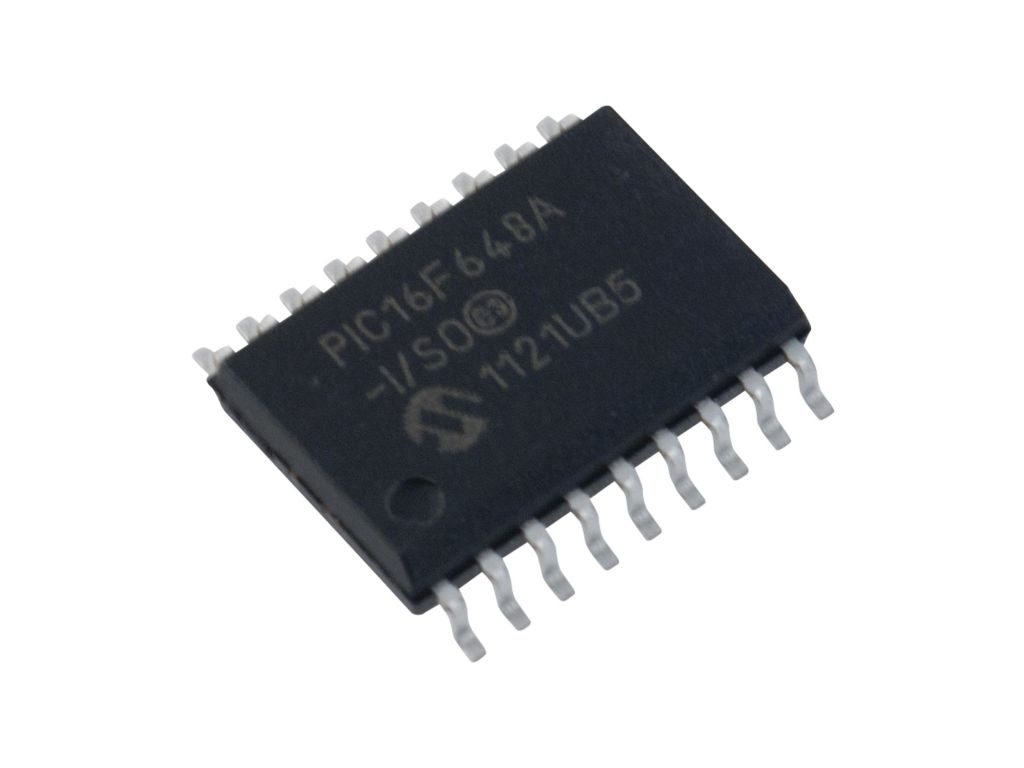
Break PIC16F648A microprocessor protection and readout firmware program from flash memory
(QTP) Devices Microchip offers a QTP Programming Service for factory production orders. This service is made available for users who chose not to program a medium to high quantity of units and whose code patterns have stabilized. The devices are standard FLASH devices but with all program locations and configuration options already programmed by the factory. Certain code and prototype verification procedures apply before production shipments are available. Please contact your Microchip Technology sales office for more details.
Serialized Quick-Turnaround Production (SQTPSM) Devices
Microchip offers a unique programming service where a few user-defined locations in each device are programmed with different serial numbers. The serial numbers may be random, pseudo-random or sequential. Serial programming allows each device to have a unique number, which can serve as an entry-code, password or ID number
Recover PIC MCU Microchip 16LF506 Firmware
Recover PIC MCU Microchip 16LF506 Firmware and copy program to new Microcontroller PIC16LF506, clone master PIC16LF506 mcu which can provide the same functions as original master Microprocessor;
Recover PIC MCU Microchip 16LF506 Firmware and copy program to new Microcontroller PIC16LF506, clone master PIC16LF506 mcu which can provide the same functions as original master Microprocessor
Data memory is composed of registers or bytes of RAM. Therefore, data memory for a device is specified by its register file. The register file is divided into two functional groups: Special Function Registers (SFR) and General Purpose Registers (GPR).
The Special Function Registers include the TMR0 register, the Program Counter (PCL), the STATUS register, the I/O registers (ports) and the File Select Register (FSR). In addition, Special Function Registers are used to control the I/O port configuration and prescaler options when Recover IC STM32F107RCT6 code.
The General Purpose Registers are used for data and control information under command of the instructions. For the PIC12F510, the register file is composed of 10 Special Function Registers, 6 General Purpose.
Registers and 32 General Purpose Registers accessed For the PIC16F506, the register file is composed of 13 Special Function Registers, 3 General Purpose Registers and 64 General Purpose Registers accessed.
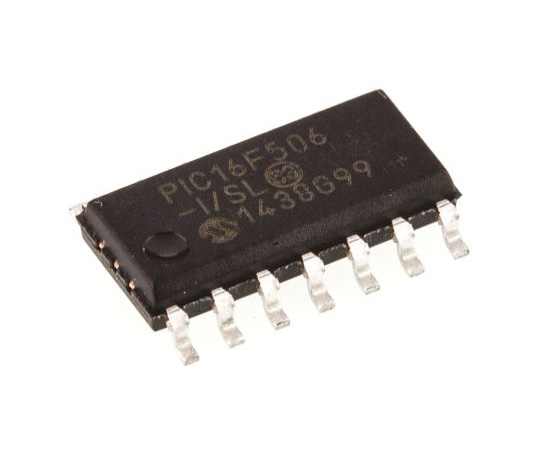
unlock microcontroller PIC16F506 tamper resistance system and extract embedded program data from flash memory
The Special Function Registers (SFRs) are registers used by the CPU and peripheral functions to control the operation of the device (see Table 4-1).
The Special Function Registers can be classified into two sets. The Special Function Registers associated with the “core” functions are described in this section for the purpose of chip AT89S8252 flash content copying.
Those related to the operation of the peripheral features are described in the section for each peripheral feature.
This register contains the arithmetic status of the ALU, the Reset status and the page preselect bit.
The STATUS register can be the destination for any instruction, as with any other register. If the STATUS register is the destination for an instruction that affects the Z, DC or C bits, then the write to these three bits is disabled. These bits are set or cleared according to the device logic. Furthermore, the TO and PD bits are not writable. Therefore, the result of an instruction with the STATUS register as destination may be different than intended.
For example, CLRF STATUS, will clear the upper three bits and set the Z bit. This leaves the STATUS register
as 000u u1uu (where u = unchanged).
Therefore, it is recommended that only BCF, BSF and MOVWF instructions be used to alter the STATUS register. These instructions do not affect the Z, DC or C bits from the STATUS register. For other instructions which do affect Status bits.