 Break MCU MC68HC11F1CFN3 Heximal
 May 1st, 2014 |
  Author:
 The MC68HC11F1CFN3, a legacy 8-bit microcontroller from Freescale (formerly Motorola), has long served in automotive, industrial, and consumer electronics applications. Known for its robust performance and integrated features—including on-chip A/D converters, serial communication interfaces, and internal EEPROM—it remains embedded in critical systems even today. However, its protected memory, often secured by hardware security bits, presents a significant challenge when attempting to extract or modify the firmware for maintenance, analysis, or system upgrade.

At CIRCUIT ENGINEERING CO.,LTD, we specialize in professional microcontroller reverse engineering services. Our expertise allows us to break MCU MC68HC11F1CFN3 heximal, enabling clients to access and restore the original binary, heximal, or source code from these highly secured, locked microcontrollers.
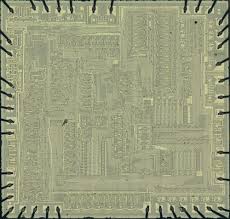
Break MCU MC68HC11F1CFN3 tamper resistance system and read heximal file out from Microcontroller MC68HC11F1, status of Microprocessor will be reset from locked to unlocked one;
Our process begins by carefully analyzing the device’s flash and EEPROM architecture. Using non-invasive and semi-invasive methods, we can crack, hack, and unlock the memory content without damaging the chip—preserving its functionality while retrieving critical data.
We extract the heximal file from the target MCU, decode the firmware, and, where necessary, decrypt encrypted sections. From there, we can help you clone or duplicate the program, convert it to a more accessible archive, or even reconstruct it into human-readable source code through disassembly or decompilation techniques.

Whether you need to copy a protected system for diagnostics or replicate functionality in a modernized platform, our service enables complete access to what was once considered inaccessible.
Features
· MC68HC11 CPU
· Power Saving STOP and WAIT Modes
· 4 Kbytes of On-Chip ROM
· 192 Bytes of On-Chip RAM (All Saved During Standby)
· 16-Bit Timer System
— 3 Input Capture (IC) Channels
— 4 Output Compare (OC) Channels
— One IC or OC Channel (Software Selectable)
· 8-Bit Pulse Accumulator
· Real-Time Interrupt Circuit
· Computer Operating Properly (COP) Watchdog System
· Synchronous Serial Peripheral Interface (SPI)
· Asynchronous Nonreturn to Zero (NRZ) Serial Communications Interface (SCI)
· 26 Input/Output (I/O) Pins
— 16 Bidirectional I/O Pins
— 3 Input Only Pins
— 3 Output Only Pins (One Output Only Pin in the 40-Pin Package)
· Available in a 44-Pin Plastic Leaded Chip Carrier (PLCC) and 40-Pin Dual In-Line Package (DIP) 2.1 VDD, VSS, and EVSS
Power is supplied to the MCU through VDD and VSS. VSS is the power supply, and VSS is ground. EVSS, available on the 44-pin PLCC, is an additional ground pin that must be grounded with VSS. The MCU operates from a single 5-volt (nominal) power supply. Very fast signal transitions occur on the MCU pins. The short rise and fall times place high, short duration current demands on the power supply. To prevent noise problems, provide good power supply bypassing at the MCU. Also, use bypass capacitors that have good high-frequency characteristics and situate them as close to the MCU as possible. Bypass requirements vary, depending on how heavily the MCU pins are loaded.

Hardware-Specific Expertise: We’re deeply familiar with the quirks and protections of the Freescale MC68HC11F1CFN3 and similar legacy devices. This means faster, safer results.
Precision and Confidentiality: We maintain strict protocols for secure data handling. All recovered firmware and files are handled with confidentiality.
End-to-End Support: We don’t just deliver raw data—we assist with interpretation, conversion, and integration into your current systems.
No Damage Guarantee: Our methods aim to preserve chip function post-extraction whenever possible, ideal for reuse or archival.
2.2 Reset (RESET)
An active low bidirectional control signal, RESET, acts as an input to initialize the MCU to a known startup state. It also acts as an open-drain output to indicate that an internal failure has been detected in either the clock monitor or COP watchdog circuit. The CPU distinguishes between internal and external reset conditions by sensing whether the reset pin rises to a logic one in less than two E-clock cycles after a reset has occurred. It is not advisable to connect an external resistor-capacitor (RC) power-up delay circuit to the reset pin of M68HC11 devices because the circuit charge time 2.3 Crystal Driver and External Clock Input (XTAL, EXTAL)
The MC68HC11F1CFN3 remains in use today due to its proven reliability in automotive control units, instrument clusters, industrial automation controllers, and legacy consumer electronics. With on-board RAM, internal EEPROM, and a flexible I/O architecture, it’s built to handle low-latency control tasks in embedded systems.
One standout feature is its bootstrap ROM, which can be leveraged for in-circuit programming or diagnostics. However, many of these features are locked down with hardware-level protection to prevent tampering or duplication—a hurdle we help you overcome.
These two pins provide the interface for either a crystal or a CMOS compatible clock to control the internal clock generator circuitry. The frequency applied to these pins is four times higher than the desired E-clock rate.
The XTAL pin is normally left unterminated when an external CMOS compatible clock input is connected to the EXTAL pin. However, a 10 kΩ to 100 kΩ load resistor connected from XTAL to ground can be used to reduce RFI noise emission. The XTAL output is normally intended to drive only a crystal. The XTAL output can be buffered with a high impedance buffer, or it can be used to drive the EXTAL input of another M68HC11.
Whether you’re tasked with maintaining a fleet of legacy control systems, duplicating a protected embedded environment, or auditing a third-party solution, our ability to break MCU MC68HC11F1CFN3 heximal and recover its firmware is your path forward. Our service is built for professionals who demand access, clarity, and reliability from even the most secured and encrypted systems.
Contact us today to learn how we can help you unlock, decode, and restore the full functionality of your Freescale MC68HC11F1CFN3-based systems.
 Posted in Break IC