 Attack Chip ATtiny2313 Firmware
 July 21st, 2010 |
  Author:
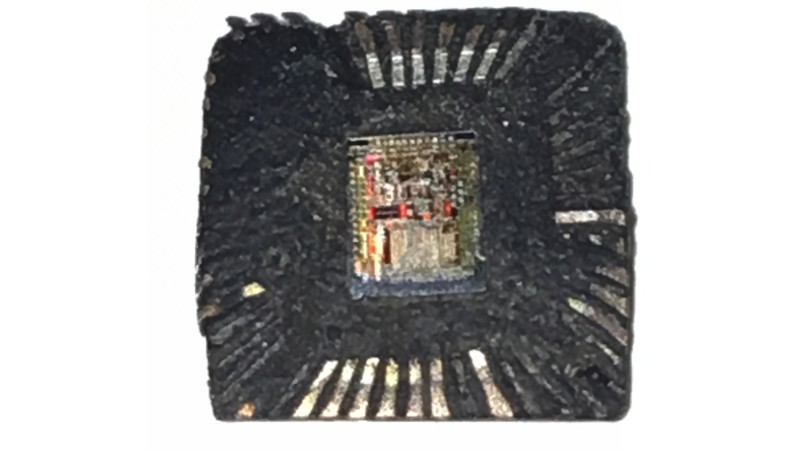
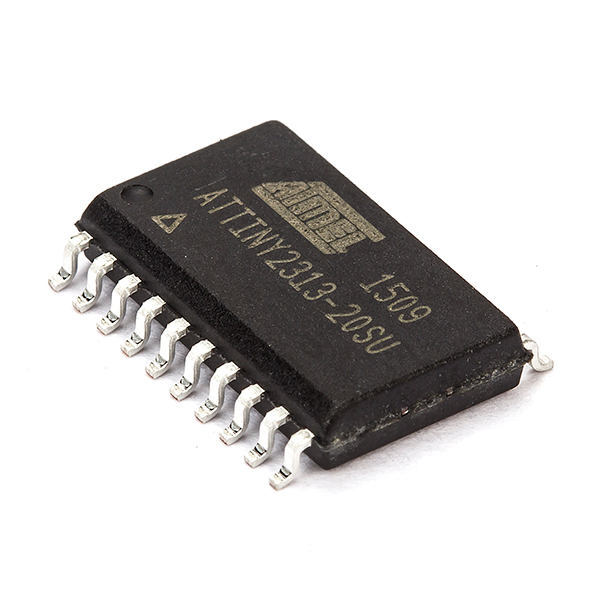
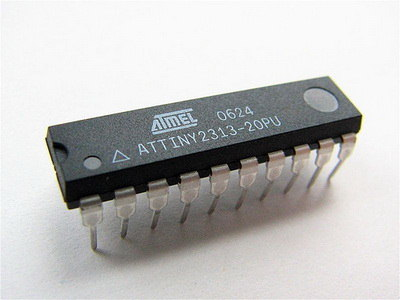
 Attack Chip ATtiny2313 and extract mcu attiny2313 Firmware from flash and eeprom memory in the format of heximal, unlock microcontroller attiny2313 fuse bit by focus ion beam;
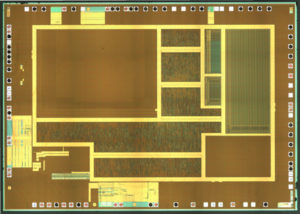
Features
· High Performance, Low Power AVR 8-Bit Microcontroller
· Advanced RISC Architecture
– 120 Powerful Instructions – Most Single Clock Cycle Execution
– 32 x 8 General Purpose Working Registers
– Fully Static Operation
– Up to 20 MIPS Throughput at 20 MHz
Data and Non-volatile Program and Data Memories if break mcu pic16f631 flash
– 2/4K Bytes of In-System Self Programmable Flash
· Endurance 10,000 Write/Erase Cycles
– 128/256 Bytes In-System Programmable EEPROM
· Endurance: 100,000 Write/Erase Cycles
Technical Methodology for Firmware Analysis
Our firmware analysis process for ATtiny2313 devices follows a structured, non-destructive methodology. We begin with comprehensive examination of the microcontroller’s configuration, analyzing fuse bit settings and lock bit configurations to understand the specific security implementation. This initial assessment determines the appropriate technical approach for accessing the protected memory contents.
For devices where security features have been enabled, we employ specialized hardware interfaces and signal analysis techniques to establish controlled communication with the microcontroller’s internal systems. This process requires precise timing control and deep understanding of AVR architecture to navigate around protective barriers without triggering permanent lockout mechanisms or damaging the physical device . The goal is to extract the complete firmware image while preserving both the microcontroller’s integrity and the recovered data’s accuracy.
– 128/256 Bytes Internal SRAM
– Programming Lock for Flash Program and EEPROM Data Security
Peripheral Features
– One 8-bit Timer/Counter with Separate Prescaler and Compare Mode
– One 16-bit Timer/Counter with Separate Prescaler, Compare and Capture Modes
– Four PWM Channels
– On-chip Analog Comparator
– Programmable Watchdog Timer with On-chip Oscillator
– USI – Universal Serial Interface
– Full Duplex USART
Special Microcontroller Features
– debugWIRE On-chip Debugging
– In-System Programmable via SPI Port
– External and Internal Interrupt Sources
– Low-power Idle, Power-down, and Standby Modes when Attack mcu pic12f510 program
– Enhanced Power-on Reset Circuit
– Programmable Brown-out Detection Circuit
– Internal Calibrated Oscillator
I/O and Packages
– 18 Programmable I/O Lines
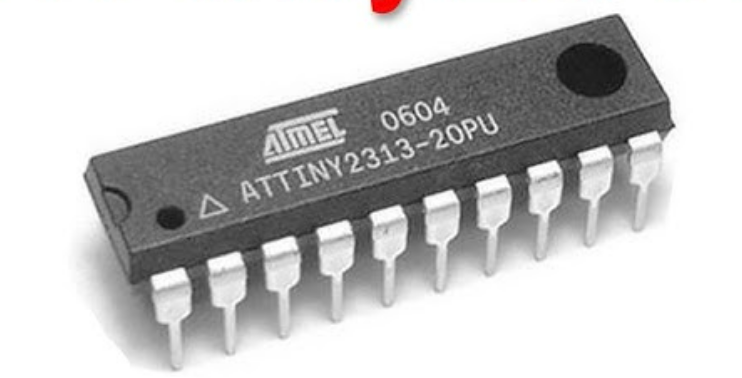
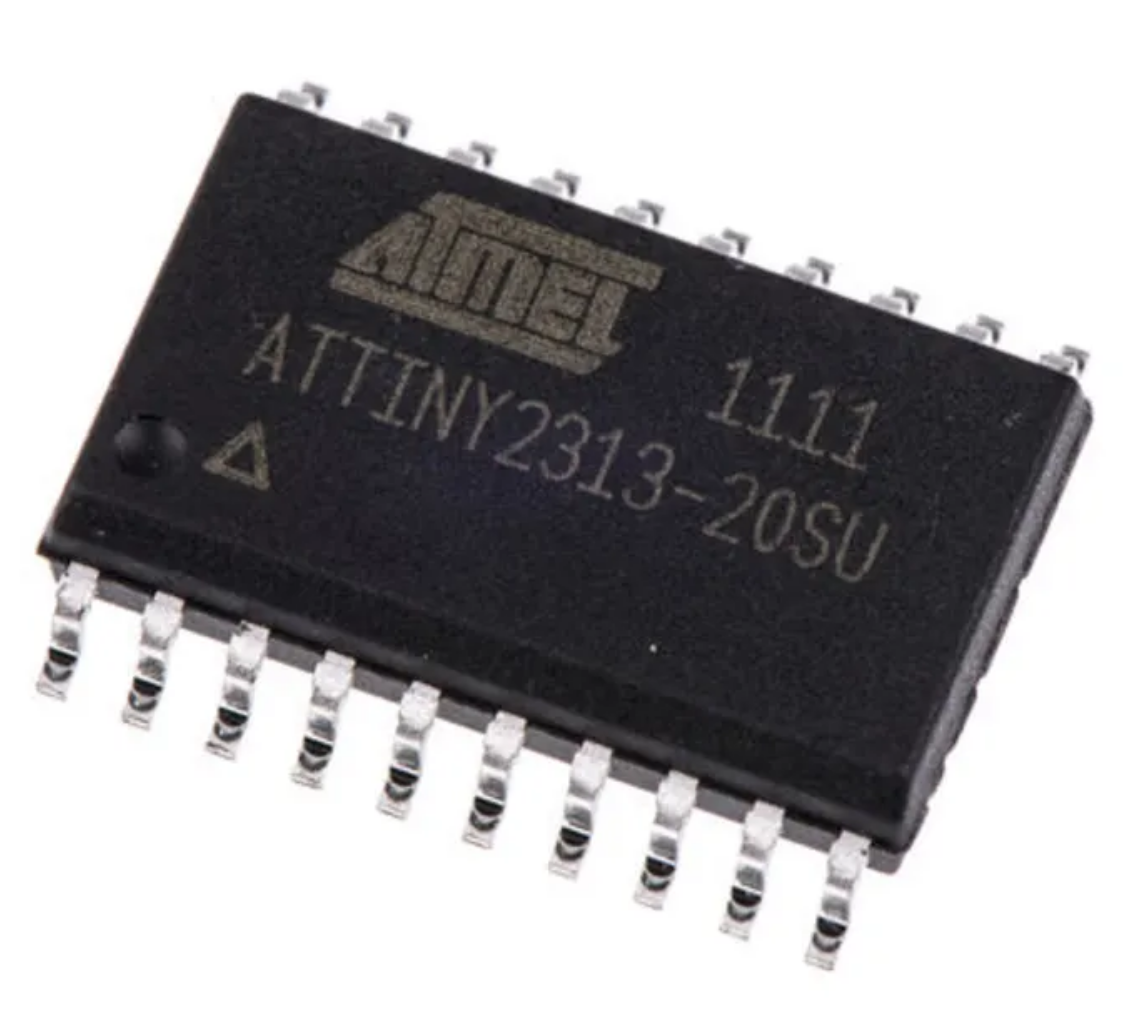
– 20-pin PDIP, 20-pin SOIC, 20-pad MLF/VQFN
Operating Voltage
– 1.8 – 5.5V
Speed Grades
– 0 – 4 MHz @ 1.8 – 5.5V
– 0 – 10 MHz @ 2.7 – 5.5V
– 0 – 20 MHz @ 4.5 – 5.5V
Industrial Temperature Range: -40°C to +85°C
Low Power Consumption
– Active Mode
· 190 µA at 1.8V and 1MHz
– Idle Mode
· 24 µA at 1.8V and 1MHz
– Power-down Mode
· 0.1 µA at 1.8V and +25°C
Firmware Extraction and Binary Recovery
Once access is established, our equipment performs a complete memory read operation, capturing every byte stored within the ATtiny2313’s Flash program memory and EEPROM data sections. This process generates a raw binary file that represents the exact firmware image as originally programmed. For applications requiring specific formats, we convert this binary data into Intel HEX format or other industry-standard file types suitable for analysis or reprogramming.
The extracted binary contains both executable code and configuration data that define the microcontroller’s behavior in its target application. Our technical team processes this raw information to reconstruct the firmware’s logical structure, identifying program sections, data tables, interrupt vectors, and configuration parameters. This transformation creates organized, analyzable files that maintain the functional integrity of the original software.
Applications and Technical Applications
Professional ATtiny2313 firmware analysis serves numerous legitimate engineering purposes. Organizations utilize our services to maintain legacy equipment when original manufacturers no longer support products, to recover from hardware failures where backup firmware is unavailable, to verify the integrity of existing systems, and to understand proprietary implementations for compatibility development.
The recovered firmware documentation provides engineering teams with the technical insights needed to maintain critical systems, develop compatible replacements, or upgrade existing functionality. This capability proves particularly valuable in industrial automation, automotive systems, medical devices, and other applications where long-term equipment reliability depends on access to embedded software.
Conclusion: Responsible Firmware Analysis
Professional firmware analysis for ATtiny2313 microcontrollers represents an essential technical service in today’s complex electronics landscape. Our methodology prioritizes technical precision, device integrity, and ethical compliance, providing legitimate access to secured firmware for authorized engineering purposes. By employing systematic approaches that respect both hardware limitations and intellectual property considerations, we enable continued innovation and maintenance while upholding the highest professional standards.
 Posted in Recover MCU