 Duplicate SPC56AP54L5 encrypted program file
 February 24th, 2021 |
 Author:
For a legacy module the first question behind duplicate SPC56AP54L5 encrypted program file is which memory region is actually needed. The SPC56AP54L5 keeps application code, data flash and configuration in distinct places. The A prefix marks ST’s safety variant of the 768 Kbyte P-line, adding ECC on flash and SRAM and a safety port.
What duplicate SPC56AP54L5 encrypted program file can realistically deliver
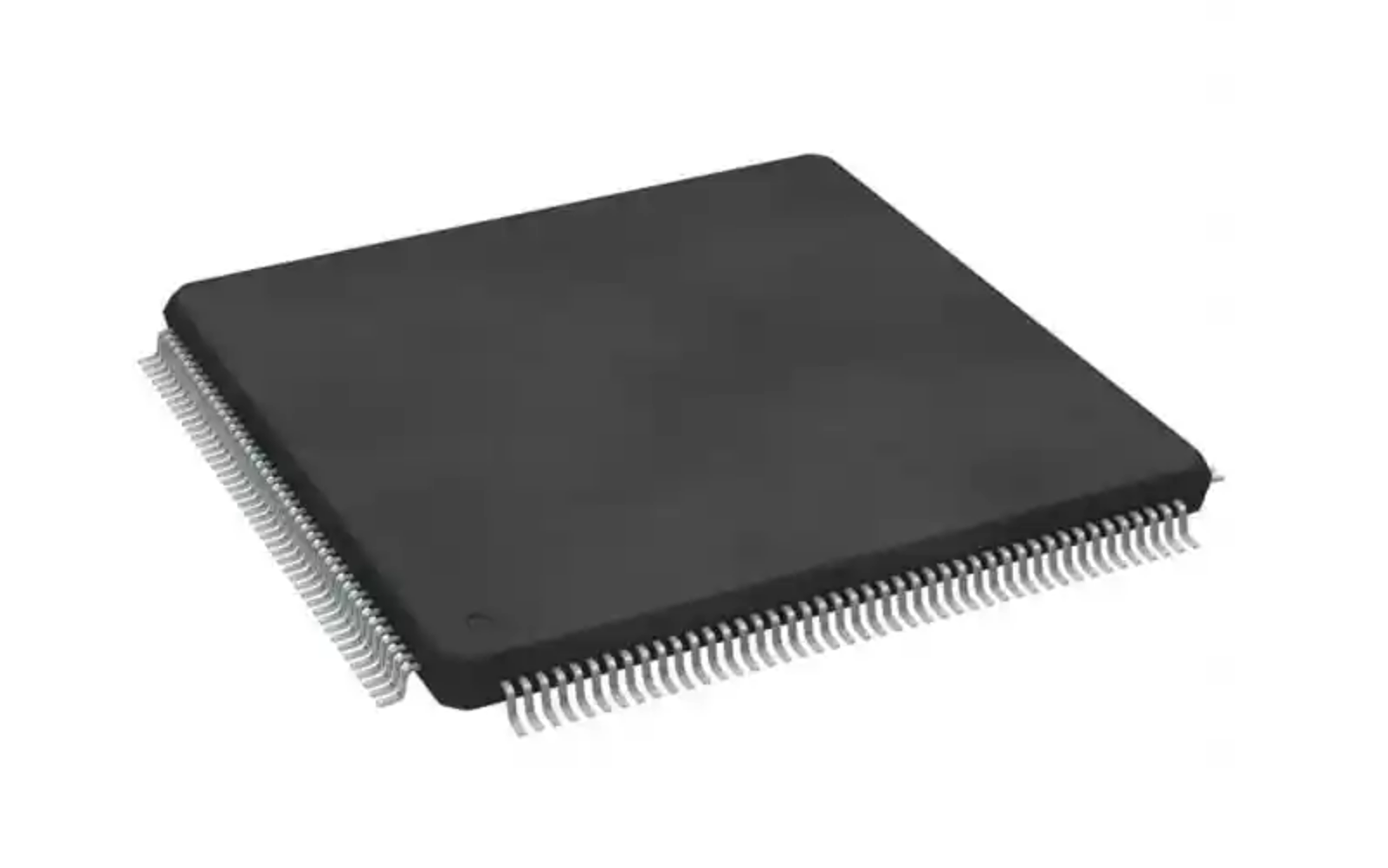
32-битная архитектура питания MCU SPC56AP54L5 восстановление флэш-памяти означает, что встроенный гекзимал будет считываться из заблокированной флэш-памяти микроконтроллера SPC56AP54L5, исходное состояние микропроцессора SPC56AP54L5 может быть разблокировано с помощью метода взлома MCU
The SPC56AP54L5 is the safety-oriented variant of ST’s SPC56 P line, built for chassis and airbag applications on a 64 MHz dual-issue e200z0h core. It executes the compact VLE form of Power Architecture code and carries 768 Kbytes of code flash, 64 Kbytes of data flash and 64 Kbytes of SRAM. The safety port can act as a third CAN channel when not reserved for safety, which changes the bus plan. The safety port and ECC coverage are the defining features of the AP ordering line. A cloned image without its configuration bytes and register map rarely behaves like the original firmware on the same board.
Region labels in a usable image
Code flash can reach 1024 Kbytes in the family, with the AP54 fitted with 768 Kbytes, plus a 64 Kbyte data flash block for EEPROM emulation and 64 Kbytes of SRAM. ECC tags cover both the code flash and the SRAM, and the error correction status module records single and double bit events. The 768 KB code Flash / 64 KB data Flash / 64 KB SRAM ECC / safety port table is the ordering reference for the AP54 member. A comparable recovery note is SPC5601DF1MLL4 flash documentation.
Protection, configuration and ECC
| Item | What the data sheet states |
|---|---|
| Part | e200z0h at 64 MHz / 768 KB code Flash / 64 KB SRAM ECC / safety port |
| Core | e200z0h, 32-bit Power Architecture VLE, 64 MHz, dual-issue, 4.5-5.5 V |
| Memory | 768 KB code Flash / 64 KB data Flash / 64 KB SRAM ECC / safety port / LQFP144 |
| Program memory | up to 1024 KB code Flash with ECC plus 64 KB data Flash for EEPROM emulation |
| RAM | 64 KB on-chip SRAM with ECC |
| Package | LQFP144, -40 to 125 C, tray or tape-and-reel |
| Boot interface | Boot Assist Module with CAN/UART loader; Nexus L2+ debug interface |
The AP part combines a register protection scheme with a censorship state held in the flash configuration. The Boot Assist Module and CAN/UART loader program code but do not provide a readback of a protected array. A mass erase clears the protection and erases the application together, so the owner’s signed build archive is the strongest evidence. Further reading on adjacent SPC56 and MCU boards: SPC5602DF1VLH4R flash documentation.
Boot stacks and their memory footprint
Communication includes FlexCAN interfaces, a dedicated safety port built on FlexCAN, LINFlex modules, DSPI, and a FlexRay controller capable of dual or single channel operation up to 10 Mbit per second. The pseudo-random watchdog service sequence must be reproduced from the build archive, not guessed. The fault collection and control unit aggregates safety events, and the software watchdog requires a pseudo-random service sequence. A documentation record should capture the safety port configuration, the ECC status and the FlexRay setup. Owners sometimes ask for a duplicate chip when what they actually need is the configuration file and the firmware that addresses it. The wider NXP, ST and general MCU material is linked here: SPC5604BK0CLQ6 flash documentation.
Choosing the right body for rework
The AP54 member is published in a 144-pin LQFP with a -40 to 125 degree range, in tray and tape-and-reel variants such as CEFAR and CEFAR/CEFAY. The 144-pin body exposes 80 GPIO plus 26 GPI, so a firmware image built for it cannot be moved to the 100-pin family members. The marked ordering code is the dependable way to tell an AP safety part from a plain P member. Related device notes on this site cover the wider Power Architecture MCU family: Arm microprocessor stm32f072rb cpu reverse engineering.
How the service is quoted
Within the SPC56 range the AP line is the safety variant of the P line, sharing the core and memory sizes but adding ECC, the safety port and the fault collection unit. Both lines originate in the same ST-Freescale automotive MCU programme as the NXP MPC56xx family. Pin compatibility means the silicon can be swapped across capacities and grades, so reported flash size and safety features must be confirmed. A written scope covers marking, ordering code, identification, clock source, supply rails and the safety configuration, then compares the owner’s release archive with the fitted device. ECC error logs are part of a defensible diagnostic record on an AP safety part. When protection is off, labelled code and data flash images can be returned; when it is on, we supply documentation and an archive comparison. For background on a neighbouring automotive controller, see Arm stm32f071cb microcontroller Flash binary restoration.
Any duplicate SPC56AP54L5 encrypted program file request is handled the same way on every SPC56 board: identify the fitted line, record the memory map and clock tree, then compare the customer’s archived build output with what the debug interface reports. Where the array is unprotected a labelled program file can be returned; where it is protected we supply an identification and documentation package instead. All work is scoped in writing for the owner or an authorised agent, with the erase consequence stated up front.
 Posted in Recover MCU