 Recover Microcontroller PIC16C62B Eeprom
 June 26th, 2010 |
  Author:
 When a device relies on the Microchip PIC16C62B for control and configuration, the small but critical EEPROM and flash areas often hold calibration tables, configuration data, or archived program fragments that are essential to operation. Our service, searchable under the keyword Recover Microcontroller PIC16C62B Eeprom, helps authorized owners and technicians safely open, readout, restore, and duplicate the firmware/binary/heximal and small nonvolatile memory regions of these controllers. We focus on lawful, confidential recovery that returns usable program archives without disclosing methods to bypass manufacturer protections.
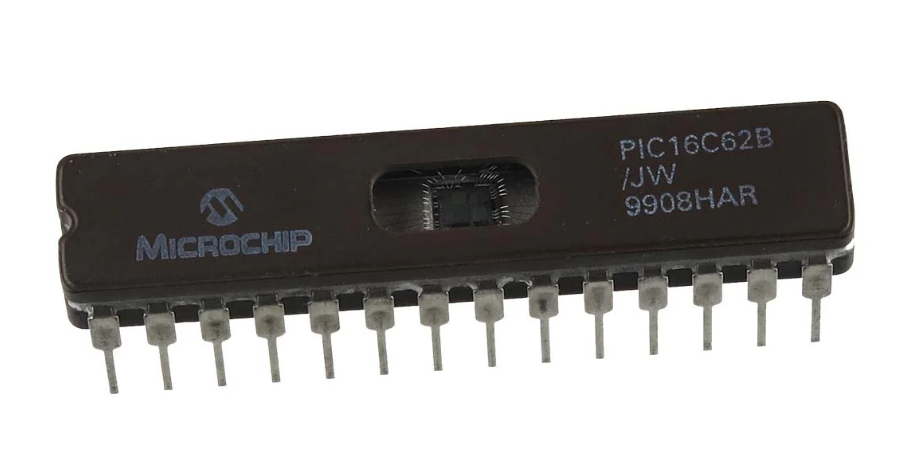
Recover Microcontroller PIC16C62B Eeprom data and extract mcu pic16c62b code from flash and eeprom memory, the secured firmware can be readount from mcu pic16c62b microprocessor memory;
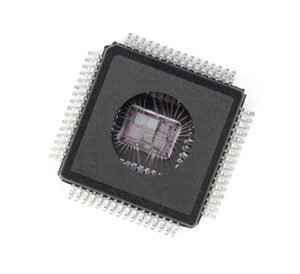
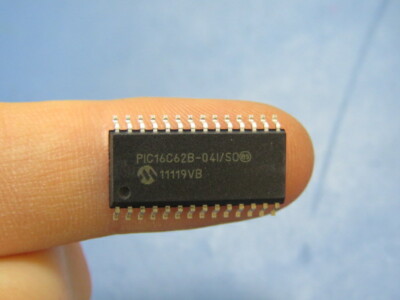
We can recover MCU PIC16C62B Eeprom, please view the Microcontroller PIC16C62B features for your reference:
Microcontroller Core Features: · High-performance RISC CPU · Only 35 single word instructions to learn · All single cycle instructions except for program branches, which are two cycle·
Operating speed: DC – 20 MHz clock input DC – 200 ns instruction cycle · 2K x 14 words of Program Memory, 128 x 8 bytes of Data Memory (RAM) ·
Devices with PIC16C62B controllers are often legacy or long-lived products. Valid reasons to request recovery include the need to restore corrupted EEPROM after failures, copy configuration files for authorized spares, clone settings for production runs, or duplicate archived data before servicing. Recovering a verified binary or heximal image of the EEPROM can avoid lengthy software rewrites and shorten downtime.
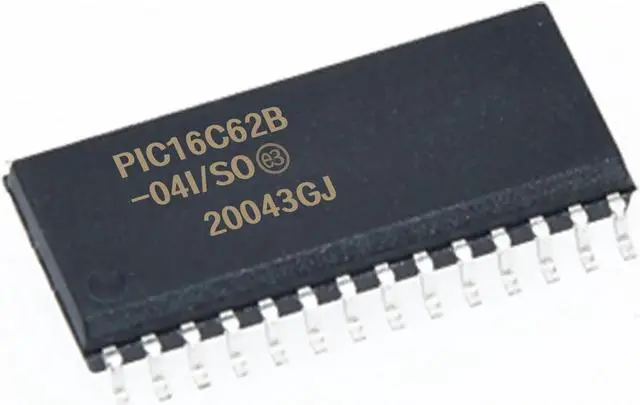
Typical applications of PIC16C62B
The PIC16C62B’s modest feature set and reliable I/O make it suitable for many industries:
- Consumer appliances and simple household electronics.
- Industrial sensors and controllers for basic automation tasks.
- Instrumentation and measurement devices that store small data archives.
- Aftermarket and hobbyist systems where a compact embedded controller is sufficient.
Because these applications frequently store system-critical parameters in EEPROM, the data is often treated as a protected, locked, or secured asset.
Eight level deep hardware stack ·
Direct, indirect, and relative addressing modes ·
Power-on Reset (POR) · Power-up Timer (PWRT) and Oscillator Start-up Timer (OST)·
Watchdog Timer (WDT) with its own on-microcontroller RC oscillator for reliable operation · Brown-out detection circuitry for Brown-out Reset (BOR) · Programmable code-protection · Power saving SLEEP mode · Selectable oscillator options · Low-power, high-speed CMOS EPROM technology·
Fully static design · In-Circuit Serial Programming (ICSP) · Wide operating voltage range: 2.5V to 5.5V · High Sink/Source Current 25/25 mA · Commercial, Industrial and Extended temperature ranges · Low-power consumption: – < 2 mA @ 5V, 4 MHz – 22.5 µA typical @ 3V, 32 kHz when copy pic16f684 Microcontroller firmware – < 1 µA typical standby current Peripheral Features: · Timer0: 8-bit timer/counter with 8-bit prescaler · Timer1: 16-bit timer/counter with prescaler, can be incremented during sleep via external crystal/clock · Timer2: 8-bit timer/counter with 8-bit period register, prescaler and postscaler · Capture, Compare, PWM module · Capture is 16-bit, max. resolution is 12.5 ns, Compare is 16-bit, max. resolution is 200 ns, PWM maximum resolution is 10-bit · 8-bit multi-channel Analog-to-Digital converter · Synchronous Serial Port (SSP) with Enhanced SPI and I2C
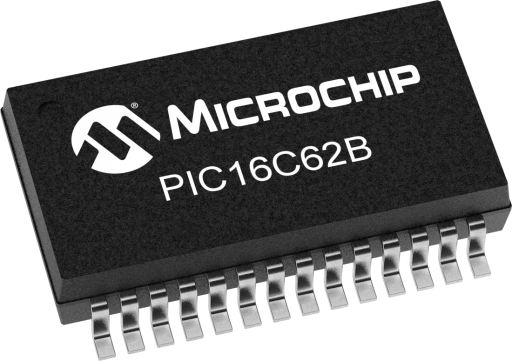
The PIC16C62B integrates limited program memory alongside EEPROM for persistent settings, plus basic analog/digital peripherals. These constrained resources mean key configuration files and calibration tables are concentrated in small memory regions — making careful extraction essential. The chip’s architecture affects how source code (if available) and program data are represented in the raw binary/heximal dumps.
General idea of our approach (non-actionable)
We begin every engagement with ownership verification and a risk assessment. Our work emphasizes non-destructive procedures to obtain a reliable memory archive. After a validated readout, we produce checked heximal or binary dumps and provide high-level annotated summaries that help engineers interpret recovered data. We do not publish or provide step-by-step techniques to crack, hack, or illegally decode protections — our focus is on authorized recovery, unlock, and restoration for legitimate purposes.
Purpose and benefits for end users
Clients using this service can expect faster recovery of device functionality, secure backups of previously inaccessible EEPROM, and the ability to copy or clone settings for authorized production or maintenance. Recovered program files and archives support debugging, testing, migration to replacement hardware, and continuity for legacy systems — saving time and reducing redevelopment costs.
Common difficulties and limitations
Challenges may include partial data corruption, variant device revisions with different memory maps, or layered protective settings that limit full reconstruction. In many recoveries, the deliverable is a validated binary/heximal archive and assembly-level annotations rather than full, human-readable source code. We always communicate feasibility, likely outcomes, and limitations before proceeding.
Ethics, authorization & confidentiality
All projects require proof of ownership or explicit authorization and are governed by confidentiality agreements. We do not assist with unauthorized copying or distribution of copyrighted or safety-critical firmware. Our goal is to help rightful owners recover, restore, and maintain their embedded systems safely and legally.
If you need to Recover Microcontroller PIC16C62B Eeprom for authorized recovery, maintenance, or archival purposes, our experienced team offers secure, professional support to retrieve and document your embedded firmware and data while protecting your IP and operational continuity.
 Posted in Recover Chip