 Recover Chip EPM7064AETC100-4N Software
 July 11th, 2014 |
  Author:
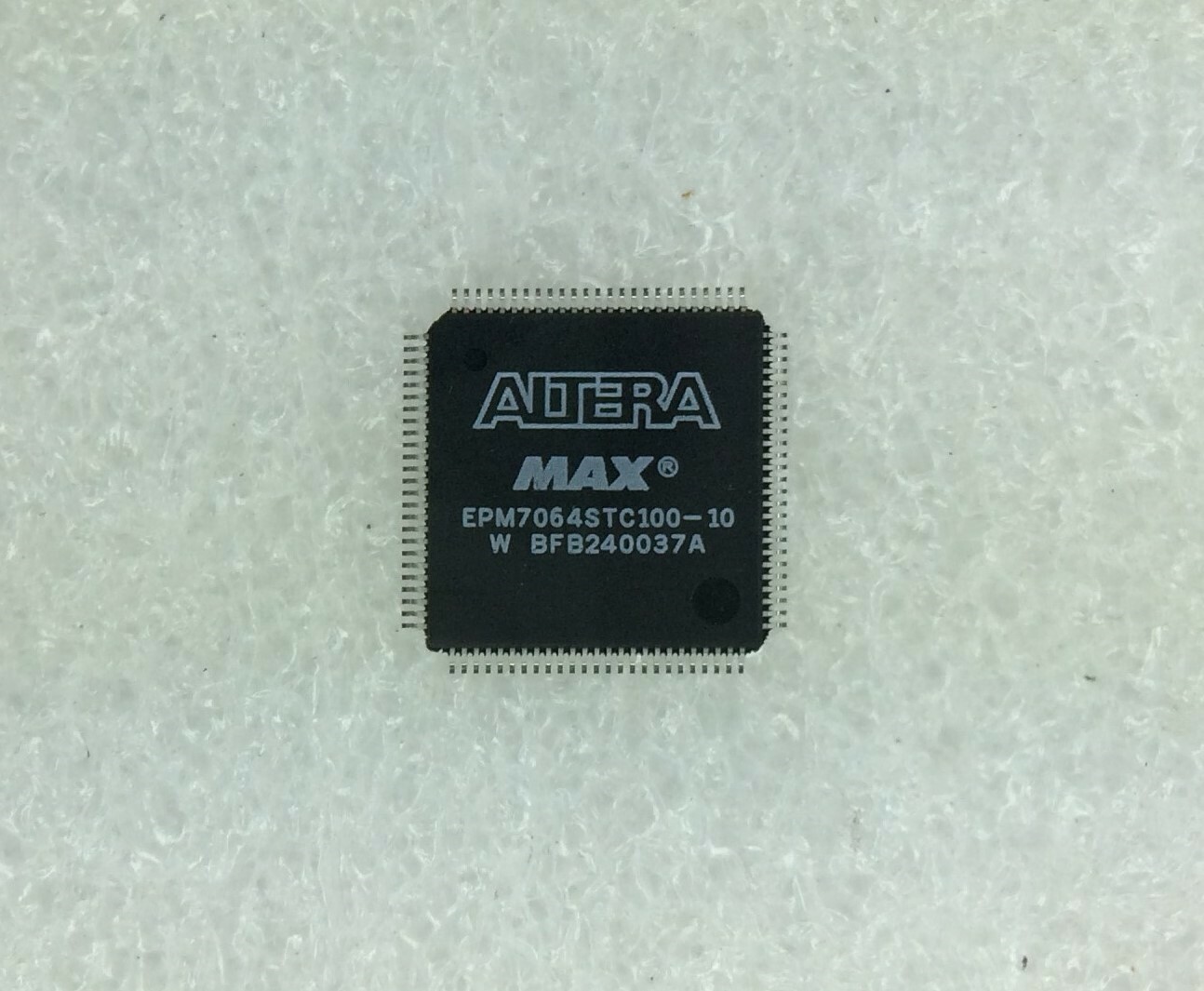
 Recover Chip EPM7064AETC100-4N Software is a professional service designed to retrieve critical design data from Altera MAX 7000 series CPLDs used in a wide range of embedded and industrial systems. The EPM7064AETC100-4N is commonly found in industrial control panels, communication equipment, automotive electronics, test instruments, and legacy automation platforms. Its compact logic architecture, fast response, and stable embedded performance make it ideal for glue logic, protocol handling, and custom control logic where firmware, binary, and archived program files are central to system operation.
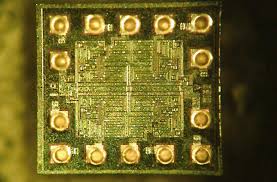
We can recover Chip EPM7064AETC100-4N software, please view below Chip EPM7064AETC100-4N features for your reference:
High-performance 3.3-V EEPROM-based programmable logic devices (PLDs) built on second-generation Multiple Array MatriX
3.3-V in-system programmability (ISP) through the built-in IEEE Std. 1149.1 Joint Test Action Group (JTAG) interface with advanced pin-locking capability
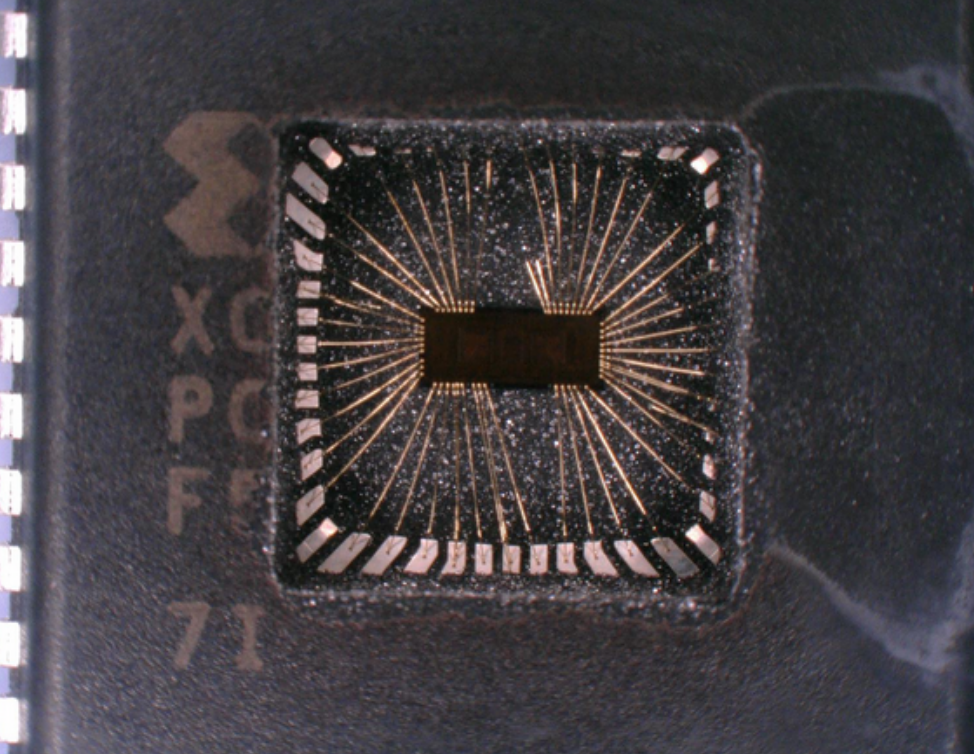
In many real-world cases, the original source code or configuration files are lost due to staff changes, discontinued suppliers, or aging storage media. Our service focuses on retrieving protected and locked design data from secured devices so that clients can restore functionality or duplicate existing hardware. Whether the goal is to recover a binary or heximal file, reconstruct embedded logic behavior, or extract archived program data for maintenance, we apply structured methods to decode and retrieve usable information while respecting device constraints. This enables safe cloning or controlled duplication without redesigning the entire system.
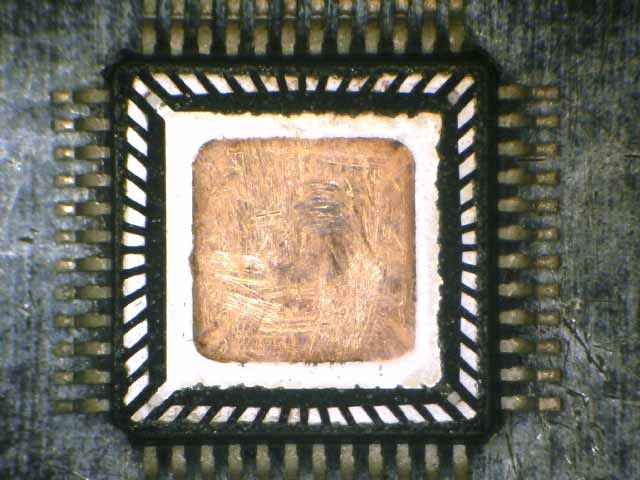
From a technical standpoint, EPM7064AETC100-4N recovery can be challenging because CPLDs rely on internal non-volatile memory structures rather than conventional flash or EEPROM layouts. Devices are often encrypted or secured with protection bits, making standard readout impossible. Depending on the condition and protection level, engineers may need to attack protection mechanisms, break access controls, or decapsulate the package for deeper analysis. These steps require experience to avoid data corruption and to ensure the recovered firmware or memory image accurately reflects the original embedded logic and timing behavior.
– MAX 7000AE device in-system programmability (ISP) circuitry compliant with IEEE Std. 1532
– EPM7128A and EPM7256A device ISP circuitry compatible with IEEE Std. 1532
Built-in boundary-scan test (BST) circuitry compliant with IEEE Std. 1149.1
Supports JEDEC Jam Standard Test and Programming Language (STAPL) JESD-71
Enhanced ISP features
– Enhanced ISP algorithm for faster programming (excluding EPM7128A and EPM7256A devices)
– ISP_Done bit to ensure complete programming (excluding EPM7128A and EPM7256A devices)
– Pull-up resistor on I/O pins during in-system
– Pin-compatible with the popular
4.5-ns pin-to-pin logic delays with counter frequencies of up to 227.3 MHz
MultiVoltTM I/O interface enables device core to run at 3.3 V, while I/O pins are compatible with 5.0-V, 3.3-V, and 2.5-V logic levels Pin counts ranging from 44 to 256 in a variety of thin quad flat pack (TQFP), plastic quad flat pack (PQFP), ball-grid array (BGA), space-saving FineLine BGATM, and plastic J-lead chip carrier (PLCC) packages.
The purpose of recovering EPM7064AETC100-4N software is to deliver tangible value to end users. By retrieving critical data and program files, manufacturers can extend product life cycles, support installed equipment, migrate designs to newer platforms, or audit legacy logic for compliance and safety. Our service reduces downtime, minimizes redevelopment costs, and preserves intellectual investment locked inside protected chips. Even in complex scenarios involving encrypted or secured devices, our structured recovery workflow helps clients regain control of their embedded systems with confidence and long-term reliability.
Supports hot-socketing in MAX 7000AE devices
Programmable interconnect array (PIA) continuous routing structure for fast, predictable performance
PCI-compatible
Bus-friendly architecture, including programmable slew-rate control
Open-drain output option
Programmable macrocell registers with individual clear, preset, clock, and clock enable controls
Programmable power-up states for macrocell registers in MAX 7000AE devices
Programmable power-saving mode for 50% or greater power reduction in each macrocell
Configurable expander product-term distribution, allowing up to 32 product terms per macrocell
Programmable security bit for protection of proprietary designs 6 to 10 pin- or logic-driven output enable signals
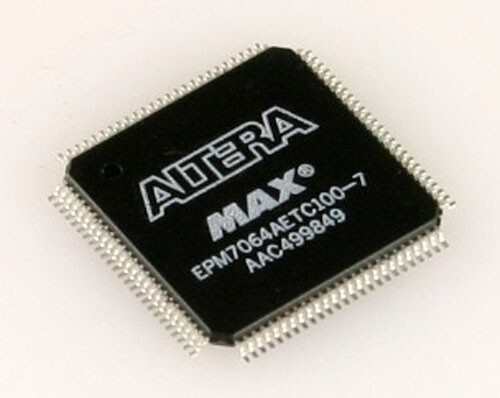
Two global clock signals with optional inversion
Enhanced interconnect resources for improved routability
Fast input setup times provided by a dedicated path from I/O pin to macrocell registers
Programmable output slew-rate control
Programmable ground pins
Software design support and automatic place-and-route provided by Altera’s development systems for Windows-based PCs and Sun SPARCstation, and HP 9000 Series 700/800 workstations Additional design entry and simulation support provided by EDIF 2 0 0 and 3 0 0 netlist files, library of parameterized modules (LPM), Verilog HDL, VHDL, and other interfaces to popular EDA tools from manufacturers such as Cadence, Exemplar Logic, Mentor Graphics, OrCAD, Synopsys, Synplicity, and VeriBest
Programming support with Altera’s Master Programming Unit (MPU), MasterBlasterTM serial/universal serial bus (USB) communications cable, ByteBlasterMVTM parallel port download cable, and BitBlasterTM serial download cable, as well as programming hardware from third-party manufacturers and any JamTM STAPL File (.jam), Jam Byte-Code File (.jbc), or Serial Vector Format File- (.svf) capable in-circuit tester.
 Posted in Recover Chip